November 2026 | 77th EDITION NEWSLETTER | | While the articles selected for this newsletter may not directly represent the opinions of the Missouri Employment Conference, they have been thoughtfully curated to spark interest and engagement among HR professionals. Each piece offers unique insights and perspectives that can enhance your understanding of the dynamic field of human resources. We encourage you to approach these articles with an open mind, as they are designed to inspire dialogue and promote a deeper exploration of the trends shaping our industry today. | | |
Amazon Deploys Multiple Programs to Recruit Military Veterans and Spouses
HR Brew | Kristen Parisis | October 30, 2026
When military veterans and their spouses transition to the public sector, many often face hurdles finding jobs and assimilating to new work environments.
Amazon, in an attempt to address these challenges, takes a holistic approach to hiring and inclusion for military families, with initiatives ranging from public-private partnerships to an employee leadership group and manager training, Ian McDuffie, manager of global military affairs, recently told HR Brew.
The result, he said, is a welcoming workplace for military veterans and their families, with clear pathways for growth that ultimately make Amazon stronger.
The company’s eight-person global military affairs enablement team sits within the people experience and technology (aka, HR) team, and is led by army veteran and military spouse Charlotte La Belle.
| | |
How Military Veterans Can Improve Hiring and Retention
HR Morning| Michelle McGovern | October 20, 2026
As our nation celebrates Veterans’ Day, consider increasing your efforts to find, recruit and retain veterans to your organization. Try it now as a catalyst to hire and retain more veterans for years to come. The voluntary quit rate is about 2%, according to data from the Labor Department. But if companies continue to hire the same way they always have, they likely can keep pace with the churn in today’s workforce.
Military Veterans Are Good Hires
“Hiring military veterans is important because they bring a wealth of experience, discipline, and a strong work ethic to the workplace. Veterans have proven leadership skills, adaptability, and a commitment to teamwork,” says Jerome Soltani, Senior VP US Services at Schneider Electric. “By putting veterans at the heart of your hiring strategy, you are building a resilient team ready to meet evolving demands with a mission-focused mindset.”
| | |
More Rights, Stronger Remedies: How The Dole Act Enhances USERRA Protections For Service Members In The Civilian Workforce
Tully Rinckey PLLC | Sean Timmons | October 9, 2026
Employees who serve in the military should not have to choose between answering their nation’s call and protecting their civilian careers. For more than 30 years, the Uniformed Services Employment and Reemployment Rights Act (USERRA) has provided important protections against discrimination and ensured that service members can return to their civilian jobs following military service.
Since USERRA’s enactment in 1994, USERRA has served as the nation’s primary law protecting the civilian employment rights of military service members, but recent legislative changes have significantly expanded those protections and the remedies available to those whose rights are violated.
| | |
USERRA Leave and Reinstatement Rights: What Employers Must Do Before, During and After Military Service
HR Training Center | October 17, 2026
An employee tells you on Thursday that she has orders and leaves Monday for nine months. She does not have paperwork yet. Her manager wants to know whether he can post the job, whether she has to burn her vacation first, and whether "we'll see what's open when you get back" is an acceptable answer.
Under USERRA, the Uniformed Services Employment and Reemployment Rights Act (38 U.S.C. 4301 to 4335), the answers are mostly no. USERRA has no employee-count threshold and no minimum length of service, and its reinstatement rule can require you to put the returning employee in a better job than the one she left. This guide walks through what the statute and the Department of Labor regulations at 20 CFR Part 1002 require at each stage.
| | |
What It Takes to Find 'Clarity' In Today's Chaos
We're living in a world of "always-on" culture—and it's burning out HR professionals.
"Those of us in HR … are being asked to help organizations navigate AI, to redesign work, to help organizations build the skills of the future. We're helping everyone else navigate an unprecedented am amount of uncertainty but we're still trying to figure out what transformation means for ourselves," said Christine DiDonato, founder of Career Revolution at the opening keynote of Women in HR at HR Tech in Las Vegas Tuesday.
| | |
Why Companies Are Moving Beyond the Question of AI Adoption
Great Place to Work | Ted Kitterman
October 29, 2026
Leaders’ questions about AI in the workplace look very different today than they did a year ago. AI use is much more widespread. Six in 10 workers use AI for work at least weekly, per new data from the latest Great Place To Work®. Three in 10 (31%) use AI daily. While 58% of respondents say that AI improves the quality of their work, overall adoption remains uneven and fragile.
Just because individual work improves in quality doesn’t mean a company also experiences a measurable, durable increase in revenue or cost savings.
| | |
Mistakes New Chiefs of Staff Should Avoid Making
Forbes | Edward Segal
October 29, 2026
In their rush to make a good impression and demonstrate their value, newly hired chiefs of staff could make mistakes that undermine their relationships with CEOs and colleagues. Avoiding those missteps begins with knowing and adhering to the role’s responsibilities and authority to make decisions.
Any mistakes could make CEOs and other senior corporate leaders question the value of a chief of staff (CoS) and create more problems than the position is meant to solve for organizations.
| | |
National Veterans and Military Families Month
Missouri Workforce Development Board | November 2026
November is National Veterans and Military Families Month. As we celebrate the military service of veterans, we also recognize that veterans are highly skilled professionals and offer businesses unique skillsets leading to success in the civilian workplace.
- Leadership – Veterans are trained to lead, solve problems, and take accountability.
- Work Ethic – Discipline, punctuality, reliability, and focus are ingrained in every veteran.
- Adaptability – Veterans are accustomed to fast-paced, ever-changing environments.
- Expertise – Many military roles are trained with skills directly related to civilian employment.
Dedicated staff in Missouri Job Centers offer free service to businesses to match job openings with qualified veterans and military spouses as well as assistance to connect with and navigate assistance programs geared to successful civilian employment.
| | |
Garrity Warnings: A Practical Guide for HR Professionals
MEC Sponsor Brent Hinders, JD, MPA – Hinders, Updegraff, Franklin, and Limkemann, P.L.C. | November 2026
Why Garrity belongs on Public Employer HR's radar When a public employer orders an employee to answer questions under threat of discipline, the answers are automatically immune from criminal use.
That rule, from Garrity v. New Jersey (1967), applies whether or not anyone reads the employee a warning. For HR professionals in government agencies, school districts, public hospitals and other public employers, this has real consequences. A poorly handled interview can taint a criminal prosecution, unravel an otherwise sound disciplinary decision, or expose the agency to labor and civil claims.
This article explains what Garrity requires, how it differs from Miranda, what employees keep, and what employers must do before, during and after a compelled interview. It closes with a model warning and a pre-interview checklist.
| | |
The HR Guide to Coordinating Overlapping Leave Laws
The HR Training Center | June 23, 2026
Managing employee leave stands as one of the most complex challenges for human resources professionals. When an employee requires time away from work due to a medical condition or workplace injury, you rarely deal with a single regulation. Instead, you face an intricate network of federal and state laws. The Family and Medical Leave Act (FMLA), the Americans with Disabilities Act (ADA), Workers’ Compensation, and the Consolidated Omnibus Budget Reconciliation Act (COBRA) overlap constantly.
Coordinating these overlapping leave laws requires a precise, structured approach. Mishandling a leave of absence exposes your organization to severe compliance risks, including Department of Labor (DOL) audits, Equal Employment Opportunity Commission (EEOC) investigations, and costly employee litigation. You must build a unified administrative framework that addresses job protection, wage replacement, reasonable accommodations, and the continuation of health benefits simultaneously.
| | |
Why Your Municipality Should Consider AI Guidelines—and How to Create Them
Clerk Base | September 24, 2026
Why AI Guidelines Matter for Municipalities Local governments face increasing budget and staffing challenges, and AI offers powerful solutions to help do more with less. AI can automate routine tasks, analyze data for smarter decisions, and improve communication with residents. For example, cities like Pittsburgh use AI to optimize traffic flow, while Phoenix’s myPHX311 portal employs AI chatbots to answer common citizen inquiries quickly and in multiple languages.
However, AI also poses risks such as privacy concerns, security vulnerabilities, potential bias, and ethical dilemmas. Without clear guidance and policies, the misuse or misunderstanding of AI tools could lead to unintended consequences or legal issues. Municipal governments like Grove City, Ohio, have shown that establishing citywide AI policies early—ones that balance innovation with risk management—can extend capabilities and save costs while protecting the community.
| | |
3 Stats About the Affordability Crisis Every Local Leader Should Know
NLC Citispeaks Blog | Justin Chu, Ayesha Mehrotra | October 23, 2026
With the rising cost of everyday essentials outpacing wage growth, millions of Americans are feeling growing economic strain to make ends meet. When households allocate more money towards basic needs, they may be unable to save for emergencies or accumulate wealth for future investments like homeownership. Local governments can play a vital role in helping residents navigate this what has been deemed the “Affordability Crisis.” Using comparative data from February 2020 and August 2026, the three statistics below help illustrate the landscape of daily economic pressures facing residents so that local leaders are better equipped to be responsive to these needs.
| |
Purpose and Responsibilities
The Missouri Association of Counties (MAC), formed in 1972, is a nonprofit, nonpartisan member service organization dedicated to the improvement of county government. It was designed and incorporated by county elected officials to provide services, research, uniformity, and coordination among member counties, in order for the county elected officials to best serve their constituents.
| |
MAC’S TRIMESTER MAGAZINE
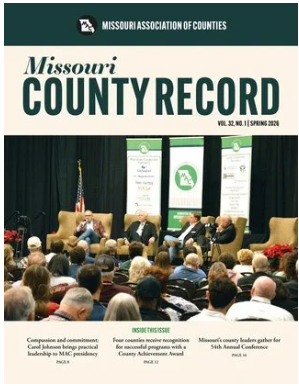
Missouri County Record
Covering all statewide news and information important to counties and county governance.
The Missouri County Record is a magazine published quarterly by the Missouri Association of Counties, a statewide lobbying group headquartered in Jefferson City, Mo. The publication generally runs 32 pages in length, and it is distributed to more than 1,400 subscribers (including county elected officials who purchase supplies, equipment, and services for Missouri county governments; all state administrative, commission, and department directors; members of the state General Assembly; as well as national affiliate associations.
| |
The Biggest Money Decisions You’ll Make in Your 20s, 30s, 40s and Beyond
Missouri Lagers | Financial Knowledge | October 20, 2026
Most of the biggest money decisions you will make do not look like money decisions at first. They look like everyday choices about work, relationships, family, timing, and how much flexibility you have when life changes.
Over time, your financial life can feel less like marching down one straight road and more like setting out on open water. Conditions shift, the map gets redrawn, and the decisions that matter most depend on the season you are sailing through.
| | |
As an organization with diverse functions, the U.S. Department of Labor carries out its mission through a number of offices and agencies. These are organized into major program areas, and headed by an Assistant Secretary or other official.
| | |
4 Reasons to Hire Veterans
DoL Blog | Darnice Marsh | July 22, 2026
The Veterans’ Employment and Training Service works every day to enable all service members, veterans, and military spouses to reach their full potential in the workplace.
As a military spouse and former human resource professional, I have seen firsthand how veterans strengthen the workplaces they join. Here are four reasons employers should seek out veteran talent:
- Leadership that strengthens teams: Veterans lead by example, communicate clearly, and stay steady under pressure. They understand mission-driven teamwork, placing organizational goals above personal gain. That balance of leadership and humility is invaluable. It helps shape workplace culture by enabling employees to recognize when to step up and when to support others. This creates stronger, more collaborative, and resilient teams.
- Discipline and reliability you can count on: Discipline is foundational to military service. For veterans, discipline shows up as accountability, consistency, and commitment to excellence. Veterans show up ready, prepared, and dependable because in the military, reliability isn’t optional, it’s essential.
- Adaptability in a changing workplace: Veterans thrive in environments where change is constant. New missions, evolving technology, shifting priorities, and changes in leadership are a part of their military experience. They access situations quickly, pivot with confidence, and stay focused under pressure.
A work ethic second to none: Military service instills persistence, grit, and an unshakable commitment to doing the job the right way. This work ethic transfers into the civilian workplace as reliability, consistency, and a refusal to cut corners. Veterans take ownership and inspire others day after day, task after task, mission after mission.
| |
I-9, Employment Eligibility Verification
Use Form I-9, Employment Eligibility Verification, to verify the identity and employment authorization of individuals hired for employment in the United States. All U.S. employers must properly complete Form I-9 for every individual they hire for employment in the United States. This includes citizens and aliens. Both employees and employers (or authorized representatives of the employer) must complete the form.
| | |
Confirm with Confidence
Enroll in E-Verify for fast and efficient employment eligibility verification.
It only takes a few simple steps to enroll in E-Verify and begin confirming the employment eligibility of all of your new hires.
| | |
E-Verify Compliance Is Getting More Complicated: What Employers Should Review Now
Fragomen Workright | October 6, 2026
For employers that participate in E-Verify, compliance does not end once a case is created. As government scrutiny of employment eligibility practices increases, E-Verify is becoming a more active compliance touchpoint, one that requires ongoing monitoring and consistent processes.
Recent developments reinforce that E-Verify should not be treated as a simple onboarding step. Employers may face E-Verify compliance reviews, desk audits, account validation requests, and new reporting obligations tied to changes in employee work authorization. At the same time, employers must continue to follow Form I-9 rules and anti-discrimination requirements when responding to E-Verify information.
One key area employers should understand is the E-Verify Status Change Report, including its use for identifying certain Employment Authorization Documents (EADs) that were previously presented by the employee to complete their I-9 and then submitted to E-Verify but have since been invalidated by the Department of Homeland Security (DHS).
| | |
Training Requirements and Resources
OSHA provides information on employers' training requirements and offers resources such as free publications, videos, and other assistance to help employers protect workers against injuries and illnesses.
| | OSHA provides safety and health resources specifically designed for small businesses. Find information on complying with OSHA standards and receive advice you can trust through OSHA's no-cost and confidential On-Site Consultation Program. | | |
Compliance Assistance, Education, and Training
OSHA is committed to meeting employers where they are and empowering them to build strong safety cultures. Learn how OSHA is helping employers foster safer and healthier workplaces. Investments in worker safety and health can also reduce injuries and illnesses, and produce significant improvements to an organization's productivity and profitability.
| | |
OSHA Encourages Employers to Prepare for Workplace Opioid Overdose Emergencies
Honigman | October 21, 2026
The Occupational Safety and Health Administration (“OSHA”) recently issued new guidance encouraging employers to prepare for opioid-related overdose emergencies in the workplace. OSHA’s new fact sheet, Opioid Overdose Rescue with Reversal Medications, recommends that employers consider keeping opioid overdose reversal medications, such as naloxone (commonly known by the brand name Narcan) or nalmefene, readily available and educating employees on how to respond when an overdose is suspected.
Importantly, OSHA’s guidance is informational and does not impose any new compliance requirements. Nevertheless, the guidance provides employers with a useful framework for evaluating whether to incorporate opioid overdose preparedness into their existing workplace safety and emergency-response practices.
| | Monthly newsletter featuring compliance assistance, training and other workplace safety and health resources. | | |
The U.S. Equal Employment Opportunity Commission (EEOC) is responsible for enforcing federal laws that make it illegal to discriminate against a job applicant or an employee because of the person's race, color, religion, sex (including pregnancy, childbirth, or related conditions, transgender status, and sexual orientation), national origin, age (40 or older), disability or genetic information.
Most employers with at least 15 employees are covered by EEOC laws (20 employees in age discrimination cases). Most labor unions and employment agencies are also covered.
The laws apply to all types of work situations, including hiring, firing, promotions, harassment, training, wages, and benefits.
| | |
EEOC Resources
Need information about a specific discrimination topic? We've categorized EEOC material for small businesses categorized by topic, so you can find what you need quickly and easily.
| | |
Employers
The U.S. Equal Employment Opportunity Commission enforces Federal laws prohibiting employment discrimination. These laws protect employees and job applicants against employment discrimination when it involves:
- Unfair treatment because of race, color, religion, sex (including pregnancy, gender identity, and sexual orientation), national origin, age (40 or older), disability or genetic information.
- Harassment by managers, co-workers, or others in the workplace, because of race, color, religion, sex (including pregnancy), national origin, age (40 or older), disability or genetic information.
- Denial of a reasonable workplace accommodation that the employee needs because of religious beliefs, disability, or pregnancy, childbirth, or related medical conditions.
-
Retaliation because the employee complained about job discrimination or assisted with a job discrimination investigation or lawsuit.
| | |
What You Should Know About DEI-Related Discrimination at Work
Diversity, Equity and Inclusion (DEI) is a broad term that is not defined in Title VII of the Civil Rights Act of 1964 (Title VII). Title VII prohibits employment discrimination based on protected characteristics such as race and sex. Under Title VII, DEI initiatives, policies, programs, or practices may be unlawful if they involve an employer or other covered entity taking an employment action motivated—in whole or in part—by an employee’s or applicant’s race, sex, or another protected characteristic.
| |
National Law Review:
Latest business law news and legal analysis...
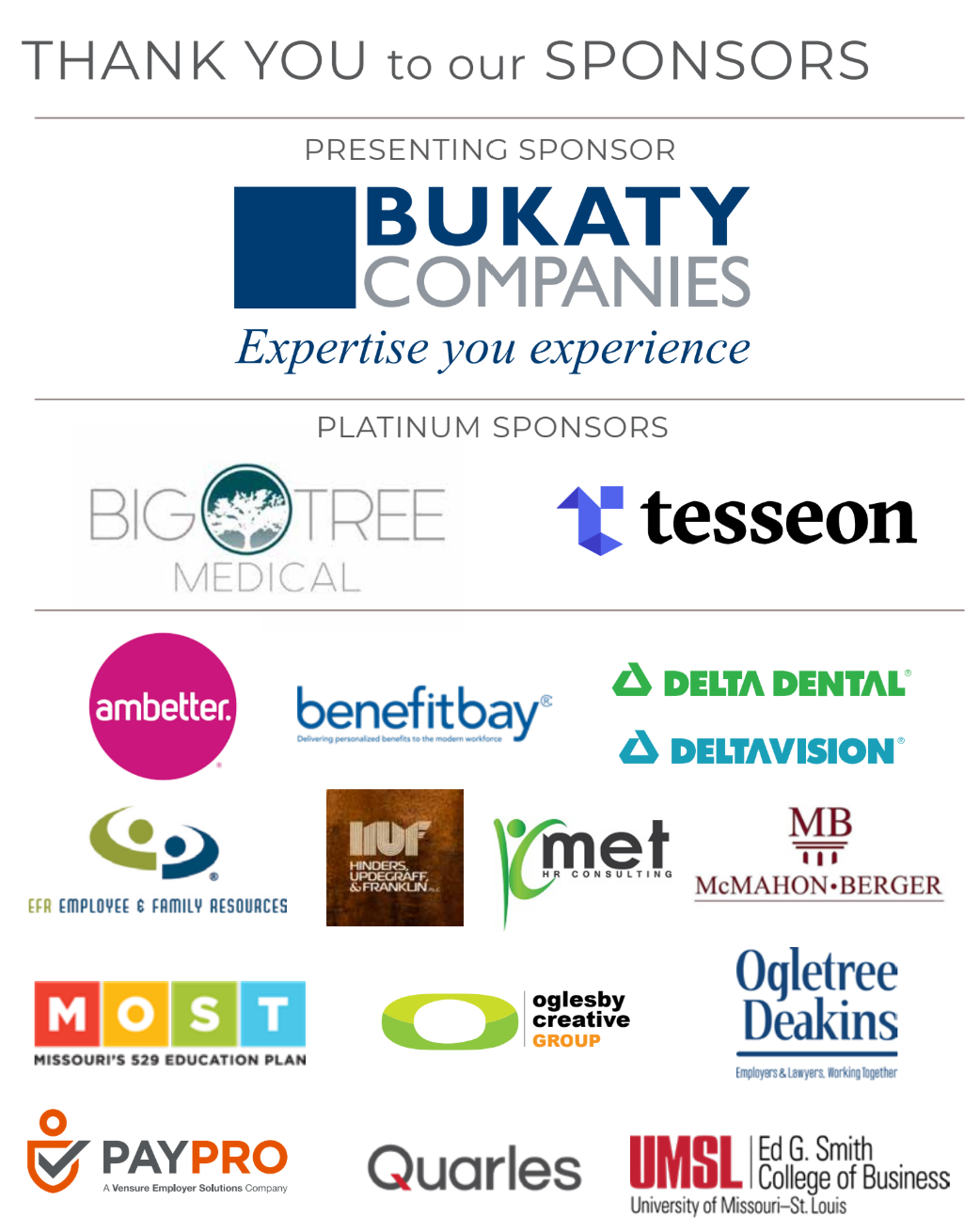
| | Our sponsors are an integral part of the Missouri Employment Conference and its continued growth. Their support allows us to bring together thousands of HR professionals, business leaders, educators, and community partners while providing valuable resources, education, and opportunities to connect. More than financial support, our sponsors help strengthen the relationships that make Missouri’s business community thrive—creating connections, sharing expertise, and investing in the people and workplaces that move our communities forward. | | GRATEFUL FOR the 2026 CONFERENCE SPONSORS! | | |
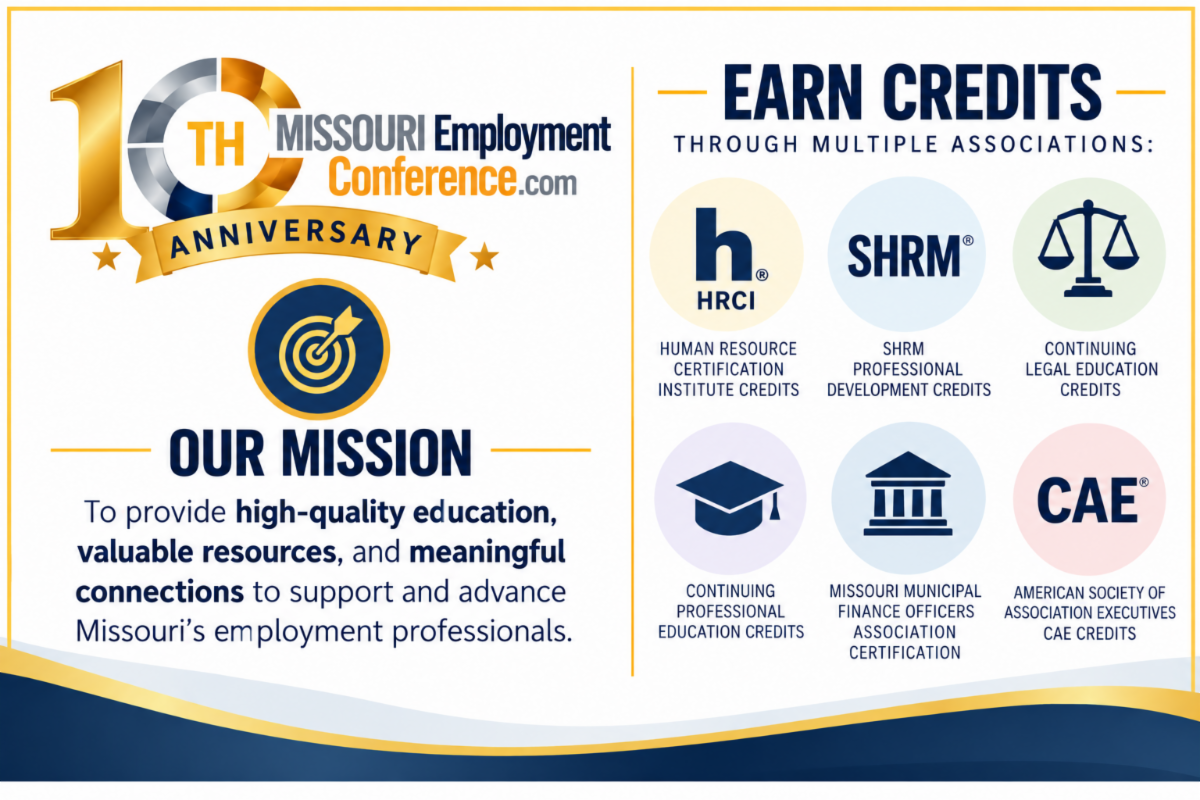
MEC is THE source for classroom instruction covering topics in the areas of employment, training, benefits & wellness education.
It remains an essential event for those who want to stay up-to-date and compliant with the latest developments in labor and employment law, best practices, healthcare reform, training, wellness, analysis, trends, and more.
Earn CEUs while networking with top industry professionals!
| | This program has been pre-approved for HR (General) recertification credit hours toward aPHR™, aPHRi™, PHR™, PHRca™, SPHR™, GPHR™, PHRi™ and SPHRi™ recertification through HR Certification Institute™ (HRCI™). | | Missouri Employment Conference is recognized by SHRM to offer Professional Development Credits (PDCs) for SHRM-CP® or SHRM-SCP® recertification activities. | | |
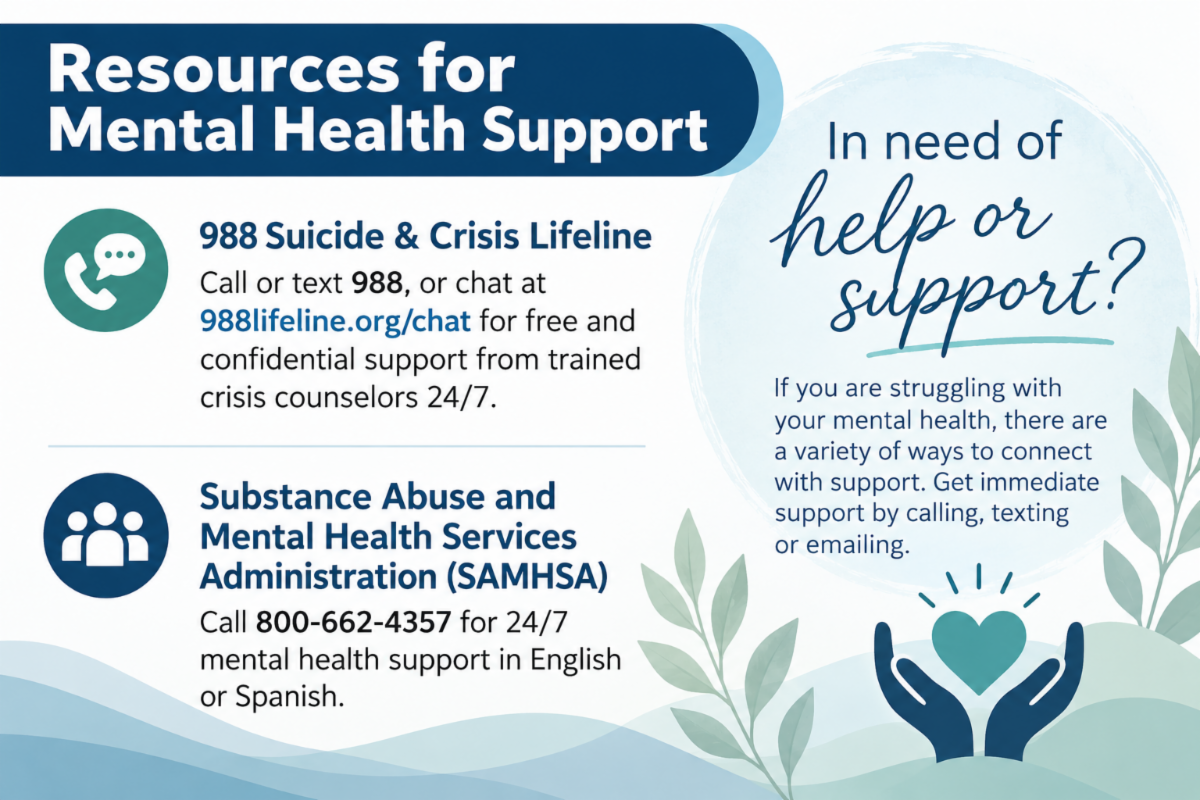
Mental Health in the Workplace: Supporting One Another
A healthy workplace starts with healthy people. As we navigate the demands of our professional and personal lives, it's important to remember that mental health matters every day. Creating a culture of understanding, compassion, and support can make a meaningful difference for employees and organizations alike. This month, we're sharing resources and reminders to help encourage open conversations, reduce stigma, and promote mental well-being in the workplace. Because when we take care of our people, we build stronger teams and healthier workplaces.
| | |
Supporting Those Who Served: Veterans & Mental Health in the Workplace
As we honor our veterans this November, it's important to recognize that supporting those who served extends beyond saying thank you. Veterans bring exceptional skills, leadership, and dedication to the workplace, but transitioning to civilian employment can also present unique mental health challenges. Employers play an important role in creating supportive environments through understanding, open communication, mentorship, and accessible mental health resources. Discover how organizations can help veteran employees feel valued, connected, and empowered to thrive.
| | |
How Employers Can Support Veterans’ Mental Health
Business Partner Magazine Team | November 11, 2025
As Veterans Day approaches, the conversation often focuses on honoring those who have served. It is an important time to recognize not only their service, but also the challenges many veterans face after leaving the military, especially in transitioning to civilian careers. For some, the shift from a highly structured military environment to a civilian workplace can be disorienting. Daily routines, clear hierarchies, and mission-focused teams are replaced by fluid roles, ambiguous expectations, and unfamiliar cultures, which can create significant stress.
| | |
SERVANT LEADERSHIP
By definition, Servant Leadership is a leadership philosophy in which the goal of the leader is to serve. If you are in a place where your talent and skills will help others, by all means, use them. We are proud of the work our leaders have done and hope that if you are in a place to serve, you choose to step up.
| | |
Forget Flexibility. Working Parents Need Predictability
Fast Company | Ericka Sóuter | September 30, 2026
Is a boring, ordinary schedule the secret to workplace happiness?
For years, we have believed that flexibility is the key to survival for working parents.
We advocate for flexible hours, flexible PTO, flexible locations. And the ability to log on from the pediatrician’s office or finish a presentation after everyone goes to bed has certainly made our lives easier. Then summer hits, or winter break, plus spring break. And your family life becomes a game of human Tetris. One kid is in robotics camp, the other soccer, and they start at different times. Or maybe it’s cold and flu season and each week someone different is home sick.
| | |
Non-Traditional Thanksgiving Recipes for Your Casual Thanksgiving Dinner
America's Test Kitchen | 2026
This year is far from traditional. Why should your Thanksgiving menu be?
Cook smarter and succeed every time. Every recipe in this collection was developed and refined by our team of 50 test cooks until they arrived at the best version.
| | |
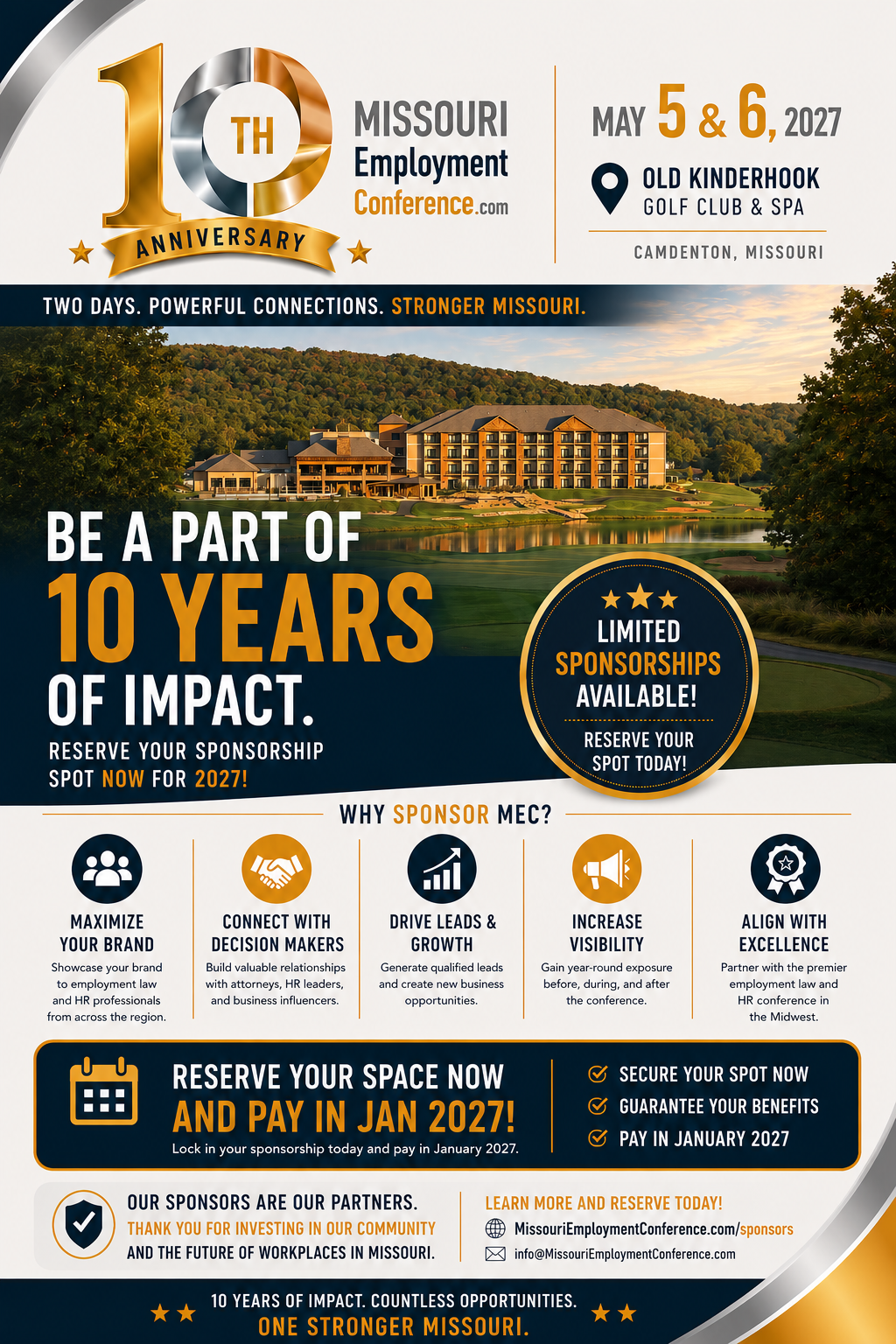
As November arrives and we look forward to the Thanksgiving season, we’re reminded of just how much we have to be grateful for — especially the incredible community that makes the Missouri Employment Conference so special.
To our attendees, speakers, sponsors, exhibitors, and partners: thank you! Your continued support, enthusiasm, and commitment to learning and growing together are what make this conference more than just an event. You've helped create a community where ideas are shared, meaningful connections are made, and professionals come together to make Missouri's workplaces stronger.
We're especially grateful for the relationships we've built over the years, the familiar faces we look forward to seeing, and the new connections we make with each conference. Your involvement inspires us to keep finding new ways to make MEC a valuable experience for everyone.
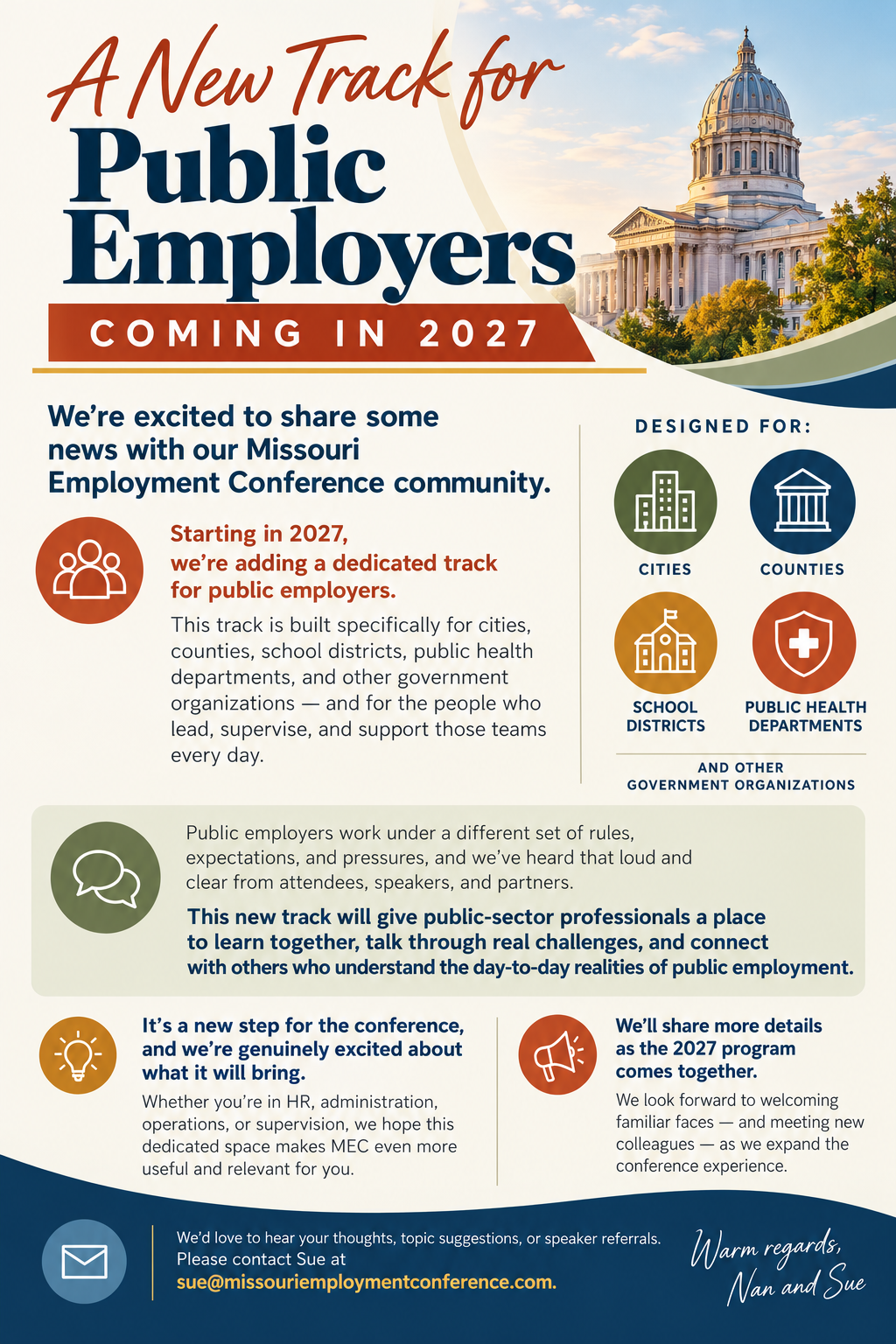
As we look ahead to 2027, we're excited about what's to come and thankful to have you along for the journey.
This Thanksgiving season, we hope you find time to slow down, enjoy the people who matter most, and reflect on the many blessings in your life.
From our conference family to yours, we wish you a wonderful Thanksgiving filled with gratitude, happiness, and togetherness!
With heartfelt thanks,
Sue & Nan
| | | | |