|
Tell us about your research project and why it is important to you.
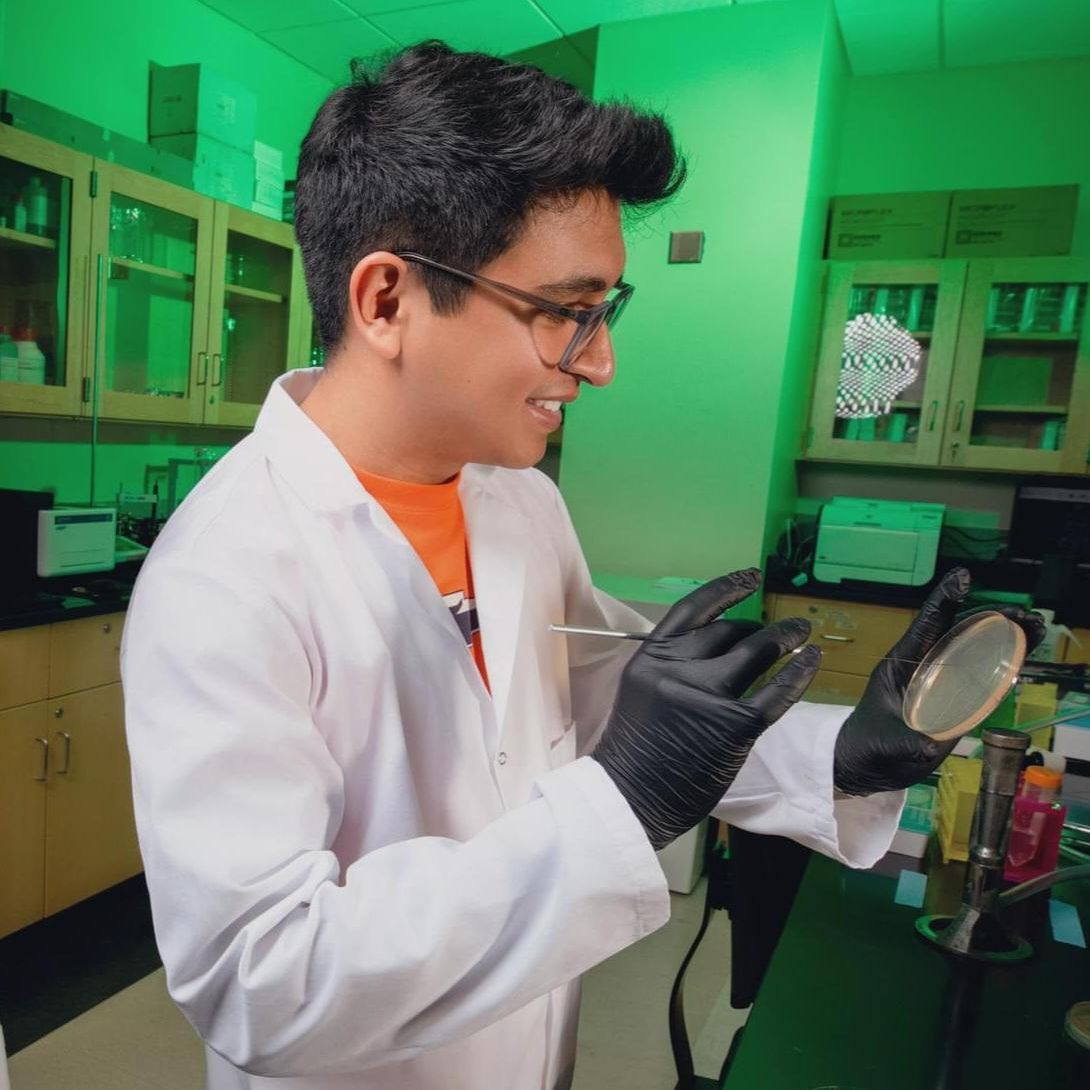
My research project examines the maturation of ribosomes in E. coli, with a specific focus on the modifications that ribosomal RNA undergoes during this process. These changes, known as post-transcriptional modifications, constitute a form of epigenetic regulation present in all living organisms and in all their RNA variants. Their relevance in numerous biological processes and in various pathophysiologies has driven the growth in recent years of epitranscriptomics—the field that studies these modifications. However, since this is still a developing area, the techniques available for detecting RNA modifications remain limited, and this is where I seek to contribute with my research.
This project is of great importance to me because it gives me the opportunity to contribute to the development of techniques for the detection of RNA modifications, an objective identified as a priority by the National Academies of Sciences, Engineering, and Medicine, and also because I am taking part in the work of a group of pioneering scientists in this area of study. In addition, this experience has allowed me to publish original research in international scientific journals and connect with leading scientists in the field. It is also relevant because the discoveries made by our group will lay the groundwork for future researchers to develop new therapies and diagnostic methods for various diseases.
Have you presented or published your research anywhere? Tell us about the experience.
To date, I have published the results of my research in two articles, both in the journal Biochemistry. The first article was selected as the main cover of the journal, and the second, as the supplementary cover. I have also presented posters at national and international conferences. Recently, I had the opportunity to present at the 39th Gibbs Conference on Biothermodynamics a project focused on the detection of post-transcriptional modifications in ribosomal RNA using nanopore sequencing.
Publishing and presenting the progress of my research has been a very enriching experience. It has allowed me to showcase my work to world-renowned scientists and, at the same time, strengthen my knowledge of biochemistry, especially of RNA modifications.
Share with us something interesting about your research that most people don't know.
Most people are unaware that RNA modifications play important roles in countless biological and biochemical processes, such as antibiotic resistance, diseases like cancer, and neurodegenerative conditions such as Alzheimer's and Parkinson's, among many others.
To date, scientists have identified more than 170 modifications in the RNA bases. We know that the four bases, or canonical blocks, that make up RNA—adenosine, uridine, cytidine, and guanosine—can be chemically modified. These RNA modifications have the potential to be used as pharmaceutical targets, or as biomarkers, for the detection of various diseases, which is why this field of study is rapidly developing.
Tell us about your academic or professional collaborations with Mexico.
Under Dr. Koculi's guidance, I had the opportunity to organize several events to inform students at the Autonomous University of Ciudad Juárez (UACJ) about the opportunities offered by UT El Paso in different areas of research. As a result of these collaborations, four graduates from UACJ have joined the Ph.D. in Chemistry and Biochemistry here.
What attracted you to Texas and The University of Texas at El Paso?
UT El Paso is a highly prestigious institution in the border region. From a very early age I wanted to study in the United States, and UT El Paso always stood out as the most viable and attractive option for me, especially because of its commitment to high-impact scientific research. My studies here began with my bachelor's degree; upon completing it, I decided to pursue a master's degree in bioinformatics. While pursuing my master's I was able to participate in various research projects, which is how I met Dr. Koculi. Inspired by the work she was doing in her lab, I decided to continue with my graduate studies and enroll in the Chemistry and Biochemistry doctoral program.
What have been some good things you didn't expect from Texas or UT El Paso?
Something that surprised me is that there is a lot of collaboration between scientists at UT El Paso and scientists at institutions of higher education in Mexico. Many of the professors in the Chemistry doctoral program have ties to professors at institutions such as UACJ, the Autonomous University of Chihuahua, and the National Autonomous University of Mexico (UNAM), among many others. These collaborations strengthen the bond between Mexico and the United States and make it possible for more Mexican students to continue their studies in this country and conduct high-level research.
What have been the biggest challenges of studying at UT El Paso and living in the United States?
A challenge confronting students like me, who live in and are originally from Ciudad Juárez, is having to cross the border almost every day. Many of us start our day by traveling from distant neighborhoods to border crossings. We must cover long distances, which affects our academic performance. However, this challenge also allows us to build skills, such as discipline and perseverance, that strengthen us and help us successfully navigate our academic careers.
How has the support of ConTex and Secihti impacted you?
The support I have received from ConTex and Secihti has been key to my development as a doctoral student; it has given me the financial stability I need to advance toward the completion of my studies. Not having to worry about covering the program fees allows me to focus on my research and academic work, which is reflected in a stronger performance.
Similarly, belonging to the community of Secihti scholars has allowed me to meet other graduate students, both from UT El Paso and other universities around the world. Together, we have formed a support network that makes the path to graduation easier, providing opportunities and making the challenges more manageable.
What kind of work do you hope to do in the future, and how do you hope your research will benefit people in the U.S. and Mexico?
I hope to have the opportunity to work as a principal investigator in my own laboratory and contribute to the evolution of the field of epitranscriptomics by developing new techniques for detecting RNA modifications.
My vision is to collaborate with scientists in Mexico and the United States to apply the latest advances in this field to the development of new therapies and drugs. I hope that these innovations will contribute to improving the quality of life for patients suffering from diseases related to RNA modifications.
What advice would you give to other Mexican students considering studying in Texas?
Texas is home to internationally renowned institutions dedicated to high-impact scientific research, offering numerous opportunities for Mexican students. My advice to those who wish to follow this path is to explore the programs that these institutions offer and reach out to researchers working in their areas of interest. Initiatives such as the Secihti-ConTex Scholarships for Study Abroad Program provide us with the opportunity to train as scientists and contribute to the future development of Mexico and the United States.
|