NEWSLETTER

We Fix Broken RFPS

9 September 2026

Your Prime Contractor Isn’t the Whole Supply Chain


You evaluated the prime.


Checked the experience.


Reviewed the team.


Scored the proposal.


Everything looks solid.


But who is actually doing the work?


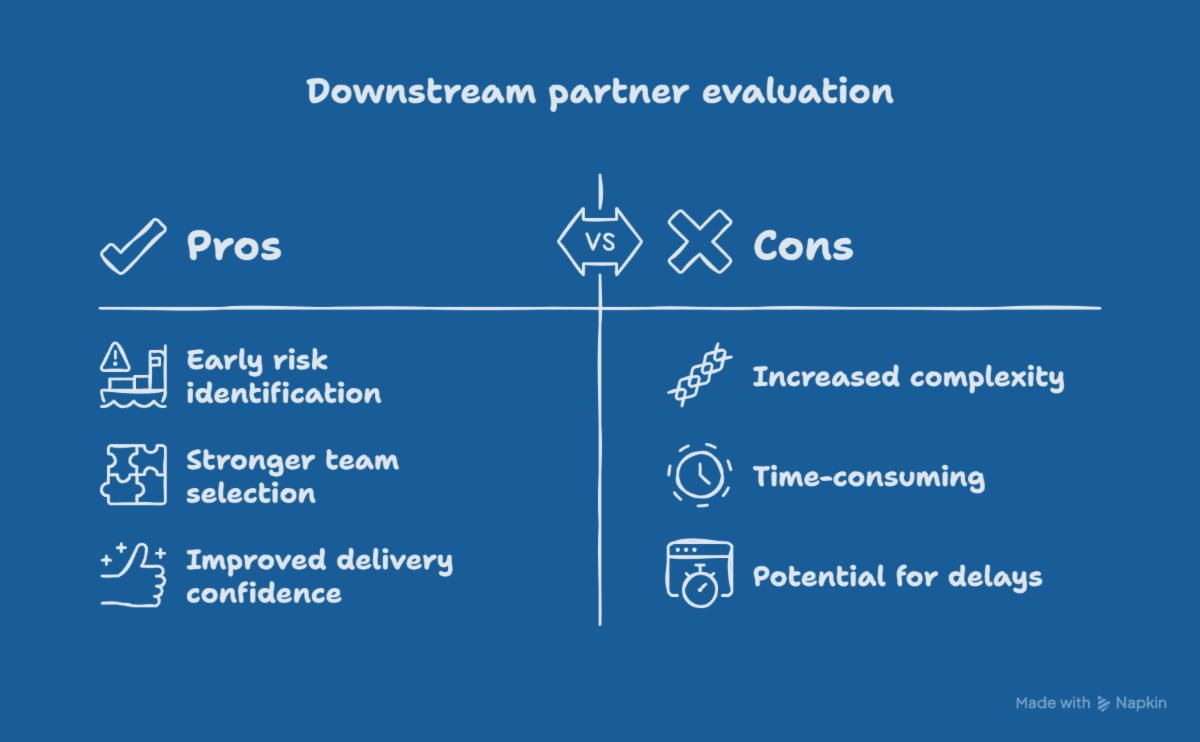
On complex procurements, some of the biggest delivery risks may sit several layers below the prime contractor—with subcontractors, specialty consultants, manufacturers, implementation partners, or suppliers whose performance can make or break the project.


That doesn’t mean procurement needs to investigate every supplier of every widget. It means knowing which downstream relationships matter enough to deserve attention before award.


A specialty trade controlling the critical path matters. A single-source manufacturer with a six-month lead time matters. The consultant holding the expertise the prime doesn’t have in-house matters. So does the implementation partner responsible for making that very expensive new system actually work.


A well-designed RFP can bring those risks into view without turning procurement into the contractor’s supply-chain manager. Ask proposers to identify critical downstream partners, explain their roles and availability, and show how they’ll manage coordination, capacity, lead times, substitutions, and disruption.


Then evaluate the people and capabilities that will actually deliver the work—not just the reputation at the top of the organizational chart.


The prime still owns the outcome. Visibility doesn’t change accountability.


But finding out after award that a critical subcontractor is unavailable, a key component has an impossible lead time, or the proposed expert was never really committed?


That’s a supply-chain lesson procurement would rather learn before the contract is signed.


Your contract is with the prime...


Your risk isn’t.

When Every Proposal Looks Good, What Do You Trust?

AI can make almost any proposal look polished.


The writing is clean.


The graphics are sharp.


The right buzzwords are there. The promises sound convincing. And producing that professional-looking proposal is becoming faster and cheaper every day.


So, what happens when everyone looks good on paper?


AI is changing the economics of competing for work. Vendors that once needed significant time, staff, and resources to produce sophisticated proposals can now create polished responses faster and at far lower cost.


That doesn’t mean the proposals are bad. It means some of the signals we’ve traditionally relied upon may become harder to interpret.


A beautifully written proposal doesn’t necessarily demonstrate better performance. A confident response doesn’t guarantee capacity. And the lowest price certainly doesn’t tell you which vendor will still be a good partner when the project hits its first serious problem.


That leaves something much harder to manufacture: trust.


In Part 1 of our new Procurement Trust Series, Ask the RFP Doctor takes on a question that affects every side of the procurement table: How much do we actually trust each other?


Buyers need to trust that vendors will deliver what they promise. End users need to trust that procurement understands what they need. Vendors need to trust that the process is fair, transparent, and worth competing for.


But do they?


We measured it.


Join us as we look at trust from all three perspectives—buyers, end users, and vendors—and explore what the results tell us about where procurement is headed.


Because when AI can make every proposal sound great, the question changes.


It’s no longer simply “Who wrote the best proposal?”


It’s “Whom do we believe can actually deliver?”


Trust isn’t a soft skill anymore. It’s procurement currency.


The Center for Procurement Excellence (CPE) is a non-profit, membership based organization that promotes the use and training of advanced Request For Proposals (RFPs). We provide tools, templates, educational and networking opportunities to assist in better project outcomes. Our mission is to improve the effectiveness of public and private procurement worldwide by advocating to drive change in the solicitation process. We advocate for Fair, Open, Transparent, Efficient, and Accountable purchasing practices. Visit our website to find out more.


LinkedIn  Facebook