|
|
|
Infant & Toddler
Connection of Virginia
April 2026
| |
| |
Annual Part C Grant Application Available for Review and Comment
Virginia’s Federal Fiscal Year (FFY) 2026 Annual State Application under Part C of the Individuals with Disabilities Education Act as Amended in 2004 has been posted on the Infant & Toddler Connection of Virginia website at www.itcva.online. The application can be found in the “For Public Comment" section of our "Public Reporting" page which is accessed via the "Supervision and Monitoring" tab on our website. The application is being made available for your review and input.
The public availability period and public comment period have been implemented to meet the requirements of the Office of Special Education Programs (OSEP). The document is available for a 60-day public exposure period beginning March 11, 2026 and concluding May 10, 2026. The document is also being made available for a 30-day public comment period beginning April 10, 2026 and concluding May 10, 2026.
The application is being posted with last year’s budget in Section III while we await our FFY 2026 allocation information from OSEP. Once we are notified of our FFY 2026 allocation, we will update Section III to reflect the new allocation amount.
During the public comment period of April 10, 2026 - May 10, 2026, please submit all public comments electronically to: Kyla Patterson, k.patterson@dbhds.virginia.gov.
| | |
Test your Knowledge with our Poll Feature
Pick your answer and scroll below to find the correct answer and explanation!
| |
| How can Service Coordinators and Providers help increase family survey response rates? | | | | |
Amplifying Family Voices: Understanding Family Outcomes & Virginia’s Annual Family Survey
Each spring, Virginia’s Early Intervention system engages in an important statewide effort to better understand the experiences of families receiving EI services. As “survey season” begins, families across the Commonwealth receive the annual Family Survey—an essential tool for gathering Indicator 4 data on family outcomes.
Why We Measure Family Outcomes
As required by the Office of Special Education Programs (OSEP), states must collect and report data on how EI services support families. Indicator 4 specifically measures the percentage of families who say EI has helped them:
• Know their rights
• Communicate their child’s needs
• Help their child develop and learn
Beyond federal reporting, these results help Virginia understand how EI is impacting families and where systems can further strengthen support.
How Virginia Collects and Uses the Data
Virginia uses a survey which includes the 22‑item Impact on Family Scale (from the NCSEAM Survey) along with four additional overall satisfaction questions. Surveys are distributed beginning in March each year, both online and on paper, and are collected and analyzed by Old Dominion University’s Social Science Research Center. The state receives detailed reports with survey results in July.
Public Reporting & Local Use of Results
Survey results are posted each year on the DBHDS website under Public Reporting, where users can view statewide outcomes, locality‑specific results, and detailed question‑level data. Local Early Intervention Systems (LEIS) can use these results to guide planning, quality improvement, and discussions about family engagement.
The survey data also contribute to each locality’s annual Determination Report. For Indicator 4, a locality earns points if its results fall within a state‑defined range (based on ECTA’s methodology). Response rate is scored separately using statewide percentiles and thresholds.
Strengthening Family Engagement Year‑Round
While the formal survey happens annually, understanding family experiences is an ongoing process. Providers and service coordinators can support this work by regularly checking in with families, discussing their experiences, and encouraging participation during survey season. Every completed survey strengthens our ability to understand and amplify family voices statewide.
| |
Schedule for the 2026 Family Survey
- Flyers begin mailing - 3/2
- Wave 1 begin mailing (those without email addresses). Families with email addresses will be sent an email invitation. - 3/20-4/3
- Wave 2 begin mailing (all non-responding families) - 4/20-5/4
- Calls begin to localities with less than 15 completes - 5/18-5/29
Link to flyer: 2026 Family Survey Flyer
| | | |
Strategies for Increasing Survey Response Rates:
- Integrate purpose of survey with other program materials so that families know about it and see value in participating
- Share results of survey with families
- Use the data to make changes. This shows families the importance and value of their input.
- Inform parents about who will have access to the results and how the information will be used; ensure confidentiality
Let’s Make this the Best Year Yet!
Here are several ready-to-use reminder messages you can share with EI staff. They are written to be clear, warm, and easy to drop into emails, texts, or quick verbal reminders.
Short email reminder to SCs and Providers from LSMs, Supervisors, team leaders, etc.
"Hello team, A quick reminder to encourage families to complete the EI family survey. A personal ask from you makes a big difference in response rates. Please take a moment during visits or calls this week to mention the survey and let families know how valuable their feedback is. Thank you for helping us strengthen our services for families".
Script for service coordinators to families (verbal reminder)
“Just a quick reminder—the family survey is available right now. It only takes a few minutes, and it really helps us understand how well we’re supporting you and other families. Your experience matters. You may have received the survey in the mail or by email."
Text message staff can send to families
"Hi! This is a reminder about the Early Intervention family survey. Your feedback helps us improve services. It only takes a few minutes. Thank you for your time!"
Staff meeting or team meeting reminder
"Please take a minute this week to reach out to any families who haven’t completed the family survey. A direct reminder from their service coordinator or provider is one of the strongest predictors of response. Thanks for helping us ensure every family’s voice is heard."
Reminder tied to a routine touchpoint
"When you’re reviewing IFSP outcomes or talking about transition with families, please remember to remind them about the survey. It fits naturally into those conversations, and families are more likely to complete it when the process feels connected to their experience."
Online invitation
Families who have provided an email address will receive a direct invitation link via email.
Those without email will be sent a paper copy by mail.
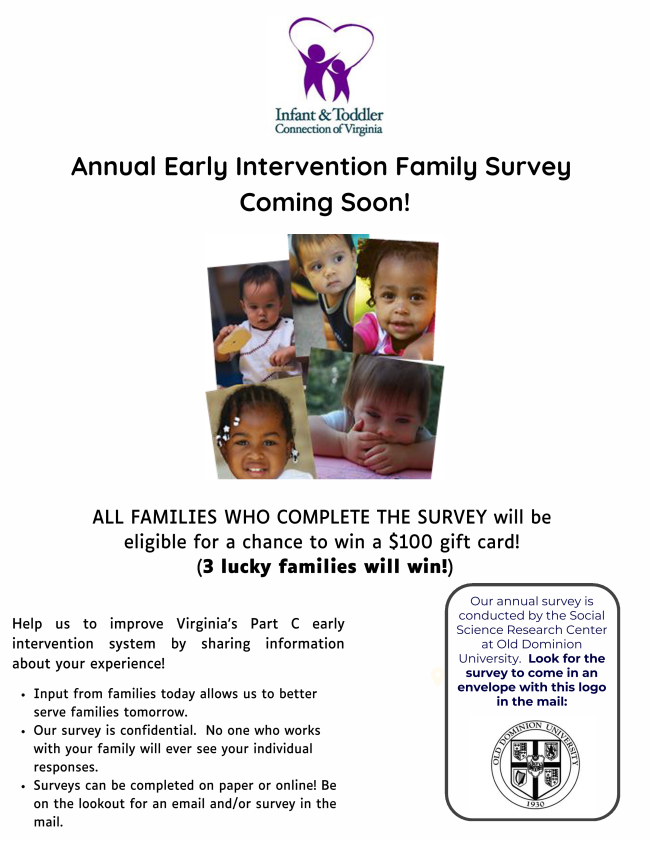
All families who complete the survey will be entered into a raffle for three $100 gift certificates
| | |
Monitoring Community of Practice (MCoP) Calls:
As a reminder, MCOP calls are held on the first Wednesday of each month beginning at 3:00PM. Our next call will be held on April 1st . ITCVA MCoP calls are open to anyone who is interested in the topic(s) being covered.
Calls are recorded for those who are unable to attend. Please visit the Monitoring Community of Practice page of the ITCVA website for a list of upcoming topics, the Microsoft Teams meeting link and session resources.
April 2026
Amplifying Family Voices: Understanding Indicator 4
May 2026
Dispute Resolution
June 2026
POSM Lessons Learned – Part 2
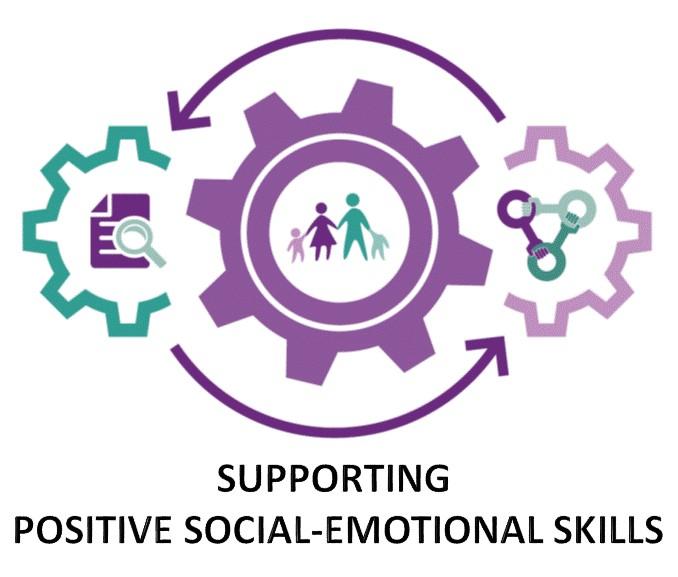
| | SUPPORTING SOCIAL-EMOTIONAL DEVELOPMENT | | |
Social and emotional development in infancy and early childhood forms the foundation for lifelong learning, healthy relationships, and mental well-being. It includes skills such as forming secure attachments, managing emotions, engaging with others, and responding to the social world around us. Early intervention professionals, caregivers, and families play a critical role in nurturing these skills, especially for children with developmental delays or disabilities.
The Virginia Early Intervention Professional Development Center (VEIPD) offers a range of targeted resources designed to support understanding, assessment, and practical strategies that promote positive social-emotional growth in young children and strengthen family-provider partnerships. This month, let's continue down our:
Social Emotional Development Learning Pathway
| |
| | |
Linking Spring Activities,
Social Emotional Development, and
the Pyramid Model Framework
Spring is a natural time for renewal, exploration, and hands‑on learning. As children observe changes in weather, plants, and outdoor environments, they have many opportunities to practice important social‑emotional skills. When thoughtfully planned, spring activities can strengthen children’s ability to build relationships, manage emotions, solve problems, and work cooperatively with others.
| | | | |
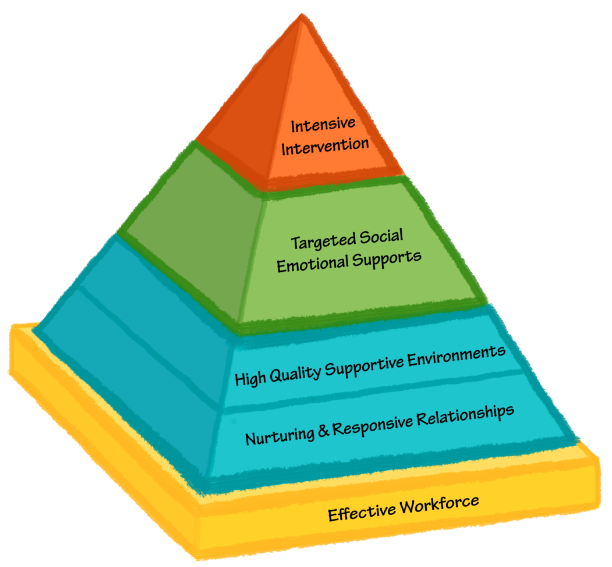
The Pyramid Model Framework provides a research‑supported approach for promoting social‑emotional development in early childhood settings. It emphasizes nurturing relationships, supportive environments, and targeted teaching strategies. By using the Pyramid Model as a guide, educators and caregivers can design spring learning experiences that are fun, developmentally appropriate, and aligned with evidence‑based practices.
Spring‑themed activities—such as gardening, nature walks, outdoor collaborative games, weather exploration, and creative arts—naturally support key Pyramid Model practices. These activities encourage children to express their feelings, engage in cooperative play, explore curiosity safely, and practice communication skills. They also offer rich opportunities to model and teach expectations, routines, and emotional literacy.
By blending the excitement of spring with the intentional strategies of the Pyramid Model, educators can create meaningful learning experiences that nurture children’s confidence, persistence, empathy, and problem‑solving skills all season long. Here are some suggested activities to get you started:
| | A GEM YOU MIGHT HAVE FORGOTTEN? | | WHAT YOU MIGHT HAVE MISSED? | | | RESOURCES FOR FAMILIES AND PROVIDERS | | |
| |
The Power of Family Engagement in Early Childhood
Thursday, April 9, 2026 | 6:30 - 7:30 pm
Building positive relationships between schools and families supports our children’s learning and development. Strong home-school connections create a more positive experience and help our children improve their relationships, health, and school success, leading to more positive long-term outcomes.
| | |
By taking an active role in the early years, schools and parents can help ensure our children have the support they need to develop to their full potential. In this interactive workshop, we are discussing what “family engagement” means to us and learning how both parents and professionals share in the responsibility for the success of all children, including children with disabilities.
This webinar will be presented on Zoom. It will not be recorded.
| | POLL ANSWER AND EXPLANATION | | |
How can Service Coordinators and Providers help increase family survey response rates?
a. Remind families the survey will come by mail from ODU or email invitation.
b. Encourage families to complete by explaining the purpose and how results are used.
c. Assure families that their responses are confidential.
d. This is not our responsibility.
e. All responses except “d”.
The correct answer is e.
To learn more about family survey results and family outcomes, watch the recorded webinar: Family Outcomes and the Family Survey: Improving Experiences and Outcomes for Families in Early Intervention
To encourage participation in the survey, share the flyer with the families you serve:
Annual Early Intervention Family Survey Coming Soon
Talk with your local system manager about how family survey results are used in your locality.
| | |
|
JOIN US IN MAKING A DIFFERENCE!
Virginia’s Part C early intervention system is built on the dedication and talent of professionals who believe in the potential of every child. If you’re passionate about supporting infants, toddlers, and their families, we invite you to bring your skills, your curiosity, and your commitment to a team that truly values your contribution. Together, we can help Virginia’s youngest learners thrive!
Join thousands of others and visit the ITCVA Employment Opportunities page today!
Click here to view current job vacancies. Let us help find you that perfect position!
Click here to request an online posting. Let us help connect you to qualified applicants!
| | |
| INFANT & TODDLER CONNECTION OF VIRGINIA | Looking for the most up-to-date version of the Part C Practice Manual...upcoming meeting dates...or even a new career opportunity? You'll find plenty of helpful information on the Infant & Toddler Connection of Virginia's early intervention website! Be sure to visit and bookmark itcva.online. | | |
MEDICAID ENROLLMENTS
If you have questions about enrollments for children with Medicaid please
contact Brenda Ayala.
| | |
| |
EARLY INTERVENTION CERTIFICATION
For questions about certification of practitioners, contact Anne Brager- 804-664-2462.
For questions related to completing the online application, contact VATRACITsupport@ssg-llc.com or from 8AM-5PM ET by calling 804-508-7229.
| | | | |
Infant & Toddler Connection of Virginia is part of the Department of Behavioral Health and Developmental Services
ITCVA Staff
1220 Bank Street, 9th Floor, P.O. Box 1797, Richmond, Virginia 23219-1797
Main Office: (804) 786-3710 • Main Fax: (804) 371-7959
| | Do you have colleagues who aren’t getting the Monthly Part C Update? Ask them to check their spam folder. If they're still not receiving it, have them email anne.brager@dbhds.virginia.gov. | |
DMAS Early Intervention Support
For specific Medicaid questions related to billing and supports for Early Intervention, please use the following email:
EarlyIntervention@dmas.virginia.gov
| | |
1220 Bank Street
Richmond, VA 23219
(804) 664-2462
| |
| | | |