May 2023 Issue:
Program Spotlight: Foster Care
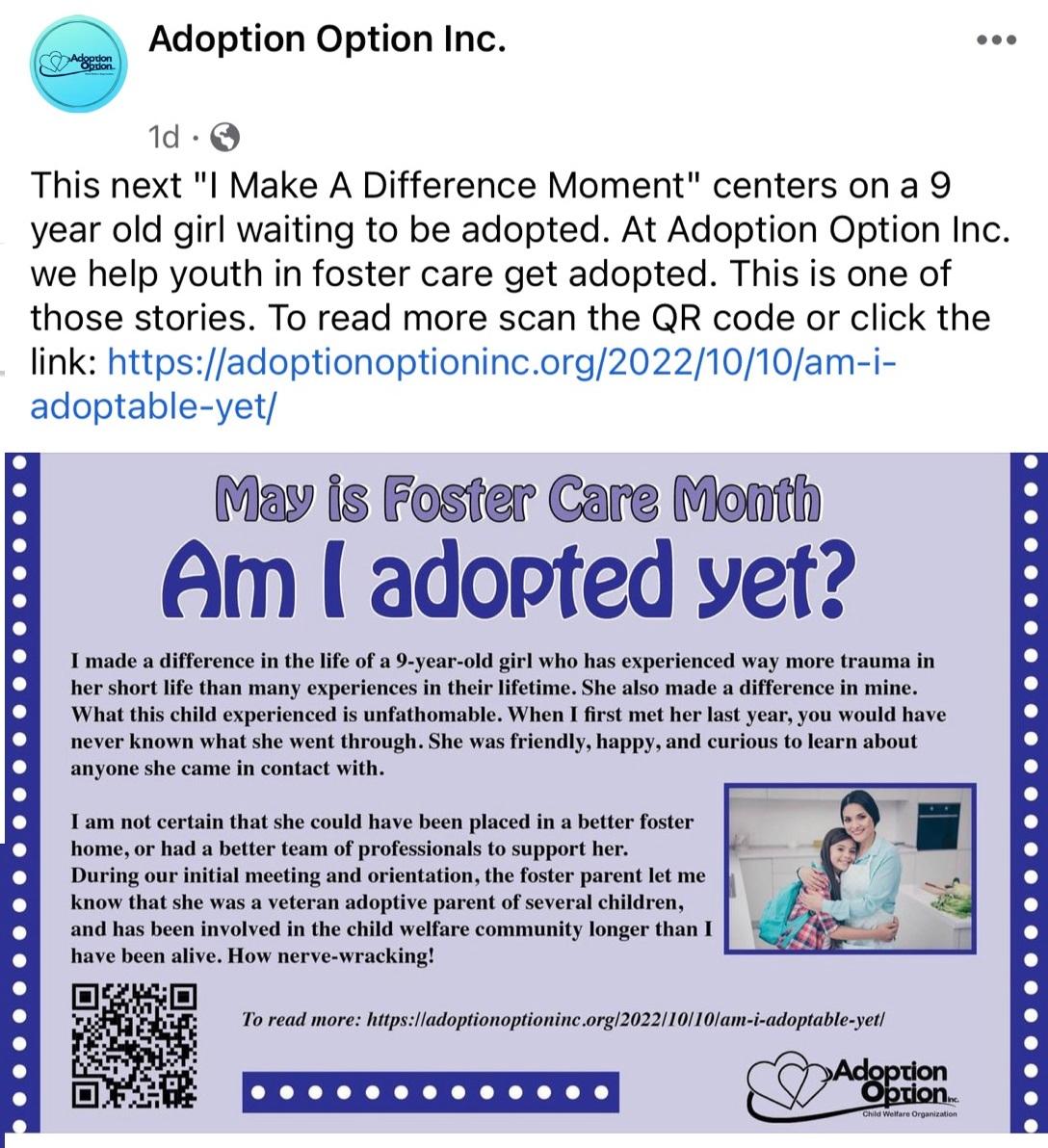
I Make a Difference Moment
Foster Care Awareness Month
Mental Health Awareness Month
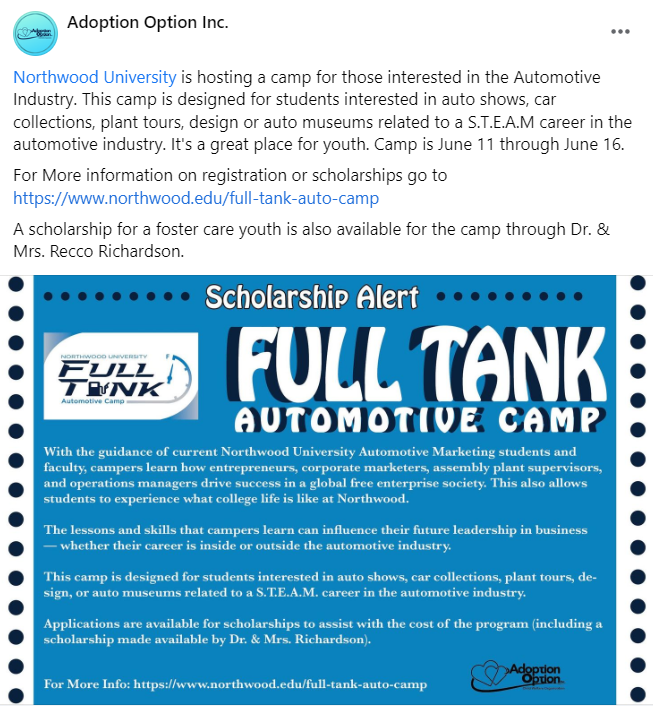
Driver Training Assistance
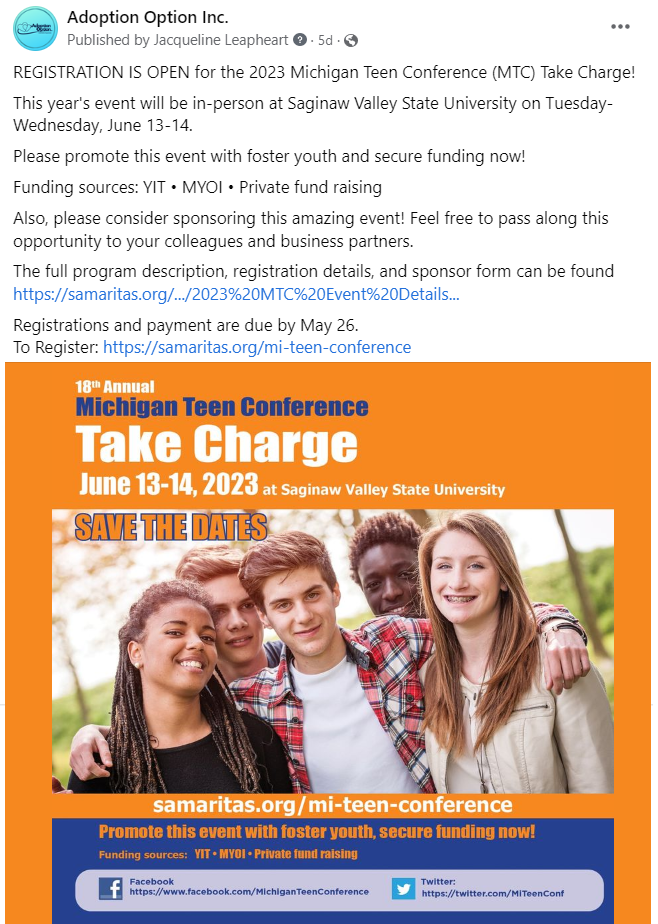
Upcoming Events
|
|
THANK YOU!!!!! We are extremely grateful to all the very kind donors who chose to donate to our 2023 Give Local Midland fundraising campaign that helps in three separate ways because our nonprofit agency is able to: 1) Access your contributions to help the children and families we serve; 2) Receive matching funds from the Midland Area Community Foundation (MACF) are added to our agency's endowment fund; 3) receive additional donations from matching funds outside the MACF.
We are thankful for all who donated during May. By the end of the day on May 3rd, Give Local Midland (GLM) contributions totaled $15,530, which enabled our organization to receive $2,883.93 in matching funds contributed to our Midland Area Community Foundation endowment fund. Following GLM we also received $8,415 in additional matching direct donations. We greatly appreciate this community contributing in May $26,828.93 to help the children and families we serve!
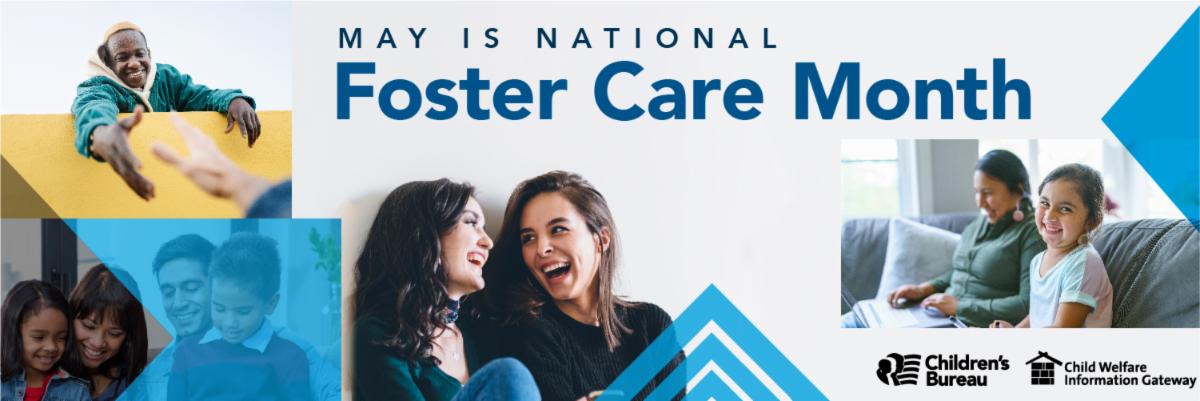
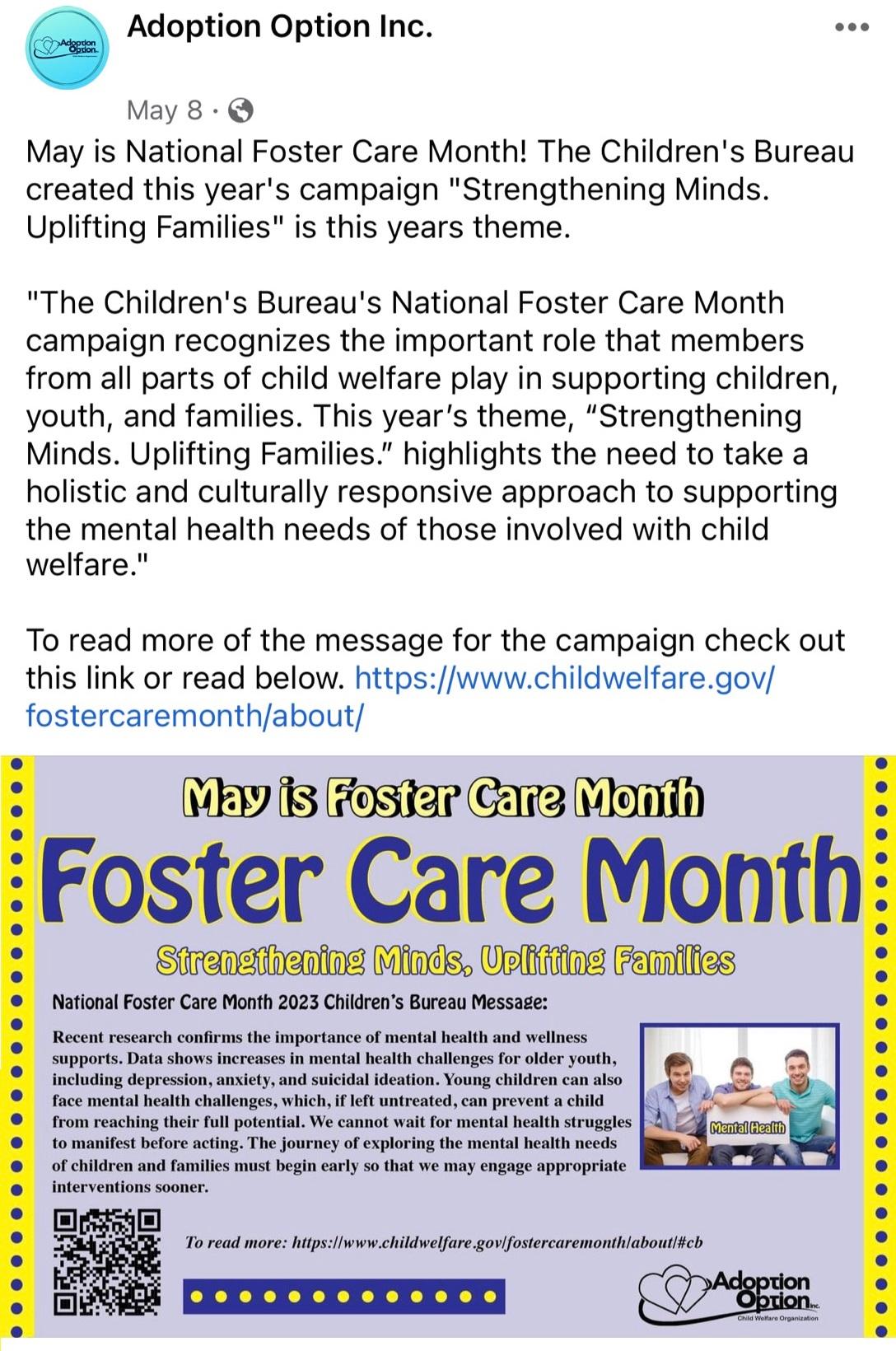
Foster Care Month is nationally celebrated each May. It is an opportunity to reflect on the important role that members from all parts of the child welfare system play in supporting children, youth and their families. Mental Health is also celebrated nationally in May. Please take the time to read the segment called "I Make A Difference Moment" where one of our foster care team members reflects on how she has helped a child in foster care who was able to gain access to the needed mental health resources. Also, please examine some of the mental health resources listed below and pass them on to anyone you believe may benefit.
|
|
The primary goal during foster care is to reunite the child with his or her parents, which can take some time. In the interim, parents with a licensed foster home serve as caring adults providing stability and safety for children in their care.
While a child is in Foster Care, we provide supportive services to birth parents, their children and the foster parents who agree to love, nurture and care for children until a permanent resolution can be found. Our services are to strengthen birth families in overcoming life challenges and assist families with reunification services while ensuring the safety and well-being of their children. Foster families help provide children with stability, consistency and support as they grow and develop while in care.
When a foster child is referred to our agency, we assign a foster care caseworker to work with the child, the birth family, and the foster family to ensure the child’s needs (safety, health, education, and progress towards permanency) are met.
In this recent article on Our Midland, Afton Steele, Michigan Department of Health and Human Services licensing supervisor for Midland and Gladwin counties, states there are 600 children were in foster care at the end of 2022 in Midland County and seven surrounding counties, while there are fewer than 60 licensed foster families in Midland and Gladwin counties.
The need in our area is great and we continue to provide the resources needed to meet the local demand. Would you like to learn more about Foster Care and how you can contribute? Contact info@aoicw.org.
|
|
Caring for our children include caring for their mental health |
|
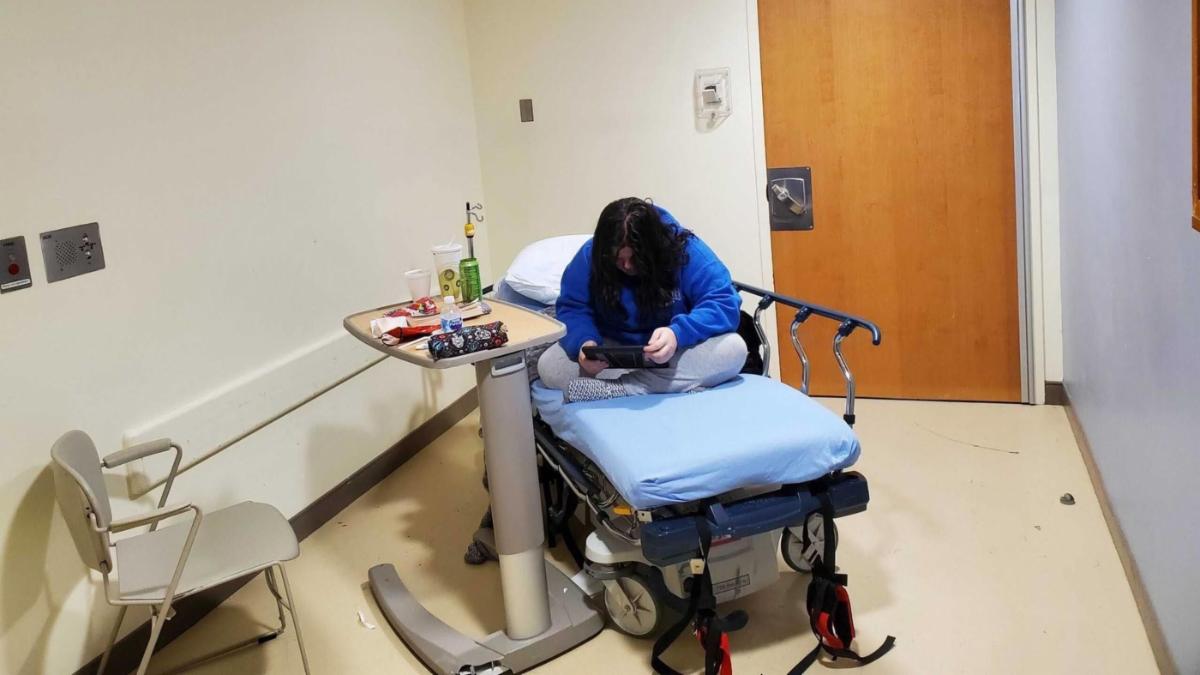
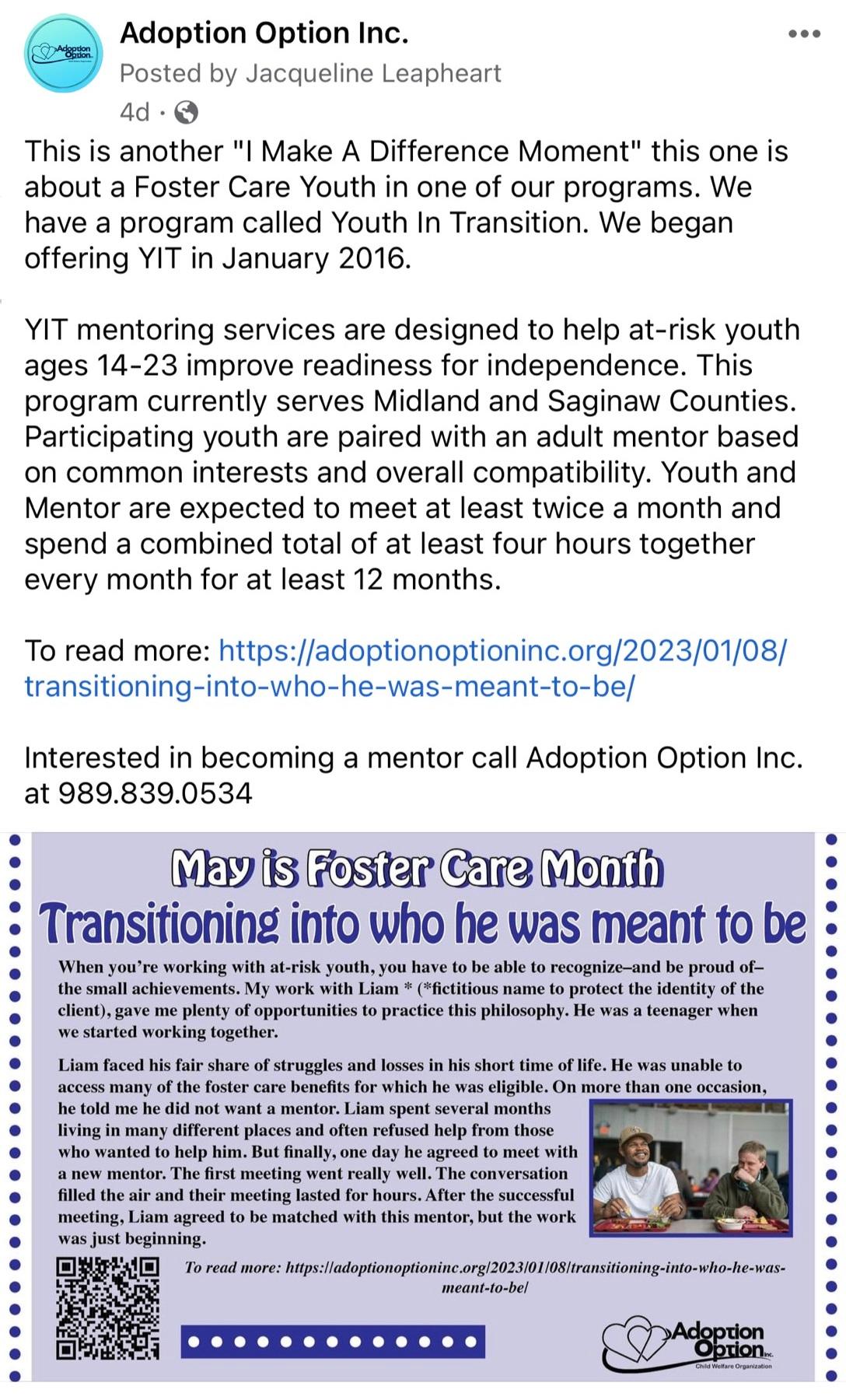
At the end of January 2023, one of the children I work with was hospitalized due to mental health concerns. The hospital was an hour drive from the office. It had been snowing for much
of the day, and was still snowing during my drive to the hospital. The only thing I was sure of was that I needed to get there safely. It was at the hospital, that I found myself relying on my knowledge, but more than anything on what my instincts were telling me.
Sitting in the ER, the foster mother, was struggling and began to cry as she told me more about what had been going on with this child. My first thought was to give the foster mother a hug, let her know that this wasn’t going to be easy, but that we would work together for what was best for this child. Later that evening the hospital determined this child was able to go home safely. After their release, I drove the hour home at around 9pm. Needless to say, I didn’t sleep well that night thinking about the events of the day and what lay ahead. Read more.
|
|
Child welfare professionals can view mental health services with a lens that includes a consideration of the culture, race, ethnicity, sexual orientation, gender, and disability of the recipient and take a holistic and culturally responsive approach to supporting the mental health needs of children and youth in foster care and their caregivers. Here are some ways how they can support these needs:
- Investing in culturally appropriate mental health supports that recognize an individual’s identity, culture, and lived experience may improve the effectiveness of services and supports and improve long-term outcomes for children and youth.
- To meaningfully address the mental health needs of children, youth, and young adults in foster care, requires a holistic approach that focuses broadly on their well-being within the contexts of home, family, school, work, and community.
- Youth and young adults are experts on their own lives. Empowering youth to make informed decisions about the mental health treatment and services they receive, who they receive them from, and when can help young people connect with providers and improve outcomes.
- Maintaining relationships with relatives and kin can increase stability, reduce trauma, and help children maintain a sense of family, belonging, and identity.
- Relational permanency is fundamental to the well-being of children and youth in foster care. Stable, nurturing placements have positive impacts on children and youth’s resilience and long-term well-being.
- Effective training and support for foster parents will improve retention, increase placement stability, and increase capacity to help children and youth in care navigate life’s challenges.
|
|
When it comes to mental health, small actions equal big impact.
- If you are worried about your mental health or are worried about someone you know, there are resources and people out there who are willing to help, no matter what your situation is.
- Talking about mental health helps promote acceptance and encourages people to seek help.
- Whether we share resources, encourage others to seek help, or simply are there for someone when they need us, we instill hope and can help others to reach out when they need to most.
- We play a part in one another’s mental wellness.
- Language matters. The language we use to talk about mental health can either perpetuate prejudice and discrimination or promote acceptance and compassion. When it comes to mental health, words matter.
- It is up to each of us to be a lifeline, sharing in a commitment to care for ourselves and those around us.
- When we use open and compassionate language around mental health issues, we empower ourselves and encourage others to find the help they need.
No matter the situation, there is always help and there is always hope.
- Be aware of the signs and symptoms of mental health issues so that we can all work together to support one another.
- If you are worried about your mental health or are worried about someone you know, there are resources and people out there who are willing to help, no matter what your situation is.
- Whether we share resources, encourage others to seek help or simply are there for someone when they need us, we instill hope and can help other to reach out when they need it most.
|
|
Have you heard about the process for accessing funding for youth who are currently in foster care and working towards obtaining their driver’s license. The funding can be used for reimbursement of activities associated with driver’s education and testing. For eligible youth with a current open foster care case who are under age 18, reimbursement can be sought for activities including the cost of driver’s training segment I and segment II, fees for a driving test (including a fee for use of a car), and supervised practice driving hours. For eligible youth with a current open foster care case who are aged 18 to 21, reimbursement can be sought for a driving test (including a fee for use of a car), and supervised practice driving hours. For more details on how to access these funds, see:
|
|
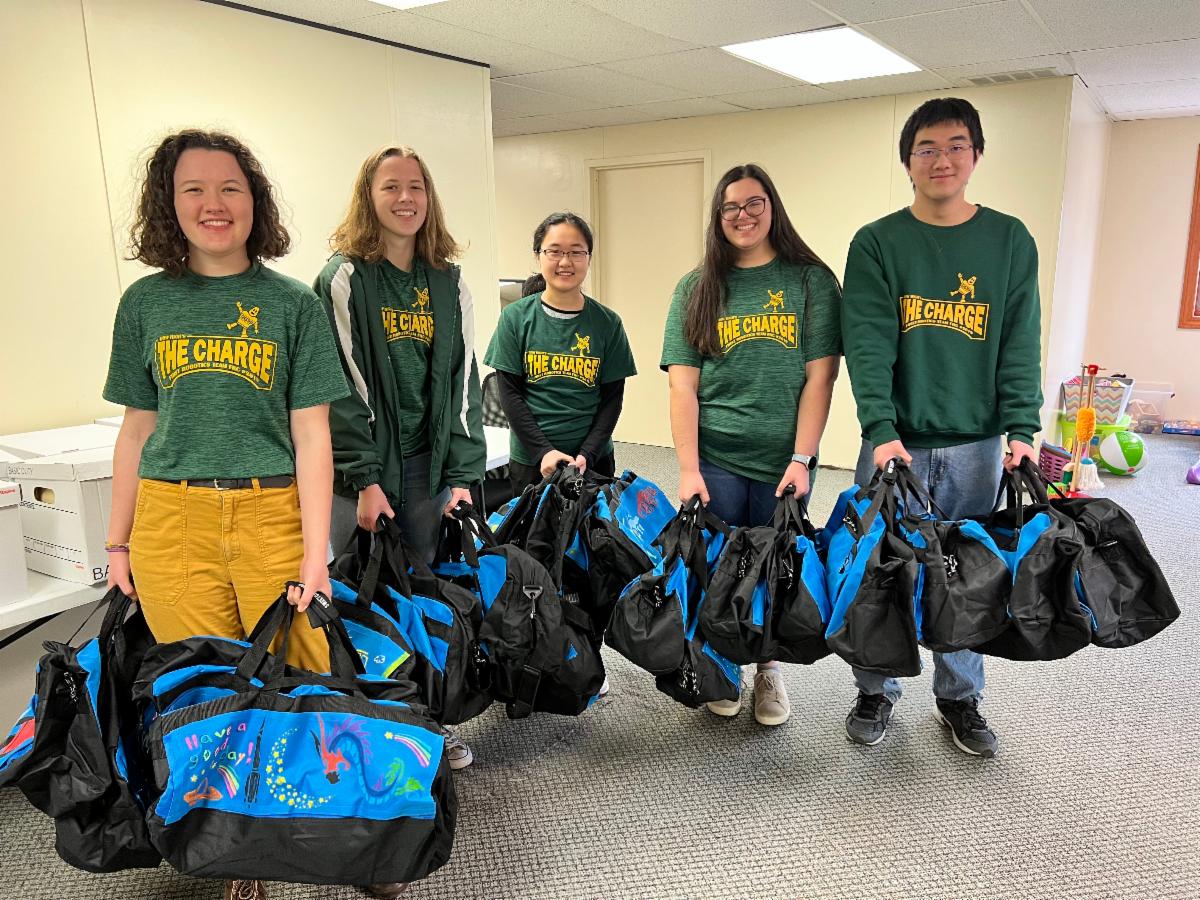
Thank you Dow High School Robotics team for your gift. The hand painted duffle bags filled with your donations are being put to good use. Our foster care workers are very excited about sharing these gifts with the children we serve. We are grateful for your leadership and efforts to build strong leaders and active community members. You are an awesome team who excels in both robotics and philanthropy! We sincerely appreciate each and every student and staff member that participated in this project. |
|
|
|
|
|
|