|
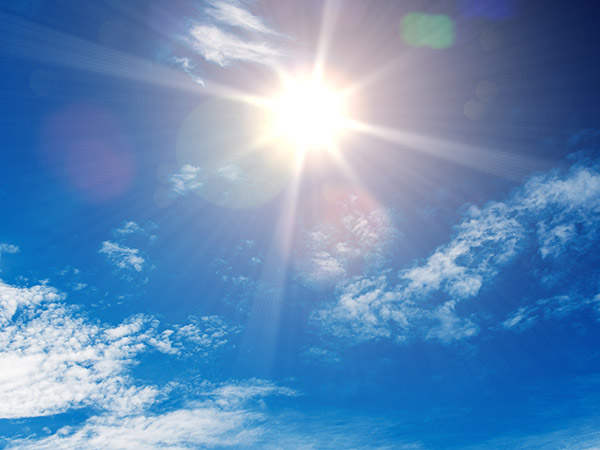
1. The 2024 summer solstice was this past Thursday. Summer is here and it's already heating up in Tucson. I have a deep dive on the solstice this week with a reader suggested article on ancient solstice traditions, some solstice facts, the solstice on other planets, and a Peruvian solstice celebration from our archives.
2. Don't miss the Strawberry Moon tonight, the full moon will rise low on the horizon and appear larger than normal with a golden hue.
3. Wednesday was the fourth celebration as a federal holiday of Juneteenth National Independence Day, commemorating the end of slavery in America.
4. Netflix has a new documentary out that tells the story of how the first black Barbie came to be.
5. Flock reader, Elizabeth Murfee shared an article on new developments in the field of animal-welfare science aimed at developing better standards and practices for human-animal interaction resulting in better animal welfare.
6. In Reaching High, I have three inspirational articles this week. Starting with one mountaineer's effort to rid Mt. Everest of years of trash left behind by past expeditions. The next is the tale of a double amputee determined to pursue his love of climbing and summit the highest peak on each continent. The last is that of a 19-year-old climbing novice who summited Everest to add content to his YouTube channel.
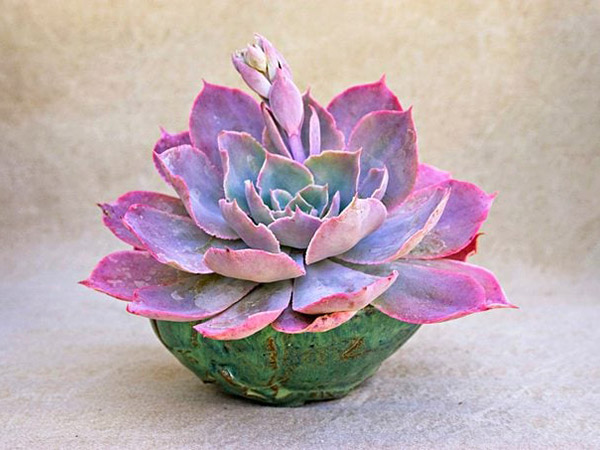
7. In Gardening, I have another reader submission on colorful succulents you can add to your garden. Thanks again, Elizabeth.
8. I recieved a gracious thank you video this week from June's little genius, Carter Martin, who we featured last week. I share his thank you below.
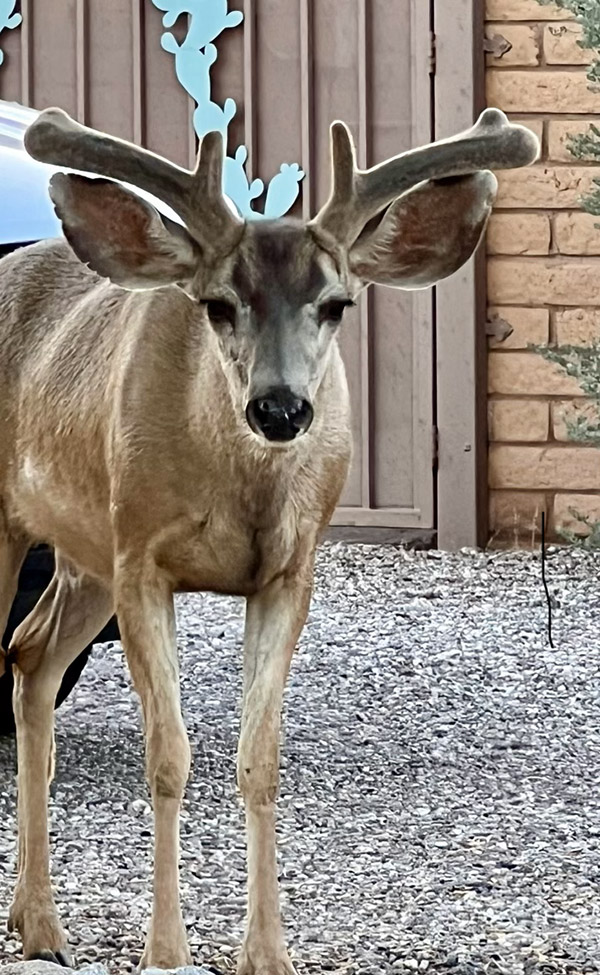
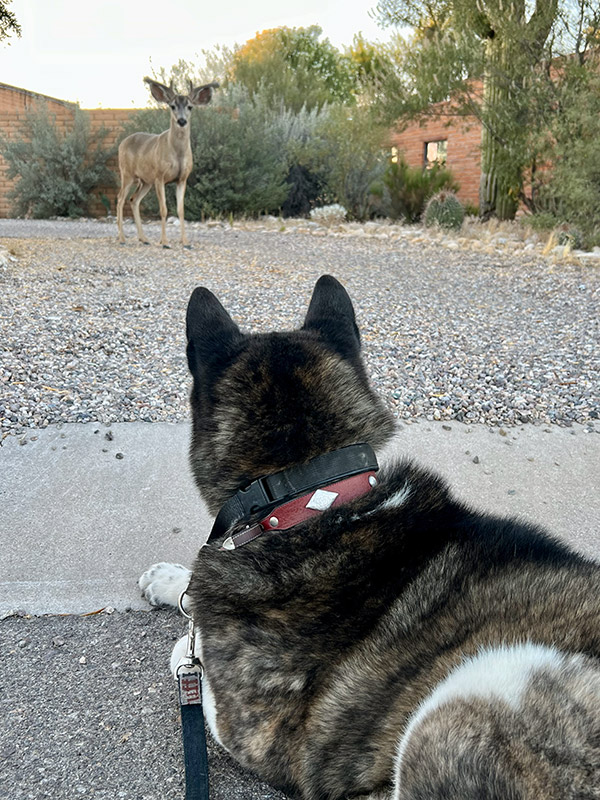
9. In the Pet's Corner this week, I have a remarkable interspecies moment of Zen courtesy of regular Flock contributor Cita Scott and her Akita Daisy.
| |
Now, to this week's Flock. | |
1. SUMMER SOLSTICE - June 20, 2024
| |
This first article on ancient traditions associated with the summer solstice was suggested by my friend and Flock reader Elizabeth Murfee. Elizabeth is the better half of the Flock's favorite contributor of creative writing, Dino DeConcini, and is the mother of podcaster Keith Murfee-DeConcini who has also graced this newsletter. Talent runs deep in this family. I really appreciate when readers make suggestions and invite you all to do so. | |
Ancient Traditions To Help You Celebrate Summer Solstice | |
From: Gaia, By: Gaia Staff, June 20, 2023 | |
|
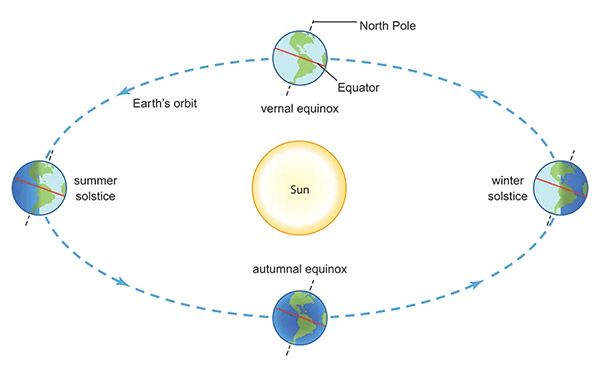
The summer solstice marks the longest day of the year, during which the axial tilt of the Earth puts the western hemisphere closest to the Sun. For time immemorial, it has been a day of celebration for many cultures across the world.
Ancient Festivities on the Summer Solstice
In ancient Greece, the summer solstice marked the start of a new year and the month-long countdown to the Olympics. The Greeks also observed the festival of Kronia, during which they worshipped Cronus, the god of agriculture. At this time slaves were given equal rights to their owners, who allowed them to participate in games and festivities, sometimes even reversing roles and serving them – it was undoubtedly a welcomed holiday.
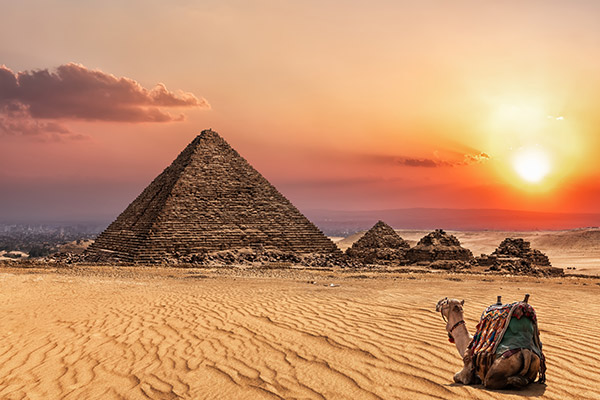
In ancient Egypt, the summer solstice represented the coming of the brightest star, Sirius. Not long after, the Nile would begin to flood its banks, marking a season of abundance from the land. The Egyptians believed Sirius was responsible for the floods and considered it the start of a new year.
The ancient Romans celebrated the festival of Vestalia, in honor of the goddess of the hearth. Married women brought offerings to the temple of Vesta, hoping the goddess would bestow blessings upon their families. Vesta was the protector of married women and virginity, and was exclusively a goddess for women.
In addition to the offerings made in Vesta’s temple, women would bake a sacred cake, which followed a strict recipe. Water from a sacred spring would be used, and prevented from coming into contact with the Earth, as it was carried in blessed jugs.
| |
|
Summer Solstice at Stonehenge
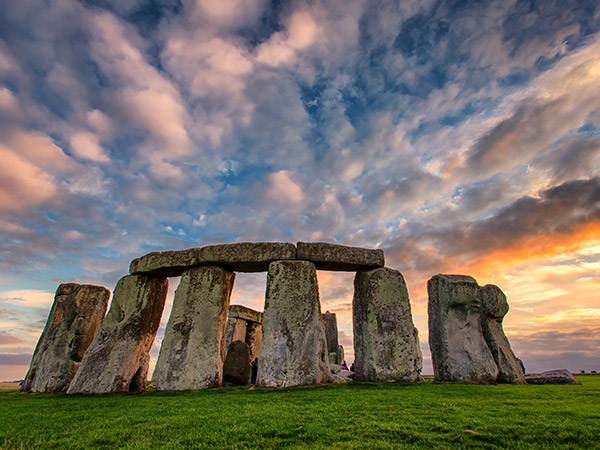
Of course, we would be remiss not to mention Stonehenge when talking about the summer solstice and Paganism. While the famous, monolithic site is still a bit of a mystery, it’s clear that the solstices were an impetus in its construction. On the night of the summer solstice, the sunset will align with the heel stone of the monument, and continue to shine through the others.
Some historians believe the construction of Stonehenge, which lasted between 3,000 and 2,000 BCE, was a societal ceremony. They believe it brought people together and was a show of communal strength to foreigners. And during the summer solstice, people from all over the country came on pilgrimages to celebrate.
| |
When Is the First Day of Summer 2024?
32 Facts About the Summer Solstice
| |
|
When is the first day of summer in 2024?
This year, the summer solstice falls on Thursday, June 20 at 4:50 p.m. EDT. In the Northern Hemisphere, the summer solstice is the longest day of the year and occurs when the sun crosses its highest and northernmost points in the sky. This day is the most sunlight we will receive all year! If you’re asking “when is the first day of summer?” note that the summer solstice marks the first day of summer for Northern Hemisphere dwellers (meaning they fall on the same day). So yes, you can start bookmarking summer quotes and summer memes to share with friends and family in celebration of sun-filled days ahead.
| |
|
The planet’s tilt causes all the sunlight
The tilt of the Earth has more influence on the seasons and the amount of daylight we get than does our planet’s distance from the sun. Earth maintains its tilt as we circle the sun, so for half the year (spring and summer), the Northern Hemisphere faces the sun more directly, while the Southern Hemisphere faces away from it. As we circle around and the Northern Hemisphere tilts away from the sun, we experience winter while the Southern Hemisphere experiences their summer.
| |
|
You can watch the sun “not set”
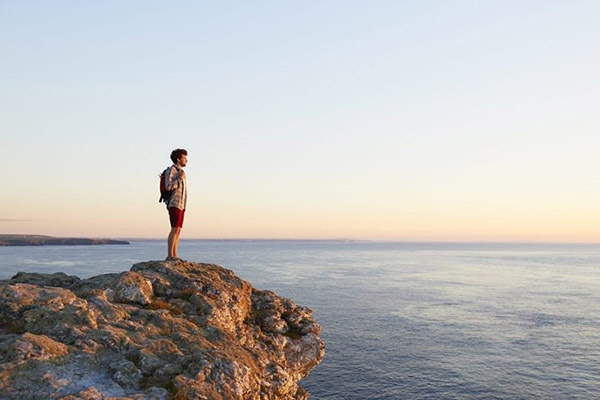
In northern Iceland, you can perch on a cliff overlooking the sea and physically watch the sun “not set,” says Ryan Connolly, co-founder of Hidden Iceland. “The sun dips all the way down to the horizon, brushes the water then starts to rise again.” Iceland is the only place outside of the Arctic Circle where you can experience this phenomenon, according to Connolly.
| |
Mars sunrise alien desert landscape by NASA | |
The summer solstice isn’t exclusive to Earth
All the planets in our solar system have summer solstices. On Mars, the solstice occurs a few days after Earth’s, in June. On Uranus, the summer solstice happens once every 84 years. The next one will occur on October 9, 2069! Each season lasts for 21 years, which makes for one long winter.
| |
Have you ever wondered if the other planets have a summer solstice? It turns out they do, except for little Mercury. Mercury is the only planet that is not tilted on its axis, so one hemisphere is never closer or further from the Sun. This results in no seasonal variation on Mercury. With no change of seasons, there is no solstice. | |
|
NASA's Cassini spacecraft captured this image as Saturn neared its summer solstice in mid-2017.
NASA/JPL-Caltech/Space Science Institute
| |
Equinoxes and Solstices on Other Planets | |
|
Every planet in the solar system, apart from Mercury, is tilted on its axis of rotation. This means each planet has its own equinoxes and solstices.
Venus and Jupiter have small axial tilts of 2.6* and 3.1 degrees, respectively. Venus orbits the Sun more quickly than Earth—in Earth time, an equinox or solstice happens on Venus every couple of months or so. Jupiter orbits more slowly; an equinox or solstice occurs there about every three Earth years.
Mars, Saturn, and Neptune have tilts similar to Earth’s: the values are 25.2, 26.8, and 28.3 degrees, respectively. At the equinoxes on Saturn, the planet’s famous rings appear edge-on as seen from Earth.
Uranus has an axial tilt of 97.8 degrees. This is close to a right angle, meaning the planet appears to lie on its side. Around the solstices on Uranus, the Sun is almost directly overhead one of the planet’s poles.
| |
Here's a post from the Flock archives. This article on the Inti Raymi solstice festival in Peru is from our June 17, 2022 issue. I was fortunate enough to witness this festival first-hand on a visit to Peru. The collective joy of the participants and their preservation of indigenous tradition made a big impression on me. | |
|
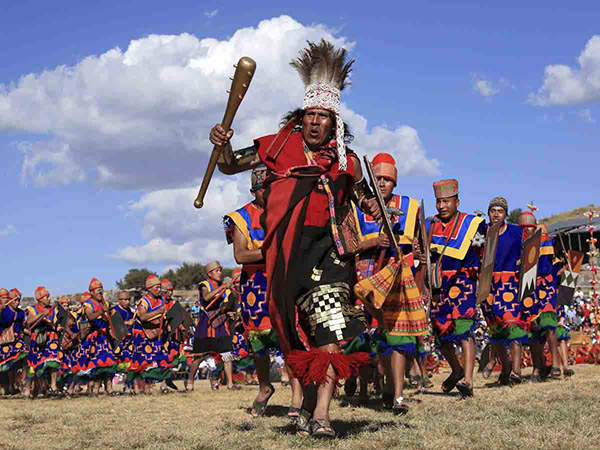
The Inti Raymi festival in Peru is a feast of the Sun God and Pachamama (Mother Earth), the main Gods of the Inca civilization. These Gods were considered to be the creators of all that exists. They rule over the destiny of mankind and the universe!
This Inca festival of Inti Raymi is the most luxurious, large, and colorful celebration to be performed in Cusco as it was originally dedicated to an Incan ruler, considered to be a demigod for his people. The Sun was to be worshiped and offered sacrifices to avoid that it would leave the Earth and its children during its long journey while it ensures its return providing heat and joy.
| |
Inti Raymi Cusco Peru - Inca Trail Machu | |
The interesting question is when is Inti Raymi celebrated? It is because, it is held on the 24th of June at present time, while the authentic celebration took place on the 21st of June, a Southern Hemisphere winter solstice. It was moved on the 24th probably to prevent it would merge with other catholic feasts. | |
2. THE HEAVENS: Strawberry Moon
| |
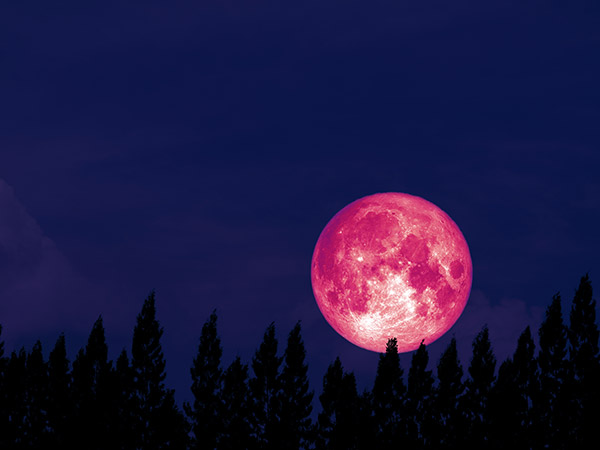
Tonight is the first full moon of the summer, the Strawberry moon. The moon will rise in the southeast just after sunset. It will appear larger with a golden hue and sit closer to the horizon than normal due to its proximity to the solstice. | |
Watch for the Full Strawberry Moon! | |
|
Why Is It Called the Strawberry Moon?
The full Moon names used by The Old Farmer’s Almanac come from many places, including Native American, Colonial American, and European sources. Historically, names for the full or new Moons were used to track the seasons. Today, we think of Moon names as “nicknames” for the Moon.
June’s full Moon—typically the last full Moon of spring or the first of summer—has traditionally been called the Strawberry Moon. This “Strawberry Moon” name has been used by Native American Algonquian tribes that live in the northeastern United States as well as the Ojibwe, Dakota, and Lakota peoples to mark the ripening of “June-bearing” strawberries that are ready to be gathered. The Haida term Berries Ripen Moon reflects this as well. As flowers bloom and early fruit ripens, June is a time of great abundance for many.
| |
This past Wednesday, June 19th, was the fourth celebration of Juneteenth, officially Juneteenth National Independence Day, as a federal holiday. June 19th has been celebrated under many names: Black Independence Day, Emancipation Day, Juneteenth Independence Day, and Jubilee Day unofficially and on a state-by-state basis since 1866 to commemorate the end of slavery in America. | |
The Historical Legacy of Juneteenth | |
|
On “Freedom’s Eve,” or the eve of January 1, 1863, the first Watch Night services took place. On that night, enslaved and free African Americans gathered in churches and private homes all across the country awaiting news that the Emancipation Proclamation had taken effect. At the stroke of midnight, prayers were answered as all enslaved people in Confederate States were declared legally free. Union soldiers, many of whom were black, marched onto plantations and across cities in the south reading small copies of the Emancipation Proclamation spreading the news of freedom in Confederate States. Only through the Thirteenth Amendment did emancipation end slavery throughout the United States.
But not everyone in Confederate territory would immediately be free. Even though the Emancipation Proclamation was made effective in 1863, it could not be implemented in places still under Confederate control. As a result, in the westernmost Confederate state of Texas, enslaved people would not be free until much later. Freedom finally came on June 19, 1865, when some 2,000 Union troops arrived in Galveston Bay, Texas. The army announced that the more than 250,000 enslaved black people in the state, were free by executive decree. This day came to be known as "Juneteenth," by the newly freed people in Texas.
Juneteenth marks our country’s second independence day. Although it has long been celebrated in the African American community, this monumental event remains largely unknown to most Americans.
| |
4. POPULAR CULTURE: The First Black Barbie | |
A new Netflix documentary from producer Shonda Rhimes tells the story the first black Barbie. The story is told through interviews with Mattel employees who share their role in the development of the doll, the personal impact it had on them, and the greater cultural impact it has had since its release. The documentaries release date on Wednesday of his week was timed to coincide with the Juneteenth holiday. | |
When Was the First Black Barbie Made? All About the Doll's History | |
Netflix’s 'Black Barbie' tells the story of how the first Black Barbie came to be — and the lasting impact she left behind | From: People, By:Lynsey EIdell, June 19, 2024 | |
|
Barbie dolls first hit the shelves in 1959 — but it would take more than two decades for an official Black Barbie to make its debut.
The concept of a Black Barbie doll was first floated at Mattel almost immediately after Barbie herself was created. The company responded in the late 1960s with a handful of Black dolls that were designed to be Barbie’s sidekick (not the star of the show). The dolls also featured the same exact design as Barbie, just in a darker skin tone — not providing an accurate depiction of a Black woman and her features.
It wasn’t until 1980 that the first official Black Barbie would emerge, with the Barbie name and distinct features. “She’s Black! She’s beautiful! She’s dynamite,” the box read for the doll, which was an instant hit. But Black Barbie wasn’t just a sales success for Mattel: She was a doll that would permanently change the toy landscape for children everywhere. And now, Black Barbie, a new Netflix documentary from Shonda Rhimes debuting on June 19, is here to tell the story of how Black Barbie came to be — and the lasting legacy she’s left behind.
| |
Black Barbie | Official Trailer | Netflix | |
5. ANIMALS: New Research on Animal Welfare
| |
Elizabeth Murfee shared another suggestion for this week's newsletter with us. This article highlights research being conducted by veterinary medicine academics with the aim of advancing animal-welfare science. Their research is aimed to develop improved understanding and standards of animal care for zoos, livestock, domestic animals, and wild populations that will lead to better animal welfare. Keep them coming, Elizabeth! | |
How Do We Know What Animals Are Really Feeling? | |
Animal-welfare science tries to get inside the minds of a huge range of species — in order to help improve their lives. | |
|
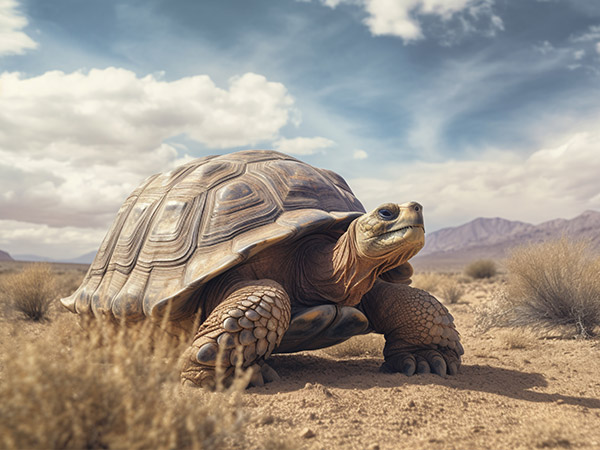
What makes a desert tortoise happy? Before you answer, we should be more specific: We’re talking about a Sonoran desert tortoise, one of a few species of drab, stocky tortoises native to North America’s most arid landscapes. Adapted to the rocky crevices that striate the hills from western Arizona to northern Mexico, this long-lived reptile impassively plods its range, browsing wildflowers, scrub grasses and cactus paddles during the hours when it’s not sheltering from the brutal heat or bitter cold. Sonoran desert tortoises evolved to thrive in an environment so different from what humans find comfortable that we can rarely hope to encounter one during our necessarily short forays — under brimmed hats and layers of sunblock, carrying liters of water and guided by GPS — into their native habitat.
This past November, in a large, carpeted banquet room on the University of Wisconsin’s River Falls campus, hundreds of undergraduate, graduate and veterinary students silently considered the lived experience of a Sonoran desert tortoise. Perhaps nine in 10 of the participants were women, reflecting the current demographics of students drawn to veterinary medicine and other animal-related fields. From 23 universities in the United States and Canada, and one in the Netherlands, they had traveled here to compete in an unusual test of empathy with a wide range of creatures: the Animal Welfare Assessment Contest.
That morning in the banquet room, the academics and experts who organize the contest (under the sponsorship of the American Veterinary Medical Association, the nation’s primary professional society for vets) laid out three different fictional scenarios, each one involving a binary choice: Which animals are better off? One scenario involved groups of laying hens in two different facilities, a family farm versus a more corporate affair. Another involved bison being raised for meat, some in a smaller, more managed operation and others ranging more widely with less hands-on human contact.
| |
Elephants call each other by name, study finds | |
Researchers used artificial intelligence algorithm to analyse calls by two herds of African savanna elephants in Kenya | |
|
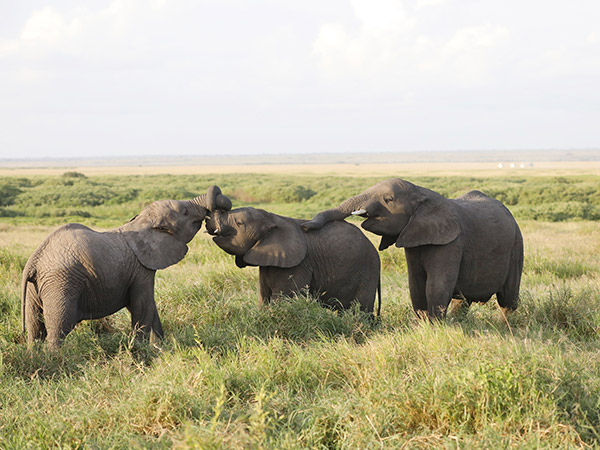
Elephants call out to each other using individual names that they invent for their fellow pachyderms, according to a new study.
While dolphins and parrots have been observed addressing each other by mimicking the sound of others from their species, elephants are the first non-human animals known to use names that do not involve imitation, the researchers suggested.
For the new study published on Monday, a team of international researchers used an artificial intelligence algorithm to analyse the calls of two wild herds of African savanna elephants in Kenya.
The research “not only shows that elephants use specific vocalisations for each individual, but that they recognise and react to a call addressed to them while ignoring those addressed to others”, the lead study author, Michael Pardo, said.
| |
6. REACHING HIGH: Everest Update
| |
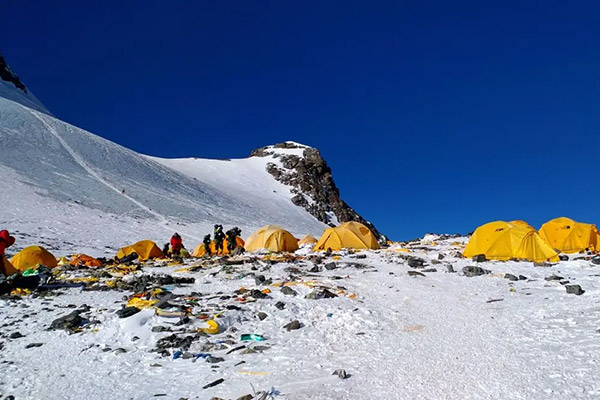
A massive amount of trash left behind by expeditions over the years has accumulated on Mt. Everest. Business Insider has a profile on Garret Madison, a professional Mountaineer who has decided to do something about it and is leading a cleanup effort on the mountain. The work is physically taxing and dangerous due to the high elevation and steep terrain. Nonetheless, his team is making a dent and have removed thousands of pounds of waste from the mountain. | |
A team of climbers just summited 3 of the most challenging peaks in the world. | |
They made it even harder by collecting roughly 2,000 pounds of trash along the way. | |
|
These three peaks — Mt. Everest, Mt. Lhotse, and Mt. Nuptse — are some of the most dangerous climbs, boasting some of the harshest conditions on Earth: freezing temperatures, low oxygen levels, and treacherous terrain.
Summiting any one of these three peaks could risk your life. Climbers can die from severe altitude sickness, falls into deep crevasses, exposure, and other threats.
Professional mountaineer Garrett Madison has achieved the Everest triple crown not once, but twice — first in 2023, the deadliest Everest climbing season on record, and again this year.
But visiting the top of the world isn't just about climbing for Madison anymore. He's summited Mt. Everest 14 times, and after years of watching trash accumulate on the mountain and its surrounding peaks, he's decided to tackle the issue head-on.
He started the Madison Mountaineering Mountain Cleanup Project in the fall of 2023, and he and his team have now collected a total of 4,000 pounds of trash — 2,000 pounds in 2023 and another 2,000 pounds this year — from Everest and neighboring peaks.
"I think we've made a big dent. There's obviously more work to be done," Madison told Business Insider.
| |
Nepali climbers holding discarded oxygen tanks that they collected from Mount Everest in 2019. | |
|
The Sagarmatha National Park and Buffer Zone, which includes Mt. Everest and seven of its neighboring peaks, has a serious trash problem. Most of the garbage is left behind by climbers, and includes stuff like abandoned tents, discarded food packaging, and empty oxygen canisters.
A 2010 study estimated that park tourism generated roughly 4.6 tons of solid waste per day during climbing seasons. But that number is likely higher today, because the amount of people climbing these peaks has generally increased since then while garbage disposal methods are still lacking.
...All that waste is polluting critical water resources for local communities, Madison said. "Where does all that trash go? It'll flow down the glaciers into the streams and rivers and water sources that communities rely upon," he said.
| |
Double leg amputee gets MBE after Everest summit | |
From: BBC, By: Zac Sherratt & PA Media, June 15, 2024 | |
|
A Gurkha veteran who lost both legs serving in Afghanistan has been awarded an MBE in the King’s Birthday Honours.
Hari Budha Magar, who now lives in Canterbury, Kent, became the first double above-the-knee amputee (DAK) to reach the summit of Mount Everest.
He completed the 8,849m (29,032ft) ascent in 2023 to show people “anything is possible”.
The 44-year-old has been made a Member of the Order of the British Empire (MBE) for services to disability awareness.
“I’m here to send a positive message around the world of hope and optimism,” said Mr Budha Magar.
The father-of-three joined the Royal Gurkha Rifles at the age of 19.
While serving in Afghanistan in 2010 he stepped on an improvised explosive device and lost both legs.
Mr Budha Magar said growing up in Nepal, disability was perceived as a sin from previous lives.
| |
Hari Budha Magar said he wants more people with disabilities “to do what they love” | |
... He now wants to climb the seven highest peaks on each continent, having already reached the summit of Mount Everest, Mount Kilimanjaro and Mont Blanc. | |
19-Year-Old Returns From Climbing Mt. Everest | |
|
One teen has accomplished a feat very few in the entire world ever come close to; at 19 years old, Ryan Mitchell can now say he’s been to the top of the world.
Mitchell said he was able to fund the journey, which he believes cost more than $120,000 in total, through his YouTube channel.
| |
7. GARDENING: Colorful Succulents
| |
Top 10 Colorful Succulents You Should Grow | |
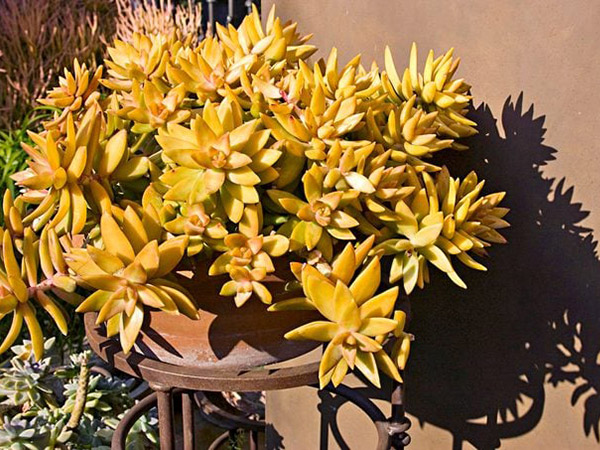
These easy-care colorful succulents will surprise you with their vibrant displays of sun-drenched yellows, reds, oranges and more. | From: Birds & Blooms, By: Kristen Schrader, November 16, 2023 | |
While browsing through garden author and succulent expert Debra Lee Baldwin’s enticing Succulent Container Gardens book, you’ll likely fall just a little bit in love. These plump-leaved colorful succulents store water in their juicy tissues, making them a forgetful gardener’s dream. | |
|
That’s because stressors that might harm or even kill other plants—an extra touch of sun, heat or cold; even a drought resulting from the gardener’s vacation (these are the best drought tolerant succulents to grow)—make many succulents come alive with color. Normally green and blue-green leaves heat up into a vivid spectrum of reds, orange, pinks, purples and yellows.
Another bonus: succulents tend to be winter bloomers. So when you bring your frost-tender plants inside to protect them from the cold, you’ll get a flower fix just when you need it most.
| |
8. THANK YOU: Still Learning from the Best
| |
Last year we covered the art of saying thank you when we received a beautifully composed note from the children of Mrs. Stam's 2022-23 Kindergarten class at Redeemer Lutheran School after a visit to the Reid Park Zoo. | |
This week, the younger generation is showing us how it's done again. June's little genius of the month, Carter Martin, has sent us an outstanding example of how to say thank you. It's no surprise that this young gentleman who likes science and aspires to work for NASA one day, made use of technology in crafting his wonderful thank you. | |
9. PET'S CORNER: An Interspecies Moment of Zen
| |
A curious deer unexpectedly appears. | |
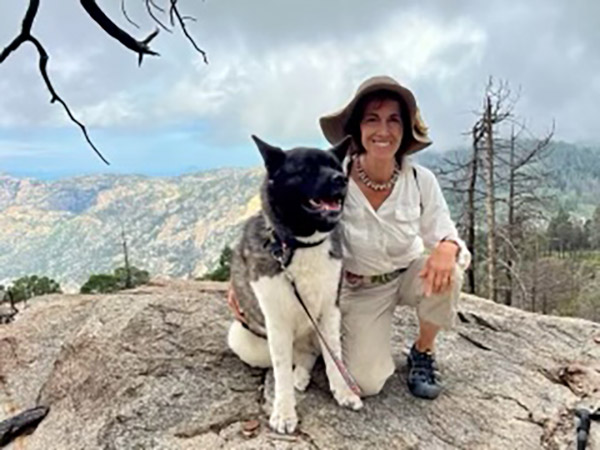
Regular Flock contributor Cita Scott taking her dog Daisy for a twilight walk when she witnessed a peaceful interspecies moment of Zen. As they walked, a yearling buck appeared before them. Daisy followed the down-stay command, locked eyes, and calmly shared a moment with the curious deer. | |
The deer and Daisy lock eyes and share a moment together. | |
Cita and Daisy on a less eventful walk. | |
|
"PLANT SEEDS OF
HAPPINESS, HOPE,
SUCCESS, AND LOVE;
IT WILL ALL COME
BACK TO YOU IN
ABUNDANCE. THIS IS
THE LAW OF NATURE."
— Steve Maraboli
| |
|
These Flock regulars are always here for you:
-
Where in the World is Zoe
Zoe is back in Colorado helping launch the 2024 early childhood, junior high, high school, and adult tennis programs with sister and mother Petra.
In coming weeks: we'll be sharing more investigative articles from our roving reporter William George, original writing from Flock favorite Dino DeConcini, and an update on the Marolt brothers' coming expedition to Argentina.
| |
Don't Be Shy: Share Your Stories! | |
I'm looking forward to sharing more of your personal stories - oral, written, or otherwise, as we enter our third year. I'd so love to present them to The Flock, hit a mailbox below to share your story. | |
Subscriptions & Idea Submissions | |
|
Feel free to forward this email to a friend. If this was forwarded to you and you would like to receive your very own Flock Newsletter, you can sign up here. If you have any questions or suggestions for future Flock resources, don't hesitate to contact me.
Your fan and friend,
Beth
| | |
The information and materials contained or referenced in this newsletter are for informational purposes only and not intended to be a substitute for professional medical advice, diagnosis, or treatment. Always consult a physician or other qualified medical professional with any questions you may have regarding a medical condition or treatment and before beginning a new health care regimen. Do not disregard professional medical advice or delay seeking medical advice or care based on anything contained in this newsletter. | | | | |