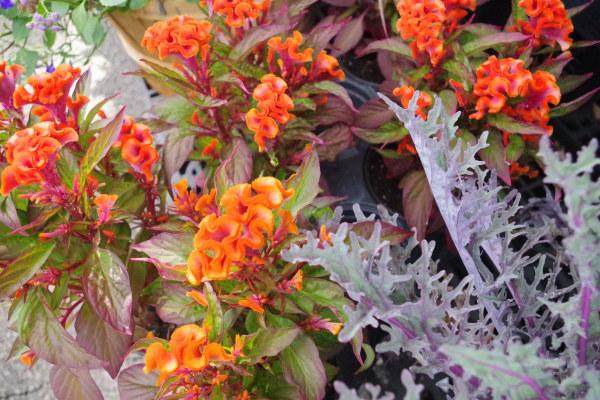
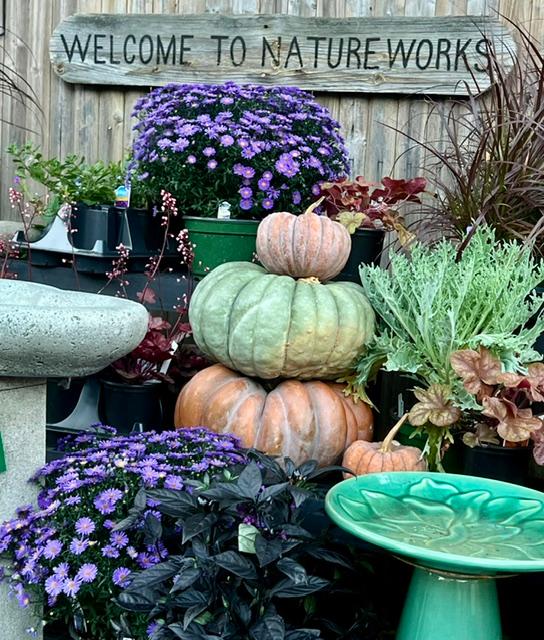
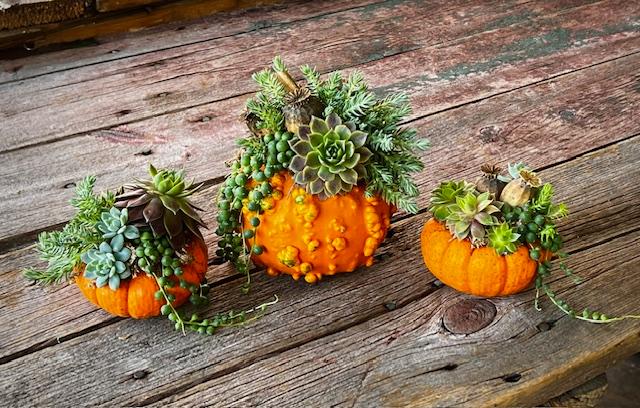
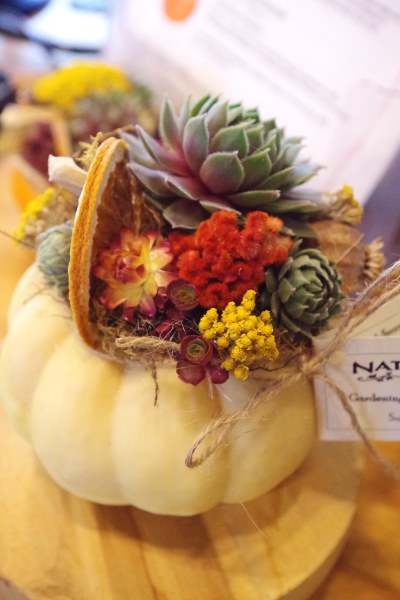
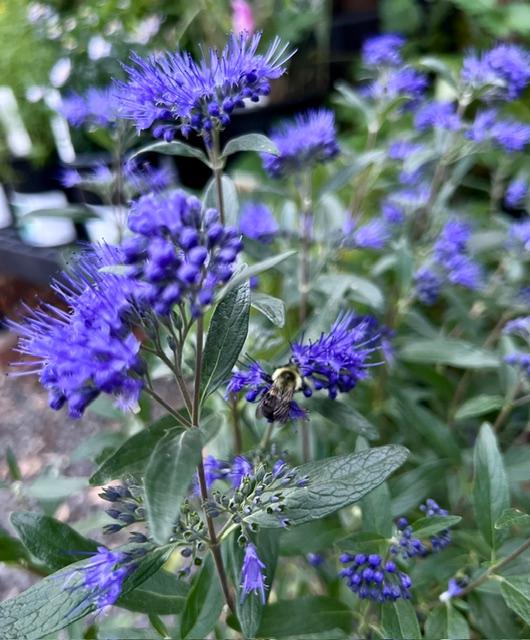
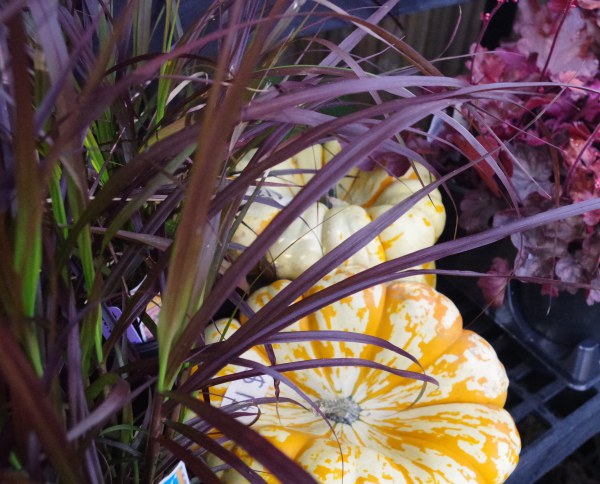
Nothing says "Welcome Fall" like orange crested Celosias and ornamental kale plants. | If you want a really healthy, happy organic lawn, FALL is your time to get to work. Feed with our all organic Sustane Step 3 or North Country Organics Pro Gro. More organic lawn care information is below. | Pumpkinscaping Season begins NOW! | | Succulent Pumpkins are being made daily! | Caryopteris 'Dark Knight' should really be called "bee bush". It is always covered with pollinators. | Ornamental grasses and pumpkins look so good together. | | The Very Best Fall EVER for Planting! | | |
Hello
I am writing this email on Tuesday and it is the official first day of fall! It is also the EQUINOX when the length of the day and the length of the night are equal. I am sure you have been noticing that it is getting dark a lot earlier. I have to hustle before supper to get a lot of my chores done!
Why do I call this the best fall ever for planting? I looked back through my garden journal and noticed how deeply affected by severe heat and DROUGHT we have been in past years. 2025-drought not broken until October 12th. 2024-still in a drought on October 20th. 2022-insane heat and drought all summer, first rain not until September 4th. We are so blessed to have had moderate late summer temperatures and plenty of regular rainfall. The gardens may look a bit messy, there may be a bunch of fungus-spotted leaves, but the soil is moist and just BEGGING to be planted! And so we will...
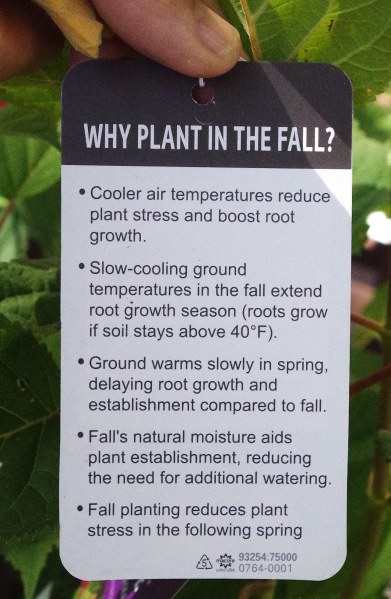
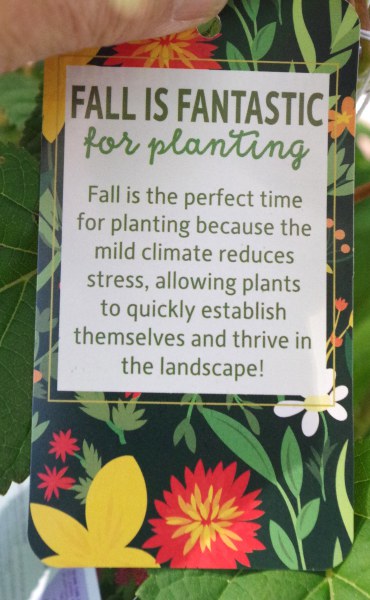
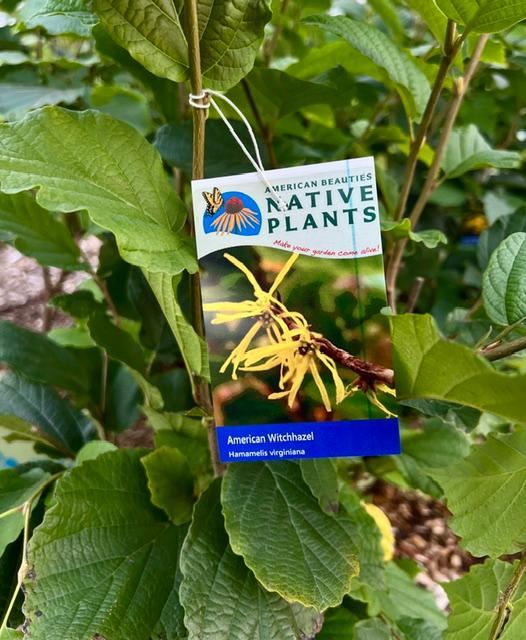
Does the first day of fall mean frost will kill our plants? Absolutely not. The first frost has occurred in my Middletown garden anywhere from mid-October until early November. The first frosts are usually light frosts. It may kill very tender annuals that you choose not to protect (I just cover them with old cotton sheets held on with clothespins), but cool season flowers and veggies are happiest when it is, well, COOL! And, in terms of hardy perennials and the later hard frosts that eventually arrive, if the tops of plants are frosted, the roots are still growing and warm. Check out and read this great tag that I found on one of our shrubs. It says it all when it comes to FALL.
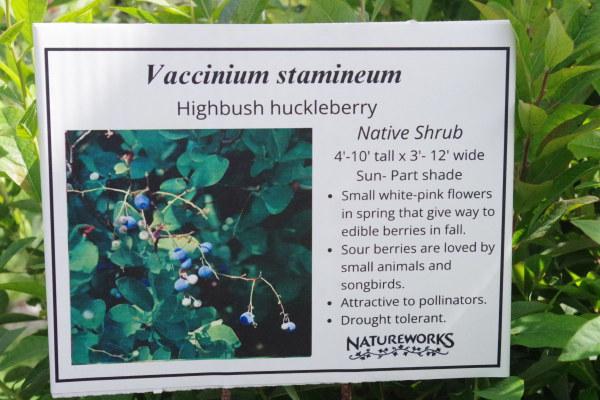
| | In fall, the leaves change color, fall slowly, but the roots KEEP GROWING. Next spring, the plant leaps out of the ground and is substantially bigger than a plant put in the chilly soil of spring. Fall is for PLANTING! | | Interesting Plants on our Benches right NOW | | I was walking around Natureworks with my carmera last Saturday and stopped in my tracks. When did we get highbush huckleberry (Vaccinium stamineum) in? This is such a great choice if you want to increase the native shrubs in your borders. It is related to blueberries (same genus) and produces berries beloved by songbirds and animals. This will grow in sandier, drier sites than highbush blueberries. | | |
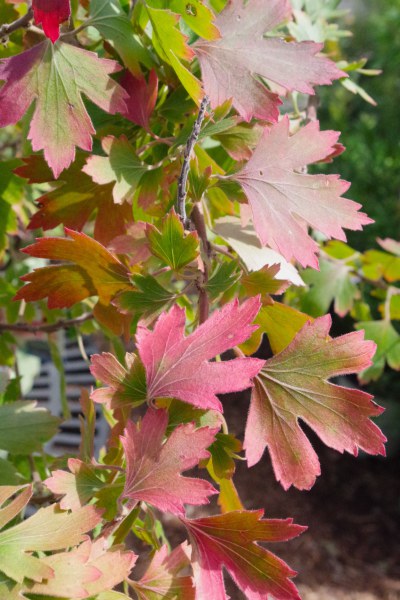
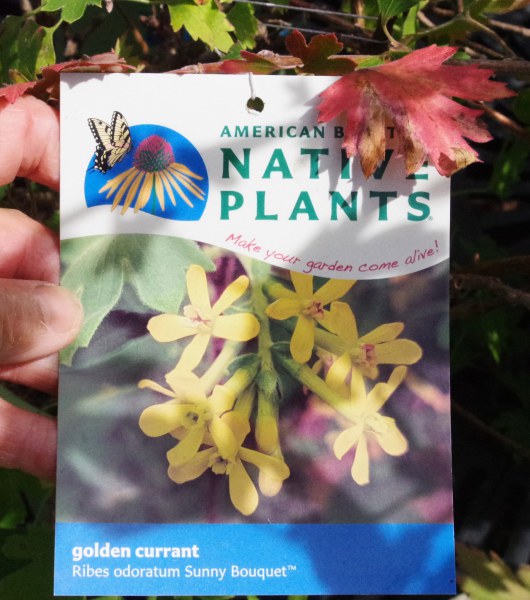
The lovely fall foliage of our native golden current (Ribes odoratum 'Sunny Bouquet') also stopped me in my tracks.
This plant is on sale at 30% off this week! Keep reading to see the nice list of 30% off plants and products near the end of this newsletter!
| | I introduced this plant to you in the spring. It may be one of the most overlooked shrubs in our garden center! I first planted it because of the amazingly sweet scented spring flowers. This natural selection only grows 2-3' tall and 3-4' wide. This would also be a great addition to a sunny border to attract the early arriving hummingbirds. The summer fruits will feed the birds. And the fragrant spring flowers will feed your soul! Get one while they last! | | |
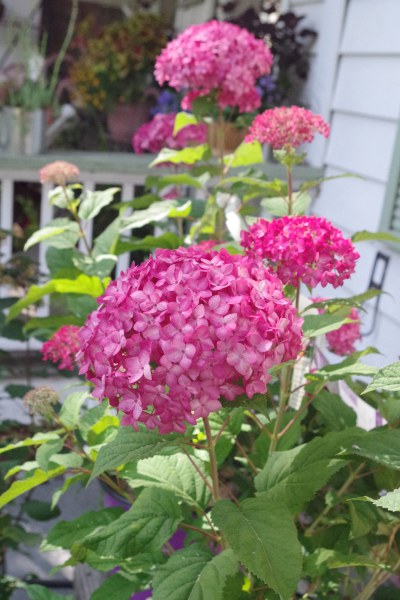
Here's another shrub we have in stock that is new for us. Meet Hydrangea arborescens 'Dreamscape'. I took this picture on Saturday, September 19th and the shrubs were in full bloom with clean, healthy foliage. H. arborescens is our native smooth hydrangea. We love them because they are hardy to zone 3 and bloom on NEW wood. Pruning is just so easy as you can cut them back to any height in the spring.
This shrub grows 3-4' tall and does best in partial shade or morning sun. It was bred specifically for STRONG STEMS that do not flop. The flowers are 8-10" across!
| |
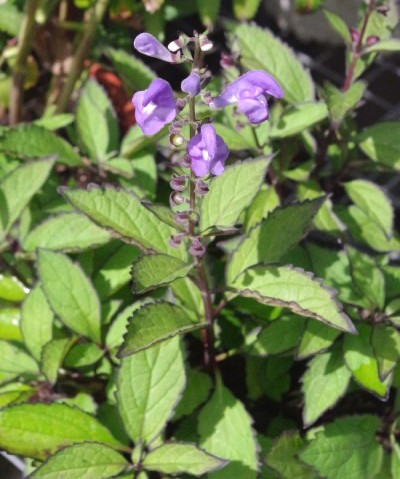
Scutellaria 'Bumblebee Blues'
Blue skull cap
A few weeks ago I mentioned that we were carrying a white variety of Scutellaria incana. This week we are featuring a BLUE Scutellaria that only grows 24" tall and spreads 24-30" wide. It grows best in partial shade and truly does attract bumblebees and all sorts of other pollinators. It is a cross between two native scutellarias: S. ovata x S. serrata. It will tolerate quite a bit of drought once established. Many consider it a native perennial substitute for our beloved tender perennial Salvias. I love the burgundy edges around the leaves as well. The normal bloom time for this interesting perennial is late spring and summer. It was pruned back after first blooming at the grower so we can appreciate the deep, rich blooms now too.
| | |
What is the LAST plant to bloom on our Succession of Bloom with Native Trees and Shrubs handout?
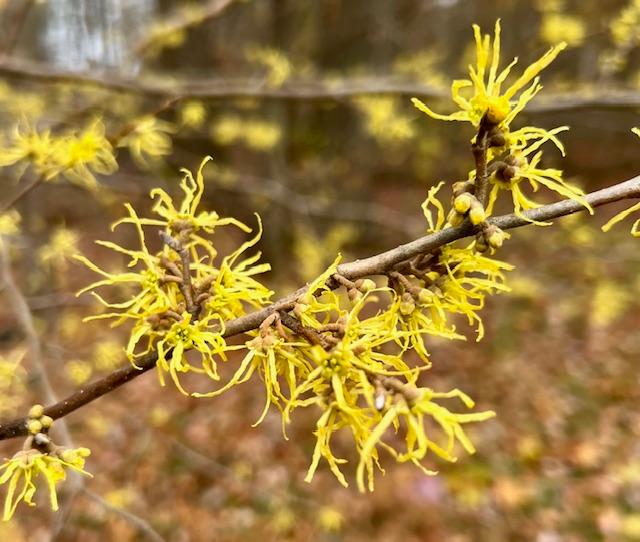
Hamamelis virginiana! Our native witch hazel flowers in November with yellow blossoms that smell really spicy. This is, in fact, the witch hazel that the astringent medicinal lotion is made from. It is an understory tree, multi-stemmed. I often see it on the edge of my client's properties and many times it is growing with our native Clethra alnifolia.
I love to pick branches of this in bloom and bring them into the shop and set them on the cash register in a vase. Most people don't know it, probably because they aren't looking for a flowering tree in late fall! But we know it and love it and would love to see you plant it in your yard.
By the way, if you haven't checked out this list (which is specifically for CT), you can find the link below. It took me many years of study and observation to compile this local list. It is a very useful tool to help you to provide native plants in bloom every month of the growing season, even November!
Succession of Bloom for CT Native Shrubs and Trees
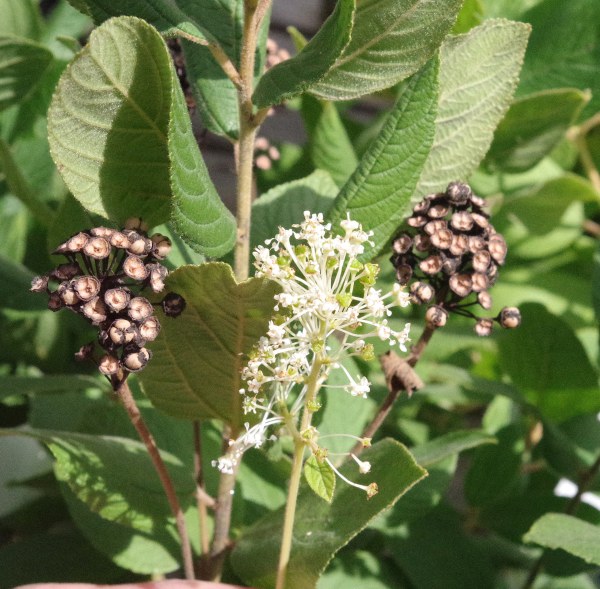
| Can you identify the plant in the picture above? I was so fascinated by the seedpods of Ceonanthus americanus (New Jersey Tea) that I had to get a closeup! As I leaned into it I realized that these shrubs were actually putting out some new flowers in September. | |
The deadline is fast approaching (OCTOBER 1ST) for you to register at the Earlybird Price for this exciting conference that I have been planning with my committee all year.
If you haven't heard Rebecca McMackin speak, start by clicking on the link below and listen to her TED Talk. She gave this talk in 2024 and has since had over 471,000 views! I heard about it and watched it and, well, let's just say I KNEW I needed to get this amazing woman to be the keynote for the CT Horticultural Society's conference.
Take 12 minutes, treat yourself, listen, be inspired, and you will see what I mean:
| | |
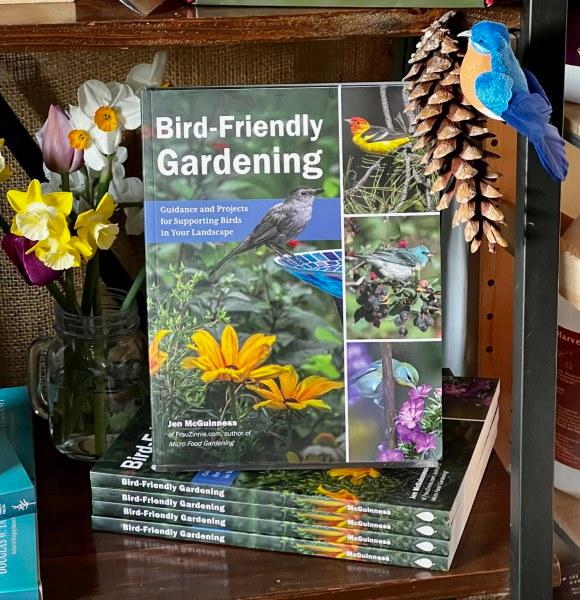
The theme of this conference is Gardening for ALL Ages. The other speakers include my good friend Jennifer McGuiness who will speak on Designing for Birds: Lessons from an Evolving Garden. Natureworks will be a vendor at this conference and we will be selling Jen's book Bird-Friendly Gardening and she will be happy to sign a copy for you after her talk!
Christine Darnell will talk on Approaching the Garden. Christine taught landscape design at Naugatuck Community College for many years. In fact, she has taught many of Natureworks' employees who design, coach, and wait on you when you visit. She is a garden designer and a dear friend. Her talk-Approaching the Garden- will explore the way we design at the various stages of a gardener's life.
The final workshop of the day is a panel of 6 gardeners of all ages including Jillian Shea, Jennifer McGuiness, Dan Furman, Eric Mason, Karen Bussolini, and me. CT Hort President Jim Sirch will moderate the panel as we all dig deep and share our experiences at the different ages and stages of gardening.
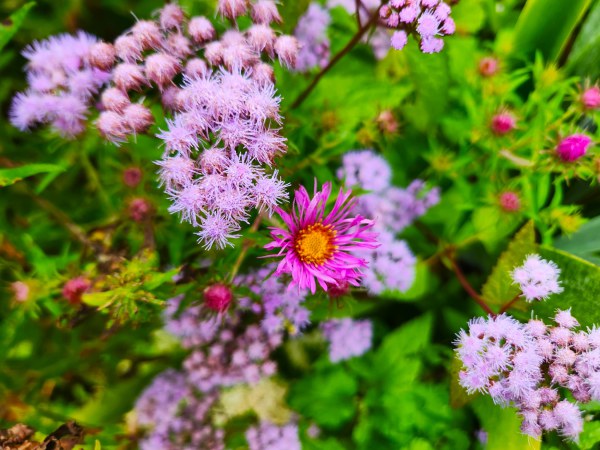
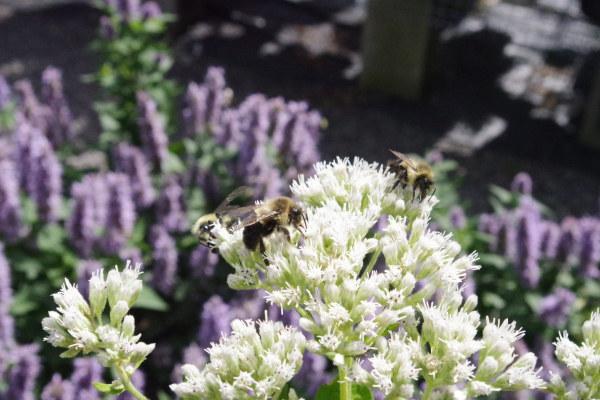
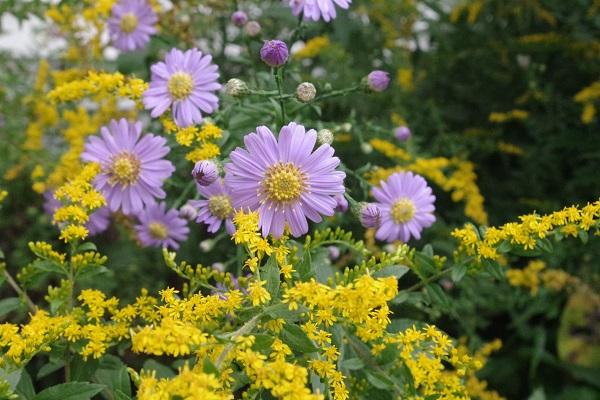
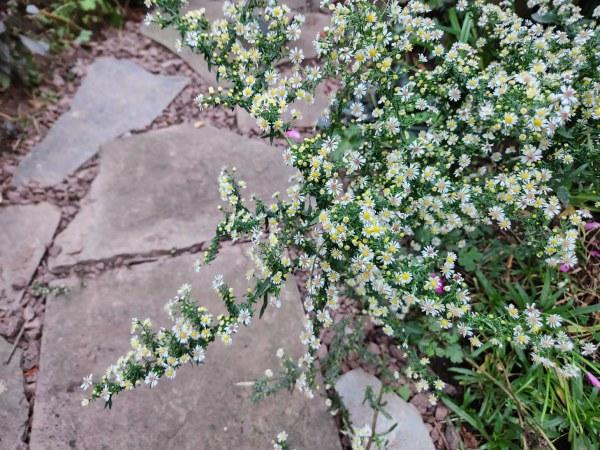
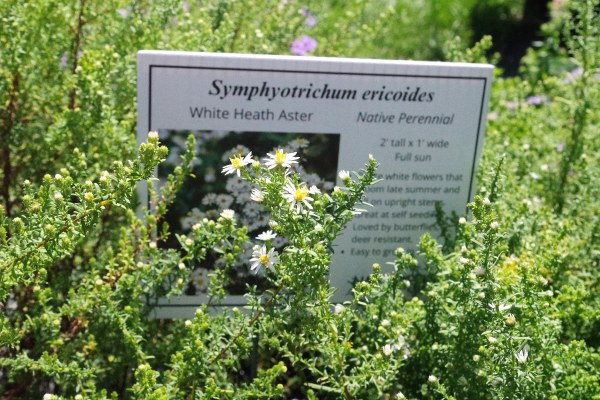
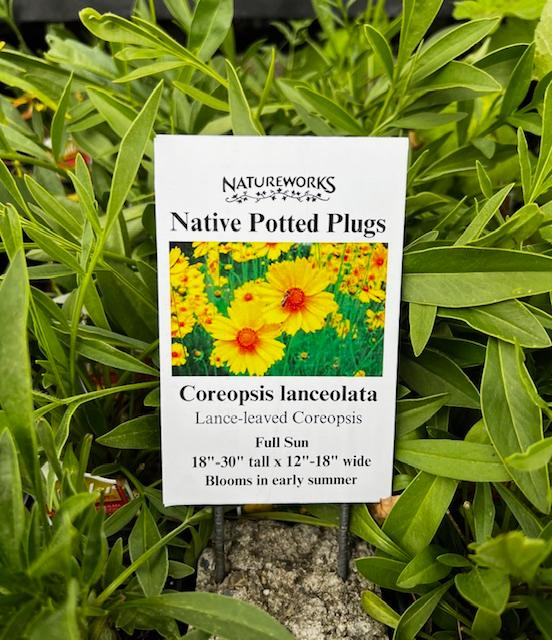
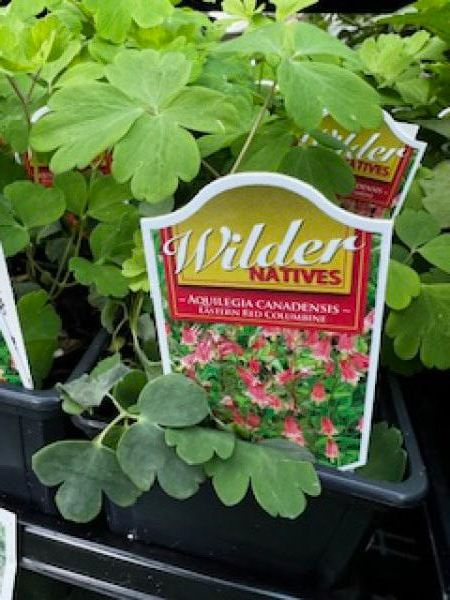
| | SUPPORT POLLINATORS WITH NATIVE PLANTS THIS FALL! | | The benches and gardens at Natureworks are literally BUZZING with life right now! I couldn't stop taking pictures of the bees on the Eupatoriums, Agastaches, asters, and so many more native plants that we love to stock at this time of year. And we are getting in LOTS MORE POTTED PLUGS of native plants this week including red and blue Lobelias, Amsonia, Asclepias tuberosa, Aquilegia canadensis (the wild columbine Rebecca McMackin talked about in her TED TALK), lots of different asters, goldenrods, and Eupatoriums too. | | Blue is such a great color to use in our fall gardens. This pretty blue daisy is our native smooth aster (Symphyotrichum laeve) and it is just coming into bloom in our gardens. We sell it as potted plugs so it is very easy to establish in your gardens. | | Above is the really pretty Symphyotrichon ericoides (white heath aster) growing alongside the new stepping stone path the Natureworks crew put down in my yard last week. I love this aster as it really supports the bees. I pinch it hard a couple of times and it arches gracefully. We have really nice, full plants in stock right now. It will take full sun or partial shade. It makes a really good weaver, softening any garden combo. | | | Solidago rugosa 'Fireworks' has arching sprays of flowers. | |
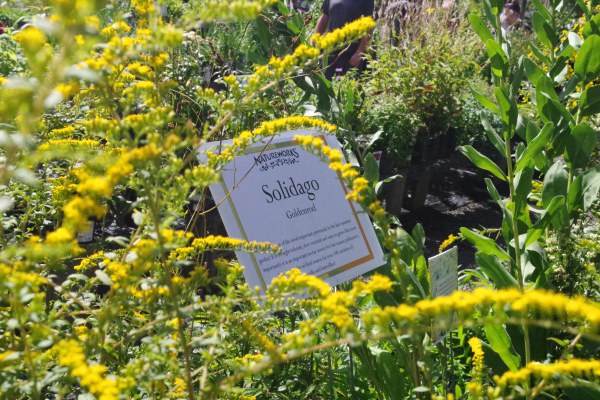
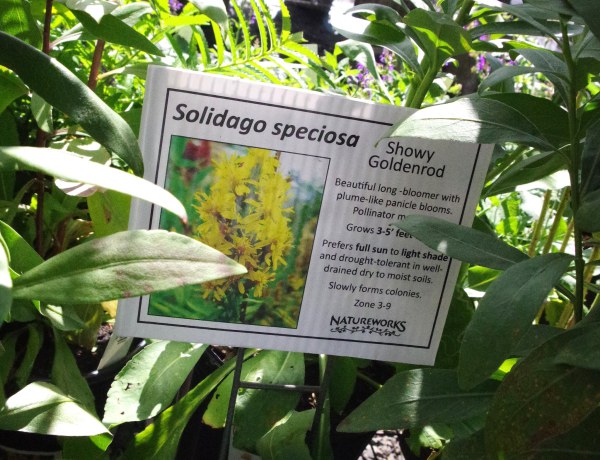
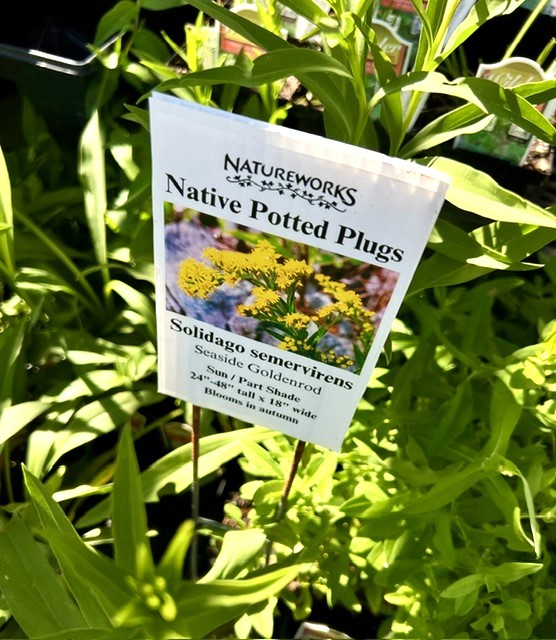
One of the most helpful things that we do at Natureworks is that we make our own educational signs for our plants. We are SERIOUS about this! Even every tray of potted plugs gets a sign.
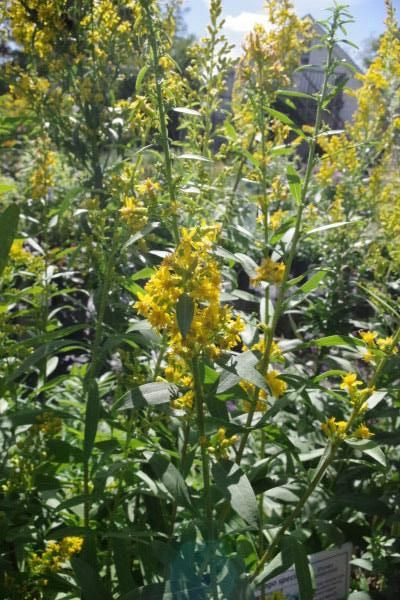
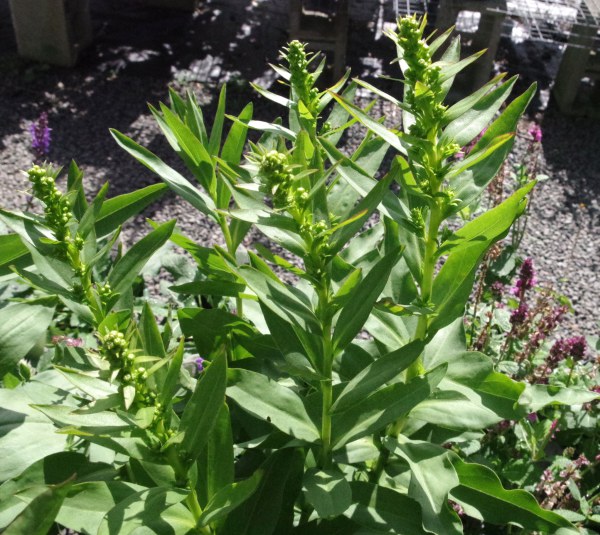
You will find this especially helpful when it comes to understanding Solidagos. NOW is the perfect week to come in and study this very important genus of native plants as we have a wide selection in stock. You can look at all the pictures you want and read all the descriptions you can find on the internet, but nothing beats studying Solidagos up close and personal.
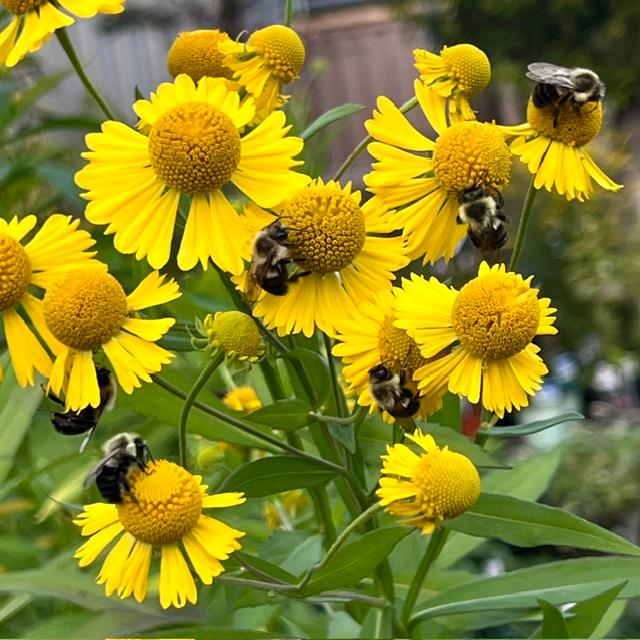
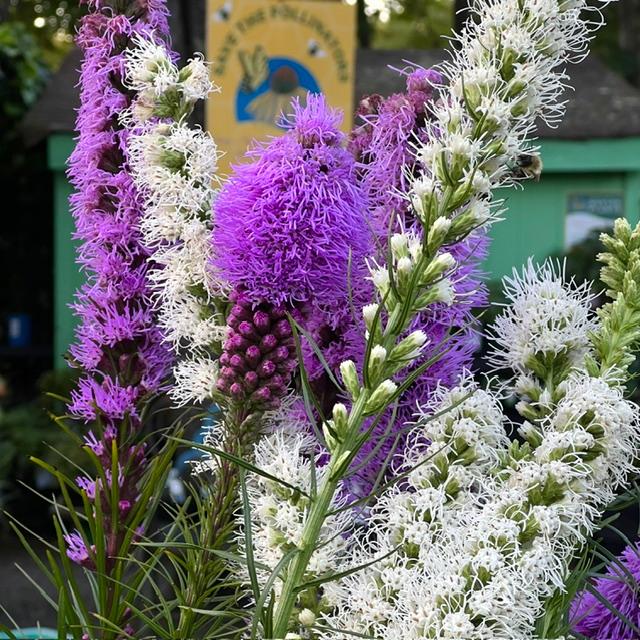
| | This is Solidago speciosa (showy goldenrod), on our benches this week. | | Solidago sempervirens (seaside goldenrod) is in bud and won't bloom until later in the fall but it is so easy to identify once you study the leaves. | | Native Helenium autumnale covered with bumblebees! This is a tall perennial, late summer/fall blooming and we have big plants in small pots! It grows 3-5' tall, 2-3' wide in sun. Perfect for the middle to back of a pollinator garden. | | Native Liatris is back in stock. Look at those flowers! We have big pots stuffed full that need a good home in your pollinator garden! Which one is your favorite color? | | A GALLERY OF COLCHICUM PICTURES FROM OUR GARDENS | | |
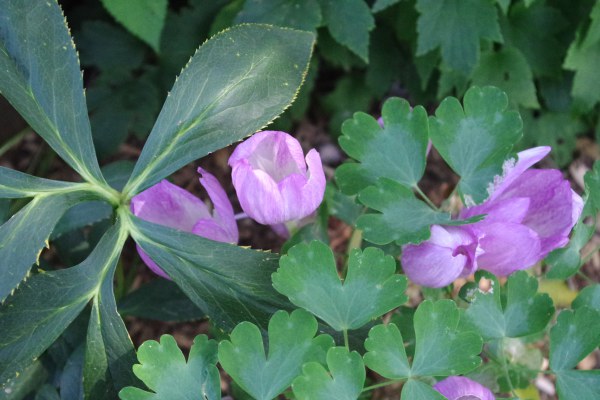
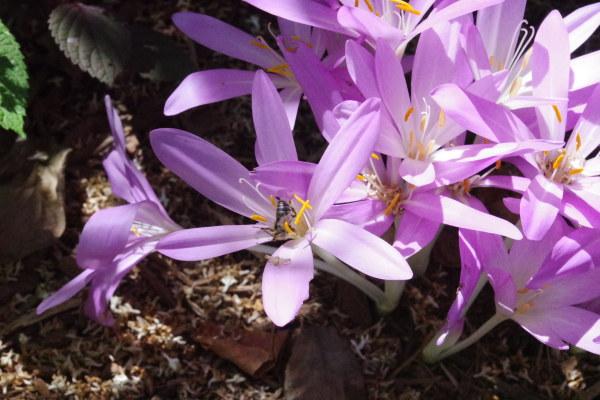
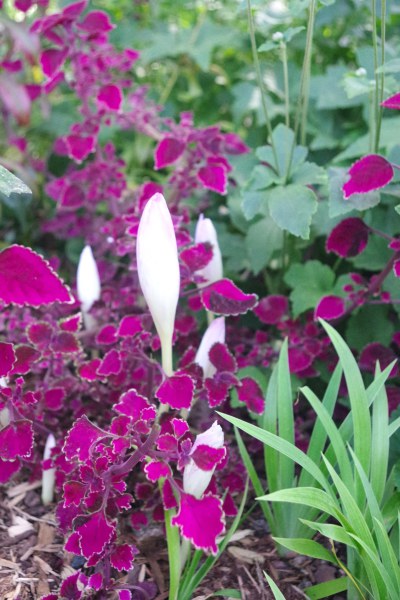
Last week's email explained just how easy it is to grow Colchicums in our gardens. I love the fact that they are NOT eaten by deer, voles, or rabbits AND that they pop up and surprise us at this time of year. It is especially interesting to study what plants they combine well with. Hellebores, columbines, Iris cristata, coleus are all good choices as you can see in these pictures. I have seen them coming up through dwarf hostas, 'Chocolate Chip' ajuga, black mondo grass (Ophiopogon) and Nepeta that has been cut back hard in July and is reblooming now, Heucheras, and a lot more. Let your creative juices flow and see what you come up with. You will be VERY happy you did at this time next year.
I took a few pics of them in our gardens on Saturday. I hope this inpires you to try some fall blooming bulbs!
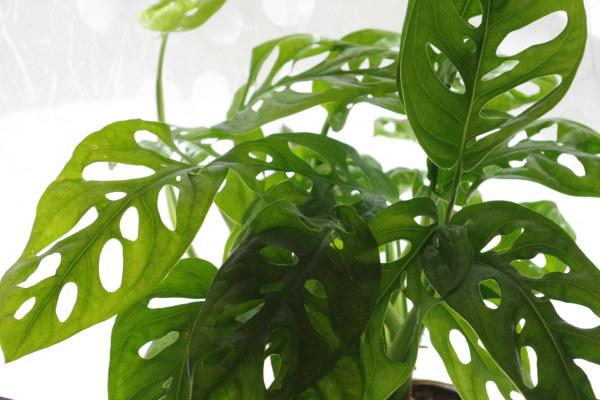
| | Can We Talk about HOUSEPLANTS for a Moment? | | I put most of my houseplants on my deck for the summer. They call that "summering outdoors". Even though we have many weeks before they really have to be brought back in, it is very wise to start planning for that now. | | Oh my, this Monstera adansonii (swiss cheese plant) has such an amazing pattern in its leaves! | |
I will be getting a few NEW plants this year and also repotting a lot of my existing plants before they come in for the winter. I love to use terracotta (clay pots) for most of my plants and Natureworks has a nice selection. I use Organic Mechanics Container Blend soil.
It is important to start soon cleaning off old leaves, taking cuttings of leggy plants and rooting them, checking for insects, and perhaps even bringing them into an isolation area (I use a sunny window in my back heated garage) to be sure they are pest free before finally bringing them in the house.
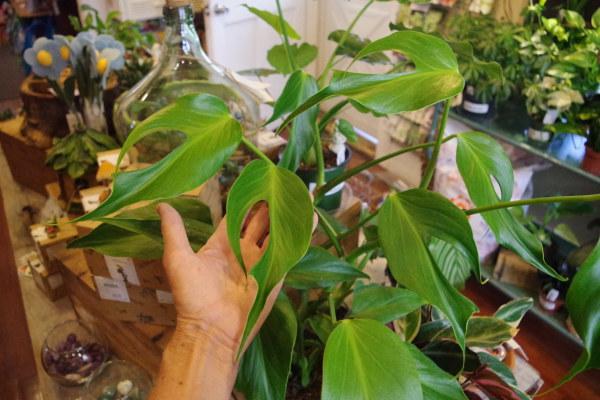
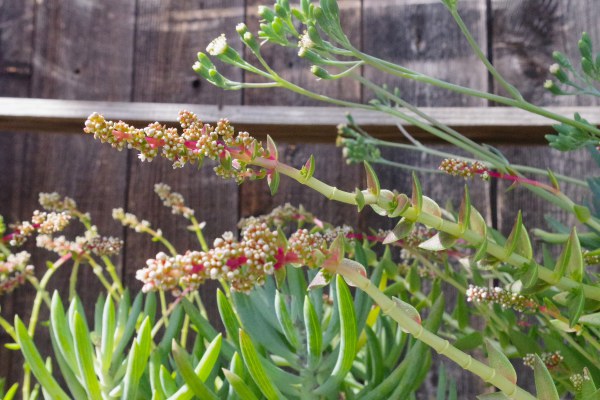
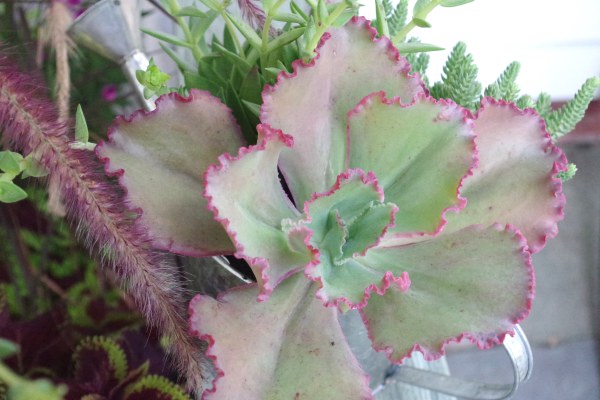
| | Jess pointed out this amazing houseplant to me: Monstera 'Burle Marx Flame'. It is named after the famous landscape architect from Brazil, Roberto Burle Marx. It is relatively slow growing and was found in Brazil. | | Many of the very cool succulents that we sell in our annual department also make great houseplants. Blue chalk sticks (Senecio) and Crassula 'Shark's Teeth' would do great on a sunny windowsill this winter. | | |
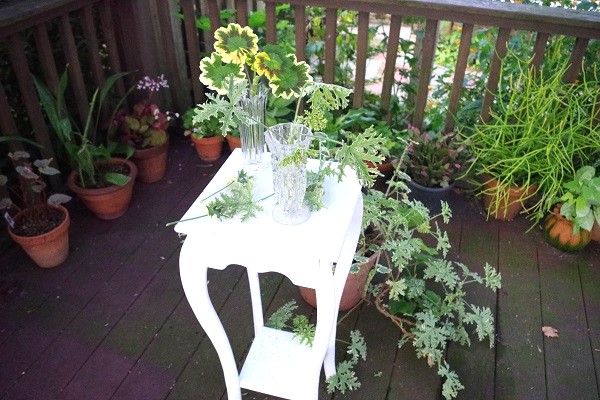
Today I took cuttings of a very leggy combination Pelargonium pot. I had combined two variegated geraniums together two years ago. I overwintered it last year and put it back out on the deck this spring. I really want to make it much fuller and fatter for next year so cutting it back, rooting the cuttings, and adding them back to this plant is the answer.
You can see part of my houseplant collection on the deck. I have my work cut out for me over the next month to get all of them repotted, cleaned up, and stage them back in the house. But that is my secret to surviving winter in CT.
| | Can we talk about SEEDS for a moment? | | |
Seeds are quickly forming on our plants. You have a few choices how you manage them:
- Leave them on the plants for the birds and small mammals to eat over the winter. This is the ecologically correct thing to do but it WILL mean you probably have lots of self-sown seedlings in your gardens.
- Cut off the seed pods the instant they are ripe. Hang each type in a paperbag in a cool, dry place. In late fall or early winter, clean the seed and sow it in milk jugs and put them outside for the winter. You will get tons and tons of baby seedlings. Be ready!
- Cut off the ripe seed, bring it to a new area, and FLING IT. This is easy and fun. You won't get tons of plants because most of the seeds will be devoured by birds and small mammals but, if you know how to spot the baby seedlings, you probably will get some that you can nurture.
- Deadhead your flowers before the seed ripens. This is appropriate for plants that you do NOT want more of. I do this with lots of asters and Solidagos and ESPECIALLY Helianthus 'Lemon Queen', which I have WAY too much of. Timing is of the essence with this method.
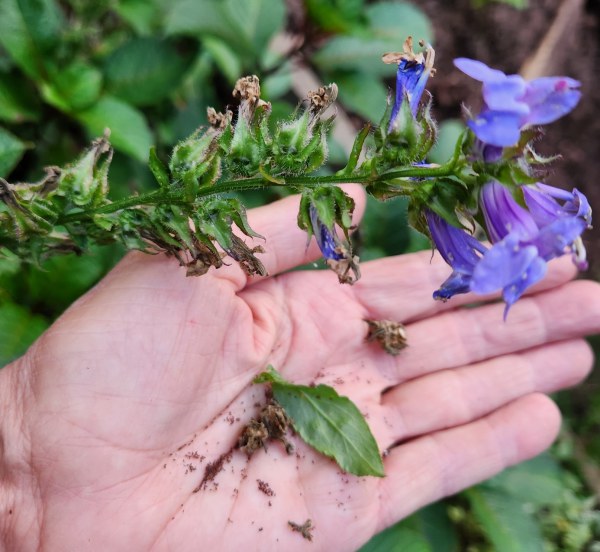
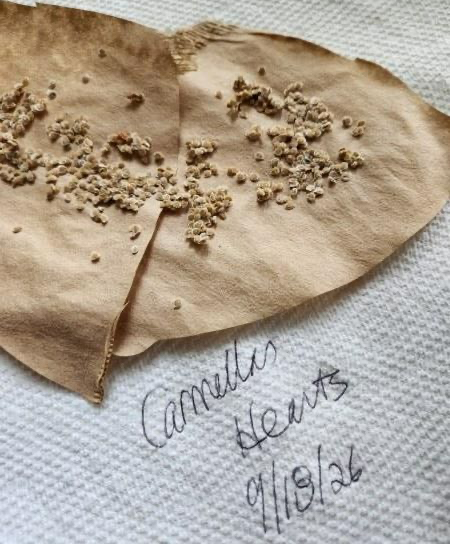
| I am in the peak of my seed saving season. Above I was checking on the ripeness of my Lobelia siphilitica (great blue lobelia) flower stalks. They were ready! The seeds, which are teeny-tiny and look like dust, fell softly into my hand. The next step, after testing one flower stalk, was to cut them and flip them quickly upside down into a paper bag, tie the bag, and hang it in my back garage. Then I can use the seed for winter sowing. (method #2 above) The other option is to simply collect the seed in my hand and FLING it to a new spot where I want more of this great native shade plant. | | I am also saving tomato seeds. In fact, we have REDISCOVERED one of our favorite Italian heirloom tomatoes, 'Carmella's Hearts'. It turns out that a relative of one of our Natureworkers had saved the seed from 2019. When she found it this winter, she said "why not?" and tried growing it. All the seeds germinated! I was given two of the tomatoes to confirm their identity. I then scooped out the seeds, put them in a jar with water, covered the jar with plastic wrap with some holes cut in it, let it sit for a few days until mold formed on the surface of the water, drained the seeds through a fine mesh strainer, and smeared them on a coffee filter to dry. As soon as they are bone dry, I will store them and we hopefully will have plants in 2027! | | IT'S ORGANIC LAWN CARE TIME! | | |
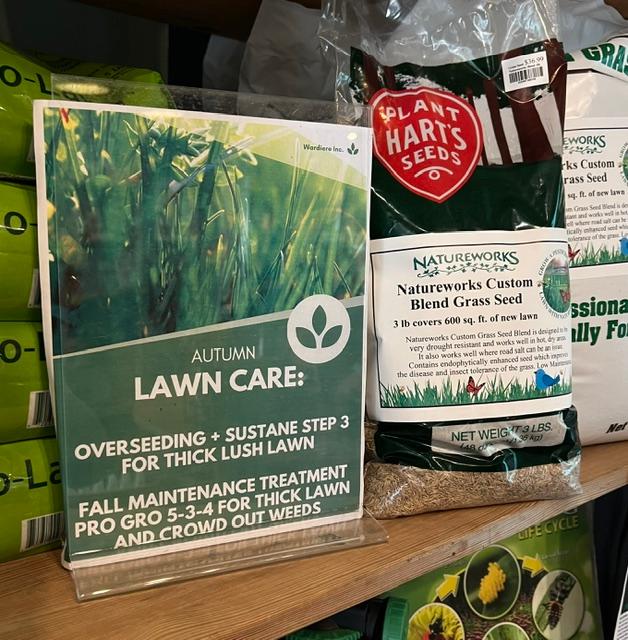
Right NOW (yes FALL, not spring) is the very best time to begin the process of reseeding and renovating your organic lawn. We have everything you need from our custom grass seed mix, EcoLawn grass seed, Mainely Mulch shredded straw, organic soil amendments, organic grub control products, and even FLAWN so you can add flowers to your lawn! Right now our sales include 30% off Beneficial Nematodes. Put them down after or during a rain to get them watered into the soil.
Got crabgrass? Overseed crabgrass areas of your lawn as the crabgrass starts to get its fall color and dies back. Another trick is to bag the clippings of crabgrass this time of year to collect and toss the seed heads. Overseeding now really helps the fight against crabgrass germination next May!
| | |
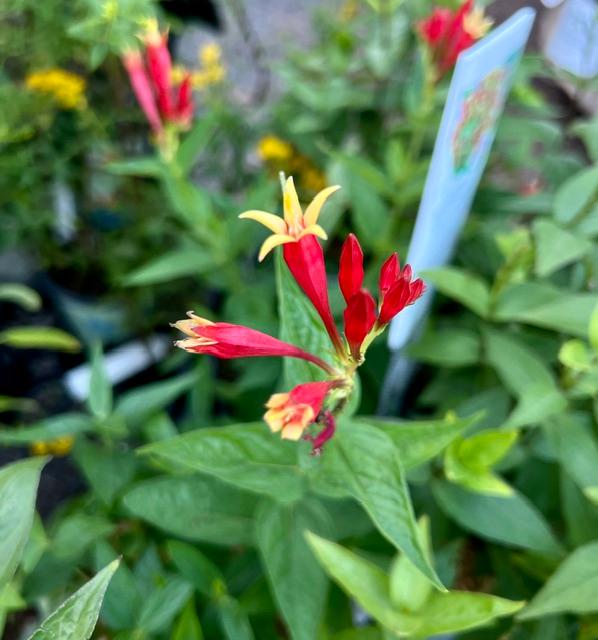
It's fall! New plants are coming into bloom. Some plants are reblooming such as this native Spigelia marilandica 'Apple Slices'.
I looked out the window of my office this morning and saw that my orange and red winterberries have turned colors. When did that happen? They must have gotten the memo that fall has arrived. My red chokeberries (Aronia arbutifolia 'Brilliantissima') are getting more brilliant red every day. My beautyberries are turning purple. So it's not just about flowers and the colorful foliage. It's about the berries too!
Let's dive into this fall planting season together. Come in and let us help you. Every plant you put in, every bulb you plant, means that next spring you will be SO thrilled and VERY proud of yourself. We've got what you need to make your fall amazing.
See you very soon...
| |
Sales this week 30% off all select perennials, shrubs, veggies, herbs,
and select compost and fertilizers too!
(Sale pricing through Sunday, October 4th or while supplies last)
Sale Perennials-
Astilbes
Baptisias
Coreopsis (potted plug size not included in sale)
Eryngium
Geranium (sun varieties only-selection limited)
Physostegia
Persicaria
Salvias
And more surprise perennials may be added to this list any day!
Sale Shrubs-
Cotinus coggygria
Ribes odoratum 'Sunny Bouquet'
Physocarpus 'Summer Wine'
Salix candida 'Iceberg Alley'
And more surprise shrubs may be added to this list!
Sale 30% off all organic vegetable and herb starts!
Parsley, Tarragon, White Peppermint, Cilantro, Rue, some Lettuce, few Kale, Endive, Celery, Dandelion, etc etc....
Sale 30% off Hardgoods-
Neptunes Harvest Liquid Fertilizers! Stock up for 2027!
Beneficial Nematodes (ideal for fall lawn care, we are just a bit overstocked...)
Black Earth Co. Compost 1cu/ft bags
Black Earth Co. Compost and Biochar 1cu/ft bags
50% off our big ugly duckling sale bench along the back fence continues daily and selection changes daily too! Includes past bloom, trimmed back, maybe lanky perennials, but healthy roots! Newly added- a bunch of NATIVE MONARDA (has mildew but roots are so good!) the gardeners know this is very normal.....
While supplies last, in store purchases only, special ordered plants not included.
is
| | | Fall Events at Natureworks! | | |
Click here to register for FALL WORKSHOPS
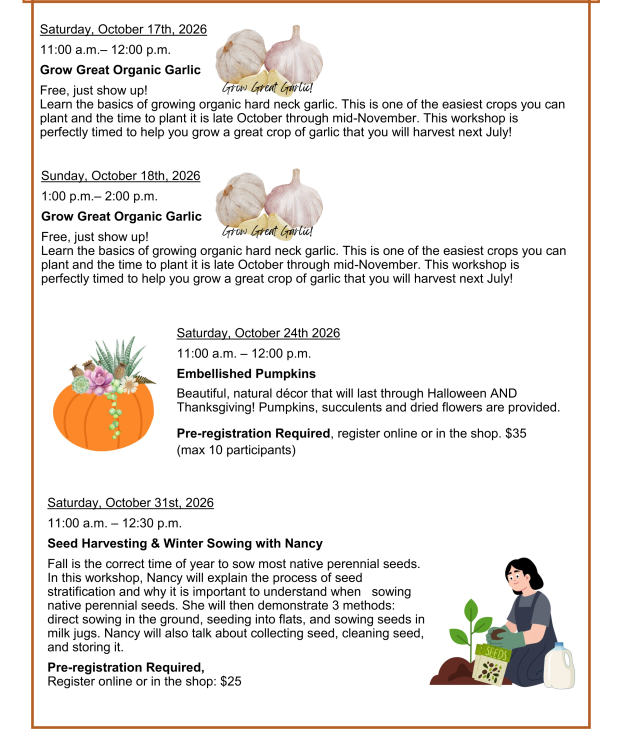
Note: many of our workshops are free and you can just show up!
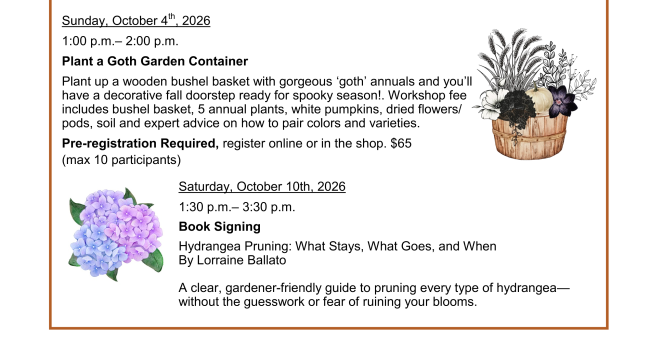
Those that are interactive where you will take home a Goth Garden planter, an Embellished Pumpkin, or a Milk Jug filled with seeds for winter sowing require advance registration and payment. Sign up soon. All paid workshops have class limits. Reserve your spot today.
| | |
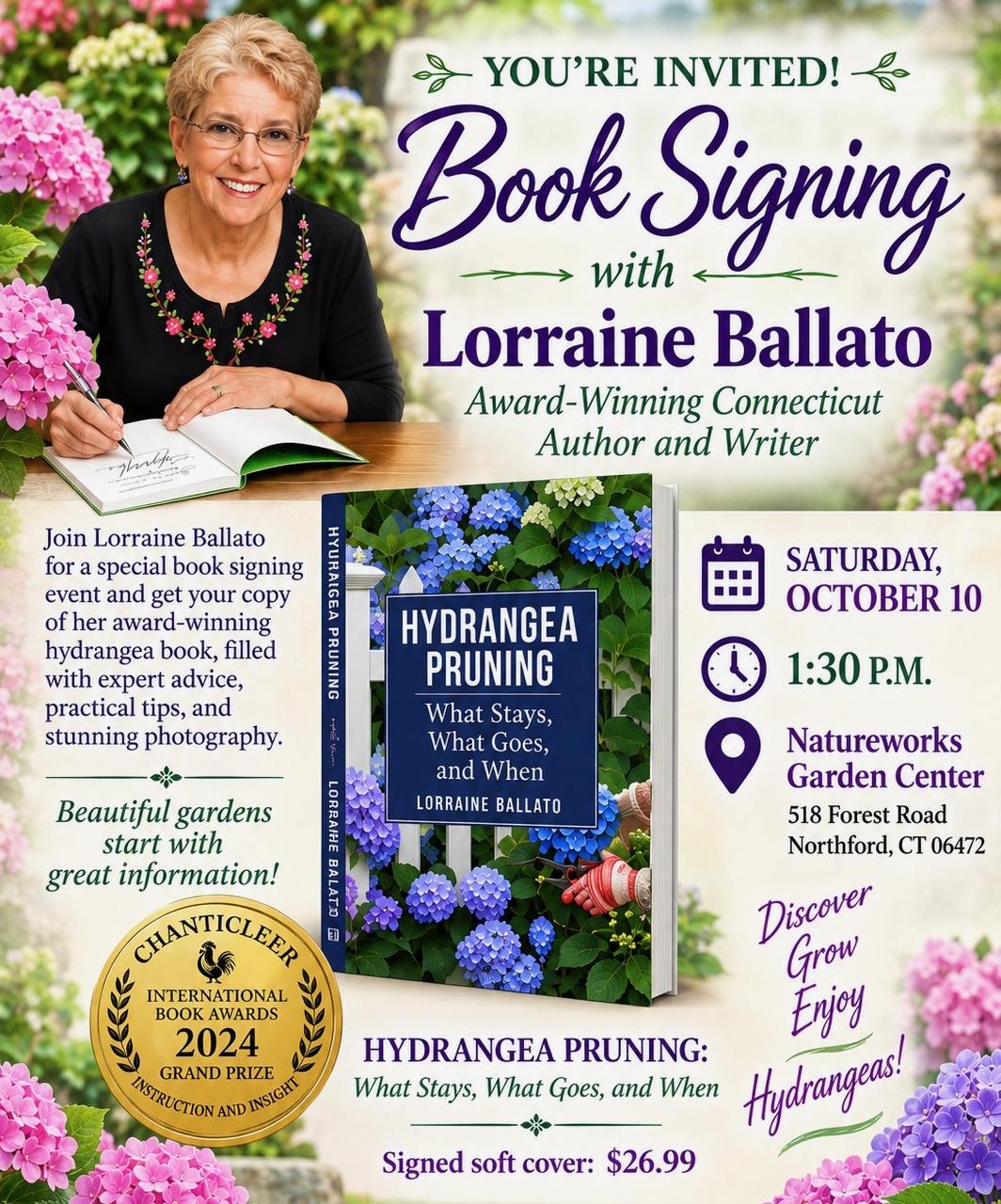
We welcome CT author Lorraine Ballato to our teaching tent to answer all your Hydrangea questions! We have a limited supply of her new book, 'Hydrangea Pruning' which answers SO MANY hydrangea questions. It is a great resource to have for your gardening library!
No need to register, just come and take a seat! She will happily sign your book!
Sat Oct 10, 1:30pm.
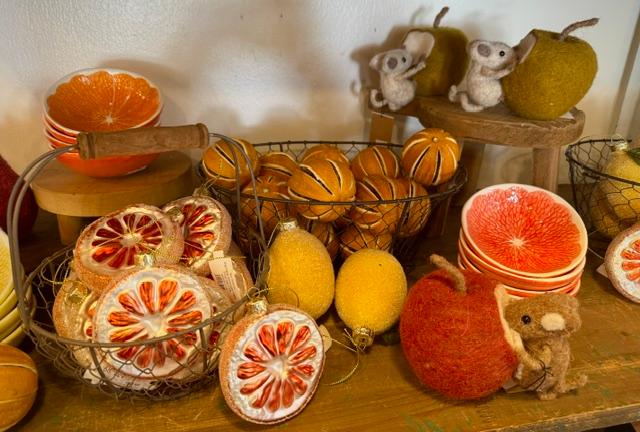
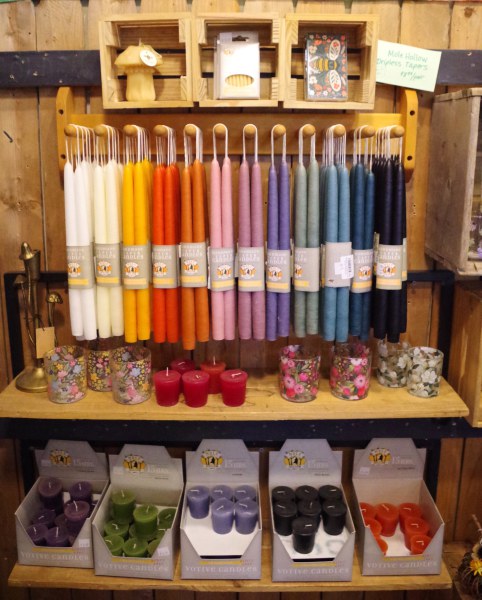
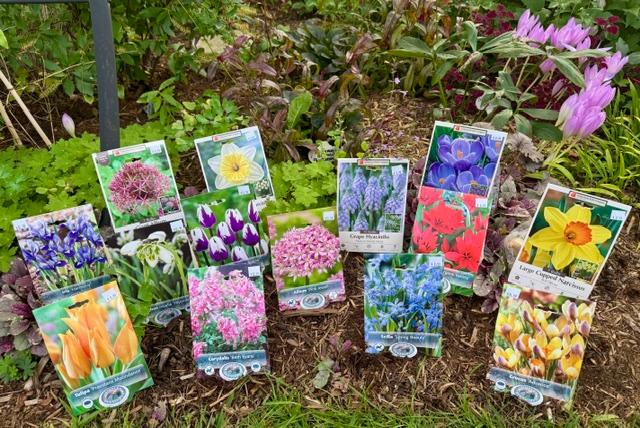
| | A few more highlights.... | | Don't forget to check inside the shop for seasonal goodies. | |  | Stock up on candles now that the light is less. I light candles every evening at this time of year! | | | And of course, spring bulbs are IN! Here's a snippet of our collection! We have over 75 types available now. Buy them soon, plant them in October and November! Check out the Colchicums blooming NOW in the garden and on the top right in this photo too! | | |
For over 55 informational handouts, head to
www.natureworksgardencenter.com
FOR THE LATEST GREATEST PHOTOS...
Follow Us on Facebook, Instagram and YouTube!
| | | | |