|
Women have long been central in shaping history and in the public square, but only 24 percent of historical figures taught in public schools are women. So where are their voices?
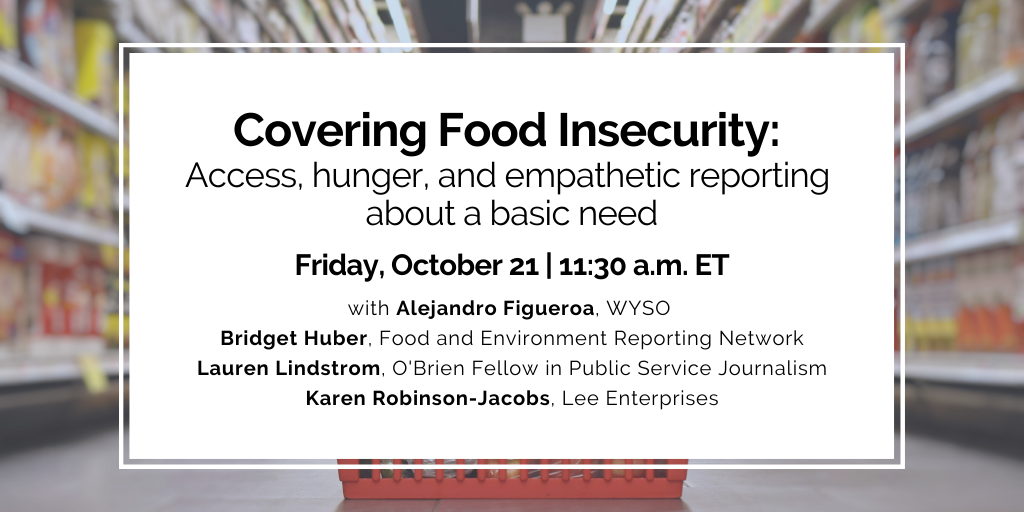
The National Press Club Journalism Institute on Tuesday held a wide-ranging conversation on how women’s voices have been silenced and spotlighted in newsrooms and in the public square, and how people can ensure that journalism raises up a diversity of women’s perspectives in the future. Participants learned from:
-
Soraya Chemaly, award-winning author of “Rage Becomes Her,” co-founder of the Women’s Media Center Speech Project
-
Deborah Douglas, co-editor-in-chief of The Emancipator
-
Allison Gilbert, journalist and co-author of “Listen, World!”
-
Dana Rubin, author of “Speaking While Female”
-
Connie Schultz, Pulitzer Prize-winning columnist, novelist, professor
-
Moderator: Julie Moos, executive director at the Institute
“We shouldn't have to, every generation, rediscover these women,” Rubin said. “It's so important what each of us is doing to recover these voices and put them into circulation so that we can build on these ideas and move forward.”
Panelists shared the following insights amplifying the voices of today’s women.
Own your own story. “When I speak in person to an audience full of women, I always try to ask them at some point, ‘How many of you have ever told your story even to people who think they know you best?’ And you will see women tear up. That's the answer — they have not. So I would say this: that any step is no small step when it's a step forward. Right? And owning your own story and seeing the value in your story and starting to share the value of your story helps you find your voice, helps you see your place in the world. And it does make you want to do more, because you start to feel your power,” Schultz said.
You have a stake in the outcome, so raise your voice. “I’ve thought a lot about ‘the voice’ — of course, the idea of having voice and speaking and sound coming from our vocal cords and our larynx. That's one meaning of voice. … But it's a metaphor, of course, for having a larger voice. And to have a voice, I believe, in the conversation is to have a stake in it, to have a stake in the outcome and to have agency in the outcome of a course of events,” Rubin said.
Bring ‘private problems’ to the public space. “Ten years ago, if you really tried to raise a flag and said, ‘You know what, this horrible thing is happening to people online: Women, particularly Black women in the United States, are being targeted. They're being targeted in organized ways. It's a threat to freedom. It's a threat to freedom of expression, it's a threat to democracy.’ You literally got the feminist pat on the head. ‘Isn't that cute? Go keep yourself safe.’
“They think it's a private problem, like all violence against women belongs in the private sphere, where we are personally responsible for keeping ourselves safe. And so you know, when I think about silenced voices, or muted voices, I think who is doing the silencing? Who is doing the muting? … So you know, if we can't directly address the accountability of the people who can make change with disproportionate power, then I think we're going to see the next generation also recreate this wheel,” Chemaly said.
Acknowledge and call out erasure. “What happens even before erasure? … I call it de-presencing. And I decided to define it around the one thing I know stone cold, and that's being a woman and being Black: the way that the cis white patriarchy has of disregarding Black women in physical spaces and the narratives as if we’d never existed. But to be erased you had to [have] ever existed. There's a sensation in the world of never having existed, Douglas said. Douglas referenced the Louisiana governor’s statements regarding Louisiana’s maternal death rates, in which the white man said the numbers aren’t so bad when adjusted to remove Black women from the figures.
“That's de-presencing. That's just taken us out of the entire story. And what is the story? You know, it starts off as a personal narrative, but it becomes part of a cultural norm which becomes part of a policy which becomes a law which becomes the whole life that we live,” Douglas said.
Be unapologetic. Elsie Robinson, the subject of a new book, was America’s most-read woman for decades, reaching 20 million people with her weekly “Listen, World!” newspaper column.
“Think of feeling ownership of the space that you're in without apology. We opened [Listen, World] on purpose, with Elsie going directly to William Randolph Hearst demanding to be paid what she was worth, and she had proof of her success over time. So it's not just shirking away from what you deserve. It's owning it and gathering evidence of your power in your job and then going for it,” Gilbert said.
Support your women writers. “You cannot be resilient online by yourself. … Newsrooms need to understand the risks in a totally different way. The risks, for example, to a young woman are very different than the risks to a middle-age, older guy. You know, she has to navigate spaces in a completely different way. And that's also true because she brings those risks into the institution, and the institution is then encountering a different threat than it may have encountered 50 years ago. So a threat to a woman's credibility is a threat to the news now, because there are women writing news, whereas that just wasn't the case the same way 50, 60 years ago,” Chemaly said.
Invite the conversation. “Every column is an attempt to start a conversation. But I don't want to be a walking apology for the views I have. And women are so frequently corrected by people who supposedly are supposed to love them by saying, ‘Well, you know, you're acting like you know, everything,’ or ‘Well, how would you know about this?’ We are so accustomed to that kind of behavior. And then add online — sorry, holy cow — add online, right? And reader mail: There is nothing I have not been called at this point. … And the thing is, you know, what they hate the most is when you can laugh at them. I know how hard this is. I know how hard this hate mail can be. If you stand for anything, you're going to have people who object to you. And if you're a woman, I've said this for years now, if you come after my appearance, my weight, or my gender, I already won. Because that meant you had nothing to say to the substance of the argument I was making,” Schultz said.
For more insights from this discussion, watch the video here.
|