|
Written by Kieran Delamont, Associate Editor, London Inc. | |
LEADERSHIP
The midlife crisis of the middle manager
Caught in a lose-lose between workload, burnout and RTO policies, middle managers are on the precipice of peril
| |
|
WE’VE WRITTEN ON a few occasions about the slipping confidence of the workforce, which has declined markedly over the past two years especially. But a new report from Glassdoor suggests that this decline in sentiment is particularly sharp among middle management.
“Employee confidence continues to drop most severely for mid-level employees for whom employee confidence has fallen 6.2 percentage points, from 54.6 per cent in February 2023 to 48.3 per cent in February 2024,” a recent report from Glassdoor reads. They are as miserable, statistically, as the average entry-level employee right now.
Looking around at economic trends, it’s not hard to see why. Companies have slowed hiring and are squeezing their mid-level managers for more efficiency. Mid-level corporate teams have also been the target of layoffs at large companies, from Meta to Google to UPS, at the end of 2023 and start of 2024. “As the ‘year of efficiency’ mandates extend into 2024, middle managers are under more pressure to do more with less, managing demands from leaders while placating anxious employees,” wrote Glassdoor’s Daniel Zhao.
Adding to the burden is that middle managers are often the ones tasked with delivering corporate bad news and managing the fallout.
“They’re really just a messenger of something that they don’t necessarily have a hand in,” Bellwether’s Jim Frawley noted. “A middle manager is not responsible for causing the layoffs, and many middle managers, when they’re trying to communicate layoffs, are defensive or trying to defend something they really shouldn’t have to defend.”
One report found that 70 per cent of managers would step down to independent contributor status if they could keep their same pay. “This statistic is a stark indicator of a deep-seated dissatisfaction and a silent crisis brewing within the echelons of middle management,” wrote AJ Cheponis.
The answer, according to leadership experts, comes down to resources. Middle managers report a lack of support from senior leadership, but a “tangible shortage of resources, be it manpower, tools or support.” And while some will argue that with December and January layoffs season in the rearview mirror that the worst may be over, it’s clear that the underlying state of middle management is not good.
“We expect more of them than they can reasonably do in a given work week,” said Gartner’s Brent Cassell. “It’s a recipe for burnout.”
| |
DESIGN
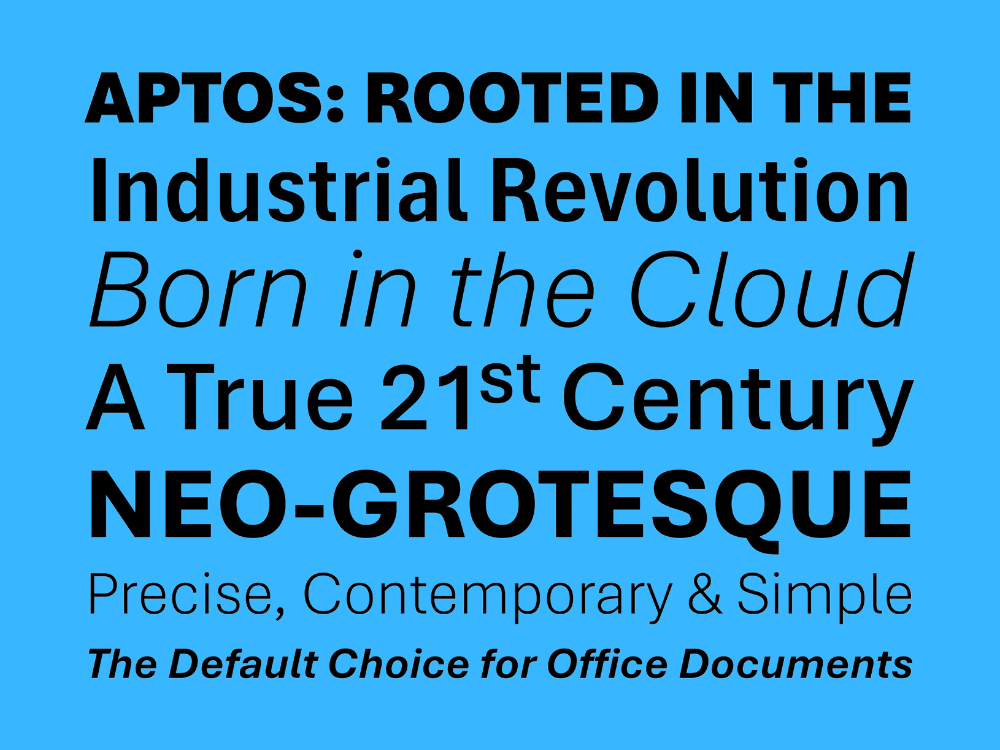
The Aptos rant
After 15 years with Calibri as the default font, MS Office quietly switched it up. Some users are less than thrilled
| |
|
IF YOU’RE WONDERING whether something’s a bit off about the look of your Microsoft Office suite over the last couple months, you’re not crazy: the default font really did change, and people are starting to notice.
“Out of nowhere my work computer changed the default font from Calibri to whatever this is and it feels like some kind of sick joke,” wrote one TikTok user earlier this year. “This happened on my Outlook and it’s caused a professional identity crisis,” wrote another.
The culprit? Aptos, Microsoft’s long-awaited new default font, first announced as the successor to Calibri in 2021, which began rolling out to Office suite users late last year.
“You might sense it if something has subtly changed,” wrote the New York Times. “That’s a feeling some people have had in recent weeks when they turn on their Microsoft Word programs. After 17 years of Calibri as Word’s default typeface, many users suddenly found themselves typing in a new typeface called Aptos.”
Why the change? Well, it seems that it was just time to freshen up the wardrobe. “I often think of this Roger Black quote, which says that fonts are basically like clothing for your ideas,” commented principal program manager at Microsoft Office Design Simon Daniels. “So, what we’re saying is that Calibri has gone out of fashion.”
In 2021, Microsoft originally piloted five new fonts ― Tenorite, Bierstadt, Skeena, Seaford and Grandview ― and the winner (among user feedback) was Bierstadt, which is now called Aptos.
“Aptos embodies professionalism, adaptability, subtle flourishes of expression and more clarity,” said a statement from Microsoft. “It articulates many different languages and tones. Stem ends are clean cut. Subtle circular squares within the letters’ contours allow higher legibility, especially at small sizes.”
It’s a small change, and lots of people might not have even noticed it (if it’s been rolled out to you at all yet). But if the font-heads at Microsoft are to be believed, it’s tantamount to the arrival of a new era. Behold the Atmos age ― welcome to the future.
“You think a font is such a tiny thing,” said Microsoft’s Jon Friedman. “It’s just letters. But it requires deep thinking; it’s not a trivial concept.”
| |
|
|
Terry Talks: The business case for learning
| In today's fast-paced world, the ability to adapt and stay relevant is crucial for just about everyone. One of the most important ways to achieve this is through continuous learning. By constantly expanding our knowledge and skills, we can stay ahead of the curve, navigate change more effectively and inspire those around us to do the same. | | | |
PRODUCTIVITY
Why time poverty is damaging to business
If time is money, why do so many people struggle to draw the correlation between the two?
| |
|
WORKPLACE WELLBEING AND the emotional state of the average employee is one topic that seems to be on everyone’s minds lately. Naturally, a lot of the focus goes to money ― are workers being paid enough? Are they accessing career growth opportunities? Can they pay the bills?
But some researchers would instead focus on time as one of the most important factors attached to worker wellbeing and suggest that “time poverty” is often overlooked in the conversation around how we feel about work, and how productive we are at work.
Feelings of time poverty are widespread. One poll conducted found that half of workers report feeling time poor. “[Time poverty] is defined as the acute feeling of having too much to do and not enough time to do it,” said Cassie Holmes, a professor at UCLA who has led research into time poverty.
“When we feel time poor, it makes us do less,” Holmes recently told Charter. “We’re less healthy…It makes us less confident in being able to achieve what we set out to do.”
And yet, experts suggest that it is systematically overlooked in policy conversations. “Billions of dollars are spent each year to alleviate material poverty, while time poverty is often ignored or exacerbated,” wrote researchers Laura Giurge, Ashley Whillans and Colin West.
In a simple harnessing of the concept that time is money, time poverty researchers say it amounts to a hidden cost to business and suggest employers can tackle employee satisfaction problems by giving people their time back. Time poor employees are less likely to bring forth new ideas, because they have less time to think creatively. They are also more likely to quit and take more leave. In short, having a bunch of workers whose schedules are packed may look productive on paper ― but it might be costing your business money.
“The evidence does suggest that being focused on time as the resource that is most precious, most critical, does lead to greater happiness, does lead to greater satisfaction,” said Holmes. “There’s always someone that’s going to make more. [But] when you use time as your metric…then you’re not subject to the social comparison.”
| |
PERSONAL FINANCE
Claiming home-office expenses was so easy, of course it had to change
If you’re one of the million of Canadians who worked remote or hybrid last year, allot yourself some extra time this tax-filing season
| | |
|
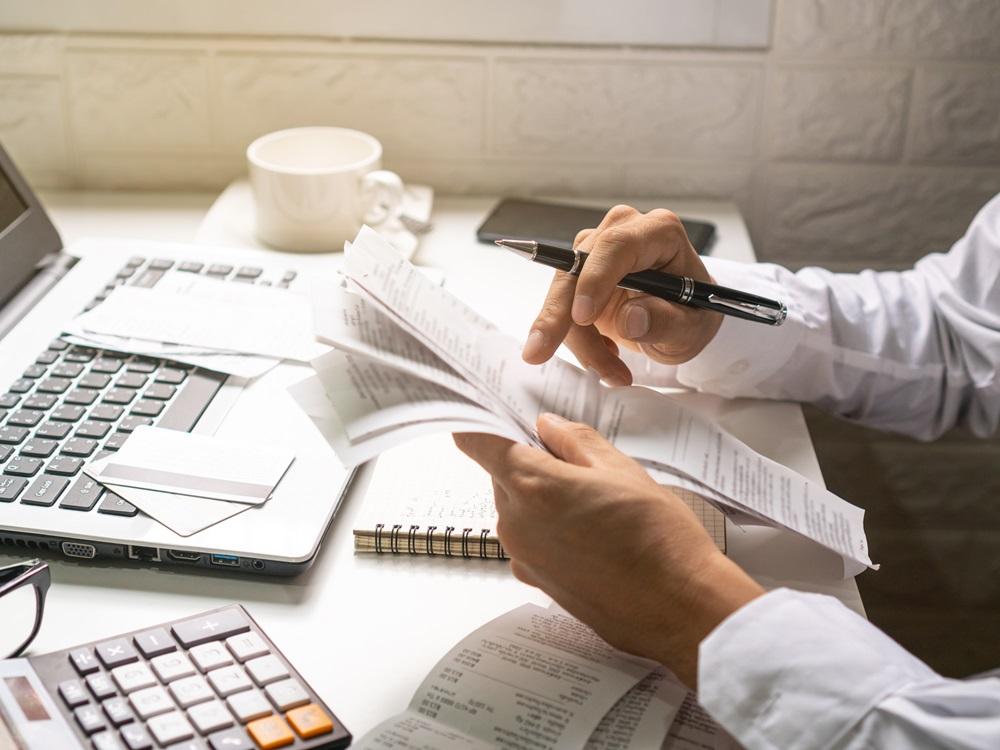
DURING THE FIRST wave of WFH in 2021, the CRA put in place a simplified method for claiming home-office expenses: $2 per day up to 250 days, or a max of $500, to cover work-from-home expenses. Simple, easy-to-grasp and straightforward. So, naturally, it had to go.
“Employees who wish to claim home-office expenses will have to go through the tedious exercise of tallying all their expenses, prorating them and then claiming the appropriate amount as a deduction on their 2023 returns,” explained the Financial Post’s Jamie Golombek. Beyond that, the usual guidelines still apply: day-to-day supplies, like pens, printer ink, etc. are expensed as costs, while larger items like computers and office chairs will need to be filed as capital costs.
It’s a small(ish) change that could have both tax filers and their employers scrambling, so it’s best to get on it early this year. One potential snarl for part- and full-time salaried employees is that in order to make a home office expense claim, you’ll need a T2200 form this year, which essentially asks your employer to confirm that you were working from home in one capacity or another (self-employed workers won’t need this one.) It’s the one part of this tax change that could throw a wrench in your return if you don’t have it ready to go.
Edward Rajaratnam of Ernst & Young said he was “disappointed” that businesses and employees weren’t given a heads up on this a bit earlier, as some employers (especially large ones) are now “scrambling” to get T2200s to all their remote-working employees ― so if you’re going to need one of these forms, it’s probably best to request one from your employer sooner rather than later if they haven’t sent it out yet already.
|
| | | | |