|
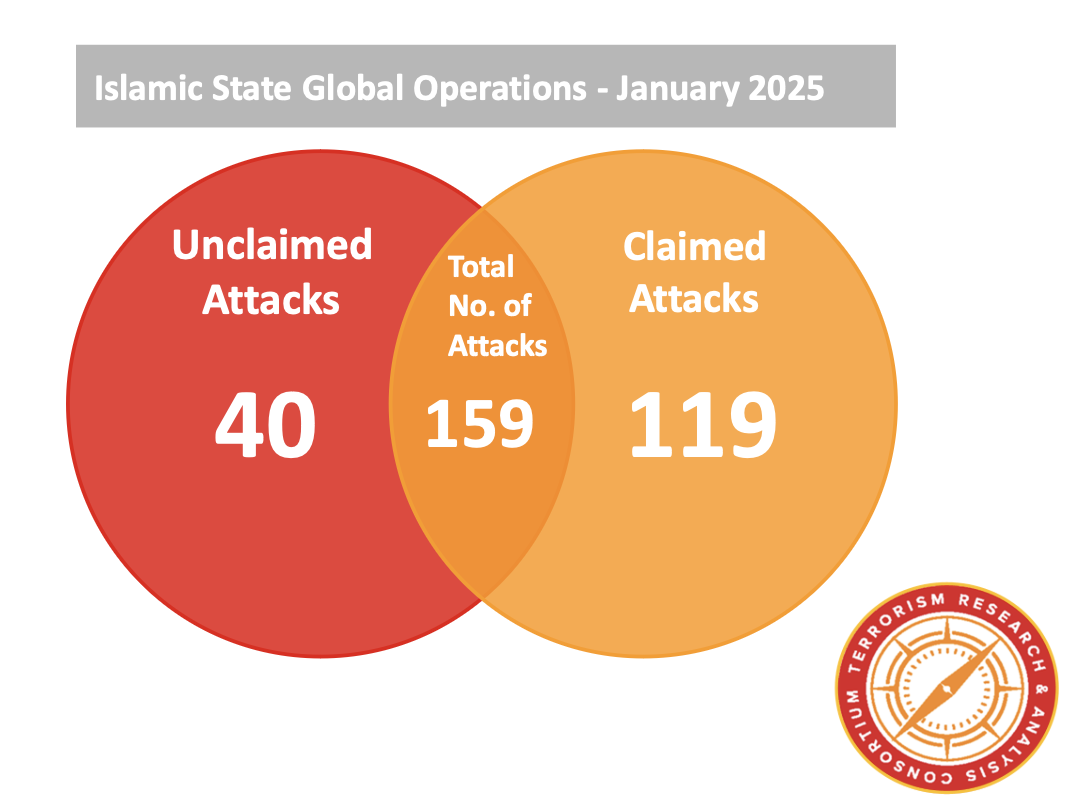
Islamic State (IS) operations in January 2025 highlighted an adaptive strategy. There were 119 claimed attacks, up from 104 last month. This increase is driven by intensified operations in Somalia, where ISS has adopted a more aggressive stance. In contrast, Syria saw a sharp decline, with operations falling from 18 in December to just 6, signalling a strategic pause rather than diminished capacity. IS often employs tactical silences to confuse intelligence efforts and prepare for future strikes.
Key hotspots this month included Somalia, Nigeria, and the DRC, while Iraq, Afghanistan, and Pakistan saw minimal activity, suggesting deliberate low visibility rather than an operational decline. Compared to January 2024’s 164 attacks, the drop to 119 this year reflects IS’ shift from high-profile campaigns like “And Kill Them Wherever You Find Them” to a blend of overt and covert operations.
The decrease in unclaimed attacks (from 50 in December to 40 in January) underscores IS’ ability to operate in the shadows, balancing publicised and silent operations to avoid counterstrikes. This strategic discretion enables IS to maintain influence globally while minimising exposure to counterterrorism efforts. As the group continues to adapt and recalibrate, its evolving approach ensures it remains a persistent threat capable of disruption and survival.
TRACs Main Areas of Interest in January 2025
Iraq & Syria
Islamic State (IS) operations in January 2025 demonstrate a calculated shift in strategy, particularly in Syria, where activity sharply declined from December. Unlike last year’s high-profile campaign, "And Kill Them Wherever You Find Them," with over 240 attacks, IS exhibited an unusual silence this month, refraining from reporting operations in Iraq and Syria. This tactical pause is a deliberate move to maintain operational security and prepare for future offensives rather than a sign of diminished capacity.
In Syria, IS activity dropped in key areas like the badiya in Homs and Deir Ezzor, signalling a tactical adjustment. However, the group remains active in southern Deir Ezzor and Hasakah, which are vital transit corridors between Iraq and Syria. Intelligence reports indicate 11,000 IS militants near the Iraqi border, hinting at a potential resurgence. Additionally, IS has resumed its economic warfare against oil infrastructure in eastern Syria, aiming to destabilise governance and replenish financial resources.
In Iraq, IS adopted a quality-over-quantity approach, claiming only one attack but demonstrating sophistication in an ambush in al-Tarmiyah that killed 13 security personnel. This calculated restraint reflects IS’ ability to execute high-impact operations while avoiding overexposure. Across both Iraq and Syria, IS’ actions suggest it is strategically regrouping to preserve its capabilities for future offensives, maintaining its status as a persistent threat.
Somalia
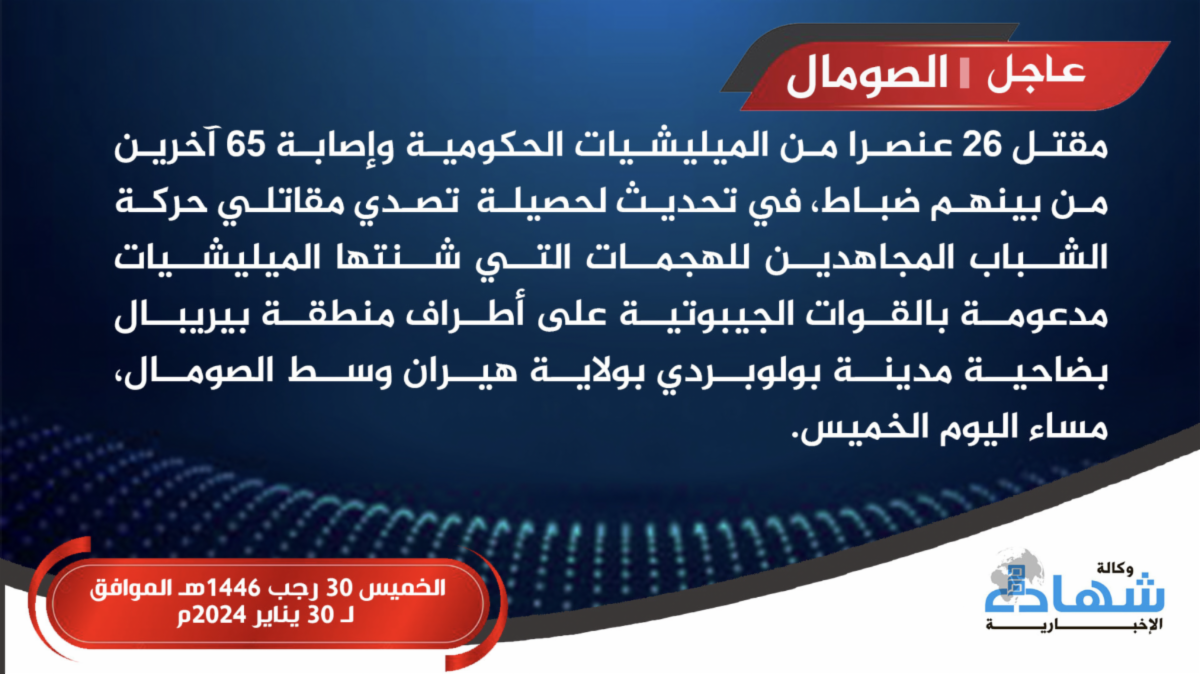
Islamic State Somalia (ISS) has abandoned its typical low-profile, financially-focused approach, ramping up attacks across Puntland since late December 2024. This escalation came in response to a counterterrorism campaign by Puntland forces and the US, which unexpectedly offered ISS propaganda opportunities. ISS claimed 16 incidents in Puntland during this period, reflecting a strategic shift from smuggling and extortion to open confrontation. Unlike its usual shadowy operations, ISS has confidently publicised its activities, signalling its readiness to sustain high levels of militant activity and countering its perception as a small, financially motivated offshoot of IS.
A key factor in ISS' growing strength is its recruitment of foreign fighters, who enhance its operational capabilities. A notable example is the December 31st attack in Puntland, where 12 militants from seven nationalities executed a complex assault, showcasing ISS' appeal as a relatively secure base for jihadists seeking battlefield engagement. The region’s strategic geography and lucrative networks attract recruits, boosting ISS' ability to conduct large-scale, sophisticated attacks.
By stepping into the spotlight, the ISS risks intensifying its counterterrorism efforts, potentially disrupting its smuggling routes and destabilising its financial hub for the broader IS network. However, this move could also amplify its propaganda and recruitment efforts, cementing its status as a rising force within the IS ecosystem. The coming months will determine whether the ISS’s gamble strengthens its position or exposes vulnerabilities under increased international pressure.
Yemen
Islamic State Yemen (ISY), one of IS’ most discreet affiliates, surfaced in recent clashes with Houthi forces in al-Bayda Governorate. The conflict began when Houthis attempted to detain an ISY militant, who detonated an explosive belt, killing several members of the arresting team. Despite ISY’s direct role, IS Central refrained from claiming responsibility, consistent with its strategy of treating Yemen as a low-visibility theatre for covert guerrilla warfare rather than large-scale territorial campaigns. ISY last received recognition in August 2023 when militants pledged allegiance to the new caliph, but it has since operated in the shadows, avoiding attention, unlike Ansar al-Sharia or Houthis, who regularly publicise their activities.
This emergence raises questions about ISY’s strength and strategy. Unlike IS Somalia's aggressive public campaigns, ISY remains restrained, likely aiming to expand its presence subtly while avoiding triggering major external interventions. ISY is expected to persist with limited but disruptive tactics, such as ambushes and IEDs while avoiding high-visibility offensives. Its continued activity underscores its embedded role in Yemen’s conflict ecosystem, but large-scale operations or formal recognition by IS Central seem unlikely unless ISY significantly escalates its influence. For now, it remains a shadowy presence, leveraging guerrilla tactics to exert pressure without inviting a broader crackdown.
|