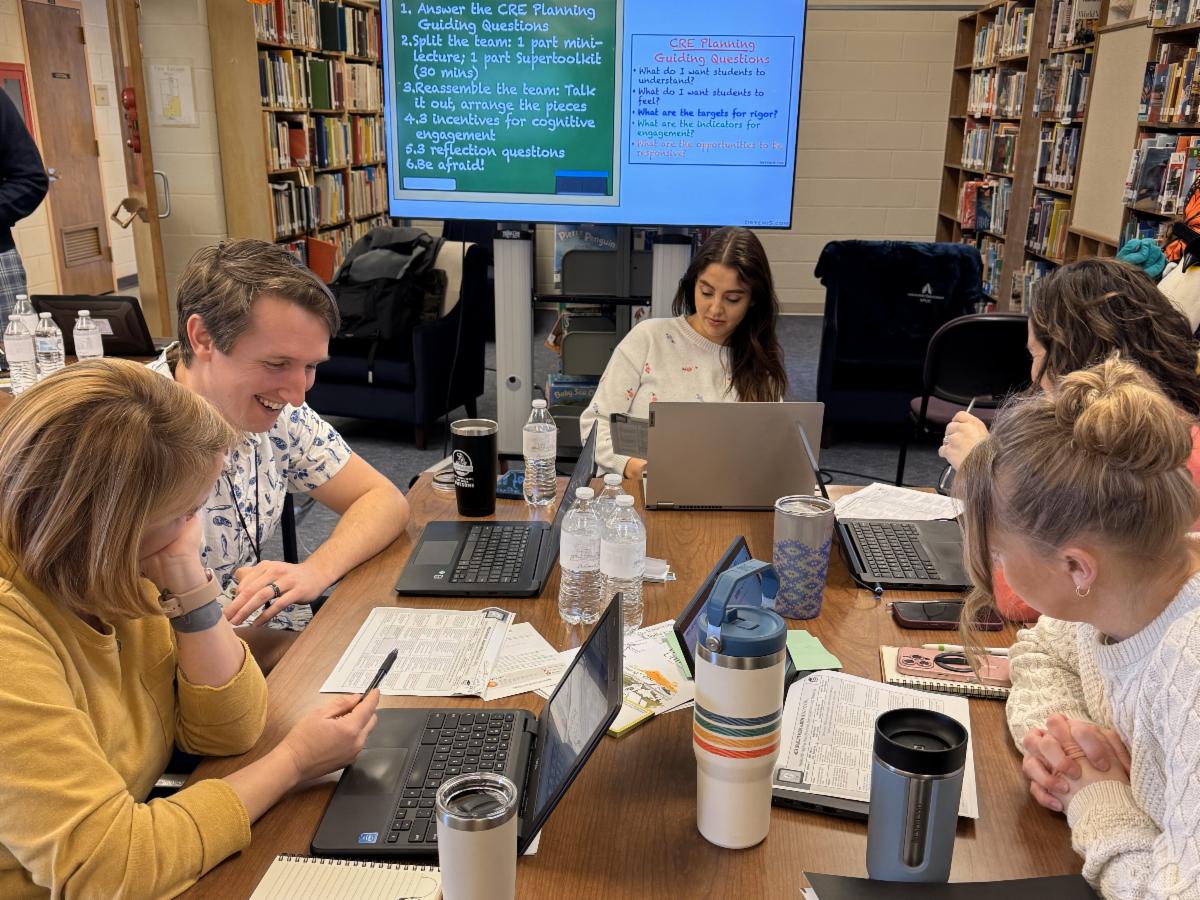
Teachers in College Place learning about Culturally Responsive Education practices and how to bring more CRE teaching to the beautiful Walla Walla Valley. | |
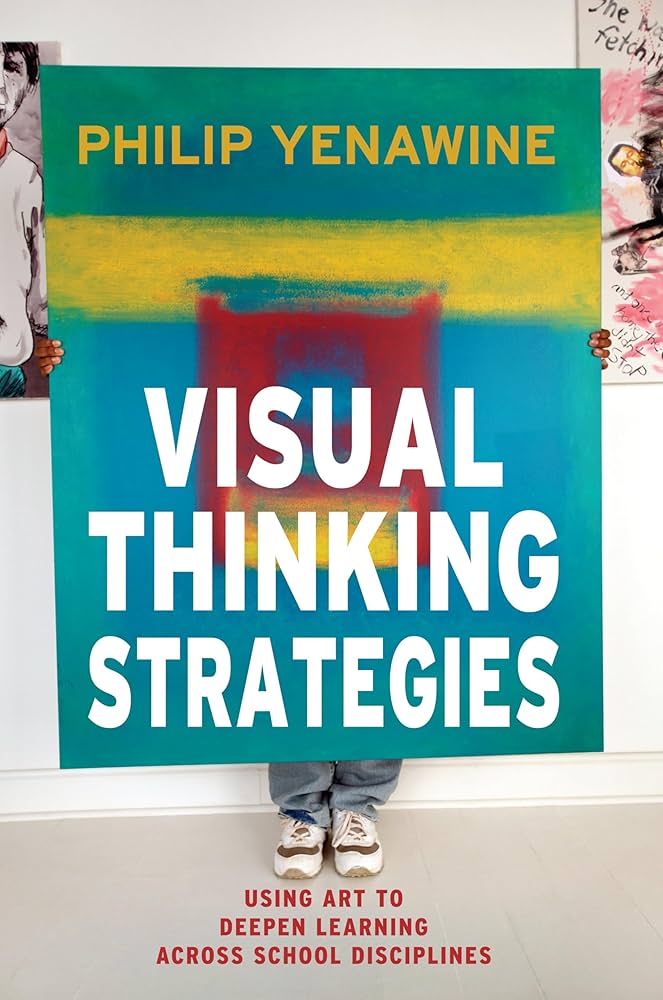
WERD Book Study: Visual Thinking Strategies | |
|
Visual Thinking Strategies: Using Art to Deepen Learning Across School Disciplines by Philip Yenawine. Facilitated by Dr. Adeyemi Stembridge.
Registration here.
Cost: Free. Book Study registrants must purchase and read the book on their own. Many local bookstores and online retailers carry this title as well.
About: We’re excited for you to join us as Dr. Adeyemi Stembridge facilitates a study of Visual Thinking Strategies by Philip Yenawine. The text is abundant with connections to our work with CRE and provides many on-ramps for learners. We will discuss the following sections of Visual Thinking Strategies on Tuesday afternoons from 4:30-6:00 on the dates below:
- February 25th – Preface and Chapter 1
- March 4th – Chapter 2 & 3
- March 11th – Chapter 4 & 5
- March 18th – Chapter 6
- March 25th – Chapter 7
See more about community agreements and clock hours on the CSTP webpage here.
| |
Washington State Teaching Standards: Financial Education | |
|
CSTP is looking to recruit educators to provide feedback on Financial Education learning standards that are currently being updated by teams at OSPI.
The teacher groups will focus on the state Learning Standards Review project. The project aims to prioritize, revise, and clarify the state learning standards. The selected focus group will:
- Engage in dialogue and feedback around the current standards and implementation.
- Complete a bias and equity screening of the standards.
- Review revision drafts and strategize how to provide continued support for revision and implementation.
- Offer feedback on the updates and changes.
Participation in this project will require in person attendance at our one-day launch event on Saturday March 15, 2025 at the Doubletree Southcenter in Seattle. Travel expenses will be covered. Additionally you will need to attend one virtual focus group follow up meeting on April 17th from 4:30-6:00 pm. Each participant could earn a stipend amount of up to $450.00.
Focus group members will be chosen to provide a well-balanced group in terms of representing:
- The race and ethnicity of Washington’s student population;
- Each geographic region in Washington;
- Large, medium, and small districts;
- Urban, suburban, and rural districts.
If you are interested in being a member of the focus group, please fill out this application by February 20.
Please email Anzara Miller at anzara@cstp-wa.org with any questions.
| |
Washington's 2025 Legislative Session Continues | |
|
CSTP continues to give updates on the current session. Every Friday, our Legislative Update Coordinator, Samantha Miller, will recap the week's events and what bills are still in play.
You can stay updated and catch up on past weeks (and even updates from past years) here on our Stories From Schools blog! We will also be sending out updates via email.
| |
CSTP's National Board Component 1 Support is Open for Registration | |
|
Registration is still open for Component 1 of our online cohort, which begins February 26, 2025
Online cohort: Facilitated by Ranice Innocent. This will be Ranice's 6th year facilitating and supporting National Board Candidates/Cohorts. Foundations and all four components will be offered, with 12 clock hours available for each section. Read more and register here.
| |
Partner with CSTP to Offer Clock Hours at Your Next Training | |
|
Are you running a course, professional development or book study and want to offer Washington State clock hours? CSTP is an approved Washington State clock hour provider and can approve your courses for clock hours. It is free for the instructor to apply for the course with participants paying a nominal fee.
Learn More and Apply for Clock Hours
| |
Career Connected Learning with CSTP | |
CCW is a statewide network of business, labor, education, and community leaders creating work-based and academic programs for young people in Washington to explore, prepare, and launch themselves into college and careers. CSTP is the designated Sector Lead for Education supporting this work at the state level. Here are our monthly updates. To find out more about Career Connect Washington you can to careerconnectwa.org.
| |
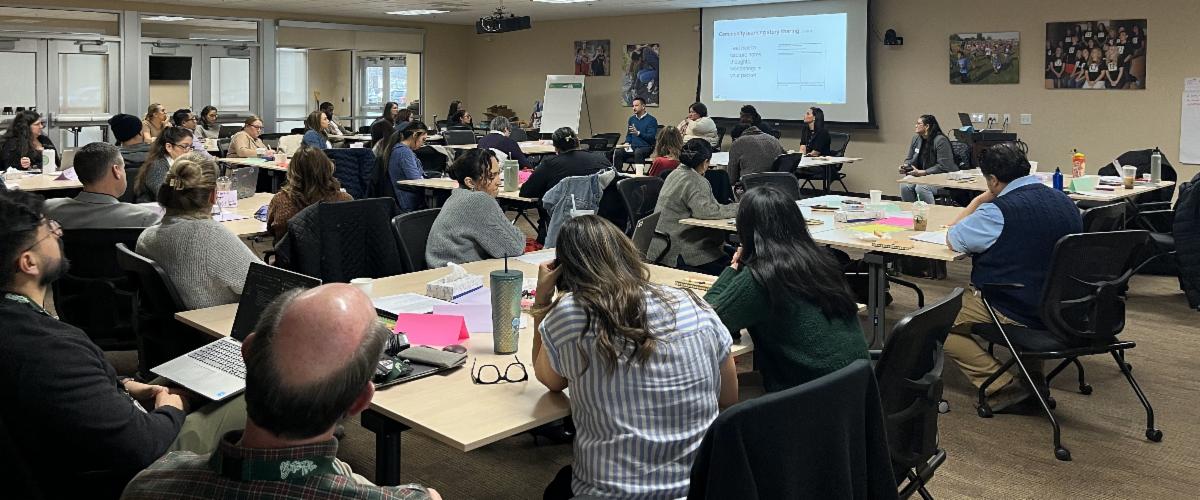
Educators gather to learn about Educator Pathways at ESD 105, 2/4/25. | |
|
Regional Gatherings Continue!
This past month CSTP partnered with ESD 105 to host another Educator Pathways Regional Gathering. Our day was full of rich discussion and reflections from a wide spectrum of invested partners in this work from district and ESD Superintendents, Educator Preparation Programs, HR Directors, Directors of Teaching and Learning and beyond!
We were thrilled to have panelists Jeff Cochran from Selah School District, Danica Garcia from the WSU Teaching Bridge Program, Darin Knapp from Puget Sound ESD, and K.O. Wilson from Kingmakers of Oakland come and share. Our panelists were storytellers and shared their wisdom and expertise about the programs they have supported that aim to expand and grow different on-ramps into the educator workforce and minimize obstacles our students encounter.
To quote Dr. Melissa Matczak, this event was an opportunity for like-minded movers and shakers in the region to come together with "dedication to eliminating unnecessary barriers to access and designing intentional collective approaches to support success"; very much resonating that great things can happen in community.
CCW Statewide Convening
This month will also be the CCW Learning Community Convening in Seattle for the entire CCW network of Regional Networks, Career Connected Learning Coordinators, Sector Leads, and the State Leadership team to collaborate on career-connected learning innovation. As part of the planning committee for this event, CSTP was thrilled and excited to support the vision and facilitation for this ultimate adult learning space!
Key moments for this event will touch upon Legislative Updates, the Intersection of AI and Career Connected Learning, Cross Regional Collaborations, Supporting Employer Roundtables and Coalitions, Scaling Programs, and Prioritizing Underserved Communities all through a lens of peer-to-peer learning.
Program Builder Round 13 Phase 4
Presentations and interviews for the selection committee have begun to be scheduled for Round 13! We have been honored to get to serve as technical assistance to prospective Program Builders to hear about the amazing work that they already do to support our students. While being part of the convenience pool does not guarantee selection for presentations and interviews in this funding cycle, all program builders who receive the opportunity to present and interview will be scheduled for a time slot prior to the summer ending of 2025.
If you have questions or would like to find some time to get some technical assistance, please contact Saara Kamal at saara@cstp-wa.org.
| |
WEA National Board Certification Resources | |
|
National Board Information Session Series: Registration Now Open!
Audience: Certificated Educators. Our Certification Trainings are conducted online through Zoom, as a Member Benefit, free of charge to WEA Members only.
National Board Certification — Overview: Session 1 (2 Clock Hours)
National Board Certification — Standards & Process: Session 2 (2 Clock Hours)
National Board Certification — Support & Next Steps: Session 3 (2 Clock Hours)
See here for more trainings and details from WEA!
| |
National Board Writing Webinars | |
|
Who: Any National Board candidate working toward National Board Certification in 2024-2025
What: These one-hour webinars are designed to support writing for the National Board portfolio. Candidates should expect to examine their own writing and work with peers on the selected topic. These sessions DO NOT replace cohorts nor conditional loan requirements.
When: Twice monthly, always Tuesdays, 4:30 PM-5:30 PM (choose Series B for upcoming dates).
See here for 2024-25 dates and registration.
| |
Hear from Educators of the Year: Kelly Guilfoil | |
|
In this episode of the League of Education Voters' "Putting Students First" podcast, LEV CEO Arik Korman interviews Kelly Guilfoil from the Lake Stevens School District, one of eight 2025 Washington Regional Teachers of the Year, about how her students are doing in the wake of the national election, what worked and what didn’t work in her own education journey, and how she would change Washington state’s education system if she were in charge and there were no budgetary constraints.
Listen here!
| |
OSPI: Grant Writing Workshop | |
|
The Nita M. Lowey 21st Century Community Learning Centers (CCLC) Program is hosting a virtual Grant Writing Workshop on February 26, 2025, from 11:30 a.m. to 2 p.m. The CCLC Program supports the creation of community learning centers that provide academic enrichment opportunities during non-school hours for children, particularly students who attend high-poverty and low-performing schools. OSPI oversees the administration of the federal grant, Title IV Part B, which funds 21st century programs for students. Please visit the 21st CCLC webpage for more information about the program and to find out which applications will receive priority for funding.
Additionally, OSPI is hosting the Bidders Conference Zoom Webinar, a comprehensive overview of the 21st CCLC Request for Proposal, application eligibility and requirements, and how to submit an application for the program. This will be held on May 8, 2025, from 9 a.m. to 12 p.m. Registration required.
If you have any questions about any of the above, contact Heidi Schultz.
| |
February is Black History Month | |
|
From blackhistorymonth.gov:
"As a Harvard-trained historian, Carter G. Woodson, like W. E. B. Du Bois before him, believed that truth could not be denied and that reason would prevail over prejudice. His hopes to raise awareness of African American's contributions to civilization was realized when he and the organization he founded, the Association for the Study of Negro Life and History (ASNLH), conceived and announced Negro History Week in 1925. The event was first celebrated during a week in February 1926 that encompassed the birthdays of both Abraham Lincoln and Frederick Douglass. The response was overwhelming: Black history clubs sprang up; teachers demanded materials to instruct their pupils; and progressive whites, not simply white scholars and philanthropists, stepped forward to endorse the effort.
By the time of Woodson's death in 1950, Negro History Week had become a central part of African American life and substantial progress had been made in bringing more Americans to appreciate the celebration. At mid–century, mayors of cities nationwide issued proclamations noting Negro History Week. The Black Awakening of the 1960s dramatically expanded the consciousness of African Americans about the importance of black history, and the Civil Rights movement focused Americans of all colors on the subject of the contributions of African Americans to our history and culture.
The celebration was expanded to a month in 1976, the nation's bicentennial. President Gerald R. Ford urged Americans to “seize the opportunity to honor the too-often neglected accomplishments of black Americans in every area of endeavor throughout our history.” That year, fifty years after the first celebration, the association held the first Black History Month. By this time, the entire nation had come to recognize the importance of Black history in the drama of the American story."
Read more here.
| |
ReadyWA Student Storytellers | |
|
In her first story as a Ready WA Storyteller, Lizzy reflects on her first day in college as a running start student! Her story highlights tips for overcoming first-day jitters, as well as her reasoning for pursuing running start! Read her story here.
| |
|
Join us for fun facts, obscure knowledge, and exploration of physics, genetics, etymology, art, and more!
| |
|
Timetables are based on the spatial motion of the Earth and other celestial bodies. The day is 24 hours long because an hour is 1/24 of the time it takes the Earth to revolve around its axis. A solar year is 365 or 366 days because, during the time the Earth rotates all the way around the sun, the Earth has spun approximately 365.25 times.
The most commonly used calendar in the world today is the Gregorian Calendar–named after Pope Gregory XIII, declared the current calendar in Europe in 1582. This modified the Julian calendar, first adopted by the Romans in 46 BCE and named for Julius Caesar. The Gregorian, Julian, and earlier Roman calendars are all solar calendars: They keep track of years by the sun. Other solar calendars currently in use today include the Persian and Ethiopian calendars.
In most solar calendars, a leap day is added every four years to account for the difference of 0.25 days per year. This is an example of intercalation: The process of changing a calendar year’s length to keep better seasonal time. Without these rules, solar calendars drift away from the seasons. The Roman Empire made the first year of the Julian calendar 445 days to correct some severe drift. Pope Gregory XIII altered the Julian calendar to remove 3 leap days every 400 years to keep everything on track; the year 1582 was only 355 days long to correct the drift that had already happened, removing October 5-14.
Other calendars prioritize the motion of the moon instead. It takes about 29.5 days for the moon to revolve all the way around the Earth, passing from full to new to full again. This places the emphasis on months rather than years. A lunar year is usually twelve lunar cycles lasting about 354 days, which is 11 or 12 days shorter than an observed solar year.
Various lunar calendars try to intercalate days to make up the difference. This is more accurately known as a lunisolar calendar, as it tries to keep pace with both the sun and the moon. For example, the Chinese, Hebrew and Buddhist calendars add an extra lunar cycle to every 2 or 3 years, totalling 13 lunar months. This is why an observance like Chinese New Year takes place on different dates each year but remains somewhere in January and February.
Meanwhile, the most popular Islamic calendar, the Hijri, keeps the year to 12 lunar cycles with no intercalation. This means observances like Ramadan take place earlier every solar year. This means there might be two Ramadans in one solar year, one at the very start of January and one at the very end of December; this was the case in 1997 and will be again in 2030.
With lunar cycles, you only have to wait for the moon to rise again to keep time. Lunar months are 29 or 30 days long, which is in the same range as the months applied to solar calendars. You might not always observe holidays in the same season, but you’ll always know when the full moon is–and based on how weird some of us can get around the full moon, maybe that’s even better!
| |
Your gift ensures that CSTP continues to support student achievement through a focus on teaching excellence. With you as a partner in CSTP’s mission, you directly make a difference in the lives of youth across Washington State schools. Donations are tax deductible and essential as CSTP works to support educators navigate unique models of student engagement and teacher leadership. | |
Liking and sharing our posts on social media is another way you can support CSTP during these times. Thank you for sharing our message. | | | | |