May 2022
Staff Highlight: Research Associate
Isadora Nogueira
Today we highlight the work of our valued Research Associate, Isadora Nogueira, who will be leaving us to start law school at the end of summer.

Isadora started with the Achieving Resilient Communities (ARC) project as an intern in the Spring of 2020 to coordinate community resilience planning in Ventura County with a focus on the farmworker population. Isadora's contributions to the ARC project included helping partners secure $820,000 in additional funding for ARC related work, conducting youth mobile heat monitoring, and leading an analysis of Ventura County CalOSHA inspections data for heat-related violations that includes recommendations generated with local farmworker leaders from Mixteco Indigena Community Organizing Project (MICOP) and Lideres Campesinas.

Isadora has also contributed extensively to our harmful algal blooms reporting work to the Centers for Disease Control and to our community small water system testing in Clear Lake for the California Water: Assessment of Toxins for Community Health (Cal-WATCH) study.

"I'm grateful to the Tracking team for showing me how to do high quality, community-engaged work on pressing issues like the presence of cyanotoxins in small, rural drinking water systems and heat-related illness in agricultural workplaces. Tracking California has forever shaped me as a professional, as a colleague, and as a Californian!"

- Isadora
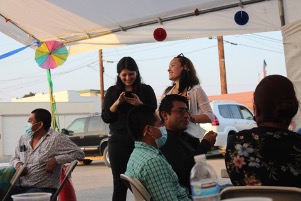
Ariadne Villegas (left) and Isadora Nogueira (right) at a celebratory dinner in Oxnard after ARC Resilience and Leadership Training series
CalOSHA Inspections for State Heat Standards
Isadora wrote a summary of results from her analysis of CalOSHA Ventura County inspections data from 2015 to 2019 for reported heat-related violations. The analysis was conducted at the request of ARC partners Mixteco Indigena Community Organizing Project (MICOP) and Lideres Campesinas.

Over half of the 120 agricultural inspections in this period found a violation, with over a quarter finding a heat violation specifically. Complaint-driven inspections were more likely to find a violation than other types of inspections; however, since CalOSHA is not mandated to inspect anonymous complaints, 65% of complaints triggered only a letter investigation rather than an on-site inspection because 80% of complaints were anonymous.

Read the summary here.
Cal-WATCH Results
Isadora helped develop a more comprehensive surveillance system to track reported illnesses in humans and animals from HABs with the California Department of Public Health.

She developed several fact sheets to share the results of drinking water sampling that our collaborators at Big Valley Band of Pomo Indians conducted in summer 2021 in the Clear Lake area, targeting homes not served by public water systems.

Over half of the intakes (drawing water from the lake to serve the homes) at homes tested had cyanotoxins above the EPA's health advisory, and many of these homes also had evidence of nitrates and/or coliform bacteria in their finished water. Cal-WATCH alerted these residents to the contaminants and held a results return webinar with project partners for the participants in May.

Isadora also worked on and helped promote a survey administered to Clear Lake residents and visitors to better understand their awareness of Harmful Algal Blooms in partnership with Big Valley.

Learn more about the results from the first year of our study here.
New publications

We discuss findings from the Fire and Water: Investigating Drinking Water Contamination in Paradise, California after the Camp Fire in 2018. Elevated levels of methylene chloride were associated with greater distance from the water meter to the tap, longer stagnation time, and the presence of a destroyed structure on the service connection.

We share a framework to share drinking water sampling results in a disaster context that draws from best practices in previous environmental results return research and crisis communication. Most participants found the results return communications to be understandable and reported feeling less worried about their drinking water quality after receiving the information. Over one-third of the participants also reported taking some kind of action around their water usage habits after receiving their results.

We analyzed data from our Sickle Cell Data Collection Program to learn more about the socio-economic factors related to Emergency Department (ED) visits for individuals with sickle cell disease (SCD). We found that Californians with SCD go to the ED without being admitted to the hospital more than twice per year on average, compared to just 0.4 times per year for all Americans. Children with SCD who are covered by public insurance have more ED encounters on average than those with private insurance. Californians with SCD are also more likely to live in low-income zip codes than other state residents. These findings were shared in a data brief, available on the tracking website.
A field visit to Coalinga, Arvin, Lamont, and Southern Bakersfield to kick off the FRESSCA study
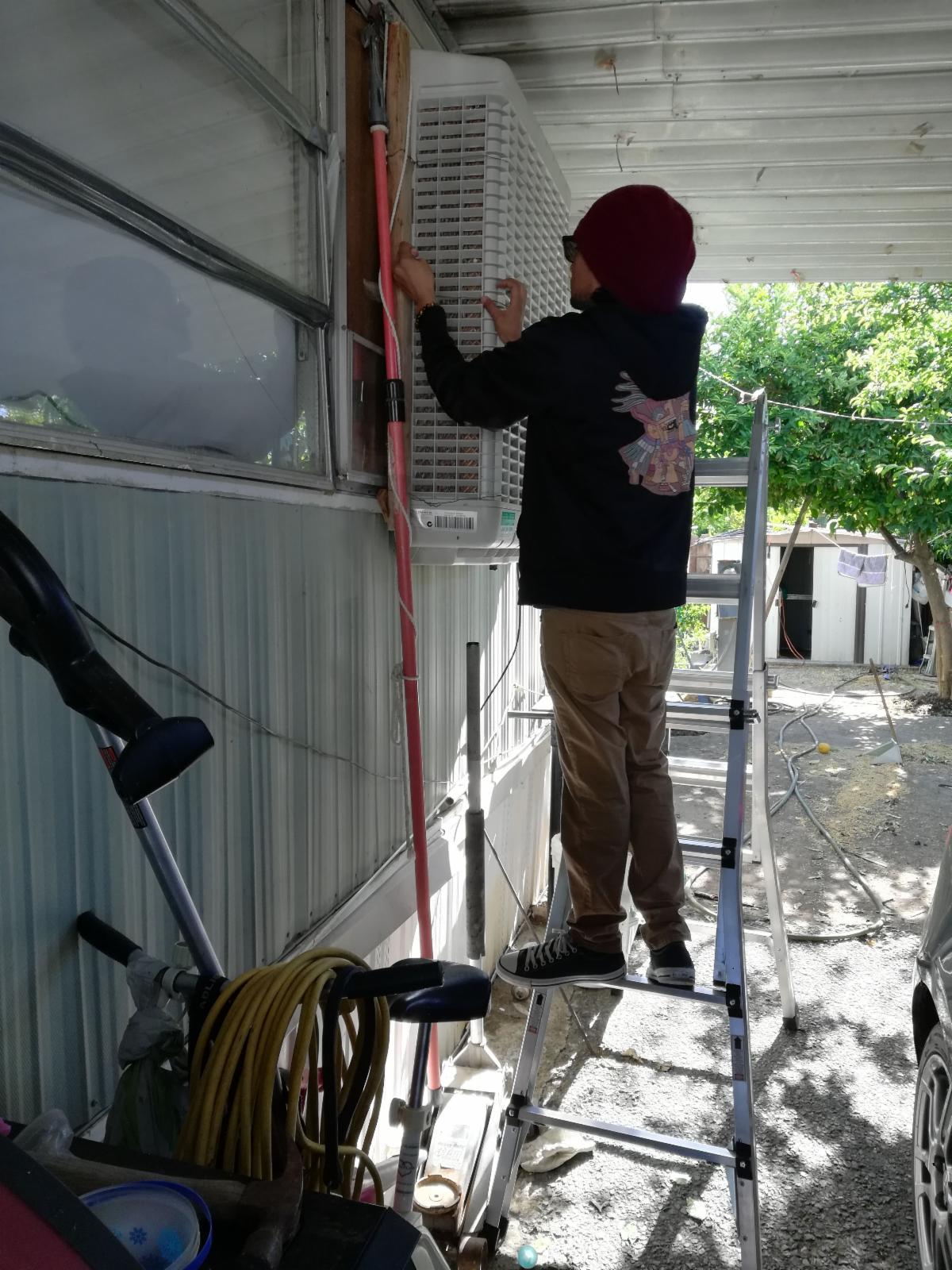
Filtration for Respiratory Exposure to wildfire Smoke from Swamp Cooler Air (FRESSCA) project staff and project partner Central California Environmental Justice Network (CCEJN) held community meetings in the Central Valley to inform residents about wildfire smoke and how to protect their health, installed purple air monitors in the homes of 30 project participants, took measurements and photos of participants' swamp coolers, and distributed air cleaners.

This summer, we'll be working to install filters designed by the Illinois Institute of Technology on as many as possible of the swamp coolers of study participants. We look forward to sharing some data in the coming months on how effective the different filtration strategies are for reducing indoor exposures to wildfire smoke!

Learn more about the FRESSCA project here.
Tracking California, formerly the California Environmental Health Tracking Program, is a program of the Public Health Institute in partnership with the California Department of Public Health. Tracking California is part of a national initiative coordinated by the National Environmental Public Health Tracking Program. 
This publication was supported by the Cooperative Agreement Number 5U38EH000953, funded by the U.S. Centers for Disease Control and Prevention. Its contents are solely the responsibility of the authors and do not necessarily represent the official views of the Centers for Disease Control and Prevention or the U.S. Department of Health and Human Services.