News and information to help journalists serve the public and stay safe.
June 30, 2020
The journalism world is pretty small. For journalists who identify as trans, that world felt even smaller — until this week. 

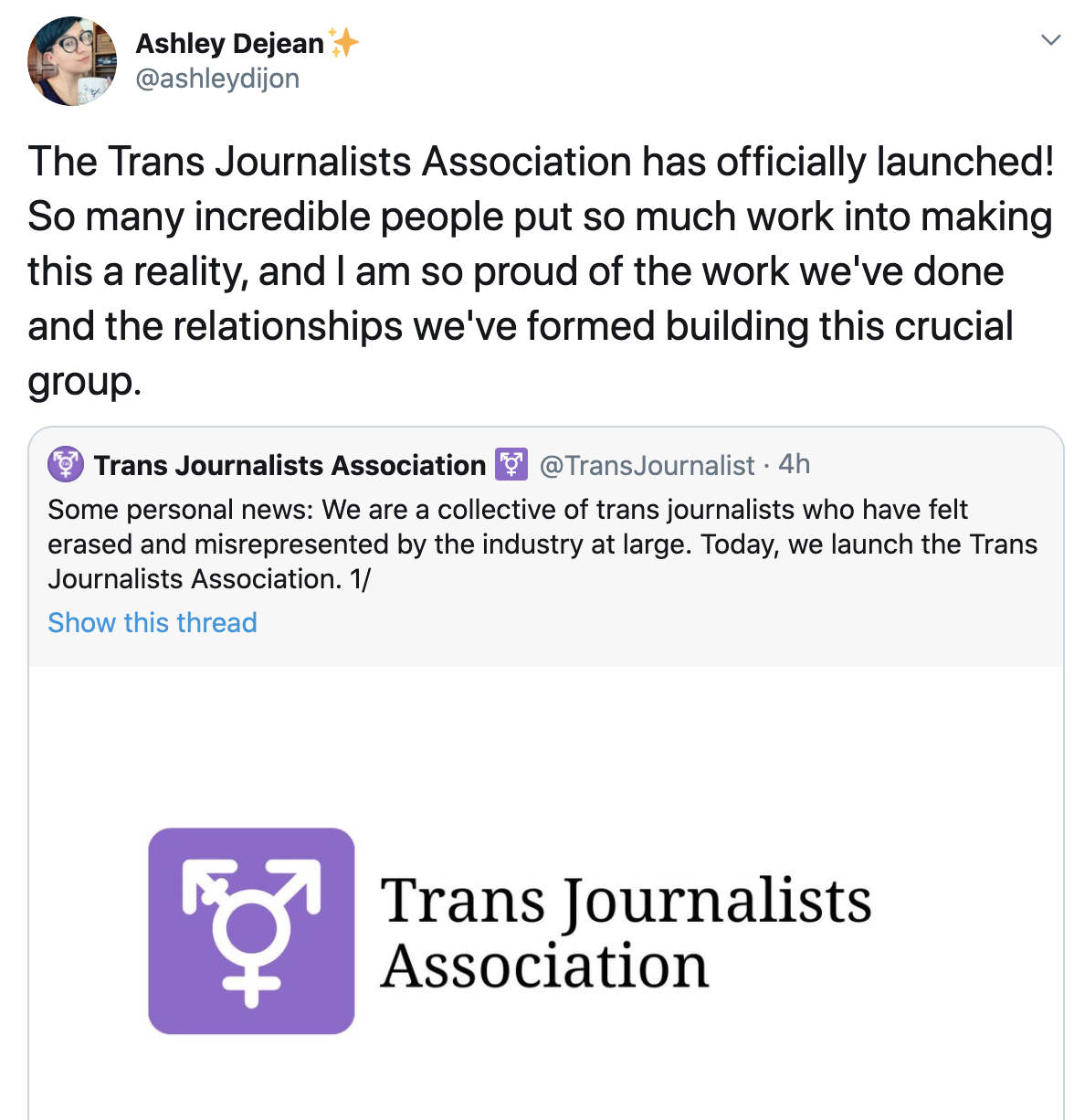
The Trans Journalists Association launched Tuesday. Ashley Dejean started the group after seeking out other trans journalists — and coming up short for a centralized group . They started a Facebook group that evolved into a Slack channel that attracted more than 200 people seeking the same sense of community and support. 

TJA members don’t pay dues, and the group’s nontraditional leadership structure means members have a direct say in its decisions. 

TJA is not affiliated with the National Association for LGBTQ Journalists (NLGJA). In an interview with NewNowNext , TJA’s founding members point to issues with NLGJA’s programming and the group’s name, which they say leave trans journalists feeling like an afterthought. 

In your interview with NewNowNext, you referenced seeking out a trans community among journalists and not finding one. What services do you hope to provide TJA members, and hope they can provide each other?

Dejean : Like other marginalized groups, trans journalists often lack access to networks and mentorship that provide opportunity, career advancement and support. One important thing our association provides is access to each other in an industry that's often hostile to trans people. That access allows us to support one another, mentor and seek mentorship from other trans journalists, and share opportunities.

Additionally, we provide resources to support trans journalists within newsrooms. We have guides to help employers make their workplace more trans friendly and support employees making a gender transition. Additionally, we've created a comprehensive styleguide to help journalists cover our communities with more sensitivity and care. We hope this improves coverage in our industry by being a resource journalists can use to better educate themselves and take some of the burden off of individual trans journalists who often have to push editors and other news leaders and fight for stories to be told with accuracy and respect.

What else do you want journalists to know?

Dejean : Only about a quarter of Americans know a trans person, meaning media coverage greatly shapes our public discourse around trans communities and issues. That means journalists have a huge responsibility to get their coverage of trans issues right. Too often, they fail in that responsibility. That failure harms trans people because it shapes the way the public thinks and talks about us. I want journalists to know they need to take the responsibility much more seriously and do the work to improve trans coverage. 

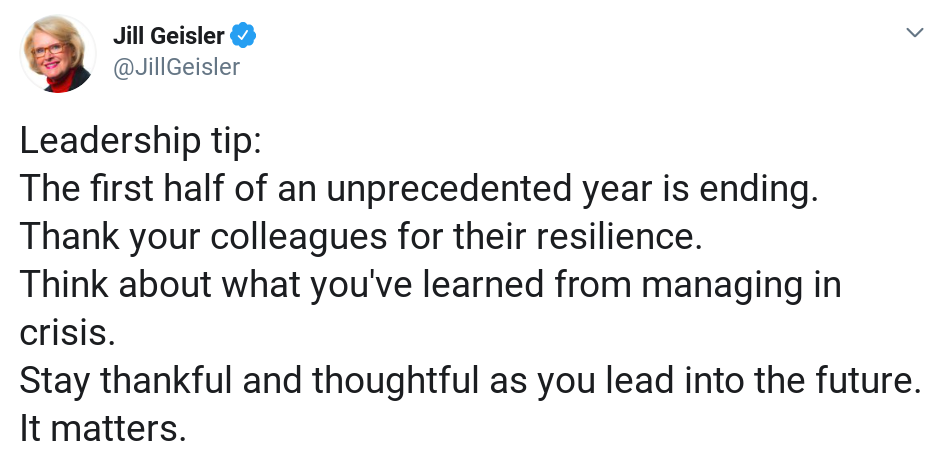
Five years from now, how will you look back on this time? How would you and your team like your work to be remembered? Earlier this year, you might have believed your team would be ‘adjourning’ by now, but instead there is more pandemic and more change. Amid all the anxiety about journalism’s future, your colleagues have appreciated your honesty, optimism and gratitude . Keep going.  

Advice from  Jill Geisler , Bill Plante Chair in Leadership & Media Integrity, Loyola University Chicago, Freedom Forum Fellow in Women’s Leadership
That maskless guy in the grocery store who insists on hovering a bit too close — Don’t you want to just clobber him? That tweet from some far end of the political spectrum — Aaargh! No one returning your calls and emails — Gimme a #%@&* break! 

Anger. It’s an emotion. Deal with it.

First, don’t deny your anger. Anger can be emotionally, professionally, even socially and politically useful . It can inform others about your limits or bring about social change; witness the effect of racial justice protests on public policy and behavior.   

But it seems anger is everywhere these days . The public is angry about restrictions related to the pandemic. It is angry about police brutality and racial injustice. And journalists are caught between documenting frustration and feeling it themselves.

Managing feelings of anger can keep them from becoming hostility . Frequent anger is unhealthy and has been associated with heart attacks, high blood pressure and even stomach maladies. And it can ruin relationships.

The Mayo Clinic has some advice on anger management, among them:

  • Count to 10 and collect your thoughts before saying anything.
  • Express your frustration using specific language and “I” phrases.
  • Take a break and do something physical.
  • Think of solutions to what frustrated you.
  • Defuse with humor (not sarcasm).

Read on for more self-care tips, or share your own .
This newsletter is written & edited by the National Press Club Journalism Institute staff: Beth Francesco, Holly Butcher Grant, Jim Kuhnhenn, and Julie Moos. Send us your questions and suggestions for topics to cover.

Get this from a friend? Subscribe , and view the archives .