|
Exploring History: Discovering Gettysburg National Military Park on the 9/11 National Memorial Trail
Welcome back to the Alliance's monthly TrailBlazer series, where the Alliance spotlights one of the various National Parks along the 1,500-mile 9/11 National Memorial Trail. This month, we're moving along the alignment to south-central Pennsylvania to feature the Gettysburg National Military Park.
Gettysburg National Military Park is the site of the July 1863 Battle of Gettysburg, which pitted the Confederate Army of Northern Virginia under General Robert E. Lee against the United States (Union) Army of the Potomac commanded by General George G. Meade. The battle of Gettysburg was the costliest battle of the American Civil War and a turning point in the four-year struggle. President Abraham Lincoln would deliver his immortal Gettysburg Address, giving meaning to the sacrifice of thousands of lives and elevating the importance of the struggle to preserve the Union and end slavery.
The preservation of the battlefield as a memorial to the United States cause began almost immediately. The Gettysburg Battlefield Memorial Association (GBMA) purchased the land where the battle was fought as a memorial to those who fought and died for the cause of the Union. In 1895, over 500 acres of preserved land were transferred to the United States government, managed initially by the War Department. In 1933, the National Park Service assumed management of the battlefield and has stewarded the park since that time.
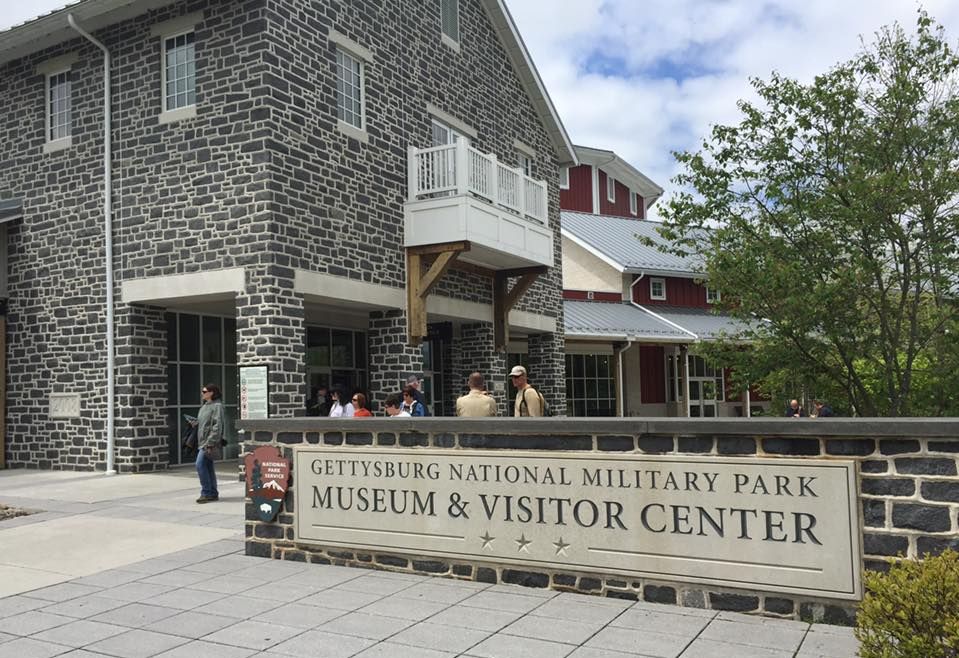
Nearly one million visitors travel to Gettysburg every year. For most, their journey begins in the Gettysburg National Military Park Museum and Visitor Center which the National Park Service manages alongside their non-profit partner, the Gettysburg Foundation. This world-class museum, along with orientation film and the 360-degree Cyclorama painting, provides a jumping-off point to explore the almost 7000-acre National Park. A twenty-four-mile, sixteen-stop tour route conveys visitors chronologically through the three days of battle, and past some of the thousands of monuments, markers, and tablets that dot the landscape. In downtown Gettysburg, the David Wills House and Museum tells the story of Abraham Lincoln’s visit to Gettysburg and the creation of his Gettysburg Address. Other opportunities for heritage recreation both within and just outside the boundaries of the National Park, including the nearby Eisenhower National Historic Site, which preserves the only home that Dwight and Mamie Eisenhower ever owned.
Over 161 years after the battle Gettysburg remains one of America’s most hallowed and iconic landscapes. From the rocky slopes of Little Round Top to the quiet and agrarian farm fields and woodlots that stretch across the rolling contours of Adams County, PA, the site of this tragic battle allows generations of visitors to come and ponder the meaning of freedom, and the “great task” remaining before all Americans.
|