THOUGHT OF THE MONTH
Climate change is a hot topic (pun intended). To better understand how the planet will respond to CO2 in our atmosphere, some researchers have been looking to the past, specifically the last time the earth’s CO2 levels were this high (above 400 parts per million). Scroll to the bottom of this email to find out what the state of the world back then can tell us about the future.
|
|
The 2022 State of the Bay Report |
|
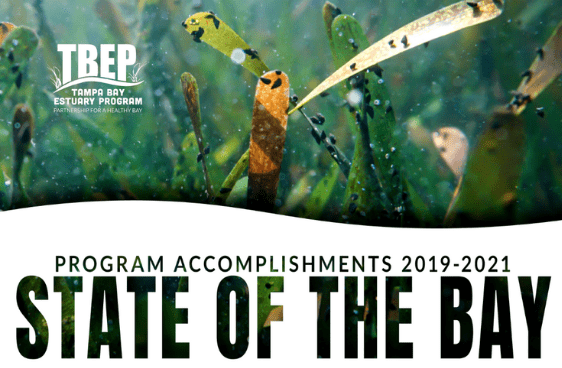
Curious about the health of Tampa Bay? We’ve recently released the State of the Bay progress report, summarizing the work of TBEP and our partners between 2019 and 2021. The report is organized around our three priorities: Clean Water & Sediments, Thriving Habitats & Abundant Wildlife, and an Informed, Engaged, Responsible, Community. Major successes, challenges, and project highlights are featured for each priority.
While we encourage our readers to review the report in full, here are 3 key takeaways:
- Upper portions of Tampa Bay show clear indicators of stress. We need to refocus efforts to reduce nutrients and invest in projects that enhance water quality, like reducing nutrient inputs, improving tidal circulation, and conserving coastal habitats.
- As development continues to increase throughout the watershed, the amount of habitat available for restoration decreases. We need to act fast, capitalizing on the restoration opportunities that remain before they are lost to development in the coming years.
- A new crop of leaders advocating for the Bay's restoration have emerged over the past few years, thanks in part to the media’s coverage of issues like Piney Point, red tide, and state-wide manatee mortalities. As a result, additional monetary resources are becoming available to support community-focused collaborations and bay improvement efforts.
|
|
|
|
Piney Point Closure Update |
Rainwater removal from the Piney Point facility began on August 13, 2022 and is expected to conclude today (August 18th).
TBEP and its partners have responded by monitoring seagrass, macroalgae, and water quality conditions prior to and during the discharge. Additional sampling will be completed on September 2nd to collect post-event samples.
A summary of monitoring results will be made publicly available after the completion of September’s sampling event.
|
|
|
|
EPC Encourages Living Shorelines |
The Environmental Protection Commission’s (EPC) “Basis of Review” provides guidelines for activities that might impact wetlands or surface waters in Hillsborough County. Recently, its rules were revised to include new options and incentives encouraging property owners and contractors to choose living shorelines over other, more hardened forms of shoreline stabilization like bulkheads and seawalls. Once installed, living shorelines absorb wave energy, increase sea level rise resiliency, provide wildlife habitat, and increase the stability of the surrounding environment over time.
|
|
|
|
Video: How Mangroves Protect the Coast
This video helps to visualize how the vegetation that grows where land and water meet does a great job of breaking up wave energy and stabilizing the shore.
|
|
Everything you need to live green | Green Living Toolkit |
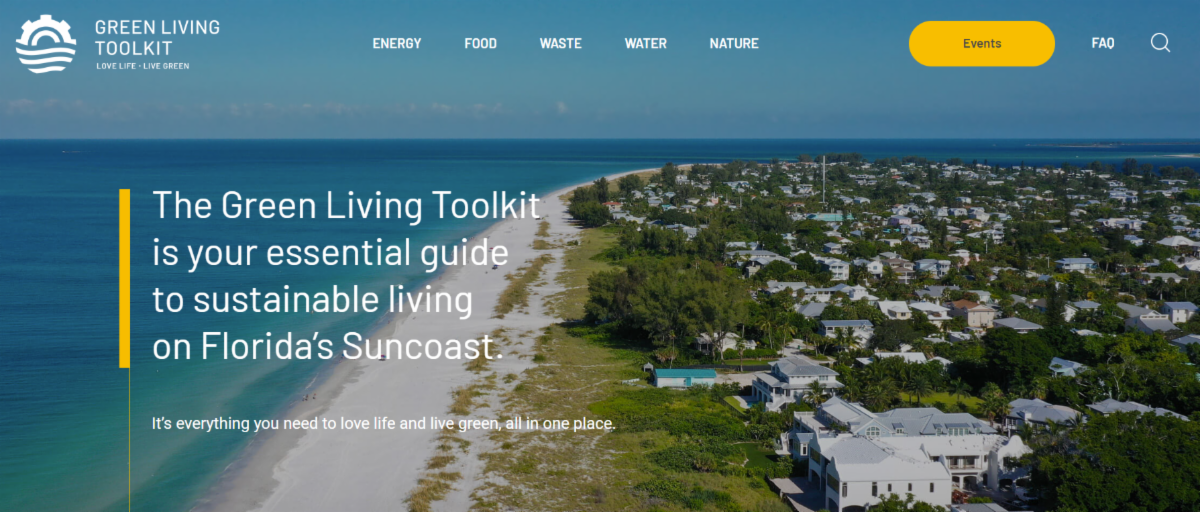
From energy, food and water, to waste, volunteering and adventure–the green living toolkit is a one-stop shop for nature enthusiasts on Florida’s Suncoast. The webpage is jam-packed with tips and tricks for living more sustainability, whatever that looks like for you. While this toolkit is curated with Sarasota and Manatee County residents in mind, the resources inside have relevance throughout the watershed.
|
|
Pumpout Nav App now available for Florida Boaters |
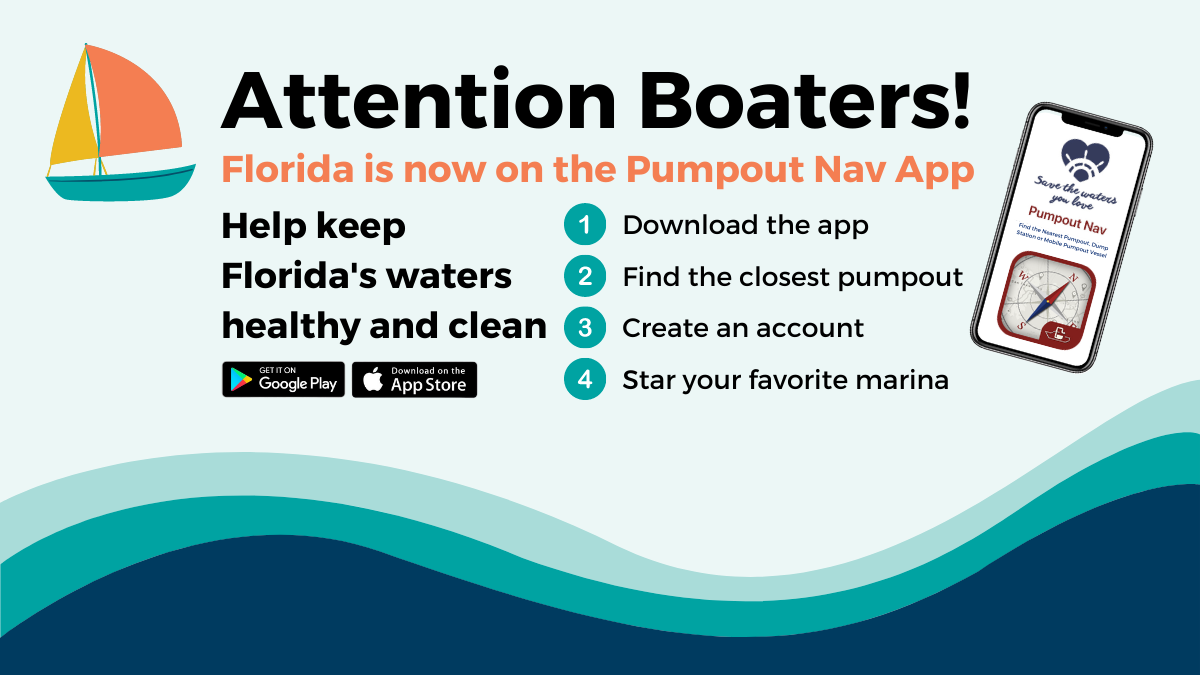
Help keep Florida’s water clean for recreation and marine life. Florida boaters can now find the closest public sewage pumpout, dump station, or mobile pumpout vessel using the PumpoutNav App, recently released by Florida Sea Grant.
|
|
Our Bay, Our Future–A Vision for Saving Florida’s Water (Part Two) at SPC STEM Center | August 24th
Join the Ocean Conservancy for a roundtable discussion with local advocacy, science, and policy experts to learn more about the issues affecting Florida’s water quality, including red tide, harmful algae bloom, and sea level rise. TBEP’s Executive Director, Ed Sherwood, will be among the speakers. RSVP by emailing RSVP@oceanconservancy.org or calling 202-351-0471 | Facebook event page
Project/Aquatic WILD Educators Workshop | August 27th (FREE)
The Project WILD suite is one of the most widely-used conservation and environmental education programs among educators of K-12 students, emphasizing wildlife and their habitats. This FREE workshop is a great resource for teachers, home school parents, scout leaders, volunteers, and nature center educators to improve their skills and gain new go-to activities. | Register Now
|
|
GRANTS
Click the title links for more information
|
|
One Month Left!
Bay Mini-Grants Accepting Project Proposals until September 16th
Educators, creatives, researchers, neighborhood associations, community groups–the list of applicants who receive our Bay mini-grants grows each and every year. This season, priority will be given to projects that support the prevention, eradication, and management of invasive species in the watershed. Interested applicants can access all the info they need by visiting tbep.org/bayminigrant
|
|
JOB BLAST
Click the title links for more information
|
|
|
|
Environmental Contaminants: Microplastics | Science By The Slice Podcast |
Lara Milligan (UF/IFAS Extension Pinellas County) discusses how microplastics end up in the environment and the potential threats they pose.
|
|
Animation: Tampa Bay Hard Bottom Habitats
|
Like a rest stop during a long road trip, Tampa Bay’s hard bottom habitats provide fish with a much-needed break on their way to the gulf and back.
|
|
When was the last time the Earth’s CO2 levels
were in the 400s?
|
|
|
|
Answer: 2.5 million years during the Pleistocene Era.
Take an animated trip with CBS to learn more about the threat of increasing CO2 levels in our atmosphere.
|
|
The mission of the Tampa Bay Estuary Program is to build partnerships to restore and protect Tampa Bay through implementation of a scientifically sound, community-based management plan.
TBEP is a partnership of Hillsborough, Manatee, Pasco and Pinellas counties; the cities of Tampa, St. Petersburg and Clearwater; the Southwest Florida Water Management District; the U.S. Environmental Protection Agency and the Florida Department of Environmental Protection.
|
|
|
|
|
|
|