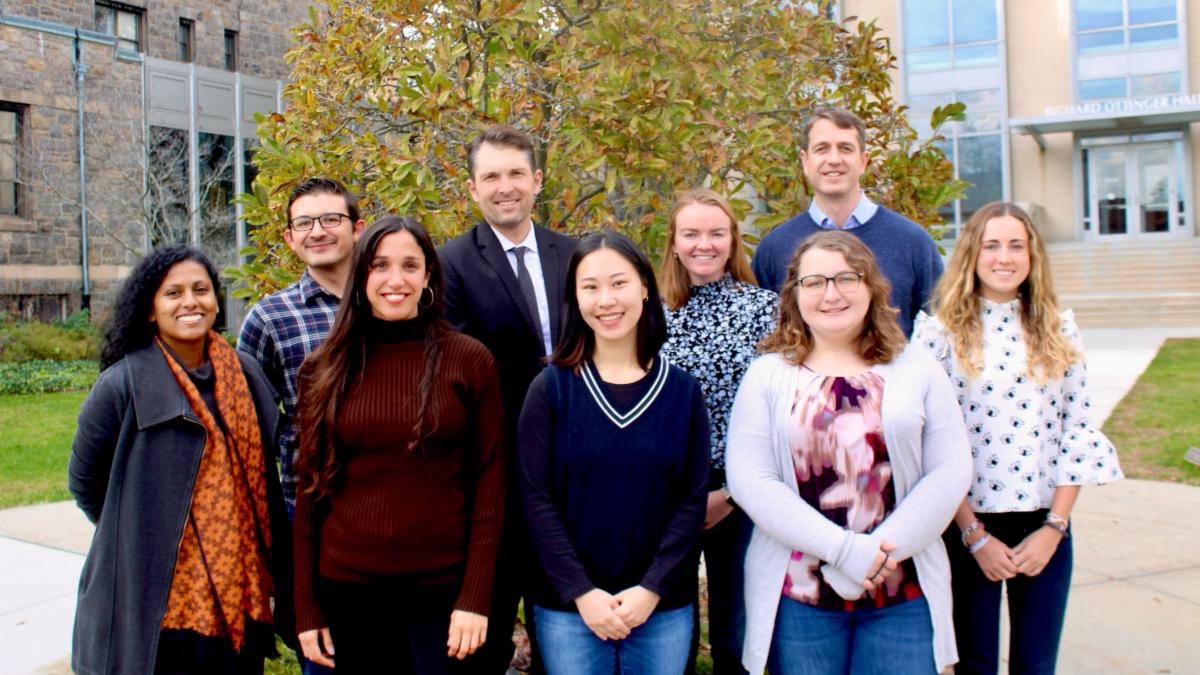
The Elisabeth Haub School of Law at Pace University is at the forefront of innovation in the ever-growing field of sustainable business law. Our Sustainable Business Law Hub serves as an incubator space, student-training program, research endeavor, and think tank devoted to addressing global sustainability challenges through policy and research projects, relationships and ESG consulting with the business community, and capacity building in private environmental governance and sustainability strategies. |
|
WHAT OUR HUB STUDENT SCHOLARS SAY... |
|
|
|
“Being an inaugural Hub Scholar was especially exciting because the inception of the Hub came at a time when US and EU mandatory ESG disclosure laws were at their infancy. The textbooks and law review articles on novel sustainable business topics are being written and rewritten at this very moment and Haub Law is at the forefront of producing a new generation of ESG lawyers. The Sustainable Business Law Hub is producing great research and a strong network for future students to tap into and the environment will benefit as a result.” - Maggie Pahl ’23
|
|
|
|
|
|
“My goal upon entering law school was to further my passion for energy policy and sustainability. Haub Law’s Sustainable Business Law Hub allows me to dedicate myself to learning more about the issues that I am most passionate about while being mentored and making a positive impact. I have participated in internships with the NRDC, the Center for Progressive Reform, and the Pace Energy & Climate Center. As a Hub Scholar, I look forward to furthering my experience specific to the fields of sustainable business law and ESG and ultimately helping to foster sustainable business practices for a healthier environmental future.” - Joshua Briggs '24
|
|
|
|
|
|
“The Sustainable Business Law Hub is unique in providing students with the opportunity to gain experience specific to the fields of Sustainable Business Law and ESG. Already, I have interned with Pfizer’s Global Supply Division and Paul Weiss’ Sustainability & ESG Advisory Practice. The courses I have taken along with internships I have participated in have allowed me to solidify my foundation as a future lawyer with strong interests in sustainable business. As a recently selected Hub Scholar, I look forward to continuing to broaden my exposure to the environmental law fields that I am passionate about while gaining practical training and experiences in these areas.” - Ashley Han '24
|
|
|
|
FACULTY SCHOLARSHIP AND ENGAGEMENT
|
|
In their article, Teaching Sustainable Business Law & The Role of ESG Lawyers, 32 N.Y.U. Env’t L.J. __ (forthcoming 2023) Professors Jason J. Czarnezki and Joshua Galperin, with 3L Brianna M. Grimes, explore the rise in sustainable business and ESG (environmental, social, and governance) work within legal practice. The article examines the theoretical underpinnings of sustainable business law and the knowledge base needed to be successful as an ESG lawyer today.
|
|
|
|
|
JASON J. CZARNEZKI
Barbara Ballan & Jason J. Czarnezki, Disclosure, Greenwashing & The Future of ESG Litigation, 81 Wash. & Lee. L. Rev. ___ (forthcoming 2024)
|
|
|
|
|
ACHINTHI VITHANAGE
Panelist: Achinthi Vithanage, Adjunct Professor and Associate Director of Environmental Law Programs, Trends in ESG & Sustainability Law, South Asian Bar Association, Washington, DC (Oct. 25, 2023)
|
|
|
CLINIC SPOTLIGHT
Food and Farm Business Law Clinic
|
Launched in 2017 with the generous support of the Sands Family Foundation and Constellation Brands, the Food and Farm Business Law Clinic at Haub Law provides pro bono transactional legal services to small farm businesses, artisan food manufacturers, craft beverage entrepreneurs, and related nonprofit organizations. Under faculty supervision, law students in the Clinic represent clients in connection with forming and structuring businesses, cooperatives, and nonprofits; drafting and negotiating legal agreements, including leases, operating agreements, and other commercial contracts; advising on regulatory matters, including related to food regulation and land use regulation; and seeking trademark protection, among other areas of practice.
|
|
|
Haub Law's Food and Farm Business Law Clinic is the first in the country entirely dedicated to providing direct, transactional legal services to food, beverage, and agricultural clients. |
|
|
By providing pro bono legal representation to its clients, the Clinic seeks to facilitate the development of a more just and sustainable regional food system and economy. At the same time, by teaching fundamental lawyering skills and professionalism through hands-on legal work and client interaction, the Clinic seeks to transform law students into practice-ready professionals. The Clinic is the first in the country entirely dedicated to providing direct, transactional legal services to food, beverage, and agricultural clients. Over just the last year, the Clinic has represented 43 clients. As a recent example, the Clinic assisted a group of clothing designers in forming and developing the New York Carbon Farm Network, a new business organized as a purchasing cooperative in which designers work collaboratively to source sustainably-produced fibers directly from farms for the commercial production of textile products. |
|
|
Meet the Sustainable Business Law Hub Advisory Board
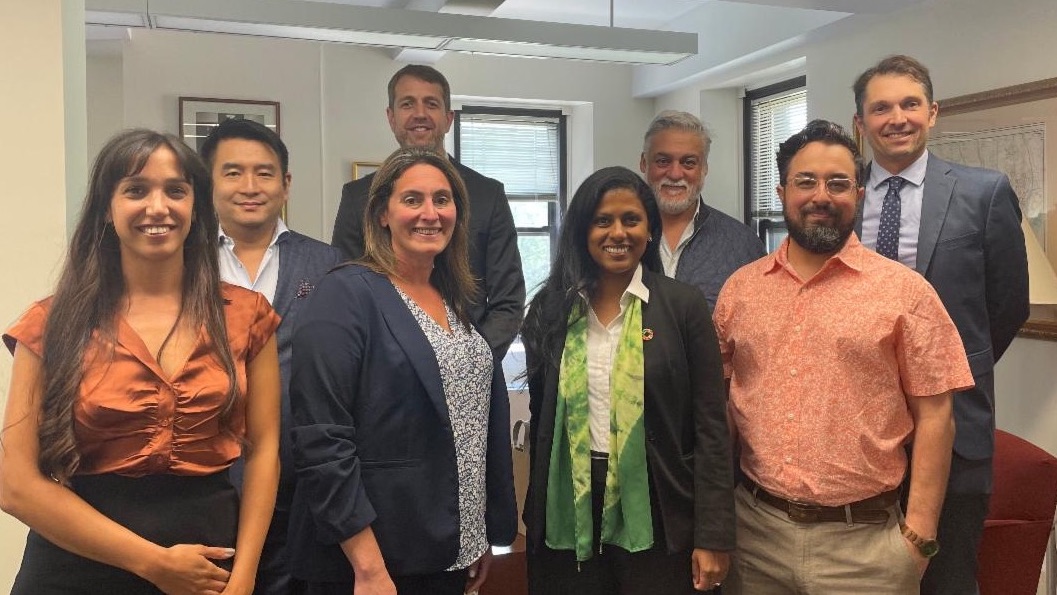
The Elisabeth Haub School of Law at Pace University's Sustainable Business Law Hub Advisory Board consists of Haub Law faculty, esteemed alumni, prominent members of the legal community, entrepreneurs, and ESG and sustainability leaders. MEET OUR NEWEST BOARD MEMBERS>
“We are extremely fortunate to be surrounded and supported by experts in business, law, technology and finance who share the same goal as us: sustainability.” -Prof. Jason Czarnezki
|
|
|
|
|
ALUMNI SPOTLIGHT
CEO/Founder, Manna Fish Farms, Inc.
Donna Lanzetta ’86 grew up on Eastern Long Island surrounded by water, but it wasn’t until she was an adult that the ocean took on more than a recreational meaning in her life. “After thirty years of civil litigation culminating in stress related health issues, I decided to make a concerted effort to destress and eat healthier – that included major changes to my diet, including eating more seafood,” said Donna. “As I looked closer, I was shocked to see our shellfish and eelgrasses have virtually disappeared, with 99% gone. At the same time, our wild capture fisheries are at maximum sustainable capacity. Then I learned that the United States is importing over 90% of our seafood. I studied the matter further to learn about ocean farming, and its potential to feed the world with responsibly raised protein, protein grown in balance with the environment. Considering sustainability, responsibility, and protein production in the face of climate change, I realized that, done right, ocean farming is part of the solution.” READ MORE>
|
|
Mark your calendars for these 2024 events hosted at Haub Law: |
|
|
|
Westchester County Clean Energy Careers Summit
Wednesday, April 3, 2024
Presented by Westchester County’s Office of Economic Development in partnership with Sustainable Westchester, Inc., New Yorkers for Clean Power, and hosted by the Elisabeth Haub School of Law at Pace University.
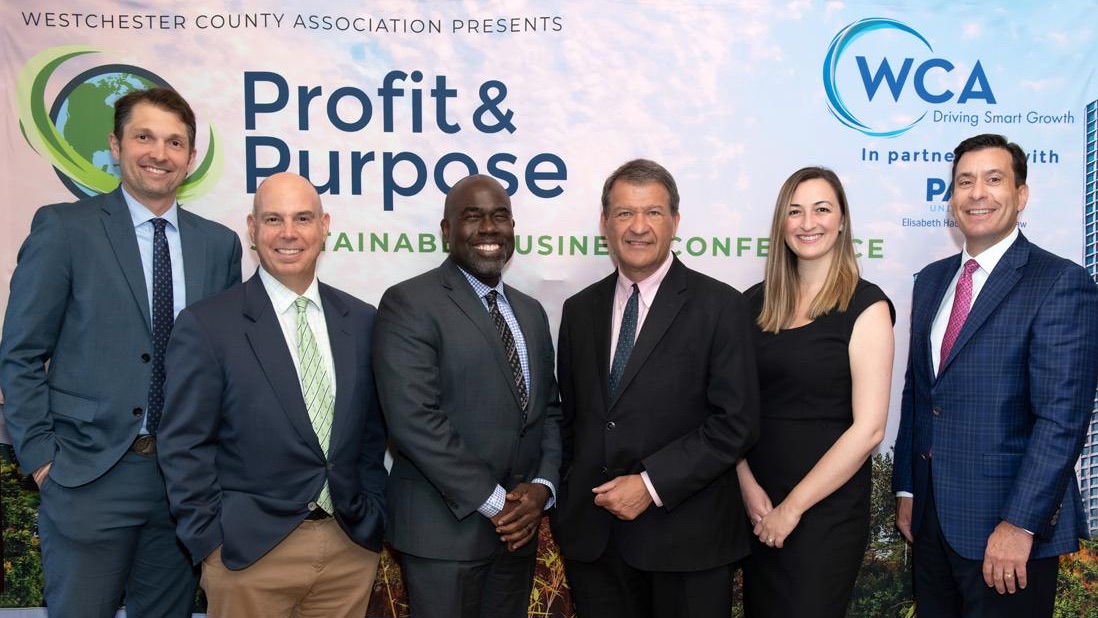
Profit and Purpose '24
WCA Sustainable Business Conference
September 2024 (Details TBD)
Presented by Westchester County Association in partnership with the Elisabeth Haub School of Law at Pace University
|
|
ABOUT THE ELISABETH HAUB SCHOOL OF LAW AT PACE UNIVERSITY
Pace University’s Elisabeth Haub School of Law offers both JD and Masters of Law degrees in Environmental Law and Comparative Legal Studies, as well as a Doctor of Juridical Science (SJD) in Environmental Law. Its Environmental Law Program was established in 1978 and has long been ranked among the world’s leading university programs, with a current #1 ranking by U.S. News & World Report. The school, housed on the University’s campus in White Plains, NY, opened its doors in 1976 and has over 10,000 alumni around the world. The school maintains a unique philosophy and approach to legal education that strikes an important balance between practice and theory. We continue to build on our historic strength of training practice-ready lawyers through our field placement programs and nationally recognized clinics which provide pro bono legal services and education to the community, including our Energy and Climate Center, Investor Rights Clinic, Food and Farm Business Law Clinic, Land Use Law Center, Criminal Justice Center, and Women’s Justice Center.
|
|
|
|
|
|
|