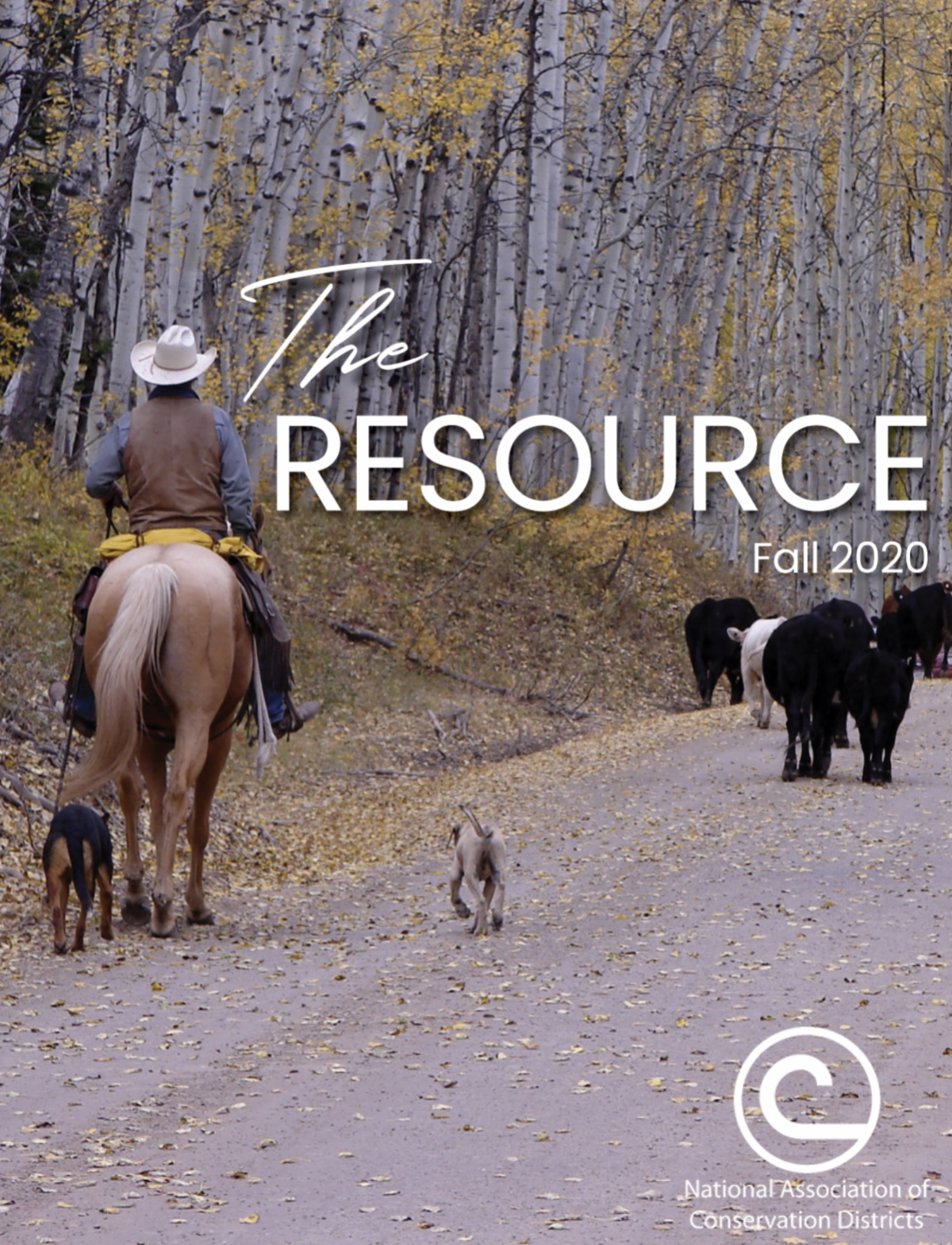
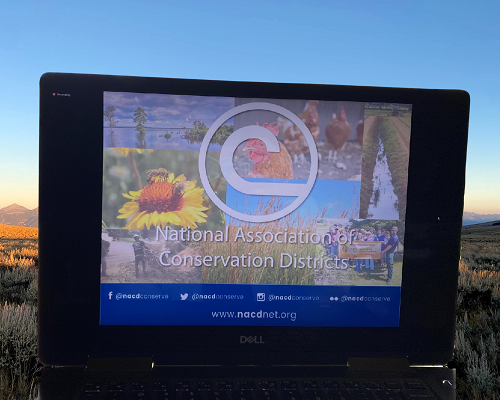
The Fall 2020 edition of The Resource has arrived!
This latest edition includes many new and exciting developments for NACD, as we continue to adapt and update our programs and resources to better serve our nation's conservation districts amidst these uncertain and challenging times.
In light of the COVID-19 (coronavirus) pandemic, this fall's edition includes tips and takeaways from NACD on how to host a successful virtual meeting; updates on NACD's 2021 Annual Meeting, now scheduled to be held virtually from Feb. 1-10, 2021; and an update from NACD's Government Affairs team as they look ahead toward 2021.
Conservation districts have also been hard at work this fall and are continuing to champion locally-led conservation in their communities. You'll read about the Chippewa Cree Tribal Conservation District and its youth corps pilot program, how the Upper Willamette Soil and Water Conservation District (SWCD) is providing wildfire relief to Oregon's communities, how the Northern Neck SWCD in Virginia is taking steps in making employee field safety a top priority, and how conservation districts in South Dakota are teaming up to help improve water quality in the Belle Fourche River Watershed.
As this year comes to a close, we are so thankful for all of you and your continued support in helping create the success stories you'll find in this fall edition. These stories are a true testament to the strength in our work and all those involved, from our national agricultural leaders and partners to the conservation district staff carrying out NACD's mission throughout our nation's lands. We hope you will enjoy this latest edition, and we look forward to all the work we will accomplish together in the future, as we continue serving our local communities.
As you read the latest edition, please let us know if you have any ideas for the next edition of The Resource. To download a copy of this edition, please click the photo above and click the cloud icon in the lower right-hand corner. Browse past editions of The Resource on NACD's website and please let us know if you have any questions or comments about this edition.
|
DONATE TO NCF'S
FALL CAMPAIGN THIS #GIVINGTUESDAY
|
Today is Giving Tuesday! In celebration of this opportunity to give to organizations making a difference, please consider donating to the National Conservation Foundation's (NCF) #FutureFocused Fall campaign.
We need your financial support in an effort to raise $60,000 to keep our programs moving forward and support the tireless work of so many of its volunteers throughout our network of conservation districts and local NCF-Envirothon programs. Every contribution matters, and your support will be matched dollar for dollar throughout the campaign!
We know that none of the work NCF supports would be accomplished without you. Today, we hope you consider supporting the work that NCF is doing to continue the conservation mission by developing the next generation of conservation leaders through the Next Generation Leadership Institute (NGLI) and the NCF-Envirothon.
To learn more, visit NCF's campaign page and click the button below to donate. Thank you in advance for your commitment and support! |
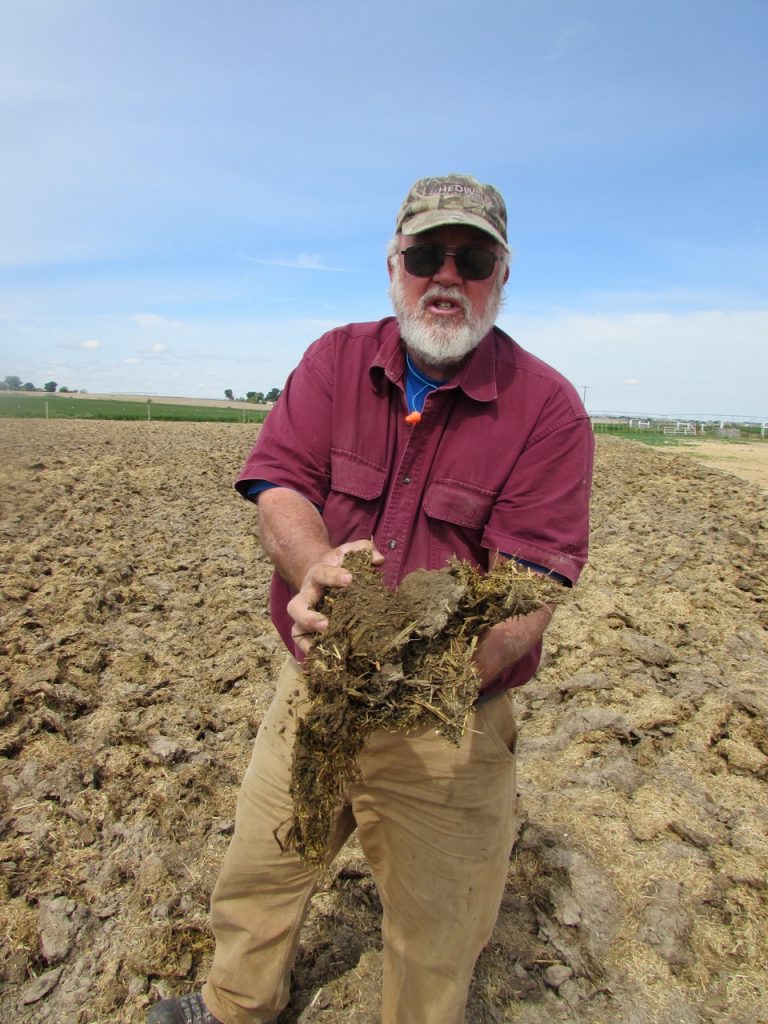
Barry Duelke is a shepherd in Buhl, Idaho, raising sheep and forages on the shallow, rocky soils, next to the Bureau of Land Management (BLM)’s high desert public lands at 4,000 feet in elevation.
When Duelke first purchased his abandoned farm in 1984, it was for base property to build a range sheep operation, grazing for both BLM and the U.S. Forest Service's public lands. The sloped soils were extremely depleted, with less than one percent organic matter (O.M.), and were eroded due to years of gravity irrigation of the crops. Two hundred ewes were initially brought in to start building the flock, whose population eventually reached 2,400.
Duelke also brought with him a chisel plow to begin a minimum-till farming program and never used a moldboard plow on the place. Initially, the crop rotation included small grains, alfalfa, orchardgrass mix hay and rotationally-grazed pastures. Over the years, small grains were replaced by spring and fall cover crop mixes that not only improved the soil but provided extra grazing both summer and fall. The sheep manure from the lambing sheds was composted and spread on the hay fields in the fall. The improvements in both fertility and soil health continued along with the stabilization and elimination of soil erosion, in large part due to the forages.
When the farm was converted to center pivot irrigation, the farming transitioned to no-till. Except for some occasional elemental sulfur, no chemical fertilizers are currently being used. The fields are now in the 4-5 percent O.M. range and continue to improve. Duelke is now trying to address mineral needs of both the sheep and the soils. He is utilizing salt/mineral mixes from the Redmond County of Utah, which includes a soil conditioner mineral component from the ancient, inland seabeds in the Utah desert.
The intensive, rotational grazing of the sheep has been a great soil health builder. The challenge is maintaining plant species diversity in the pasture mixes. The initial pasture seeding includes orchardgrass, festololium, grazing alfalfa, red and white clover, chicory and plantain. The orchardgrass and alfalfa are very aggressive compared to the other forages, which have a shorter lifespan and will need reseeding. Cover crops include cereal grains, Italian ryegrass, sunflowers, and a wide variety of brassicas of both the turnips and forage rapes. Multiple crown varieties are preferred, which will allow sequential grazing.
Duelke says that the journey continues as he rebuilds this farm to complete sustainability. He has more questions than answers and is always looking for new books to help him along the way. He recommends the website Acres, U.S.A. as a good resource for finding books, especially for finding re-prints of older texts.
To learn more about Barry Duelke and his operation, visit the NACD website to read his profile. If you or someone you know would like to become a member of the NACD Soil Health Champions Network, please contact NACD North Central Region Representative Beth Mason at beth-mason@nacdnet.org. |
|
NACD's D.C. Office Closed Until
March 2021
|
In light of the ongoing COVID-19 (coronavirus) pandemic, NACD’s Washington, D.C. office will be closed with staff teleworking through Feb. 26, 2021.
NACD wants to ensure the continuity of normal business operations, and you can reach NACD staff during regular business hours as usual via email or by calling the main line: (202) 547-NACD. We will continue to update our members on any changes during this time.
|
Have You Checked
Your District's
Directory Information?
|
To ensure we have the latest contact information, please check your district's listing on your state webpage and contact NACD Communications Coordinator Lucy Sears at
|
MACD Holds
Virtual Convention
|
NACD recently took part in the Montana Association of Conservation Districts' (MACD) 2020 Virtual Convention, which took place Nov. 18-19.
The panel on wildfire mitigation included the innovative fuels reduction program run by the Lower Musselshell CD, a 2020 NACD Technical Assistance (TA) grantee.
NACD Secretary-Treasurer Ian Cunningham and NACD Northern Plains Region Representative Sunni Heikes-Knapton provided updates on the national association's activities and programs, and wrapped the presentation up with a speech from former Natural Resources Conservation Service (NRCS) Chief Matt Lohr, from NACD's 2020 Annual Meeting.
"Overall, the showcase of conservation district successes and partner contributions were well-represented at this successful virtual event," said Heikes-Knapton.
|
Visit NACD's Marketplace for
2021 S&E
Educational Materials
|
Make learning at home easy and interactive with NACD's free, downloadable educational materials with printable worksheets and activities.
Educate K-8 students on the importance of forests and trees with the 2021 Stewardship and Education (S&E) educational materials, featuring the theme "Healthy Forests, Healthy Communities."
|
Register for NACD's December U&C Webinar |
Space is still available for NACD's Urban and Community (U&C) Conservation webinar, scheduled for 12:00 p.m.-1:00 p.m. Eastern on Dec. 17, 2020.
The webinar will feature the Thurston Conservation District (TCD) and its collaboration efforts with the nonprofit organization Bounty for Families (BFF). During the webinar, participants will hear from TCD, a 2020 NACD Urban Agriculture Conservation grant recipient, and how their partnership with BFF enabled them to successfully adapt their programming and outreach efforts during COVID-19 (coronavirus).
These popular webinars, held on the third Thursday of each month, are sponsored by The Scotts Miracle-Gro Foundation in partnership with the NACD Urban and Community Resource Policy Group. There is no cost to participate, but space is limited. Registration will be accepted on a first-come, first-serve basis.
To register, click here. If you have difficulty, please contact NACD Pacific Region Representative Ariel Rivers. |
Promote your conservation district or state association's tree sale, annual meeting, webinar, field day or more on NACD's Calendar of Events!
|
|