November 2026

Philanthropy That Builds


What If We Changed Where Philanthropy Enters the Equation?


Philanthropy has long played an essential role in helping individuals and families access affordable housing. From rental assistance to supportive services, charitable contributions help bridge the gap between what households earn and what housing costs.


But what if philanthropy could also help close that gap before a building is even constructed?


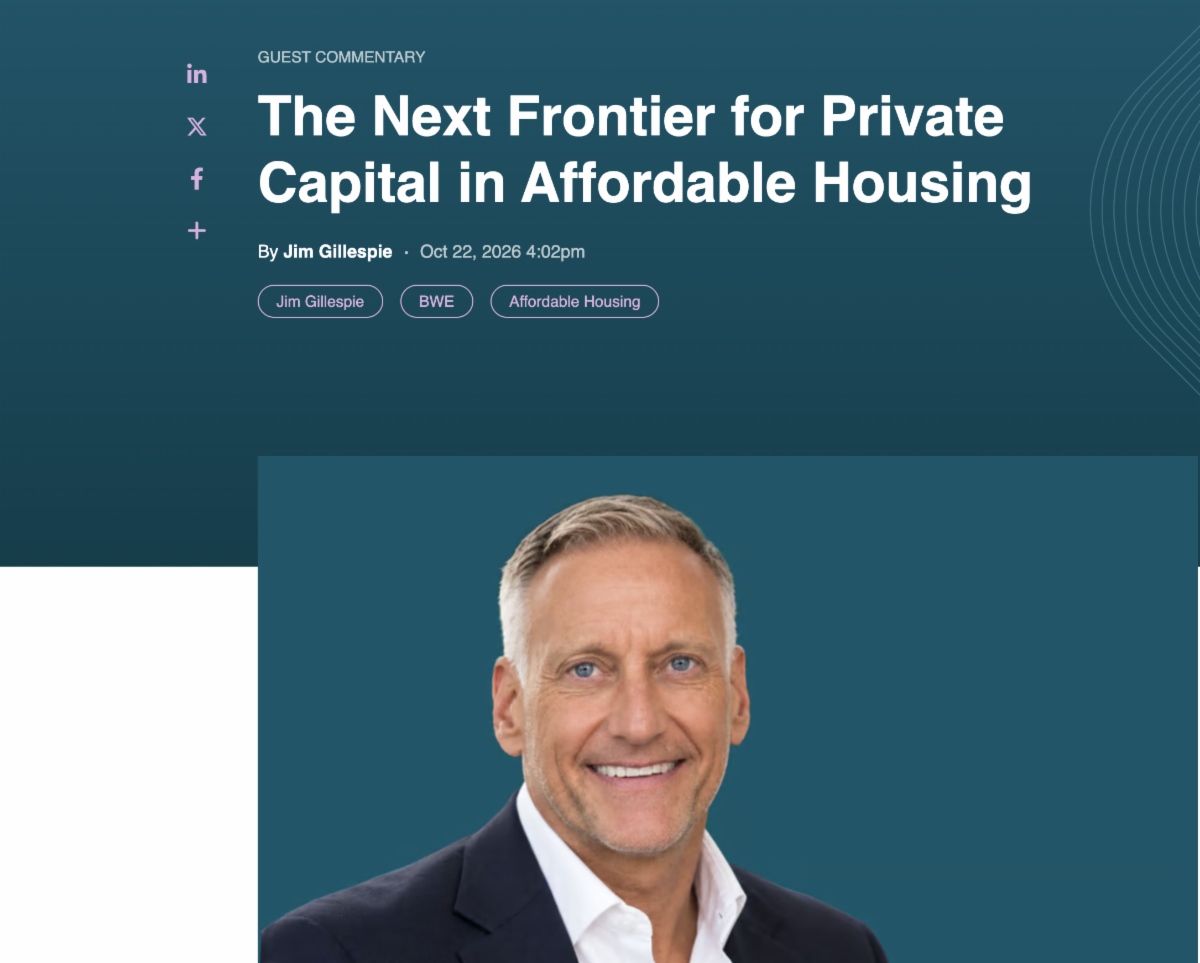
In a recent Affordable Housing Finance article, "The Next Frontier for Private Capital in Affordable Housing," Jim Gillespie explores how strategically placed capital can unlock housing developments that might otherwise remain stalled. His argument highlights an important principle: the structure and timing of capital can be just as consequential as the amount invested.


At The Affordability Project, we believe this principle offers an opportunity to rethink the role of charitable giving.


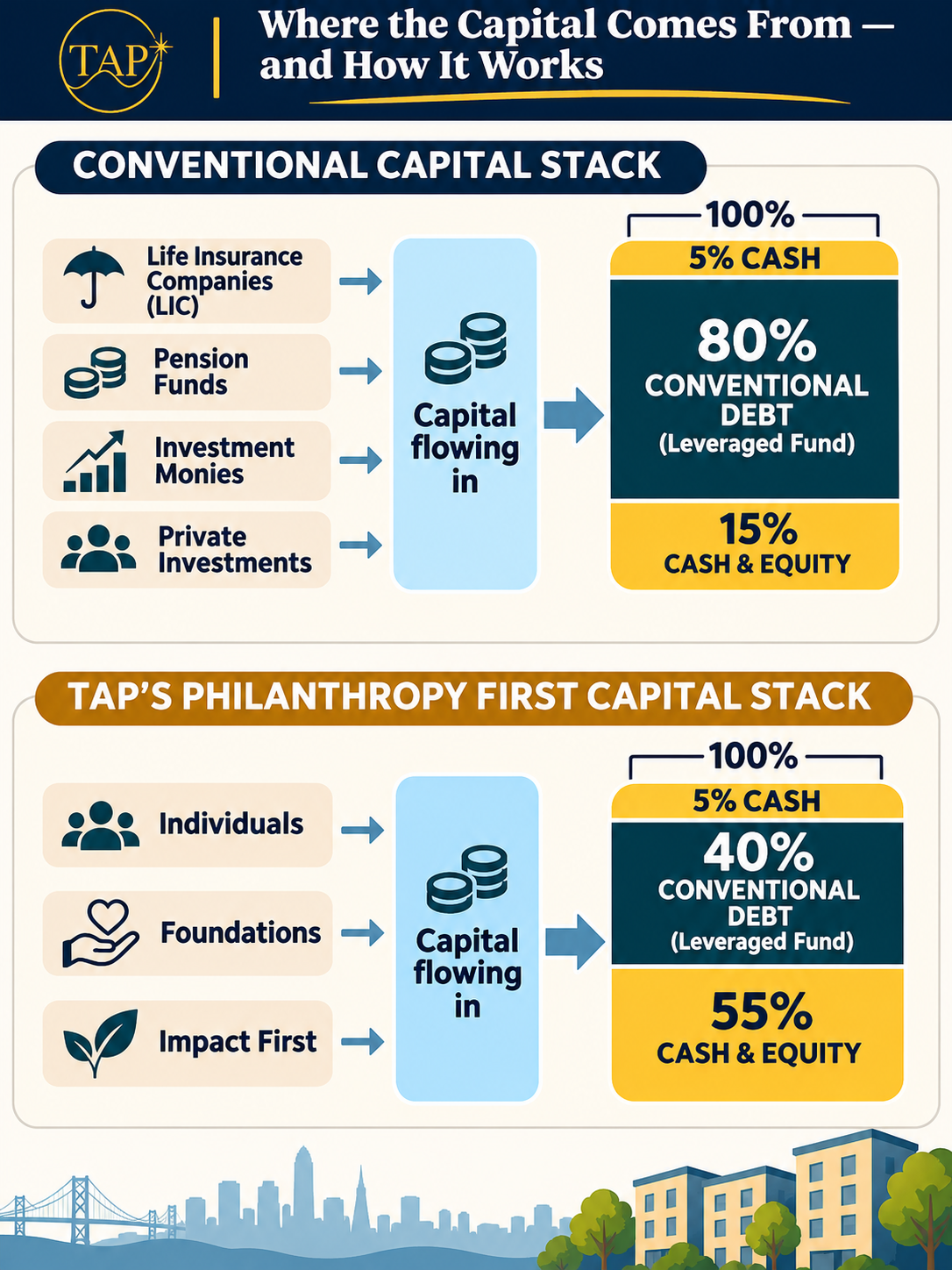
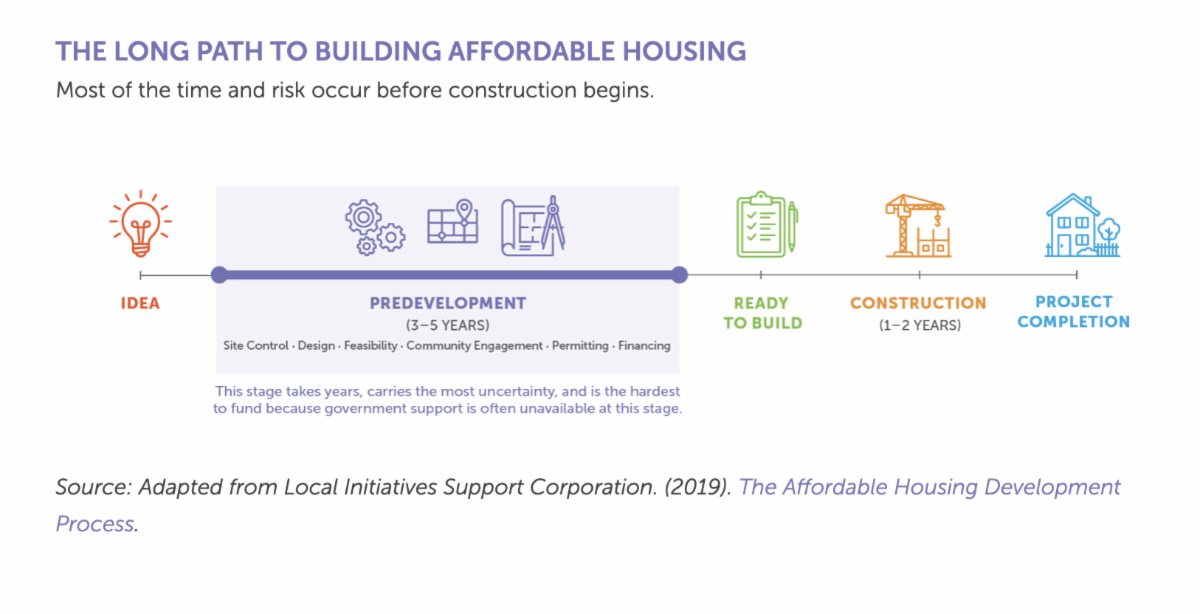
Rather than using philanthropic dollars solely to help households afford rents determined by conventional development economics, we can also deploy those dollars earlier—within the development's capital stack.


When charitable contributions reduce the need for expensive financing or high-return equity, they can lower the financial burden a building must carry. That creates an opportunity to establish rents based on what working households can afford, rather than what is necessary to satisfy conventional investor return expectations.


The distinction matters.


Philanthropy that supports rental assistance helps close an affordability gap. Philanthropy that helps finance development can reduce the gap itself.


And when lower-cost development capital is combined with nonprofit ownership, responsible financial management, and long-term affordability commitments, the benefits can extend far beyond the initial contribution.


A building can continue providing affordable homes for decades. A financially sustainable nonprofit developer can use its experience, operating capacity, and potentially recoverable capital to pursue additional developments.


This is the opportunity TAP sees in philanthropy—not simply as a subsidy, but as productive capital that helps create lasting community assets.


What if the greatest impact of a charitable dollar wasn't measured only by the assistance it provides today, but also by what it makes possible tomorrow?


TAP News

What Your Support is Building


From Vision to Reality: Reaching an Inflection Point


Since 2021, The Affordability Project (TAP) has been working to address the root causes of community instability by focusing on San Francisco's often-forgotten missing middle. Our goal is to build affordably by bringing together strategic community investments so families have the freedom to live, hope, create, and thrive.


Along the way, TAP has learned valuable lessons through both its successes and setbacks. As we reflect on our journey, two key takeaways have emerged:


  • Challenging conventional financing. Financiers are accustomed to development projects backed by government funding or institutional investor equity. While TAP retains full ownership of its project equity, it does not have the substantial financial resources of government agencies or institutional investors. As a result, TAP must demonstrate a significantly stronger cash and asset position to secure debt financing for its first development.


  • Breaking new ground. Despite the widely recognized need for affordable, mid-priced housing, few financial or governmental incentives exist to build it. Consequently, there are limited comparable developments and financial data to guide lenders in their decision-making. TAP is working to establish a precedent where few exist.


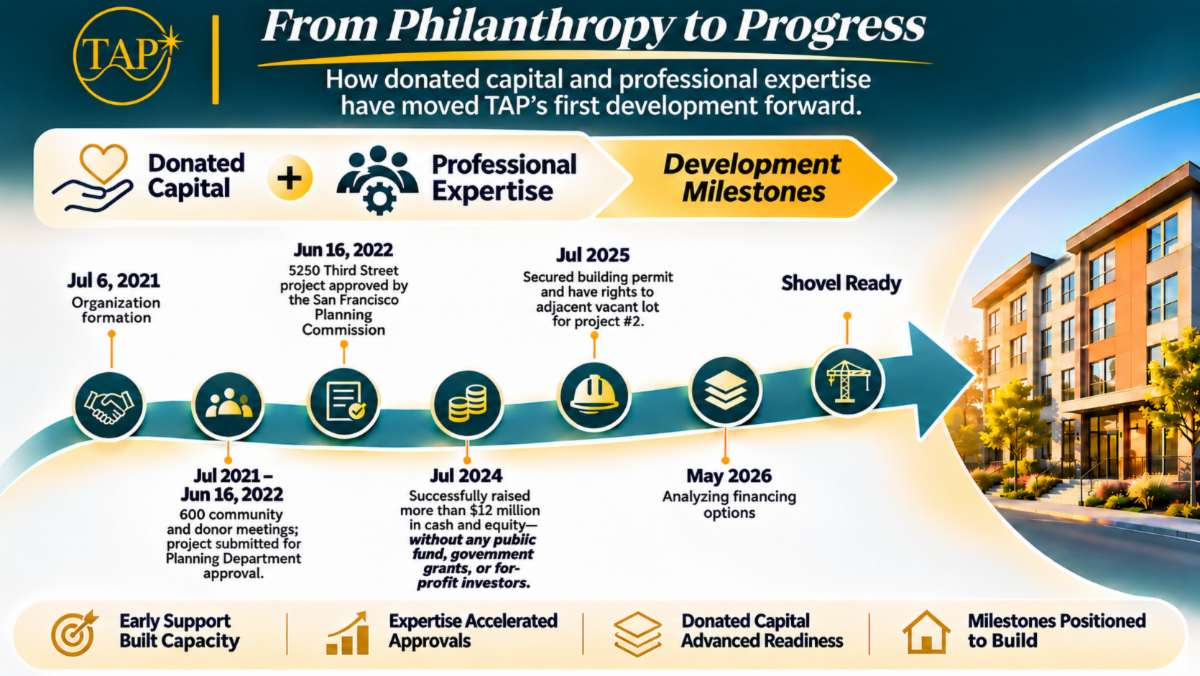
As we celebrate our achievements, we recognize that now is not the time to take our foot off the pedal. We are approaching a critical inflection point—one where years of philanthropic support, professional expertise, and perseverance can culminate in a proof of concept.


What began as a vision for San Francisco has the potential to become a blueprint for building affordably in communities across the nation.


Conscious Capital

What Happens When Capital Chooses not to Take Everything it Can?


Conventional capital terms and the thinking around the ways to set them deserve deeper thought. Tim Szarnicki has written about this specifically saying:


Imagine evaluating an investment with two related sets of questions.


The first is familiar: What financial return can the capital earn? What risks does it cary? How likely is repayment? What alternatives are available?


The second asks what the capital can make possible: What outcome is intended? Could different terms change the decisions of the people using the money? What additional value might result? How would we know whether the outcome occurred because of those terms?


These questions do not have to compete. In fact, they can make each other more useful.


Understanding the financial return being relinquished helps establish the cost of the concession. Measuring the additional outcomes helps determine whether that concession was worth while. Together, these questions provide a more disciplined basis for comparing investment opportunities.


Capital is already shaping economic outcomes. It does to through the returns it demands, the risk it accepts, the time horizons it imposes, and the claims it makes on future values. Those terms are not inevitable. They are choices.

Agentic Capital begins with the idea that we can make thse choices more deliberately--and measure what becomes possible as a result. Taking less is not the goal. Creating more value is.


The question is not whether capital should always take less. It is whether we have fully considered what capital could make possible if we choose to deploy it differently.


Click below to read more.


Something to Read

The Stories that Got us thinking...

The Next Frontier for Private Capital in Affordable Housing


TAP finds itself in a unique position. Our mission to create affordable housing for the often-forgotten middle class—leveraging philanthropic capital without relying on government funding—challenges the “business as usual” approach to affordable housing.


That is why this month's featured article, The Next Frontier for Private Capital in Affordable Housing, resonated with us. It challenges us to rethink how capital can be deployed to address our housing supply crisis.


At TAP, we believe that solving this crisis requires bold thinking, innovative financing, and a willingness to challenge conventional development economics. It is an opportunity to look at philanthropy through a new lens—not simply as a means of giving, but as a means of building.


See link below for the full article.

Expanding Affordable Housing Through Nonprofit Developers


This article is a compelling example of Philanthropy That Builds—demonstrating the power of charitable capital not only to build homes but also to strengthen communities.


The Harry and Jeanette Weinberg Foundation recognizes the importance of investing in the capacity of nonprofit housing developers to create homes that remain affordable for generations.


TAP is not alone in its mission. However, achieving lasting affordability requires visionary philanthropic partners who recognize the potential of investing in a different approach to housing development.


With the support of foundations like the Weinberg Foundation, nonprofit developers like TAP can take on the audacious task of changing the economics of housing—making it more affordable to build, more affordable to live in, and a lasting asset for the community.


See link below for the full article.

Call to Action

Since its founding, TAP's North Star has been San Francisco's Bayview-Hunters Point neighborhood, home to our inaugural development at 5250 Third Street.


This feature from the San Francisco Chronicle tells the story of two families, different generations, and a shared challenge: affordability.


Legacy matters. For communities to thrive, generations of families must have the opportunity to remain in the neighborhoods they helped shape. The Bayview has a rich history, a distinct cultural identity, and an important place in San Francisco's story.


At TAP, we believe that investing in the future of the Bayview is investing in the future of San Francisco. Now is the time to look beyond the neighborhoods that traditionally attract investment and direct our collective resources toward communities whose potential has too often been overlooked.


San Francisco cannot truly be a great city until every neighborhood has the opportunity to thrive.


Thank you to our partners in mission!


(415) 424-4739


YouTube  Web  LinkedIn  
 

The Affordability Project | 3364 Sacramento Street | San Francisco, CA 94121 US