|
Hey friend,
September is better than January as a month in which to set new goals. According to various sources (in which I cannot actually find any scientific study whatsoever), September beats January based on the likelihood that you will actually do something that works towards these goals.
Despite the lack of hard evidence, there is logic to the suggestion that September is preferable:
- You may have been on holiday, had some downtime and reassessed what's important
- You may have that back to school feeling, now you've bought the uniform and filled the pencil case for your kids
- You realise there is only a few months left of 2026 and it's now or never
- You may feel a sense of dread in a cold January, post-Christmas
Of course, you can set new goals any time you like. One thing to consider is what your customer does at this time of year?
If they're starting to think about Christmas, you need to be there with your relevant offer.
If they're starting to review budgets for 2027, perhaps you want to get your product or service on someone's mind with the right info they can take to their Finance person.
I've been doing some research recently on group buying decisions - you know, where it's not just one person's decision to purchase, but needs approval. Various studies point to the need to focus less on individual roles and more on bringing all group participants together. I see the benefits of this. But we know that, certainly lately, finances and budgets have a focus and getting sign off from finance is important.
A finance person's need is, I think, different from an operational person's need. The information that helps get them on board is more about facts than 'story'.
If your customers tend to need some kind of buy-in from someone in finance, I've written some thoughts on how to achieve this, and a template you can download to tell the story of the requirement in a framework that works for them.
Developing this sooner rather than later, perhaps in September in readiness for budgets could be a valuable use of your time.
Good health and best wishes,
Paul
Paul Ince
LikeMind Media
| | |
Members of the team share things they've seen that you may find interesting and helpful.
You told us you like being signposted to interesting things, not necessarily just our stuff. We like to be helpful so here you go!
| |
How should businesses choose influencers they work with?
I was reading this article and it made me think about how and why business owners choose the influencers they work with.
If everyone is making positive content, in a similar style, that content will just get lost in a sea of impossibly positive similarity. And, at that point there’s zero trust left, because apparently all food ever tried by influencers seems to be the best thing since sliced bread.
That simply ruins their credibility as a trusted source of information and audiences will see that you are essentially being paid to advertise the product or service.
This got me thinking, if there are tonnes of influencers making similar content, surely people are a bit over it?
Of course, there are still good influencers out there and as a business owner it’s important to make sure they align with your business.
Find out who they are, who their audience is and what they are talking about. Check to see whether their content style matches yours, their reason for wanting to help promote your business and ultimately, say no if it’s not going to work.
As a business, you don’t want the public to think you’re just paying people (with cash, products or services) to say nice things about you. Find influencers with integrity so that their review means something. If they give you a negative review, use it as a means of improving your offering and invite them back to show them.
Perhaps a ‘pay what you think it’s worth’ model is a better way of working? They pay what they think the product or service is worth, and you get their honest review because who’s going to pay for something that’s pants? Admittedly, you may get people undervaluing it, but I’d argue that’s down to the choice of influencer.
You may still have to pay them/ offer something in return for the content, if you’re asking them to pay for the product. Although you could wave the payment after they give you their valuation?
| |
You can 100% have a successful audio-only podcast
I'll say that again.
You can absolutely have a successful podcast which is audio-only.
I recently did a LinkedIn post about this which got good traction.
Now, I am in no way an influencer but it's currently around 1000 impressions, had 40+ reactions and 10+ comments.
It seems that people agree.
One fellow podcast producer said, "As someone who works on video-first AND audio-only podcasts, YES."
Another person commented that they are often listening to podcasts when doing something else, and so can't watch.
And the best comment was simply, "Absoblimminlutely". A term I will now endeavour to use regularly...
Now, don't get me wrong, I am not anti video podcasts, and I understand the benefits. However there is still a place for audio only podcasts. I've come across umpteen episodes that have made a masterpiece purely using audio, where I've been fully immersed and making my own images in my head.
Could they have done the same with video?
Remember, just because you can do something, doesn't mean you should do it.
If you want to do video, you have the resource and it makes sense for you, crack on. Don't let me stop you.
However, don't be pressured into doing video if it's not right for you.
You can absoblimminlutely (😉) still be successful if you decide video isn't for you.
So, you no longer need to put off starting that podcast because you didn't want to do video. Let's get your masterpiece out there, and into the world.
| |
What can we learn from Krusty the Clown about marketing?
I’ve been thinking a lot these past few weeks about Krusty the Clown, he of the green hair and red nose from The Simpsons whose erstwhile literacy campaign slogan tells us to “Give a hoot, read a book!”
It’s good advice, and maybe more so than ever as, just lately, I’ve been reading how thousands of books have been scanned and then destroyed in an Amazon warehouse for AI training data. Or conversations I’ve heard about people writing and publishing a book, only for it to be quickly discovered that it was completely AI generated. The absolute gall of some folk!
I have friends and colleagues who are voracious readers, who plough through two or three marketing books per week. That’s not me, I hasten to add, and I’m not for one minute suggesting you transform yourself into a full-on bibliophile. I prefer to have a collection of marketing books that I dip into whenever and wherever. A resource library, if you will.
Marketing books do provide useful tips, guides and tools to help us do our jobs, and I certainly advocate picking some out now to read at your leisure. There are hundreds out there for you to devour, but choose wisely, and do so before AI floods the market with poor-quality writing. Or destroys them altogether.
If you’d like some recommendations on what books to read in your field, I’d be happy to discuss with you.
| |
Is nostalgia a secret weapon for marketing?
After a ten-year break, Dolmio recently released a campaign that stopped Gen Z in their tracks. The Dolmio puppet family has returned, but with a modern glow up. Although Papa Dolmio appears to be the same with his bad dad jokes and sideburns, it is evident that the family has changed, especially Sophia who now appears to possess what people call ‘Instagram face’.
Seeing an advert, character or product from your childhood often brings back emotions and memories that don't actually have anything to do with the product at all. The older Dolmio adverts remind me of family mealtimes and watching TV after school, and I believe that is what makes Dolmio so special; they understand the importance of nostalgia and how to use it as a marketing tool.
Dolmio has taken something that's familiar and well-loved and reintroduced it to a modern and social media centred world. By reintroducing the family, but incorporating the use of social media, a more modern look to the characters and a mature joke ‘#saucy content’, Dolmio are attempting to capture the Gen Z audience, whilst taking into account that they are no longer children. Nostalgia isn't always about recovering something from the past, it's about reintroducing something people have an emotional connection with and finding a way to make it relevant again whilst keeping those positive consumer perceptions.
So maybe think twice before you create fresh content, what is it that your consumers love about your brand and could you work with something you already have? For example, perhaps you have an old post that performed extremely well but may feel slightly outdated now, so reintroduce the concept with a modern twist, you may even find it performs better than the first as audiences often engage when reminiscing. There is often value embedded in the content your audience knows and adores, so use it to your advantage!
| | |
Are you utilising the power of email marketing?
In a world where algorithms dictate what your audience sees, email consistently delivers messages to those that need to see it.
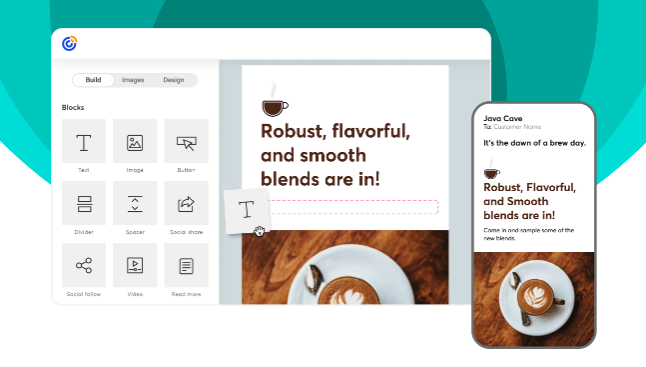
We use Constant Contact for our email marketing and its simplicity helps us deliver beautifully branded emails without the unnecessary fluff in the code that causes some email systems (🙈) to get put into the Junk folder.
| | |
If you want to start getting noticed in the inbox and want to add email to your marketing channels, use the link below to join via our partner link - then we can support you!
| |
Any Questions?
Have a question about content creation, customer journeys or their behaviour? We'd like to address real world conundrums. Or you can share a tale of how your actually got some great results - we'd love to feature you.
Reply to this email with your question or story.
| | | | |