Connecting

March 4, 2024


Click here for sound of the Teletype

Top AP News

Top AP Photos

AP Merchandise

AP Emergency Relief Fund

Connecting Archive

AP Newsletters

AP Books

AP News Tips

Colleagues,


Good Monday morning on this March 4, 2024,


Fifty-five years in journalism – and still at it. That’s a statement that not many of us can make. Our colleague Bob Reid just celebrated this milestone – and Connecting asked him to review those years that have taken him all over the world in pursuit of journalism.


The announcement late last week that Lucy Nicholson of Reuters will become the AP’s new director of photos resulted in comment from a retired AP photographer who competed against her and from a retired AP journalist who, like Lucy, had a Polish grandfather who was a prisoner in the same Nazi concentration camp during World War II.


In today’s Final Word, our colleague Andy Lippman shares his thoughts following the death of his father, Mort Lippman. Our prayers are with Andy and his family.


ANOTHER SUMMONS SINCE CONNECTING SERIES: Richard Drew – I received a ‘Jury Summons,’ as it is called in New York City, Wednesday. Hopefully my recent knee replacement surgery, done last Friday, will ‘pardon’ me.”


Here’s to a great week ahead – be safe, stay healthy, live each day to your fullest.


Paul


Bob Reid marks 55 years in journalism

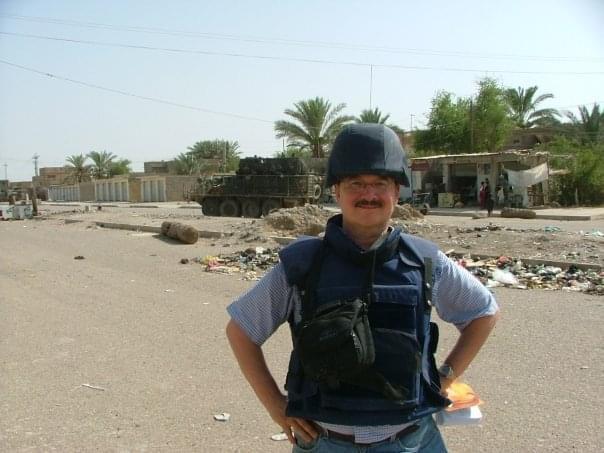
In Baqouba, Iraq in 2007 during the Iraq War. 


Robert Reid - Sunday, March 3 was, for me, a birthday of sorts. I wasn’t conceived, born, baptized, or named on that date. Instead, it marks the day 55 years ago that I reported for duty at the AP Charlotte bureau – my first, fulltime job in print journalism.


Fifty-five years later, I’m still at it.


Somebody asked me if that was a boast or a cry for help. It’s more like the sensation someone must feel after rolling a car down a hill, climbing out of the wreckage, and wondering in amazement, “how did I survive?”


The first days were a bit rocky. Early on, the news editor pulled me aside. “We have a dress code here,” he said. My jeans and madras shirt didn’t pass muster.


Suffice it to say, 1960s wire service journalism was a different world. It was almost exclusively White and male, except for the bureau secretary. The noise from the printers was so loud that we all suffered hearing loss and learned to talk a few decibels over a scream.


One editor kept a bottle of whiskey on the desk, which was not for decoration. It was tolerated because the drunker he got, the better and faster his writing. By the end of the evening both he and his prose were singing.


That inauspicious beginning set me off on a journey that led from Charlotte to the New York world and foreign desks, then postings in Bonn, Cairo, Manila, the United Nations, Vienna, Brussels, Amman, Baghdad, Kabul, Berlin and finally to Washington with Stars and Stripes – and countless other places in between.


For a kid who grew up on the edges of Appalachia and had only crossed the Mississippi River twice in his first 18 years, journalism became more than a career. It was a life.


Over the years I’ve come to understand that I graduated from Davidson College but was educated at The Associated Press. What we didn’t earn in salaries we were paid in experiences both good and bad.


Looking back, I feel sorry for young people just starting out. Their road will be much tougher, and in many cases much shorter. Will they feel the exhilaration of watching dictatorships fall, or the adrenalin rush that comes with covering some of the biggest stories in the world? All while raising children overseas and sending them to college.


I hope so.


EDITOR'S NOTE: Bob Reid retired from AP in 2014 and joined Stars and Stripes, where he is editor-in-chief.


Lucy Nicholson forced me to up my game


Doug Pizac - During my 30+ years as an AP photographer, I tried to set a standard where at events, fellow/competing shooters had to up their game to keep up with me. If I disappeared on you, then you were about to get skunked. And on occasions there were other photographers where I had to up my game. It was a healthy give and take both personally and professionally.


The best photographer I ever came across where I had to put myself in double overdrive to keep up with was Reuters’ Lucy Nicholson. She was a creative hard-working dynamo that pushed me and taught me new ways to cover assignments. And from her work I’ve followed during retirement she is still a force to be reckoned with.


The announcement that she is now AP’s new Director of Photography is welcomed and heartwarming news. What she will be bringing to our beloved wire service is sure to up everyone’s game.


LUCY: Welcome to AP, and thank you for taking the position. Now it will be interesting to see how you deal with the five-hour time difference between NYC and London. I would normally say good luck, but having worked with/against you I’m sure you’ll pull it off just fine.


A strong connection with grandfathers

Dennis Conrad - Friday’s Connecting was strongly so for me.


In reading about AP’s new director of photography, Lucy Nicholson, not only did I discover that she is “half Polish,” as am I, but that we also both have Polish grandfathers who were prisoners in the same Nazi concentration camp in Stutthof, Poland, in WWII.


Her grandfather survived and lived to tell Lucy about his experience.


My grandfather died at age 56 in September 1944 after 18 months of forced labor.


Perhaps the two men were at the camp at the same time, even the same barracks.


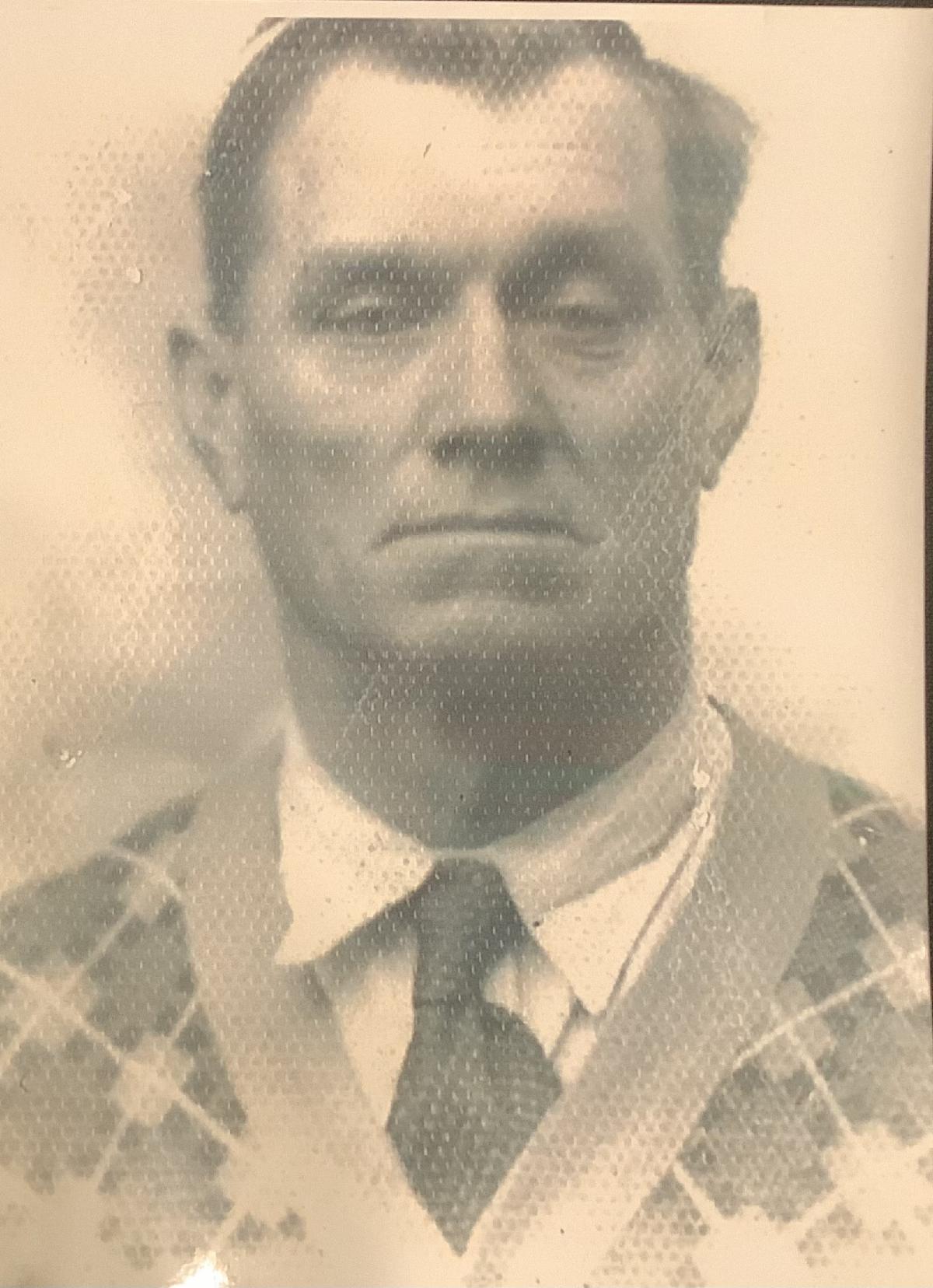
My grandfather, Tomasz “Thomas” Wilinski, was arrested by the Gestapo at his home in Kolno, classified as a “political prisoner” and transported to the camp near Gdansk.


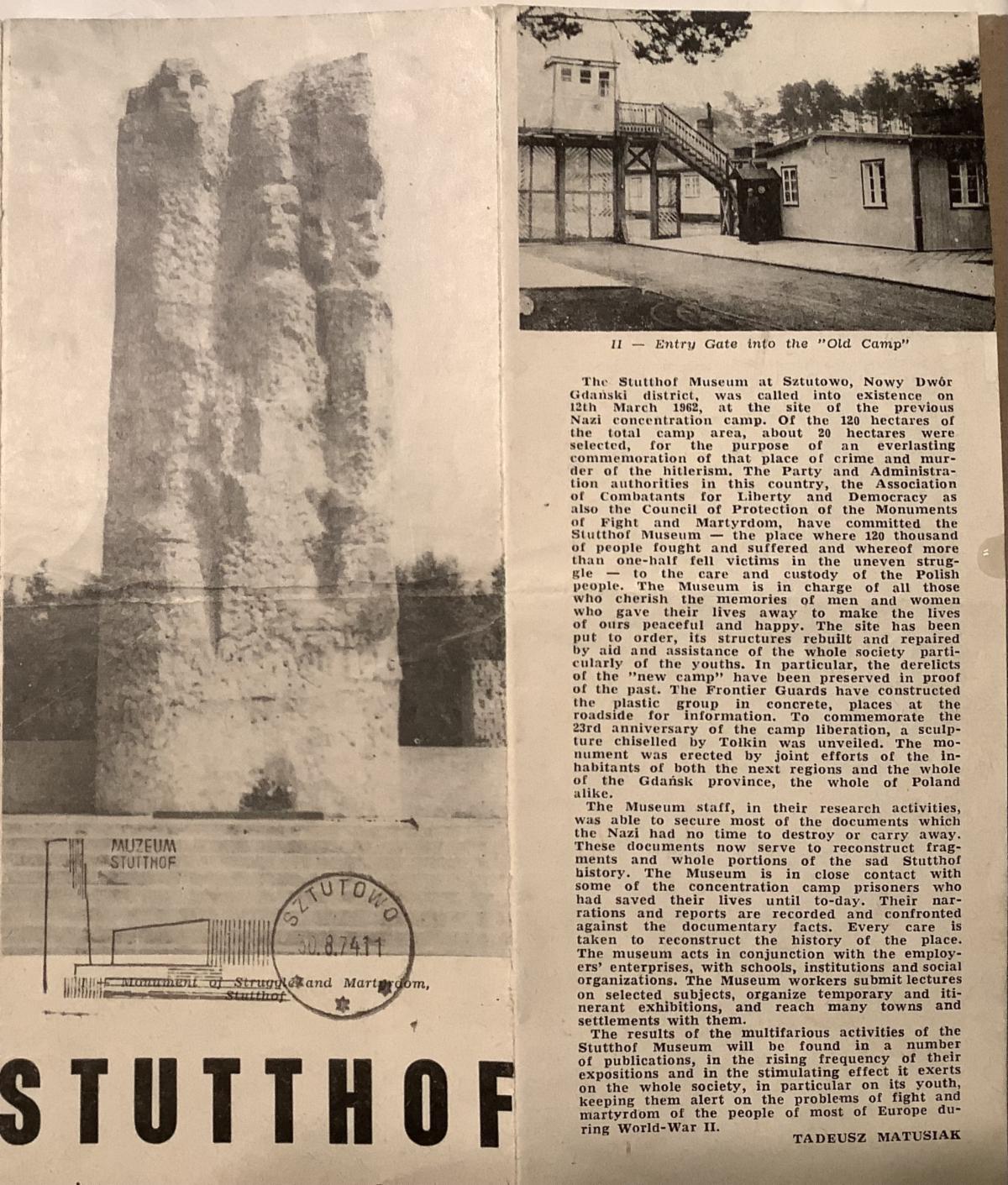
As a University of Florida exchange student in Poland, I had the opportunity during a summer break to travel on my own throughout the country. On August 30, 1974, nearly 30 years to the day that Tomasz died, I visited the death camp, saw the crematorium where his body would have been taken and the memorial constructed after the war to honor the victims of Nazism.


Our family now has the file the Nazis kept on Tomasz from the time of his arrest as the Holocaust Museum in Washington was able to locate it for me in their archives.


My late mother was also able to obtain a censored letter her father had signed as a Stutthof prisoner and mailed to a friend in Kolno in February 1944:


“My beloved Leo, I am well and I hope you are also well. I thank you very much for the parcel. My dear Leo, please be so kind and send me packages often. I have a good appetite. I will thank you from the bottom of my heart. I need two packages every week. Leo, please be so kind and do it for me. Now I am sending the letter and sending my regards.”


The signature was familiar. The writing was in German. The stamp on the envelope featured a portrait of Hitler.


Although my grandfather was Roman Catholic, I asked the Holocaust Museum if they would like the letter as a donation to their collection because I noticed their exhibits focused on atrocities committed by Nazis against all peoples, not just Jews. They eagerly added it to their archives along with the story of his life that I wrote for them as well as photos of Tomasz including the one in a sweater shown here.


Above are also a postcard and brochure from my 1974 visit to Stutthof.


I also have a list of many names of men who were in the same building with Tomasz at the time he was segregated with other political prisoners.


Maybe Lucy’s grandfather is among them.


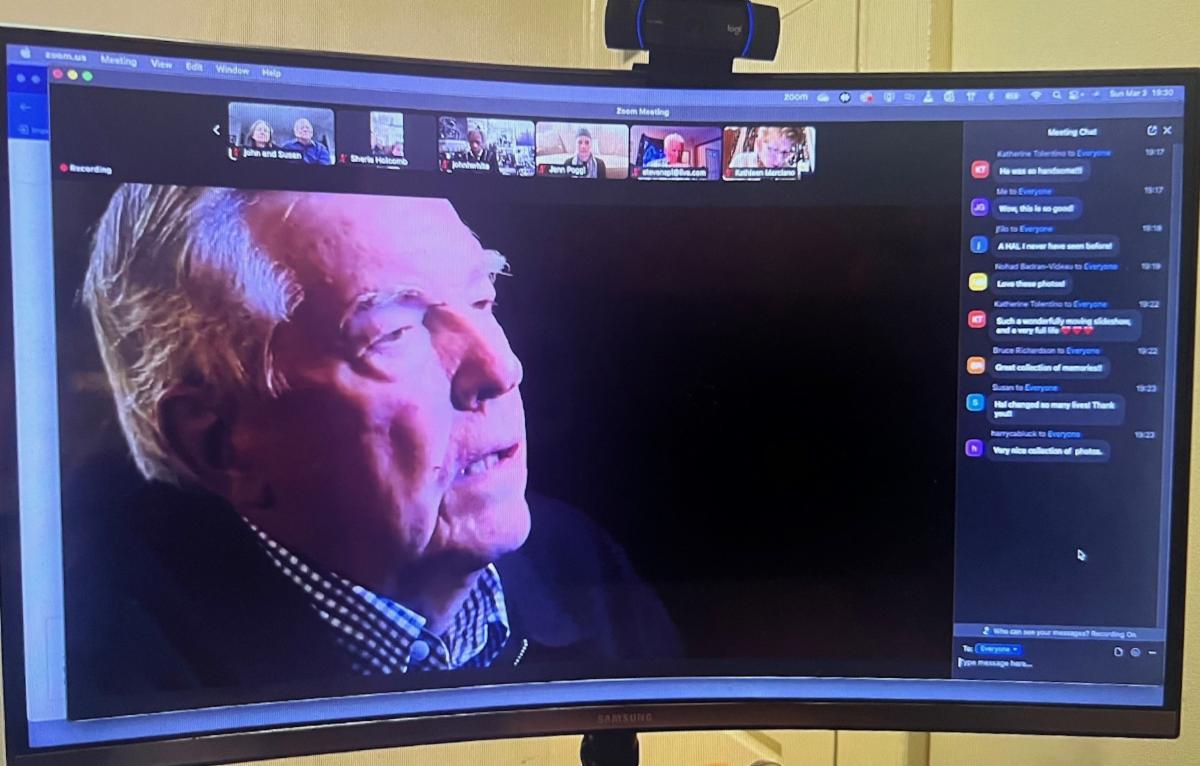
Hal Buell’s life, career celebrated in Zoom gathering

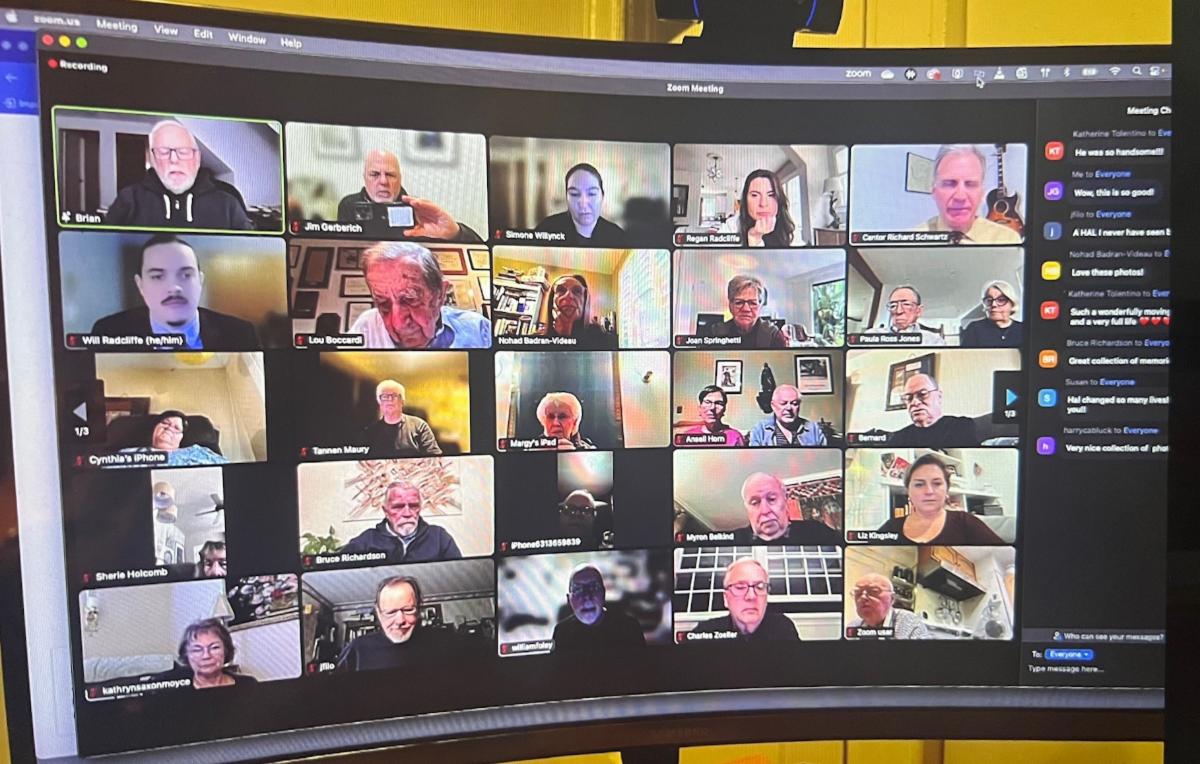
Screenshots by Jim Gerberich


About 90 family, friends and AP colleagues from the U.S. and abroad gathered Sunday evening by Zoom to celebrate the life of Hal Buell, the AP’s former long-time Executive NewsPhoto Editor and the visionary architect of the shift to electronic photography and electronic pictures handling by the AP and the news industry. Buell died Jan. 29 at the age of 92.


The gathering was organized by Hal’s daughter, Barbara Buell Radcliffe.


Barbara and members of her family led off the service, followed by former AP President/CEO Louis D. Boccardi and retired AP photo editor Brian Horton. Members of the Zoom community including Pulitzer Prize winners John H. White, Bill Foley, John Filo, Neal Ulevich and Reed Saxon shared memories. Filo, Foley, Ulevich and Saxon are former AP photographers from the Buell era.


-0-


John Brewer adds:


We shared memories, laughed, cried, talked and thought of all the ways Hal had touched us -- and how, on a Sunday in March, he had brought us back together. 


Most of us there, I think, hadn't seen each other in years.


We scanned the Zoom boxes -- and as Lou Boccardi spoke, I found myself once again snapping to, sitting up straighter, reconnecting to his evocative words.  


Moment of Zen

J. David Ake - And so it begins. The famous cherry trees around the Tidal Basin in Washington are starting to bud. According to the National Park Service peak bloom is expected some time between March 23 thru March 26.


Rainy day Saturday

Claudia Counts - Rainy Saturdays can be very relaxing. The normal noises of the city become muffled and the primary sound is that of tires hissing on wet streets. This is a view of Eighth Avenue looking north toward Columbus Circle in New York City.


The Final Word


A son’s farewell to his dad

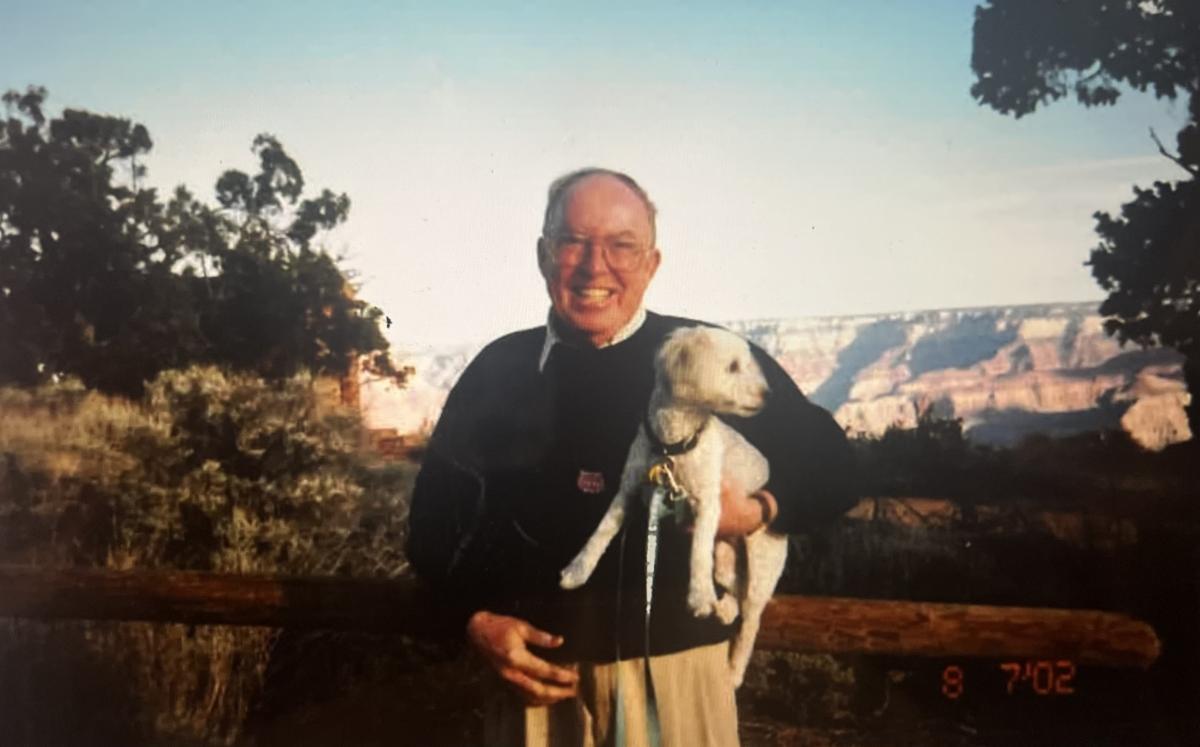
Mort Lippman with his dog on a trip to the Grand Canyon. (Photo courtesy of Andy Lippman).


Andy Lippman - I’ve heard friends say how hard it is when your last parent dies.


I now know the feeling.


My dad Mort, who lived in Scottsdale, Ariz., died last Thursday at age 97.


I’m fortunate that I got to share him and put off that lonely feeling for a lot of years.


But he fell and broke his leg two weeks ago, and a lot of complications, plus old age, brought his life to a close.


My dad never met a stranger. That doesn’t mean that he was a party person.


He wasn’t big on parties. He was rather, extremely outgoing. My mother, brother and I might be out the door of a store, and my dad would still be talking to the clerk. My mom would roll her eyes and say, “There goes your father again.”


I once introduced him to an old-order Mennonite family in northern Indiana. He took such a liking to them that every year he sent them a box of lemons that grew from a tree in his backyard. They returned the favor by baking him lemon cookies.


My red-haired dad grew up in Brooklyn, NY. By age 10, he was bringing lilacs from his backyard to the girl across the street, Mimi, whom he married when he was 19 and she was 18.


She followed him across the country while he served in the Army during World War II. Any story about my dad is a story about my mom, my brother Glenn and I and later, his second wife Nancy.


My dad got gunshot concussion during training and spent time in being treated in hospitals during the war-along with being tapped to learn Japanese in case America had to invade Japan.


But he never put himself in the category of being someone special. He didn’t even apply for military disability until he was in his mid- 80s-and even then, he had to be convinced to do so by a longtime friend. A VA administrator looked at him as if to say “where have you been all these years?” before approving his request.


Every Thanksgiving, the family would sit down to dinner and my dad would tell what my brother and I called “the story” of how he and my mom during one Thanksgiving during the war had to make do with a few dollars worth of food for the holiday meal.


My dad was definitely a “Greatest Generation” guy. He had a strong work ethic and never complained outwardly about what was bothering him. We would hear only after the fact about the time he continued working despite having a bloody sock because of an infected toe.


He was a pharmacist, and owned a drug store in Alexandria, Va.


Despite his long hours, I remember times when he came home and played catch with me. There were occasional days off when we had what my mom labelled “Men’s Day Out”, and we went to lunch and a movie.


I grew up in the 1950s in a home where dad worked and mom took care of the home front.


But, my dad and mom rarely thought of going away by themselves.


Vacation meant going with their two sons, and so we got to go to Arizona for baseball spring training (my dad loved baseball), and Ireland.


Often in the winter, we’d get in the car and travel from our home in Bethesda, Md., to Williamsburg, Va. In the mornings, my dad and I would walk the cobblestone streets of the colonial town.


We’d also go back to his old stomping grounds in Brooklyn, and hear stories about his hero, the New York Yankees first baseman Lou Gehrig - another guy who never complained about an injury; about his mother’s cooking (we were always delighted to confirm his judgment); and listen to stories about how hard he tried both in his studies and in sport. He was often one of the shorter guys on a team at 5-foot-6.


My dad, after the war, went to college on the GI Bill.


My dad’s credo was that he’d work as hard as he could to get the customer what they needed, and he wanted those who worked for him to do the same. Every Christmas, he’d get cards from young people who had worked for him and remembered the experience.


That proved to be a winning strategy when he and my mom moved to Arizona in 1970, and opened the first of four Hallmark card and gift stores around the state.


He genuinely enjoyed most of the customers and they were often effusive in their response. He offered new products. One time when he was visiting me in Kentucky, he discovered a Southern candy called “Goo-Goo Clusters” - which is a mass of nuts and caramel bathed in chocolate.


Wouldn’t you know it was a hit with the folks in Phoenix, Arizona.


My mom died in 2001. She was 73 and they had been married 53 years.


The years that followed were lonely, but he tried to stay involved both socially and with the public. It was while working part-time at a local bookstore that he met his second wife, Nancy, who was also working at the store.


My dad doted on both of his wives. He kept a closet where he put gifts for future occasions. I ’know that when my mom died, he was several holidays ahead toward presenting a gift. I know the same is true now. If I told him that there were daffodils available at Trader Joe’s, he’d tell me that he’d already been there and bought some for his wife.


He brought Nancy flowers every week.


My dad wasn’t perfect, and neither was my relationship with him. There were bumps along that road, and my dad could get mad and wasn’t afraid to say, if he thought I did something wrong.


But, starting after my mom died, I started calling my dad almost every afternoon about 4 p.m. I did it at first thinking it was for him. I realized after awhile, that I was doing it for me too.


I’m glad that my last conversation ended with my telling him that I loved him. My dad was not the kind of man who often actually said those words to me. This time, he answered, “I know that son. I feel the same way,”


My dad once told me that he’d like his epitaph to be “I tried” - because he tried so hard to do well in his life.


Dad, you succeeded.


Stories of interest


They are TV’s ghosts — networks that somehow survive with little reason to watch them anymore (AP)


BY DAVID BAUDER


NEW YORK (AP) — The list of memorable characters and personalities who entered popular culture through cable television is long: Honey Boo Boo. Tony Soprano. Lizzie McGuire. Don Draper. Jon Stewart. Beavis and Butt-Head. Chip and Joanna Gaines. SpongeBob SquarePants.


Pick your own favorites. Chances are there won’t be many more to join them.


Few cable and satellite networks are a force anymore, the byproduct of sudden changes in how people entertain themselves. Several have lost more than half their audiences in a decade. They’ve essentially become ghost networks, filling their schedules with reruns and barely trying to push toward anything new.


Says Doug Herzog, once an executive at Viacom who oversaw MTV, Comedy Central and other channels: “These networks, which really meant so much to the viewing public and generations that grew up with them, have kind of been left for dead.”


As they fade, so are the communities they helped to create.


Read more here.


-0-


Lobbyist Marion Hammer’s NRA sugar daddy LaPierre is gone, but she’s still riding high on NRA cash (Florida Bulldog)


By Dan Christensen, FloridaBulldog.org


National Rifle Association honcho Wayne LaPierre’s ticket to ride the NRA’s gravy train was canceled last week with a New York jury’s widely reported corruption findings, but his longtime Florida collaborator Marion Hammer continues riding high on NRA millions he funneled to her.


Hammer’s pay deals were among stacks of evidence the jury weighed before determining that the NRA, LaPierre, ex-treasurer and CFO Wilson “Woody” Phillips and general counsel and corporate secretary John Frazer are liable for violating the law. LaPierre, who resigned as executive vice president shortly before the civil corruption trial, was found to have abused his position for his personal benefit and by steering lucrative contracts to relatives and friends, like Hammer. He was ordered to pay $4.35 million.


For decades, the powerful Hammer has sought to come off to Florida’s public as the NRA’s unwavering advocate for the paramountcy of the Second Amendment. Here’s what she told the Tampa Bay Times when she announced her “retirement” in June 2022:


Read more here. Shared by Nick Penniman.


-0-


ESPN NFL reporter Chris Mortensen dead at 72 (Fox News)


By SCOTT THOMPSON


Chris Mortensen, the legendary ESPN NFL reporter, died Sunday morning, the network announced. He was 72.


"Mort was widely respected as an industry pioneer and universally beloved as a supportive, hard-working teammate," ESPN Chair Jimmy Pitaro said in a statement. "He covered the NFL with extraordinary skill and passion, and was at the top of his field for decades. He will truly be missed by colleagues and fans, and our hearts and thoughts are with his loved ones."


Mortensen stepped away from his longtime role with ESPN after the 2023 NFL Draft, announcing that he needed to prioritize his health and family.


Read more here. Shared by Dennis Conrad.


-0-


Alibaba’s New AI Video Generator EMO Makes Photos Talk and Sing (PetaPixel)


JEREMY GRAY


Chinese multinational Alibaba, best known for its e-commerce operations, also heavily invests in technological development projects. Researchers in the company’s Institute for Intelligent Computing showed off their new AI video generator, EMO.


EMO, or Emote Portrait Alive, is an “expressive audio-driven portrait-video generation framework” that turns a single still reference image and vocal audio into an animated avatar video with facial expressions and poses.


EMO AI engine examples


Among the numerous examples the team created is taking a still AI-generated sunglasses-wearing woman from OpenAI’s Sora debut and having her sing “Don’t Start Now” by Dua Lipa. Fortunately, the character is one of the least terrifying of Sora’s creations.


Another example shows an AI-generated photo of da Vinci’s Mona Lisa and having her sing “Flowers” by Miley Cyrus, as covered by YUQI. In another clip, Audrey Hepburn sings a cover of an Ed Sheeran track. The YouTube channel RINKI compiled all of Alibaba’s demo clips and upscaled them to 4K.


Read more here. Shared by Doug Pizac, who said, "Chinese company Alibaba is not only a huge competitor to Amazon but it is also one of the largest artificial intelligence companies in the world. Here’s a PetaPixel story on its ability to turn a STILL photo into a video where the subject not only speaks fake words but also sings in a very convincing manner. Watch the composite video showing what it can do. Frightening."

Today in History - March 4, 2024

Today is Monday, March 4, the 64th day of 2024. There are 302 days left in the year.


Today’s highlight in history:


On March 4, 1865, President Abraham Lincoln was inaugurated for a second term of office; with the end of the Civil War in sight, Lincoln declared:


“With malice toward none, with charity for all, with firmness in the fight as God gives us to see the right, let us strive on to finish the work we are in, to bind up the nation’s wounds, to care for him who shall have borne the battle and for his widow and his orphan (tilde) to do all which may achieve and cherish a just and lasting peace among ourselves and with all nations.”


On this date:


In 1789, the Constitution of the United States went into effect as the first Federal Congress met in New York. (The lawmakers then adjourned for lack of a quorum.)


In 1863, the Idaho Territory was created.


In 1917, Republican Jeannette Rankin of Montana took her seat as the first woman elected to the U.S. House of Representatives, the same day President Woodrow Wilson took his oath of office for a second term (it being a Sunday, a private ceremony was held inside the U.S. Capitol; a second, public swearing-in took place the next day).


In 1933, Franklin D. Roosevelt took office as America’s 32nd president.


In 1966, John Lennon of The Beatles was quoted in the London Evening Standard as saying, “We’re more popular than Jesus now,” a comment that caused an angry backlash in the United States.


In 1981, a jury in Salt Lake City convicted Joseph Paul Franklin, an avowed racist and serial killer, of violating the civil rights of two Black men, Ted Fields and David Martin, who’d been shot to death. (Franklin received two life sentences for this crime; he was executed in 2013 for the 1977 murder of a Jewish man, Gerald Gordon.)


In 1987, President Ronald Reagan addressed the nation on the Iran-Contra affair, acknowledging that his overtures to Iran had “deteriorated” into an arms-for-hostages deal.


In 1994, in New York, four extremists were convicted of the 1993 World Trade Center bombing that killed six people and injured more than a thousand. Actor-comedian John Candy died in Durango, Mexico, at age 43.


In 1998, the U.S. Supreme Court ruled that sexual harassment at work can be illegal even when the offender and victim are of the same gender.


In 2012, Vladimir Putin scored a decisive victory in Russia’s presidential election to return to the Kremlin and extend his hold on power.


In 2015, the Justice Department cleared Darren Wilson, a white former Ferguson, Missouri, police officer, in the fatal shooting of Michael Brown, a Black 18-year-old, but also issued a scathing report calling for sweeping changes in city law enforcement practices.


In 2017, President Donald Trump accused former President Barack Obama of tapping his telephones during the 2016 election; an Obama spokesman declared that the assertion was “simply false.”


In 2018, “The Shape of Water” won four Oscars including best picture, an award announced by Warren Beatty and Faye Dunaway a year after they were caught up in the erroneous announcement that “La La Land” and not “Moonlight” had won for best picture.


In 2020, federal health officials investigated a suburban Seattle nursing home at the center of a coronavirus outbreak.


In 2022, Russian troops seized the biggest nuclear power plant in Europe after a middle-of-the-night attack that set it on fire and briefly raised worldwide fears of a catastrophe in the most chilling turn in Moscow’s invasion of Ukraine to that point.


Today’s birthdays: Actor Paula Prentiss is 86. Movie director Adrian Lyne is 83. Singer Shakin’ Stevens is 76. Author James Ellroy is 76. Former Energy Secretary Rick Perry is 74. Singer Chris Rea is 73. Actor/rock singer-musician Ronn Moss is 72. Actor Kay Lenz is 71. Musician Emilio Estefan is 71. Movie director Scott Hicks is 71. Actor Catherine O’Hara is 70. Actor Mykelti (MY’-kul-tee) Williamson is 67. Actor Patricia Heaton is 66. Sen. Tina Smith, D-Minn., is 66. Actor Steven Weber is 63. Rock musician Jason Newsted is 61. Actor Stacy Edwards is 59. Rapper Grand Puba is 58. Rock singer Evan Dando (Lemonheads) is 57. Actor Patsy Kensit is 56. Sen. James Lankford, R-Okla., is 56. Gay rights activist Chaz Bono is 55. Actor Andrea Bendewald is 54. Actor Nick Stabile (stah-BEEL’) is 54. Country singer Jason Sellers is 53. Jazz musician Jason Marsalis is 47. Actor Jessica Heap is 41. Actor Scott Michael Foster is 39. TV personality Whitney Port is 39. Actor Audrey Esparza is 38. Actor Margo Harshman is 38. Actor Josh Bowman is 36. Actor Andrea Bowen is 34. Actor Jenna Boyd is 31.

Connecting is a daily newsletter published Monday through Friday that reaches more than 1,800 retired and former Associated Press employees, present-day employees, and news industry and journalism school colleagues. It began in 2013. Past issues can be found by clicking Connecting Archive in the masthead. Its author, Paul Stevens, retired from the AP in 2009 after a 36-year career as a newsman in Albany and St. Louis, correspondent in Wichita, chief of bureau in Albuquerque, Indianapolis and Kansas City, and Central Region vice president based in Kansas City.


Got a story to share? A favorite memory of your AP days? Don't keep them to yourself. Share with your colleagues by sending to Ye Olde Connecting Editor. And don't forget to include photos!


Here are some suggestions:


- Connecting "selfies" - a word and photo self-profile of you and your career, and what you are doing today. Both for new members and those who have been with us a while.


- Second chapters - You finished a great career. Now tell us about your second (and third and fourth?) chapters of life.


- Spousal support - How your spouse helped in supporting your work during your AP career. 


- My most unusual story - tell us about an unusual, off the wall story that you covered.


- "A silly mistake that you make"- a chance to 'fess up with a memorable mistake in your journalistic career.


- Multigenerational AP families - profiles of families whose service spanned two or more generations.


- Volunteering - benefit your colleagues by sharing volunteer stories - with ideas on such work they can do themselves.


- First job - How did you get your first job in journalism?


- Most unusual place a story assignment took you.


Paul Stevens

Editor, Connecting newsletter

paulstevens46@gmail.com