|
- Rev. Christopher B. Morton
Church Vitality is the new primary focus of the Christian Church In Nebraska. While every Regional Church has always been concerned with church vitality, it seemed to your Regional Church leadership that now is the time to re-imagine The Purpose of the Regional Church. After three years of planning together, we have decided that we really need to focus our disparate efforts at being The Church. And have further decided to dedicate an increasing amount of our time, energy, and resources to the question of Church Vitality.
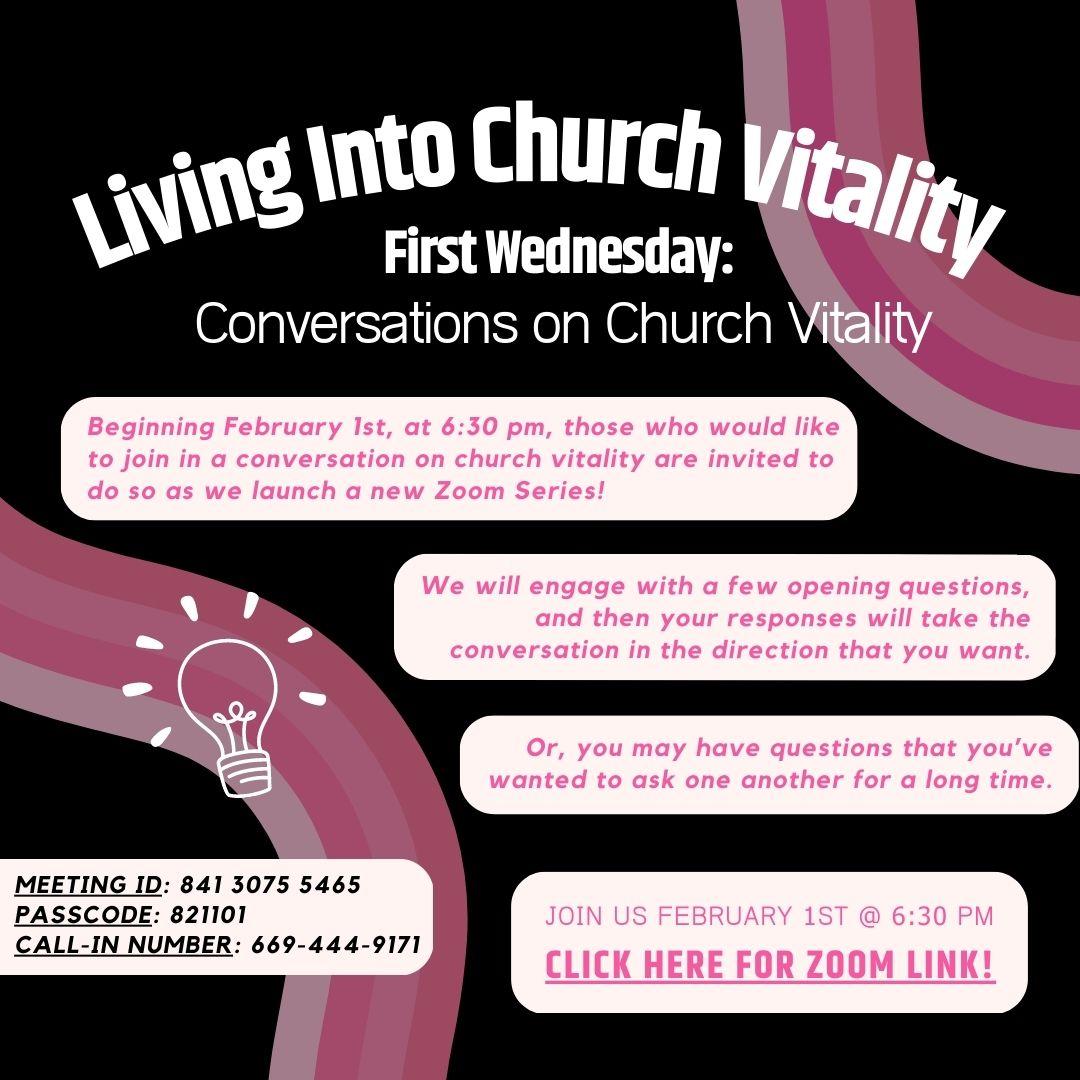
As we begin the new year it seemed to me that spending some time sharing some thoughts on church vitality with one another might be helpful.
But what is church vitality? How can you measure vitality? What do you see, hear, and feel when the church is being vital?
Many of us will turn to numbers, or metrics, so that we can measure vitality. Numbers may be helpful, but they are not an ends statement, or final determining factor. For instance, while saying that a church worship service averages 120, or 210, or 1,200 people, such a number doesn’t begin to give you a picture of the life of that church. Nor do numbers alone provide us with a sense of the complexity of what it means for a congregation in the community where it is located.
Comparing and contrasting the life of Havelock Christian Church in Lincoln with First Christian Church in Lincoln, let alone FCCs in Omaha, Falls City, Minden, or North Platte, provides for an interesting conversation that may help us to both appreciate the vital differences and similarities, as well as the diverse ways in which congregations are experienced by the people.
The Christian Church (Disciples of Christ) have not been quite as explicit about our expectations of local churches as maybe some other Mainline Protestant, or Catholic Churches. But, many denominations, including our own, have fallen into the thinking that there is a standard by which we can measure vitality. For a while, vitality was measured by:
-
Contemporary Music/Worship – did the church include contemporary music, and/or have a second worship service that was considered contemporary;
-
Small Group Ministries - Other congregations emphasized the need for small group ministries to be(come) vital.
-
Long-Term Pastorates – Some congregations were committed to llonger-term ministries of the clergy because they believed that that alone would bring about vitality.
-
Youth Groups - Emphasizing youth groups was a way of measuring a church’s vitality.
Resource: Reclaiming Rural: Building Thriving Rural Congregations, pages 27-28
But what happens if the community where the local church is located is surrounded by people who are aging, and there are fewer and fewer young families? Or the number of people who gather each Sunday is small enough so that a congregation does not need small groups? How do we measure the nuances of each local church, and the community where it is located?
|