The green CSTP journal continues its work, even in the autumnal months! As we slip closer to winter and the days get shorter, we remind you to always look for the joy and lightness around you. And sometimes that lightness is found among holiday decor and a celebration of the season! | | Brilliant Teaching Virtual Courses | | |
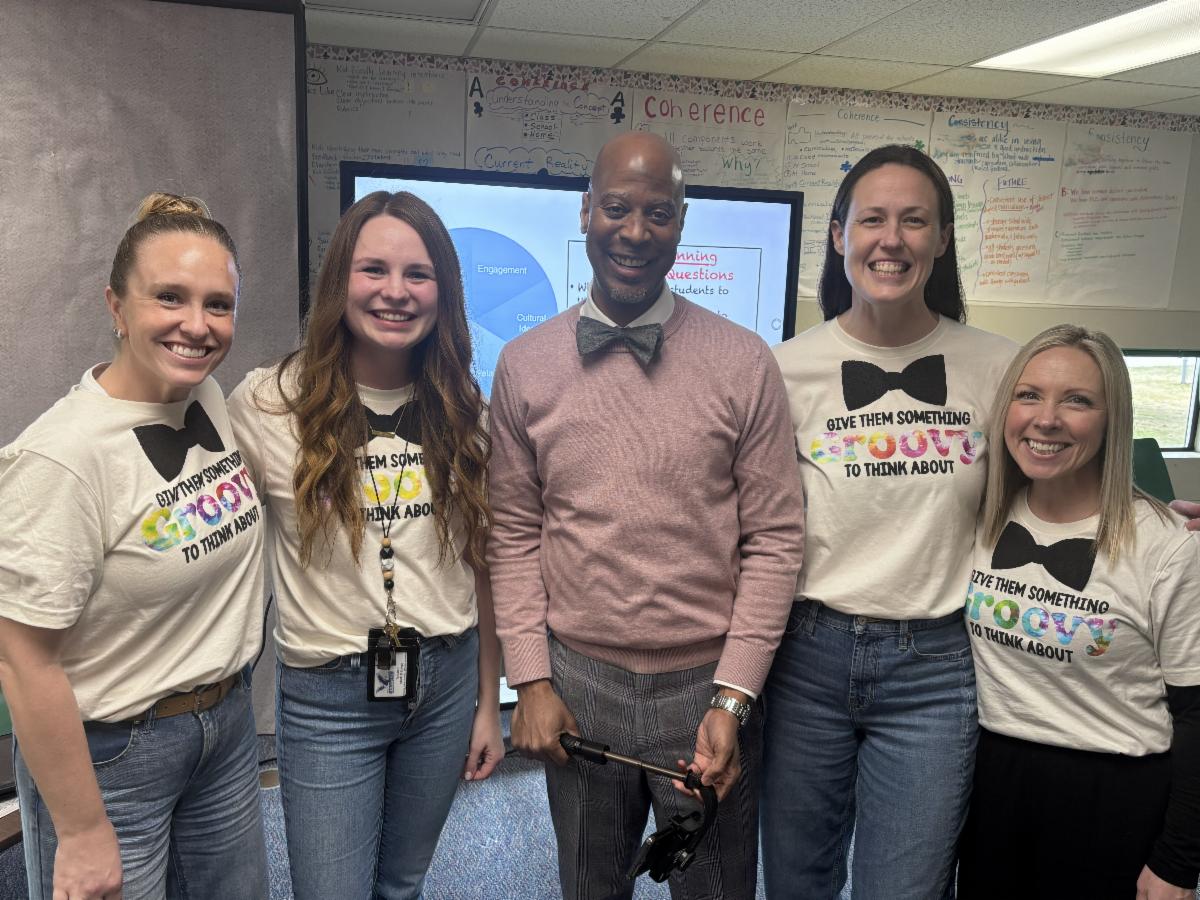
This school year, with funding support from OSPI, the Center for Strengthening the Teaching Profession (CSTP) and Dr. Adeyemi Stembridge are offering four Brilliant Teaching Virtual Courses to reach educators in every part of Washington State.
Register here!
Over three course meetings, participants will design a complete unit-long, culturally responsive learning experience they can bring into their classrooms. Their planning will center on the CRE mental model: the six themes of culturally responsive education and five planning questions. Educators will use this framework to clarify the understandings they want students to develop and plan for engagement, rigor, and responsiveness along the way.
Participants will also use the Brilliant Teaching app, which captures their thoughtful responses to the planning questions and helps them develop and extend their thinking. The app supports the dream exercise and helps identify activities in the Super Toolkit that fit their instructional purposes. Teachers’ knowledge of their students and classrooms guides the process.
Educators can participate individually or with colleagues. For those who have attended a residency, the course offers an opportunity to bring their teams into the work and develop a shared planning process. Educators who are new to the framework are equally welcome.
The first course meets December 1, 8, and 15, 2026, from 4–7 p.m. Pacific Time. Registration is $20 per seat, and professional clock hours are available. Three additional courses will follow in 2027. Register here!
| |
Register for our WERD Book Study: Cultural Responsive Teaming in Schools! | |
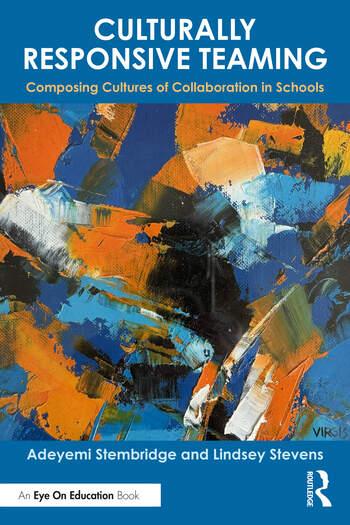
We're excited for you to join us as Dr. Adeyemi Stembridge and Lindsey Stevens facilitate a study of their new book: Culturally Responsive Teaming: Composing Cultures of Collaboration in Schools! This is Dr. Stembridge's latest book, having come out just this year. This follows from his previous works, Culturally Responsive Education in the Classroom and Brilliant Teaching.
This year we are charging a nominal fee of $20 per person to attend this book study, and also providing free general clock hours.
Register here!
Dates
We will discuss the following sections of Brilliant Teaching on Thursday afternoons from 4:30-6:00 on the dates below:
- Jan 28th Preface and Chapter 1
- February 4th Chapters 2 and 3
- February 11th Chapter 4
- February 18th Chapters 5 and 6
- February 25th Chapters 7 and 8
Book Study registrants must purchase and read the book on their own. If you want to support CSTP, consider purchasing through our Amazon referral link. Otherwise, many local bookstores and online retailers carry this title as well.
Clock Hours
A total of 12.5 general clock hours will be available for free during this book study. Each of the 5 online meetings earns 1.5 clock hours up to a total of 7.5 clock hours. Each week of reading is worth 1 clock hour for a total of 5 clock hours. To be eligible for reading clock hours, you must also attend the corresponding online meeting. Participants that miss an online meeting cannot make up the clock hours, but can still earn them for the remaining meetings attended and the corresponding readings. Please review the Community Agreements for the book study before the first meeting.
Small Groups
All participants will be assigned to a small group that meets each week to dive into intimate discussions of the book. Please indicate in your registration if you want to be in the same group as somebody, and we will do our best to accommodate the request.
Find registration here!
Please email Saara@cstp-wa.org or Ada@cstp-wa.org with any questions!
| CSTP's National Board Cohort is Open for Registration | |
Are you looking for a virtual cohort to join for support in your National Board Certification journey? CSTP can help!
Components 1, 2, and 3 are still open!
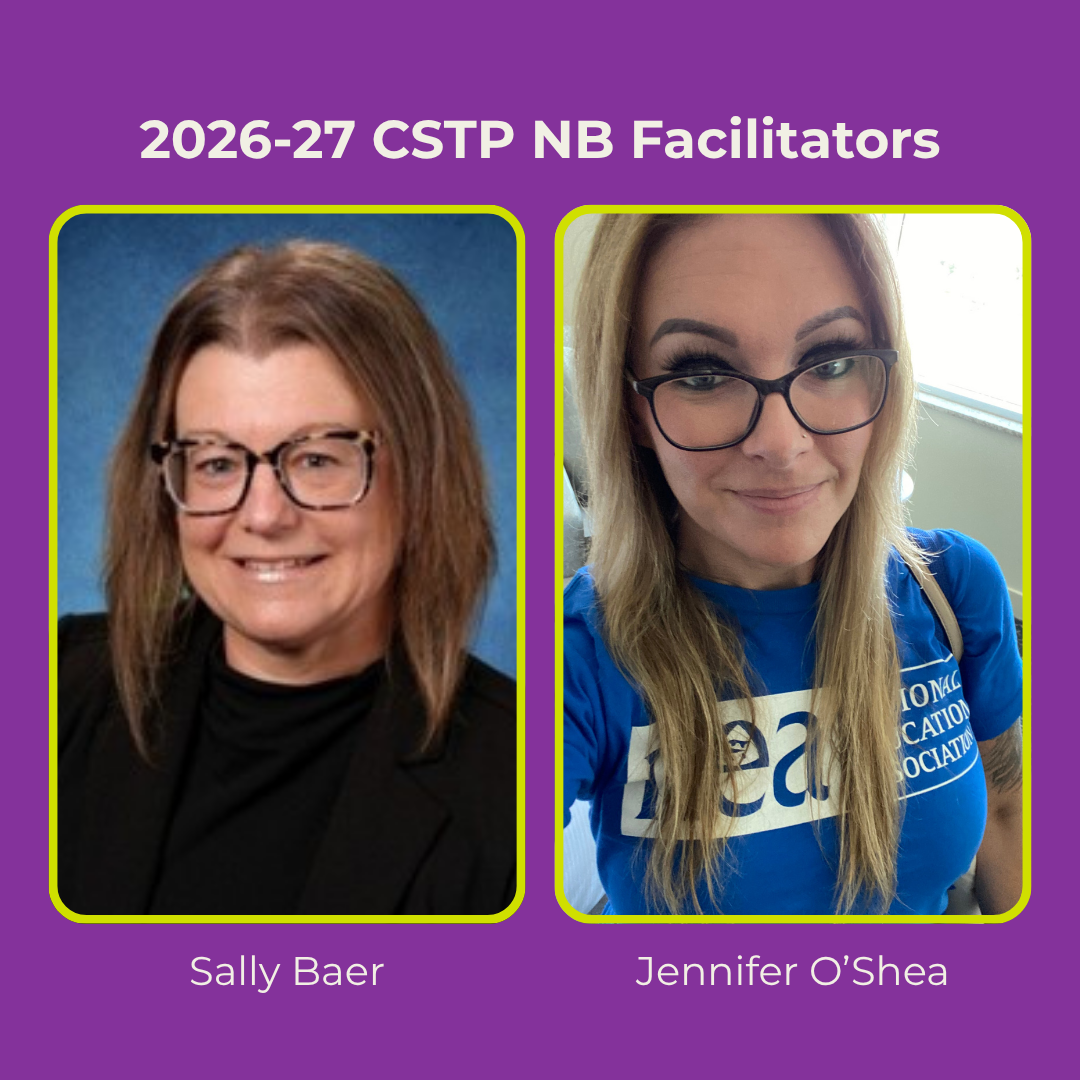
CSTP is supporting online Washington national board candidates with a cohort over Zoom with one of two OSPI trained National Board Facilitators. Candidates are encouraged to register early as our small cohorts fill up early, and must register at least two weeks prior to the first meeting. Our two facilitators this year will be Sally Baer and Jennifer O'Shea.
Find more information and register here!
Questions? Contact ada@cstp-wa.org.
| Bring CSTP Expertise to Your School or District's Professional Learning | | |
As you are considering what professional learning you may need this year, CSTP is ready to collaborate with you! We provide consultation, facilitation, and coaching to support teacher leadership, teamwork, and customized professional learning in your school or district.
We bring expertise in:
-
Teacher Leadership Development, helping educators step into influential roles and contribute meaningfully at the school and district level.
-
Supporting Teacher Teams, offering structures and strategies that enhance team communication and empower collaborative, equity-focused reflective practice
-
Culturally Responsive Pedagogy, equipping educators with tools and mindsets that support all students to access rigorous, engaging work while honoring all students’ identities
Let CSTP help you design meaningful learning experiences, launch leadership frameworks, or amplify teacher-led initiatives—whether virtual or in-person. Interested in exploring how CSTP can support your school or district? Reach out to Linsdey@cstp-wa.org. We’re ready to collaborate with you!
| | Partner with CSTP to Offer Clock Hours at Your Next Training | | |
Are you running a course, professional development or book study and want to offer Washington State clock hours? CSTP is an approved Washington State clock hour provider and can approve your courses for clock hours. It is free for the instructor to apply for the course with participants paying a nominal fee.
Learn More and Apply for Clock Hours
| | OSPI 2026-27 National Board Writing Webinars | |
Registration is live for OSPI's upcoming National Board Writing Webinars!
These one-hour webinars are designed to support writing for the National Board portfolio. Any candidate working towards certification can join. Candidates should expect to examine their own writing and work with peers on the selected topic. These sessions DO NOT replace cohorts nor conditional loan requirements.
Choose series A, B or both. All sessions are hosted on Tuesday from 4:30-5:30 pm. One clock hour available per session.
Series A (Fall-Winter) (Register here)
- Nov 17: Writing Tips: Convincing, Clear, Consistent
Series B (Winter-Spring) (Register here)
- Jan 5: Writing about Contextual Information
- Jan 19: Writing about Instructional Context
- Feb 2: Forms & Written Commentary
- Feb 23: Identifying and Writing about Goals
- March 9: Using Evidence in Written Commentary
- March 16: Integrating National Board Standards
- April 6: Writing Tips: Convincing, Clear, Consistent
Registration links can also be found on OSPI's webinar handout. RSVP is required. Contact OSPI's National Board Support email with any questions.
| | November is Native American Heritage Month | | |
What started at the turn of the century as an effort to gain a day of recognition for the significant contributions the first Americans made to the establishment and growth of the U.S., has resulted in a whole month being designated for that purpose.
In 1915, the annual Congress of the American Indian Association meeting in Lawrence, Kans., formally approved a plan concerning American Indian Day. It directed its president, Rev. Sherman Coolidge, an Arapahoe, to call upon the country to observe such a day. Coolidge issued a proclamation on Sept. 28, 1915, which declared the second Saturday of each May as an American Indian Day and contained the first formal appeal for recognition of Indians as citizens.
The first American Indian Day in a state was declared on the second Saturday in May 1916 by the governor of New York. Several states celebrate the fourth Friday in September. In Illinois, for example, legislators enacted such a day in 1919. Presently, several states have designated Columbus Day as Native American Day, but it continues to be a day we observe without any recognition as a national legal holiday.
In 1990 President George H. W. Bush approved a joint resolution designating November 1990 “National American Indian Heritage Month.” Similar proclamations, under variants on the name (including “Native American Heritage Month” and “National American Indian and Alaska Native Heritage Month”) have been issued each year since 1994.
Read more and find resources here.
| | |
Join us for fun facts, obscure knowledge, and exploration of physics, genetics, etymology, art, and more!
| | |
All books professionally printed today have an identifying code. You can usually find it printed on the back of the book, conveniently visible and scannable. This is the ISBN: International Standard Book Number. These numbers are tracked and purchased from the International ISBN Agency and are used by stores, libraries, archives, and wherever else books are stored or sold.
It was the British who first decided that they wanted an easy way for computers to catalogue books. The Standard Book Number (SBN) was implemented in UK markets in 1967. The International Organization for Standardization (ISO) adapted this system for an international audience in 1970, starting with other European countries and the United States. It has since become the universal trade standard for all published work.
The ISBN distinguishes between not just books but also between different editions, versions, and bindings of the same book. For example, a novel might have identical first and second editions; the edition number will change, but the ISBN number will not. However, if the cover is changed, a new introduction is added, or any other text is majorly changed, then the new printing is given a new ISBN. This is why hardcover books, paperbacks, and ebooks can contain the same content but have a different code. This is also why classics and other longstanding popular books end up with hundreds of ISBNs each.
The original British SBN number was 9 digits long. When the ISO standardized it and expanded it to more countries and publishers, a tenth digit was added. An extra 0 was added to the front of SBNs to port them into the international system. The ISBN standard was then increased to 13 digits in 2007 to better fit in with newer international trade standards. All books published on or after January 1, 2007, have an additional European Article Number (EAN) code added. All current ISBNs start with one of two codes dedicated to books: 978 or 979.
After the EAN, each ISBN contains a “group” code that represents a certain area of the world. Following that, there is the publisher code, indicating the organization claiming the ISBN. Then there is a specific code for the individual title. At the end there is a single digit that acts as a “check digit” that is calculated using the prior digits to help verify there are no errors in scanning. The group, publisher, and title codes are variable in length; the group “0” can represent any English-speaking country, but a country like Greece has code 960. Publisher and title code lengths vary accordingly. ISBNs are often printed with hyphens separating these various parts.
You can convert a 10-digit code to a 13-digit code by prepending the 978 or 979 code, but that will change the calculation involved in the check digit. The last digit of the ISBN will thus vary between the two. Keep that in mind next time you’re hand keying an old ISBN, as one does.
The ISBN doesn’t mean much by itself, but as long as we agree what book is connected to what number, the system runs smoothly. All it takes is several international organizations, shared databases, trade agreements, and many acronyms. Thankfully, that’s all stuff that we’re good at. Now let’s go read some (well catalogued) books.
| | Your gift ensures that CSTP continues to support student achievement through a focus on teaching excellence. With you as a partner in CSTP’s mission, you directly make a difference in the lives of youth across Washington State schools. Donations are tax deductible and essential as CSTP works to support educators navigate unique models of student engagement and teacher leadership. | | Liking and sharing our posts on social media is another way you can support CSTP during these times. Thank you for sharing our message. | | | | |