|
The Rural Advantage in a Workforce-First Era
Every few years, higher education reaches an inflection point, a time when national priorities shift and institutions are challenged to adapt. As I look across the higher education landscape this summer, I believe we're living through one of those moments.
Whether you're following discussions in Washington, reading the higher education press, or talking with employers in your own community, one message keeps surfacing: workforce development has become a national priority.
That shouldn't surprise any of us.
For years, community colleges have been the nation's workforce engine. We've trained nurses, welders, electricians, teachers, technicians, first responders, precision manufacturers, cybersecurity professionals, and countless others who keep our communities functioning every day. What's different today isn't our mission, it's that the rest of the country is finally recognizing just how essential that mission has become.
For rural community colleges, however, I believe this moment presents both an opportunity and
a responsibility.
Unlike many larger institutions, rural colleges have never had the luxury of operating in isolation.
We've always worked hand-in-hand with local employers, economic development organizations,
school districts, chambers of commerce, hospitals, manufacturers, and community leaders.
When the largest employer in town needs twenty more welders or the local hospital needs
respiratory therapists, we don't convene a committee that studies the problem for two years. We pick up the phone, bring people together, and start building solutions.
That's one of our greatest strengths.
But we should also remember that workforce development has never meant simply filling jobs.
Our responsibility is much broader than preparing students for their first day of work. We
prepare them for careers that will evolve, industries that will change, and communities that
depend upon educated citizens as much as skilled employees.
That means teaching adaptability.
Critical thinking.
Communication.
Problem solving.
Leadership.
Those skills remain valuable whether someone is entering manufacturing, healthcare,
agriculture, information technology, or transferring to pursue a bachelor's degree.
The conversations surrounding short-term credentials and workforce training are exciting and I
believe community colleges are uniquely positioned to lead them. At the same time, we should
resist the temptation to think that workforce education is somehow separate from higher education. It isn't.
The best workforce programs don't simply teach students what to do.
They teach them how to continue learning long after graduation.
That's especially important today, when technology, particularly artificial intelligence, is changing
jobs at a pace we've never before experienced. The occupations our students enter today will
almost certainly look different five or ten years from now. Our graduates won't succeed because
they memorized a particular software package or machine operation. They'll succeed because they developed the curiosity, resilience, and confidence to keep learning and adapting.
I also think rural colleges possess another competitive advantage that often goes unnoticed:
Relationships.
We know our students by name. Our faculty know their families.
We understand the employers in our communities because many of us serve alongside them on
local boards, volunteer organizations, and civic groups.
That kind of trust cannot be manufactured or artificially generated.
It becomes the foundation upon which successful workforce partnerships are built.
As RCCA members, we have an opportunity to lead—not because rural colleges have the
largest budgets or the newest facilities, but because we've spent decades doing exactly what
national policymakers are now encouraging institutions to do: listen to our communities and respond with agility.
The national conversation may have finally caught up with us.
Now it's our turn to demonstrate what rural leadership looks like.
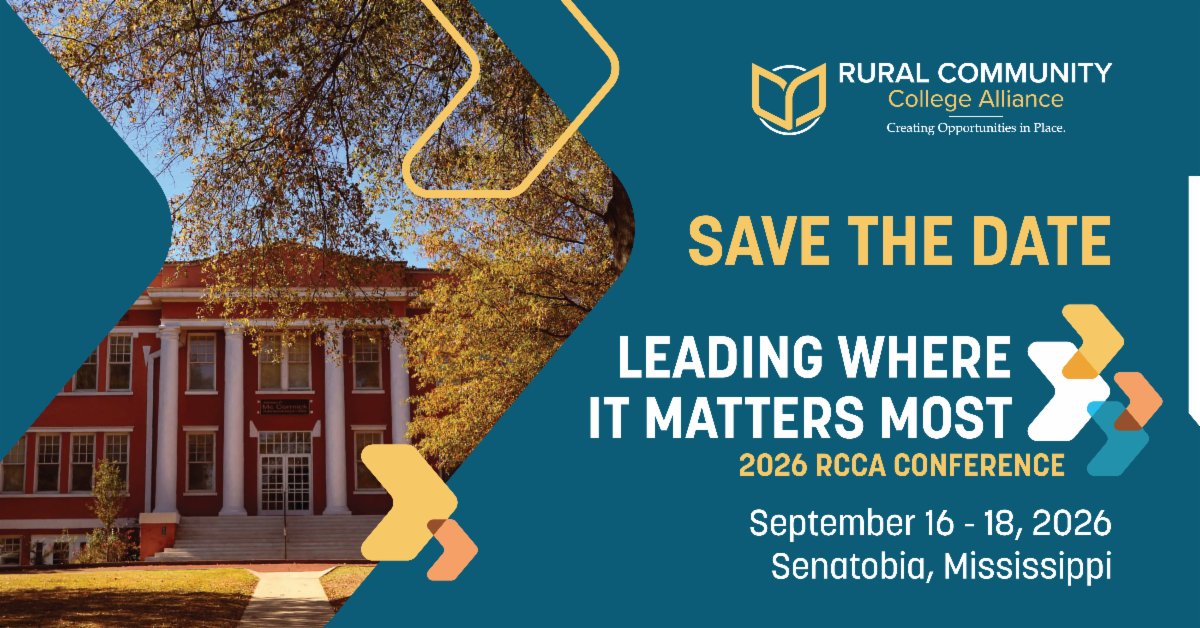
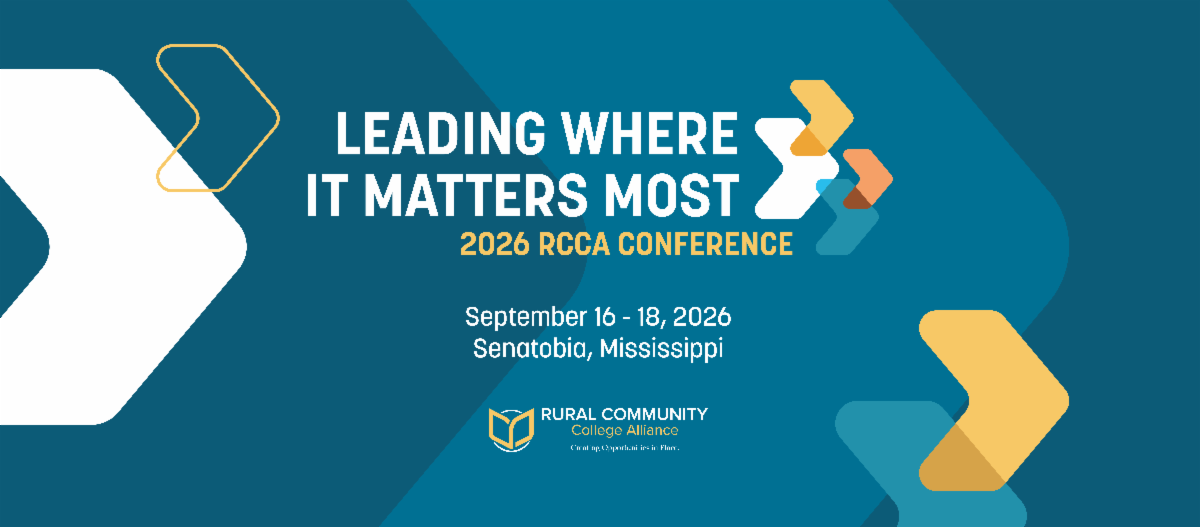
I hope many of you will join us this September at our joint RCCA–ATEA National Conference at
Northwest Mississippi Community College. There is perhaps no better place to continue this
conversation. Throughout the conference, we'll be exploring innovative workforce partnerships,
leadership strategies, student success initiatives, and practical ideas that you can take back to
your campus. Just as importantly, we'll have the opportunity to learn from one another—something that has always been one of RCCA's greatest strengths.
As always, I encourage you to share your successes with one another. If your college has
developed an innovative apprenticeship, launched a new employer partnership, expanded work-
based learning, or found creative ways to meet local workforce needs, let us know. The best ideas often begin with a conversation among colleagues who understand the unique opportunities and challenges of serving rural communities.
Until next month, thank you for the work you do every day to strengthen rural communities
through the power of education. The future of rural America isn't something we wait for, it's something we build together.
|