|
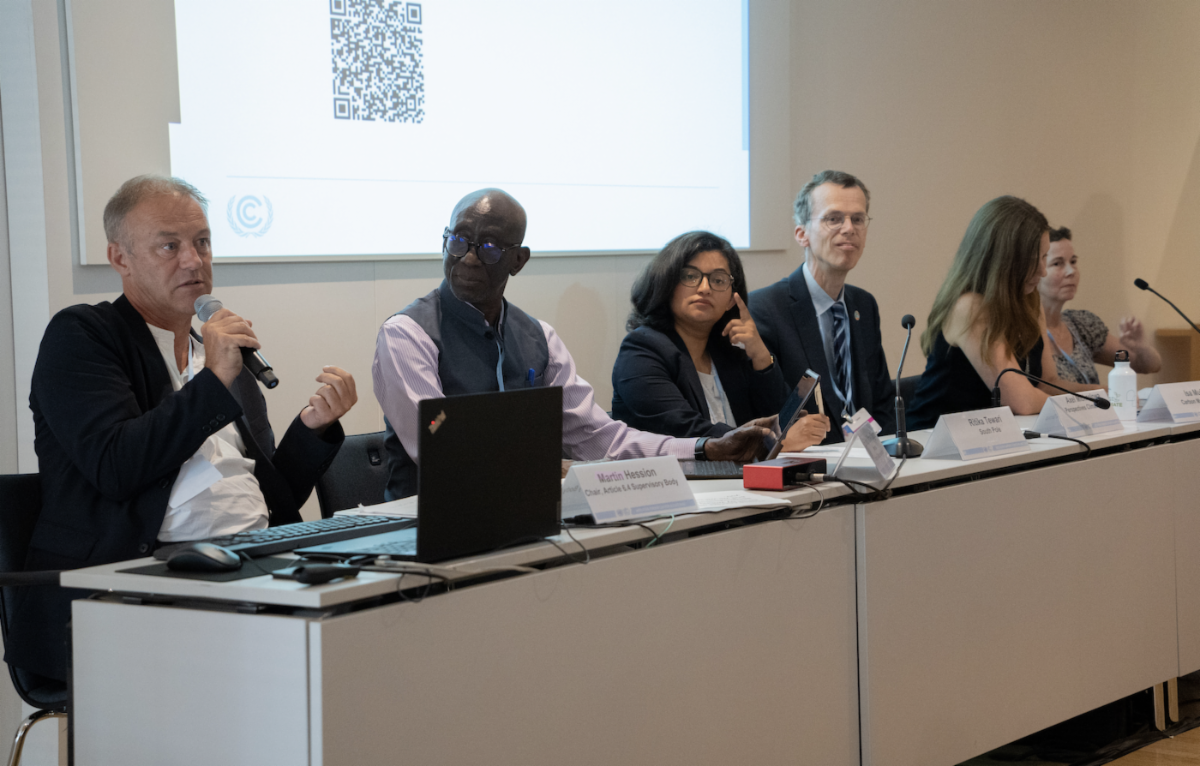
At the SB62 side event on the Paris Agreement Crediting Mechanism, held on 18 June 2025, the focus was on how the UN carbon market is being operationalized through detailed work on methodologies and standards since the major breakthrough on international carbon markets at COP29.
Speakers included: Martin Hession (Article 6.4 Supervisory Body Chair), El Hadji Mbaye Diagne (Methodological Expert Panel Co-Chair and A6.4 Supervisory Body member), Ritika Tewari (South Pole; Project Developer Forum; B-PMI), Axel Michaelowa (Perspectives Climate Group), Karen Olsen (UNEP), and Isa Mulder (Carbon Market Watch).
The discussion highlighted progress since Baku on key elements such as baseline setting, additionality, and leakage - positioning the mechanism as a Paris-aligned benchmark for international carbon markets.
“This year we’ve managed to adopt an additionality standard and a baseline standard and they are quite radical and different. The baseline standard has progressive ambition built into it: There is a 1% per year reduction of crediting levels, which we think is aligning with Paris and ambition.
"There is also a starting point that is 10% lower for historic emissions. Why that’s important is that makes the crediting levels consistent with pathways to zero, and it also leaves more of the mitigation benefit at home with host countries,” said Supervisory Body Chair, Martin Hession.
The Supervisory Body Chair also outlined priorities for the Body ahead of COP30, which include guidance on removals, a risk assessment tool, and targeted support to help countries engage with the mechanism.
|