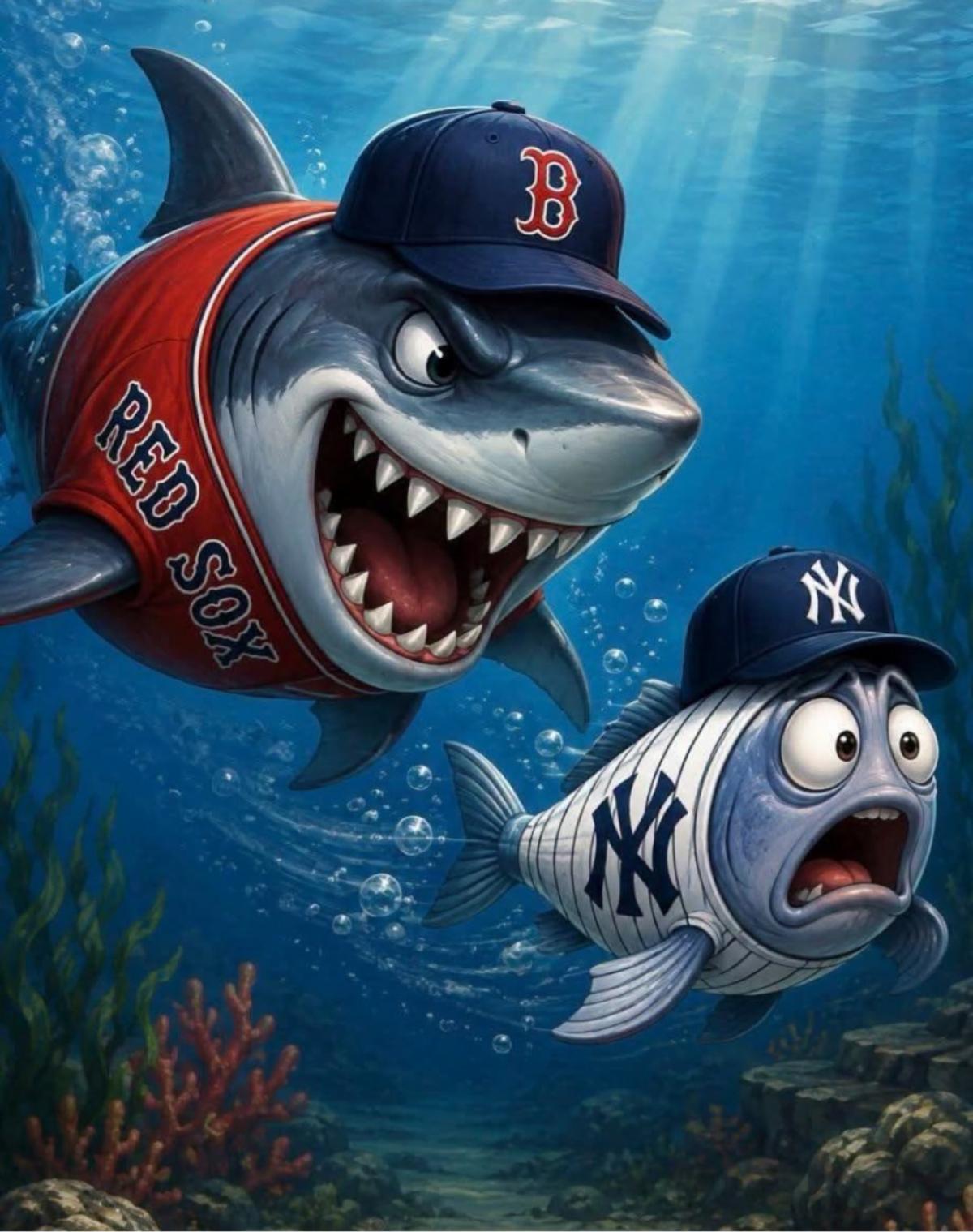
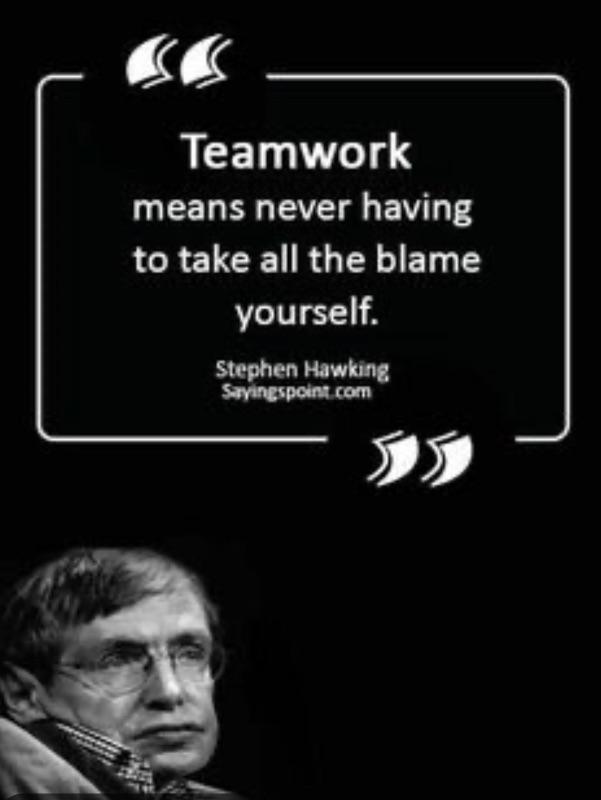
People discover what kind of leader you are when the team is losing—not when everyone is celebrating. Chad Tracy’s message was simple: “I’m not going to turn on you.” He did not promise that tomorrow would be easy. He promised that they would face it together. | | |
There are a lot of Red Sox fans who read this weblog, but I would encourage Yankee fans to stop after this sentence.
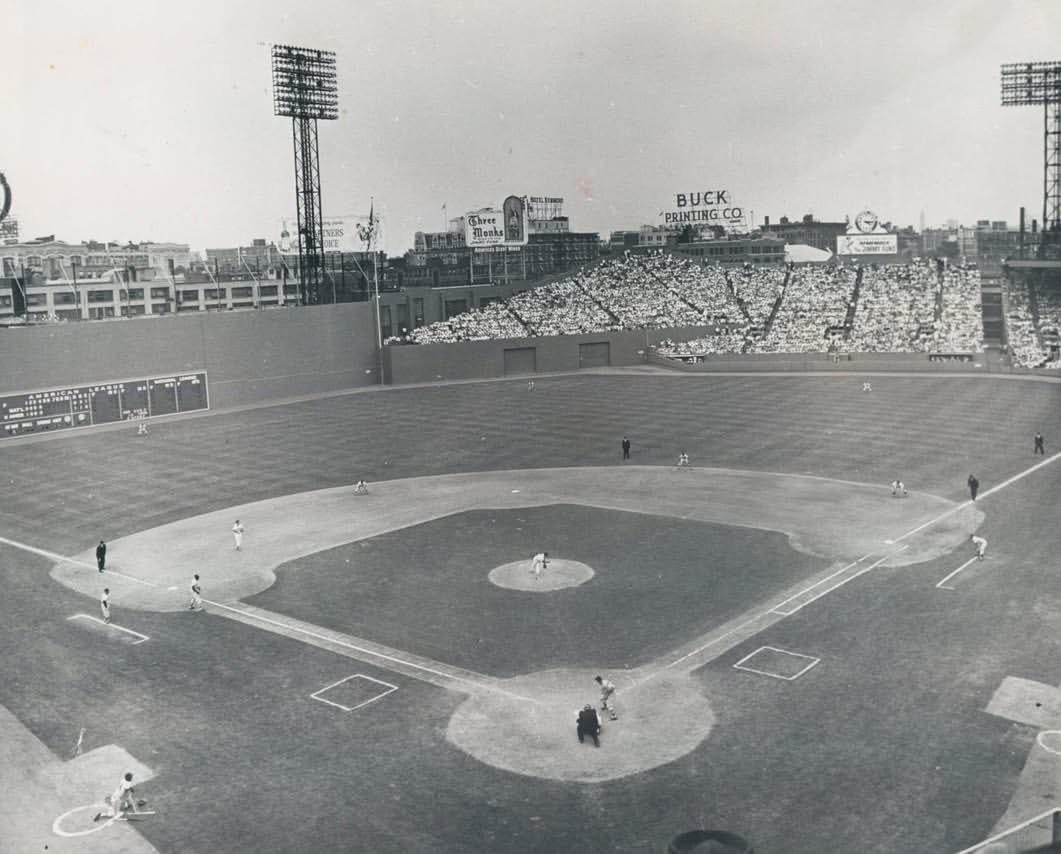
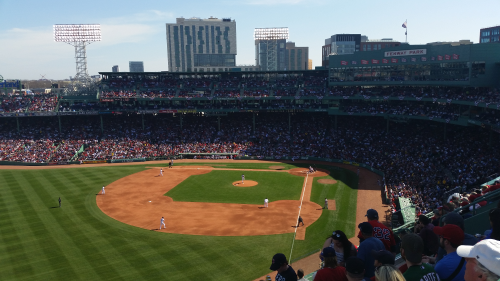
When I first walked up the ramp behind home plate at Fenway Park as a seven-year-old kid, I was overwhelmed by the green. The grass was green. The grandstand was green. The roof was green. And, of course, there was the Green Monster towering over left field. It was like being dropped into an entirely green world.
That feeling is still there today, with one small exception: There now seem to be more than 250 advertising signs on the walls, above the walls and possibly inside the walls.
But I didn’t go to Fenway then to look at the walls, and I don’t go there now to look at advertisements. I go to watch the game. And the 2026 Boston Red Sox have given us quite the games to watch.
| | When Leadership Comes From Everywhere | | |
Late in June this season, the Red Sox were buried in last place. They weren’t just losing. They were finding increasingly creative and painful ways to lose.
My son, my brothers and I kept watching.
- We watched through April.
- We watched through May.
- We watched through June.
We watched, complained, analyzed, second-guessed and agonized through almost every game. I now tell everyone who will listen—and some people who will not—that we never gave up on the Red Sox, even when many fans understandably did.
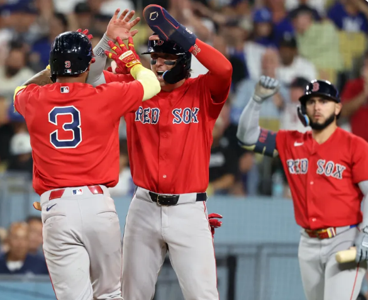
Then came July. The Red Sox finished the month with a record of 21–4, the best calendar month in franchise history. Twenty-one wins and four losses. After three months of frustration, the Red Sox suddenly seemed incapable of losing. They pitched better. They hit better. They ran the bases better. They made fewer mistakes. They found ways to win close games, come from behind and protect leads.
What changed? It will come as no surprise to regular readers that my one-word answer is: Leadership. In this case, leadership came from three different directions. When leadership begins coming from everywhere, “unstoppability” is usually not far behind.
| | |
Leadership Direction #1: The Manager
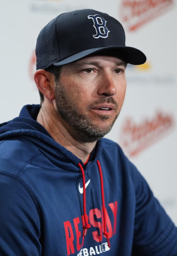
The Red Sox have an interim manager, Chad Tracy. “Interim” is a title an organization gives someone when it wants them to do the job but isn’t quite ready to admit that it believes they can do the job.
I once served as an interim executive director for a client. Being named interim is not exactly a vote of confidence. It is more like a wave of confidence from across a crowded room. “We think you might be able to do this. Go ahead and give it a try.”
Chad Tracy does not appear to be a spectacular, attention-seeking leader. He isn’t trying to become the story. He does not seem interested in proving that he is the smartest person in the dugout. But he must be doing something right. He has pushed the right buttons, made difficult decisions and helped turn a struggling collection of players into a winning baseball team. More importantly, the players appear to be responding to him.
My observation is that Tracy puts the players first. I suspect the players believe that too. Leaders do not earn trust by repeatedly telling people that they care about them. They earn it through dozens of small decisions, conversations and actions. Players know when a manager is protecting them. They know when he is listening. They know when he is being honest. And they know when he is putting their success ahead of his own reputation. Leadership is often visible in the results long before it becomes visible in the headlines.
| |
Leadership Direction #2: The Players
A manager can establish expectations, make strategic decisions and create the right environment. But the players still have to play. The Red Sox players appear to have accepted ownership of their situation. The veterans are acting like veterans. Younger players are learning from their mistakes. The entire team seems more coachable and more willing to try something different.
During July, the Red Sox repeatedly used sacrifice bunts and other forms of “small ball” to move runners and manufacture runs. Bunting is not glamorous. The batter deliberately gives himself up to move a teammate closer to scoring. That is more than following a manager’s instructions. That is leading by example.
It is a player saying, “This moment is not about me. It is about what the team needs.”
Organizations improve when people stop asking, “How will this make me look?” and begin asking, “What gives us the best chance to succeed?” The strongest teams are not made up of people who never make mistakes. They are made up of people who acknowledge mistakes, learn from them and change what they do next. That is ownership. That is coachability. And that is leadership.
| |
Leadership Direction #3: Worcester
At this point, you may believe we have covered all the possible leadership directions. The manager leads from the dugout. The veterans and other players lead from the field and clubhouse. What could possibly be the third direction? The Worcester Red Sox.
My son and I have a General Admission Access Pass for the Worcester Red Sox—the WooSox, as they are known locally, and so far this year we have been to about ten games. During those games, we have watched at least a dozen players who have been promoted to the major-league roster. We also watched Chad Tracy manage in Worcester before he was promoted to Boston.
The players arriving from Worcester are not merely filling empty roster spots. Many of them are bringing energy.
They are thrilled to be in the major leagues. They run hard. They practice hard. They seek advice from veteran players. They understand that every game may determine whether they remain in Boston or return to Worcester. Their enthusiasm is contagious.
Their hustle reminds established players not to become too comfortable. Their willingness to learn gives veteran players an opportunity to teach. Their desire to stay in the major leagues creates urgency without anyone needing to hang a motivational poster in the clubhouse. That is leadership from below.
Titles are not required. Seniority is not required. Experience is not required.
Sometimes the newest person in the organization changes the energy simply by demonstrating how much the opportunity matters. The Worcester players may have helped turn the Red Sox into a real team—if you know what I mean. A roster is a list of individuals. A team is something different.
A team forms when people begin sacrificing for one another, learning from one another and believing that they can accomplish something together that they could not accomplish separately.
| |
The Leadership Formula
The season is not over. The Red Sox may continue their remarkable run, or they may eventually fall short of reaching the playoffs. Baseball has a way of humbling everyone. But regardless of how the season ends, the Red Sox have already given their fans something memorable.
More importantly, they may have discovered a leadership formula worth remembering:
- Leadership from the top establishes direction.
- Leadership from within creates ownership.
- Leadership from below produces energy.
Organizations become especially powerful when all three appear at the same time. The formal leader creates an environment in which people can succeed. Experienced people accept responsibility for maintaining standards. Newer people bring enthusiasm, curiosity and urgency. Everyone has a role. Everyone contributes. Everyone leads.
That lesson applies far beyond Fenway Park. When your organization is struggling, do not look exclusively toward the person with the biggest title. Observe what is happening throughout the entire organization.
- Who is establishing trust?
- Who is accepting responsibility?
- Who is sacrificing personal credit for the team?
- Who is bringing energy into the room?
- Who is helping others improve?
Leadership may be coming from places you did not expect.
| Observe it. Act on it. And stay with it. That may not guarantee a 21–4 month. But it can give almost any team a fighting chance. | |
How Deep Do My Red Sox Roots Go?
Before you decide that I am overreacting to one remarkable month of Red Sox baseball, here is a little True-or-False quiz.
How many of the following statements about me, the Red Sox and Fenway Park do you think are true?
- When I was a kid, I often fell asleep in bed listening to Red Sox games on the radio.
- Sometimes, while listening to afternoon games on the radio, I kept a complete scorecard.
- Before I had a car—or even a driver’s license—getting to Fenway Park from Braintree required a bus to Quincy, another bus to Fields Corner, the Red Line to Park Street and then the Green Line to Kenmore Square.
- When I was ten years old, I had parental permission to make that trip with a friend. When I was 12 years old, I could do it by myself.
- On October 1, 1964, I attended a game that drew the smallest crowd in the history of Fenway Park: 306 people. I sat in Section 1, Row 1, Seat 1 right next to the visitor's bullpen.
- My wife and I attended a Red Sox game during our honeymoon and sat in the center-field bleachers.
- I have attended more than 200 games at Fenway Park.
- I have seen the Red Sox play on the road in San Diego, Los Angeles, Anaheim, Oakland, Seattle, Cleveland, Baltimore, Chicago, Kansas City, New York, Minnesota, Detroit, Texas, Atlanta, Washington, D.C., and Colorado.
- I have been inside the Green Monster.
- Some of my late mother’s ashes were spread in left field at Fenway Park.
- I once took a friend from Cincinnati to a game at Fenway. As the game began, he looked around, turned to me and said, “Now, I get it.”
- Give me almost any Fenway Park section number, and I can tell you where the seats are located.
- When I ran a restaurant across the street from the park, I would call the store and schedule the post-game staffing based on my estimate of the crowd size.
- When I began attending games, a bleacher seat cost $1, and a seat in the right-field grandstand cost $1.50.
- I wrote a letter to the owner of the Red Sox when I was a kid, requesting that he lower the urinals in the restrooms to make it easier for kids. He wrote back and thanked me and lowered them.
- I saw the Boston Patriots play at Fenway Park in a game that effectively determined who would advance to the AFL Championship Game.
- When I completed my marathon, I ran 47 laps around the outside of Fenway Park to reach 26.2 miles.
- I once rented the bleachers at Fenway Park to hold an event when the Hatch Shell area was closed for renovations.
- Longtime Red Sox infielder Kevin Youkilis once volunteered for me, and we took over the Fenway Park press room for a filming project.
- I once got into a skirmish in the stands with Matt Keough, the son of former Red Sox outfielder Marty Keough. Matt later became a major-league pitcher, primarily with the Oakland A’s.
The Answer
Every one of them is true.
So, yes, I may be slightly biased when I write about the Boston Red Sox.
But I believe I have earned the right. And perhaps my friend from Cincinnati said it best: “Now, I get it.”
| | Bonus Video: Click to Watch | | If you are reading this on a social media platform, click below and you'll automatically receive a 'different' story every week on Wednesday. | | |
The Roll Call of states and countries where readers reside: Arizona, California, Colorado, Connecticut, Delaware, Florida, Georgia, Hawaii, Illinois, Indiana, Iowa, Kansas, Kentucky, Louisiana, Maine, Massachusetts, Michigan, Mississippi, Missouri, Montana, New Hampshire, New Jersey, New Mexico, New York, North Carolina, North Dakota, Ohio, Pennsylvania, Puerto Rico, Rhode Island, South Carolina, South Dakota, Tennessee, Texas, Vermont, Virginia, Washington and Washington DC, Wisconsin plus Canada, Conch Republic, Australia and the United Kingdom.
| | |
Ed Doherty
774-479-8831
www.ambroselanden.com
ed-doherty@outlook.com
Forgive any typos please.
| | | | | |