Faulkner County Agriculture Update
February 27, 2026
| | |
Weather
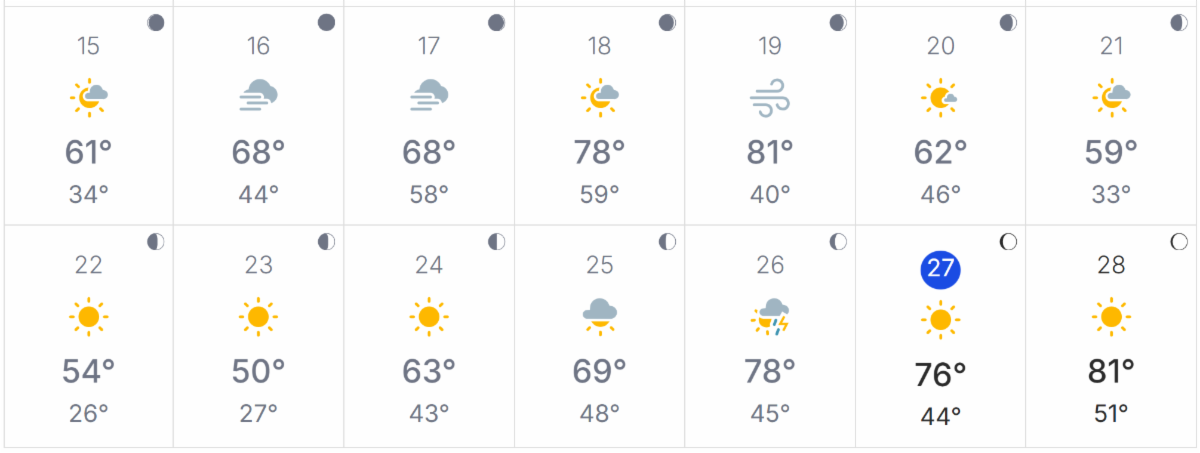
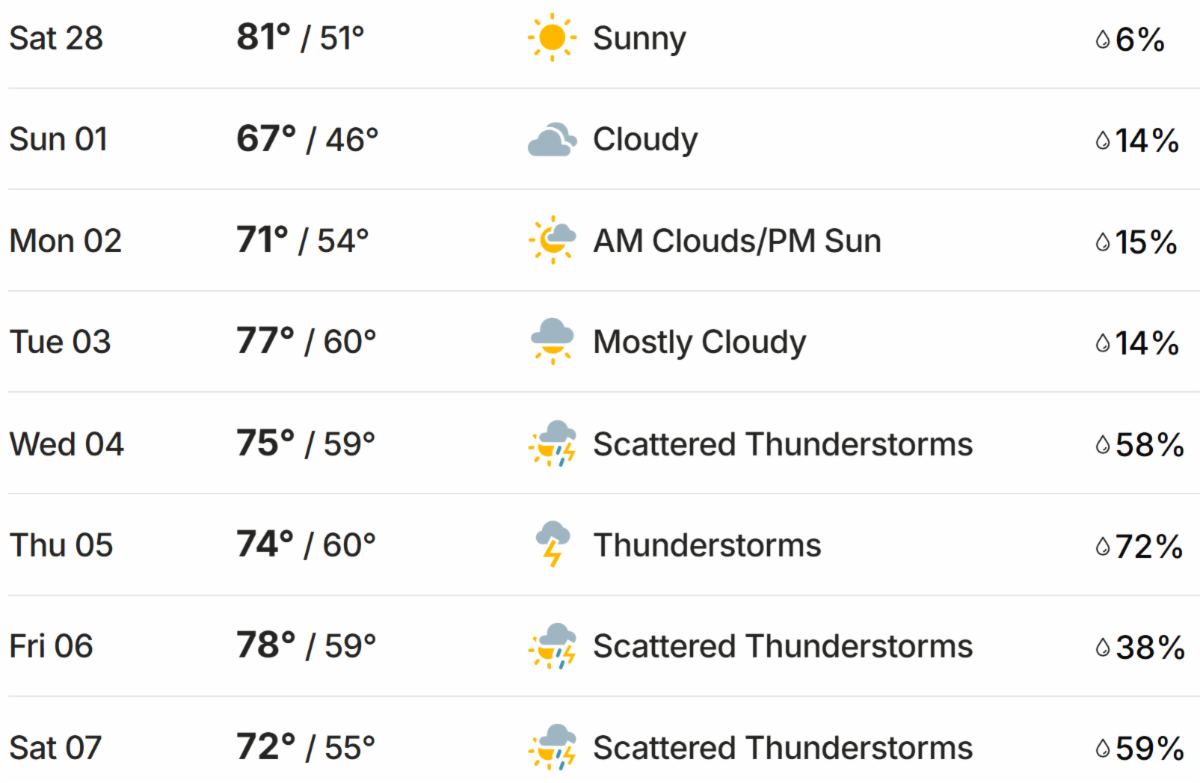
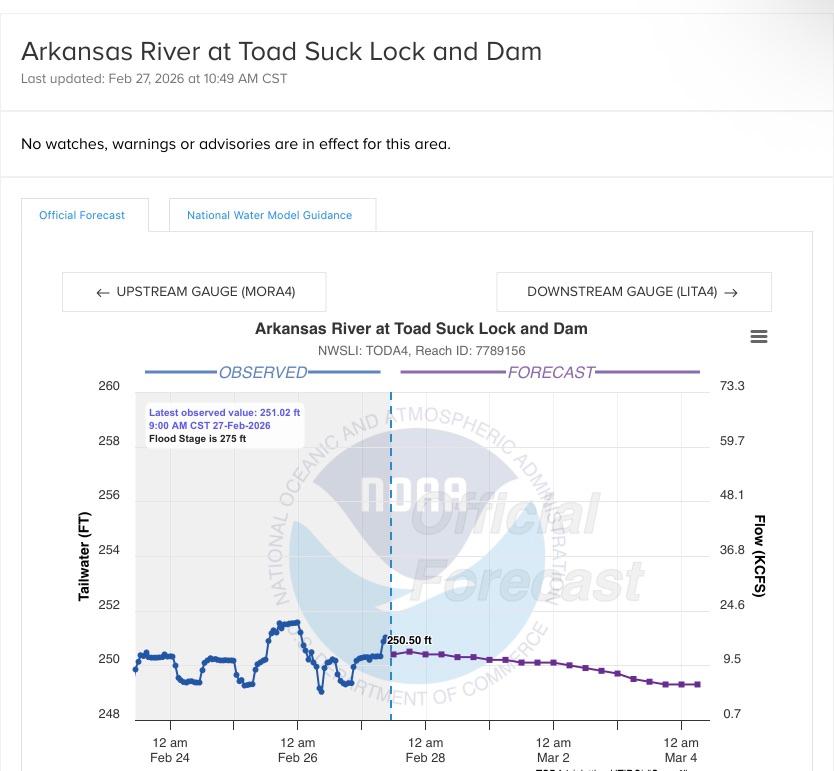
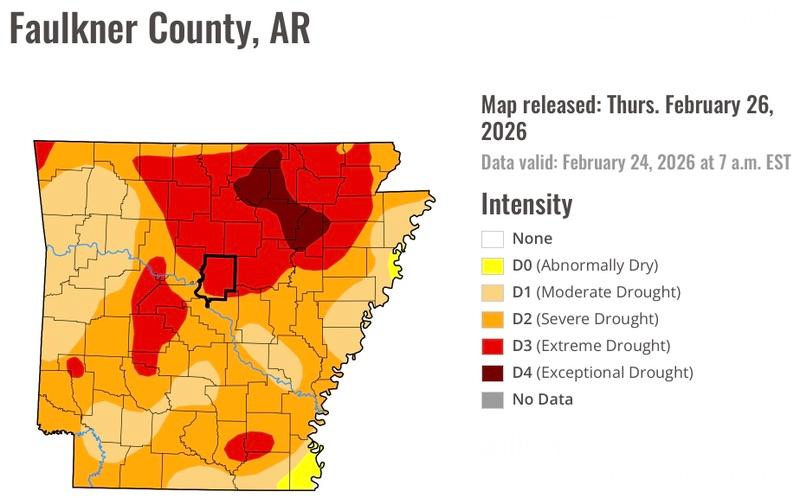
We had a few showers come through parts of the county on Thursday. Most of the rain was only around a tenth or so, but some of the heavier rain dropped 3/4 of an inch in places. We are still looking at a D3 drought at this time. Next week looks like better chances of rain over several days. This could be our first round of severe weather, so be prepared for lighting and high winds around your farm. We have a nice weekend ahead, so make sure your are storm ready.
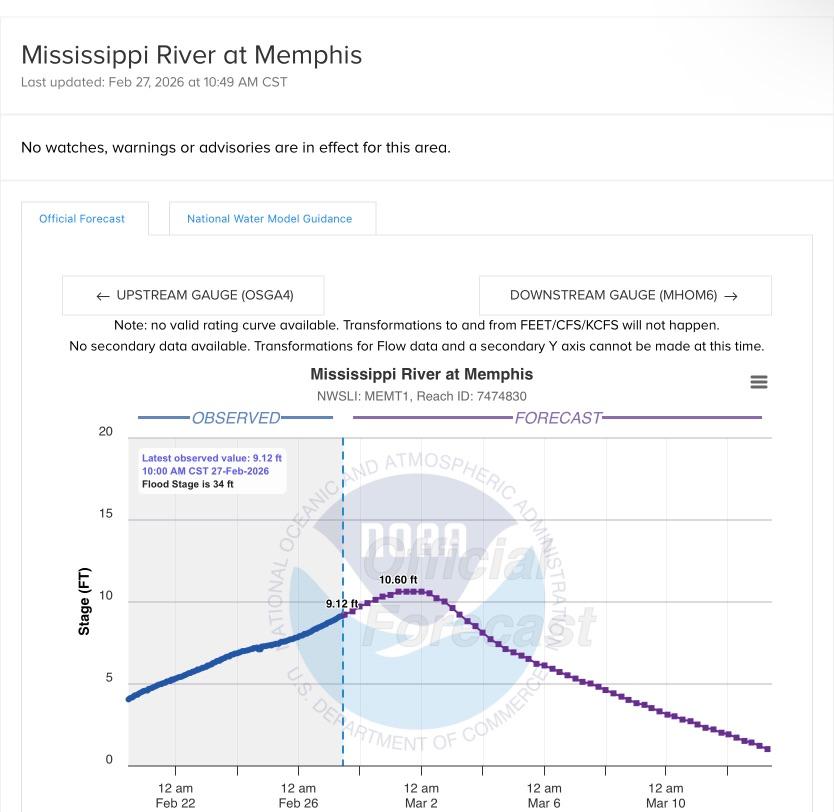
| | Arkansas and Mississippi River | | |
Wheat
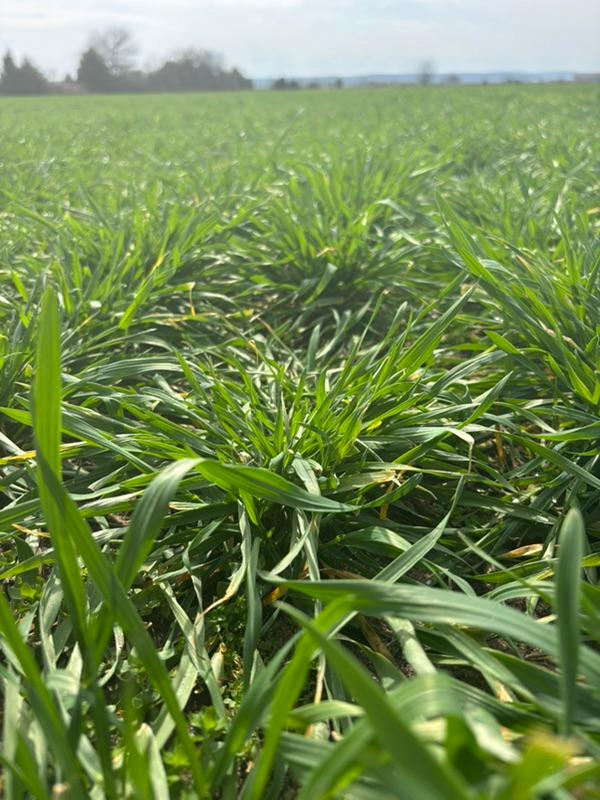
Wheat continues to grow with the nice weather and is starting to come along. Herbicide applications are going out now, and we should start looking at follow up fertilizer applications in the next few weeks. There is no need to be using a fertilizer inhibitor like agrotain right now with these temperatures.
| | |
Ryegrass
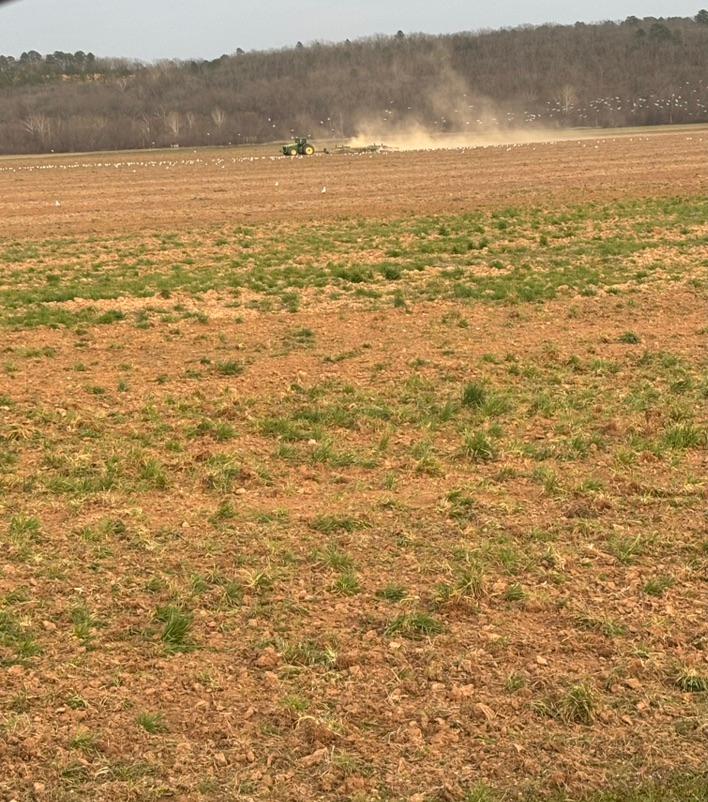
Ryegrass is out there, and now is the time to start thinking about your strategy to get it. As I was driving around this week I noticed we are dragging ryegrass from the edges of fields out into the fields as we till. Trying to till ryegrass will just roll it around to a new place in the field where it will take root. Two applications of paraquat (Gramoxone) applied 3 weeks apart is still the best way to burndown ryegrass. Clethodim (Select Max) still has some activity, but there is a 30 day plant back in corn and rice that we are getting very close too. Glyphosate just makes it mad, so it isn't an option at all.
| | |
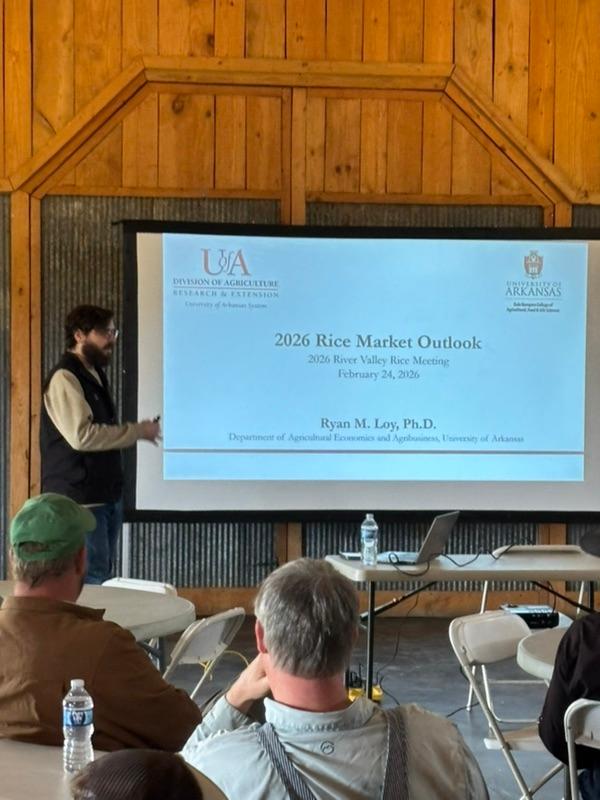
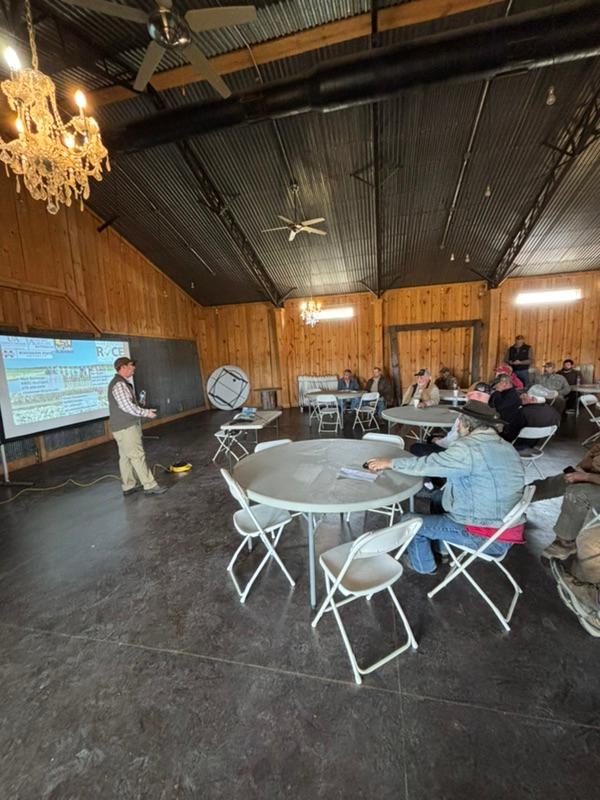
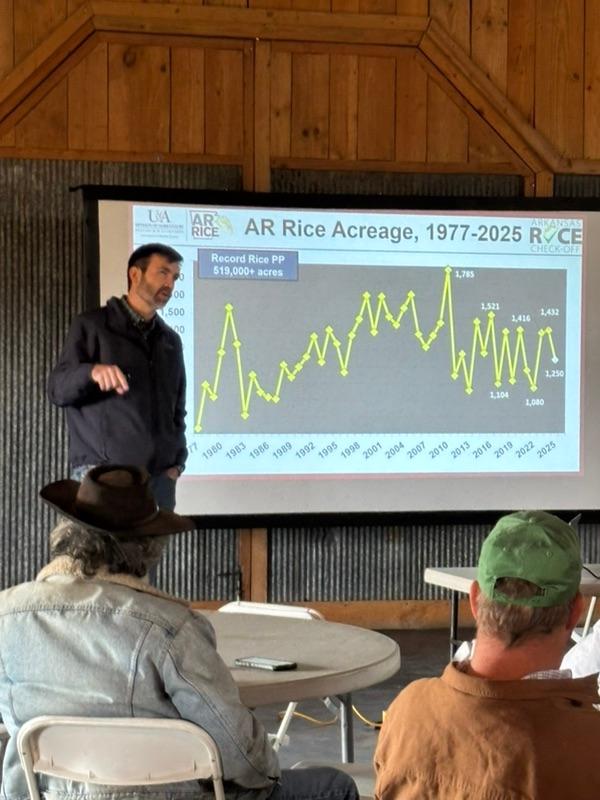
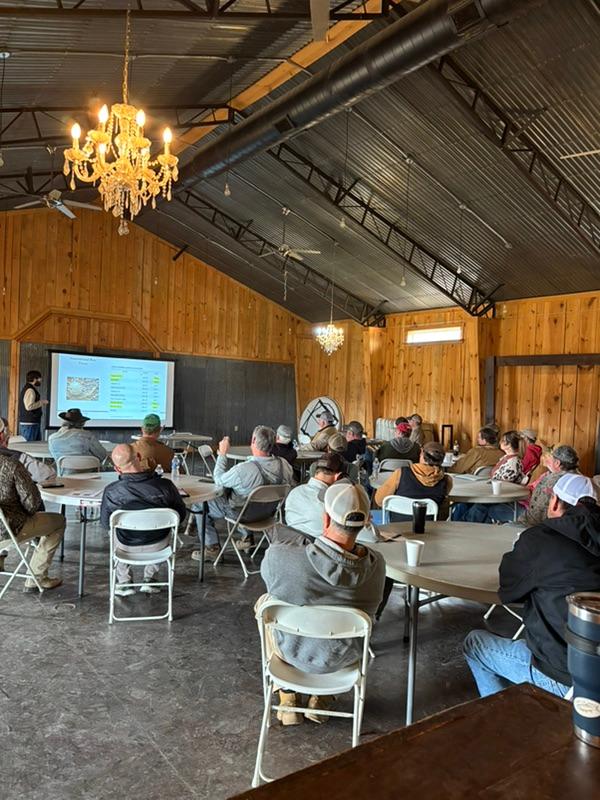
River Valley Rice Meeting
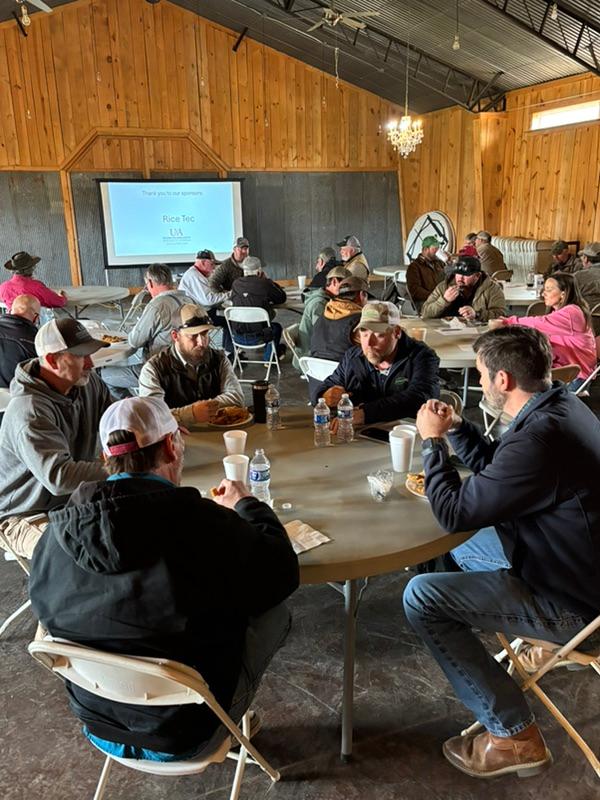
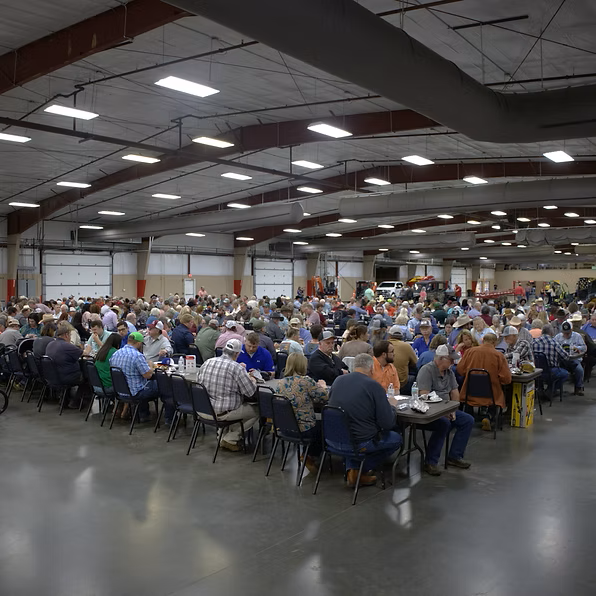
The River Valley Rice Production Meeting was held Tuesday February 24, 2026. We had a great turnout and a really good program. Thank you to the producers that came out, to our speakers, and to our sponsors.
Our sponsors were: Chaney Consulting LLC, Gowan USA, Horizon Ag, Nutrien Ag Solutions, and RiceTec.
| |
SoyStage
Trying to determine what maturity group soybean to plant at what time is sometimes confusing. Here in Faulkner County, it seems like our maturity groups act different than they do in Eastern Arkansas. Early planted Group IV's aren't working as good as Group V's planted later, and I have even had some questions about planting Group VI's.
One way that might help us understand the maturity groups is going to the SoyStage website. SoyStage is an online tool that predicts Soybean developmental stages. You can see phenology maps based on historical weather data or predict phenology for the current year.
I played around with it a little bit, and made a chart showing days to maturity depending on emergence date. The later the emergence date the closer together maturity date is between maturity groups. I have added a link to the website below.
| | |
Crop Enterprise Budgets
Below is a link to the 2026 Crop Enterprise Budgets. If anyone needs assistance with these budgets please let me know.
| |
Rice Market Outlook 2026
Dr. Ryan Loy, Assistant Professor
Dr. Alvaro Durand-Morat, Associate Professor
2025 Domestic Market Recap and 2026 Outlook
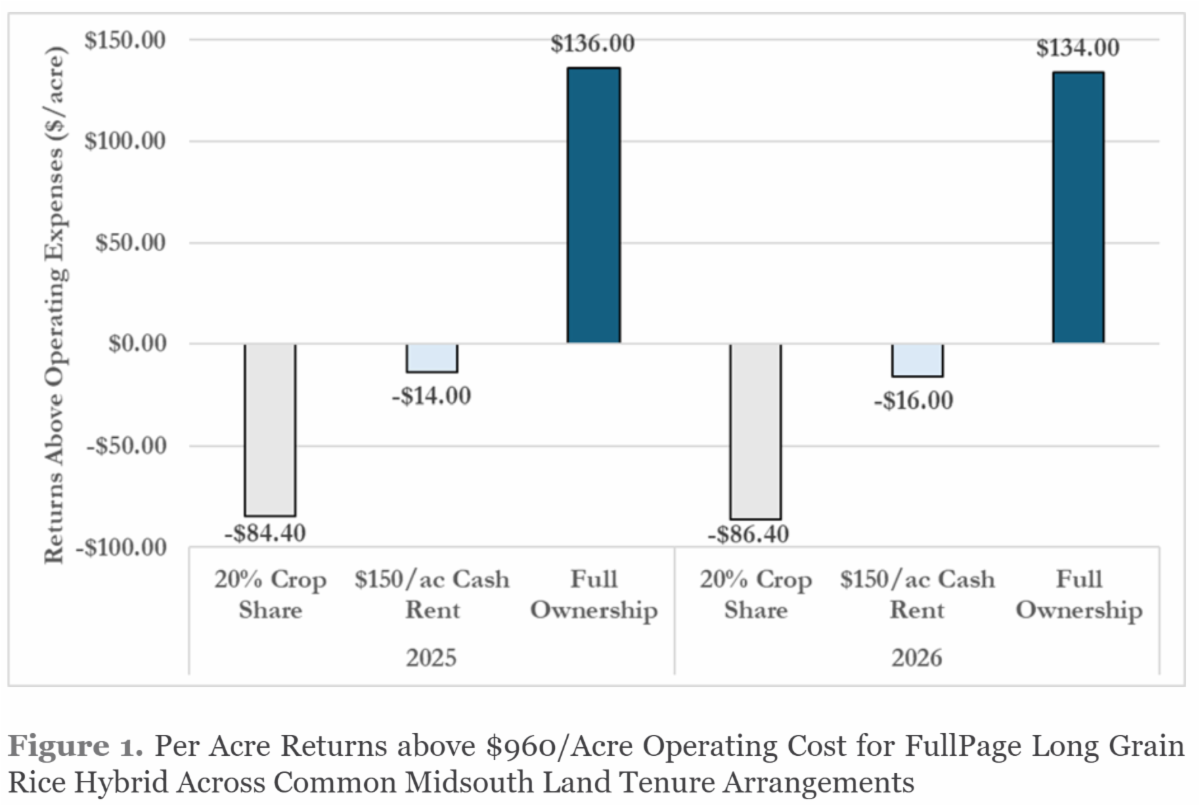
In 2025, U.S. rice acreage amounted to roughly 2.8 million acres, of which 2.7 million acres were harvested (USDA-NASS, 2026). All rice class acreage was down ~4 percent from 2024, due in part to the generational flood event that took place in April across the Midsouth, which forced many farmers to replant, or in some cases leave ground fallow due to razor-thin margins for rice in the South (Biram et al., 2025). Compared to 2025, the upcoming growing season preview shows tighter stocks, with a declining price environment. The January 2026 WASDE report currently pegs long grain ending stocks ~34.6 million bushels, little change from the 24/25 marketing year; but a significant change in average farm price, which is currently forecasted at $10.50/cwt (down from $14.00/cwt during the 24/25 marketing year) (USDA, 2026). Given this outlook, Figure 1 shows the expected 2026 returns for a Midsouth farmer under common rental agreements, compared with 2025. We use the same yield assumptions of 190 bushels/acre and an expected price of $5.80/bushel (~$12.88/cwt), with the main differences being rental expenses and input price changes from the last growing season (UADA, 2025). Figure 1 highlights that even with a modest decline in input prices, 2026 margins are not forecasted to improve much, if at all. In both cases, an operation that owns its land is expected to make a profit, while 20% crop share and $150/acre cash rent agreements show only modest improvement, with ‘shallower losses’. The 2026 domestic rice market will continue to struggle with tight margins and increasing international competition.
| |
2026 International Trade Outlook
International rice prices remain low due to large exportable surpluses, particularly from Asian exporters, and lower import demand from Indonesia. Temporary price increases, such as those observed in Thailand in late 2025, have already reversed, and export prices across major suppliers—including the United States, Uruguay, Thailand, and Vietnam—show sharp year-on-year declines (FAO, 2026). Unless major production shocks occur in Asia, prices are expected to remain depressed through 2026.
Global rice production for the 2025/26 campaign is projected to be near record levels (around 541 million metric tons), with demand slightly lower (538.6 million metric tons), resulting in a third consecutive year of global surplus and continued stock accumulation (USDA-FAS, 2026). India has emerged as the world’s leading rice producer, surpassing China since 2024/25, and is expected to reach a new production record in 2025/26 (preliminary reports suggest a record high main Kharif crop harvested in 2025 and an increase in area planted of the second Rabi crop). Its rapidly growing exportable surplus makes India a decisive force in shaping global market dynamics.
Since U.S. long-grain rice competes strongly with Mercosur rice in the Western Hemisphere, it is important to highlight that the upcoming 2025/26 Mercosur harvest is expected to be smaller due to reduced planted area and climatic challenges, although high initial stocks—especially in Brazil—will partially offset lower output (USDA-FAS, 2026). Thus, Mercosur’s lower production performance may be good news for U.S. rice maintaining or reclaiming market share throughout the Western Hemisphere.
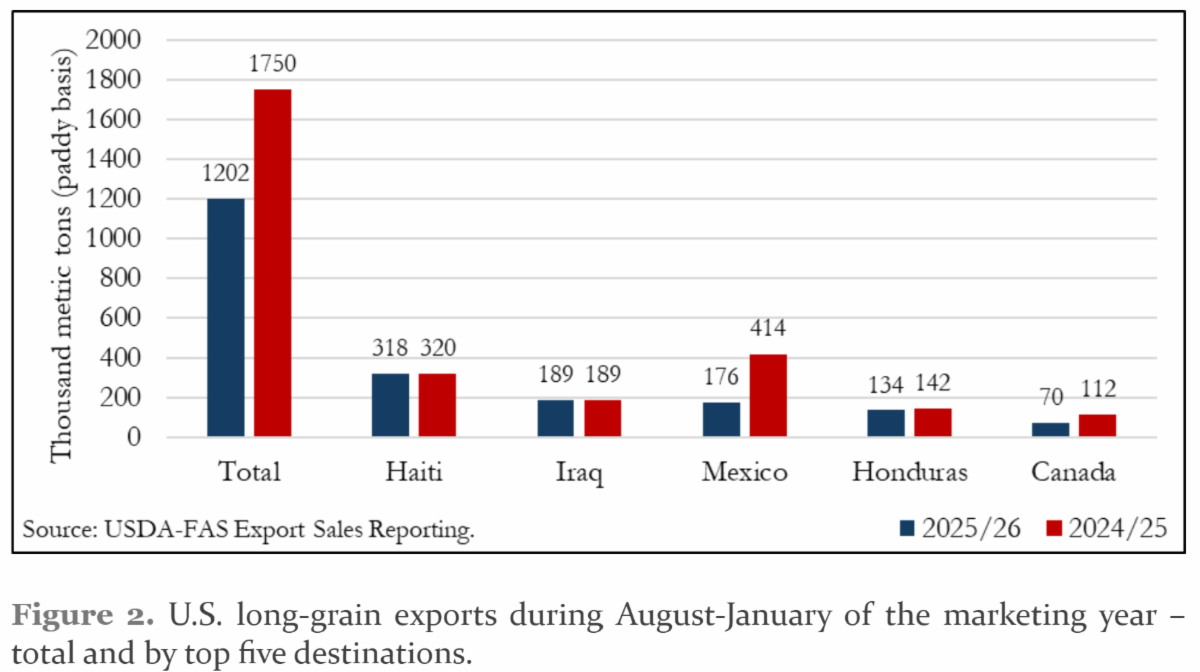
In this international context, U.S. long-grain exports in the first half of marketing year 2025-26 (August-January) decreased 31% relative to the same period a year ago (Figure 2). While the U.S. has maintained export levels to Haiti and Iraq, it has experienced a significant drop in exports to Mexico and, to a lesser extent, to Canada and Honduras, due largely to increasing competition from South America.
| | Beef, Small Ruminants, & Forages | | |
Determining Nitrogen Costs of Different Fertilizers
Kevin Lawson – County Extension Agent – Agriculture, Faulkner County
Danny Griffin – County Extension Agent – Staff Chair, Van Buren County
Brian Haller – County Extension Agent – Staff Chair, White County
Many producers are in the process of fertilizing winter annuals, and it won’t be long before we are fertilizing warm season pastures. When talking to producers about fertilizers, you usually get the same comment “dang that Urea is so high”. Agreed, Urea is high on a per ton basis, but you can’t go on price per ton only. When you really look into it, you need to compare each product on price per pound of nitrogen.
How much nitrogen is in different fertilizers?
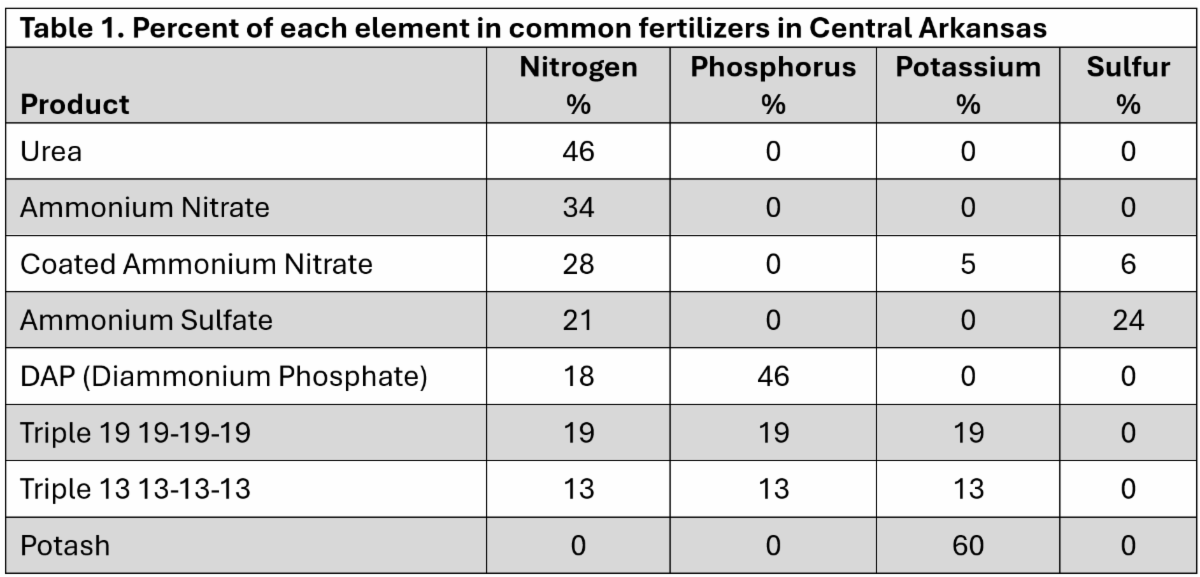
Each nitrogen source has a different percentage of nitrogen in it. When looking at a fertilizer analysis, there are usually three numbers represented. The first number is nitrogen, the second number is phosphorus, and the third number is potassium. An example would be Triple 19 which is 19-19-19. That means that Triple 19 is 19% nitrogen, 19% phosphorus, and 19% potassium. For every 100 pounds of Triple 19 you put out you will get 19 pounds of nitrogen, 19 pounds of phosphorus, and 19 pounds of potassium. There are a few products that have micronutrients in them and may have a fourth number. The most common micronutrient available in commercial fertilizers for forages is sulfur. Fertilizers like Ammonium Sulfate (21-0-0-24) and Coated Ammonium Nitrate (28-0-5-6) will have a fourth number that designates the percent sulfur in that product. Table 1 has the breakdown of the common fertilizers and their nutrient analysis. Not all dealers carry all of these products, so depending on where you get your fertilizer will depend on what products are available and these do not represent all of the products that are out there, but these are the most common.
| | |
When we are discussing nitrogen, you can see there is a big difference in the actual nitrogen in each product. Urea has the biggest percentage at 46% followed by Ammonium Nitrate at 34% and then Coated Ammonium Nitrate (28-0-5-6) at 28%. Ammonium Sulfate and DAP both have some nitrogen in them but should only be used when needing sulfur or phosphorus. Depending on how much actual nitrogen you need on your forage will determine the amount of these products you will be applying.
What is the price of actual nitrogen in different fertilizers?
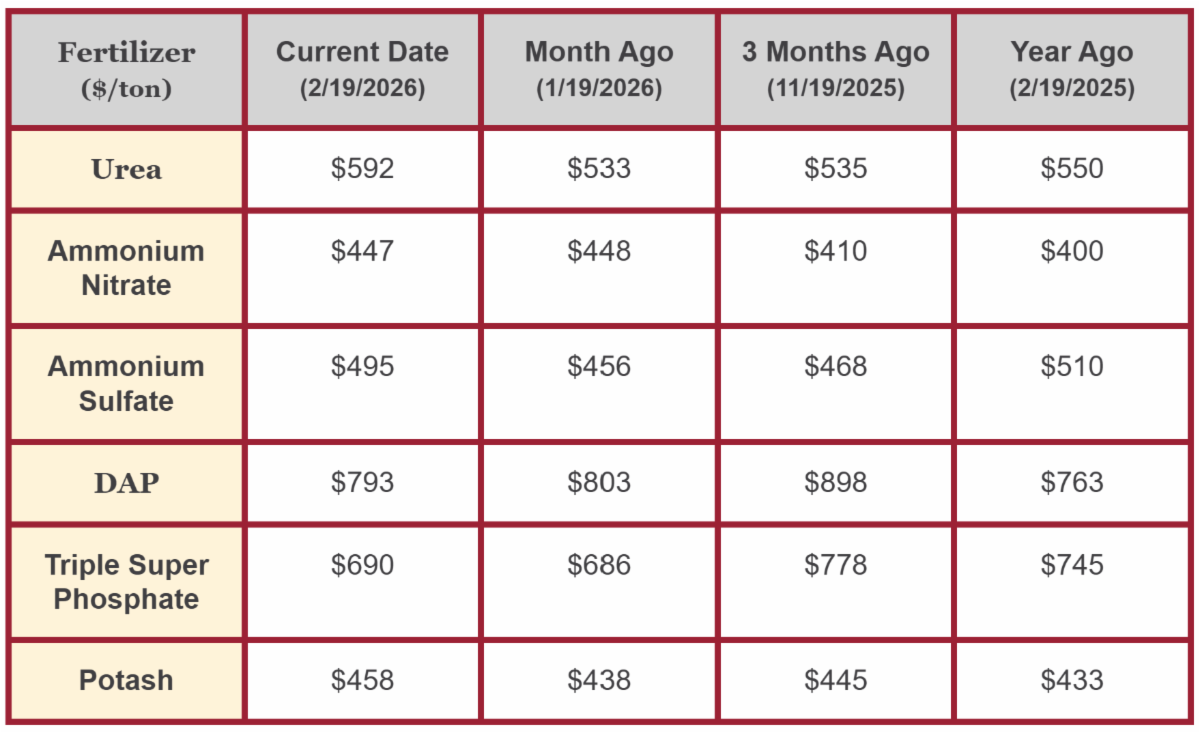
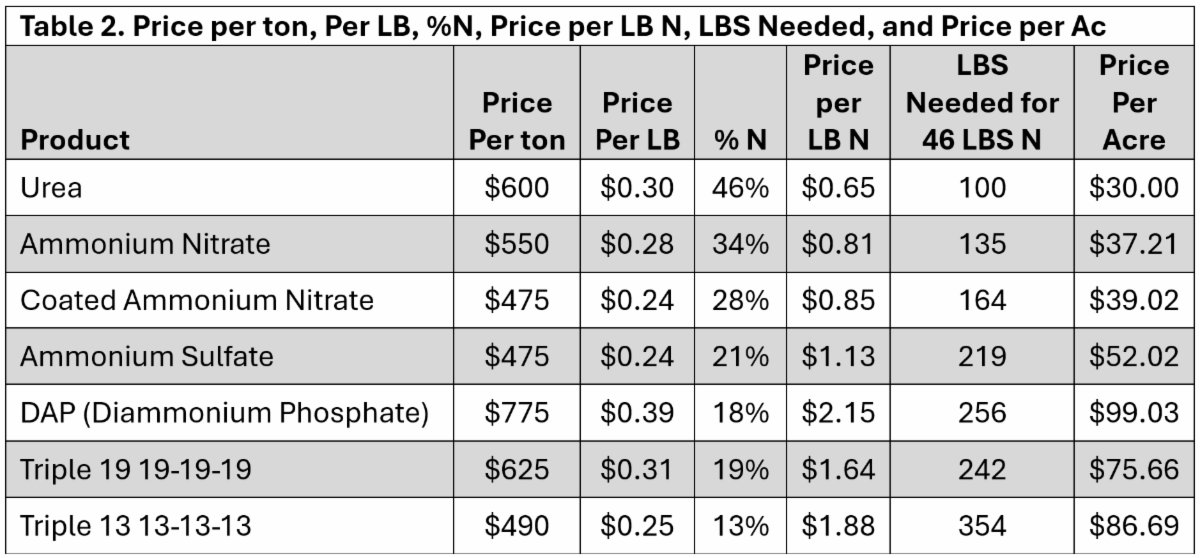
To determine the actual value of a fertilizer, producers need to dig deeper than just price per ton. Table 2 shows an average price of some of the fertilizers being sold around Central Arkansas as of February 19, 2026. DAP is the most expensive fertilizer at $775. It usually is more expensive, but it is used as a phosphorus source more than a nitrogen source. Triple 19 and Urea are similar at $625 and $600 per ton respectively. Compared to Coated Ammonium Nitrate at $475 it looks like Urea is much more expensive. When comparing these fertilizers to each other though, Urea has 46% nitrogen to Coated Ammonium Nitrates 28%. That means that for Urea you are paying $0.65 per pound of nitrogen versus $0.85 per pound of nitrogen on the Coated Ammonium Nitrate.
Another way to look at this is to determine how much nitrogen you need and get a price per acre. For this example, to keep things simple let’s say that your ryegrass needs 46 pounds of actual nitrogen to get it growing this time of year. To determine how many pounds of fertilizer you need, take 46 and divide it by the percentage of nitrogen in that fertilizer. For Urea you would divide 46 by 0.46 (46%) which equals 100 pounds of Urea needed to get 46 pounds of actual nitrogen. The results to that equation is shown in Table 2 under the column that says Total LBS needed for 46 LBS N for each fertilizer. As the percent nitrogen goes down, the more pounds of fertilizer you would need to get to 46 pounds of actual nitrogen. It takes 135 pounds of Ammonium Nitrate and 164 pounds of Coated Ammonium Nitrate to equal 100 pounds of Urea respectively.
The next part of the equation is to determine how much that amount of fertilizer is going to cost you. The easiest way to determine that is to divide the price per ton by 2000. That will give you a price per pound of fertilizer. In this example Urea is $600 per ton, and if you divide that by 2000 pounds you will get $0.30 per pound of fertilizer. To get that 46 pounds of actual nitrogen you need 100 pounds of Urea, therefore 100 times $0.30 per pound will cost you $30 per acre to apply 100 pounds of Urea. Then you can multiply how many total acres you have times that price to get the total amount of money it will cost you to fertilize that ryegrass.
| | |
Which fertilizer is the best value?
At the prices that are listed at this time, Urea is still the best value for the money spent. Even though it is one of the highest fertilizers based on a per ton basis, it’s high nitrogen content makes it the cheapest way to get nitrogen to your forages. Ammonium Nitrate and Coated Ammonium Nitrate will cost around $7 and $9 an acre more respectively. Urea will have to get up above $750 a ton to be equal to those other fertilizers if the other prices stay the same. Notice that Triple 19 and 13 are extremely high compared to Urea, Ammonium Nitrate, and Coated Ammonium Nitrate. $490 a ton looks great compared to $600 a ton, but it isn’t even close on a per acre basis.
| | |
Arkansas Cattlemen's Area 7 Spring Area Conference
The Area 7 Conference of the Arkansas Cattlemen's Association will be on March 24, 2026 at the Conway Expo Center. The meeting starts at 5:00 pm.
To register, click on the link below. Registration is due by March 17, 2026.
| | |
Pregnancy Diseases in Sheep and Goats
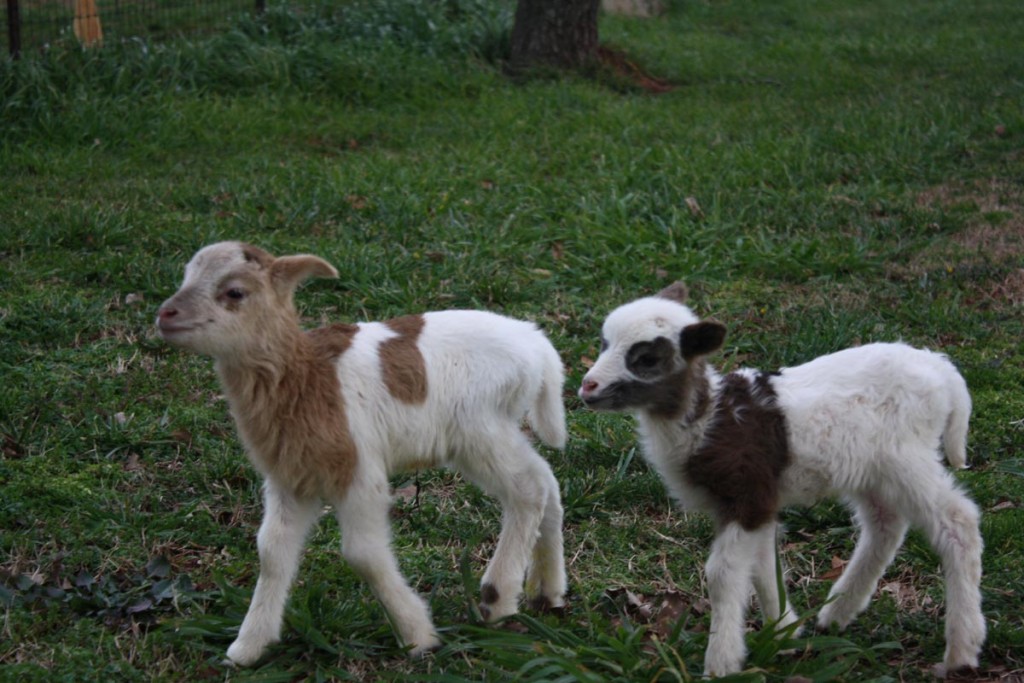
The sheep and goat industries face several disease challenges, but abortions are the most costly. An abortion rate of 5 percent within a flock or herd is common. If more than a 5 percent abortion rate occurs, producers should become concerned and begin investigating the cause to help prevent an abortion epidemic.
Abortion is the loss of the fetus during gestation. Usually, the loss is detected during the final two months of gestation with evidence of the expelled fetus. In contrast, early embryonic loss results in resorption of the fetus and can sometimes be detected when the female unexpectedly returns to estrus or develops bloody vaginal discharge. Either way, abortion is always a frustrating event to a livestock producer.
Noninfectious causes of abortion, such as nutritional deficiencies and environmental causes, may be shared by sheep and goats. However, infectious causes of abortion can be species-specific. This fact sheet explores the common causes of abortion, how to prevent them and how to treat them. Several of the infectious diseases can also infect humans (zoonotic disease); therefore, personal protection is recommended for people handling aborted fetuses.
To view the Fact Sheet Click on the Link:
| | |
Pesticide Applicator Trainings
In order to purchase restricted use pesticides (herbicides, insecticides, fungicides, etc) you must have a private applicators license. The license is good for 5 years.
To obtain a license you must first attend a certification training. Certification trainings are done in person by a County Extension Agent or you can go online and be certified. Below is a link to the online training.
In person trainings this year will all be at the Faulkner County Extension Office and will be on:
March 12 - 6:00 PM
April 30 - 2:00 PM
A certification training costs $20 and is due the day of the training.
Once a producer is certified, they will go through the Arkansas Department of Agriculture to obtain the license which is $45.
Please call the Extension office at 501-329-8344 to sign up for one of these dates.
If you have a question about your license, please follow the License Search and Verification link below to find your license.
| | |
Livestock Market Report
The following links are for the weekly livestock market report from the Arkansas Department of Agriculture website and the Livestock Auction Dashboard from USDA. Both sites have marketing data for all livestock sold at Arkansas Sale Barns.
| | |
2025 Faulkner County Agriculture Demonstration Summary
The 2025 Faulkner County Agriculture Demonstration Summary is now available at the link below.
The 2025 Faulkner County Demonstration Summary is a collection of on-site demonstration results conducted in Faulkner County by local County Agents. Demonstrations are the cornerstone of the University of Arkansas System Division of Agriculture Cooperative Extension Service’s mission which is:
“We strengthen agriculture, communities, and families by connecting trusted research to the adoption of best practices.”
On-site demonstrations allow producers and homeowners to see firsthand how Extension recommended varieties and best management practices work in their counties and surrounding area.
| | |
Sign up for Text Alerts
You can now sign up for text alerts from me throughout the year. I have two areas you can sign up for which includes Faulkner Livestock or Faulkner Ag (Row Crop Updates). To sign up you can follow one of these links or use the QR Codes below.
| | Pursuant to 7 CFR § 15.3, the University of Arkansas System Division of Agriculture offers all its Extension and Research programs and services (including employment) without regard to race, color, sex, national origin, religion, age, disability, marital or veteran status, genetic information, sexual preference, pregnancy or any other legally protected status, and is an equal opportunity institution. | | | | |