Monthly News & Updates


5/15/2025


The myth of ideal weight...

Have you been spending time worrying about reaching an ideal weight? So let's take a look at the myth of ideal weight...


🤔The idea that you are maximally healthy if you are at an ideal weight came from actuarial tables. Yes, the ones the insurance companies use the predict how likely you are to die!


😯Except, people who take out insurance policies are more likely to be male, white, and upper class. This skews the idea of ideal weight.


😕The ideal weight is viewed to be a BMI of 20-25. This means that at least 50% of the United States is considered to be overweight. The ideal weight is much closer to a BMI of 25-30.


😳Males are more likely to be impacted by a higher BMI than females. This has to do with where they store their fat.


🤯Females need to have a BMI over 30 to have significant health impacts in morbidity and mortality.


Does this resonate with you? Let's chat about how shifting behavior patterns can bring about the changes you are seeking.


From the mess,


Renee


PS-Please feel free to share this newsletter to those who might appreciate it.


Let's hang on to what we've got!

Did you know your body is built to want to hold onto the weight you have? This is a survival mechanism built in, and why most people gain their lost weight back...


  • After 24 hours your body has a heightened perception of food. It will smell more aromatic, as well as look and taste more appealing.
  • After 3 days your basal metabolic rate will decrease, reducing the pace at which your body burns food for energy.
  • After 1 week you will begin to develop food obsessions- talking and dreaming about food.
  • After 1 month eating induces eating. When you start eating you will not want to stop.
  • After 3 months of dieting 30% of dieters are clinically depressed.


Rapid dieting doesn't work. Look to make slow sustainable life changes over time.

The scale can be your friend...

Want to block weight gain? One of the most effective methods to avoid weight gain is to weigh yourself regularly, under the same conditions (First thing in the morning, no clothes and after you have urinated with you scale on a level solid surface), preferably each day.


Record and graph your weight changes over time. Watch for trends over time. It is far easier to make small changes when you see your weight changing by a pound or two, than it is to make large changes as you panic over the 10 or 20 pounds that seem to have crept on without warning.


Curious about the science that backs this up...Check out one of these articles by clicking on it to open:


Weighing everyday matters: Daily weighing improves weight loss and adoption of weight control behaviors


Daily weighing may be key to losing weight


An overabundance of fat tissue in the body does not have the same impact on every person. People with a very low BMI and a very high BMI have a higher risk of dying of diseases, however exercise flattens that curve producing a reduction in morbidity relating to being fit. Your level of fitness, is not dependent upon your weight.


Fat tissue, in the stomach area, is related to hypertension, diabetes, cardiovascular disease and atlerosclerosis.This is for you men!


Women tend to store fat in their bottom, thighs, and legs. However women are still told to lose weight.


50% of obese people have diabetes, hypertension, and hyperlipidemia.

However, 50% of obese people DO NOT! Losing weight does not help this group to increase their lifespan.


You do not need to get down to your ideal weight to reverse pathologies. A 5 to 10% weight loss will usually help. That 5 to 10% reduction is possible with sustainable lifestyle changes.


If this is resonating with you...reach out! Let's chat about the ways in which I can support you or your family. To book a time to chat click the button below.


Super Size ME! I have a problem with food...when I find something I enjoy, I don't always want to stop eating it. As a result, my portion sizes on some foods end up being disproportionately large.


A few facts on portion size...

Reducing portion size will reduce your calorie intake.


The less you eat, the less fat you will consume and the less cholesterol you will have in your liver. The less saturated fat you eat, the less bile your body needs to break it down. Bile is a known carcinogen, so you are lowering your cancer risk.


Scientific studies have shown that caloric restriction can have positive effects on humans including a lower percentage of body fat, lower risk for diabetes and heart disease, lower blood pressure, as well as experiencing less depression, less hunger, and a higher overall quality of life.


As a family we are working on our portion sizes, reminding ourselves that the food will not disappear if we do not finish it all in one sitting.

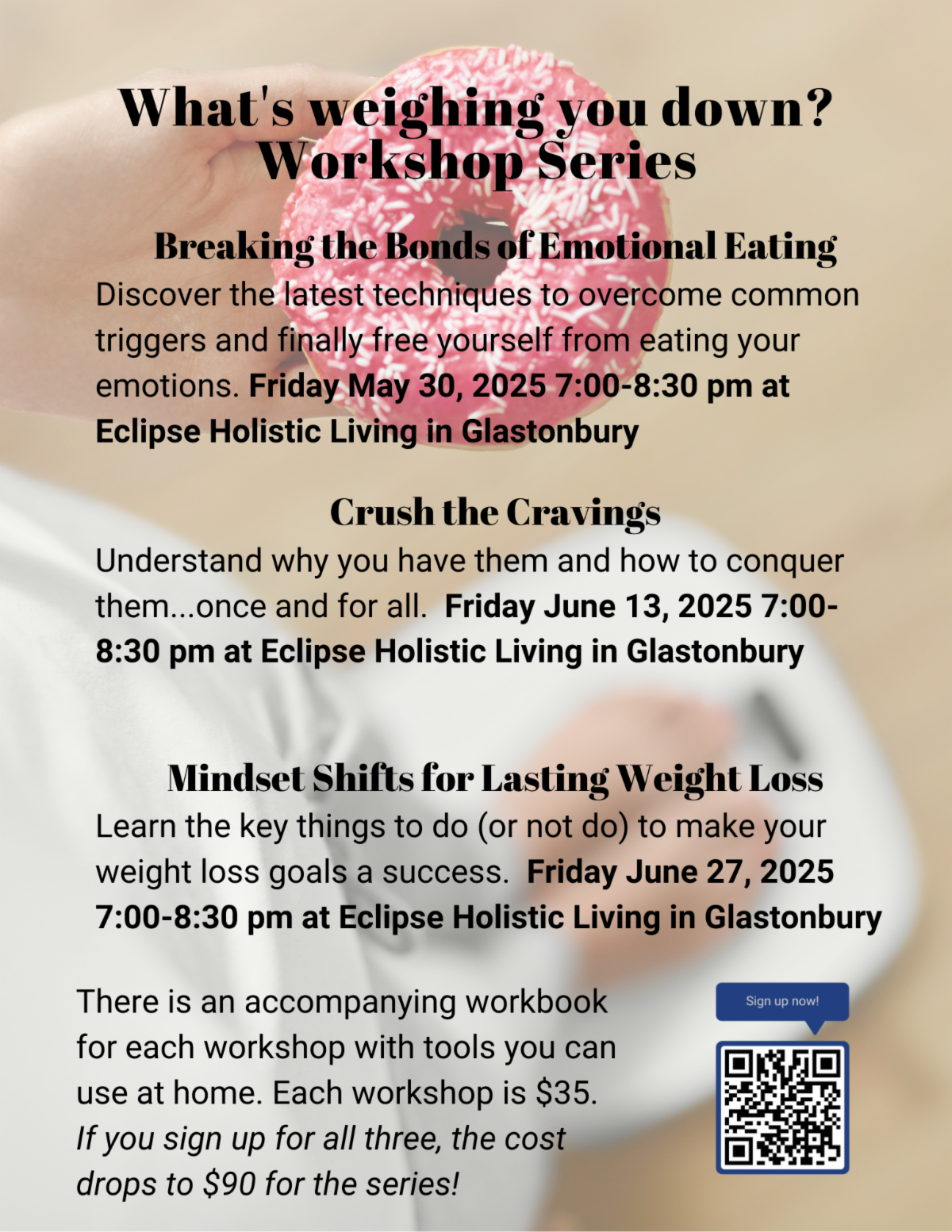
Upcoming events!

Don't hesitate to reach out if you have questions or are seeking further information.


Work With Renee!

Individual coaching slots are open. Together we can work 1-1 on identifying habits and patterns that are impacting your overall well-being and developing new habits to support the lifestyle and identity you wish to move towards.


Consider a parenting problem solving sessions where we can work together on addressing challenges your child may be experiencing at home or school using behavioral strategies, nutrition, and mindfulness.

 
Facebook  Instagram