REMINDER: YOUR SUBMISSIONS ARE ENCOURAGED | | |
1. Bindu's Corner: This week, Bindu has shared some women's wit and wisdom
2. Winter Solstice 2025: This coming Sunday is the winter solstice, the beginning of astronomical winter, an annual event that cultures around the world have celebrated for millennia.
3. Photography: Photographer Andrew McCarthy captured the silhouette of a falling man against a detailed image of the sun's surface in a work titled The Fall of Icarus.
4. Reaching High: Park City, Utah, mother of seven children, Jenn Drummond, is on track to complete the Seven Summits in 2026, after completing the Seven Second Summits in 2023. Amazing!
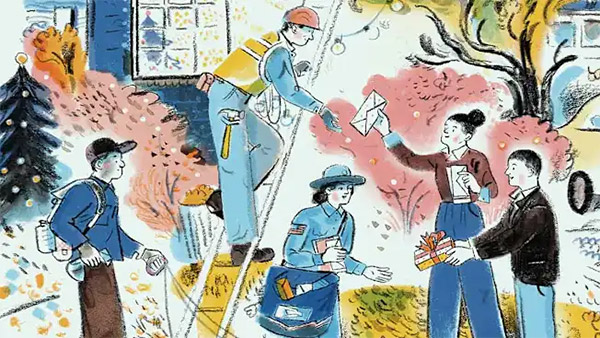
5. Holiday Etiquette: I have a holiday tipping guide brought to the Flock's attention by my husband, Michael.
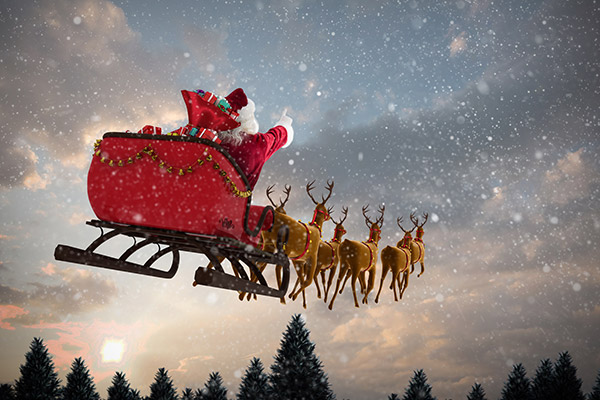
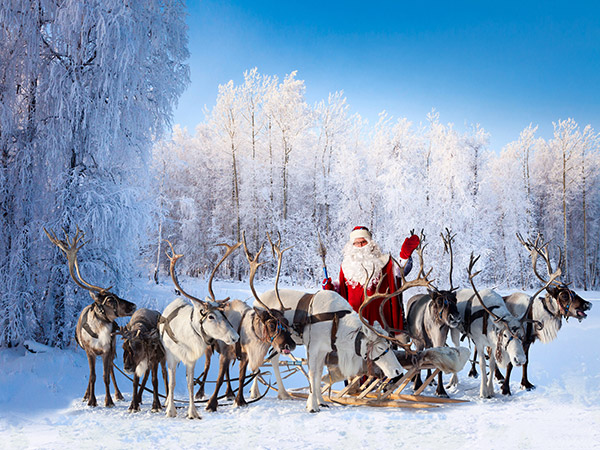
6. Christmas: This year for, Christmas, I'm doing a deep dive into Santa's Reindeer, how they became part of the Christmas story, and how they got their names.
7. Bonus: I'm closing this week with Bing Crosby singing I'm Dreaming of a White Christmas.
| | |
I hope you will pick and choose, and enjoy your reads.
Please feel free to share the Flock.
| | Now, to this week's Flock. | |
1. Bindu's Corner: This Week's Wisdom
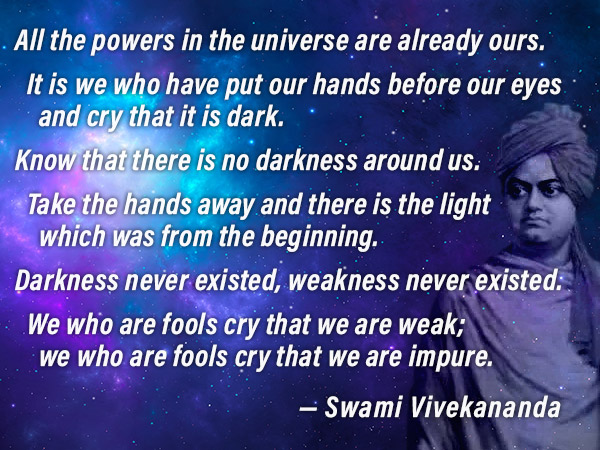
| | This week, Bindu has offered us some women's wit and wisdom and an affirmation from Swami Vivekananda. | | |
One must be patient like the earth. What inequities are being perpetrated on her! Yet she quietly endures them all. Man, too, should be like that.'
Let me tell you how to love all equally. Do not demand anything of those you love. If you make demands, some will give you more and some less. In that case you will love more those who give you more and less those who give you less. Thus your love will not be the same for all. You will not be able to love all impartially.'
— Holy Mother Sri Sarada Devi
After you die, you wear what you are.
— Saint Teresa of Avila
We are so vain that we even care for the opinion of those we don't care for.
— Marie Von Ebner- Eschenbach
A bad habit never disappears miraculously; it's an undo-it yourself project.
— Abigail Van Buren, aka Dear Abby
We grow old more through indolence than through age.
— Christina of Sweden (Queen of Sweden 1632-1654)
It is far more impressive when others discover your good qualities
without your help.
— Judith S. Martin, aka Miss Manners
| |
2. Winter Solstice 2025: December 21, 2025
| | The Earth's axis of rotation is tilted approximately 23.5 degrees off vertical. The tilt creates the seasons by affecting how directly sunlight hits the Earth at latitudes north and south of the equator. This coming Sunday, December 21st, is the winter solstice, marking the first day of astronomical winter in the northern hemisphere, with the shortest day and longest night of the year. The sun will appear lower in the sky and rise and set the furthest south on the horizon than on any other day. In the southern hemisphere, the opposite is true: this Sunday marks the summer solstice, bringing the longest day of the year. The effects of the solstices, especially changes in daylight hours and seasonal intensity, are much greater farther from the equator, with the poles seeing the most extreme effects. While the solstices mark the start of astronomical winter and summer, many cultures have celebrated them as midwinter and midsummer, the turning points of their respective seasons. | | It's the winter solstice. Here are 5 ways people celebrate the return of light | | From: NPR, By: Diba Mohtasham, December 21, 2024 | | |
It's officially the start of a new season…
But while for some it might be a reason to go to bed early, for many, the day calls for celebration. Since before recorded history, the winter solstice has traditionally meant a time of renewal and ritual for people all over the world.
Here are some ancient winter solstice celebrations from both hemispheres and how they're marked.
| |
Shab-e Yalda
Northern Hemisphere
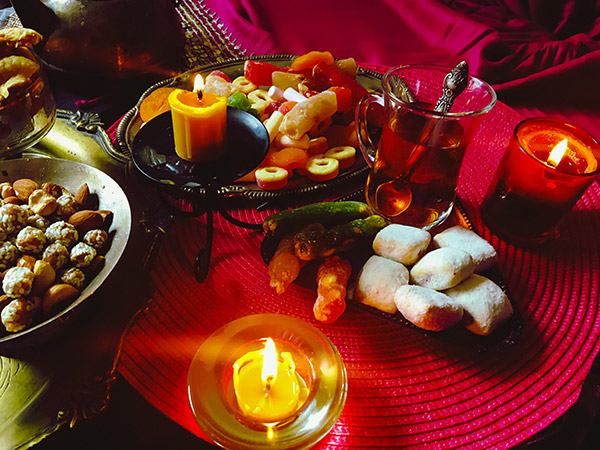
| | For centuries, Iranians around the world have gathered on winter solstice to celebrate Yalda, meaning birth or rebirth. The holiday dates back to the Zoroastrian tradition, and is believed to be a dedication to the sun god Mithra. Also celebrated in many Central Asian countries such as Afghanistan, Azerbaijan, and Uzbekistan, Yalda is a time when loved ones gather to eat, drink, and read poetry through the night and welcome the sun. Nuts and fruits such as pomegranates and watermelons are symbolic, as their red hues represent dawn and life. The holiday represents the victory of light over darkness. | |
Donazhi
Northern Hemisphere
| | In Chinese, Dongzhi literally means "winter's arrival," and is one of the solar terms in the traditional Chinese calendar. The occasion signifies a turning point in the year when yin energy transitions to the positive energy of yang as the days grow longer. Traditionally celebrated as an end-of-harvest festival during the Han Dynasty, today it is an important time to spend with family and eat a hearty meal of tangyuan (glutinous rice balls) or dumplings, depending on what part of China one lives in. | |
Inti Raymi
Southern Hemisphere
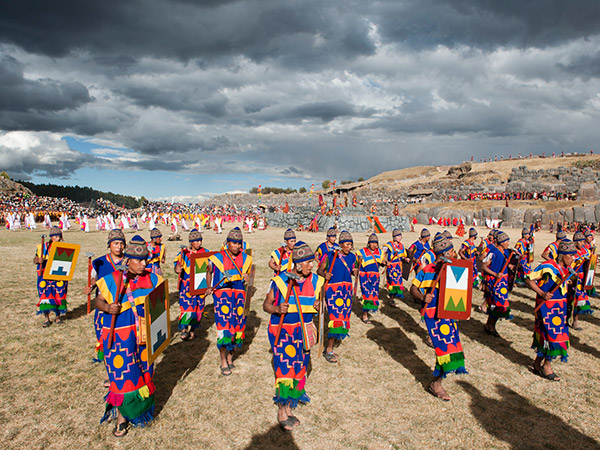
| | Peru's winter solstice is celebrated in June and honors the Incan sun god Inti (Quechua for "sun"), the most revered god in the Inca religion. Banned during the first years of the Spanish conquest, the festival has since been resurrected and now takes place in the city of Cusco, once the center of the Incan Empire. Festivities include feasts and mock sacrifices that honor historic rituals. | |
Soyal
Northern Hemisphere
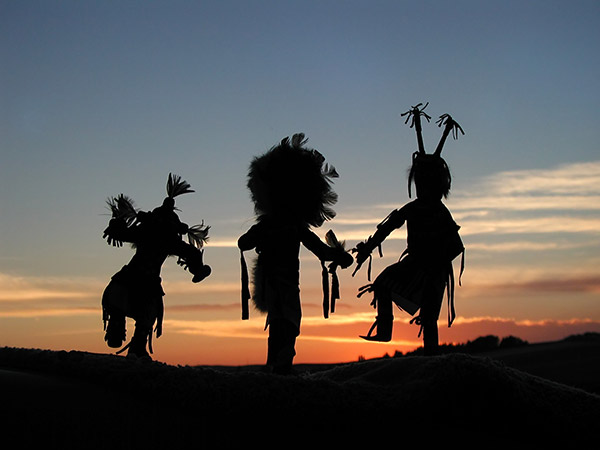
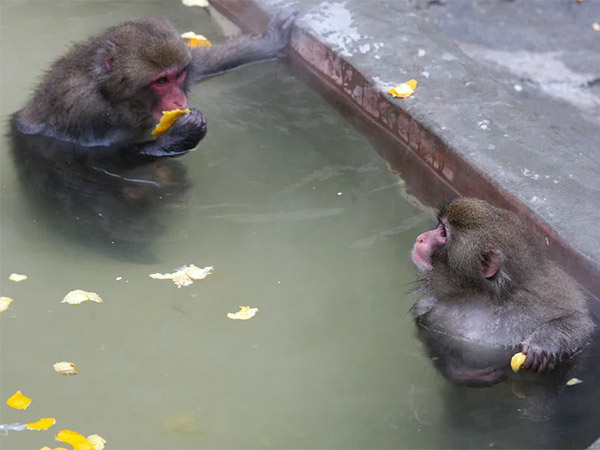
| | Soyal is the winter solstice celebration of the Hopi Indians of northern Arizona. Ceremonies and rituals include purification, dancing, and sometimes gift-giving. At the time of the solstice, Hopi welcome the kachinas, protective spirits from the mountains. Prayer sticks are crafted and used for various blessings and other rituals. | | Monkeys sit in an orange spa for the winter solstice at the Ueno zoo in Tokyo in 2007. Orange spas are a Japanese winter solstice tradition. | |
Toji
Northern Hemisphere
| | In Japan, the winter solstice comes with several rituals and customs to welcome the return of the sun. One custom that dates back hundreds of years involves taking a hot bath with yuzu, a citrus fruit known for its healing properties. Other traditions include eating a winter squash called kabocha, and foods that contain the "n" sound (like udon), as they are believed to bring good luck. | |
3. Photography: The Fall of Icarus
| | Smithsonian Magazine tells the story of the complex planning and timing that went into capturing this amazing photo taken from a dry lakebed an hour and a half to the east of Tucson, just outside of Wilcox, Az. | |
This Stunning Image Shows a Skydiver Falling Across the Face of the Sun. Here’s How the Team Captured the Mesmerizing Photo
Months of careful planning and calculations went into the shot. Then, the team had only one jump attempt to get it right
| From: Smithsonian Magazine, By: Margherita Bassi, December 10, 2025 | | |
The scene sounds like something straight out of an action thriller: a skydiver drops out of an aircraft, their dark silhouette plummeting across the surface of a giant, fiery star.
The final product? Even more mesmerizing: a still shot of the skydiver, upside down with arms spread among sunspots.
That’s right. The celestial body is the sun, and the image is an actual photograph of skydiver Gabriel Brown, known as blackgryph0n on Instagram.
“Immense planning and technical precision was required for this absolutely preposterous (but real) view,” astrophotographer Andrew McCarthy, who goes by the username cosmic_background on Instagram, wrote on X. “I captured my friend @BlackGryph0n transiting the sun during a skydive. This might be the first photo of it's [sic] kind in existence.”
Titled “The Fall of Icarus,” presumably in reference to the Greek myth about the inventor Daedalus’ son, who fell into the sea after flying too close to the sun, the image also shows intricate structural details of the sun, such as loops and small flares. That’s thanks to a special telescope filter that allows a view of the atmospheric layer above the sun’s surface…
McCarthy and Brown came up with the idea earlier this year after a skydiving get-together, Brown writes on Instagram. They discussed how cool—and difficult—getting a solar skydiving shot would be. Describing both himself and McCarthy as “stubborn,” Brown writes that they started organizing the ambitious endeavor.
| | Capturing “The Fall Of Icarus” | |
4. Reaching High: Park City Mom Closing in on the Seven Summits
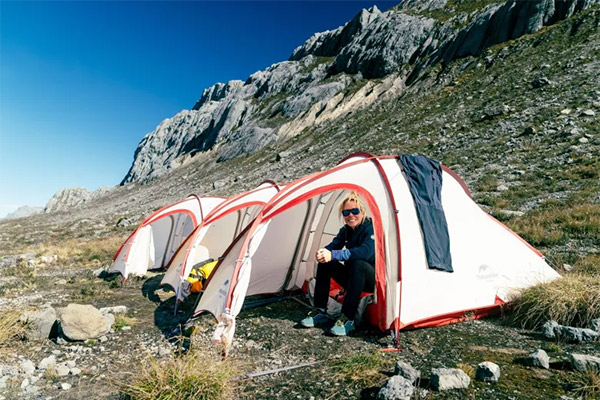
| | Having already become the first female climber to successfully summit the second-highest peak on each continent, mom to seven children, Jenn Drummond is on track to finish bagging the seven highest peaks from each continent in 2026. Proving there's nothing a determined mom can't do. | | Park City mountaineer Jenn Drummond begins final push to complete seven highest peaks on each continent | | |
When Park City resident Jenn Drummond completed the Seven Second Summits in 2023, she became the first woman to reach the second-highest peak on every continent.
In the two years since, Drummond has focused on returning to each continent in pursuit of the Seven Summits. She has five behind her and two still to go — Mount Elbrus in Europe and Denali in North America, both of which she plans to complete in 2026.
The Seven Summits mark the highest point on every continent, requiring months of preparation and long periods spent adjusting to altitude and weather to complete. For Drummond, the Seven Summits represent the next step in seeing how far her experience, teamwork and resilience can take her now.
Drummond began pursuing major climbs after a serious car accident in 2018 forced her to rethink what she wanted her life to look like and her approach to risk.
“Before my accident, I worked in finance, which is basically a constant exercise in risk management,” she said. “But the accident changed my relationship with it. It made me realize that while managing risk is important, avoiding it completely is not living.”
She climbed Mount Everest in 2021 and soon after committed to the Seven Second Summits, a project that often involves more demanding conditions and technical skill than the Seven Summits.
| | Drummond trains year-round in Park City, using the area’s terrain and altitude to prepare for long expeditions while balancing her climbing goals with raising seven children at home. Credit: Photo courtesy of Jenn Drummond | | |
“I was drawn to the Seven Second Summits because only one person had ever completed them and I realized I could be the first woman to do it. That mattered to me,” she said.
She said the appeal was not adrenaline, but challenge and the chance to work toward something that would require her full attention and effort. It also became a way to test her own capacity for resilience and decision-making under pressure. She said completing the Seconds helped her understand how she reacts when things go wrong in high-stress situations and know that she could handle it.
| |
5. Holiday Etiquette: Holiday Tipping Guide
| | During the holiday season, who and how much you should tip can be confusing. This helpful guide from Consumer Reports was brought to my attention by my husband, and faithful Flock reader, Ivan Michael Kasser. I'm sure this will come in handy through the holidays. | |
CR's Holiday Tipping Cheat Sheet
Not sure how much to give your dog walker, hairdresser, or mail carrier—or whether you should tip them at all? We've got you covered.
| | From: Consumer Reports, By:Brian Vines, November 8, 2025 | |
Americans are fed up with being asked to tip for an ever-increasing number of their daily purchases. When it comes to holiday tipping, though, many of us still feel more like George Bailey than Ebenezer Scrooge: In a 2024 Bankrate survey, 80 percent of Americans said they planned to give holiday tips to house cleaners and other service workers.
Deciding who gets a year-end tip—and how much that should be—is rarely straightforward. It might seem obvious that you should give one to the landscaper who braved the heat wave to keep your lawn from turning to hay and to the cleaner who always keeps your home ready for company.
But what about the doormen, home health aides, and other folks who help you manage your life throughout the year?
To find out, CR asked etiquette experts and service workers for the best ways clients can express their thanks, no matter their budget.
Who Gets Tipped and Who Doesn’t
Unlike the extras we routinely give taxi drivers, restaurant servers, and some other workers each time we pay them, holiday tips are a once-a-year gesture to acknowledge and thank the people whose work supports us on an ongoing basis, says Pamela Eyring, president of the Protocol School of Washington, which provides training in international protocol and business etiquette.
Many of these workers, such as garbage collectors and home health aides, don’t normally receive tips—so this might be your best chance to recognize them. But what about the barbers, massage therapists, and others you already tip each time they provide a service? "It’s nice to give them something extra at the end of the year, too," says Elaine Swann, author of "Elaine Swann’s Book of Modern Etiquette" (Kayppin Media, 2025) and founder of the Swann School of Protocol in Carlsbad, Calif. "It’s a way to show gratitude to everyone whose services help to make your life easier—even those you regularly tip," she says.
That said, there’s no need to tip professionals, such as doctors, attorneys, and physical therapists, Eyring and Swann say. And most delivery people fall into a gray area: USPS letter carriers cannot accept cash or gift cards, though they may accept gifts worth $20 or less.
Deciding on the Right Amount
There are no hard-and-fast rules about how much you should tip at the holidays, but some tipping norms have become a social convention. For example, giving your barber a holiday bonus equal to the cost of one haircut has become a customary way to show thanks for year-round service.
When You Don’t Want to Give Cash
Just like the jolly guy in red, anyone who doesn’t get a cash tip will appreciate a gift of home-baked cookies or other thoughtful goodies accompanied by a card. "I’ve had clients give me homemade candies and cakes instead of cash at holiday time," says Abbey Allen, a licensed massage therapist in Ohio. "I always appreciate it when they give me something homemade because it means they took the time to think of me and it’s coming from their heart."
Your Giving Guide
Our etiquette experts suggest these amounts to say thank you at the end of the year to all the service providers on your list.
| |
6. Christmas: Santa's Reindeer
| | Santa's reindeer have only been a part of the Christmas story for a relatively short time. Originating in early nineteenth-century New England, they quickly became an integral part of Santa's yearly journey delivering gifts around the globe. Within just a few years, the number and names of the flying reindeer in his sled team had been established. The team of eight reindeer would grow to nine with the addition of a shy outcast with a glowing nose who would go on to lead the sled team 120 years later and become a holiday icon. | The History of Santa's Reindeer | |
The character of Santa Claus is largely based on St. Nicholas of Myra and Sinterklaas of Dutch lore. Both of those figures traveled via a noble, white steed. Yet in some Western cultures, particularly America, Santa Claus travels the world on Christmas Eve delivering gifts in a sleigh pulled by flying reindeer.
In 1812, American author Washington Irving refers to St. Nicholas as "— riding over the tops of the trees, in that self-same wagon wherein he brings his yearly presents to children" in the revised version of A Complete History of New York written under the pseudonym Diedrich Knickerbocker. Yet no mention is made of what propels the wagon. So where did the story of flying reindeer originate?
The first known written account of reindeer in association with the legend of Santa Claus occurred in 1821. That year, New York printer William Gilley published a sixteen page booklet titled A New Year's Present, to the Little Ones from Five to Twelve Number III : The Children's Friend by an anonymous author. In the book, reindeer are introduced into the Santa Claus narrative:
| |
Old Santeclaus with much delight
His reindeer drives this frosty night.
O'er chimneytops, and tracks of snow,
To bring his yearly gifts to you.
| |
During an 1822 interview, New York's Troy Sentinel editor Orville L. Holley questioned Mr. Gilley regarding the booklet's author and the topic of reindeer. Though he did not identify the author, Mr. Gilley responded:
"Dear Sir, the idea of Santeclaus was not mine nor was the idea of a reindeer. The author of the tale but submitted the piece, with little added information. However, it should be noted that he did mention the reindeer in a subsequent correspondence. He stated that far in the north near the Arctic lands a series of animals exist, these hooven and antlered animals resemble the reindeer and are feared and honored by those around, as you see he claims to have heard they could fly from his mother. His mother being an Indian of the area."
In 1823, the Troy Sentinel published the poem A Visit From St. Nicholas, commonly known as The Night Before Christmas. The poem features eight flying reindeer pulling Santa's sleigh and, for the first time, they are identified by name.
| What are the Names of Santa's Reindeer? | |
You most probably know the names or at least some of the names of Santa’s reindeer from the 1949 hit ‘Rudolph the Red-Nosed Reindeer’ (bet you probably sang that in your head), but where did they originate from and are there 8 or 10 of them?
The Origin of Santa's Reindeer
Back in 1823, the poem ‘A Visit from Saint Nicholas’ or most commonly known as ‘Twas the Night before Christmas’ by Clement Clarke Moore referred to the ‘eight tiny reindeer’:
| |
‘now Dasher! Now Dancer! Now Prancer and Vixen!
On Comet! On Cupid! On Donder and Blixem!’
| |
By the late eighteenth century, children in the former New Amsterdam regarded Santa by ‘Sante Klaas’ from ‘Sinter Niklaas’, a Dutch name for St Nicholas which forms the basis of his name to this day. Donder and Blitzen are also Dutch names from ‘donder en bliksem’ which translates to ‘thunder and lightning’, a phrase which was a mild form of swearing in nineteenth century New York but was also modified in 1844. Moore changed the name of Blixem to Blitzen as it better rhymed with Vixen. Also in the ‘Rudolph the Red-Nosed Reindeer’ song, Marks changed ‘Donder’ to ‘Donner’ but there is some uncertainty whether he knew it was German or the word sounded better.
The other names of Santa’s reindeer we can assume were for the purpose of a memorable name to bellow when he rode off on his sleigh, and also names that rhymed and fitted to an iambic metre. Dasher and Dancer for example, are both metered and alliterative names and follow the tradition of naming animals after attributes. There is some uncertainty about this as it is also believed that the inspiration originated from the Norse god of thunder, Thor especially as in myths he rode a wagon through the skies which was led by his two goats named Gnasher and Cracker.
But the poem does not mention any name of Rudolph, so where did the most famous reindeer come from? Rudolph doesn’t actually appear in historical records until the twentieth century. Although the lyrics of the Rudolph song, written by Johnny Marks, were taken from the poem ‘Twas the Night before Christmas’, the character itself was actually based on a character crafted by the Montgomery Ward marketing team in 1939. The name Rudolph first appeared in a storybook by a Chicago department store’s adman Robert May to promote the holidays. It wasn’t until a decade later that this name was adapted into the hit song.
How Many Reindeer are There?
Santa originally had 8 reindeer and it was until 1939 that Rudolph came into the scene to make 9. But through the years, lyrical confusion sparked a 10th name to Santa’s herd. Olive, ‘The Other Reindeer’, has been taken from a misunderstanding on the lyrics of the ‘Rudolph the Red-Nosed Reindeer’ song. Instead of “All of the other reindeer”, some people have thought it to be “Olive, the other reindeer” and so this mistake has generated a new reindeer character.
| | Gene Autry - Rudolph the Red-Nosed Reindeer | |
7. Bonus: I'm Dreaming of a White Christmas
| | |
Please enjoy this rendition of Irving Berlin's Classic Christmas song, I'm Dreaming of a White Christmas, from the 1954 film White Christmas, performed by Rosemary Clooney, Bing Crosby, Vera Ellen, and Danny Kaye.
Merry Christmas, everyone!
| | White Christmas Clip | Paramount Movies | | These Flock regulars are always here for you: | | Don't Be Shy: Share Your Stories! | | I'm looking forward to sharing more of your personal stories - oral, written, or otherwise, as we enter our third year. I'd so love to present them to The Flock, hit a mailbox below to share your story. | | Subscriptions & Idea Submissions
Reminder: Your submissions are always welcomed. | | |
Feel free to forward this email to a friend. If this was forwarded to you and you would like to receive your very own Flock Newsletter, you can sign up here. If you have any questions or suggestions for future Flock resources, don't hesitate to contact me.
Your fan and friend,
Beth
| | | The information and materials contained or referenced in this newsletter are for informational purposes only and not intended to be a substitute for professional medical advice, diagnosis, or treatment. Always consult a physician or other qualified medical professional with any questions you may have regarding a medical condition or treatment and before beginning a new health care regimen. Do not disregard professional medical advice or delay seeking medical advice or care based on anything contained in this newsletter. | | | | |