|
On Monday, April 10, the National Association of Conservation Districts (NACD) and a coalition of agriculture and conservation organizations sent a letter to congressional appropriations leaders requesting at least $1.2 billion for NRCS Conservation Operations and full authorized funding for farm bill conservation programs in Fiscal Year 2024 (FY24).
More than 50 organizations signed the letter to support the requests. Nearly 90 percent of NRCS Conservation Operations funding supports Conservation Technical Assistance (CTA), which facilitates the implementation of on-the-ground conservation by supporting our conservation workforce, conservation planning, and the extension of specialized technical assistance to producers.
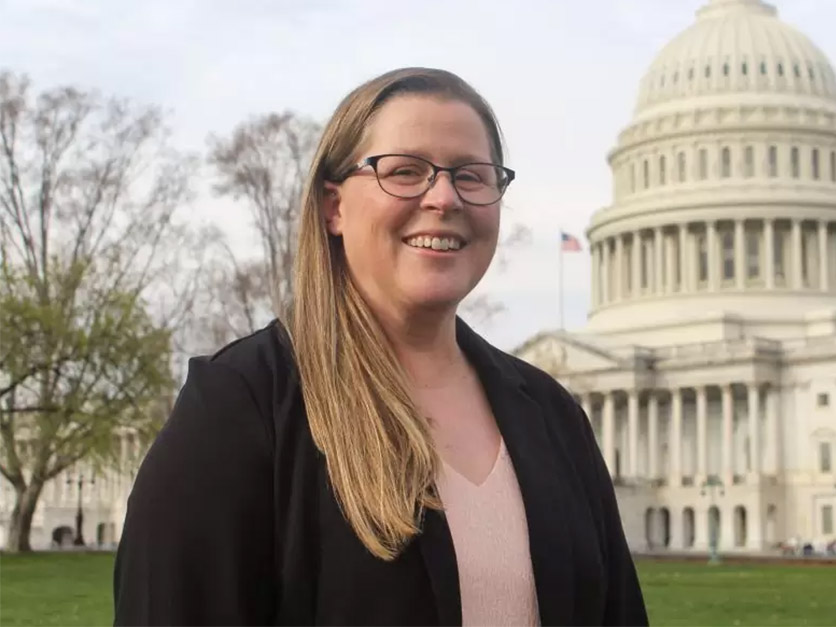
“NACD appreciates Congress’ longstanding bipartisan support for CTA and conservation programs, and once again calls on appropriators to increase funding for CTA and reject any cuts to farm bill programs,” said NACD President Kim LaFleur. “It is critical that we provide producers and local conservation partners with the resources and tools required to be effective stewards of our country’s working lands.”
It is now more important than ever that federal spending legislation provides strong support for CTA as NRCS and partners work to administer recent investments in voluntary conservation programs, including the Environmental Quality Incentives Program and Conservation Stewardship Program. The letter also urges Congress to reject any changes in mandatory spending for these conservation programs to address the current backlog and to help an increasing number of producers voluntarily implement conservation of their lands.
Read the full letter here.
| NACD'S NORTHEAST REGION RELEASES RESOURCE LIBRARY FOR DISTRICTS | |
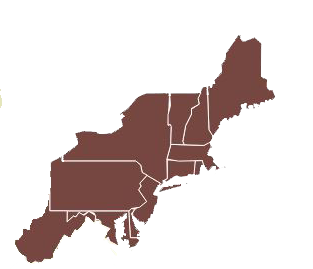
NACD's Northeast region has released a resource library of materials and resources from across the region, examples that conservation districts could utilize as references for communicating about their own work. Included in the library is everything from presentation examples on year-end report outs, templates for crafting testimony, example invitations to state decision makers for district events, and a variety of one-page visual materials highlighting how to condense so much great work into an easy to reference one page document.
The work has been led by the northeast capacity building communications committee, which was established to address the the need for sustainable funding for conservation and addressing climate change mitigation and resilience in the region. The library was created to help districts best communicate these priorities to their audience - being state decision makers, funders, and partners.
These efforts began in April 2018, when representatives from across the conservation partnership in the northeast met in Tarrytown, NY to examine their current activities and assets. Participants shared their best practices and discussed their visions for the future and drafted potential actions. With the significant interruptions to work in 2020 and staffing changes across the partnership, the work slowed until it was revisited in November 2021.
The region still felt strongly about the importance of these efforts and following a work session at the region meeting in 2021, several workshops were planned and led in 2022 which resulted in the 2022 Capacity Building Report. This chapter of the work aims to reprioritize what is most needed at the regional level for this effort to be successful with an eye towards sustainability and making sure participants have the support they need to be able to engage.
Read the 2022 Capacity Building Report here.
The resource library is available to all and will continue to grow as materials are added. Next steps this year will include beginning to address the next identified action: climate change mitigation and resilience for a state decision maker, funder, and partner audience.
| NACD PRESIDENT KIM LAFLEUR SHARES OP-ED ON CONSERVATION IN THE FARM BILL: NO ONE SIZE FITS ALL | |
Every five years, Congress works to pass a farm bill to determine our country’s path forward on food, agriculture, and conservation policy. The bill impacts rural and urban communities and economies, food security and sovereignty, human health, and the environment and climate. The conservation title of the upcoming 2023 farm bill will be critical to improving and expanding access to voluntary, incentive-based conservation across the country.
Conservation has never been more important. Stakeholders across the food system – from producers, non-governmental organizations, corporations, and governments – recognize the importance and impact of land stewardship. Conservation and sustainable production practices reduce harmful emissions, improve soil health and productivity, enhance water quality, and increase resilience. By regenerating, not exhausting, our limited natural resources we can advance food security, maintain productive lands for generations to come, mitigate climate change and generate critical environmental outcomes.
However, there are no “one-size fits all” solutions. An effective conservation delivery system relies on grassroots, locally led, voluntary initiatives. America’s 3,000 conservation districts convene community stakeholders in all parts of the country to identify, prioritize, and tackle their most critical natural resource issues. They work with farmers, ranchers, and forest stewards to design and implement the most effective system of practices – such as no-till, cover crops, filter and buffer strips, and restoring native plants – that promote sustainable land use and protect natural resources for future generations.
As the President of the National Association of Conservation Districts (NACD), I represent this incredible network and ensure that their voices are heard by lawmakers and conservation leaders. Any legislation impacting local communities must be equitable, inclusive, and shaped by grassroots advocacy. This past March, more than 250 conservation district leaders convened in Washington, DC to ensure that their elected leaders understand not only their needs, but also the local and national importance of their conservation efforts, and their role in safeguarding food security and achieving lasting environmental outcomes. Our members traveled from as far as Hawaii and Guam to advocate for bolstering the locally developed and led approach to conservation.
The past year has been historic for conservation and there are more important developments on the horizon. The Inflation Reduction Act (IRA) provides $18 billion for conservation programs and $1 billion for conservation technical assistance. These investments answered a longstanding call from NACD to bolster these highly effective programs that were only able to support one in every three producers that applied. NACD is also a recipient of a Partnerships for Climate Smart Commodities grant and will be working with producers to scale sustainable production systems and facilitate access to growing climate-smart markets. All of these investments can produce a substantial return in the form of clean water, air, and productive lands, as well as more efficient and sustainable production methods.
Read the full article in Agri-Pulse.
| DOD GIVES REPORT ON REPI PROGRAM TO CONGRESS | |
On April 5, 2023 the US Department of Defense (DOD) gave their annual report to congress on the Readiness and Environmental Protection Integration (REPI) Program. The REPI program addresses a critical need to mitigate encroachment pressures that negatively impact the military’s operational capabilities at installations across the United States. Since 2003, the REPI program has leveraged over $1.13 billion in non-Department partner contributions to conserve more than 1.18 million acres of land at 120 locations across 35 states and territories. In 2020, NACD became an implementation partner with DOD on the REPI program. NACD’s partnership increases local capacity around DOD installations by utilizing Conservation Districts to effectively engage private landowners and adding additional outreach efforts to build public-private partnerships and emphasize the historical role that DOD plays in managing and sustaining these important natural resources. Since the inception of this partnership, NACD has established additional program partnerships in Morrison County, MN, Thurston County, WA, Guam, and Hawaii.
This presentation highlighted the successes of the REPI program in 2022, including protecting over 345,000 acres nationally, establishing eight new projects at DOD installations including in Guam and Hawaii, and featuring three outstanding case studies. One, implemented by Marine Corps Installation East at Camp Lejeune in North Carolina, preserves buffer land along the Atlantic coast, resulting in over 9,766 acres of conservation easements and 14,994 acres of natural resource management. Another, in partnership with the Georgia Forestry Commission, working on the Georgia Sentinel Landscape, increases prescribed fire efforts within REPI boundaries, benefitting agriculture and forestry, coastal resiliency, watershed health, and gopher tortoise habitat. The last case study highlighted the work on Joint Base Pearl Harbor-Hickam in partnership with the Hawaii Department of Land and Natural Resources. This project focuses on ungulate-proof fencing to restrict feral pigs, and invasive plant removal to protect native forest ecosystems.
The next REPI webinar will be held on April 26, 2023 at 1:00 p.m. ET to recognize the 10-year anniversary of the Sentinel Landscapes Partnership and will present milestones and accomplishments achieved through this partnership. For more information and to register for upcoming REPI webinars, please visit this webpage: https://www.repi.mil/Resources/Webinars/. For more information on the REPI program, visit the program homepage: https://www.repi.mil/. View the full 2023 REPI Report to Congress here.
| LAST CHANCE TO GRAB 2023 ANNUAL MEETING APPAREL | The Limited Edition 2023 Annual Meeting apparel items will only be available on the NACD Marketplace through April 30, 2023. The hats, polos, and jackets are a fantastic way to show "I was there!," even if you weren't. All purchases through the Marketplace support NACD. These items and others are available here. | |
NACD Seeks Director of Finance and Operations | |
NACD is seeking a Director of Finance and Operations that will be responsible for managing the financial, operational, and human resource functions of the association. This position will be based out of the NACD headquarters office in Washington, D.C. The full position description can be found here.
Interested candidates should apply by April 14 to receive priority consideration.
| NACD Welcomes NACD-NRCS Liaison |  | |
NACD is excited to welcome Michael Watson into the newly established NACD-NRCS Liaison role. He will serve will serve as a key link between NACD and the USDA-Natural Resources Conservation Service (NRCS) to facilitate coordination and communication on respective programs, services, and priorities.
Watson comes to this role from Georgia NRCS where he has served as Assistant State Conservationist for Field Operations since 2002. Prior, he served as Acting Assistant State Conservationist for Management and Strategy in North Carolina, Acting Assistant State Conservationist for Operations and Acting State Administrative Officer in Georgia, and Acting State Conservationist in New Hampshire, among many other distinguished roles within the agency.
Watson has extensive experience working with conservation districts and core partners across the country and brings this wealth of experience and knowledge of our national partnership to the NACD-NRCS Liaison role. He is an engineer by education and training with a Bachelor of Science in Civil Engineering from North Carolina Agricultural & Technical State University.
Watson will be based in Washington, D.C., splitting his time between the USDA and NACD headquarter offices. He can be reached at michael.watson2@usda.gov.
| |
Support NCF
this Spring!
| |
The National Conservation Foundation (NCF) is asking you, conservation leaders, to support the advancement of programs and partnerships to deliver locally-led conservation solutions and to develop the next generation of conservation leaders through their spring fundraiser. The campaign aims to raise $25,000 for conservation education by the end of April!
Your financial support is needed to help programs like the NCF-Envirothon and the Next Generation Leadership Institute (NGLI) continue to shape the next generation of conservation leaders that will bring solutions to the table.
| Answer Forestry Survey on Carbon Sequestration | |
Cambridge University is conducting a survey to uncover and rank the main factors affecting adoption of forestry methods that promote carbon sequestration through federal assistance programs.
They are attempting to answer two specific questions over the course of these surveys: 1) Why aren’t more landowners applying for government grants to convert their land for forest carbon offsets?; and 2) Which policies could improve participation in USDA programs for forest carbon offsets?
Complete the survey here.
| USDA Awards Innovations in Climate-Smart Ag, Soil Health, and Nutrient Management | |
The U.S. Department of Agriculture (USDA) recently announced they are investing $40 million this year for 31 new projects through its Conservation Innovation Grants (CIG) program, one of the ways USDA brings together partners to develop innovative approaches to climate-smart agriculture. Additionally, USDA is announcing a $19 million investment in two projects focused on nutrient management funded through the Regional Conservation Partnership Program (RCPP), and two new formal partnerships to further nutrient management implementation.
Read their full announcement here.
|
Promote your conservation district or state association's tree sale, annual meeting, webinar, field day, or other events on NACD's Calendar of Events!
| |