Elmo Peeler Note-for-Note Piano Transcriptions |
|
|
Greetings!
Today is the first day of August and time again for my monthly newsletter, to keep you informed of recent transcriptions and other news of the last month.
|
|
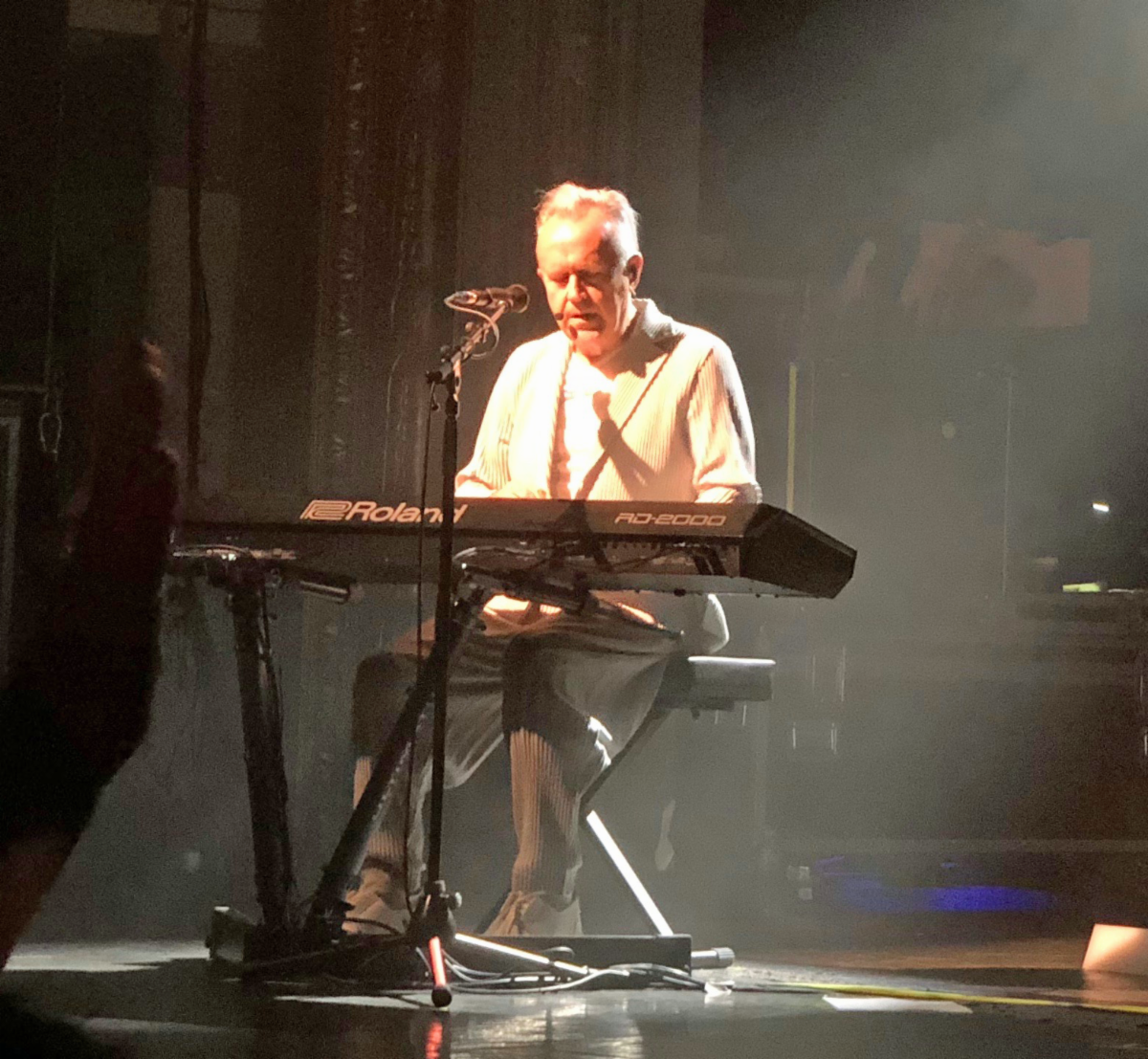
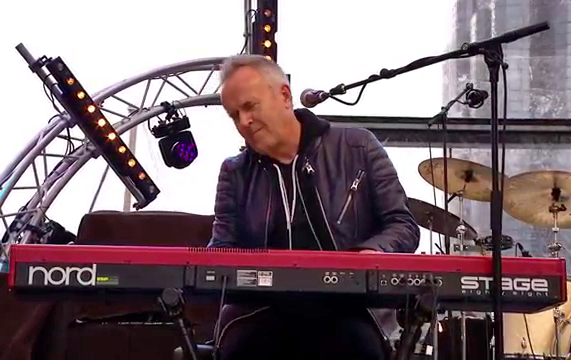
Howard Jones - "No One Is To Blame" |
|
This month I have three new transcriptions - each with an outstanding piano part.
One is of a beautiful song by Howard Jones, another is one of the greatest Motown-rhythm-section R&B recordings, and the third is a Bob Dylan classic as recorded by Leon Russell.
Plus, a new finger exercise to increase strength and independence of the fingers. This one is a bit challenging, and uses a fingering very similar to that used by Chopin himself.
Also this month the MIDI Corner and the Gospel Corner sections are included to help you find exactly what you need.
|
|
BTW, to make sure that my email doesn't end up in your Spam folder, please add me to your Contact list and/or mark my email as "Not Spam".
Note that every Title Heading is clickable.
|
|
ALL of the Sheet Music listed on my website has been personally transcribed by me, and guaranteed to be note-for-note perfect.
Whether you:
- have a cover band and want to get your keyboard parts exactly correct,
- are a professional who wants to study the styles of rock's greatest keyboard players, or
- are a hobbyist that wants to learn how to play pop/rock and great piano music,
...these note-for-note transcriptions will prove extremely helpful.
|
|
The United Kingdom, Detroit & Oklahoma
|
|
Born in 1955 in Southampton to Welsh parents, Howard Jones spent his early years in Rhiwbina, Cardiff, South Wales, where he attended primary and then grammar school. Young Howard began taking piano lessons at age seven and later attended the Royal Grammar School in High Wycombe, Buckinghamshire.The eldest of four boys, his brothers, Roy, Martin, and Paul, all became musicians. The family moved to Canada when he was a teenager. His first band was Warrior, a progressive rock group.
After returning to the UK, Jones attended the Royal Northern College of Music in Manchester in the mid-1970s while playing in various bands. He met Buddhist practitioner Bill Bryant, who wrote lyrics for some of Jones's songs and was a major influence during this period. The Jones brothers had a band called Red Beat in the late 1970s.
|
|
|
Jones appeared as a solo artist in local venues in High Wycombe. In 1983, he hired the Marquee Club in London and invited record labels to come and see him perform. After a BBC Radio 1 session, Jones obtained support slots with China Crisis and Orchestral Manoeuvres in the Dark before signing to Warner Music Group in mid-1983. He has cited eclectic influences such as Orchestral Manoeuvres in the Dark, Keith Emerson and Stevie Wonder.
His first single, "New Song", was released in September 1983, and he had four more hits over the next twelve months and a #1 album which went double-platinum, Human's Lib.
In 1985, Jones released his second studio album, Dream into Action, his most successful album worldwide, staying on the U.S. charts for almost a year. It included "No One Is To Blame", which was later re-recorded, featuring Phil Collins as drummer and producer, and performing backing vocals. This second version appears on Jones' U.S. EP, Action Replay, and also as a bonus track on the CD version of his subsequent LP One to One.
In July 1985, Jones performed at Wembley Stadium as part of the Live Aid concert. BTW, yours truly had the good fortune to have also performed at Wembley Stadium about ten years later as conductor/arranger/keyboardist for Rod Stewart during our "Unplugged" tours. Am not sure of Howard Jones' ticket sales there, but the Rod Stewart concert at Wembley set an attendance record of 82,500. I remember it well, in part because it was on my birthday. Rod's background singers (Joey Diggs, Lamont Van Hook & Fred White) serenaded me with their a cappella version of "Happy Birthday".
Thirty years later Howard Jones performed a beautiful vocal-and-piano-only version of "No One Is To Blame" on The Ken Bruce TV Show on June 5, 2015 in Glasgow, Scotland. Click here to view it. That is one of this month's brand-new transcriptions.
My new Howard Jones transcription:
|
|
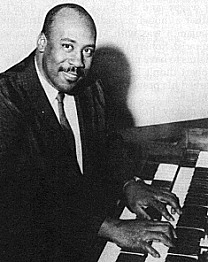
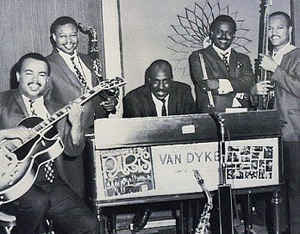
Earl Van Dyke, aka "Chunk of Funk" |
|
Born in Detroit in 1930, Earl Van Dyke went on to become perhaps the best R&B pianist in history.
His father was a classical violinist who worked at the Ford Motors factory. Earl started playing piano at age five and took lessons at the Detroit Conservatory of Music.
He began playing professionally as a teenager and hanging out with the likes of Yusef Lateef, Tommy Flanagan, Roland Hanna, Kenny Burrell, and Hank Jones, getting a gig here and there.
In between factory work, sporadic playing jobs, and two stints in the Armed Services, Van Dyke caught tuberculosis and spent two and a half years in a veterans administration hospital.
He was hired to replace departing organist Jimmy Smith in Chris Columbo's band.
|
|
While touring with Lloyd Price ("Personality," "Stagger Lee"), Van Dyke met fellow Detroiter James Jamerson in Rockville, NY, in 1959. The phenomenal bassist was backing another Detroiter, singer Jackie Wilson. Jamerson had been recording for an upstart label called Motown Records headed by a young songwriter/producer named Berry Gordy, who had written all of Wilson's hits to that point.
Jamerson enthusiastically encouraged Van Dyke to move back to Detroit and become part of something that was going to be big. Van Dyke didn't decide to join Motown until 1962, with the help of a solid 150 dollars a week job offer from Mickey Stevenson of Motown's A&R department. Well, not exactly 150 dollars a week. Just after joining the label, Van Dyke's "pay" for a session was a bowl of soup. He also saw that he wasn't the only piano player on the block. There was Motown's first pianist Joe Hunter and pianist Johnny Griffith. When Hunter left Motown in 1963, Stevenson named Van Dyke the bandleader for the Funk Brothers.
Once the march of the Motown hits began, Van Dyke and the rest of the band were on call 24 hours a day, every day of the week. All-day recording sessions became common with a few scant hours left to maintain family and personal relationships, relax, or keep their chops up by playing jazz at the Twenty Grand Club, Phelp's Lounge, and their favorite after-hours haunt, the Chit Chat Club. Sometimes their set would be interrupted by a Motown producer arriving and saying that they needed the band for a impromptu recording session and they'd reluctantly go to the recording studio to lay tracks in the pre-dawn hours. The band became so tight that the label would have them record rhythm tracks (no singers, not even an actual song) and would later add vocals to them after a song had been written to fit the tracks. In some instances, a band member would have a part that he created replaced and recreated by a vocal line or riff.
Although Motown was having hit after hit, the Funk Brothers' pay didn't increase; so Van Dyke started a musician's strike during a 1965 European tour when the band was asked to play backing tracks for Motown acts appearing on a British television show. Originally, they had been told that the acts were all going to lip-sync. After that incident, Van Dyke was looked upon as a spiritual sage, big brother, and a parental figure by the rest of his fellow Motown studio musicians.
By 1967, Van Dyke and company were getting paid better than ever. Just that previous year, Van Dyke had made $100,000 from Motown and his outside work. Though the musicians were now paid well for their services, they were still well below union scale. Because this was a commonly known fact in the Detroit music community, several music entrepreneurs, took advantage of the situation and offered the band more money, leading to the Funk Brothers being heard on a lot of backdoor sessions, including "Cool Jerk" by the Capitols - this month's brand-new transcription.
Unfortunately by 1991 Van Dyke developed a debilitating case of carpal tunnel syndrome and had to quit playing. The following year, at the age of 62, Van Dyke died of prostate cancer at Harper Hospital in Detroit.
His legacy to R&B music is huge, and fortunately he left many amazing tracks behind that will last forever. Even though many pianists may not know his name, they'll be inspired by and learn from his recordings.
My new Earl Van Dyke transcription:
|
|
|
|
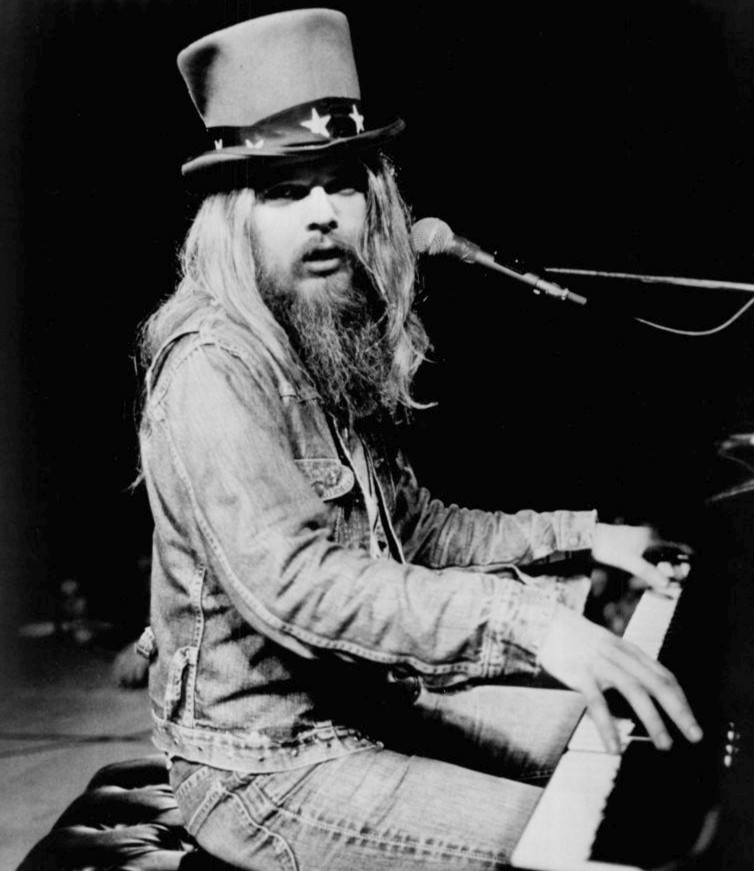
Born in Oklahoma in 1942 as Russell Bridges, young Russell began playing piano at the age of four.
He attended Will Rogers High School in Tulsa, Oklahoma in the same 1959 class as David Gates ('Bread'). He and Gates played and recorded together as the Fencement.
At 14 Leon was already performing in Tulsa nightclubs. "Oklahoma was a dry state and consequently there was no liquor laws, and I was able to take advantage of that by playing in nightclubs at the age of 14. It was real handy."
At 17, in 1958, Russell moved from Tulsa to Los Angeles, where as a first-call studio musician he played on many of the most famous recordings of the 1960s.
When Leon began working with Joe Cocker in 1969, he was already a veteran of the L.A. studio scene, a member of 'The Wrecking Crew', playing on many of Phil Spector's 'wall-of-sound' hits, plus hits by The Byrds, The Beach Boys, Jan & Dean, Gary Lewis & The Playboys, Bobby 'Boris' Picket, Herb Alpert, Frank Sinatra, Glen Campbell and many others. |
|
In 1970 Leon Russell was at his pianistic peak, recording his eponymous album, Leon Russell, and then releasing his Leon Russell and the Shelter People album the following year. If you want to hear Leon at his swamp-rock best, it's hard to beat that time period and those two albums. During that time he also recorded his own version of Bob Dylan's classic song, "It's All Over Now, Baby Blue". However, it was not released until 1989, almost two decades later, when it appeared as a bonus track on the CD re-issue of Leon Russell and the Shelter People in 1989. |
|
My Leon Russell transcriptions:
|
|
August's New Transcriptions - Howard Jones - "No One Is To Blame", The Capitols - "Cool Jerk" & Leon Russell - "It's All Over Now, Baby Blue"
Note-for-Note Accuracy
|
|
Earl Van Dyke & The Funk Brothers |
|
There are three brand-new transcriptions available this month, all with excellent piano parts.
My own favorite is the extraordinary piano track on The Capitols' "Cool Jerk", played by the Motown R&B genius Earl Van Dyke.
And it's hard to find a prettier piano part than Howard Jones' lovely "No One Is To Blame".
And Leon Russell's piano track on Bob Dylan's "It's All Over Now, Baby Blue" is yet another classic Leon Russell track - my third in three months.
"Cool Jerk" is simply one of the most dance-able records ever, propelled by the amazing piano part.
|
|
Even before the drums come in, the bass guitar and piano kick off the song, setting forth the syncopated, foot-tapping 'groove'. And even though the piano has already been a prominent part of the recording since the beginning, halfway through the song the piano is given a solo when the singer says, "Now give me a little bit of bass with those 88's". And those ivories just intensify - an amazing piano track. |
|
As for Howard Jones' "No One Is To Blame" - one of Jones' pianistic strengths is his control, i.e., his ability to bring out the top melody line while subordinating the 'accompaniment', both in the Right Hand. Another strength is his chord voicings, e.g., his use of Dsus2, E7sus4 and E7(no 5) chords. This gives him a different piano 'sound' than the vast majority of rock pianists, who use less creative voicings. All in all, he has a very impressive piano style that sounds simple at first listen but upon closer examination reveals itself to be quite evolved/sophisticated - a very talented musician indeed, not just an outstanding songwriter. |
|
Leon Russell's version of Bob Dylan's classic "It's All over Now, Baby Blue" includes Leon's crushed-grace-note technique, where he'll hit a three-note cluster, and then immediately release two out of the three notes - just one of his important swamp-rock techniques. It also includes his use of a modified "IV-chord bump" technique where he substitutes a suspended chord for the IV-chord in the 'bump', plus his excellent left-hand octaves and other Leon pianistic 'goodies'. |
|
For Strength and Independence of the Fingers
|
|
|
|
One of the best ways to increase strength and independence of the fingers is to practice double notes, i.e., two notes played simultaneously with one hand.
This is an exercise in playing a chromatic scale in minor thirds using only the Right Hand - both ascending and descending.
Fingering is included, which is based upon Frederic Chopin's own suggested fingering for his Etude in Thirds. Chopin dared to think outside the box in the early 19th century and used fingerings that had never been used before. In doing so he advanced piano technique to a new level.
|
|
Whether you prefer playing classical, jazz or rock, this new exercise should help you to improve your chops.
This exercise is available as both a sheet-music PDF and as a MIDI file.
BTW, if you need other good, effective technical exercises, please check out the other 89 exercises available.) |
|
(to listen to it, click here) |
|
The Hangout Place for Gospel Classics
|
|
You don't have to be from the Deep South to love Gospel piano, nor do you need to belong to any particular religion. All you have to have is a love for wonderful old-time, swinging, uplifting piano-playing.
Leon Russell, Billy Preston, Richard Tee and Ray Charles, some of the greatest keyboard players ever, loved the style and infused their own performances with Gospel licks and rhythms.
Inspired by the wonderful playing of the portly Associate Pastor/Musical Director of my childhood's Baptist Church deep in the piney woods of Mississippi, in recent years I've transcribed and/or arranged a few Gospel classics.
This little corner of my newsletter is where I'll keep you informed of my latest efforts to share that old-time Gospel sound.
Here are my Gospel transcriptions and/or arrangements, plus some exercises:
Full-blown Gospel:
Heavily Gospel Influenced:
Moderately Gospel Influenced:
Gospel-related Exercises:
|
|
Helpful for Those that Don't Read Sheet Music Well
|
|
Most of my transcriptions have heretofore been available only as sheet music in PDF's. That is gradually changing - some are now also available as MIDI files, which can be especially helpful for those that would prefer to listen to them than to read the sheet-music notation.
This section of my newsletter is where I'll keep you informed of which transcriptions and exercises are available as MIDI files.
BTW, if you'd like my sheet music in a MIDI file, just let me know which one(s).
Here are the currently available MIDI files of my transcriptions, arrangements, and exercises:
MIDI Files of Rock & Pop Transcriptions:
MIDI Files of Exercises:
|
|
If you're using a vintage synthesizer, please check out our synth patches here.
These are the most highly-organized and best-sounding synth patches available anywhere, guaranteed. Get the most out of your vintage hardware with these large patch libraries:
Ensoniq
Kawai
Korg
Roland
Yamaha
Even if you don't use the actual hardware synthesizers, there are software emulations that will allow you to play these patches on your computer, as VSTI's in your sequencer. These include:
Korg Legacy Digital Edition (for M1 & T1 synths)
Native Instruments FM8 (for DX7 synths)
Aurora FM (for DX7 & TX81Z synths)
SQ8L (for ESQ-1 synths)
|
|
I've had the good fortune to have taught some of the biggest names in the entertainment industry, and if you're serious about learning, I'll be happy to help you, too.
By means of Skype lessons (or in-person if you're in L.A.), I can coach you and help you to improve your technique, your rhythm, your ability to improvise, your knowledge of music theory, your sight-reading, and to develop relative pitch.
|
|
- The Beach Boys
- Rod Stewart - All 'Unplugged' Concerts
- Ricky Nelson - Stone Canyon Band
And I've also won classical piano competitions performing Beethoven, Rubinstein and Saint-Saens' Piano Concerti. See me playing here. "Josie's Boogie" is quite the virtuoso dramatic minor-key showpiece; check out the ascending double-octave run at the ending... :)
Thanks to the internet, I can help you play piano better - rock or classical, by ear or by note.
Or if you live near the Hollywood Hills and are willing to wear a mask, I'll teach you in my home.
1) Your musical background
2) Where you are currently, musically-speaking
3) Your musical goals
|
|
|
My students include members of:
- Weezer (Rivers & Brian)
-
Vampire Weekend (Ezra & newest addition, Greta)
- Incubus (Mike)
- The Strokes (Nick)
- Rooney (Robert)
-
Jason Schwartzman (Mozart in the Jungle)
- Courteney Cox
- Pablo Dylan
|
|
Franz Liszt - rocking out on
|
|
|
|
"Wow! I have always appreciated your work and this one (The Leon Russell Exercise) is no exception. Leon Russell's style is a touchstone for me and this exercise hits the bulls-eye. Thanks so much.
One of my favorite things about the exercise is the final chord, which I will henceforth call the "Leon Russell chord." I wish I had known about it decades ago when I was playing out more, because I would have used the heck out of it. It's wonderful for getting a dirty New Orleans sound. Thank you, thank you!!"
- Mark S.
|
|
|
Los Angeles, CA
323-650-6602
|
|
|
|
|
|
|
|