Trauma: What It Is, Why It Matters, and How We Can Respond
In Recognition of National Trauma Awareness Month
by Meagan Rico
Trauma is more common than many people think.
In fact, research shows that more than 70% of people worldwide experience at least one traumatic event in their lifetime (Kessler et al., 2017). That means trauma is not rare, but it is something that many of us carry, whether we openly talk about it or not.
From a public health perspective, trauma is not just a personal issue. Trauma affects children, families, workplaces, and entire communities.
What Do We Mean by "Trauma"?
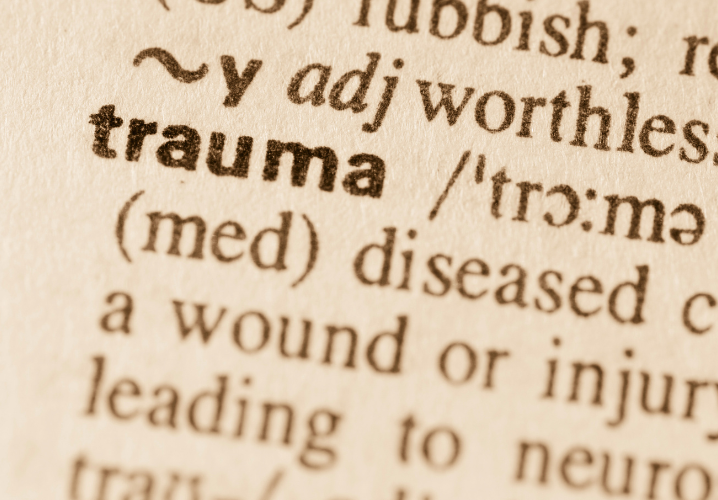
Trauma happens when an experience overwhelms a person's ability to cope.
This could be a single event, like a car accident, or ongoing stress, such as abuse, neglect, or living in an unsafe or unstable environment. For children, trauma is often studied through Adverse Childhood Experiences (ACEs). ACEs include things like abuse or neglect, exposure to violence, or household challenges like substance use.
These experiences can shape a person's health and well-being far into adulthood.
The Reality: Trauma Is Widespread
Trauma is not limited to one group of people; it cuts across all backgrounds.
Research indicates that about 60% of people report at least one ACE, and about 1 in 6 report four or more ACEs, which are linked to higher health risks (Madigan et al., 2023).
How Trauma Affects Health
Trauma does not just affect emotions; it affects the whole body. Studies have found that people with higher levels of trauma are more likely to experience depression and anxiety, substance use, chronic diseases, challenges with relationships, and challenges with daily functioning.
One breakthrough study found that people living with multiple ACEs were up to 12 times more likely to experience serious mental health challenges (Felitti et al., 1998).
This happens because trauma can disrupt the body's stress response system, especially when it occurs in childhood.
When we experience stress, the body activates a built-in alarm system, often called the "fight, flight, or freeze" response. During this response, the nervous system releases stress hormones, called cortisol and adrenaline. These hormones are great for helping us react quickly and help to keep us safe. In short bursts, this response is helpful and protective.
However, when stress is intense, repeated, or ongoing, especially during childhood, this system can become overactive. Instead of turning off after the danger passes, the body stays on high alert. Researchers often refer to this as toxic stress (Shonkoff et al., 2012).
Over time, this constant state of being on alert can do the following:
- Affect how the brain develops, especially in areas related to learning, memory, and emotional regulation.
- Increase inflammation in the body.
- Disrupt sleep, mood, and your body's ability to fight infection.
As you can see, this helps explain why early trauma is linked not only to mental health challenges, but also to long-term physical health conditions later in life (McEwen, 2007).
Trauma Is Also a Community Issue
Here is the part that we do not talk about enough: Trauma is not just about individual experiences; it is shaped by the conditions people live in.
Research shows higher rates of trauma among people facing poverty, housing instability, and limited access to resources (Madigan et al., 2023). This means that preventing trauma is not only about personal choice. Preventing trauma is also about building strong, supportive communities.
Healing Is Possible
Trauma can have lasting effects, but it does not have to define a person's future. People can and do heal.
Research consistently shows that supportive relationships are one of the strongest protective factors against the long-term effects of trauma. For kids, even one trusted adult or connection can make a meaningful difference.
Public health efforts need to continue to focus on:
- Creating safe and stable environments.
- Supporting families and caregivers.
- Increasing access to mental health care.
- Using trauma-informed approaches in services and systems.
What This Means For All of Us
Understanding trauma helps us respond with empathy instead of judgment. You do not have to be a healthcare professional to make a difference. Small actions matter, so you could try to help by practicing listening without judgment, being patient with others (and yourself), supporting your family and neighbors, and connecting people to local resources.
When we recognize how common trauma is, we can start to build a community that supports healing. Because at the end of the day, trauma may be common--but so is reslience.
References (APA 7th Edition)
Felitti, V. J., Anda, R. F., Nordenberg, D., Williamson, D. F., Spitz, A. M., Edwards, V., Koss, M. P., & Marks, J. S. (1998). Relationship of childhood abuse and household dysfunction to many of the leading causes of death in adults: The adverse childhood experiences (ACE) study. American Journal of Preventive Medicine, 14(4), 245–258.
Kessler, R. C., Aguilar-Gaxiola, S., Alonso, J., Benjet, C., Bromet, E. J., Cardoso, G., … Koenen, K. C. (2017). Trauma and posttraumatic stress disorder in the World Mental Health Surveys. European Journal of Psychotraumatology, 8(sup5), 1353383.
Madigan, S., Deneault, A. A., Racine, N., Park, J., Thiemann, R., Zhu, J., Dimitropoulos, G., & McDonald, S. (2023). The prevalence of adverse childhood experiences: A systematic review and meta-analysis. Child Abuse & Neglect, 137, 106012.
McEwen, B. S. (2007). Physiology and neurobiology of stress and adaptation: Central role of the brain. Physiological Reviews, 87(3), 873–904.
Shonkoff, J. P., Garner, A. S., & Committee on Psychosocial Aspects of Child and Family Health. (2012). The lifelong effects of early childhood adversity and toxic stress. Pediatrics, 129(1), e232–e246
Webster, E. M. (2022). The impact of adverse childhood experiences on health outcomes. Journal of Public Health Research, 11(1).
|