|
Water Quality Update for Friday, September 4th, 2026
by the Canandaiuga Lake Watershed Association
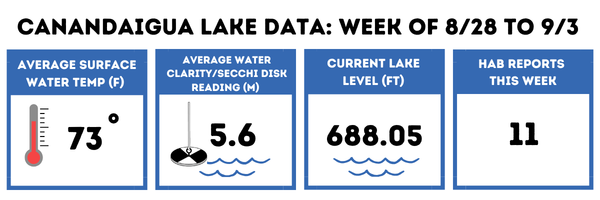
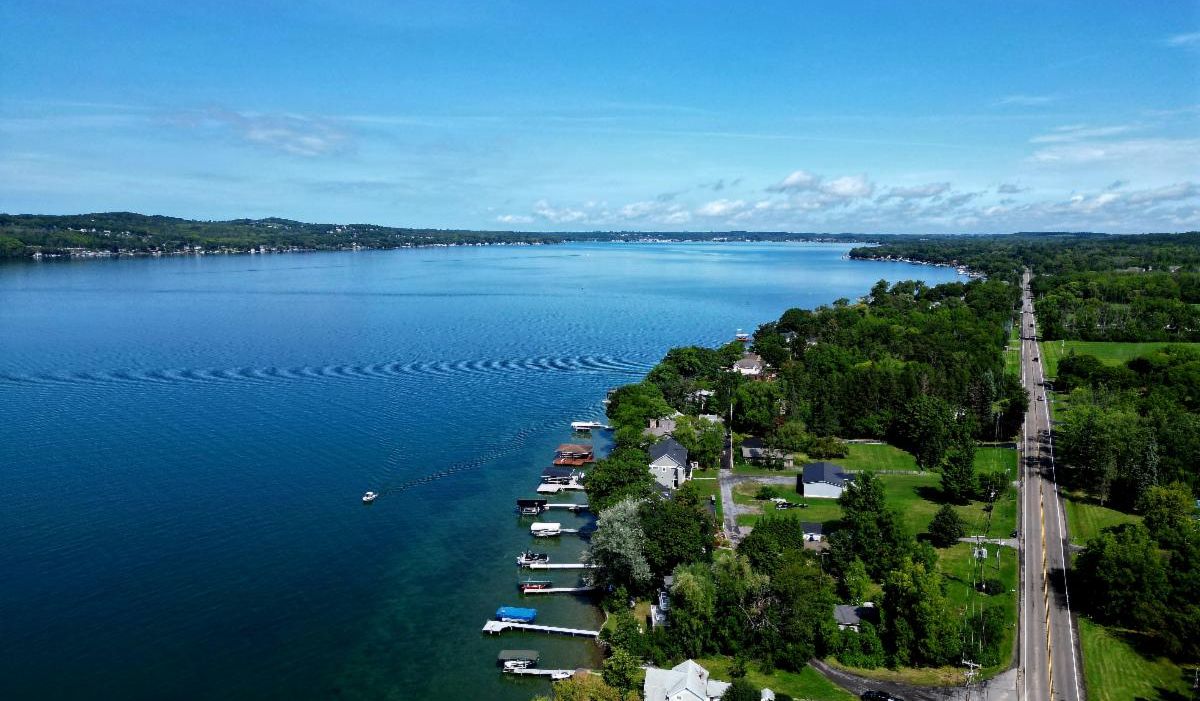
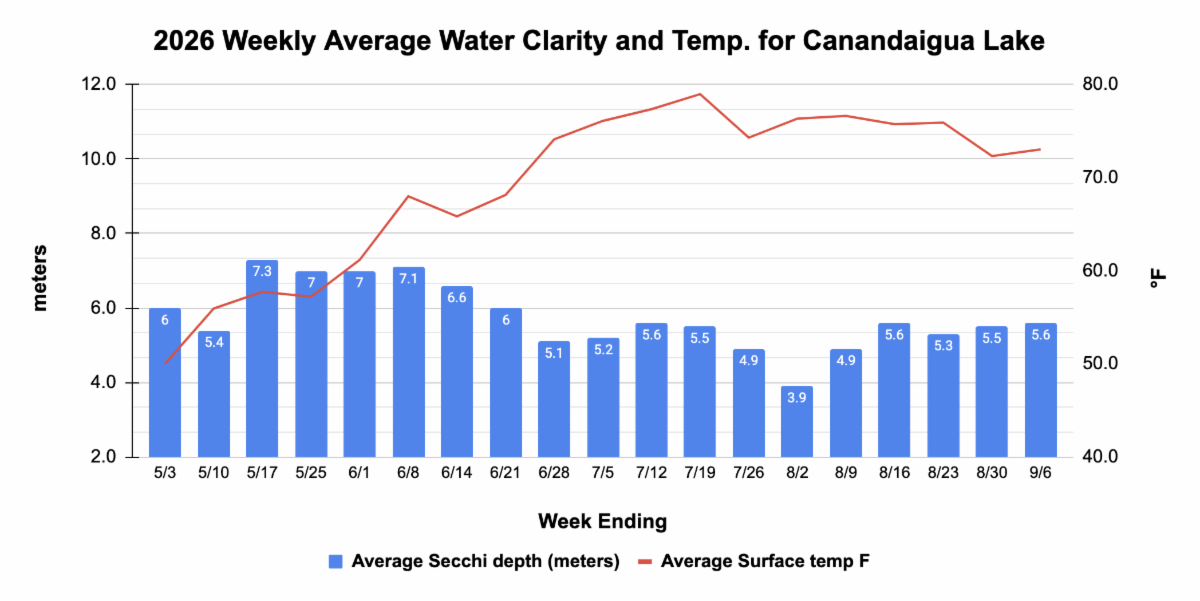
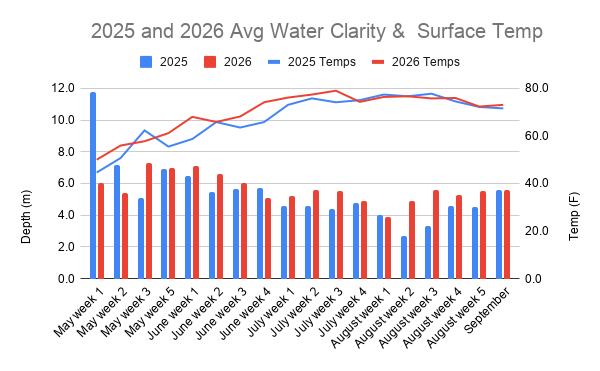
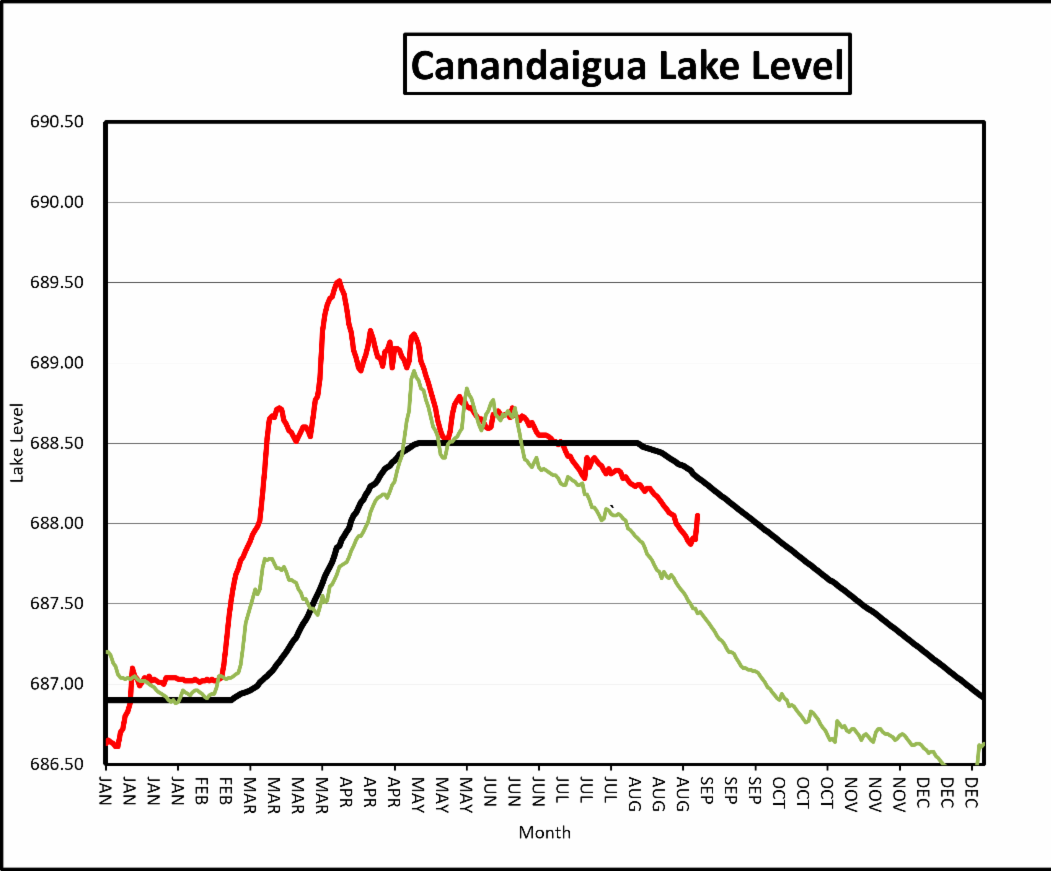
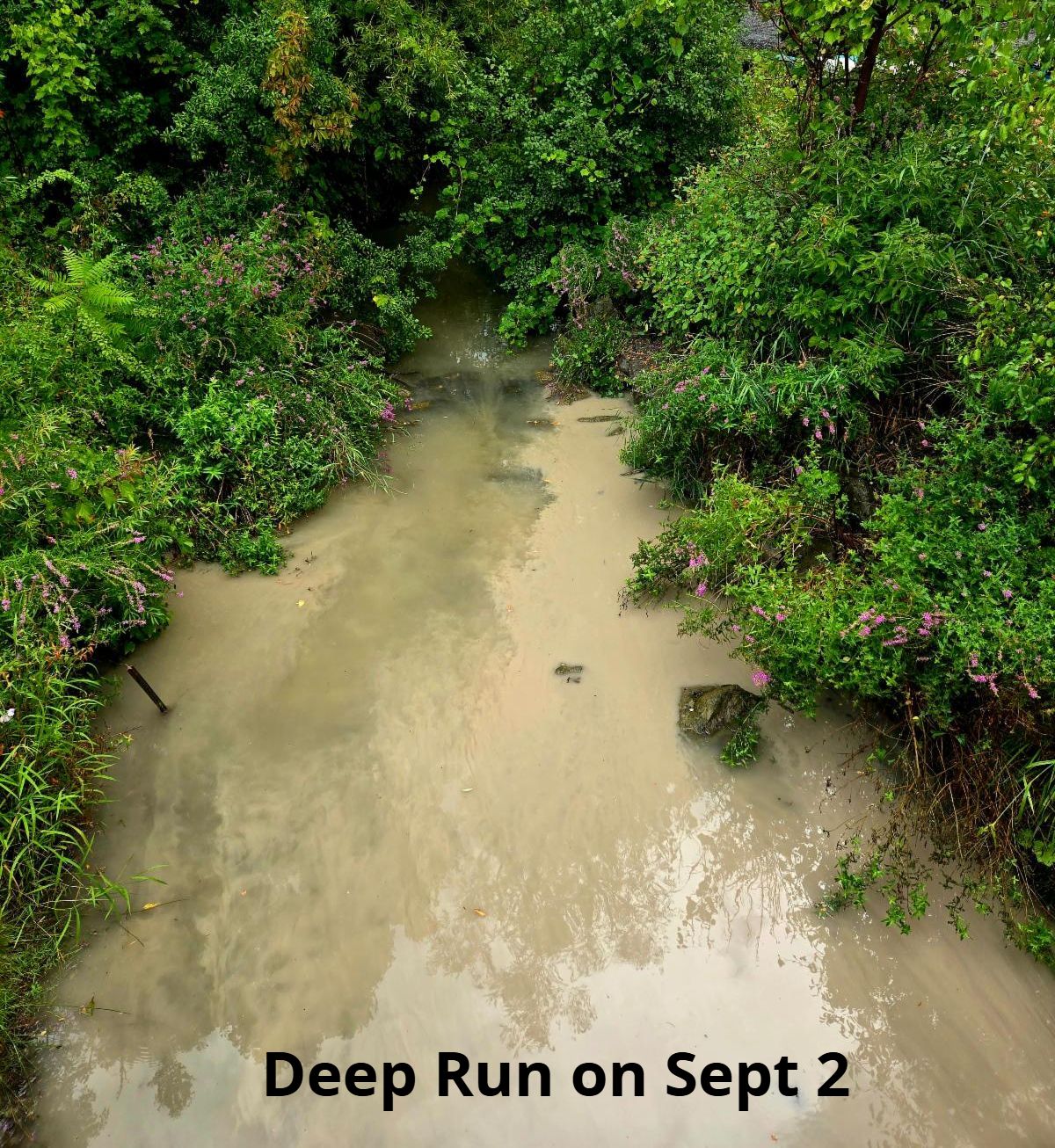
| | Did someone forward you this email? Click HERE to subscribe directly. | | The CLWA Weather Station is located at Canandaigua BoatWorks on the east side of the lake. | | This week's photo is the view north from Deep Run on Wednesday late morning after the rain cleared. | | This week we had quite the weather with rain on multiple days and a big lightning storm Wednesday night. Luckily Canandaigua faired better than other areas in our region - which had 5 confirmed tornados. Water clarity and surface temperature averages are about the same as last week - but lake level has increased a bit with all the rain. After the rain on Wednesday - hot, calm weather conditions in the afternoon brought numerous reports of harmful algae blooms around the lake. | | Weekly water clarity and temp data collected by our dedicated CLWA Citizen Science volunteers. You can see that average water clarity and surface temperature are about the same this week as last. | | How is 2026 comparing to 2025 so far? Average surface temps are just about the same right now as they were last year. Water clarity (measured by secchi disk depth) has seemed a bit better overall actually - but this week looks just about the same as this time last year. | Lake level has increased this week with the recent rain and is back where it was on August 24th. Currently both outlet gates are closed and the feeder canal gate is open at the required minimum - 0.25 ft open. There are a few different places you can find the lake level online. NOAA is one. Lake Levels online also has nice charts - where you can easily see the whole year and compare to the last few years. | | Lake leve chart provided by Canandaigua Water Resource Recovery Facility. The black line is the guide curve. The green line is 2025 lake levels - and the red line is 2026. Precipitation and evaporation greatly impact the lake level. | | |
In this weeks update:
- HABs Update
- Have you seen a freshwater sponge?
- Stream Flow and Nutrient Monitoring
- Upcoming events
| | |
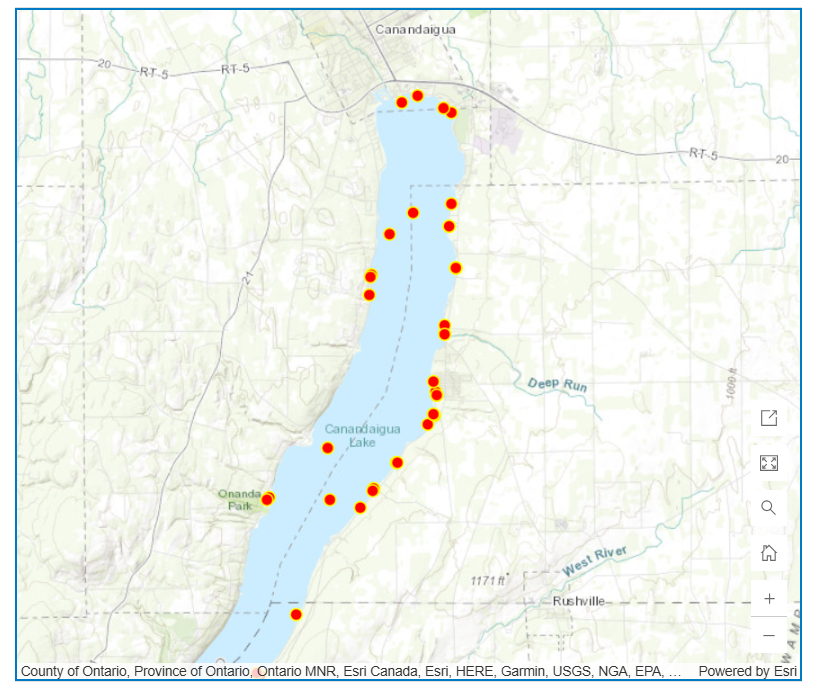
We had eleven harmful algae bloom reports come in this week. Our HABs map shows where reports have come in this season to date. Reports have come in mostly on the north end of the lake so far - on both sides - and also mid-lake - but are starting to work their way down south as the season progresses.
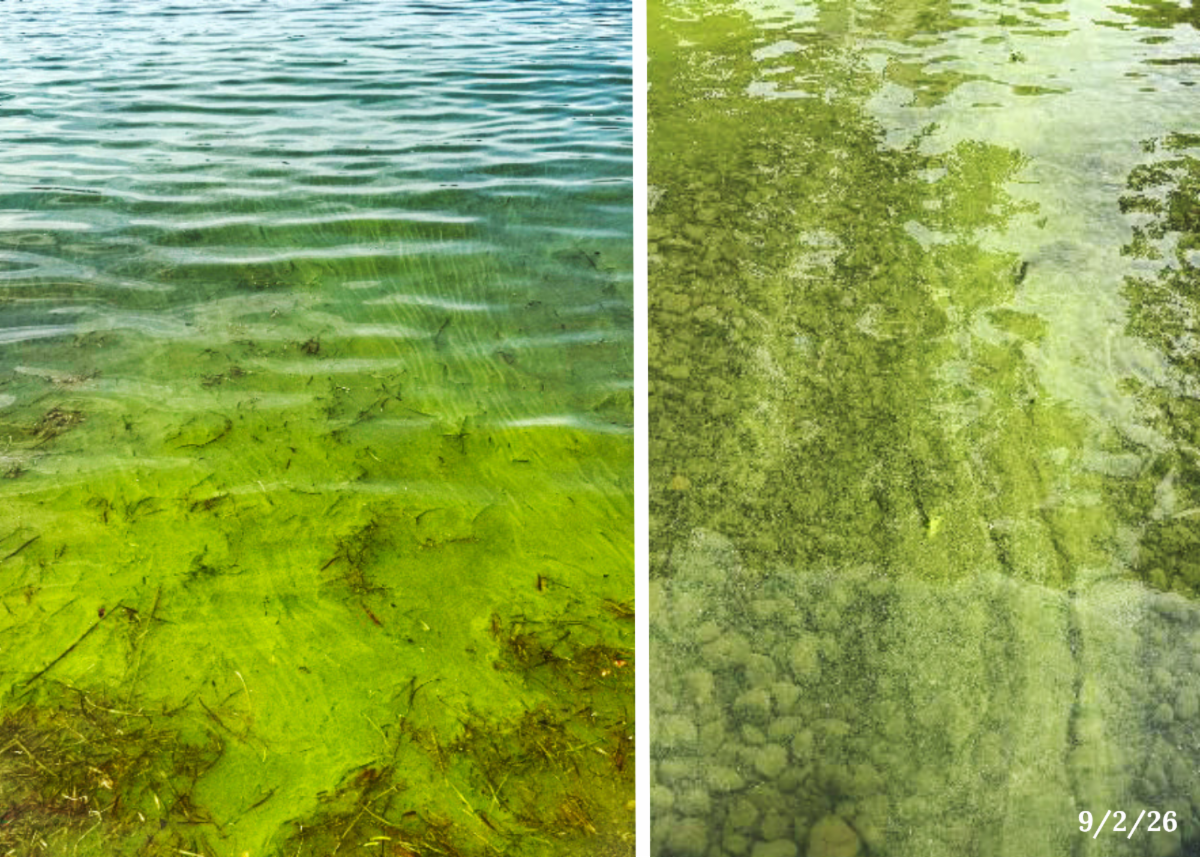
The photo below from this week's report looks much more concentrated - like spilled paint - than the less concentrated streaking reports from earlier in the deason. Typically September has been the worst month for HABs on the lake so our volunteers are staying alert and checking the shoreline as we move into the month.
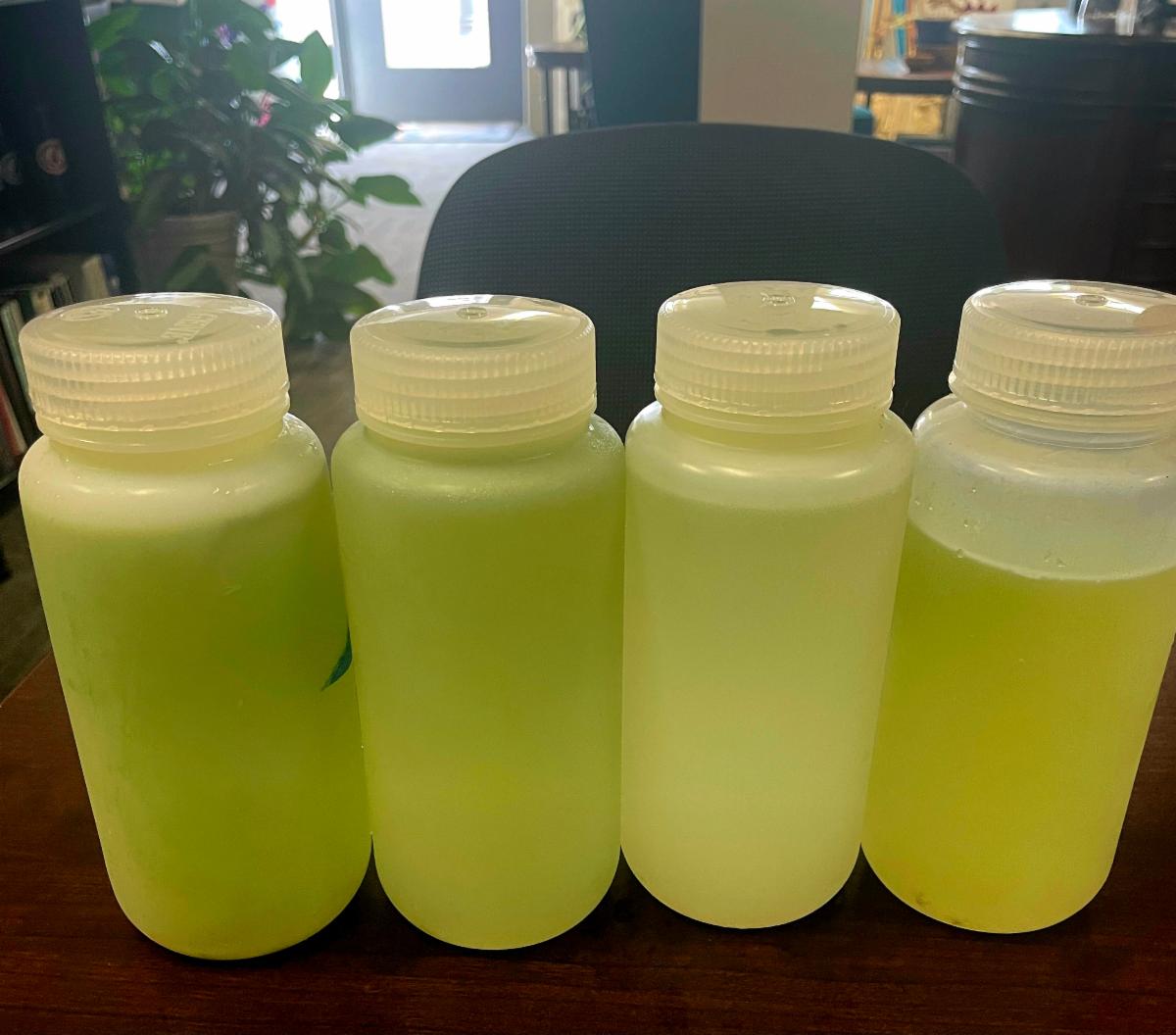
| | HABs samples collected by CLWA volunteer citizen scientists on Sept 2 and delivered to Finger Lakes Institute for analysis. The samples are tested to analyze their blue green algae chlorophyll levels first - and anything over 25 ug/L is considered a bloom by NYSDEC. For samples that meet the bloom threshhold, they are then analyzed for microcystin toxin levels as well. | | Confirmed bloom reports from volunteers have come in mainly from the north end of the lake so far this summer on both sides and also mid lake. The map is interactive on our website and you can click to view reported blooms to see their date and location details. | |
Remember: HABs are constantly changing.
They can appear, move, and disappear quickly. A bloom reported in one location does not mean that the entire lake is affected or that conditions are the same everywhere.
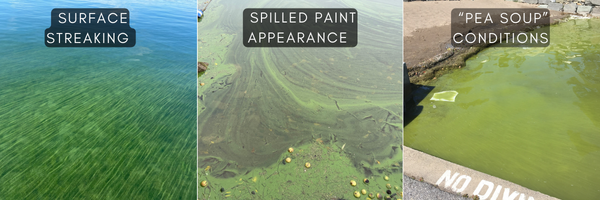
Our HAB map is a helpful tool for seeing where blooms have been reported, but it is not an exact, real-time picture of conditions across the lake. Before swimming, boating, or letting pets near the water, take a moment to look at the water where you are. If you see water that looks like spilled paint, pea soup, or has unusual discoloration or surface scum, stay out.
When in Doubt - Stay Out!
Knowledge is power! Knowing what HABs look like and staying informed can help you safely enjoy Canandaigua Lake all summer long. Stay observant, stay informed, and help us spread the word!
Scoll all the way to the bottom of this email for our general HABs reminders, resources, and ID info.
| | Meet Spongilla Lacustris: Your friendly neighborhood freshwater sponge | |
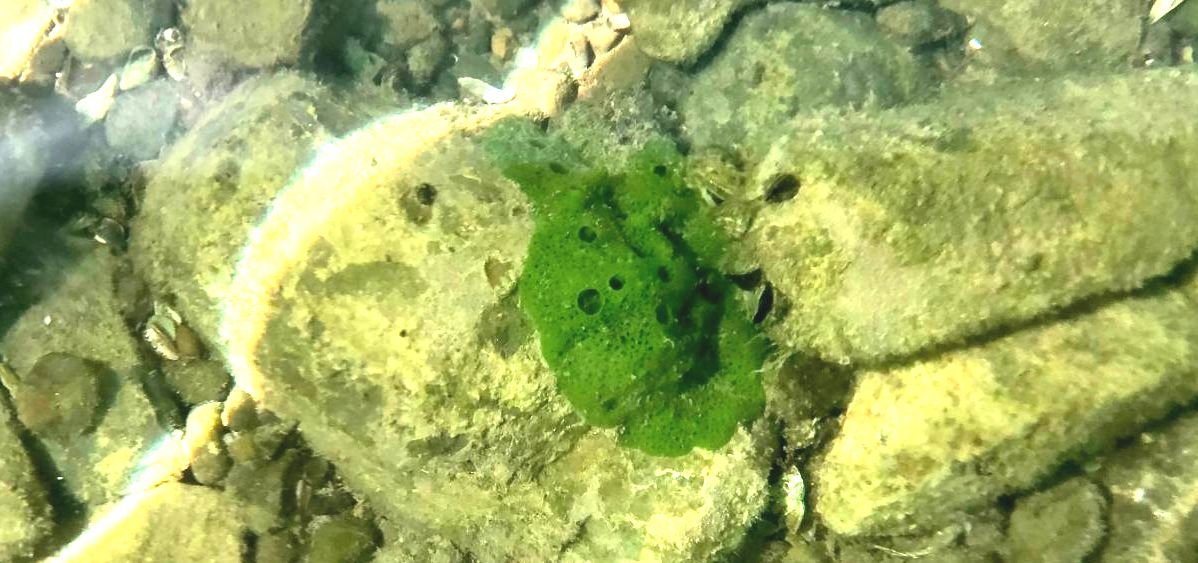
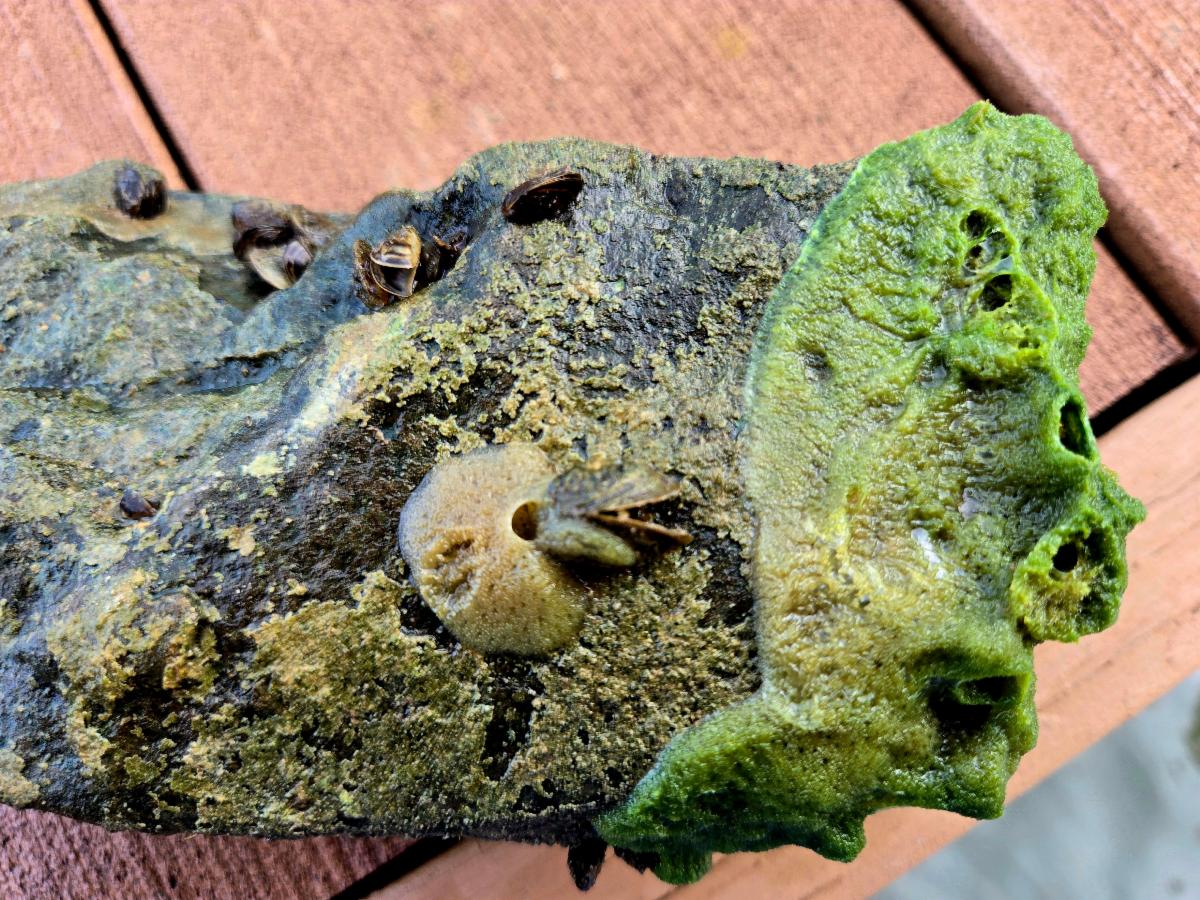
While out looking at the zebra mussels - or actually lack there of - along a member's dock pilings (more on that topic next week!) - CLWA's Emily DeBolt noticed this odd green blob growing in the water on a rock in shallow water near the dock. At first glance I assumed it to be some sort of benthic algae - but upon closer inspection - it wasn't slimy or hairy feeling at all - but rather a bit hard and bristly, even spongy feeling - and sure enough - it turns out to be a freshwater sponge - spongilla lacustris.
Lake sponge - or common freshwater sponge - can vary greatly in appearance - from a low crust like growth (like what I saw) to a tall, branching finger-like structure that looks a bit like a Halloween decoration. They can be white or tan or bright green - like the one I found. The green color comes from a symbiotic relationship with a tiny green algea (zoochlorellae) living inside the sponge. In return for the fuel from the algae's photosynthesis - the sponge protects the algae with its bristly skeleton. Up close under a miscroscope - our common freshwater sponge looks like a network of glass-like needles called spicules.
Lake sponges are bioindicators of a healthy aquatic ecosystem. They are highly sensitive to suspended sediment that could clog their microscopic feeding pores, suffocating them. They are also not tolerant of chemical pollutants are actually animals even though they look like plants. Have you seen a freshwater sponge growing in the lake? We would love to get a better idea of how common they are. Please reach out to Emily if you have ever seen one - you can just reply to this email to do so!
| Spongilla lacustris - a freshwater sponge - pictured growing on a rock on the east side of the lake - along with some zebra mussels. You can see that parts of the sponge are tan - and parts are green. The green areas have a tiny green algae living in symbiosis with the sponge. | Stream Flow and Nutrient Sampling Update | | |
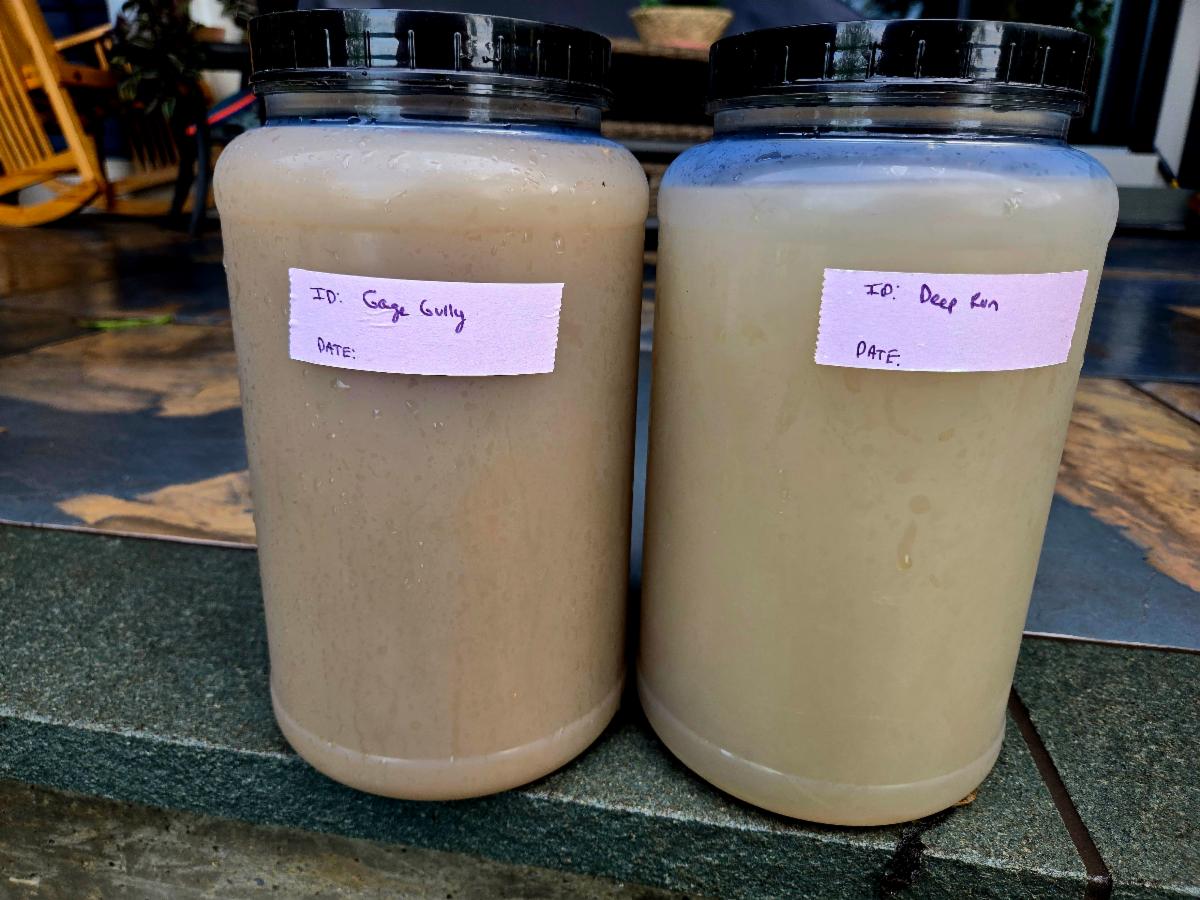
Our dedicated “Stream Team” was at it again this month, measuring stream flow and collecting samples at Gage Gully and Deep Run. As luck would have it, our baseline monitoring coincided with Wednesday’s rain, making this month’s sampling more of a storm event sample than a baseline measurement - but that’s okay! Samples were collected and delivered to the Finger Lakes Institute for laboratory analysis.
This project has two main components. First, measuring stream flow throughout the season will allow us to develop flow curves - a way to estimate how much water is moving through a stream based on its water level. Second, measuring nutrient concentrations will allow us to develop concentration-discharge curves, which help us understand how nutrient concentrations change as stream flow increases.
Once we have enough flow data to establish these relationships, we’ll be able to pair nutrient concentrations with the amount of water flowing through the stream to estimate how much phosphorus, nitrogen, and other materials are being carried into Canandaigua Lake - including on days when we don’t have a direct water sample.
Ultimately, this project will improve our understanding of nutrient loading from these two streams and provide valuable data that CLWA and our partners can use to help prioritize projects where they can have the greatest impact on protecting the lake.
Our upcoming Lake Reporter newsletter will feature a more detailed article about this project, so keep an eye out!
| | Both Deep Run and Gage Gully were pretty 'chocolate milk' on Wednesday morning after some heavy rain. These samples will be analyzed by the Finger Lakes Institute certified lab for phosphorus, nitrogen, and total suspended solids. | | |
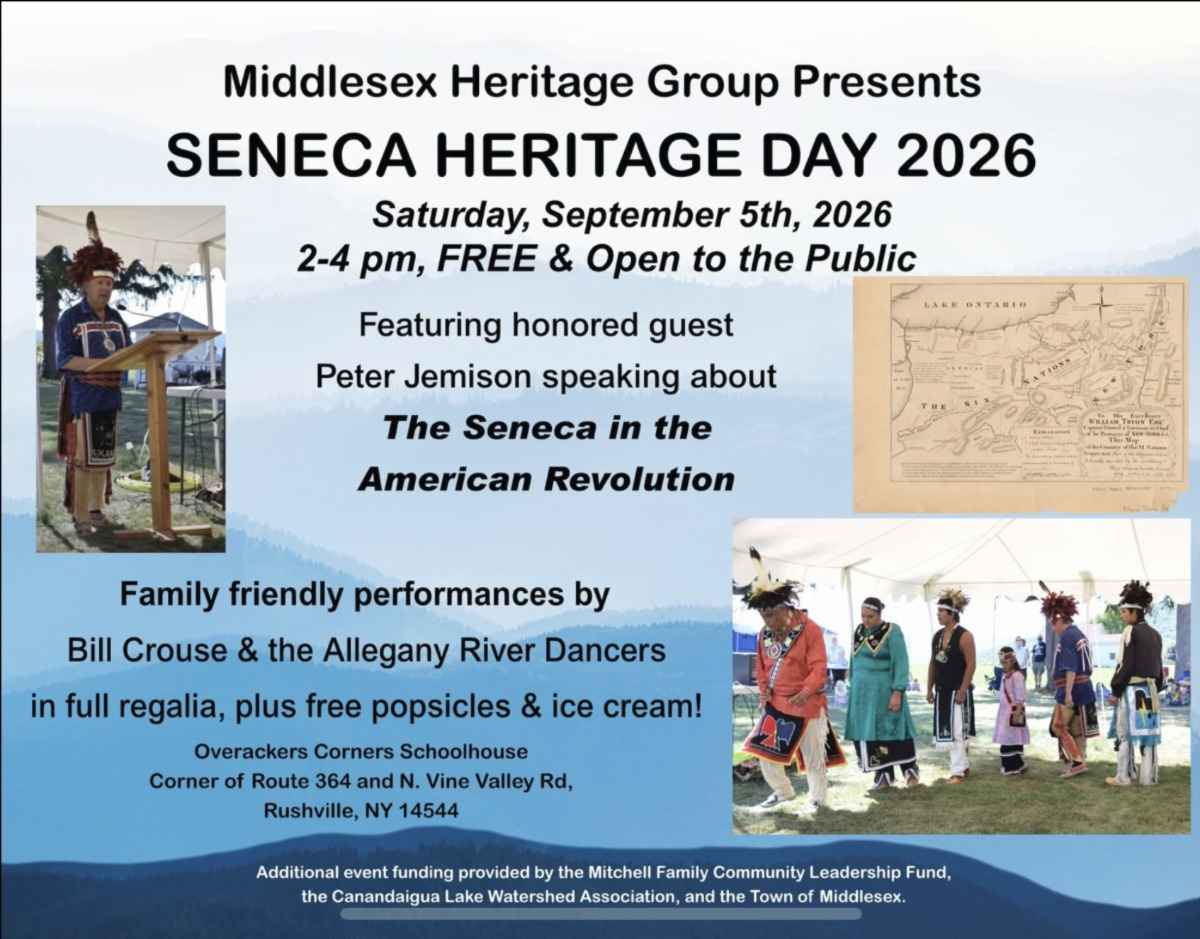
Please join the Middlesex Heritage Group at the historic Overackers Schoolhouse for their annual Seneca Heritage Day. Each year they host this event to honor our region’s Indigenous people and their cultural legacy. This year’s theme is “The Seneca in the American Revolution”.
Artist and Educator Peter Jemison will speak, and Bill Crouse and the Allegany River Dancers will perform traditional dances in full regalia.
This is a free event, and open to the public. There will be pie, and free ice cream sandwiches, popsicles, and water.
| Get your Flares for the Ring of Fire! | | |
Can you believe the Ring of Fire is on the horizon? The summer is flying by! This year the event will be held on Saturday, September 5th starting at 9 PM. The event begins with the lighting of a ceremonial bonfire at the top of Bare Hill. Right after, participants along the shoreline will light their flares to create a continuous glowing red ring around the Canandaigua Lake perimeter.
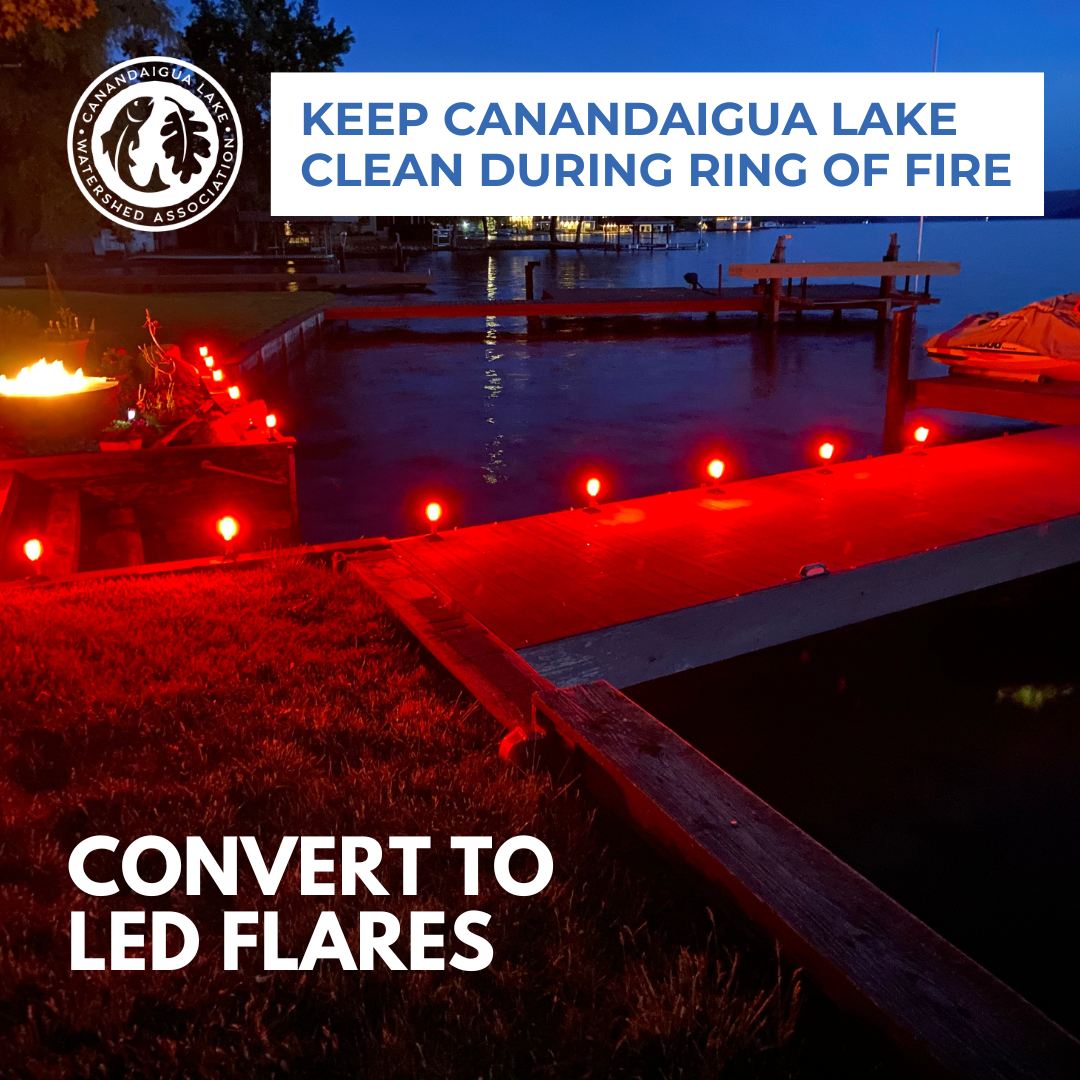
In the past, traditional incendiary highway flares created the beautiful red glow we know and love during the Ring of Fire. While creating an exciting fizz and bright light, they also leave behind potassium perchlorate burn-off, which contaminates the air, soil, and lake, in addition to leaving behind metal spikes that can pollute the lake.
We are happy to share that many participants have switched to an environmentally-friendly LED flare. Learn more about them and their benefits at the link below and consider transitioning to this option if you participate in the Ring of Fire.
| |
|
When: Wednesday, September 16th, 6:00- 7:30 PM
Where: Heron Hill Tasting Room on Canandaigua Lake, 5323 Seneca Point Road, Canandaigua, NY 14424
Join Heron Hill and the CLWA for a special tour of the Heron Hill Vineyard's at the Heron Hill Tasting Room on Canandaigua Lake. You will learn about the history of the vineyards, its day to day operations, and all of their sustainability efforts implemented in order to help protect water quality!
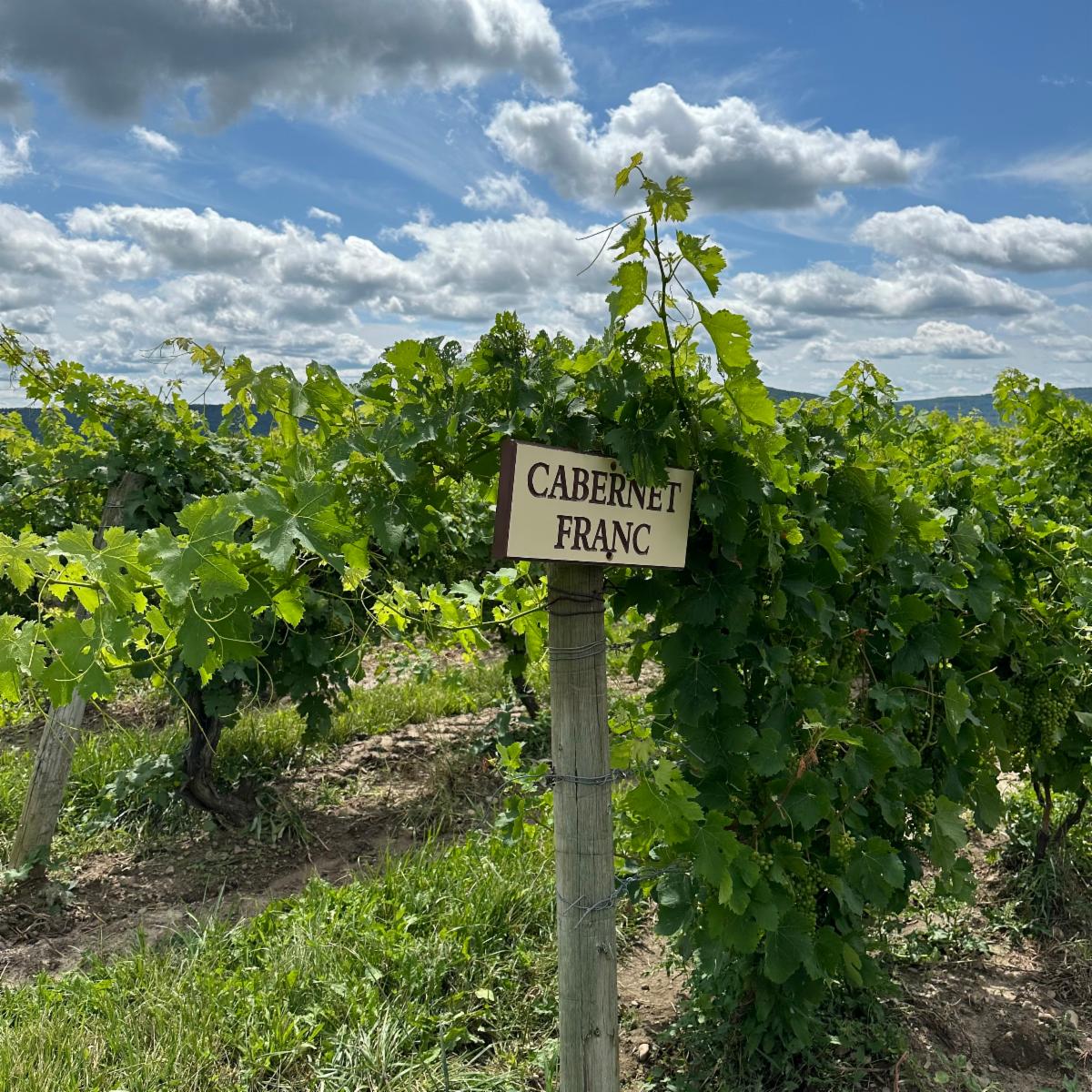
You will also get to enjoy live music, light snacks, and have the opportunity to purchase some of the limited-edition Heron Hill wine crafted especially for CLWA. Wine's for sale include a Chardonnay and Cabernet Franc, crafted from grapes grown at Heron Hill’s Ingle Vineyards, located on the west side of Canandaigua Lake and owned by winery founders John and Josephine Ingle.
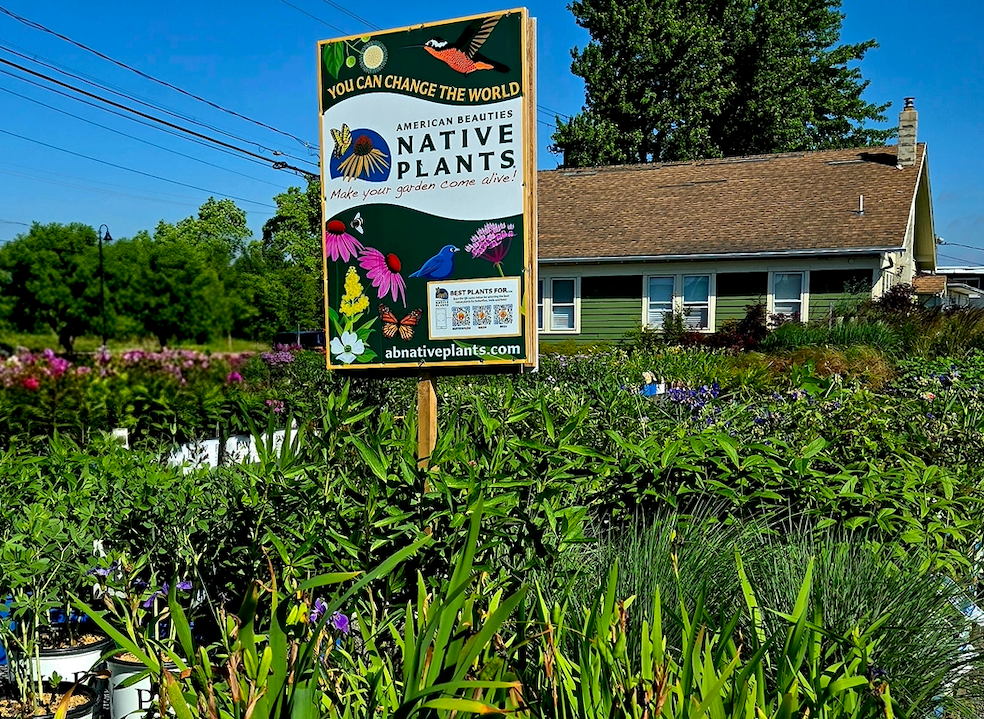
| | Mayflowers Native Plant Open House | |
When: Tuesday, September 22nd, 6:00- 7:30 PM
Where: Mayflowers Nursery and Garden Center, 2505 NY-332, Canandaigua, NY 14424
Join the CLWA and Mayflowers Nursery and Garden Center for a tour of their facility and to learn more about the benefits of native plants, Mayflowers' native plant offerings, and other things you to can do to live lake-friendly. The fall is an excellent time to plant so we hope you can join us to learn more and find some native plants you and your garden will love!
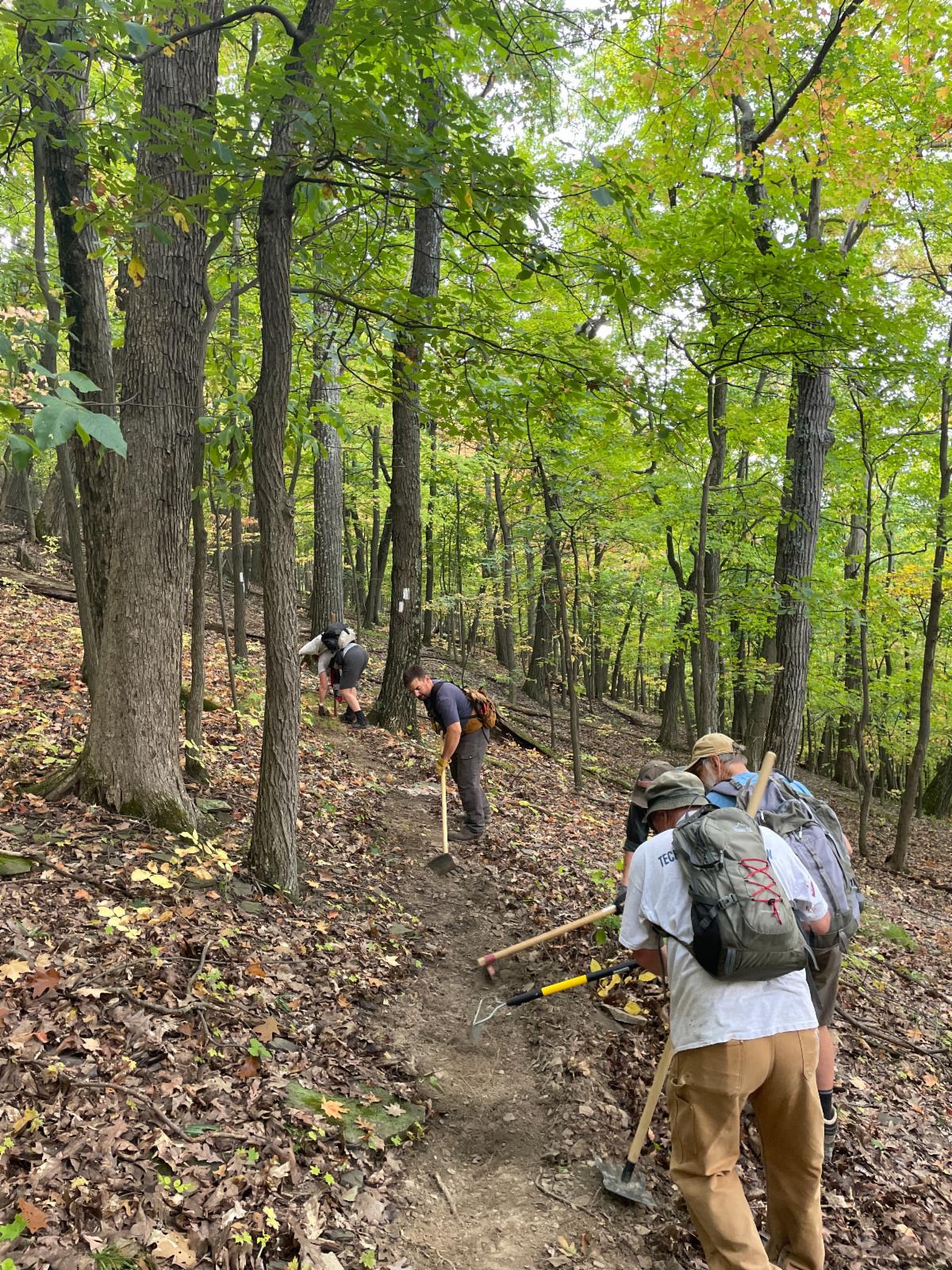
| Trail Work Day with Finger Lakes Land Trust (FLLT) | |
When: Friday, October 16th, 10:00AM-12:30PM and 1:30-4:00PM.
Where: Great Hill Preserve, 4756 S Hill Rd, Middlesex, NY 14507
Join the Canandaigua Lake Watershed Association and the Finger Lakes Land Trust (FLLT) for a second year of trail work at the Great Hill Nature Preserve in Middlesex NY. The main focus of the day will be side- hilling and working on switchbacks. All gear, including gloves and clippers, will be provided by FLLT.
*Meet location will be Clark's Gully parking area because parking is a bit tricky at the preserve. We will then carpool to the preserve.*
Please wear appropriate attire for trail clean-up and bring plenty of water and a snack if you'd like.
*Registration is required so we know how many volunteers to expect! Thank you!*
*Rain date is October 23rd, 10:00 AM-12:30 PM and 1:30-4:00 PM*
| CLWA Annual Chipotle Fundraiser -- Mark your Calendars! | |
You will need to show this flyer before ordering at the restaurant!!!
If you will be ordering online, please use the code in the flyer below, 34FGCQ8.
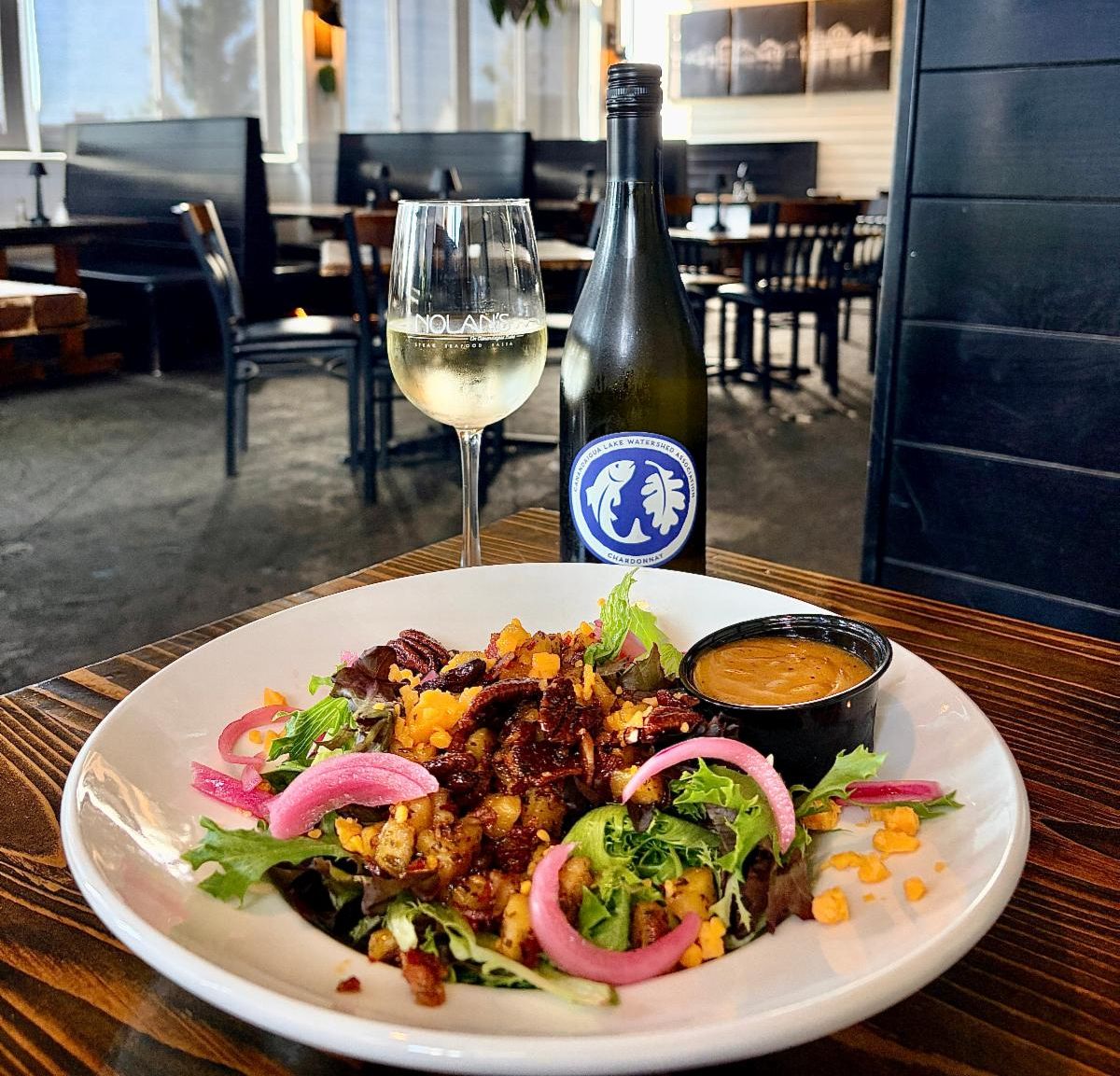
| This Month is Packed with Exciting Partnerships! | 'Savor the Flavor. Support the Lake' Partnership Is Back! | September's special is Hot Honey Apple Bacon Salad - Apple-bacon chutney, sharp cheddar crumble, candied pecans, pickled red onions, served over mixed greens with Nolan’s hot honey vinaigrette. Pairing: Heron Hill Chardonnay to benefit CLWA | |
Now in its second year, the collaboration between Nolan's on Canandaigua Lake, Heron Hill Winery, and CLWA brings together local food, Finger Lakes wine, and lake stewardship to inspire residents and visitors alike to help protect the lake that make Canandaigua such a special place to live, work, and visit.
From July 1st through September 30, Nolan's will once again feature a limited-edition Heron Hill Winery Chardonnay in support of CLWA. A portion of every bottle sold will be donated to CLWA to advance our mission of protecting, preserving, and restoring Canandaigua Lake through science, education, and advocacy. Read all about the partnership here in the Democrat and Chronicle.
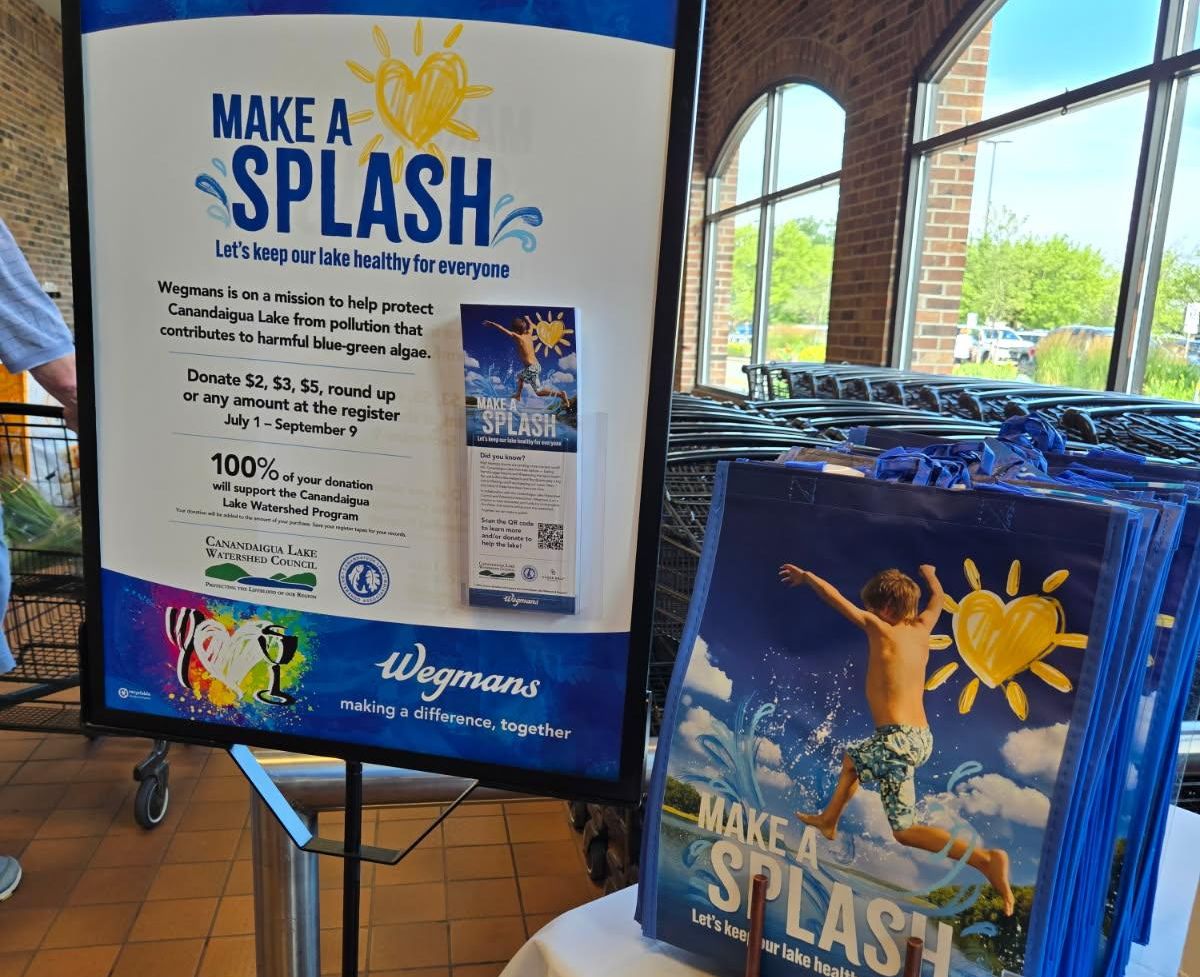
| Make a Splash Campaign with Wegmans | |
The Make A Splash Campaign is back at the Canandaigua Wegmans through September 9th! You can help by purchasing a limited-edition Make A Splash reusable bag or making a donation at checkout. Proceeds are shared equally between the Canandaigua Lake Watershed Council and the Canandaigua Lake Watershed Association.
Thank you to Wegmans and everyone who supports this community effort. Together, we're making a lasting difference for Canandaigua Lake.
| | |
Stay informed so you can enjoy Canandaigua - or other New York Lakes - safely and confidently this summer.
We have a map on our website homepage for Canandaigua Lake reported blooms from our volunteers.
NYHABS Map
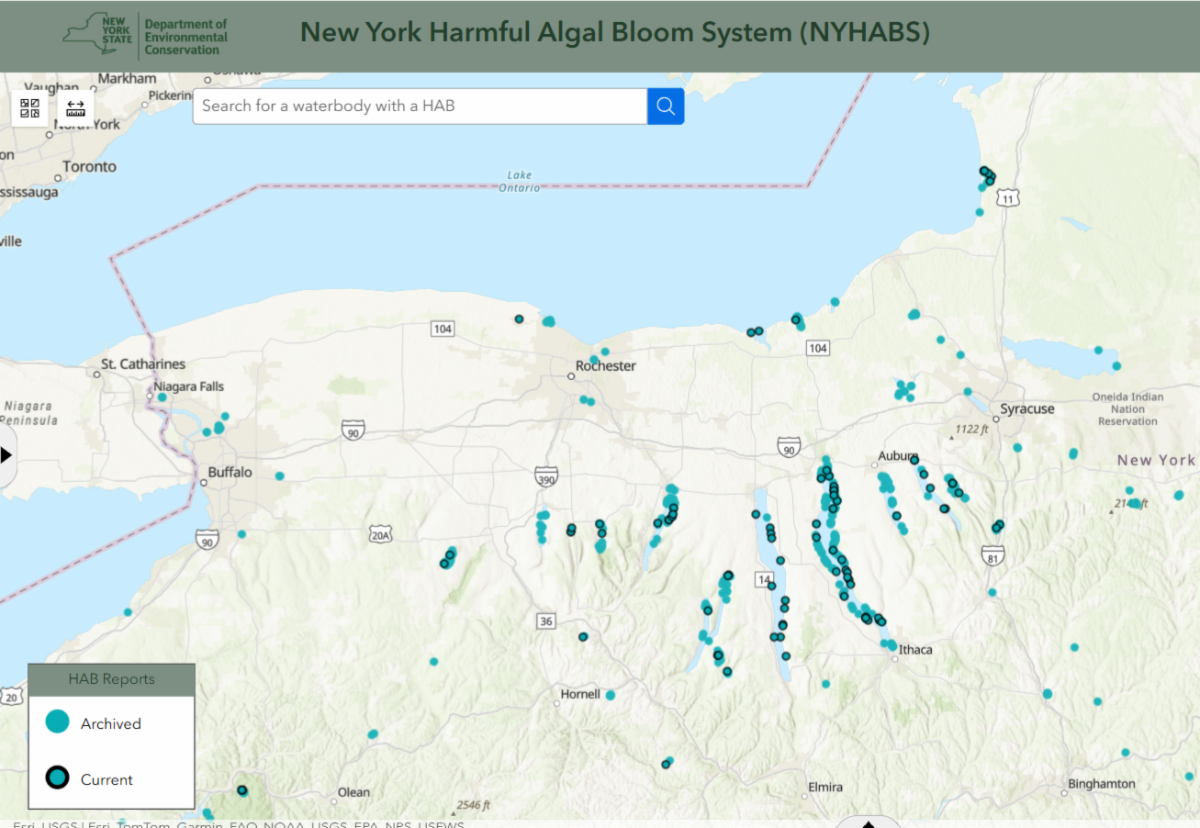
The link below leads to the NYHABS interactive map and displays the location of HABs in New York State. Each blue dot outlined in black represents a HAB reported in the past 2 weeks. There may be other waterbodies with HABs that have not been reported to DEC. All reports through our monitoring program are shown on our own map on our website. CLWA staff uploads all HABs report to the NYHABs database that we receive through our trained volunteers. You can also upload a HABS report directly to DEC here.
Visit NYHABS map here NYHABs map on Sept 4 shown below.
| |
About HABs
Cyanobacteria, sometimes referred to as blue-green algae because of their color, are among the oldest organisms on Earth. They are naturally occurring in our lakes, generally in low numbers.
When triggered by the perfect storm of conditions - such as heavy rains followed by a few days of warm weather with calm winds - cyanobacteria may begin to increase, forming “blooms”. HABs can appear quickly and persist for hours or days, or they can disappear almost as quickly as they formed.
Since previous research informs us that high levels of toxins (microcystin) may accompany the blooms, humans and our pets should avoid coming into contact with the water when an active bloom is observed.
How to identify blooms
Use visual cues to identify potential blooms. They can appear like pea soup, spilled paint, surface streaks or scum. The color is typically green, blue-green, or yellow, but can also be brown, red, or purple. When blooms are discovered, they are usually found along shorelines or in cove areas. They are most often seen along the stretch of shoreline that is impacted by the prevailing winds. However, during significant bloom events, sometimes they can be found in open water areas.
Visit the NYS DEC website to learn more about identifying blooms.
| |
Remember - conditions can change rapidly. Please use caution when out on the lake and look for characteristics of HABs including water that looks like:
- Pea soup, spilled paint, surface streaks or scum
- Color's that are typically green, blue-green or yellow but can also be brown, red or purple
- Typically found along shorelines or coves
Please, to keep yourselves and pets safe, avoid any water conditions that appear to be bloom-like. Don't hesitate to reach out to us at 585-394-5030 with any questions or email us at HABS@canandaigualakeassoc.org if you are concerned about water quality. Sending us photos of the water is strongly encouraged. Have a wonderful weekend and stay tuned.
| |
What should you do if you suspect a bloom
When in doubt, stay out!
- Don't swim, wade, jetski, waterski or tube in a bloom.
- Shower if exposed to bloom conditions. Wash pets off if they have gone into bloom-infested waters.
- Don't consume fish from the lake during blooms.
- Do not use PRIVATE water drawn from the lake during a bloom. Public water supplies have safeguards in place and can be utilized unless you are otherwise notified.
-
Report the bloom to the NYSDEC NYHABs portal: on.ny.gov/habform
| | | | |