Humans Shape the Journey of Mud | |
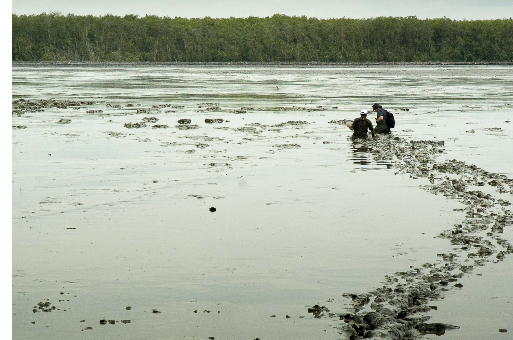
According to a comprehensive new study out in Nature Geosciences, University of Florida Geological Sciences Professor Thomas Bianchi and his colleagues document that mud, and the tremendous stores of organic carbon it holds within its matrix, is shifting where it is and isn't at a global scale due to human activity and climate change. These shifts have tremendous implications for the fate and carbon storage benefits of coastal wetlands, including salt marshes and mangrove forests, and as well as the rich biodiversity that is sustained by the world's tidal mudflats. | |
How Does the Florida Wildlife Corridor Help Provide Resilience to Climate Change? | |
|
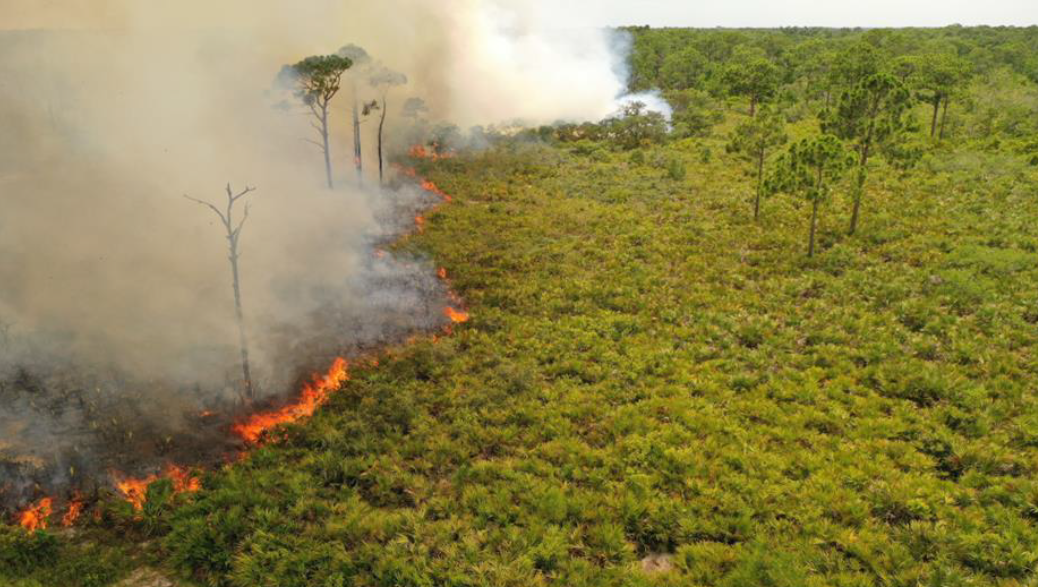
Florida is ground-zero for climate change impacts as our natural and human communities are forced to grapple with increasing heat, flooding, sea level rise, and wildfire risk.
Archbold approached Florida Atlantic University to assess overlaps between land conservation in the Florida Wildlife Corridor and the resilience of the state’s nature and people to advancing climate change. Archbold’s conservation program is using the Florida Wildlife Corridor and Climate Change Report’s results to credibly motivate the Corridor’s protection.
| |
Companies Ignoring Climate Change Risks Get Punished by Markets | |
|
Companies that proactively manage climate risks boost their valuations, while those with a passive stance are discounted in the equity market, according to new research.
A pioneering study from the University of Florida has quantified corporations’ exposure to climate change risks like hurricanes, wildfires, and climate-related regulations and the extent to which climate risks are priced into their market valuations. The research also exposes a costly divide – companies that proactively manage climate risks fare much better than those that ignore the threats.
The article "Corporate Climate Risk: Measurements and Responses" is published in the Review of Financial Studies.
| |
UF Researchers Develop Helpful Conservation Tool Using Data Analytics | |
|
As Florida faces an influx of people and rapid land development, there are growing needs when it comes to effectively protecting critical landscapes.
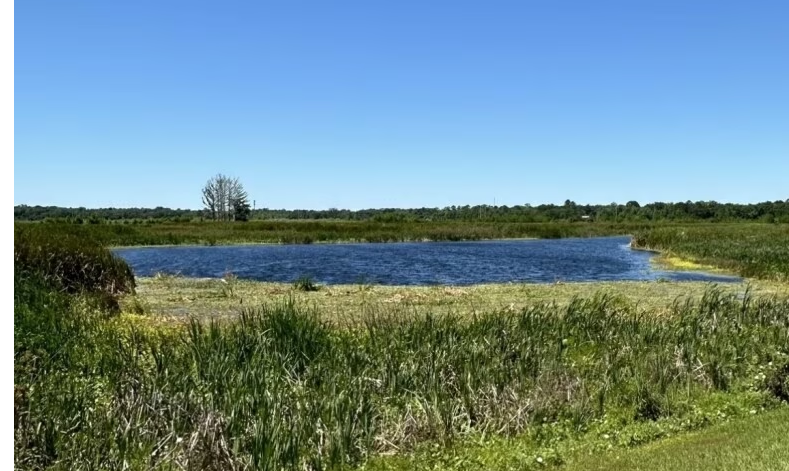
Researchers at the University of Florida Center for Coastal Solutions and Center for Landscape Conservation Planning recently developed a tool to help address some of those needs. The Land Conservation Optimizer Tool helps identify optimal conservation lands in Florida that could help improve water quality if they are protected, according to the UF Center for Coastal Solutions.
| |
Share Your Team's Florida-Based Adaptation Project! | |
|
Are you part of a team imagining, empowering, or building Florida’s future? If so, Share the highlights of your applied approaches to addressing flood impacts on Florida communities! Submit your presentation or poster abstract today to be a part of our upcoming 3-day symposium on Flood Adaptation by submitting a proposal to present your work. All are welcome to submit! Check the website for additional details.
Submit your abstract before May 10th here:
| |
The theme for this exhibition is informed and inspired by Jeff Goodell’s searing new book, The Heat Will Kill You First: Life and Death on a Scorched Planet. We are seeking artworks that relate to the first order threat and prime mover of all other impacts of our climate crisis - HEAT. Participants can use any medium. All approaches - traditional and non-traditional - are welcome. We are open to the plurality of styles and expressions that the word HEAT, the idea of HEAT, allows. | |
If you have any climate-related research, news items, or events that you would like to submit for consideration in the next newsletter, please email them to info@floridaclimateinstitute.org
| |
Other Upcoming Events & Webinars | |
|
NCA5 Key Message: Agriculture Faces Growing Threats, but Innovations Offer Help | May 7, 2024 | webinar
Climate Risk and Opportunities for Tropical and Subtropical Crop Production in Florida | May 9, 2024 | Homestead, FL & virtual
NTC/EPA Tribal Climate Town Hall: EPA's Climate Adaptation Plan and Leveraging Grants for Climate Action | May 9, 2024 | Webinar
Advancing Ecology and Environmental Data Science for a More Just and Equitable Future | May 16, 2024 | webinar
Priorities and Opportunities for Enhancing Collaborative Wildlife Conservation in the Southeast | May 16, 2024 | webinar
Triple Threat: Addressing Climate Justice, Food Insecurity & Health Disparity in African American Rural SC | May 28, 2024 | webinar
Flooding Adaptation Symposium | October 28 - 31, 2024 | Kissimmee, FL
DEP Resilient Florida Grants Webinar Series | various dates | virtual
| |
Job, Internship, and Fellowship Opportunities | |
|
National, International, and Remote
Senior Manager, Coastal Resilience, Audubon | Oyster Bay Cove, NY
Senior Director, Blue Climate Program, Conservation International | flexible
Managing Director, Natural Climate Solutions Roadmap Initiative, Conservation International | flexible
Associate Director of Forest Programs: Natural Climate Solutions, TNC | Minneapolis, MN
Climate Program Project and Partnership Manager, TNC | Phoenix, AZ
Manager, Climate Adaptation & Resilience, Rainforest Alliance | Amsterdam, NL
Research Affiliate, Southeast Climate Adaptation Science Center | flexible
| |
|
Barroso, Wahl, Li,, Enriquez, Morim, Dangendorf,, et al. (2024). Observed Spatiotemporal Variability in the Annual Sea Level Cycle Along the Global Coast. JGR Oceans, 129(4).
Butler IV, M. J., Duran, A., Feehan, C. J., Harborne, A. R., Hykema, A., Patterson, J. T., et al. (2024). Restoration of herbivory on Caribbean coral reefs: are fishes, urchins, or crabs the solution? Front. Mar. Sci., 11.
Dennington NL, Grossman MK, Ware-Gilmore F, et al. (2024). Phenotypic adaptation to temperature in the mosquito vector, Aedes aegypti. Glob Chang Biol, e17041.
Hauer, M. E., Jacobs, S. A., & Kulp, S. A. (2024). Climate migration amplifies demographic change and population aging. Proceedings of the National Academy of Sciences, 121 (3).
Hodnebrog, Ø., Myhre, G., Jouan, C., Andrews, T., Forster, P. M., Jia, H., et al. (2024). Recent reductions in aerosol emissions have increased Earths energy imbalance. Commun Earth Environ, 5(1).
James WR, Furman BT, Rodemann JR, et al. (2024). Widespread habitat loss leads to ecosystem-scale decrease in trophic function. Glob Chang Biol, 30(4), e17263.
Kang, Y. Y., Kaplan, D. A., & Osland, M. J. (2024). Linking temperature sensitivity of mangrove communities, populations and individuals across a tropical-temperate transitional zone. Journal of Ecology.
Kemppinen, J., Lembrechts, J. J., Van Meerbeek, K., Carnicer, J., Chardon, N. I., & et al. (2024). Microclimate, an important part of ecology and biogeography. Global Ecology & Biogeography.
McIlroy SE, Guibert I, Archana A, et al. (2024). Life goes on: Spatial heterogeneity promotes biodiversity in an urbanized coastal marine ecosystem. Glob Chang Biol, 30(4), e17248.
Parkinson, R. W. (2024). Horizontal Rates of Wetland Migration Appear Unlikely to Keep Pace with Shoreline Transgression under Conditions of 21st Century Accelerating Sea Level Rise along the Mid-Atlantic and Southeastern USA. Coasts, 4(1).
Yannick, Oberbauer, Staudhammer, Cherry, & Starr,. (2024). Carbon Dynamics of a Coastal Wetland Transitioning to Mangrove Forest. JGR Biogeosciences, 129(4).
| |
About Us
The Florida Climate Institute (FCI) is a multi-disciplinary network of national and international research and public organizations, scientists, and individuals concerned with achieving a better understanding of climate variability and change.
| | | | |