Hi friends,


Hope your back to school season is going smoothly!


Many of you are new to this newsletter because you downloaded the back to school anxiety worksheet. Welcome! We hope you have navigated or are navigating back to school anxiety with bravery! Check out our Resource page for more worksheets and educational content.


I’ve written previously about the importance of routine and September always feels like a good time to revisit this theme! I love a good routine year round, but the transition to back-to-school or to fall is particularly ripe with opportunity.


Routine gets a bad rap, particularly with adolescents who may groan when they hear that word. But the truth is kids and teens (and adults) crave and need this structure.


For children or adults with any type of mood or anxiety issues, routine can provide predictability and reduce conflict. When I was faculty at the Institute for Juvenile Research at the University of Illinois at Chicago I was part of a clinical research team focused on pediatric bipolar disorder. In the cognitive behavioral intervention we tested (RAINBOW) to help families experiencing the challenge of mood disorders, the very first step was Routine. Establishing family routines around key critical periods like getting out the door to school in the morning or unwinding before bed cleared up an amazing amount of conflict and emotional distress. We saw it as step one, before even thinking about moving on to teaching Affect regulation.


Creating positive routines that support our mental and physical health is a skill that we can all use, so how do we do it? 


  1. Choice is important - Allowing a child or teen to opt in to routine by building it together and having a choice builds buy-in. It may be as small as “do you want to brush your teeth first or put your pajamas on first?” When young people feel they have a choice and this is something you built together, they are more likely to give it a try with you. 


  1. Start small - it’s helpful to start with a two or three step routine for bedtime rather than a ten step routine. You can always add on once you get the hang of the one or two steps. This helps prevent overwhelm and giving up. 


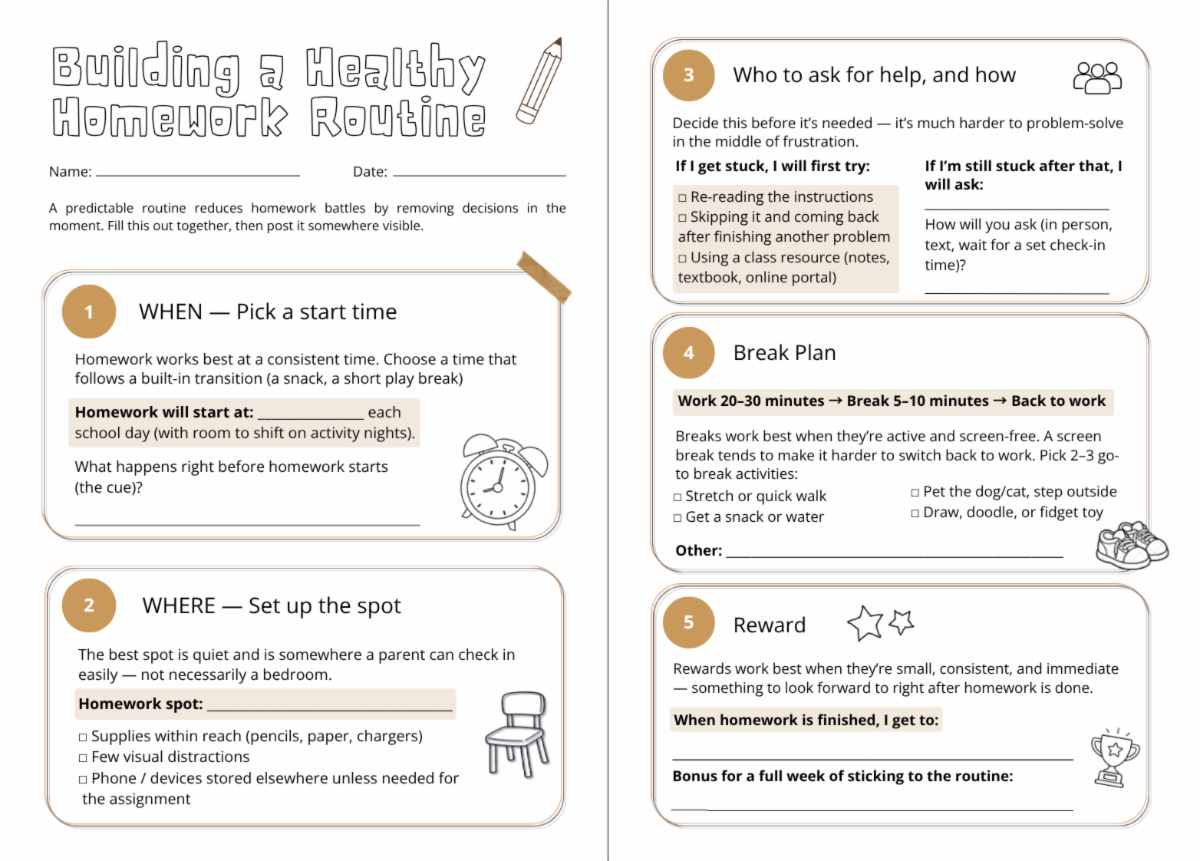
In order to help you with this, I’ve created a worksheet for building a homework routine. Building a homework routine early in the year can create predictability around expectations and reduce family conflict.


And having a routine doesn’t mean it has to be rigid, or can never shift.


For Adults: 

What’s a healthy routine you want to start this season? A walk outside before WFH? Start small. Give yourself a physical reminder. Build in accountability and reward. You’ve got this!


We’re here to help if you get stuck. 


Wishing you ease and some colorful and fun back-to-school supplies this season!


Dr. Rachel and the Well Brain Team


Additional Resource: 

Homework guide from the National Association of School Psychologists

Beach yoga was my happy place this summer. Moving my yoga routine from outdoor to indoor is a seasonal transitiong, but the important thing is to keep the routine!


If you found this newsletter helpful, you can forward it to a friend.

Stay connected!

Instagram  LinkedIn