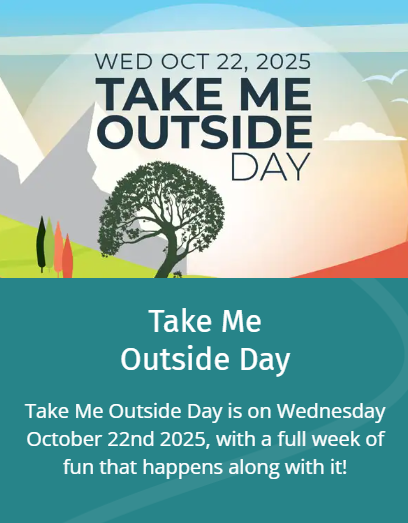
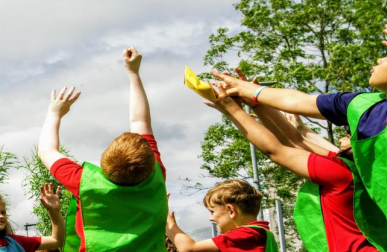
Many students thrive in the outdoor classroom, whether it be the change of pace, the fresh air, or the immersion in nature. With so many opportunities to touch, smell, see and hear, your schoolyard can provide rich learning experiences that are a welcome change to the four walls of the classroom for both students and teachers. Take the time to get outside with your students on October 22nd for Take Me Outside Day: A Celebration of Outdoor Learning.


The outdoor activities and resources suggested for TMO week focus on Indigenous Perspectives & Knowledge, Environmental Education & Climate Change, and Health & Wellbeing. If we want students to connect to the Earth, extend their learning environment and commit to spending one hour outdoors on Take Me Outside Day.


How do you start taking your students outside for outdoor learning? You need inspiration and fresh ideas to get started, regardless of whether outdoor learning is new to you. Look no further! Learning for a Sustainable Future, in partnership with Take Me Outside, conducted a webinar, Learning Goes Outside: Getting Started to help prepare you for Take Me Outside Week. This webinar highlights some strategies for engaging in outdoor activities and resources to learn more! Whether it is Math, the Arts or any subject you teach, you can motivate and empower your students using the outdoors.


Grades K-3

Maple Trees and Marmots

This activity explores the effects of climate change on animals and plants through a role-playing game. During the game, students gain insight into how climate change may affect familiar plants and animals. After a round, a change in climate/habitat is introduced in order to illustrate how changes in weather can affect the plants and animals


Activities

  • Get outside and play Maple Trees and Marmots. Students pretend to be marmots or ground squirrels on a food hunt. Their challenge will be to collect enough food to survive the winter
  • Explore trees in your schoolyard with the Meet a Tree activity. This sensory awareness activity connects students with trees in a memorable way. Have students sketch their tree with as much detail as possible 
  • Head outdoors with this Climate Change Scavenger Hunt to explore climate change and the many scientists who help with research

Grades 4-6

Be a Biodiversity Detective

Students investigate biodiversity of wildlife in their backyard or schoolyard by selecting and mapping out areas they expect to be high in biodiversity in part one. Part two uses a larger area to make observations about the area by using “biodiversity clues”. This activity centers around counting species diversity as a way to measure and explore the concept of species and ecosystem biodiversity. 


Activities

  • Become Hula Hoop Detectives, students measure (count) the species diversity in different locations of your schoolyard or local park by using small groups and hula-hoops to define the study area for each group
  • Participate in a Climate Kids Scavenger Hunt; students take a hike and closely observe the nature around them. Have students start a nature journal to draw or describe each of their observations
  • Get outdoors with Climate Connections, where students play a variety of non-competitive games that explore the connections between human actions, climate change, and positive and negative impacts on wildlife habitat


Grades 7-9

Climate Change Dodgeball

An active game to show how increasing greenhouse gases cause global warming. This game can be used to scaffold the student's understanding of the greenhouse effect and global warming and prompt discussion on how our actions can make a difference. The resource provides some discussion points to enhance the learning.


Activities

  • Try your hand at Climate Change Dodgeball, followed by a discussion on how our actions can make a difference
  • The Carbon Dioxide Game is a fun, active way to explain the greenhouse effect and human contribution to global climate change
  • Natural Inquirer has students use interview techniques to research and write about an animal or plant affected by climate change. Get outside and locate the real plant or animal you want to interview.

Grades 10-12

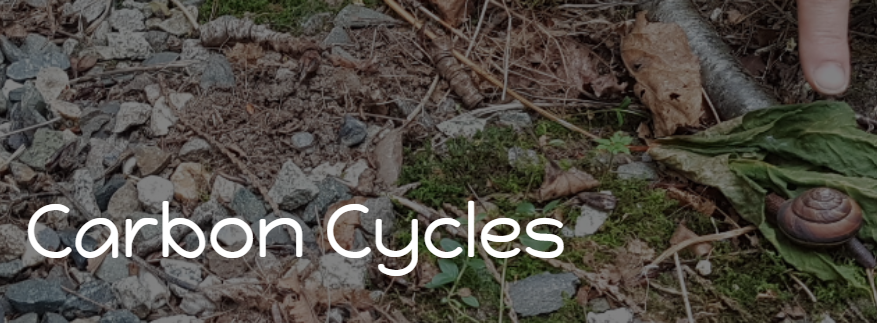
Carbon Cycles! Climate Change & Ecosystems

In this active game, students follow the path of carbon through the carbon cycle to learn where carbon is stored and how it circulates. In the first round of the game, students move from one component of the Earth to the next, discovering there are short and long term carbon cycles and that the short carbon cycle is closely linked to energy flow in ecosystems. The second round highlights how human actions, through the use of fossil fuels and clearing of the world’s forests, results in an increase in the amount of carbon dioxide in the atmosphere.


Activities

  • Get outside and play Carbon Cycles students follow the path of carbon through the carbon cycle to learn where carbon is stored and how it circulates
  • Learn What's the Value of that Tree by measuring the tree; you can find out the amount of carbon dioxide and pollution it removes from the air and the amount of stormwater it can help mitigate
  • Getting Outdoors with Physics provides students with an opportunity to go outdoors and collect primary data around motion and its applications. Students will record the time required for a vehicle to drive through the drop-off area of a school, which will lead to discussions about commuting, vehicle emissions and fuel efficiency
 

About Learning Inside Out


Above you will find a selection of activities, broken down by various grade levels. These guides will be released biweekly and archived on our Learning Inside Out page, so you can always access the full catalogue.


Some of the activities have been modified from resources on our R4R database, simplified and adapted for both outdoor learning in the school yard or at-home as needed. The activity descriptions above should contain all the information and links that you need!


If you'd like to view the full original resource on R4R, including curriculum connections for every province/territory, click the activity title.


We want this guide to work for you, so your feedback is invaluable to us.

Use the feedback button at the bottom of this Guide, or email us at info@LSF-LST.ca. We would also love to see photos of students engaging in the activities, please e-mail us any pictures or videos you have!


Follow us on social media for continued weekly highlights & other exciting opportunities through the school year!

Facebook  Twitter  Instagram  Linkedin  

Please share widely with any parents and teachers in your life!

Learning for a Sustainable Future (LSF) is a Canadian charity with over 25 years of experience working within the education system. Our Resources for Rethinking (R4R) database is an award-winning collection of resources that are peer-reviewed by certified teachers and connected to curriculum in all provinces and territories. R4R is recommended on many Ministry of Education websites.