|
International Civil Liberties Monitoring Group
Coalition pour la surveillance internationale des libertés civiles
May 24, 2025 - 24 mai 2025
| | Press conference: ICLMG & The Defend Dissent Coalition oppose Ottawa bubble by-law | |
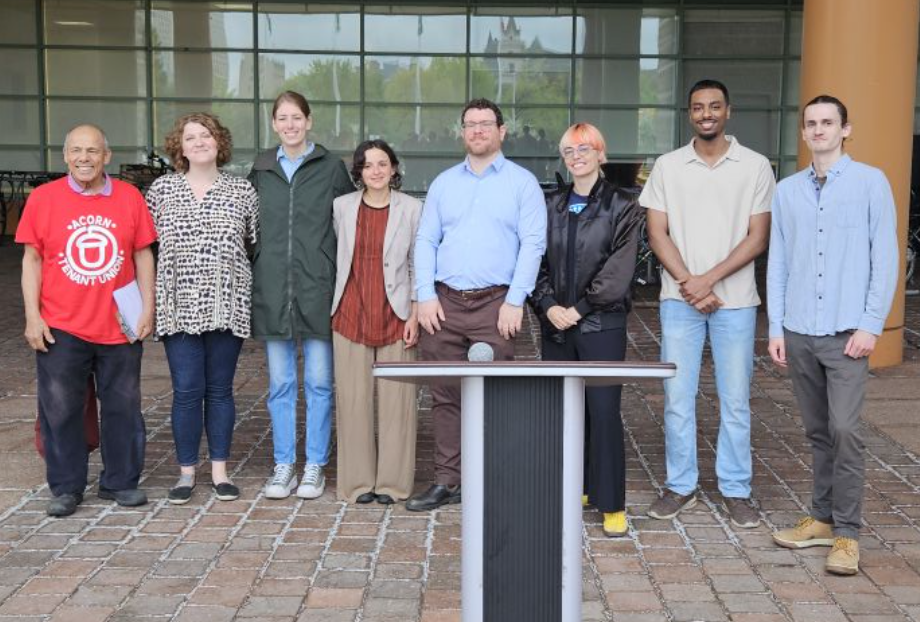
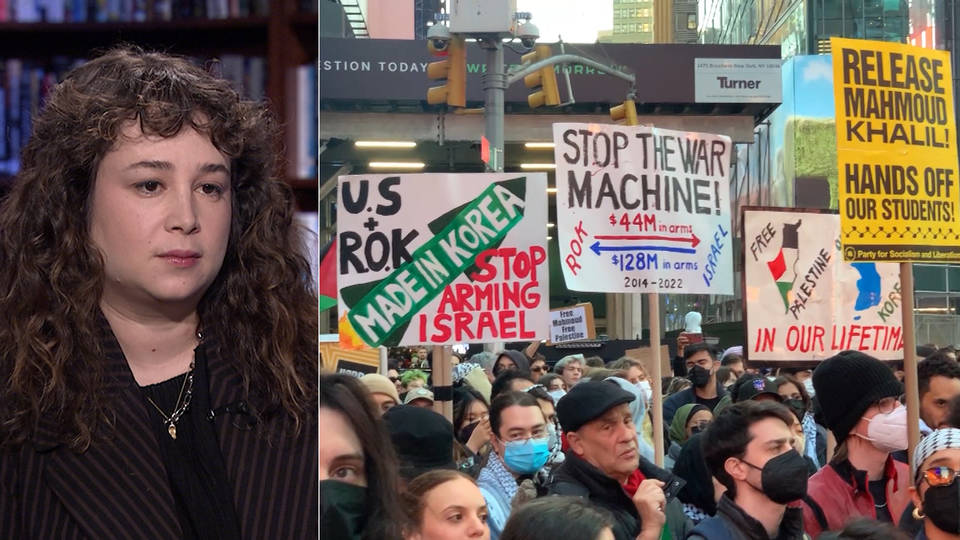
Horizon Ottawa 15/05/2025 - The Defend Dissent Coalition, a coalition of over 60 small businesses and organizations from labour to climate to human rights, hosted a press conference before the Joint Committee Meeting of the Emergency Preparedness and Protective Services Committee and the Public Works and Infrastructure Committee to outline why Council should vote against the Mayor's plan to rush adoption of a bubble by-law in Ottawa, and to speak to why many in the community are not in favour of a bubble bylaw that seeks to put forward excessive measures to curb protest that would cover most of the city.
Speakers:
Tim McSorley, International Civil Liberties Monitoring Group National Coordinator
Jaisie Walker, Executive Director of Planned Parenthood Ottawa (PPO)
Ruth Lau-Macdonald, PSAC Regional Executive Vice President, National Capital Region
Callie Mettler, Executive Director, Capital Pride
Tom Ledgley, Coordinator, Horizon Ottawa
Aviva - Chapter Coordinator, Independent Jewish Voices Ottawa Chapter
Representative from Palestinian Youth Movement Watch - Visionner
Desmond Cole: Bubble zone protest-bans threaten Palestine solidarity—and public dissent
CJPME report: Bubble Zone Laws: Protecting communities or cracking down on pro-Palestine dissent?
Legal and Tactical Guide: Know Your Rights!
Ottawa City Hall rolling out 'hostile' new security measures
ACTION Stop Repressive Protest Bans!
NEW ACTION For Ontario residents: Protesting is Our Charter Right: Tell your Ontario MPP to Stop Bill 16
| | ICYMI: Liberal government must prioritize strong, unequivocal action to protect civil liberties and human rights during time of turmoil | |
ICLMG 15/05/2025 - As the new Liberal government works to set its priorities and MPs prepare to return to Ottawa, Canada faces a turbulent world where fundamental rights are being eroded both internationally and at home. To protect these rights and ensure they do not simply become empty promises, the government must prioritize strong, concrete and unequivocal action, warns the International Civil Liberties Monitoring Group (ICLMG) in a new open letter to Prime Minister Mark Carney.
“Over the past several months, and especially during the election campaign, all parties have been vocal that they will protect Canada’s national security. We agree that all people in Canada, and around the world, deserve to live in safety,” said Tim McSorley, national coordinator of the ICLMG. “However, we need to remember that this security cannot come at the expense of human rights and civil liberties; but rather, that protecting them is the bedrock of ensuring all of our safety.”
The full letter, online here, details necessary actions and urges governmental response:
Stop foreign surveillance and restrict information-sharing with foreign national security agencies. Notably, the government must end the application of the US Secure Flight List and other US watchlists to Canadian domestic and non-US international flights as well as halt negotiations on the Canada-US CLOUD Act agreement, which would allow US law enforcement to spy on people in Canada and access information held by Canadian companies without a warrant or oversight from Canadian courts.
Protect privacy, end mass surveillance and regulate dangerous technology, including updating Canadian laws and policies to protect against government surveillance, such as facial recognition and online data scraping, to protect against efforts to undermine encryption, and to regulate artificial intelligence (especially for national security purposes).
Protect rights at the border, including canceling the Safe Third Country Agreement, reconsidering the billion dollars being shifted into border security and instead determine how it could better meet the actual needs of people in Canada, and fast-tracking the new CBSA complaints and review body.
End Canada’s complicity in indefinite detention, unfair extradition and torture, including resolving the cases of Abousfian Abdelrazik, Mohamed Harkat and Hassan Diab, and repatriating all Canadians and family members detained in camps and prisons in Northeast Syria.
Protect freedom of expression and association, dissent and protest, internationally and at home, by amending vague and overly-broad Canadian “national security” laws and refraining from introducing new anti-protest legislation, such as “bubble zone” laws at the federal level.
Reinforce accountability, transparency and due process, including ensuring that any national security review is transparent and fully involves civil society and impacted communities, increasing funding for review bodies, and repealing changes to the Canada Evidence Act and reducing restrictions on the defence accessing evidence and other information in terrorism cases.
End the use of political, rights-violating and secretive watch lists, including the Terrorist Entities List and the Passenger Protect Program.
Defend rights in the context of counterterrorism internationally, including taking a firm stance against states using the label of “terrorism” to justify human rights abuses, particularly in regard to the ongoing genocide in Gaza and violence committed across the region by Israel.
We must remember that Canada’s national security apparatus has been used to violate the rights of Canadians many times: from complicity in the torture and detention of Canadians abroad such as Maher Arar, Abdullah Almalki, Ahmed El Maati, and Muayyed Nureddin; illegally collecting private data and monitoring our online activities; to spying on, harassing and arresting journalists, Indigenous land defenders and anti-genocide protesters as well as violently dismantling camps; and using AI and facial recognition without authorization and oversight.
“Prime Minister Carney has described his party as ‘the party of the Charter,’ and recently committed, including in conversation with the UN Secretary-General, to protecting human rights. We urge the PM and the government to show that in bold, immediate actions,” said McSorley. Source
Version française : Le gouvernement libéral doit prioriser des mesures fortes et sans équivoque pour protéger les libertés civiles et les droits de la personne en ces temps tourmentés
NEW ACTION Halt military deployments with Trump’s USA
| | Syria: New urgency to end unlawful detention system holding tens of thousands of people following Islamic State defeat | |
Amnesty International 20/05/2025 - The mayhem created by recent haphazard US funding cuts must prompt the rapid reduction in the number of people arbitrarily and indefinitely detained in north-east Syria for their perceived affiliation to the Islamic State (IS) armed group, Amnesty International said.
- Ongoing chaos caused by US humanitarian funding cuts creates dangerous uncertainty
- New Syrian government and autonomous authorities must address inhumane detention system
- UN and US-led coalition must support efforts to reduce numbers in camps and facilities
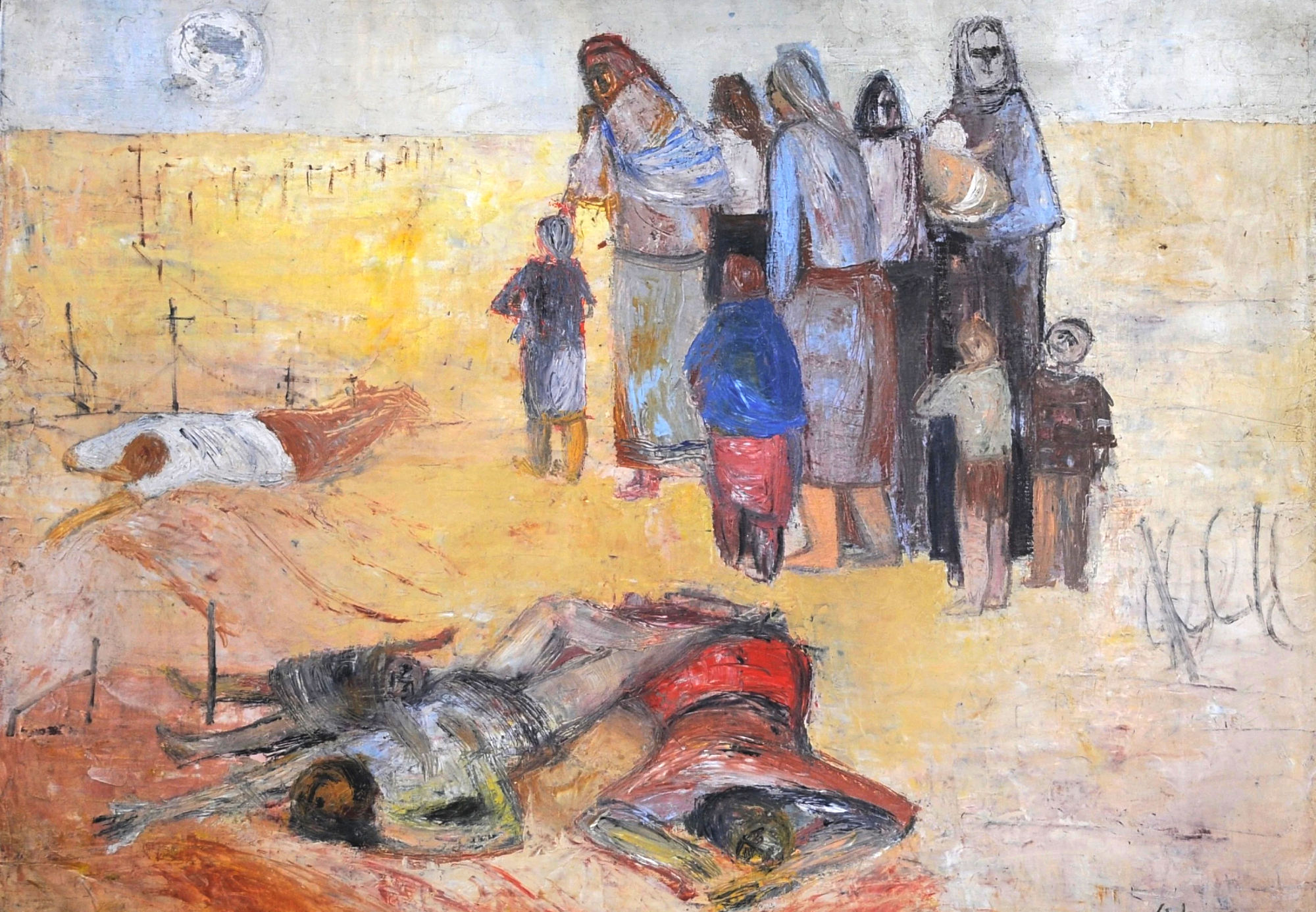
More than six years after the territorial defeat of IS, the Autonomous Authorities of the North and East Syria Region (autonomous authorities), with the support of the US-led coalition to defeat IS, continue to unlawfully detain tens of thousands of men, women, and children with perceived affiliation to IS in over two dozen detention facilities and in Al-Hol and Roj detention camps. Some of these individuals are survivors of crimes under international law, and trafficking in persons committed by IS. Most people have not been charged or given the opportunity to challenge their detention, and some detainees have been subjected to torture and other ill treatment.
The Trump administration’s sudden and unprepared funding cuts have created what can only be described as a chaotic situation, characterized by weakened basic services in the camps. As stop-gap resources run out and further cuts loom, camp residents face increased turmoil. Amnesty International’s report last year documented how people in the camps already faced grossly inhumane and life-threatening conditions, with inadequate access to sustenance and healthcare. They have been forced to endure an unstable and often unsafe existence, rife with violence and other criminality. As one 28-year-old woman told Amnesty International: “We are living in terror.”
“The chaos created by the Trump administration’s funding cuts could have catastrophic effects on the tens of thousands of children, women and men detained in north-east Syria,” said Agnès Callamard, Amnesty International’s Secretary General. “It is unconscionable that the Trump administration would further weaken one of the world’s most volatile camps by abruptly terminating funding for essential services, leaving an extreme burden on the autonomous authorities and humanitarian actors.” In March 2025, Amnesty International spoke with 27 individuals – including humanitarian and non-governmental organizations, representatives of the autonomous authorities, and residents of Al-Hol and Roj camps – regarding the future of the detention system. [...]
Accelerating repatriation and returns from camps in north-east Syria
After years of failing to find a durable solution to the crisis in north-east Syria, the turmoil created by the funding cuts must finally spur urgent action. Recent events – including the fall of the Bashar al-Assad government, growing UN presence in north-east Syria, and increasing diplomatic ties between the Syrian government and states with nationals still detained – could help accelerate an end to the unlawful system of detention. [...]
Recommendations
The new Syrian government, autonomous authorities, US-led coalition, and the UN must identify long-overdue solutions to the crisis. Among the most urgent priorities is the need to downsize the camps. Before families can leave the camps, children and young adults separated from their families should be reunited. There should be investment in programmes in Iraq and Syria to support the voluntary return, rehabilitation, and reintegration of Iraqis and Syrians, who are not suspected perpetrators of crimes under international law, in their areas of origin.
“It’s time to finally put an end to this unlawful system of detention. As the US prepares to downsize its military presence in Syria, the people still living in these camps must not be abandoned,” said Agnès Callamard. “States with nationals in north-east Syria should immediately charter flights to finally bring home child citizens, their carers, and potential victims of trafficking.
Any remaining adults should be screened to identify which individuals should be investigated and prosecuted for crimes committed under international law or serious crimes under domestic law. Everyone else should be released, and the Syrian government and other countries should help resettle those unable to return home.”
Victims of crimes committed by IS deserve justice. Even if individuals are repatriated for trials, a residual group of Syrians and foreigners who cannot return home will remain. The new Syrian government, with the support of the autonomous authorities and international community, must initiate a plan for trials that meet international standards. Read more - Lire plus
Video: A message to Mark Carney and Anita Anand on 8th anniversary of my son Jack's illegal incarceration in Syria
ACTION “Canadians are dying": Free Jack Letts & 19 Canadian Kids, Women & Men in Syria
A father's fight to find out what happened to his son who traveled to ISIS-controlled territory
| | The time for words is over, the time for action is now | About the joint statement by Canada, France and the UK on the situation in Gaza and the West Bank | |
CQUP 21/05/2025 - On Monday, May 19, Canada, France and the United Kingdom issued a joint statement that marked a departure from past positions, taking a much more critical tone towards Israel. Now that they are seeing the logical culmination of Israel’s plans in all its horror, they want to distance themselves from what has become an embarrassing situation. But their statement is just words. For the Palestinian people, it is one minute to midnight. Only strong action—immediate, multilateral and sustained action—can make Israel back down.
Together for 19 months of genocide
It must be borne in mind that prior to this statement, Canada, France and the UK were unwavering supporters of Israel for decades. They maintained close ties with Israel at every level: economic, political, diplomatic, military and cultural. Those ties extended to complicity in the Israeli occupation and colonization of the Occupied Palestinian Territories (Gaza and the West Bank, including East Jerusalem) and the current genocide.
Since October 2023, while Israel has killed or maimed 200,000 Palestinians (at least), starved an entire population and destroyed all of its infrastructure, these countries have gone from initially defending Israel’s “right to defend itself” to expressing “concern” and finally calling for a ceasefire. But they DID NOTHING. They did not impose meaningful sanctions or take any steps to end the atrocities.
Demands fall far short of international law
This is the first time these countries have used terms such as “abhorrent language” or “egregious actions” in relation to Israel. But the limited nature of their demands is striking. Canada, France and the United Kingdom oppose “the expansion of Israel’s military operations in Gaza” and “any attempt to expand settlements in the West Bank” (emphasis added). What they should be demanding is an immediate halt to all Israeli military operations in Gaza, the complete withdrawal of its army from all of the Occupied Territories, and the dismantling of all settlements in the West Bank, including East Jerusalem. This would bring their demands into line with the opinion issued by the International Court of Justice on July 19, 2024 and the subsequent resolution passed by the United Nations General Assembly, which set September 17, 2025 as the deadline for Israel to end its occupation and colonization of the Occupied Territories.
Saving face—with the same fake solutions
Even as the Palestinian people are being dismembered in Gaza and Israel wants to finish them off, Canada, France and the UK are talking about “a long-term political solution” (emphasis added) and reaffirming their support for the “efforts led by the United States, Qatar and Egypt,” although Egypt has consistently cooperated with Israel in maintaining the blockade and, as is well known, the United States continues to arm Israel and its president says the U.S. should take over Gaza and turn it into the Riviera of the Middle East.
Canada, France and the UK also want to exclude Hamas from talks about the future of Palestine, as if this were their decision to make. They state: “We will continue to work with the Palestinian Authority, regional partners, Israel and the United States to finalize consensus on arrangements for Gaza’s future.” Is this how they understand the right of peoples to self-determination—deciding who should represent them and asking them to reach a consensus with a genocidal state?
It is time to act!
If Canada does not want to remain complicit in Israel’s crimes, it must immediately apply all means of political and economic pressure at its disposal. There are many things it could do, including immediate recognition of the State of Palestine, applying a real two-way embargo on military equipment, joining in actions before the international courts, terminating economic and military agreements, imposing sanctions and breaking off diplomatic relations.
Canada should also urge all its allies do likewise and work for the maintenance of real international pressure until the following conditions are met:
- the immediate and permanent lifting of the Israeli blockade and the resumption of aid distribution by the relevant UN agencies, beginning with UNRWA;
- an immediate and permanent ceasefire;
- full compliance with international law by Israel, which would entail dismantling the settlements and ending the occupation;
- the rapid and unconditional realization of the Palestinian people’s right to self-determination.
New orders from the International Court of Justice and more UN resolutions won’t make Israel back down. Unfortunately, neither will another UN conference in June. Only the immediate implementation of maximum sanctions could make Israel change course.
When international law is openly, even proudly, flouted by many countries—led by the United States and Israel—this is the only way that Canada, a country that claims to uphold international law, can truly defend it and fulfil its obligations under the Convention on the Prevention and Punishment of the Crime of Genocide. The very possibility of a future for the Palestinian people is at stake. Source
Version française : Ce n’est plus le temps des paroles, c’est le temps d’agir!
“The Suffering Is Beyond Description”: Report from Gaza as U.N. Warns 14,000 Babies Could Soon Die
‘Render it unusable’: Israel’s mission of total urban destruction
PROTEST Shut Down CANSEC - The world's largest arms trade show - Wed May 28, 7AM, EY Centre, Ottawa
NEW ACTION PM Carney: Implement a full, two-way arms embargo without delay
NEW ACTION Defend Canadian Sovereignty and Human Rights — Support the Nakba Bill
Arms Embargo Now May 18 webinar
Arms Embargo Now June 5 Day of Action
| | Her husband and kids were given safe passage to Canada. She's living in a tent in Gaza | |
CBC News 12/05/2025 - A Gaza man who arrived in Ottawa with his three children last month is now pleading with Canadian authorities to help their mother join them.
Qasem Alyazji, 42, and his children left Gaza in early April through the Kerem Shalom crossing in the southern part of the Palestinian territory after the family home was destroyed in a bombing. The family crossed into Jordan and then flew to Canada. But Alyazji's wife, 37-year-old Doaa Nashwan, remains in Gaza, living in a tent.
Earlier this year, when the family got an email from Immigration, Refugees and Citizenship Canada's (IRCC) office in Jordan saying Canada was working with local authorities to evacuate them from Gaza, they were ecstatic.
The family had applied for visas through IRCC's special measures for extended family members in Gaza. Alyazji had applied with the help of his brother who lives in Toronto. But their happiness was short-lived when they realized Nashwan's name was missing from the list of those approved to cross the Gaza border.
"My children at this time begin crying," said Alyazji, sitting across the kitchen table and reading a prepared document from his phone, at times pausing when he could no longer suppress his tears. The couple ultimately decided they wanted their children to be safe, and so Alyazji left Gaza with them — but not his wife.
"The kids didn't want to leave at the first time. Everyone was crying," said Asil. "They don't want to leave their mom behind. "She wanted to save her kids ... so she picked them over her. She [chose] to stay behind and send her children away." [...]
Doaa remains in Gaza because she was unable to complete a temporary resident visa requirement to receive approval to leave Gaza through Canada's special extended family program. That program, which is not permanent and is capped at 5,000, is not taking any more applications.
Canada requires [Gaza] applicants between the ages of 14 and 79 to submit a photograph and fingerprints before they can be evacuated. Those biometrics allow the Canadian government to complete a security screening. Alyazji's biometrics were already on file as he had previously applied for a visa and his children are young enough not to need one. But for applicants like Doaa who still need to submit fingerprints and a photograph, the only option for doing that is in a third country.
On its website, the IRCC says it will allow people who've completed their other application requirements to leave Gaza to file their biometrics. But in a statement to CBC News, the department suggests even if Canada is on board with someone's application, it's not that simple. "Canada continues to put forward names of people who passed preliminary eligibility and admissibility reviews to local authorities for approval but does not ultimately decide who can exit Gaza," the statement reads.
Canada too slow to evacuate people, says advocate
According to IRCC, as of April 27, 1,177 people have been approved to come to Canada through the special extended family program for people in Gaza, with 811 having already arrived. "At least 525 people who fled Gaza have been approved outside of the public policy for a temporary resident visa or temporary resident permit," the IRCC added.
Critics like Matthew Behrens, however, say Canada is moving too slowly. "The Canadian government, from the very beginning of this program, has acted as an obstacle to the evacuation of the loved ones of Palestinian Canadians," said Behrens, co-ordinator for the Rural Refugee Rights Network.
While other countries like Australia, Ireland and Iceland have been able to more quickly get family members out of Gaza, Canada "has not shown any real initiative," Behrens said. "You [can] compare it to the Ukraine program, where we were processing about 1,400 applications a day. On average, Canada has processed two applications a day in the Gaza program," he said.
"That negligence has resulted in the deaths of individuals who could be living full and loving lives here in Canada." Meanwhile, Doaa's three children are already attending school in Ottawa, but their father says it's been difficult. "Every day in the morning they cry and [say they] need mom. And I don't know — what can I do?" said Alyazji, who remains hopeful his family can be reunited. Read more - Lire plus
ACTION These Kids Need Their Moms: Canada Must Immediately Evacuate Doaa and Nariman from Gaza
NCCM: Canadians have lost family members during the relentless bombings in Gaza on May 14 & 15
Gaza TRV Reunification Advocacy Toolkit
| | As Trump Tours Mideast, Palestinians Report War-on-Terror-Like Torture in Israeli Jails | |
Forever Wars 14/05/2025 - I have no idea if we're on the verge of the final Israeli conquest of Gaza, or the verge of a new ceasefire/hostage deal that averts it, or the verge of a third thing. But the stakes are underscored in a report issued Monday from the Palestinian Centre for Human Rights. (PCHR; normally I like to avoid acronyms, but it's going to be easier this way). PCHR interviewed more than 100 Palestinians detained by the Israeli military in Gaza. They described widespread, systemic torture in both their detentions and interrogations. PCHR puts the torture in the context of the Israeli genocide, as mechanisms of dehumanization designed to leave irreversible damage—physical, mental, and to their identities as Palestinians. And those mechanisms, PCHR observe, "bear alarming similarities to those used in notorious facilities like Guantanamo and Abu Ghraib."
BEFORE WE DELVE INTO THESE ALARMING SIMILARITIES, let's note that the point here isn't to determine which techniques originate with America and which with Israel. The techniques of torture and occupation iterate on one another, across different practitioners and occupations. A previous edition of FOREVER WARS explored the dialectical relationship between the Israeli occupation of Palestine and the War on Terror. Additionally, such techniques are not exclusive to the U.S. or to Israel, nor are all techniques shared by the two, but there are certain conspicuous similarities. That frankly makes sense given the close U.S.-Israel relationship.
As well, the descriptions that follow are gruesome and can be hard to bear for some. I don't want to delve into the details in an unseemly fashion. But bearing witness requires describing what these more-than-100 people experienced.
"[T]hreats, insults, humiliation, beatings and other forms of physical violence were commonly inflicted on detainees," PHCR found. Beatings in particular, were reported by "all interviewees," and occurred "from the moment of arrest, during transfer, and throughout detention in both military facilities and prisons." That overview matches many interviews I've conducted with ex-U.S. detainees, although many of the weapons involved ("rifle's butt, batons, chains, sticks, iron rods, brass knuckles, steel, shoes") don't. Israeli soldiers threw people out of their armored vehicles and "dragged me all the way down a pebble road," one ex-detainee tells them. During a 22-year old's single day in detention, Israeli soldiers cut off part of his ear. While the U.S. didn't engage in detainee mutilation—although we don't know what happened to Abu Zubaydah's left eye, and Navy SEALs performed corpse desecrations—there are certain other similarities, particularly regarding dehumanization. One 36 year-old man says he was called an animal and beaten until he agreed he was one, recalling the "dog-walkings" of Iraqis by U.S. soldiers at Abu Ghraib.
Inside the network of military detention centers and prisons, Palestinians were subject to frequent sleep deprivation, and not only for interrogation purposes. Sleep deprivation was a hallmark of the post-9/11 CIA and U.S. military wartime-detentions complex and often achieved by contorting the body into painful "stress positions" that rendered sleep impossible. Similarly, Palestinians report being subjected to extreme cold, "like a meat freezer," much as denizens of Guantanamo and the CIA black sites were. "Dogs were used more broadly during arrest and detention," similar to Guantanamo and Abu Ghraib, with Israeli soldiers telling Palestinian detainees that the dogs were rabid and they would unleash the animals on them. [...]
I think at this point you get the general idea. The whole report is available here if you wish to read it. Before moving on, I have to note the account of one woman who described how the Israelis generated collaborators. During interrogation, the soldiers told her "that they would deprive me of my seven children if I did not collaborate. They told me, 'The computer says you are affiliated with Islamic Jihad.'"
That's a reminder of what artificial intelligence is truly for, today, regardless of the promises the tech industry self-interestedly makes about what AI will offer in the future. That's part of why investment in AI is included in Trump's Mideast yield. I'm relieved that the U.S.-Houthi War has stopped; I think lifting sanctions on Syria is the right decision; and I hope, even if I don't expect, for Trump to force Israel into a ceasefire, something that has been possible every single one of the 587 days since October 7. But the prominence of AI-based investment during this most recent tour shows that what Trump is offering is ultimately about perpetuating the regimes of the current Middle Eastern rulers. We have no excuse not to know what that means by now, but a reminder is found inside Israeli interrogation rooms. Read more - Lire plus
Rapport Addameer : « plus de 10 100 prisonniers politiques identifiés dans les prisons israéliennes en mai 2025 »
| | Gaza. Pour en finir avec la « guerre contre le terrorisme » | |
OrientXXI 12/05/2025 - Alors qu’Israël intensifie son offensive génocidaire à Gaza, la thèse de la légitime défense paraît désormais totalement éculée. En revanche, l’argument de la « guerre contre le terrorisme » pèse toujours en s’appuyant sur la désignation du Hamas comme groupe terroriste par les États-Unis et l’Union européenne. Qu’en est-il au regard du droit international? [...]
Le Hamas, tout comme le Hezbollah, figure sur les listes terroristes des États-Unis et de l’Union européenne, mais pas sur celles des Nations unies. La caractérisation de ces mouvements comme terroristes n’est pas universelle, ce qui est peu connu. Les sanctions financières qui leur sont infligées ne relèvent pas du conseil de sécurité des Nations unies, mais d’États, agissant individuellement ou régionalement, sans validation internationale. Or ces sanctions sont venues toucher à Gaza le peuple palestinien ayant, au regard des normes issues des Nations unies, le droit de disposer de lui-même. C’est pourquoi le rapporteur spécial John Dugard soulignait dès 2007 le caractère inédit de la situation : « Le fait est que le peuple palestinien est soumis à des sanctions économiques, premier exemple d’un tel traitement à l’égard d’un peuple occupé. Cela est difficile à comprendre. » [...]
Par-delà les combattants, la diabolisation par la désignation terroriste s’étend aussi à l’ensemble du pouvoir civil de Gaza. C’est ainsi qu’Israël trouve parfaitement légitime de décrire, par exemple, les acteurs du système hospitalier comme terroristes, et qu’il cible des agents civils ne relevant pas de l’organisation militaire du Hamas. Et, finalement, c’est l’ensemble de la population de Gaza qui relève du terrorisme, car, toujours selon Guilad Erdan, ce sont bien les civils « qui ont élu les meurtriers du Hamas, qui ressemble tant à Daech». [...]
Cette diabolisation continue d’être relayée dans le monde occidental. De nombreux acteurs européens exigent, pour l’avenir, que le Hamas renonce au pouvoir à Gaza (ce qu’il affirme accepter), mais également qu’il rende les armes. Ceci s’avère problématique, en l’absence de protection internationale de la population de Gaza contre les bombardements et le siège israéliens. Cette exigence de désarmement est difficilement concevable en situation génocidaire, ainsi que le démontre le précédent de Srebrenica où plus de 8 000 hommes désarmés ont été exécutés en juillet 1995. [...]
De même, après la violation du cessez-le-feu par Israël et les États-Unis et leur annonce commune du retour à un siège total, il est toujours question, dans le discours onusien et européen d’exiger la « libération inconditionnelle » des otages, sans référence au respect des accords conclus, principe fondamental en droit international. Or l’accord de cessez-le-feu de janvier 2025 reprend celui acquis en juillet 2024 qui a été officiellement soutenu par le conseil de sécurité (résolution 2735 du 10 juin 2024), à la demande même des États-Unis. Il est basé sur l’échange de prisonniers, le retrait de l’armée israélienne de Gaza, et la fin du siège. En conséquence, exiger une « libération inconditionnelle » c’est s’associer au discours israélien accompagnant sa violation et renoncer à considérer le Hamas comme un acteur politique. C’est encore l’un des effets de la caractérisation d’une entité comme terroriste : le groupe terroriste n’est pas un interlocuteur admis, il est, sauf exception utile, disqualifié et finalement toujours relégué dans le champ de la criminalité.
La nature du conflit
Les juridictions internationales qui ont rendu, pendant l’année 2024, des décisions ou avis relatifs à Gaza n’ont jamais employé le terme « terroriste » pour décrire le Hamas. La Cour internationale de justice (CIJ) parle, dans ses ordonnances des « groupes armés ». Les juges de la Cour pénale internationale (CPI), dans les mandats d’arrêt visant les responsables israéliens du 21 novembre 2024, emploient les mêmes termes. Pourtant, la manière dont la CPI qualifie juridiquement le conflit pose problème : elle estime être en présence d’un conflit international opposant Israël à la Palestine, mais aussi d’un conflit interne entre Israël et le Hamas. Cette description juridique décompose artificiellement le conflit et omet d’interroger le statut du Hamas au regard du droit international de la guerre, un droit qui ne reconnaît pas la notion de « mouvement ou groupe terroriste ».
Depuis 1949, ce droit admet en revanche que, dans une situation d’occupation, des « mouvements de résistance organisés » puissent être assimilés à des combattants étatiques (article 4 § 2 de la IIIe Convention de Genève). Ultérieurement, suite aux conflits de décolonisation, le droit de la guerre a également élevé les mouvements de libération nationale au statut de combattants étatiques (Premier protocole additionnel aux Conventions de Genève, 1977, article 1 § 4). Ceci signifie que ces combattants doivent, s’ils sont mis hors de combat, relever du statut de prisonniers de guerre. Ils peuvent être poursuivis pénalement pour des crimes de guerre, mais ne peuvent l’être, comme dans un conflit interne, pour le simple fait d’avoir combattu.
S’il est encore estimé que le protocole additionnel I ne peut faire référence dans le territoire palestinien occupé puisqu’Israël ne l’a pas ratifié (cet argument devrait être dépassé par le recours au droit coutumier qui s’impose aux États, même s’ils n’ont pas ratifié des traités), il est en revanche impossible de ne pas se référer aux conventions de Genève que les Nations unies, et la CIJ elle-même estiment applicables. Dans ce cas, il est difficile de ne pas voir dans les groupes armés palestiniens des « mouvements de résistance organisés », assimilables à une armée étatique, et dans le conflit entre Israël et le Hamas, un conflit international. Le choix de qualifier ce conflit comme interne renvoie à la manière dont les puissances coloniales présentaient les conflits de décolonisation, avant que le travail de l’Assemblée générale des Nations unies ne permette de rejeter l’idée que ces conflits relevaient des « affaires intérieures » de l’État colonial.
Des groupes armés palestiniens et de l’autodétermination
Dans cette période des années 1960-1970, les règles posées par l’Assemblée générale des Nations Unies s’agissant du droit des peuples colonisés à disposer d’eux-mêmes affirment clairement le droit de résister à l’oppression, y compris par la lutte armée. C’est d’ailleurs ce qui a inspiré l’adoption du premier protocole additionnel aux Conventions de Genève. S’agissant du peuple palestinien, ce droit a été régulièrement soutenu. Lire plus - Read more
Western intelligence agencies helped Mossad assassinate Palestinians in Europe in the 1970s - report
| | « Postes de police chinois » : quand la couverture médiatique blesse une communauté | |
The Rover 20/05/2025 - Situé au cœur du Quartier chinois de Montréal, le Service à la famille chinoise du Grand Montréal (SFCGM) offre depuis 1976 des services à la communauté chinoise montréalaise.
Ce centre communautaire et un centre similaire situé à Brossard — le Centre Sino-Québec de la Rive-Sud (CSQRS) — sont parmi les seuls qui offrent des services en mandarin et en cantonais pour les membres de la diaspora chinoise de la région montréalaise qui parlent uniquement ces langues. Dirigés par Xixi Li, qui est aussi actuellement conseillère municipale à Brossard, ces centres offrent, entre autres, des cours de francisation, des services pour les aîné.e.s et de l’aide à la recherche d’emploi.
Des allégations fortement médiatisées par la presse francophone
Le 9 mars 2023, plusieurs médias, dont La Presse et Le Journal de Montréal, ont rapporté que la Gendarmerie Royale du Canada (GRC) était en train d’enquêter sur ces centres communautaires.
« La Gendarmerie royale du Canada (GRC) enquête sur deux présumés ‘postes de police chinois’ au Québec qui auraient instauré un ‘climat de terreur’ au sein d’une partie de la diaspora chinoise », peut-on lire dans l’article de La Presse de Vincent Larouche et Henri Ouellette-Vézina « La GRC enquête sur deux présumés ‘postes de police chinois’ » daté du 9 mars 2023. « Les deux organismes soupçonnés par la Gendarmerie royale du Canada (GRC) d’être des ‘postes de police chinois’ clandestins à Montréal et à Brossard disent être étonnés de se voir ainsi ciblés. Ils assurent être prêts à collaborer avec les autorités canadiennes et maintiennent qu’ils condamnent tout comportement qui pourrait s’assimiler à du harcèlement et à de l’intimidation», peut-on lire dans l’article de La Presse de Vincent Larouche « Les organismes visés offrent leur collaboration à la GRC » daté du 14 mars 2023. [...]
La communauté chinoise dit être blessée par la couverture médiatique francophone
Plusieurs membres de la diaspora chinoise croient que la forte médiatisation de cette histoire a énormément blessé la communauté. Wawa Li, une organisatrice communautaire dans la communauté chinoise, a été extrêmement bouleversée lorsqu’elle a lu un article du Journal de Montréal écrit par Sarah-Maude Lefebvre et Yves Lévesque qui abordait les allégations de la GRC.
« En déroulant l’article, j’ai réalisé qu’une des photos qui avait été utilisée, c’est à l’événement du centième anniversaire de la [Loi d’] exclusion [sur les Chinois]. Il y a eu des commémorations à Ottawa, puis moi, j’y étais. […] C’est la première fois que ma sœur venait avec moi, c’est comme la première fois que j’avais ce genre de moment-là avec […] un membre de ma famille », se remémore Wawa Li.
Elle avait été émue par la foule de personnes chinoises qui brandissaient des drapeaux canadiens devant le Parlement malgré la sombre histoire du pays de racisme et d’exclusion. Elle admirait la force des aîné.e.s qui s’affichaient comme des fièr.e.s Sino-Canadien.e.s et qui prenaient des photos pour commémorer ce moment historique.
« Finalement, les photos que j’ai vues dans l’article, c’était ça. C’était fou de voir que c’est à un événement de réconciliation! » témoigne Wawa Li. « C’était un moment pour moi de réconciliation pour dire que, moi, je dois accepter que je fais partie de cet héritage-là, que le Canada fait partie de mon héritage. Maintenant, je vais suivre ce que les elders font et pardonner. Mais finalement [voir que] cette photo-là est utilisée dans cet article, ça m’a tellement chamboulée! »
Lorsqu’elle a appris la nouvelle de l’enquête, Mme Chiu a eu peur de prendre la parole.
« J’ai trouvé ça incroyable, mais en même temps, et je vais vous dire ça, parce qu’un des effets sur la communauté chinoise de ces allégations non fondées [c’est] d’avoir un effet de gel sur la liberté de parole, d’expression de la communauté chinoise », affirme-t-elle. « Après les allégations dans les journaux, même les gens de la communauté qui normalement courent après les médias… personne n’osait dire un mot. Même moi, qui suis militante et connue pour mes prises de parole, même moi j’ai [eu du recul]. Personne n’a envie d’être enquêté par la GRC! » Mme Chiu affirme que ces accusations non fondées, dont les détails spécifiques n’ont toujours pas été communiqués aux centres communautaires, sont un bafouement du droit à la présomption d’innocence.
« Pendant les premières semaines, quand l’affaire est sortie sur la GRC, c’était scandaleux comment, dans tous les médias, dans toutes les manchettes, ils ont décrit cette affaire comme si c’était un fait accompli, que c’était comme assumé qu’il y a effectivement des postes de police cachés dans nos centres communautaires au Québec! » Mme Chiu veut que la GRC et les médias puissent spécifier les torts commis par les présumés postes de police chinois, « comme ça, peut-être on peut vous donner des explications ».
Elle affirme également que les médias ont la responsabilité de couvrir adéquatement les histoires qui affectent une communauté déjà marginalisée et vulnérable et que les journalistes doivent être conscient.e.s des impacts de leur couverture médiatique. Elle cite que l’Association nationale des Japonais-Canadiens soutient la cause des centres communautaires, car la diaspora japonaise au Canada a déjà subi l’internement durant la Seconde Guerre Mondiale suite à des accusations publiques d’espionnage et ne veut pas que quelque chose de semblable se reproduise.
Jointe par téléphone à son bureau, Sarah-Maude Lefebvre a tout d’abord accepté la requête d’entrevue du Rover. Toutefois, au cours de l’entrevue, elle a exprimé être mal à l’aise avec nos questions et a décidé de mettre fin à l’entretien. Mme Lefebvre a refusé de nous accorder une seconde entrevue. Elle a également parlé de notre journaliste à Vincent Larouche de La Presse, que The Rover a également sollicité pour une entrevue. Suite à cela, M. Larouche a refusé notre demande d’entrevue.
L’enquête est toujours en cours et aucune preuve n’a été trouvée
Presque deux ans après la sortie publique de la GRC, au moment de publier ces lignes, l’enquête est toujours active et n’a rien trouvé pour prouver ces allégations.
La GRC a refusé d’accorder une entrevue à The Rover, citant que l’enquête est toujours en cours. Toutefois, la GRC a affirmé dans l’article « La GRC enquête sur deux présumés ‘postes de police’ chinois au Québec » du Journal de Montréal par Sarah-Maude Lefebvre et Yves Lévesque, daté du 9 mars 2023 que « On sait pertinemment qu’il y a certaines personnes qui subissent des pressions, qui ont peur pour elles ou pour leur famille. On veut leur tendre la main. Non seulement pour détecter et [poser des actes de] perturbation, mais si on peut aussi prendre des actions de répression, on va le faire. »
L’article ne définit pas clairement le concept de « poste de police chinois », affirmant seulement que « l’organisme espagnol de défense des droits civils Safeguard Defenders avait dévoilé l’automne dernier l’existence de ce phénomène à l’échelle mondiale, dont cinq postes qui se trouvaient au Canada ».
Dans un autre article du Journal de Québec daté du 27 avril 2023 par Sarah-Maude Lefebvre et Dominique Lelièvre intitulé «Les ‘postes de police chinois’ du Québec ne seraient pas fermés», le Ministre fédéral de la Sécurité publique Marco Mendicino a affirmé que « la GRC a pris des mesures décisives pour fermer les soi-disant postes de police ». Dans le même article, Xixi Li affirme que « le Centre Sino-Québec et le Service à la famille chinoise du Grand Montréal n’ont reçu aucune demande de fermeture de la part de la GRC. Nos activités se déroulent normalement. » [...]
Xixi Li et les centres communautaires poursuivent la GRC
Le 6 mars 2024, Xixi Li, le SFCGM et le CSQRS ont déposé une poursuite à la Cour Supérieure contre la GRC, réclamant des dommages matériels, moraux et punitifs s’élevant à près de 4,9 millions de dollars. Elle cite notamment dans sa poursuite la diffamation que la GRC a faite à son égard lors de ses sorties publiques dans les grands médias, dont La Presse et Le Journal de Montréal.
Dans sa demande introductive d’instance, Xixi Li a affirmé qu’elle n’était pas au courant des allégations contre ces organismes. Elle dit en avoir été informée après les sorties publiques de la GRC dans les médias le 9 mars 2023. Selon un communiqué daté du 15 janvier 2025, peu après le dépôt de la poursuite, « la GRC a demandé une suspension des procédures judiciaires pour une durée de neuf mois afin de compléter son enquête ». Le communiqué mentionne également que le 9 décembre 2024, « la GRC a déposé une deuxième requête demandant une suspension supplémentaire de quatre mois pour terminer son enquête ». Sur les conseils juridiques de leurs avocates, les centres communautaires visés n’ont pas opposé cette requête de la GRC « dans l’espoir qu’il est dans l’intérêt supérieur de la communauté chinoise et de l’ensemble du public canadien que le plus d’informations possibles soient recueillies et rendues publiques concernant les allégations ». Lire plus - Read more
| | UN: Start Talks on Treaty to Ban ‘Killer Robots’ | |
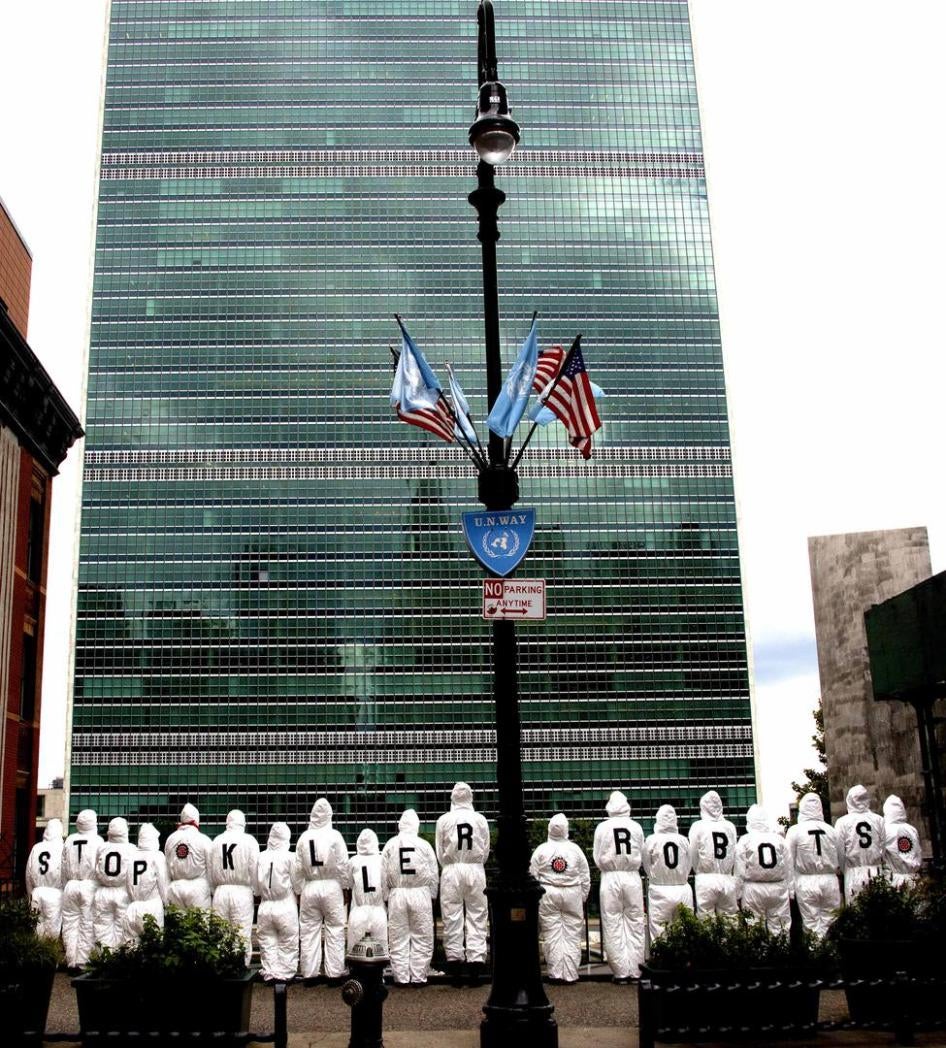
Human Rights Watch 21/05/2025 - Global momentum to prohibit and regulate “killer robots” seems to be building, as evidenced by numerous countries’ participation in the first United Nations General Assembly meeting on autonomous weapons systems, Human Rights Watch said today.
Officials from 96 countries, along with representatives from UN agencies, the International Committee of the Red Cross (ICRC), and nongovernmental organizations, attended the General Assembly meeting in New York on May 12-13, 2025.
“Dozens of states expressed grave concerns and alarm about removing human control from weapons systems,” said Mary Wareham, deputy crisis, conflict and arms director at Human Rights Watch. “Amid increasing desire for regulating autonomous weapons systems, states should commit to open negotiations on a ‘killer robots’ treaty this year.”
Technological advances and military investments are spurring the rapid development of autonomous weapons systems, which would operate without human intervention. Once activated, these weapons systems rely on software, often using algorithms, input from sensors like cameras, radar signatures, heat shapes, and other data to identify a target. After finding a target, they would fire or release their payload without the need for approval or review by a human operator. That means a machine, rather than a human, would determine where, when, and against what force is applied.
The UN meeting saw many states call for a new international treaty to address these and other concerns, with most advocating for a strict prohibition on autonomous weapons systems that are unpredictable.
At the opening of the UN meeting, UN Secretary-General António Guterres and ICRC President Mirjana Spoljaric Egger reiterated their call for the conclusion of a legally binding instrument banning these “politically unacceptable, morally repugnant” weapons by 2026. The secretary-general has also emphasized this call in his forthcoming 2025 report on the protection of civilians, which will be presented to the UN Security Council on May 22.
More than 120 countries support calls to negotiate a treaty that prohibits and regulates autonomous weapons systems. The ICRC, civil society groups, and many governments say the treaty should prohibit autonomous weapons systems that operate without meaningful human control or that target people. Regulations should ensure that all autonomous weapons systems not covered by the prohibitions operate only with meaningful human control. Read more - Lire plus
Canada has not yet declared its position on the negotiation of a legally binding instrument on autonomous weapons systems
| | Letter to the Prime Minister Urging Leadership on Refugees and Immigration | |
CCR 16/05/2025 - We urge these be included as priorities in your cabinet’s mandate letters:
1. Reclaiming the Narrative of Canada as a Welcoming Nation
Public opinion polling consistently shows that Canadians view immigration positively, reflecting a broad consensus that Canada is strengthened by immigration, respect for human rights and being open to the world.
Yet in the year leading to the 2025 election, we saw this precious consensus come under attack with false narratives that pitted Canadians against future Canadians, blaming newcomers for long standing policy failures not of their making. Refugees and asylum seekers were particularly targeted despite comprising less than 2% of total annual immigration numbers.
It’s time to turn the storyline around with a unifying vision. Our members witness daily how in our communities people show up for other people, welcoming newcomers as neighbours, colleagues and friends. At a time when our sovereignty is under threat, when Canadians are rallying to stand behind what makes us distinct and binds us together as a nation, we need to defend our core values as a welcoming country.
To build the strong united and supportive communities pledged in the platform, we need an intentional shift, from all levels of government and all parts of society, in how we talk about immigration. Now is the time to build a positive vision that ignites our best qualities, combats the negative rhetoric that keeps many of us feeling unsafe and unwelcome, and builds the basis for a more inclusive and prosperous future for us all.
For our part, we are working with a broad coalition of organizations to launch a national campaign and ensure the public consensus for immigration is maintained and strengthened. We are keen to engage with you on its relevance for parliamentarians.
2. Reasserting Canada’s Global leadership on Refugees
We enthusiastically welcome your commitment that at a time of rising global conflict and authoritarianism, Canada will lead where many are stepping back. The US retreat to isolationism – ending refugee resettlement, suspending the asylum system and other protection programs, slashing USAID, and withdrawing from UN institutions– is causing shockwaves of harm for millions around the world. Your government’s commitment to scale up international assistance funding and programs for LGBTQIA+ refugees is commendable. Other vulnerable refugee populations also need attention.
It is essential that Canada’s response to global crises be guided by an unwavering commitment to advance equity and anti-racism. We must learn from the widely critiqued immigration initiatives for Sudan and Gaza that have cost so many lives and let down so many in our communities who still hold out hope for a Canadian response we can all be proud of. Together we can build programs that tackle the systemic barriers and biases created by anti-Black and anti-Palestinian racism. An action plan to end the chronic delays faced by refugees being processed from Africa must be launched. There are simple steps like transparency of data by region that would help.
Canada’s immigration levels matter–to people at home and abroad. The economic, family and refugee pillars of immigration need better balance. Processing times for refugees are consistently among the longest of all categories. We urge you to ensure Canadian values and leadership are reflected by committing that a minimum of 15% of annual admissions are dedicated for humanitarian resettlement, including at least 20,000 Government Assisted Refugees, given the skills, capacity and generosity of our people. Where you lead, Canadians will respond, as we have repeatedly, from the arrival of Vietnamese refugees decades ago to more recent crises in Syria, Afghanistan and Ukraine.
Crucially, the government must end the agonizing wait times endured by refugees who have found protection in Canada but remain separated from their families abroad. Children should be reunited with their parents within 6 months.
3. Ensuring the Right to Asylum with Dignity
The right to seek asylum from persecution is a right protected under the Canadian Charter and international law. Yet people in Canada are increasingly being told that refugee claimants are causing a “crisis”— a situation Canada is unable to handle. This is simply not the case. Our country, a global leader in welcoming refugees, has the infrastructure, the know-how and the resources to respond to those seeking protection at and within our borders in an effective and orderly way that treats people with dignity. [...]
This is an historic moment of transformation in our relations with the US and this is no less true for matters of migration. We are witnessing in the US a suspension of the rule of law, the abandonment of the principle of non-refoulement, the dismantling of the asylum system, and severe encroachments on civil rights.
Given the evidence, it is impossible to maintain with integrity that refugees turned back at our border will be safe in the US. The Safe Third Country Agreement must be abandoned. It is both ineffective and violates people’s rights, leading families to risk more dangerous journeys and incentivizing organized crime.
We urge you to reject a costly, militarized, US-style approach to border enforcement that dehumanizes those who seek our protection. Collectively we have proven solutions to respond to those fleeing dangers – solutions that can save lives at a fraction of current costs. In a world of closing minds and closing borders, Canada can lead the way. Read more - Lire plus
Les personnes trans prises dans l’étau de l’Entente sur les tiers pays sûrs
NEW ACTION Send a message to PM Carney: Migrants Need Permanent Status Not Precarity
| | The "Invasion" Lie, The Intelligence Purge and The Threat to Habeas Corpus | | |
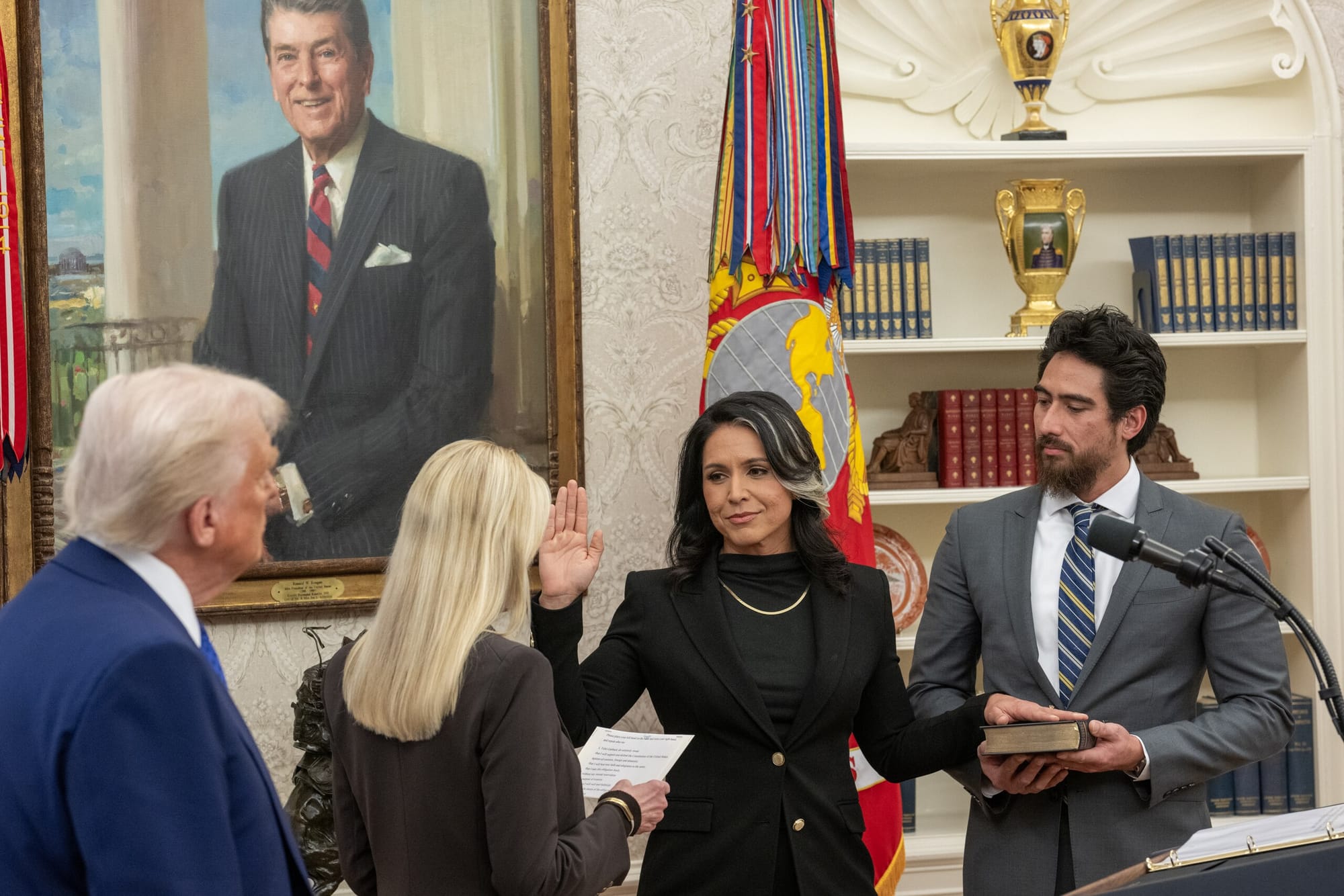
Forever Wars 19/05/2025 - Tulsi Gabbard, the latest opportunist to serve as Director of National Intelligence, fired the two senior leaders of the National Intelligence Council last week. Their fireable offense was to preside over an intelligence analysis refuting a lie favored by the Trump administration, which holds the United States to be under invasion by the Venezuelan government using the previously obscure gang Tren de Aragua.
Predictably, Gabbard's office claimed that firing acting National Intelligence Council Chairman Mike Collins and his deputy Maria Langan-Rieckoff was a strike against "the weaponization and politicization of the intelligence community," rather than, say, Gabbard unambiguously weaponizing and politicizing intelligence. If you read this piece of mine from 2020, you'll be familiar with Gabbard's gambit.
The National Intelligence Council analysis in question, dated April 7, is available here, and I encountered it via SpyTalk, so shout out to them. (SpyTalk EIC Jeff Stein solicited my first freelance piece of national-security journalism, way back in 2002, so I hold him in high regard.) The Times reported last week that the April 7 assessment was itself a do-over, after Gabbard deputy and National Counterterrorism Center Director Joe Kent reportedly told Collins to "rethink" an earlier version that came to the same conclusion.
"While Venezuela's permissive environment enables TDA [Tren de Aragua] to operate, the Maduro regime probably does not have a policy of cooperating with TDA, and is not directing TDA movement to and operations in the United States," the analysis found. The basis for that assessment, it continues, is that "Venezuelan law enforcement actions demonstrating the regime treats TDA as a threat; an uneasy mix of cooperation and confrontation rather than top-down directives characterizing the regime's ties to other armed groups; and the decentralized makeup of TDA that would make such a relationship logistically challenging." They might have added that it's fucking rich to accuse the Venezuelans of destabilizing the United States when the United States has been involved in two failed coups against Venezuela in less than 20 years.
My track record in journalism should demonstrate that I am not here to glaze the intelligence agencies. Hearing the likes of Jim Clapper manipulate the phrase "speaking truth to power," as if the "intelligence community" isn't power itself, causes my eye to twitch. But that shouldn't obscure the underlying issue here. The April 7 intelligence analysis is a substantial impediment to a claim critical for Trump to perform renditions and deportations using a 227-year-old law intended for use during wartime. That is, for the Trump administration to avail itself of the authorities of the 1798 Alien Removal Act, which circumvent due-process guarantees, it has to show that the U.S. is under a real and not rhetorical invasion. "Invoking [the Act] in peacetime to bypass conventional immigration law would be a staggering abuse," writes Katherine Yon Ebright of the Brennan Center for Justice with understatement.
Over the past two months, the courts have dealt Trump's mass-deportation agenda setback after setback, particularly concerning Trump's invocation of the Alien Removal Act. While we shouldn't overstate these setbacks since ICE continues its raids, the Trump administration's most recent legal frustration came on Friday, when the Supreme Court continued a pause on using the act for migrant removals so an appeals court can clarify "whether the president's move is legal," per CNN, among other central questions. CNN also noted that during the Trump administration's initial March submission to the Supreme Court asking to overturn lower-court bans against using the Act to deport/render people, it cited "sensitive national-security-related operations."
It is unsurprising that the administration would cite "national security" grounds to argue that the courts need to defer to the executive. That was the frequent assertion made by the Bush administration at the dawn of the War on Terror, continued by the Obama administration when it came time to assassinate a U.S. citizen it never charged with a crime. While those efforts didn't succeed in destroying habeas corpus—that is, in making detentions unreviewable—they succeeded more than they failed, as readers of REIGN OF TERROR know. Once again, Trump is opening a jar that the War on Terror loosened up for him. The Supreme Court will likely end up deciding the scope of the applicability of the Alien Removal Act, and the track record of the court makes me doubt it has a Rasul v. Bush or a Boumediene v. Bush in it. (Not that the federal courts after those rulings freed Guantanamo detainees, but I digress.) As Sam and I were working on this piece, the Court permitted Trump to remove Temporary Protected Status for up to 350,000 people who migrated to the U.S. from Venezuela.
The judicial friction prompted White House Deputy Chief of Staff Stephen Miller, on May 9, to threaten the suspension of habeas corpus in a statement to reporters. Soon after, Steve Bannon made the same threat, phrased as prediction since he doesn't wield formal power, in an interview with the Financial Times. Their statements were aimed at the federal judges and Supreme Court justices considering mass-deportation cases. Since the judicial branch will want to avoid the bright-line Constitutional abandonment that suspending habeas corpus represents, Miller and Bannon are telling the courts that if they want to keep Trump from crossing a Rubicon, they need to accept the abandonment of due process for mass deportation. Seeing how quickly mass deportation, even outside the Alien Removal Act, became a weapon against political dissent, Miller and Bannon are running a heat check on the judges, to see who will go along with the bullshit distinction of gutting due process in the name of saving habeas corpus.
The firings should remove all doubt, should any remain, about why Gabbard is in her job. It’s reminiscent of Trump getting rid of a troublesome inspector general in retaliation for his role in Trump's first impeachment and firing one of Gabbard's predecessors for insufficient loyalty. The director of national intelligence is purging inconvenient intelligence analysts not for being part of a "Deep State" but for not being a suborned part of a Deep State. It will never stop being ridiculous for the Office of the Director of National Intelligence to see itself as excluded from a Deep State, just as it was for Mike Flynn, a former JSOC intelligence chief and a director of the Defense Intelligence Agency, to posture like he was fighting one. The only thing distinguishing an intelligence official from a Deep State operative in MAGA's eyes is deference to its agenda. Read more - Lire plus
NEW ACTION USA: RETURN ANDRY AND OTHERS EXPELLED TO EL SALVADOR
How ICE is becoming a secret police force under the Trump administration
Video: What Happened to ‘Abolish ICE’? Francesca Fiorentini Explains
Judges dismiss national security charges against immigrants who enter new militarized zone at border
| | Trump Is Building a Global Gulag for Immigrants Captured by ICE | |
The Intercept 15/05/2025 - The Trump administration appears to be laying the groundwork for a global gulag for expelled immigrants.
In addition to using longtime U.S. detention facilities at Guantánamo Bay in Cuba, the Trump administration is seeking more far-flung locales to hold deported people, regardless of their countries of origin.
The U.S. is already using the notorious Terrorism Confinement Center, or CECOT, in Tecoluca, El Salvador, and has its sights set on numerous other countries, including many that the State Department has excoriated for human rights abuses. The U.S. has reportedly explored, sought, or struck deals with at least 19 countries: Angola, Benin, Costa Rica, El Salvador, Eswatini, Equatorial Guinea, Guatemala, Guyana, Honduras, Kosovo, Libya, Mexico, Moldova, Mongolia, Panama, Rwanda, Saudi Arabia, Ukraine, and Uzbekistan.
“These are the plans of an authoritarian regime. They want to spend likely billions of taxpayer dollars to send asylum-seekers into war zones or to countries rife with human rights abuses,” Sen. Chris Murphy, D-Conn., told The Intercept.
“It’s truly alarming that this administration doesn’t view people fleeing persecution or torture as human and that the United States government is even discussing this obviously illegal proposal. It’s deeply un-American, will make all Americans less safe, and will, without a doubt, result in the loss of human life,” Murphy said.
The State Department refused to provide a complete list of countries with which the U.S. has made agreements to accept deportees from other countries — often referred to as third-country nationals — citing the sensitivity of diplomatic communications. But the Trump administration is planning a major increase in deportation flights in coming weeks to destinations across the globe, according to a government official who spoke on the condition of anonymity, as well as published reports.
In remarks outside the White House on Friday, White House deputy chief of staff Stephen Miller offered a glimpse of the global scope of deportations. “We send planes to Iraq. We send planes to Yemen. We send planes to Haiti. We send planes to Angola,” he said. “I mean, ICE is sending planes all over the world all the time. Anyone who came here illegally, we’re finding them and we’re getting them out.”
The White House did not respond to a request for clarification about which countries are receiving third-country nationals.
In the aftermath of the 9/11 attacks, the George W. Bush administration created a worldwide network of secret prisons and torture sites as part of its global war on terror. Its crown jewel, the Guantánamo Bay detention center, was established in January 2002 as a place for the United States to hold so-called enemy combatants.
The U.S. government chose the U.S. Naval Station Guantánamo Bay because it was seeking a site where neither U.S. nor international law applied — a legal black hole where they could disappear people indefinitely. Over time, Guantánamo became emblematic of gross human rights abuses. “Forever prisoners” of the war on terror are still being held there today. Others caught up in America’s counterterrorism dragnet were detained at torture prisons in Afghanistan and Iraq or kidnapped and “rendered” to CIA black sites — secret prisons in at least eight countries around the world.
As the Trump administration has expanded the Bush and Obama-era terrorism paradigm to cast immigrants and refugees as terrorists and gang members, it has reconceptualized rendition and even pressed Guantánamo Bay into service as a way station for Venezuelan men expelled to El Salvador.
“In many ways, this is a retread of some of the practices of the second Bush administration in terms of extraordinary rendition abroad; the RDI program, rendition, detention, and interrogation — the formal name for their torture program,” said Brian Finucane, who worked for a decade in the Office of the Legal Adviser at the Department of State where he advised the U.S. government on counterterrorism and other military matters. “Using the counterterrorism model, the Trump administration believes it provides it with broad authority to ride roughshod over civil rights.” Read more - Lire plus
Attorneys say U.S. immigration authorities appear to have begun deporting migrants to South Sudan
DHS asks for 20,000 National Guard troops to assist in deportations
DOJ sends warning to judges and lawmakers who stoke Trump’s wrath on immigration
Trump DOJ Sues Colorado Over Sanctuary Immigration Laws
Deportation camps: EU member states want to “prevent judicial scrutiny”
| | Podcast: Migration, AI and The Rise of the Machines | |
OpenDemocracy 10/03/2025 - Borders patrolled by AI-powered robotic dogs once seemed like something purely in the realm of dystopian sci-fi novels. But the border industrial complex is working hard to make them a part of our (still dystopian) reality.
Petra Molnar, author of The Walls Have Eyes: Surviving Migration in the Age of Artificial Intelligence, joins us to discuss the militarization of border technologies, the racial politics of migration and the complexities of being both a refugee and an economic migrant.
Petra is a lawyer and anthropologist specializing in migration and human rights. She is the co-creator of the Migration and Technology Monitor, a collective of civil society, journalists, academics, and filmmakers interrogating technological experiments on people crossing borders.
—
Transcript
Hello and welcome to In Solidarity. I'm Aman Sethi. Today we're diving into the terrifying world of the border industrial complex, a network of corporations who have made a business of devising ever more dystopian technology to track and trap vulnerable people making their way across national borders.
Think AI powered robotic dogs with facial recognition cameras for eyes. The rise of the borders industrial complex is pretty scary on its own. But as anyone following the tech industry can attest, technologies and tactics devised to control borders very quickly become technologies and tactics to control citizens. At this point, I can imagine you sitting back saying, ‘great, the world is on fire, the plague of war sweeps the land, and now we have to worry about AI robo dogs?’, Well, yes, unfortunately we do.
And to help us worry along, we have our guest for today, Petra Molnar has written this great book called The Walls Have Eyes: surviving migration in the age of AI. Petra is an anthropologist, an immigration lawyer, and one of the most interesting minds thinking about the intersection of migration, tech, law and borders. Hi, Petra. Welcome to the show.
Thank you so much for having me.
It's a real pleasure, Petra. Let's just start, by cutting straight to it like, why did you write this book?
Yeah, that's it. That's a good place to start, because this book took me about six years to write. I mean, I always thought it would end up in a book, but it was a winding road, I mean, as most of these projects are. I am not a tech person, not a technologist. Six, seven years ago, I didn't know what AI was or what algorithms were, and frankly, I didn't really care, because I was a practising lawyer in Canada at the time.
I'm a refugee lawyer and an anthropologist by training, but not a tech person, but my colleague, Lex Gill, who's a technology lawyer expert, and I at the time, back in 2018 discovered that the Canadian government was experimenting with algorithms to automate various parts of the Canadian immigration system, and we wrote a report about it, and this little report made its way into all sorts of chambers of government and the UN and it really surprised me at how much attention this was getting, perhaps because it was one of the first attempts to try and put a human rights lens on the intersection of technology and migration, surveillance and automation.
And from then, because I've always tried to work from a comparative perspective, I thought, well, what's happening at other borders, what's happening in other jurisdictions and other environments. And the project kind of organically grew from there and eventually culminated in the book.
What I love about the book is you really take the reader there, like the readers with you as you traverse a series of sort of borderlands. Can you describe some of the things that that you saw and what really jumped out to you in in the geographies that you, that you traversed.
It starts off at the US Mexico border, and tries to tell a story of the kind of growing surveillance that's been part and parcel of the US immigration response for for decades, and intensifying recently, of course.
Never more so than under the Trump presidency 2.0, but the first chapter also talks a lot about the people who show up to try and help those who are on the move, so the samaritans who go into the Sonora desert to drop water or to assist people in distress and to deal with human remains as well. Then there's few chapters about the situation in the European Union, namely Greece, because Greece has been warehousing, for lack of a better term, huge numbers of people on the move for a number of years, which has resulted in essentially these open air prison refugee camps that are now replete with all sorts of tech.
What kind of tech?
It really is a broad class of tech that I cover in my work. I talk about it kind of as technologies of border management or migration control, so that can include things like surveillance tech that people might be familiar with, things like drones, cameras, but even more draconian projects now, like robo dogs that have been introduced at the US Mexico border and AI lie detectors that the European Union's been playing with.
There's also things that you know are more on the side of, for example, big data sets that are being collected on people on the move. Then also a lot of the automation projects that I briefly alluded to, the kind of visa triaging algorithms and the decision making that happens behind closed doors even once a person has already arrived in the country that they are planning to go to.
One of the things that I've found interesting about your work was that it refers to this, this idea that you call the borders industrial complex. What do you mean by that?
So this is a term first introduced by a wonderful colleague of mine, Todd Miller. He's a journalist in Arizona, and he runs an amazing platform called The Border Chronicle. I would encourage you to take a look at it.
So Todd's been talking a lot about the border industrial complex as an idea, because what we're really seeing is this rise of an industry, an industry built on innovation by the private sector to solve the so-called problem of migration that states are very concerned about. So if a state is able to say, well, people on the move are a problem, and we need a solution for it, the private sector sweeps in and says, ‘well, look, we have the solution for you, and we will sell it to you, and that solution is a robo dog or a drone or AI’, and it really is a multi billion dollar industry now, and it's exponentially increasing.
I don't have the figures for 2024 and 2025 yet, but there is a massive uptick of investment. And perhaps disturbingly too, the day after President Trump was re-elected, stocks in private security and surveillance firms soared. So there is this relationship between a turn to the right, anti-migrant sentiments, and the private sector stepping in and offering these so-called solutions to assist with this kind of move towards controlling migration more and more. Read more - Lire plus
Missed opportunities in AI regulation: lessons from Canada’s AI and data act
The AI Dragnet: The U.S. government is activating a suite of algorithmic surveillance tools, developed in concert with major tech companies, to monitor and criminalize immigrants’ speech
UK: Why the Home Office’s ‘AI Asylum Success Story’ Was Anything But
| | Project Esther: NYT Details Right-Wing Plan to “Rebrand All Critics of Israel” as Hamas Supporters | |
Democracy Now! 19/05/2025 - A new report in The New York Times takes a deep dive into Project Esther, a policy blueprint to crush the pro-Palestinian movement in the United States from the Heritage Foundation, the right-wing think tank best known for spearheading Project 2025.
Project Esther was formed during the Biden administration and lays out plans for surveilling, silencing and punishing pro-Palestinian activists, including deporting non-U.S. citizens and withholding funds from universities. Many of the Heritage Foundation’s proposals appear to have been taken up by the Trump administration.
“Project Esther aims to rebrand all critics of Israel and pro-Palestinian protesters as providing material support for terrorism,” says investigative reporter Katie Baker. “They’re very explicit that this is what they’re doing. … This is all laid out online, and it has been for months.” [...]
The Forward had originally talked about this kind of white paper of the Heritage Foundation, but you went much further. You named names and talked to people behind Project Esther. Tell us who they are.
KATIE J.M. BAKER: Yeah, so, the woman overseeing Project Esther is Victoria Coates. She is a former national security adviser to Trump during his first administration, and she has a long history of working on Israeli matters. And then, Robert Greenway ran the Abraham Accords, and he’s one of the co-authors of Project Esther.
AMY GOODMAN: And if you can talk about what exactly their plans are? And how many Jewish groups are involved in shaping Project Esther, as they talk about — as the leaders of Project Esther talk about combating antisemitism?
KATIE J.M. BAKER: Yeah, so, Project Esther aims to rebrand all critics of Israel and pro-Palestinian protesters as providing material support for terrorism. So that means that anyone who’s ever participated in a pro-Palestinian protest at a university, for example, is potentially providing material support and should be fired or deported or otherwise ostracized from what they call open society. And there’s not very many Jewish groups involved in this project. There are a few, but the task force that inspired Project Esther was primarily Christian and right-wing organizations.
AMY GOODMAN: Can you talk about the role of Christian Zionists?
KATIE J.M. BAKER: Yeah. There are some Christian Zionists who are interested in Israel because they think that it will help bring about Christian dominion worldwide or bring about biblical end times. But there are also a lot of Christians who just see shared Judeo-Christian values and support Israel for that reason. [...]
AMY GOODMAN: You write in the piece, “Project Esther’s architects envisioned outcomes that at the time might have seemed far-fetched. … Now, four months after … Trump [has taken] office, Heritage Foundation leaders are taking an early victory lap.”
KATIE J.M. BAKER: Yeah, so, again, they won’t say for sure. And, you know, if you recall, last year, Project 2025 was so contentious, it became such a big talking point during the election campaign, that Trump had to distance himself from it. So, they’re very careful to keep their distance from each other. But they do say that they meet regularly with officials from the administration. And Mr. Greenway said to me that it was no coincidence that we’re seeing actions such as billions of dollars withheld to universities for federal funding. We’re seeing calls to monitor the social media of immigrants for, quote-unquote, “antisemitic” activity. We’re seeing the attempts to deport people who have criticized Israel or argued for Palestinian rights. And so, all of that is very clearly laid out in Project Esther. Read more - Lire plus
New Video of Mahmoud Khalil’s Arrest Shows Trump Admin is Lying in Court
Lawsuit over deportations of foreigners with pro-Palestinian views can proceed, judge rules
ICE Duped a Federal Judge Into Allowing Raid on Columbia Student Dorms
DHS Is Getting Ready to Identify Everyone Who Leaves the Country, Expanding Immigration Dragnet
| | Trump admin claims donating to LGBTQ+ rights group undermines national security | |
LGBTQ Nation 13/05/2025 - The Trump administration is justifying the president’s claim that top U.S. law firm Susman Godfrey is a national security threat by citing its donations to an LGBTQ+ legal nonprofit.
Trump targeted Susman Godfrey in an April 9 executive order which sought to revoke security clearance from Susman lawyers and restrict their access to federal buildings. The order was seen as retaliation for the firm having represented Dominion Voting Systems in its 2021 defamation suit against Fox News after the right-leaning media outlet repeated Trump’s claims that Dominion’s voting machines helped “steal” the 2020 election from Trump. During a signing ceremony in the Oval Office last month, White House Deputy Chief of Staff went so far as to falsely suggest that the firm “is very involved in the election misconduct,” according to Bloomberg Law.
Susman challenged Trump’s order in court, arguing that it violated the firm’s and its clients’ constitutional rights to free speech and due process. On April 15, a federal judge granted the firm a temporary restraining order barring the administration from enforcing parts of the order while the case proceeds. The case was back in court last week, where a lawyer for Trump’s Justice Department faced sharp questioning from U.S. District Judge Loren AliKhan about the administration’s justification for Trump’s order, according to Reuters.
On Monday, May 12, Lawfare senior editor Roger Parloff posted a screenshot from court filings on Bluesky that indicates the administration’s flimsy rationale. In his order, Trump alleged that Susman “funds groups that engage in dangerous efforts to undermine the effectiveness of the United States military through the injection of political and radical ideology.” As evidence for the claim, which Susman denies, the Trump Department of Justice cites the fact that the firm “has provided funds to GLBTQ Legal Advocates and Defenders (GLAD), which previously sued the Federal Government to enjoin Department of Defense policy, based on a radical theory of gender ideology.”
In August 2017, GLAD filed a lawsuit on behalf of five transgender servicemembers challenging Trump’s first term trans military ban. The organization later joined Equality California and the National Center for Lesbian Rights as co-counsels in another case challenging the ban.
While Above the Law’s Joe Patrice notes that the administration’s argument that charitable contributions to an LGBTQ+ nonprofit constitute a national security threat is laughable, he also notes that the administration’s characterization of GLAD’s legal challenge is alarming. “To call a federal [civil rights] lawsuit an effort to undermine the government requires adopting the premise that it’s a threat to make sure the government isn’t doing anything illegal,” Patrice writes.
Susman Godfrey is one of several top law firms that have been the subject of Trump’s recent executive orders. While the firm and three others have chosen to fight the administration in court, nine firms have reportedly struck deals with Trump, promising over $900 million worth of pro bono work for the administration, according to Business Insider.
“The whole point of the Susman Godfrey executive order and those like it is to intimidate law firms into abandoning advocacy on behalf of their clients,” a lawyer for the firm argued in court last week, according to Reuters. “That is unconstitutional, full stop.” Meanwhile, as Bloomberg Law notes, the firms that have challenged Trump’s executive orders have been winning in court. Read more - Lire plus
| | UK special forces veterans accuse colleagues of war crimes in Iraq and Afghanistan | |
The Guardian 12/05/2025 - Former UK special forces personnel have accused colleagues of committing war crimes in Iraq and Afghanistan, including alleging that they executed civilians and a child.
Graphic accounts of routine executions of handcuffed prisoners and the killings of people in their sleep were handed to the BBC, which reported that weapons were planted during cover-ups.
The new allegations of war crimes span more than a decade, much longer than the three years currently being examined by a British public inquiry. Members of the Special Boat Service (SBS), the Royal Navy’s elite special forces regiment, are accused for the first time, along with soldiers from the SAS – who have been in the spotlight of the inquiry.
Veterans who spoke to the BBC spoke of a “mob mentality” among some former colleagues who were described as “lawless” and exhibiting “serious psychopathic traits”. “They handcuffed a young boy and shot him,” said one veteran of the SAS in Afghanistan. “He was clearly a child, not even close to fighting age.”
The government has said that anyone with any evidence should contact the public inquiry.
Mike Martin, a Liberal Democrat MP and member of the defence select committee, said the accounts echoed those of Afghan families.
Panorama also claimed that David Cameron was repeatedly warned during his tenure as prime minister that British special forces were killing civilians in Afghanistan.
The allegations are based on interviews conducted by investigators from the BBC’s Panorama programme, from more than 30 veterans who served with or alongside UK special forces in Iraq or Afghanistan.
Richard Bennett, the UN-appointed special rapporteur on the human rights situation in Afghanistan, said the allegations highlighted “the need for comprehensive accountability and justice for victims and their families”.
A Ministry of Defence spokesperson said: “We are fully committed to supporting the independent inquiry relating to Afghanistan as its work continues." Read more - Lire plus
| | UK anti-terrorism tsar calls for anti-dissent laws | |
The National 19/05/2025 - THE UK’s anti-terrorism tsar has claimed foreign agents are promoting Scottish independence and getting people to hate Britain.
Jonathan Hall KC, the UK Government’s adviser on terrorism law, suggested that ministers may seek to introduce “anti-subversion” laws to crack down on beliefs that he claimed posed a threat to democracy.
In comments released ahead of a speech to the conservative Policy Exchange think tank on Monday evening, Hall argued new laws could be brought in to “save democracy from itself”.
He said: “If I were a foreign intelligence officer of course I would meddle in separatism, whether Scottish independence or independence of overseas territories or Brexit.
“I would encourage extreme forms of environmentalism, hoping that policies generated would damage my adversaries’ economy or at least sow discord or hopelessness.”
Hall suggested that hostile foreign states may sponsor Islamist MPs and use social media as a “delightful playground for wedge issues”.
His planned speech, first reported in The Times, will also see him claim that foreign agents could be pushing trans rights on social media and questioned whether the Government may need to adopt “a Cold War mentality that sniffs out subversion”.
Hall was expected to say: “If I were a foreign intelligence officer, of course I would ensure that the UK hated itself and its history. That the very definition of woman should be put into question, and that masculinity would be presented as toxic. That white people should be ashamed and non-white people aggrieved. I would promote antisemitism within politics.
“My intention would be to cause both immediate and long-term damage to the national security of the UK by exploiting the freedom and openness of the UK by providing funds, exploiting social media, and entryism.” Source
| | OTHER NEWS - AUTRES NOUVELLES | | ICLMG ACTIONS DE LA CSILC | |
Canada: Abolish rights-violating terrorist entities list!
| | |
On October 15, 2024, the Canadian government placed the Samidoun Palestinian Prisoner Solidarity Network on Canada’s terrorist entities list. While ostensibly a tool to protect the safety and security of people in Canada and internationally, the list is an arbitrary political tool that undermines freedom of association, of expression and due process in the courts. Its effectiveness as a national security tool has never been demonstrated in a manner that justifies its use.
Due to these deep flaws, and more, the ICLMG has consistently called for the list to be abolished since the Canadian coalition’s founding in 2002. Please join us in urging the Canadian government to abolish the rights-violating terrorist entities list once and for all. Thank you!
| | CSIS isn't above the law! | | |
In recent years, at least three court decisions revealed the Canadian Security and Intelligence Service (CSIS) engaged in potentially illegal activities and lied to the courts. This is utterly unacceptable, especially given that this is not the first time these serious problems have been raised. CSIS cannot be allowed to act as though they are above the law.
Send a message to Public Safety Minister Marco Mendicino demanding that he take immediate action to put an end to this abuse of power and hold those CSIS officers involved accountable, and for parliament to support Bill C-331, An Act to amend the Canadian Security Intelligence Service Act (duty of candour). Your message will also be sent to your MP and to Minister of Justice David Lametti.
| | Canada must protect Hassan Diab! | | Canada must repatriate all Canadians detained in NE Syria now! | |
On January 20, 2023, Federal Court Justice Henry Brown ruled that Canada must repatriate Canadians illegally and arbitrarily detained in northeast Syria. On February 6, 2023, the Canadian government filed an appeal and asked that the Brown ruling be set aside and placed on hold while the appeal plays out. This is unacceptable.
Every day the government fails to bring these Canadians home, it places their lives at risk from disease, malnutrition, violence, and ongoing military conflicts, including bombing by Turkey’s military. United Nations officials have even found that the conditions faced by Canadians in prison are akin to torture. Please click below to urge the federal government to repatriate all Canadians illegally & arbitrarily detained in northeast Syria without delay.
| | 21 years of fighting deportation to torture: Justice for Mohamed Harkat Now! | | Canada must protect encryption! | |
Canada’s extradition system is broken. One leading legal expert calls it “the least fair law in Canada.” It has led to grave harms and rights violations, as we’ve seen in the case of Canadian citizen Dr Hassan Diab. It needs to be reformed now.
Click below to send a message to urge Prime Minister Trudeau, the Minister of Justice and your Member of Parliament to reform the extradition system before it makes more victims. And share on Facebook + Twitter + Instagram. Thank you!
Regardez la vidéo avec les sous-titres en français + Agir
| | Protect our rights from facial recognition! | Facial recognition surveillance is invasive and inaccurate. This unregulated tech poses a threat to the fundamental rights of people across Canada. Federal intelligence agencies refuse to disclose whether they use facial recognition technology. The RCMP has admitted (after lying about it) to using facial recognition for 18 years without regulation, let alone a public debate regarding whether it should have been allowed in the first place. Send a message to Prime Minister Trudeau and Public Safety Minister Bill Blair calling for a ban now. | | |
Thanks to the support of our members and donors in the second half of 2024 we have been able to work on the following:
- Bill C-20, the Public Complaints and Review Commission Act - which has been adopted and will finally create an independent watchdog for CBSA
- Bill C-27, Digital Charter Implementation Act, 2022 and the very problematic Artificial Intelligence and Data Act
- Bill C-63: The concerning Online Harms Act
- Bill C-70: The new and highly controversial Foreign Interference law
- Bill C-353: The Foreign Hostage Takers Accountability Act
- Palestine and the right to dissent
- Canada’s terrorist entities list
-
Monitoring the implementation and review of the authorization regime for international assistance to vulnerable populations in areas controlled by “terrorist” groups
- Combatting Racism & Islamophobia
- Repatriation of all Canadians detained in Northeastern Syria
- Justice for Dr Hassan Diab
- Mohamed Harkat & Security certificates
- Work with the international Civil Society Coalition on Human Rights and Counter-terrorism
- The UN Counter-terrorism Executive Directorate (CTED) Canada assessment
- The UN Cybersecurity Treaty & the EU AI Convention
What we have planned for 2025!
The coming year will present many challenges, old and new. Much of our successes from this past year will continue to need follow-up, as we track the establishment of the new CBSA review body, and push back against new foreign interference laws and attempts to silence protest. There are also the challenges we will face with the incoming US government, which is already playing out its promises to increase the securitization of the US-Canada border with more police, drones and facial recognition surveillance. This will place the rights of all travellers, but especially asylum seekers searching for protection and better living conditions, at risk.
We’ll also have our own election in Canada this year, and ICLMG will be working to both make sure the public is aware of the parties’ track records on civil liberties and national security, as well as to secure commitments to protect our rights from candidates and the new government once it is in office.
We will continue our work on these issues and much more in the next year:
- Pressuring lawmakers and officials to protect our civil liberties from the negative impact of national security as well as opposing the discourse of “countering terrorism” to repress dissent, such as protests in support of Palestinian rights and lives
- Co-creating a mechanism to monitor how the new Countering Foreign Interference law is used, as well as continue pushing back against xenophobic fear-mongering
-
Protecting our privacy from government surveillance, including facial recognition, and from attempts to weaken encryption, along with advocating for good privacy law reform
- Addressing the lack of regulation on the use of AI in national security, including proposed exemptions for national security agencies
-
Fighting for Justice for Mohamed Harkat, an end to security certificates, and addressing problems in security inadmissibility
-
Fighting for Justice for Hassan Diab and reforming Canada’s extradition law
-
Monitoring the implementation of the authorization regime for organizations that provide international assistance to vulnerable populations in areas controlled by “terrorist” groups
-
Pushing back on the false narrative depicting migrants and refugees as security risks, and advocating for rights protection and accountability for border agencies, including by monitoring the creation of a new CBSA and RCMP watchdog and complaint body
-
The return of the rest of the Canadian citizens and the non-Canadian mothers of Canadian children indefinitely detained in Syrian camps
-
The end to the CRA’s prejudiced audits of Muslim-led charities
- Greater accountability and transparency for the Canadian Security Intelligence Service
- Advocating for the repeal of the terrorist entities list, the Canadian No Fly List, and for putting a stop to the use of the US No Fly List by air carriers in Canada
- Keeping you and our member organizations informed via the News Digest
-
And much more! Read more - Lire plus
| | Les opinions exprimées ne reflètent pas nécessairement les positions de la CSILC - The views expressed do not necessarily reflect the positions of ICLMG. | | |
THANK YOU
to our amazing supporters!
We would like to thank all our member organizations, and the hundreds of people who have supported us over the years, including on Patreon! As a reward, we are listing below our patrons who give $10 or more per month (and wanted to be listed) directly in the News Digest. Without all of you, our work wouldn't be possible!
James Deutsch
Bill Ewanick
Kevin Malseed
Brian Murphy
Colin Stuart
Bob Thomson
James Turk
John & Rosemary Williams
Jo Wood
The late Bob Stevenson
Nous tenons à remercier nos organisations membres ainsi que les centaines de personnes qui ont soutenu notre travail à travers les années, y compris sur Patreon! En récompense, nous nommons ci-dessus nos mécènes qui donnent 10$ ou plus par mois et voulaient être mentionné.es directement dans la Revue de l'actualité. Sans vous tous et toutes, notre travail ne serait pas possible!
Merci!
| | | | |