Future Consciousness
Insights 
The Center for Future Consciousness

June 20, 2023

In this Issue


  • New Book: The Evolution of Consciousness - Chapter One - Cosmic Evolution
  • New Article: Must Read SF Books & Authors
  • The Evolution of Science Fiction YouTube Series
  • New CFC Website
  • New Expanded CFC YouTube Channel


Director of
The Center for Future Consciousness 

Center for Future Consciousness

Sign Up Now for Subscription
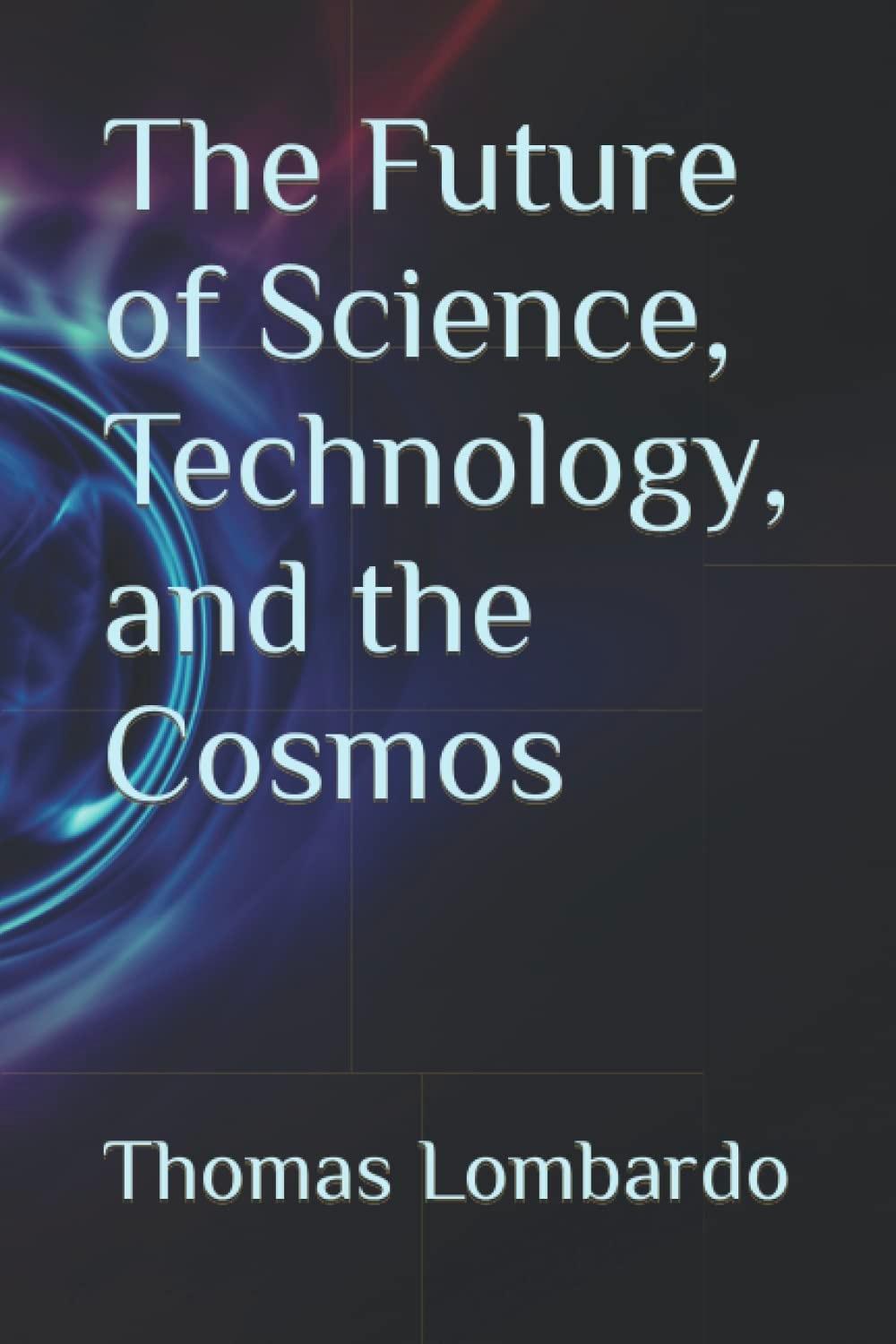
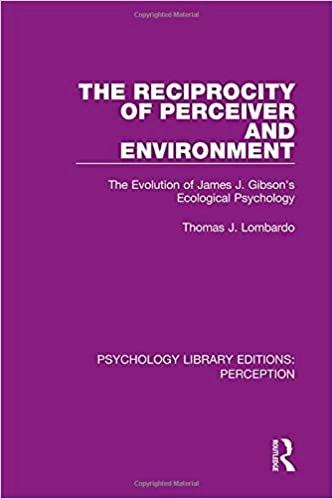
Tom Lombardo's Books on the Future, Wisdom, Psychology, Science Fiction, and Future Consciousness
 

New Book: The Future Evolution of Consciousness

Chapter One - Cosmic Evolution I

Dear Friends and Colleagues,


As introduced last month, over the last couple of years I’ve been working on a new book “The Future Evolution of Consciousness.” As everyone is aware, there are an incredible variety of current approaches that attempt to constructively address the many challenges in contemporary times. It seems to me that the key factor to focus upon both in addressing our present problems and creating a positive future is to significantly evolve our consciousness. As such, I’ve been writing a book on this topic. 


Beginning with the previous issue, I am publishing online, in Future Consciousness Insights, roughly once a month over the next year or so, drafts of each consecutive chapter in this new book.


Last month I started with the Introduction to the book. The complete Introduction is available for viewing on my Center for Future Consciousness website:

https://centerforfutureconsciousness.com/wp-content/uploads/2024/05/evol-of-consciousness-intro.pdf.  


This month I'm including Chapter One: Cosmic Evolution Part One. (See below)


The total published set of draft chapters of the book is available for reading on my Center for Future Consciousness website at:

https://centerforfutureconsciousness.com/the-future-evolution-of-consciousness/.


I am looking for feedback and comments on the book. After reading any parts of the draft chapters you can send any comments or feedback to my email: tlombardo1@cox.net.


The Future Evolution of Consciousness

Thomas Lombardo


Chapter One:

Cosmic Evolution - Part One


“Evolution is the story of us all.”

Peter Watson


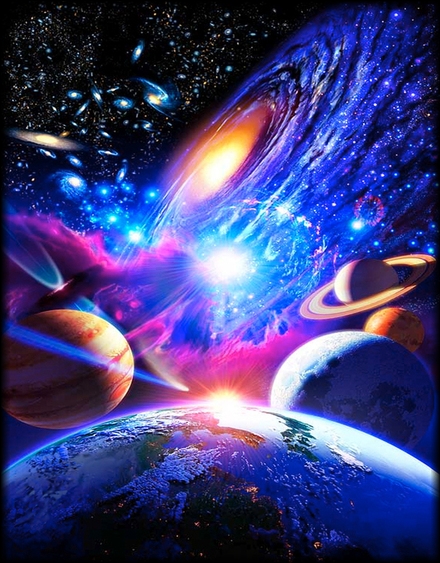
My starting point for understanding the future evolution of consciousness is to place this evolutionary process within the context of the more general cosmic reality in which it is embedded.


Understanding the nature of consciousness is a necessary step in thoughtfully considering the future evolution of consciousness. What is it that we imagine evolving in the future? To realistically and plausibly imagine the possibilities of the future evolution of some reality we need to understand the nature of that reality. So how are we to approach the challenge of understanding the nature of consciousness, such that we can credibly discuss the future evolution of consciousness?


I take the view that consciousness is part of the cosmic totality of reality, of all that exists. Consciousness is embedded within a cosmic reality and is part of the whole of the universe. Whatever is the cosmic whole, in some basic sense this all-encompassing reality supports the existence of consciousness. Our cosmic reality is the deepest and most fundamental foundation of the existence of consciousness. We could plausibly argue that the cosmic whole creates consciousness. As such, consciousness should be understood as a manifestation and consequence of the reality of the cosmos as a whole. And by implication, understanding, as best as we can at this point in time, the nature of the cosmos is essential to understanding the nature of consciousness.


Hence, I begin this inquiry into nature and future evolution of consciousness by delving into the question of our cosmic reality and how consciousness fits into the big picture of things. 


The Dualist Theory of Cosmic Reality


In the long history of the study of the nature of reality and the cosmos—encompassing religious, philosophical, and scientific thinking across many different cultures—numerous theories have been proposed and various key issues and debates have emerged: Is reality a unitary whole, or a pluralism of many distinct and separate parts? Does order or chaos rule existence and the universe? Is ultimate reality mental and spiritual in nature, or is all of reality fundamentally physical in composition? Are there two or more different dimensions of reality? Is there a grand purpose or design to reality, and if so, what is it? Was the cosmos created by some outside agency or force, or is the universe eternal and self-creative? 


One highly influential theory of reality, found in both early Eastern and Western philosophies and religions, is that reality consists of two distinct realms, one eternal, changeless, non-physical, and foundational, and one temporal, transforming, physical, and derivative. In this mindset, reality is viewed as a dualism consisting of a timeless, eternal, non-physical, and foundational sphere of existence, and an ephemeral sphere of time and the physical realm, with birth and death, and “becoming and passing away.” The eternal realm has often been conceptualized as some type of absolute Deity or God, such as in Judaism, Christianity, or Islam; or as some pure abstract and mathematical reality, such as in Plato’s philosophy; or as the ultimate ground (foundation or substance) of all being, such as in the Hindu conception of Brahman; or simply as an undifferentiated and pervasive timeless consciousness. 


Within this cluster of similar perspectives on the nature of reality, the eternal realm, in some manner or form, is seen as providing an explanation for the totality of reality, including the physical realm and the fluctuating world of time. The eternal realm is seen as the foundation of all that exists, and when a Creator is postulated within this view, the Creator is seen as generating, initiating, and bringing into existence the temporal realm. The eternal realm, inclusive of an eternal Creator, may also be seen as imprinting some grand purpose, design, or abstract form on the temporal realm. All in all, the eternal realm is seen as a framework in which to make sense out of the world of time, human reality, and existence in general.


In this mindset, the eternal realm is often viewed as the deepest and most “true” reality, with the temporal realm often described as illusory and mere appearance. (That which is changeless is more real then that which fluctuates and passes away.) 


Further, as an expression of this mindset the eternal is conceptualized as a “higher” or more elevated form of existence, whereas the temporal realm is more primitive and less advanced. It is the eternal that is usually worshipped and revered. And moreover, the eternal realm is seen as a more rarefied and different kind of reality (or substance) than the temporal; for example, the eternal realm is “spiritual” or mental, whereas the temporal realm is brute physical matter. 


This dualist view of reality had a number of different implications regarding both the nature of humanity and the ongoing saga of human existence, including humanity’s future. We are beings that exist within a cosmos that is supported by some kind of eternal foundation and in some deep sense we are reflections—indeed possibly creations—of this fundamental eternal realm. This eternal realm, which can include a Creator, provides cosmic understanding, meaning, and purpose to our human existence. Further, within this mindset, it is frequently the hope and aspiration of believers that they can (or will) ascend to the higher non-physical eternal realm, either after physical death, or through some type of deep conscious meditation that penetrates beyond the world of mere appearances. 


Of special note, this dualist mindset often includes the idea that within each human, as a distinct reality different from the physical body, is some type of non-physical reality or entity (such as a soul or spirit) that is a creative reflection of the eternal non-physical cosmic reality. Consciousness, mind, and the personal self all can be seen as part of this non-physical dimension within humans. As such, it has been a common belief that humans possess two distinctive dimensions within their total make-up: A physical dimension and a consciousness (or spiritual) dimension. The conscious mind and the physical body of humans form a dualism of distinct realities. 


All in all, the idea of a foundational eternal reality that created and supports our everyday temporal reality provides psycho-social stability and security for the human mind and human societies. This view provides an explanation for existence and provides humanity, both individually and collectively, a sense of meaning, order, and purpose within the grand scheme of things. This dualist philosophy, in different forms, also offers an aspirational and hopeful vision for the future, realized through spiritual and meditative practices, or “life after death” transformation and ascendence into a heavenly non-physical realm.


Even up to current times, a huge percentage of the human population believes, in some manner or form, in this dualist vision of an ultimate unchanging (or eternal) reality that is somehow responsible, or foundational to all that exists, including human reality and the physical temporal world we perceive around us. Moreover, in line with this cosmic dualism is the dualist belief in two different dimensions within human existence, a mental-spiritual and a physical reality. Additionally, as still embraced by many in current times, is the belief and promise that we can (or will) transcend our physical bodies and ascend to the higher, non-physical eternal realm after death, or perhaps though deep meditative or religious-spiritual practices. 


The Theory of Cosmic Evolution 


As noted above, throughout human history many different theories of reality and the cosmos have been proposed, but one general theoretical view has emerged in the last few centuries that directly and profoundly challenges the highly influential dualist mindset explained in the previous section. Increasingly, this newer theory has come to dominate, at the very least, scientific thinking on reality and the universe. This general theory is cosmic evolution. 


To quote from my book Future Consciousness, the theory of cosmic evolution entails that: 


“The entire universe from the simplest and smallest of its component parts to the largest and most complex, as well as all its laws, fundamental forces, and constants, is the result of a multi-faceted evolutionary process extending back over more than … thirteen billion years into the past. This evolutionary principle may further extend beyond the observable universe to the multi-verse (all that is, encompassing our own universe and other hypothetical universes). This principle can also be applied to the future: Everything that will happen, and everything that will emerge, will be the result of this cosmological evolutionary process.”


* * *


You can complete the reading of this book installment--with added references and footnotes--at "Cosmic Evolution Part One."


https://centerforfutureconsciousness.com/wp-content/uploads/2024/06/evol-of-consciousness-chp-1-part-one.pdf


New Article: "Must Read Science Fiction Authors and Books for Futurists"

In the June, 2024 issue of Compass Magazine of the Association of Professional Futurists I published a new article that provides a concise and informative overview of important science fiction authors and books for futurists (or for that matter any interested reader).


You can read the beginning of the article below, followed by a link to the complete article with illustrations on my website.


Science fiction literature offers an immense wealth of reading resources for futurists. But, where to start?


As an avid science fiction enthusiast who has incorporated science fiction in my work as a professional futurist, I’ve identified a selection of important authors and books spanning the entire history of science fiction that I believe futurists would find informative, intellectually stimulating, and valuable to read. 


If you are a reader of science fiction, I apologize if I didn’t include one or some of your personal favorites, but the number of noteworthy science fiction novels and authors is gigantic and I needed to constrain my list to a manageable size. I present my list in roughly chronological order, and I have also included some groupings of authors and novels centered around some selective themes in science fiction. 


Why (Should Futurists) Read Science Fiction?


Although science fiction does not exclusively deal with the future, for it includes alternate histories and realities as well, its primary focus has been on the future, and in this regard it offers a multitude of diverse and detailed narratives of hypothetical futures. 


To a significant degree, these futures narratives are informed and inspired by modern science and technology and contemporary social-philosophical thought. Expanding our imagination of possible and plausible futures, science fiction makes the future feel real through its dramatic storylines, richly detailed concrete settings, and unique characters and their personal challenges and interactions. 


In addition, to various degrees, science fiction offers integrative and holistic visions of the future, covering all dimensions of (human) reality from science and technology to ecology, culture, psychology, politics, and society as a whole. Science fiction deals with “the future of everything.” Although science fiction often contains plausible predictions about the future, its core value is in stimulating all dimensions of our consciousness of the future, from thought, imagination, and foresight to emotion, ethics and values, and personal identity. Throughout its history, science fiction has facilitated the ongoing evolution of “holistic future consciousness.”


CLASSIC EARLY SCIENCE FICTION


Science fiction has a long history extending back hundreds (if not thousands) of years. For futurists, it’s valuable to see how the future has been envisioned in the past; science fiction provides a history of futurist thinking.


  • Francis Bacon, New Atlantis (1626): An amazing and highly prescient array of technological and scientific predictions set in an ideal utopian society organized on ethical and religious principles. 


  • Jules Verne, Paris in the Twentieth Century (1863): Another incredible array of future predictions but set in a dystopian reality that in many ways is similar to contemporary society. 


  • Albert Robida, The Twentieth Century (1883): A highly engaging “slice of life” with comical characters, hundreds of fascinating illustrations, and again highly prescient predictions about the future. Both Robida and Verne’s novels highlight how human characters are affected by social and technological transformations. 


  • Edward Bellamy, Looking Backward: 2000-1887 (1888): An optimistic, rationalistic, and constructive vision of the future based on social engineering. A psychological jolt and challenge to our contemporary pessimistic and nihilistic modes of consciousness about the future. 


  • Camille Flammarion, Omega: The Last Days of the World (1893): An extensively researched historical review of imagined ways the world and humanity could end.  


  • John Jacob Astor, A Journey in Other Worlds (1894): An intricate multi-faceted optimistic vision of the future, embracing capitalism, economic growth, advancing technologies, and space travel, all enveloped in a religious theistic cosmic framework. 


  • Hugo Gernsback, Ralph 124C 41+ (1911): Gernsback, who popularized the expression “science fiction” (beginning in 1929), wrote this highly didactic and utopian vision of the 27th century; filled with an immensity of technological predictions. 


  • Laurence Manning, The Man Who Awoke (1933): Anticipating the collapse of modern industrialization, the destruction of the environment, and the emergence of virtual reality, an inspiring and cosmic vision of the far future evolution of humanity in search of the meaning of existence. 


Read the complete article with references and illustrations at: Must Read SF Authors and Books


https://centerforfutureconsciousness.com/wp-content/uploads/2024/06/sf-authorsbooks-compass-final.pdf

The Evolution of Science Fiction:

Complete YouTube Series

Consisting of thirty-four videos, I recently completed, with the superb help and support of Tery Spataro, my Evolution of Science Fiction Webinar Series. All the videos on the playlist, chronologically ordered, are available for viewing on my You Tube channel at: 


https://www.youtube.com/playlist?list=PLIvBA8u8-18QzwxllJrzh6OAKVAUYfNmS. 


The series consists of videos covering each major period in the evolution of science fiction from ancient times to the first two decades of the twenty-first century. For those viewers interested in a condensed accelerative overview of the entire history of science fiction, you can watch the “Comprehensive History of Science Fiction” video (part of the series) at: 


https://www.youtube.com/watch?v=8Dqu4YJvXrA&list=PLIvBA8u8-18QzwxllJrzh6OAKVAUYfNmS&index=30&t=9s . 


For those unfamiliar with the series, here’s a quick introduction to its content: 


“Combining colorful slide presentations and in-depth analysis, in these webinars, based on my emerging book series Science Fiction: The Evolutionary Mythology of the Future, I examine the evolutionary history of science fiction from ancient to contemporary times. I delve into the mythological origins and dimensions of science fiction; fantasy versus science fiction; the rise of the modern scientific world view; utopias and dystopias through the ages; the Enlightenment, Romanticism, and Gothic horror; the impact of evolutionary theory on science fiction; Wells, Stapledon, and the integration of futures studies and science fiction; robots, techno-intelligence, and aliens; time travel and alternate realities; fantastical adventures, space exploration, and the emergence of Space Operas; the Golden Age, the Silver Age, the New Wave, Feminist Science Fiction, Cyberpunk, Steampunk, and the "New Weird;" social, psychological, and religious science fiction; and numerous other key themes and dimensions of science fiction. Covering science fiction literature, art, cinema, and comics, I discuss in depth the appeal, value, and influence of science fiction on the modern world and the impact of intellectual and cultural trends on the evolution of science fiction.”


New Center for Future Consciousness Website


The Center for Future Consciousness website has been totally redesigned and moved to a Word Press platform allowing for continual and speedy updates and revisions in the future. The website address for the Center is still the same address (url) as before: www.centerforfutureconsciousness.com. And all the content of the previous website is still available on the new website.


Some of the most significant updates to the new website, include:


  • An updated and complete listing of all my published books (CFC Book Page) with new reviews and extended descriptions of my newest books.
  • An updated list of my Library of Best Science Fiction Novels, adding over 60 new novels to the previous list and including over twenty newly listed and ranked novels of the last two decades.
  • An updated list of my Library of Best Science Fiction Movies, adding over 100 new movies to the previous list and now covering movies up to 2022/2023.
New Expanded CFC
YouTube Channel


With the hard work of Tery Spataro, the CFC YouTube Channel has been greatly expanded. Among the sixty available videos and podcasts on the CFC Channel are all the previous Evolution of Science Fiction Webinars—twenty-eight two-hour videos—now free for viewing.


Go to Tom Lombardo YouTube Channel: https://www.youtube.com/@tomlombardo75/playlists for the complete listing and links for all CFC videos.


The playlists on the CFC Channel include:


  • Introduction to the Center for Future Consciousness
  • The Future
  • Philosophy
  • Contemporary Trends and Theories
  • Future Consciousness & the Evolution of Consciousness
  • The Evolution of Science Fiction Webinar Series
  • Other Science Fiction Presentations


Future Consciousness Insights and Wisdom and the Future are publications of the Center for Future Consciousness. Readers can access previous issues of these journals, as well as the earlier newsletter "Wisdom Page Updates" at the Archived Future Consciousness Insights, Wisdom and the Future, and Wisdom Page Updates.


The reader can subscribe to Future Consciousness Insights at the Center for Future Consciousness Website.