|
The Pacific-Southwest Joint Region Meeting is the only NACD Region Meeting where two regions meet together. The two regions combined hold the high plains, the Rocky Mountains, the high and low deserts in the west, the mountains and tundra of Alaska, and the Pacific Coast and Pacific Islands. Bringing everyone together in one place provides a chance to discuss success stories and strategies that shape conservation across all of these areas.
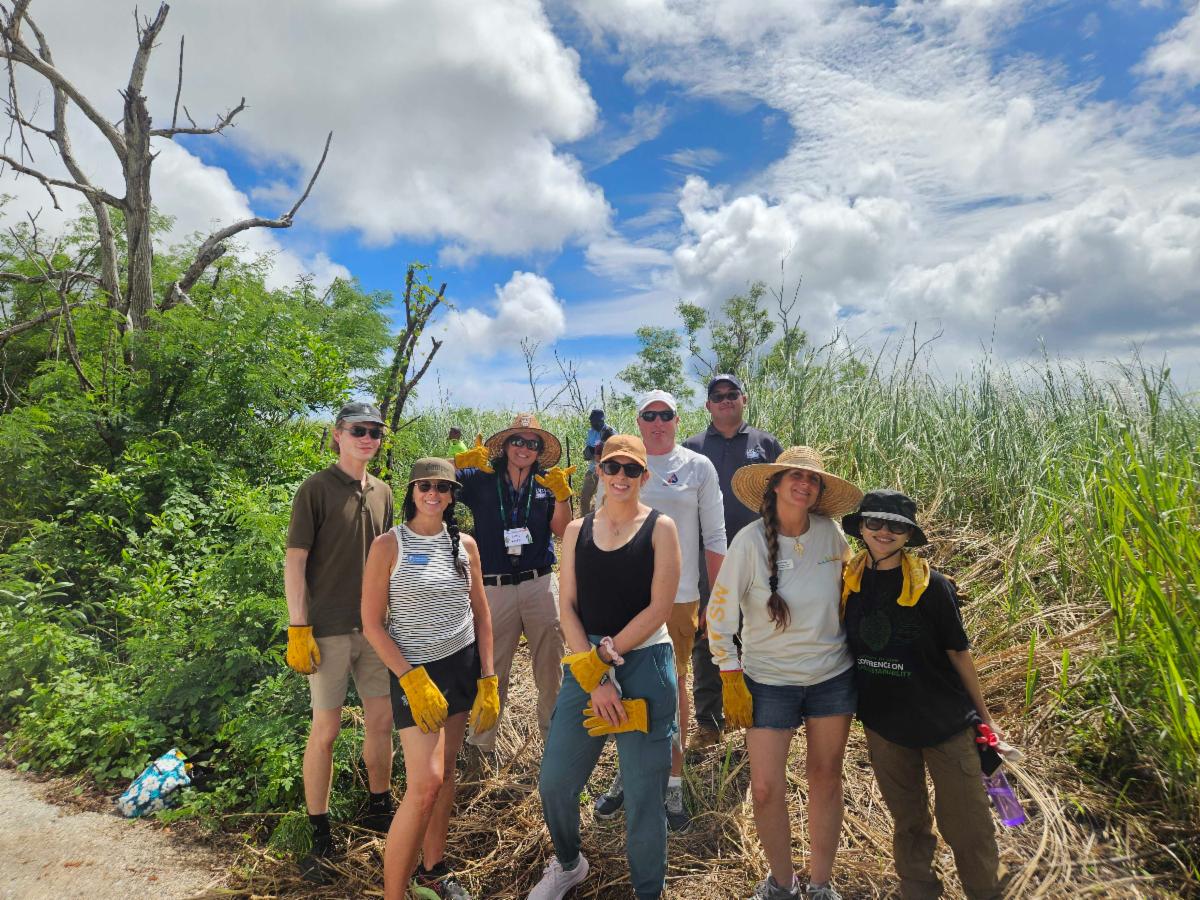
This year’s joint meeting was held last month in Guam, where attendees were treated to guest speakers, including NACD President Gary Blair and the Governor of Guam, Lourdes A. Leon Guerrero. Breakout sessions, with a focus on collaboration between districts and regions, were part of the meeting. The second half of the week featured field days around both the north and south of the island and were a highlight of the trip for many attendees. These included visits to culturally significant sites, such as the Valley of the Latte and the Ritidian Wildlife Refuge, as well as special access granted by the U.S. Navy to visit Fena Reservoir and the Bonya Latte site.
Attendees also participated in a service project that highlighted community-based restoration efforts focused on reforestation, native habitat enhancement, and long-term landscape resilience. This project was supported by the University of Guam Sea Grant’s Guam Restoration of Watersheds (GROW) initiative, alongside a Friends of NACD Grant and multiple community partners. The project is focused on replanting native trees and shrubs after first removing the invasive plants. Attendees left a lasting impression on the island by helping to plant trees in the service project area. Likewise, seeing the impacts of Guam’s conservation efforts up close left a lasting impression on meeting attendees.
| IN MEMORY OF MAXINE MATHIS | |
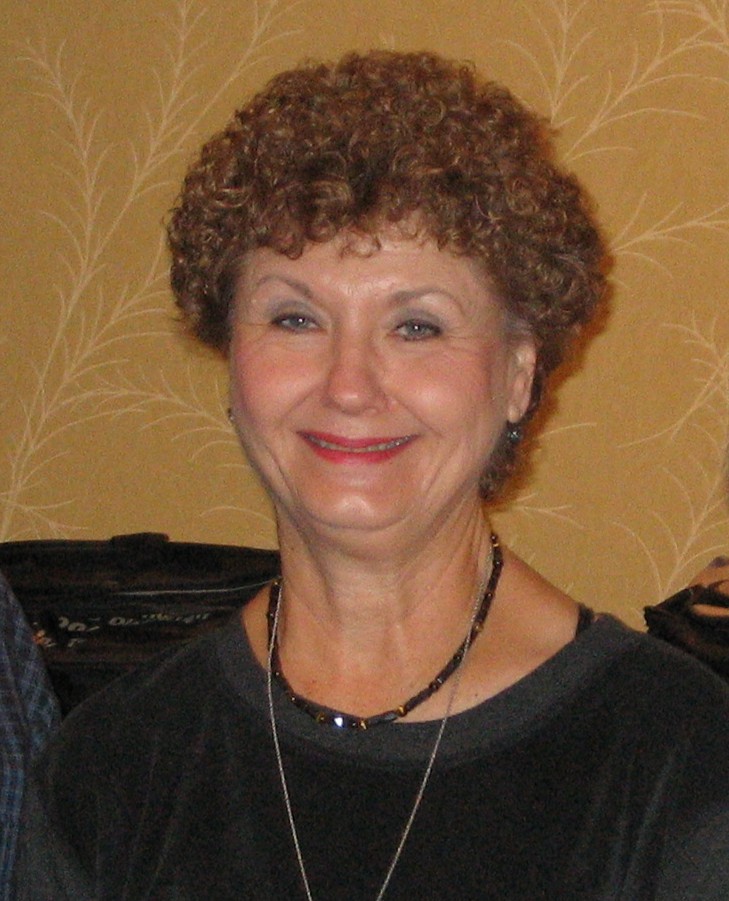
NACD pays tribute to a cherished member of our team from League City, Texas, who passed away earlier this year — Maxine Mathis.
For many years, NACD operated a production location in League City, where the organization managed its store and printing press serving conservation districts nationwide. Maxine was a cornerstone of that Texas team, ultimately becoming the longest-serving staff member in NACD's history, with 48 years of dedicated service.
Maxine handled much of the bookkeeping for the League City office and oversaw the collection of videos, pamphlets, stationery, envelopes, business cards, and stewardship and education materials. Few people knew NACD as thoroughly as she did. Her hand touched nearly every part of the operation.
| |
That deep knowledge and presence inspired the organization to create a recurring feature in its stewardship and education booklets called "Ask Maxine." Each age-group booklet included an "Ask Maxine" segment, featuring a caricature of Maxine answering a conservation question tailored to that audience — a lighthearted tribute to Maxine that also helped engage young readers in conservation education.
Maxine retired in 2009 after helping NACD close the League City location as the organization transitioned to an online store and production model, consolidating operations into its Washington, D.C. office.
Though it has been some time since Maxine was part of the NACD team, she remains close to our hearts and forever tied to the memory of NACD in another era. Read her full obituary here.
| |
WHAT'S UP IN WASHINGTON?
GOVERNMENT AFFAIRS UPDATE
| |
Senate Agriculture Committee to Resume Farm Bill Markup
The Senate Agriculture Committee is scheduled to resume consideration of the Agricultural Act of 2026 on Wednesday, September 16, as the Senate returns from its August recess. The Committee initially considered the bill on August 6 but recessed the markup after the legislation failed to advance on a 10–11 vote. Chairman John Boozman has continued working to secure the bipartisan support needed to move the bill out of committee. NACD will continue monitoring the markup and provide updates as the process moves forward.
EPA Announces $3.5 Million for Tribal Water Quality Projects
EPA announced approximately $3.5 million in competitive Clean Water Act Section 319 grant funding for federally recognized Tribes and eligible intertribal consortia to address nonpoint source pollution and improve local water quality. Eligible projects may include streambank restoration, erosion control, livestock exclusion fencing, stormwater management, and development of watershed-based plans. Applicants may request up to $175,000, and EPA expects to fund approximately 20 projects. Applications are due November 9. EPA will also host an informational webinar on September 17 for prospective applicants. Learn more about the funding opportunity and register for the webinar through EPA.
Forest Service Extends Roadless Rule Comment Period
The U.S. Forest Service extended the public comment period on its proposal to rescind the 2001 Roadless Area Conservation Rule. The original September 21 deadline has been extended by 15 days, and comments are now due October 6. Conservation districts and partners interested in submitting comments now have additional time to review the proposal and supporting materials. Read the Federal Register notice and find information on submitting comments here.
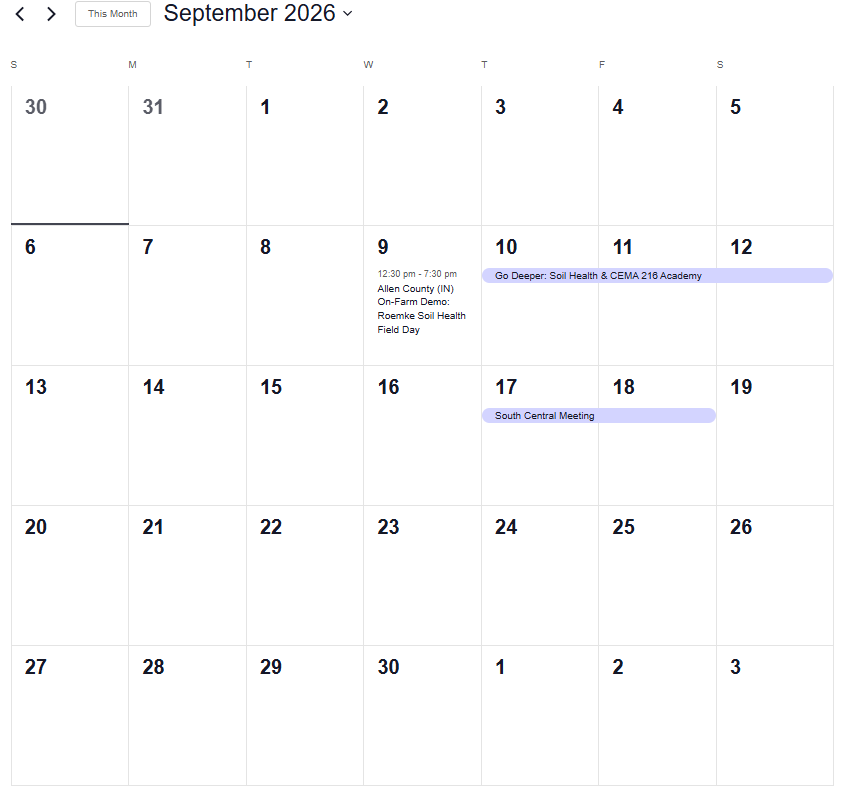
Important Dates
| RESTORING THE ARKANSAS RIVER CORRIDOR | |
By Nicole Poitra, NACD Northern Plains Region Representative
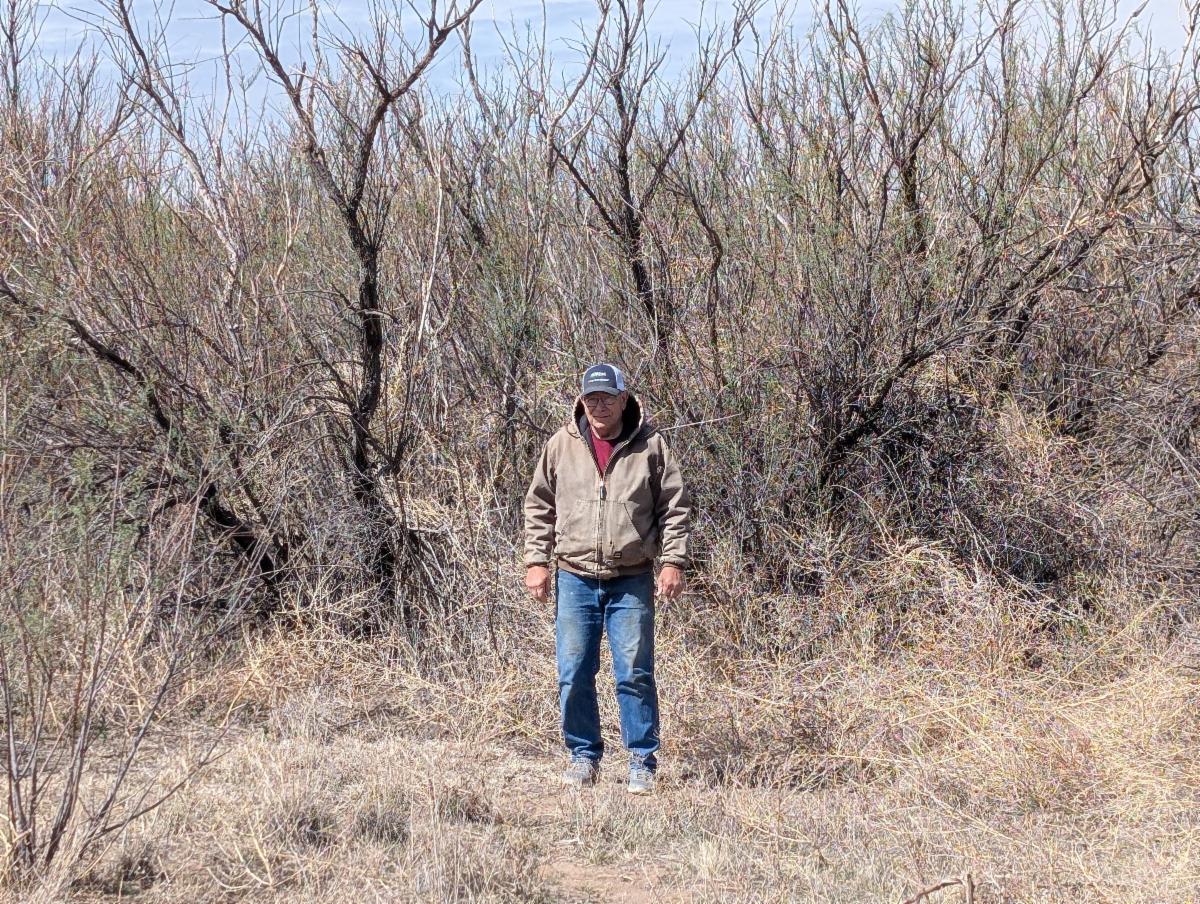
Along the Arkansas River, from John Martin Reservoir in Colorado to Dodge City, Kansas, an invasive plant has transformed portions of the river corridor. Now, conservation partners and landowners are working together to transform that landscape by removing invasive tamarisks, restoring native vegetation, improving wildlife habitat, and finding a beneficial use for the material being removed.
Tamarisk, also known as salt cedar, is a non-native woody plant that has spread throughout portions of the Arkansas River floodplain and many other river systems throughout the Midwest. Dense stands can replace native vegetation, alter natural hydrology, reduce grazing productivity, and degrade wildlife habitat.
For Abram Lollar, Regional Biologist with Ducks Unlimited, the problem is more than simply having too many trees. One of the challenges has been changing the perception that dense, woody cover automatically means better wildlife habitat. When tamarisk is allowed to spread unchecked, it can form a monoculture that leaves little room for the diverse native grasses, shrubs, and other vegetation wildlife need for food and cover.
Those concerns helped lead to a collaborative effort to restore portions of the Arkansas River corridor. With more than 90 percent of the area privately owned, the work depends heavily on voluntary participation and relationships with landowners.
| |
Partnerships Make the Work Possible
Ducks Unlimited works directly with private landowners to plan and carry out restoration, with local conservation districts playing an important role in connecting the project with landowners. The Kearny County Conservation District (CD) has been the primary district involved, with Finney and Hamilton County Conservation Districts also supporting the effort. The districts help promote the project, educate landowners about the restoration work, and connect interested landowners with Ducks Unlimited.
Kearny County CD also provides cost-share assistance to landowners for native grass seed and follow-up treatments to control tamarisk resprouts. This local support helps ensure restoration continues after the initial removal and gives native vegetation a better opportunity to become established.
A local dairy has also become an important partner by providing beneficial use for the removed tamarisk. The partnership has received support through the North American Wetlands Conservation Act (NAWCA), with project materials reporting 1,176 acres of wetland and riparian habitat restored along the Arkansas River and another 1,176 acres committed through the grant partnership.
The project demonstrates how conservation can create benefits across sectors. Landowners gain healthier and more usable landscapes; agricultural operations benefit from restored grasslands and the reuse of organic material, and wildlife gains more diverse habitat.
Seeing the Difference on the Ground
While acreage and project statistics help demonstrate progress, some of the most meaningful results have come directly from landowners.
Lollar recalled hearing from one landowner after restoration who could see across the river, something they said hadn’t been possible in roughly 50 years. Others have contacted him after noticing plants and wildlife they had not previously seen on their properties.
One landowner contacted Lollar after seeing hundreds of unfamiliar large birds on the restored property. The birds were sandhill cranes. Before restoration, dense tamarisk had left them little suitable habitat to use. Within months of the work, wildlife was already making use of the restored area. Similar reports have followed, with landowners seeing elk, mule deer, wild turkeys, and other wildlife using areas where native vegetation has been allowed to return.
Challenges and the Work Ahead
The effort is about much more than removing an invasive species. It is about restoring the function of the Arkansas River corridor, bringing back native vegetation, creating better habitat, supporting working lands, and helping landowners see the benefits of conservation firsthand.
Perhaps most importantly, the project is creating changes that landowners and their families can see for themselves, from being able to look across the river again to watching wildlife return to places where it had been absent for years.
Along the Arkansas River, removing tamarisk is only the beginning. The larger goal is restoring a healthier, more diverse landscape that can continue providing benefits for agriculture, wildlife, water resources, and future generations.
Read the full story on NACD's blog.
| | NACD Seeks Grants Administrator | |
NACD seeks a Grants Administrator to support the day-to-day monitoring and financial oversight of NACD’s federal grants and subaward portfolio, working within established compliance frameworks under the guidance of the Director of Conservation Programs. This position also provides administrative support for the full lifecycle of pass-through grants, including pre-award solicitation activities and post-award monitoring and closeout.
The Grants Administrator plays a key role in supporting compliance with 2 CFR 200 and federal grant requirements, helping subrecipients meet their performance and financial obligations, and maintaining strong, proactive relationships with NACD members and partners. The ideal candidate is detail-oriented, process-driven, and service-minded, with the ability to communicate clearly with grantees.
Apply by Friday, September 18, for priority consideration. See the full position description here.
| Watch Conservation Coffee on USFWS Programs | |
Missed NACD's latest Conservation Coffee webinar? Watch the recording to hear about the U.S. Fish and Wildlife Service’s (USFWS) Private Lands and Farm Bill programs and what USFWS can do for conservation districts and producers.
Presented by Elizabeth Freiday from USFWS's Farm Conservation Program, learn about opportunities that you or your conservation district customers may be missing out on.
Find all previous Conservation Coffees on NACD's YouTube.
| Submit a Session Proposal! | |
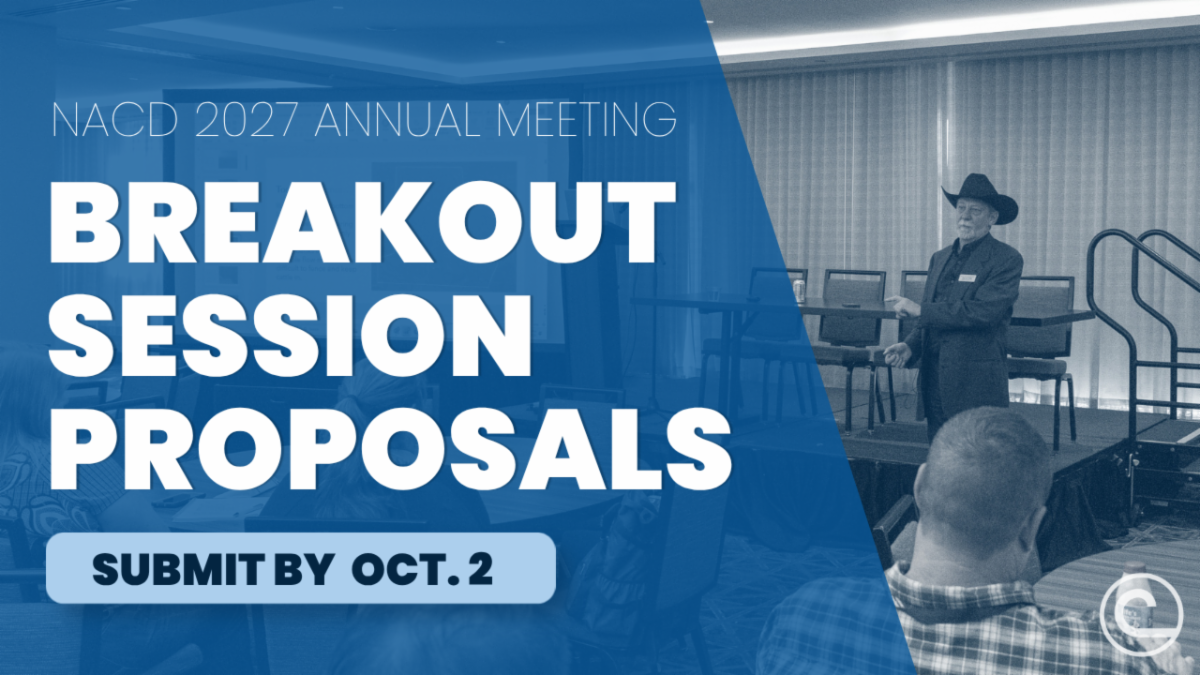
NACD is now accepting breakout and training session proposals for the upcoming 2027 Annual Meeting to be held in Las Vegas, NV, on February 6-10, 2027!
Breakout sessions spotlight the work of conservation districts and partners across the country. We are also accepting proposals for training sessions to help conservation district board members and employees build their skillsets. Sessions typically last an hour and often showcase several speakers.
NACD's breakout and training sessions are some of the most popular activities among meeting attendees and provide a platform for districts to share their initiatives with one another. Spread the word about this opportunity and consider submitting a proposal by October 2!
If you have any questions, or would like to discuss your proposal before submitting, please reach out to the NACD Membership Team.
| Nominations Open for NCDEA Awards | |
The National Conservation District Employees Association (NCDEA) is accepting nominations for the Outstanding Conservation District Professional and Outstanding Conservation District Board Member awards. These awards are presented annually to recognize professionalism and dedication in the people behind the nation’s conservation district programs.
All District Employee Professional nominees must have been employed by their District for three (3) years when the nomination is filed with the appropriate state and/or regional organizations. All District Board Member nominees must have four (4) years of board service at the time the nomination is filed with the appropriate state and/or regional organizations.
Conservation district employees, conservation district employee associations, conservation district boards, state conservation agencies, NRCS, NACD, and other associated conservation professionals may submit nominations.
All states must submit nominations to the region by October 15. Regions must submit nominations to the national level by November 15.
| Join Webinar on Feeding the Soil | |
Join Farmers for Soil Health for their webinar, Feeding the Soil: Cover Crops, Crop Rotations and more, on September 16 at 12:30 p.m. ET.
Join the webinar with Dr. Marshall McDaniel, a soil scientist whose work explores how agricultural management practices shape soil health. Dr. McDaniel will share insights from his research on crop rotations and cover crops, including how these practices influence soil carbon, soil nitrogen, and microbial biomass. He will also touch on his work with perennial groundcovers in corn and corn/soybean systems, discussing their potential as a long-term cover crop strategy and what it takes to manage them effectively.
Register here.
| Promote your conservation district or state association's tree sale, annual meeting, webinar, field day, or other events on NACD's Calendar of Events! | |