Wisconsin Coastal Resilience Newsletter | | |
Greetings from the Wisconsin Coastal Resilience Team!
This month's newsletter contains:
Member-to-Member Updates:
-
CALM Lunch & Learn: OneMap
- Recipients Announced for Pre-Disaster Flood Resilience Grant Program
Lake Michigan Water Level Update
Resource Highlights:
- Door County Flood Maps Updated by FEMA
- WaterHub Communication and Messaging Guides
Around the Great Lakes:
- NOAA GLERL Reports Great Lakes Ice Cover Near Average for the 2025 Season
- Videos Showcase Tribes Caring for Wetlands in Wisconsin
Funding Opportunities:
- USFWS National Coastal Wetlands Conservation Grants
- Port Infrastructure Development Program
Trainings:
- NOAA Economic Guidance for Coastal Management Professionals
- Professional Development in Coastal Resilience
Conferences & Webinars:
- IAGLR's 68th Annual Conference on Great Lakes Research
-
Partnering with Local Government for Extreme Weather Resilience
- Realizing Resilience: Coordinating Efforts from across the Great Lakes Basin
-
Coastal Inundation Community of Practice Virtual Engagement
- Great Lakes Observing System Annual Meeting
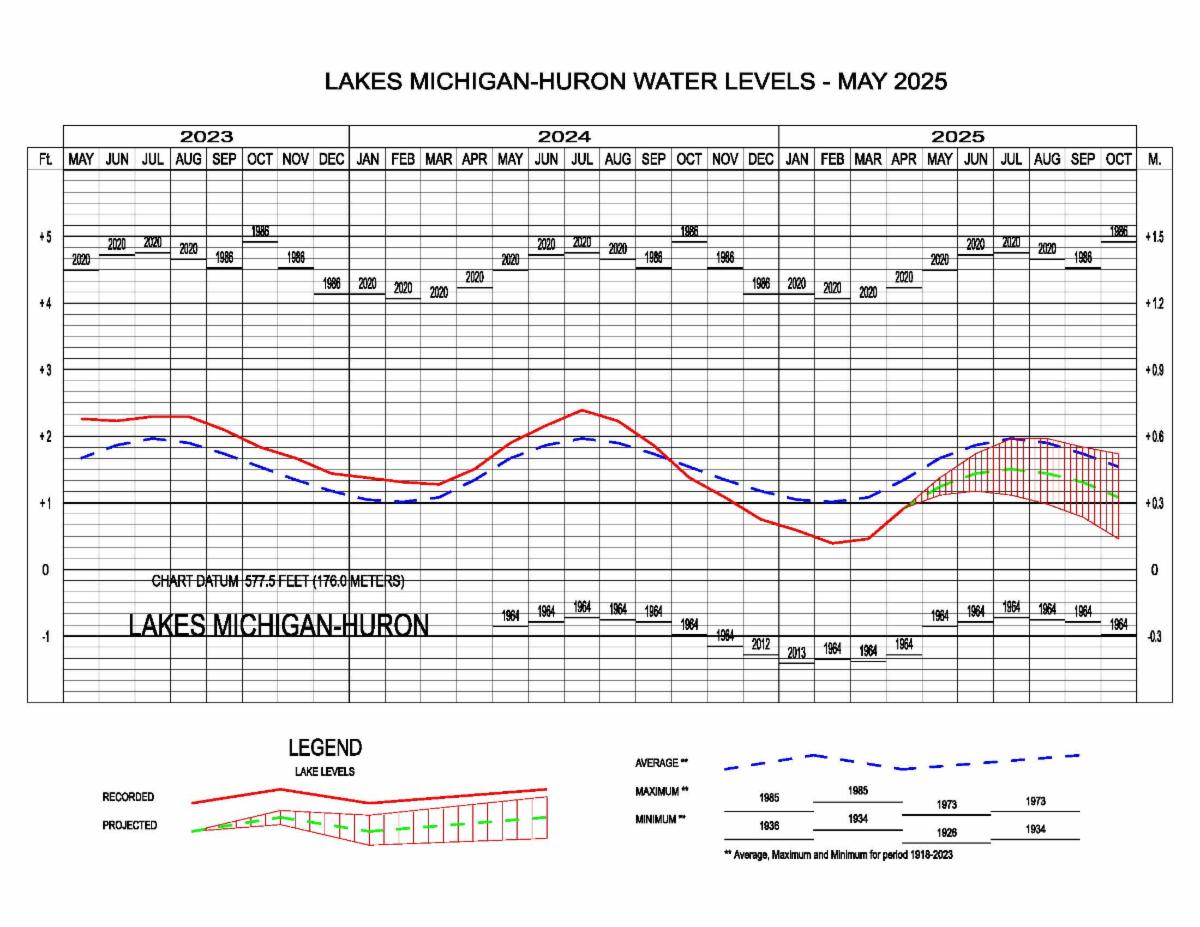
| | CALM Lunch & Learn: OneMap | | Last month, CALM members joined speakers Jeff DuMez (GIS Coordinator / Land Information Officer, Brown County Planning & Land Services Department) and Jim Giglierano (former Geographic Information Officer, Wisconsin Department of Administration) to discuss their work on OneMap, a GIS pilot project. Members learned how the project is developing critical GIS data layers that can support habitat restoration, conservation projects, and other local planning and land use decisions. To learn more, watch the recording of the event above. | | Recipients Announced for Pre-Disaster Flood Resilience Grant Program | Bay-Lake Regional Planning Commission, City of Green Bay, Village of Sommers, and Ozaukee County were among the recipients of the Pre-Disaster Flood Resilience Grant (PDFRG) program announced this spring by Gov. Tony Evers and the Wisconsin Department of Military Affairs. The program aims to help communities in flood-prone areas identify flood vulnerabilities such as erosion hazards, road and culvert washouts, and incised stream channels and works to implement solutions, such as reconnecting streams and floodplains, mitigating erosion hazards, restoring or improving natural flow and movement of water or sediment, reestablishing area foliage and plant life, and more to help naturally manage flooding before disaster strikes. | | May 2025 Water Level Update | | Lake Michigan water levels began their seasonal rise. Lake Michigan is now about 5 inches below the long-term average water level for the month. Water levels are expected to continue their seasonal rise through July. | | Door County Flood Maps Updated by FEMA | | |
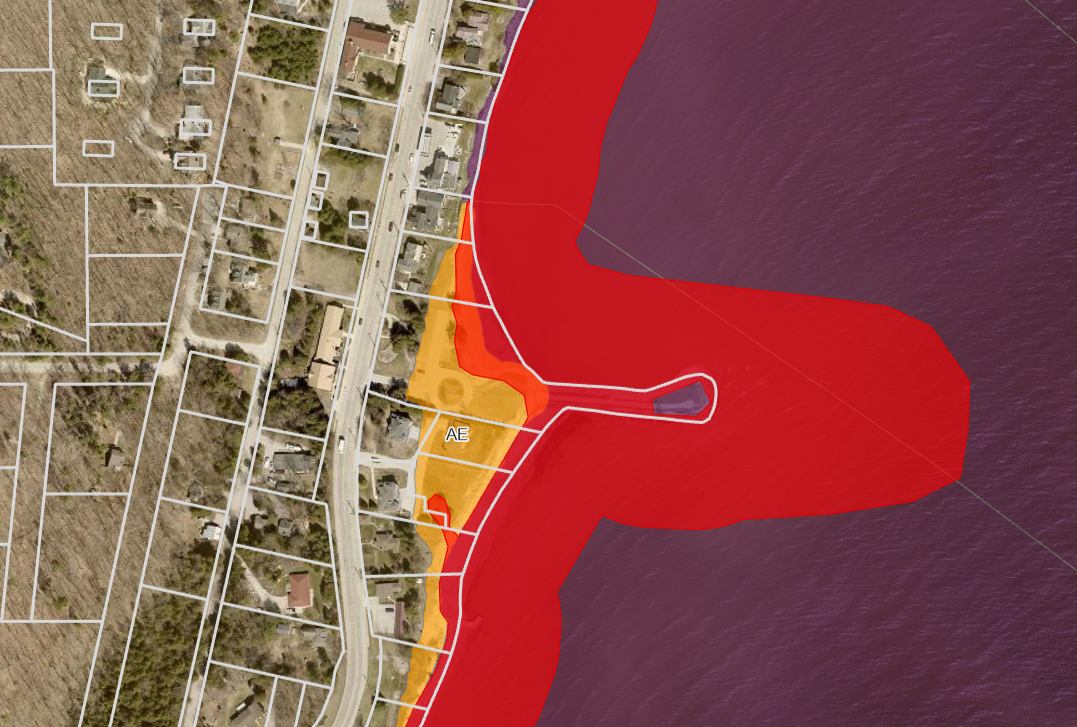
In 2024, the Federal Emergency Management Agency (FEMA) published updated flood maps for Door County. The 2024 maps are the first update since 2009 and reflect a new methodology that treats the Great Lakes more like an ocean, with storm surge and wave action as contributors to coastal flooding. The maps likely present a more accurate picture of the floodplain. Read more about the impacts of these maps on homeowners and their use as a tool for climate adaptation here.
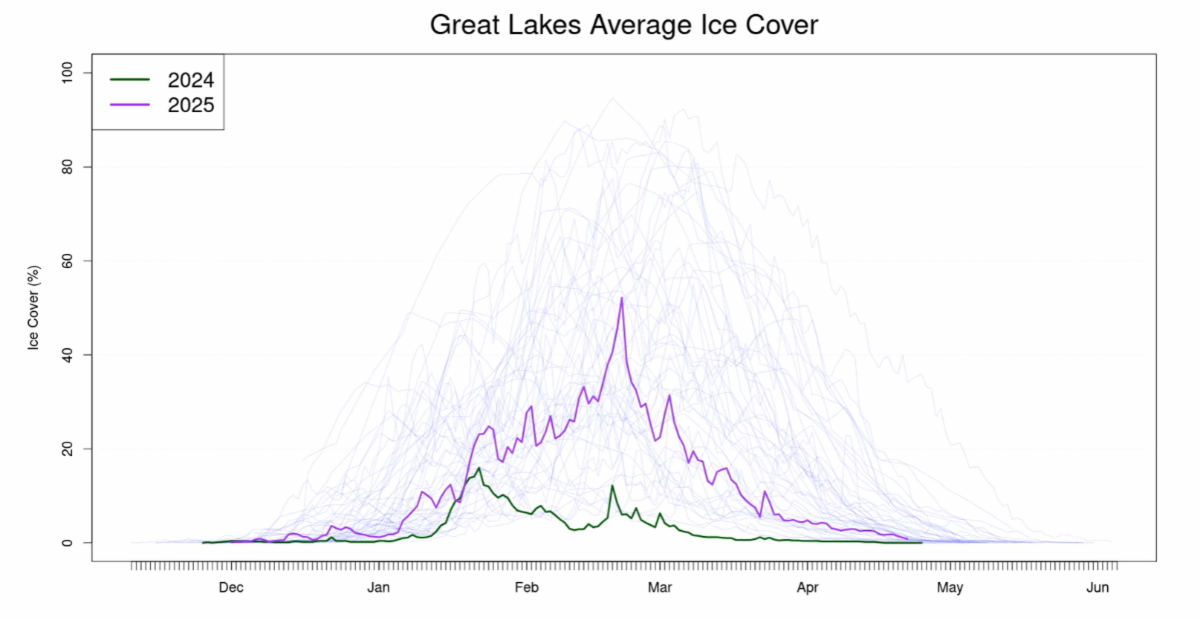
| | WaterHub Communication and Messaging Guides | | WaterHub, a nonprofit organization dedicated to advancing water justice and resilience, has developed a collection of communication and messaging guides for those working to protect water resources. Informed by public opinion research, these resources may be useful for anyone looking to more effectively communicate with project stakeholders on coastal projects. Browse resources like Tipsheet: Water messages that bridge divides, Message Guide: Nature as Infrastructure, and more. | | NOAA GLERL Reports Great Lakes Ice Cover Near Average for the 2025 Season | The 2024-2025 winter Great Lakes ice season stayed close to long term normals following the near historic low ice levels seen in the 2023-2024 winter. However, despite colder temperatures than last winter, most of the lakes stayed slightly below long term averages on a daily basis through the season. The figure above shows 2025 daily ice cover percentages compared to 2024 ice cover values and other past seasons. Note that the 2025 ice season had an increase in ice cover compared to last year, but it did not approach record levels. | | Videos Showcase Tribes Caring for Wetlands in Wisconsin | | Tribes in Wisconsin are doing vital work to protect and restore wetlands and watersheds. This work helps maintain high water quality, manage flood waters, and provide vital habitat. The Wisconsin Tribal Conservation Advisory Council, Wisconsin Wetlands Association, and USDA-Natural Resources Conservation Service have partnered with Tribes to raise awareness of this important work by producing short videos highlighting these stories. In celebration of American Wetlands Month in May, the partners have released the latest video in the series highlighting the Lac Courte Oreilles Band of Lake Superior Ojibwe in Northern Wisconsin. Earlier videos in this series featured the work of the Oneida Nation in Northeast Wisconsin (above) and the Bad River and Red Cliff Bands of the Lake Superior Tribe of Chippewa Indians in Northern Wisconsin. | | USFWS National Coastal Wetlands Conservation Grants | | |
The National Coastal Wetlands Conservation Grant Program supports the long‐term conservation of coastal wetland ecosystems for the benefit of coastal communities, fish and wildlife and their habitats, and the recreating public. The Program provides eligible State and Territory agencies with cost sharing awards for projects that protect and restore valuable coastal wetland resources. Projects may include acquisition of a real property interest in a coastal wetland ecosystem and the restoration, enhancement, or management of coastal wetlands.
Eligible Applicants: State and Territory agencies
Application Deadline: July 18, 2025
| Port Infrastructure Development Program | |
The Port Infrastructure Development Program (PIDP) is a discretionary grant program administered by the Maritime Administration (MARAD). Funds for the PIDP are awarded on a competitive basis to projects that improve the safety, efficiency, or reliability of the movement of goods into, out of, around, or within a port.
Eligible Applicants: City, town, county, state, tribal (federally recognized), or special district governments
Application Deadline: September 10, 2025
| | NOAA Economic Guidance for Coastal Management Professionals | | |
Putting an economic valuation on natural resources can be helpful or even necessary when applying for grants, choosing between potential projects, or communicating the importance of a resource. This online training provides a practical introduction to economic analysis and valuation for a general audience. Over the course of three modules, NOAA economists will provide a practical introduction to economic valuation methods and tools, describe common approaches to valuing ecosystem services, and lead participants through the steps of a basic benefit-cost analysis. Register now for one, two, or all three sessions.
Module 1: Introduction to Economic Analyses and Valuation
Wednesday, June 11, 1p-3p CT
Register
Module 2: Pathways to Valuing Ecosystem Services
Wednesday, June 18, 1p-3p CT
Register
Module 3: Introduction to Benefit-Cost Analysis
Tuesday, June 24 & Wednesday, June 24, 1p-3p CT
Register
For additional NOAA coastal management trainings, visit the Digital Coast Academy webpage.
| Professional Development in Coastal Resilience | |
June 26
6p - 7p CT
Virtual
Stone Lab and Ohio Sea Grant will host guest speaker Sarah Spiegler, Coastal Resilience Specialist at the North Carolina Sea Grant College Program, North Carolina State University, for a presentation on Professional Development in Coastal Resilience. Audience members, including those joining online, will be able to ask the speaker questions at the end of the presentation.
| | IAGLR's 68th Annual Conference on Great Lakes Research | |
June 2-6
Milwaukee, WI
Virtual
The International Association for Great Lakes Research (IAGLR) is having its 68th Annual Conference on Great Lakes Research. It will feature four days of inspiring science centered around the theme Creating Great Lakes Resilience. For those who cannot make it to Milwaukee, there will be a virtual option available.
| Partnering with Local Government for Extreme Weather Resilience | |
June 10
12p - 1p CT
Virtual
Join Urban Waters Learning Network to learn about innovative partnerships between local governments, community organizations, and residents who are working together to create projects that protect communities against extreme heat and flooding. Speakers will share success stories from across the country where local government and community partners are expanding urban tree canopy, facilitating community engagement for planning, and improving collaborative decision making for emergency preparedness. Attendees will walk away with a clear understanding of how to collaborate with local government to create a well-financed, community-centered plan for the future.
| Realizing Resilience: Coordinating Efforts from across the Great Lakes Basin | |
June 18
12p - 1p CT
Virtual
Staff from the University of Minnesota Climate Adaptation Partnership (MCAP) will preview the upcoming Midwest Climate Resilience Conference (Oct. 20-22), and the Great Lakes Commission will provide an overview of GLC’s Action Plan for a Resilient Great Lakes Basin. This Action Plan helps to prioritize basin-wide efforts and forms a roadmap to advance climate resilience in the region.
| Coastal Inundation Community of Practice Virtual Engagement | |
June 24
1:00p - 2:15p CT
Virtual
Join panelists Lydia Salus (Wisconsin Coastal Management Program), Tracie Sempier (Mississippi-Alabama Sea Grant Consortium), and Danielle Swallow (Delaware Sea Grant) for a discussion on regional resilience networks, including CALM. Panelists will discuss the value of regional networks and highlight strategies that have been successful within their regions for building effective networks for coastal resilience.
| Great Lakes Observing System Annual Meeting | |
July 9
Ann Arbor, MI
The Great Lakes Observing System is having it's annual meeting and celebrating 20 years of operation and service. The meeting will include the latest in Great Lakes observations, information, and community engagement, while reflecting on 20 years of impact and sharing their vision for the next 20 years of GLOS.
| | |
For questions about the CALM Network, or to submit something to the newsletter, contact:
Jake Kolanowski
jacob.kolanowski1@wisconsin.gov
608-261-9197
| | |
For questions about Lake Michigan coastal hazards or how to address them, contact:
Adam Bechle
bechle@aqua.wisc.edu
608-263-5133
| | University of Wisconsin Sea Grant Institute | (608) 262-0905 | 1975 Willow Drive, 2nd Floor, Madison, WI 53706 | | | | |