|
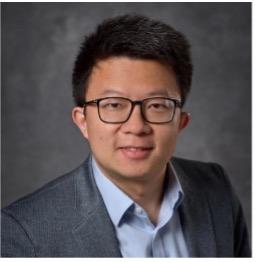
Dear member of the BME community,
While we are nearing the end of 2025, I would like to extend my heartfelt appreciation to all of you for your hard work and dedication to making great progress and establishing a collaborative and supportive community.
This month marked my first six months serving as your chairperson and I am deeply grateful for all the help and support by our faculty, in particularly Dr. Adam Alessio whose made my transition easy and smooth. I am very excited to the many collaborations with all of you.
This past month, we also welcomed our new business administer Simone Proulx, who has started the job with force, skill, and enthusiasm. We all look forward to working with her.
Happy New Year!
Warm regards,
Cheri Deng, Ph.D.
| |
- Faculty Spotlight
- Recently Awarded Grants
- Student Spotlight
- Student Reflections
- Reminders
| | |
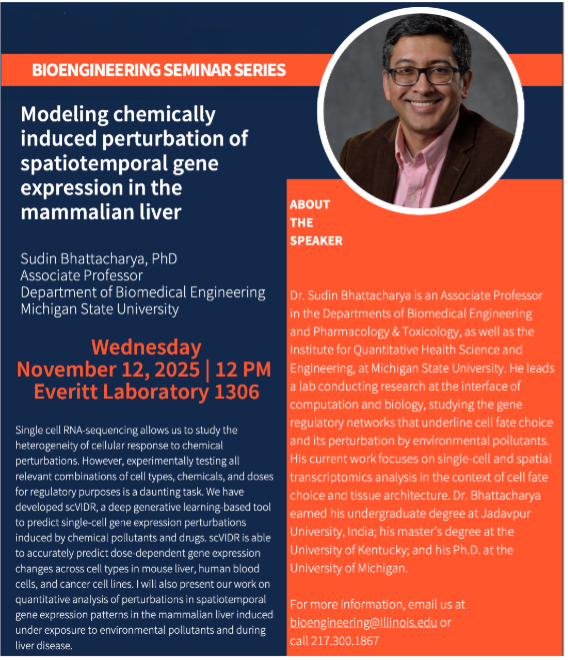
Dr. Sudin Bhattacharya
- "Modeling chemically-induced perturbation of spatiotemporal gene expression in the mammalian liver", Department of Bioengineering, University of Illinois Urbana-Champaign, November 12, 2025.
- "Deep Generative Learning of Single Cell Gene Expression to predict Dose-Dependent Chemical Perturbations", ScitoVation, LLC, Sep 23, 2025 (online).
| |
Dr. Taeho Kim
- “Engineered Inorganic Nanoparticles as Photoacoustic Theranostics for Cancer and Inflammatory Diseases“, Department Seminar, Biomedical Engineering, Michigan Technological University (MTU) on September 19th, 2025.
Dr. Masako Harada
-
“Extracellular Vesicles: Nature’s Communication System Reimagined for Therapeutic Delivery“, Department of Biological Sciences, Seminar, Bowling Green State University, Ohio (virtual) on September 17th, 2025.
Dr. Cheri Deng
- “Biomedical Ultrasound: bridging engineering with biology and medicine”, Department of Biomedical Engineering Seminar, Tulane University, November 13, 2025.
| | |
Dr. Cheri Deng
Portable Resonant Acoustic Rheometry System Enables Rapid and Integrated Acoustic-Mechanical Characterization of Soft Biomaterials
Applied Physics Letters
Dr. Deng and colleagues report the development of a portable resonant acoustic rheometry (RAR) system that enables rapid, co-localized, and simultaneous characterization of both the viscoelastic and acoustic properties of soft biomaterials. This integrated platform allows multiple samples to be analyzed efficiently, advancing tools for biomaterials research and translational applications.
https://doi.org/10.1063/5.0289258
Harnessing Extracellular Vesicles for Stabilized and Functional IL-10 Delivery in Macrophage Immunomodulation. Extracellular Vesicle.
Results from the collaboration of Dr. Deng with Dr. Kananda has been published in a recent article; doi.org/10.1016/j.vesic.2025.100102
Dr. Masako Harada
VesicleVoyager: In Vivo Evolution of Targeted Extracellular Vesicles
Journal of Extracellular Vesicles
Dr. Harada’s team introduces VesicleVoyager, an innovative platform that engineers extracellular vesicles (EVs) displaying protein libraries and screens them directly in mice. This in vivo evolution approach identified new targeting proteins that direct EVs to specific organs, such as the pancreas, offering a powerful strategy to improve drug delivery precision while reducing off-target side effects.
https://doi.org/10.1002/jev2.70184
Dr. Aitor Aguirre
Immune-Integrated Human Cardiac Microtissues Reveal Inflammation-Driven Arrhythmias
Cell Stem Cell
This study presents human cardiac microtissues containing macrophages, revealing how immune cells contribute to heart development, cell-cell communication, and electrical signaling. When exposed to inflammatory conditions, these tissues develop arrhythmias resembling atrial fibrillation, providing a novel and powerful model for studying heart disease mechanisms and testing therapies.https://doi.org/10.1016/j.stem.2025.09.011
Dr. Xuefei Huang
Decoding the Glyco-Code in Cancer Using Nanotechnology
Dr. Huang co-authored a comprehensive review examining how carbohydrates (the “glyco-code”) regulate cancer biology and how nanotechnology can be leveraged to decipher and therapeutically modify these signals for biomedical applications.
https://www.sciencedirect.com/science/article/abs/pii/S0008621525003830
In related translational work, Dr. Huang’s group is developing next-generation vaccines against Bordetella pertussis that target bacterial carbohydrate antigens and pertussis toxin. Unlike current vaccines, this approach aims not only to reduce symptoms but also to eliminate the bacteria, addressing a key factor behind recent whooping cough outbreaks.
https://msutoday.msu.edu/news/2025/09/sweet-targets-the-quest-for-an-improved-whooping-cough-vaccine
Dr. Ruiguo Yang
Dr. Yang contributed to two recent publications advancing our understanding of complex biological systems and their regulation. Together, these studies provide new insights with implications for both fundamental biology and translational research.
| | - Dr. Aitor Aguirre and Dr. Christina Chan have a new R21 grant funded from NIEHS. The title of the project is: The role of the epicardium and IRE1 in mediating environmental exposure on cardiac function
| | |
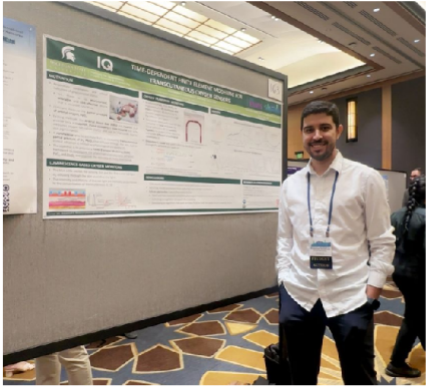
Mohammed Almatrood
- Mohammed participated in the COMSOL Conference and the IEEE Body Sensor Networks (BSN) Conference, where he also received a BSN travel award, and published two related papers on time-dependent computational modeling of transcutaneous oxygen monitoring. These contributions aim to advance wearable sensor design through realistic physiological simulation and strengthen the clinical relevance of non-invasive oxygen monitoring for vascular and critical care applications.
| | | |
Autumn & Summer Mclane-Svoboda
- Autumn and Summer from Dr. Saha's Lab traveled to San Diego in November to present their posters at the annual Society for Neuroscience Conference
| |
Spartan Street Medicine Experience
By Leo Pereira Sanabria
As part of the BME 840 course led by Dr. Purcell, graduate students are challenged to identify an unmet clinical need, propose a potential solution, and develop a business plan. One of the most meaningful opportunities from this course was volunteering with Spartan Street Medicine, a program from the Colleges of Human Medicine and Osteopathic Medicine that provides direct outreach and care to people experiencing homelessness.
During one event, I shadowed medical students as they treated patients in the
community. One patient came to check her blood pressure after feeling lightheaded,
but within minutes, the brief visit became an intimate conversation about the loss of
her child years ago and how that grief continues to shape her emotional and physical
health. Moments like this reminded me that sometimes the most powerful form of
care isn’t a medical device or intervention—it’s the act of listening.
This experience reshaped how I think about biomedical engineering. It reinforced the
importance of grounding innovation in empathy—of listening first, then designing.
Too often, as engineers, we’re tempted to pursue technical solutions before fully
understanding the problem. Volunteering with Spartan Street Medicine reminded me
why I chose this field in the first place: to connect science with humanity.
| |
BMES 2025
By Dhruv Singh
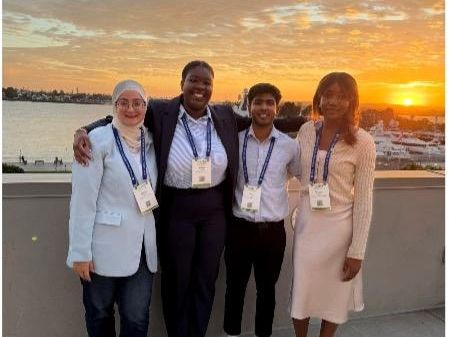
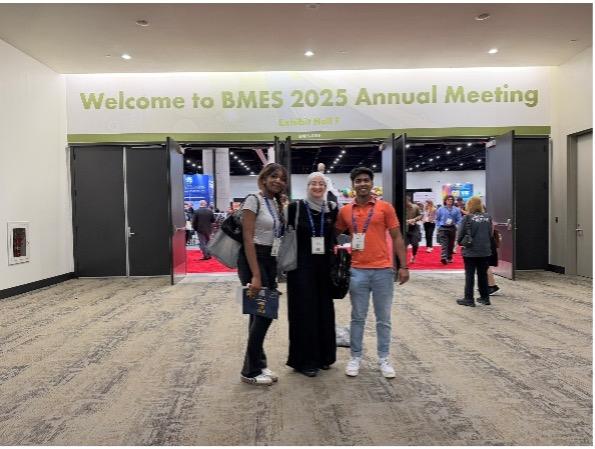
The 2025 Biomedical Engineering Society (BMES) Annual Meeting in San Diego was an incredible experience, bringing together thousands of students, researchers, and professionals from academia, industry, and clinical settings from all over the world. The scale of the conference was huge, covering, and going beyond, the entire spectrum of Biomedical Engineering.
It was exciting to hear scientists discuss innovation in tissue-engineered platforms, fluidic modeling, adoption of NAMs, Organ-on-Chip models, Nanotechnology, etc. The poster sessions were equally engaging, offering the chance to have one-on-one conversations with researchers from diverse backgrounds.
Beyond the science, the conference offered a vibrant atmosphere by including a bunch of social and networking aspects. The welcome reception in the exhibit hall, the various university-hosted receptions, and the casual chats during coffee breaks and meals all gave us a chance to meet fellow engineers and scientists, share war stories about lab work, and talk about our interests.
And of course, San Diego itself was a fantastic setting for the conference. After the conference sessions each day, we took advantage of what the city offered. We went down to the beach, enjoyed the breeze, and watched a gorgeous sunset. We explored the Gaslamp Quarter downtown, which offered great food, lively streets, and an amazing nightlife. We also visited the USS Midway Museum, walked aboard the aircraft carrier, and learned some war history.
In summary, attending the BMES Annual Meeting was an all-around win with an unforgettable blend of groundbreaking research, professional growth, and community. I came back with new connections, fresh ideas, and great memories from San Diego.
| | Financial Resources for Graduate Students | | |
The MSU College of Engineering offers a range of funding opportunities to support graduate students:
-
Emergency Fellowship: A one-time $1,000 grant for students who have unexpected life events and need financial support (ex. Medical costs, car repair, urgent move, etc.)
-
Child Care Grant: Up to $2,000 for students with primary care responsibility for a child (0–36 months) enrolled in a licensed child care program.
-
Conference Travel Grants: Up to $450 per trip to support students presenting their research at conferences.
-
Graduate Teaching Assistantships (TAs): Available within departments; preference is given to doctoral students.
-
Dissertation Completion Fellowship (DCF): Supports PhD students in their final year; nominations are made by faculty advisors.
-
Graduate Office Fellowship (GOF): Supplemental funding distributed by departments; students should contact their graduate program director.
-
University Distinguished Fellowship / University Enrichment Fellowship: Highly competitive fellowships for outstanding students.
-
Academic Achievement Graduate Assistantships (AAGA): Awarded based on academic excellence.
-
Graduate School Fellowships: Including Dissertation Completion Fellowship, Education Opportunity Fellowship, and Research Enhancement Award.
-
Future Academic Scholars in Teaching (FAST) Fellowships: Supports students interested in academic careers.
For more details and application procedures, visit the Funding Opportunities page.
If you know a student who might benefit from these resources, please contact Ashley Justice (justic14@msu.edu)
| |
- If you are graduating this semester, please make sure to apply for graduation asap
- You will be prompted to work on your Annual Review for 2025 soon, please make sure to complete this soon
Office Hours (Stop By!)
-
Ashley Justice, Academic Program Coordinator (Rm 2111): Tue/Wed/Thu 1–3 PM
-
Dr. Sudin Bhattacharya, Graduate Program Director (Rm 1042): Mon 10–11 AM
| | | | |