US Biochar Initiative Newsletter
August 2021
Having trouble viewing this newsletter?
Choose 'display all images' (at top of email) and 'view entire
|
|
BIOCHAR IN THE NEWS
By Tom Miles, Executive Director
This month we saw new carbon methodologies in development by Climate Action Reserve and Verified Carbon Standard (VCS). Climate Action Reserve is recruiting biochar experts for their Work Group. Submit Statements of Interest by August 27. VCS requests comments on their draft methodology by September 9. Also, the UN Intergovernmental Panel on Climate Change (IPCC) issued their Sixth Assessment Report highlighting the dire global condition and the need for carbon reduction. On the US climate policy front, thanks to the many farm and environmental organizations that have supported biochar proposals in the infrastructure and other bills to assist production and research. This month, we are also seeing increased interest in biochar for carbon removal, new products, and new and larger production facilities. Let's take advantage of these opportunities to increase biochar production and use. |
|
BIOCHAR EDUCATION PROJECT FUNDED
The U.S. Biochar Initiative (USBI) and the Nebraska Forest Service (NFS), part of the University of Nebraska, Lincoln (UNL), have received a nearly $120,000 grant through the U.S. Forest Service’s Wood Innovations Grant (WIG) program. See job opening in the Opportunities section below. The project will be led by USBI board member and NFS Forest Products Specialist Heather Nobert.
|
|
Seeking Education Grant Steering Committee Members
The USBI Education Committee is seeking your valuable experience as a researcher, biochar producer, or biochar user to help guide grant efforts. Steering Committee mem-bers will commit to provide advice on developing ma-terials, review publication drafts, and attend a series of
|
|
quarterly online meetings over the project's two-year period. If you have subject matter expertise in biochar production, applications and business |
|
development in stormwater or manure management, animal feed, biochar amended compost, soil blends and growing media, landscape turf and trees, or viticulture, please consider joining this exciting initiative to promote the biochar industry!
Send your letter of interest and qualifications to USBI Education Committee Chair Heather Nobert with "Steering Committee" in the subject line.
|
|
|
|
Did you know that most of our readers have not yet made a contribution to our USBI all-volunteer non-profit? If you value having free access to reliable info that helps you grow your business, please make today your day to click on "Take Action"! |
|
|
MEET A BIOCHAR PRACTITIONER
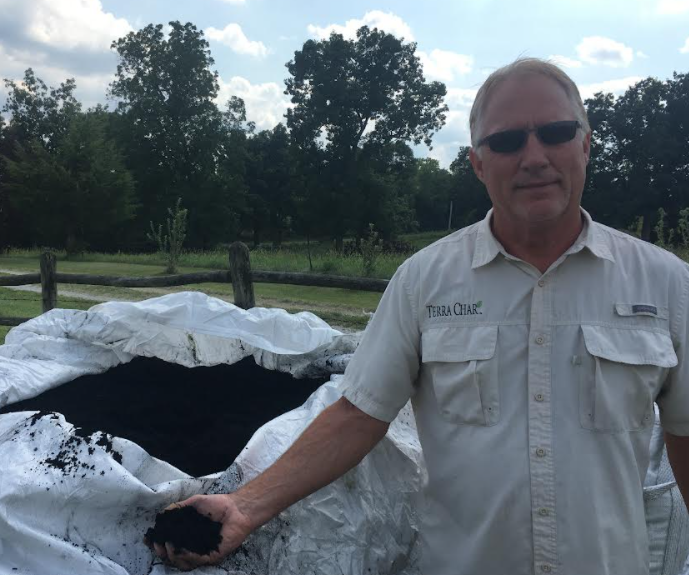
Phil Blom, CEO
BioEnergy Innovations Global, Inc. and Energy Americas Solutions, LLC
|
|
Q What got you started with biochar?
A I grew up on a dairy farm in Iowa. When I was young, my father started a cattle breeding and genetics business offering artificial insemination services to other farmers. I headed off to college, but two years later, my dad was injured and couldn’t work, so I came home to help with the business. Eventually, I took over the business and built it up to become the largest independent beef genetics company in the US and sold the business in 1999. I became a real estate broker here in Missouri until the 2008 slump and was having lunch with a friend who knew I was looking for an alternative. “Biochar,” he said, “is an up and coming thing.” He was an engineer working on emissions from charcoal kilns, which is a big industry in Missouri. He knew the value of carbon and that I was interested in soil. It sounded
|
|
Phil Blom, CEO
BioEnergy Innovations Global, Inc. and Energy Americas Solutions, LLC
|
|
interesting so I spent a few months doing research and trying biochar out in my garden soil. I could see the value of it with my own eyes, and I got hooked.
Q What was your first step to build your biochar business?
A I started going to Mother Earth News fairs and similar events and sold buckets of biochar. The organic farming community were the first farmers to recognize the benefits. Early on, I was fortunate to meet David Yarrow, a leader in the organic farming movement in New York. We integrated biochar into the organic farming world. Other groups that really understand the value of soil carbon are our Amish and Mennonite farmers. High-value horticulture growers crops also get it.
Q What products do you offer now?
A Our registered brand is called Terra-Char and we source the biochar very carefully to maintain high quality. All of our trademarked Terra-Char products have a minimum of 76% fixed carbon. Terra Char products come in five-gallon buckets, 1.66 cubic yard totes and bulk semi-truck-loads. We have 1-2 cubic foot bags coming soon. We also distribute soil amendments that work really well with biochar - humates, rock dust and organic nitrogen.
Q What's your approach to get farmers to try biochar?
A We start by selling them enough to try in their gardens and orchards. They can see the value there, and then they can integrate it into their farmland. We spend a lot of time on the phone helping clients understand how to apply biochar effectively so that it pays for itself in the first year. For every successful customer we get, we know we will get another one – or three. Word of mouth works with farmers.
Q What other biochar markets are you getting into?
|
|
A We're doing a lot with water filtration, storm
water, and bioremediation. We sell biochar to large composting operations and it really improves their product. We also work with CAFO (Confined Animal Feed Operations) farms that see a lot of benefit using biochar in bedding to control ammonia and retain nitrogen in composted manure. Again, it's the smaller independent farmers who will try this. It's not easy for big corporate franchise CAFO operations to change their practices. Biochar in animal feed has a good future, currently in the early adoption phase.
Q We find that most of the biochar production is in the northwest and southeast, where the wood products industry is concentrated. But most of the end users are in the midwest where you are. How are you addressing this gap?
A I started another company called Energy Americas Solutions to provide combined heat and biochar (CHAB) equipment. There are a lot of small sawmills scattered around the Midwest that have woody residuals to burn and a need for heat to dry lumber. We work with equipment manufacturers to identify the best technologies and then represent those technologies to customers. If they buy equipment from us, we can often provide off-take agreements for the char and help them develop local markets. There is lots of good biochar territory in the midwest to open up!
Q What’s next for you?
A We are getting interested in carbon credits for biochar. I’m still trying to learn how it works but it could have a lot of potential. People are too complacent about the future. The heat waves we are experiencing are starting to have a real impact. Biochar is the right thing for the planet and people. It can help provide us with food and energy security. People need to make the effort to understand it. My personal goal is to keep building this business so it is attractive to younger people who can take it over and make it an even bigger success.
|
|
|
|
Our Biochar Learning Center database on the USBI website continues to grow! Check out the most current and useful articles, websites, videos and other resources.
Featured August Resources
|
|
Find free educational videos on a ton of topics including current articles, books, podcasts,
and more.
|
|
ANNOUNCEMENTS AND OPPORTUNITIES |
|
----- Virtual Biochar Expert Bid Opportunity -----
|
|
The Nebraska Forest Service and USBI are seeking a contractor to prepare educational documents that address barriers to biochar commercialization and adoption in seven key market sectors. The position will be funded through our recently awarded USFS Wood Innovations Grant (WIG) with the goal of providing more specific biochar market development and producer and end-user education.
The ideal bidder will have knowledge of the biochar industry and a strong science communications background. He or she will work with the USBI Education Committee and sector-specific steering committees to develop:
-
Fact Sheets: Introductory and topic overview information.
-
Roadmaps: Strategic outlines of barriers to developing a market sector. Roadmaps what biochar producers and/or end-users (markets) need to scale-up.
-
Use Guidelines: Could take the form of case studies, including best uses, application methods, rates, frequency, seasonality, and ideal biochar characteristics.
Send inquiries to USBI Education Committee Chair Heather Nobert with Biochar Educator in the subject line.
|
|
----- Opportunity for Biochar Expert Program Coordinator Job Opening at Michigan State University ----
|
|
----- Microsoft $1 Billion Dollar Climate Innovation Funding
|
|
Funding is available over the the next four years. See Microsoft awardee information and the funding inquiry form here. learn how a Smith College professor is working with the indigenous communities to use biochar to restore the damage caused by slash-and- burn agriculture.
|
|
----- New, Enhanced USBI North American Biochar Directory -----
|
|
ROLLING OUT THE GREEN CARPET FOR
NEW USBI DIRECTORY MEMBERS
A big USBI directory welcome goes out to Connecticut biochar producer Biomass Controls, Missouri's BioEnergy Innovations Global, Inc., and Michigan's Carter Family Associates, LLC.
We hope your listing brings you lots of new connections!
Add your USBI listing - HERE. After review, your listing will be published in the USBI Biochar Directory.
|
|
BIOCHAR EVENTS CALENDAR
August 17 noon - 12:45 PM EDT Urban Bioenergy & Biochar Opportunities free webinar. Biochar expert Kathleen Draper, Chairman of the International Biochar Initiative, will provide an overview of biochar, and outline its potential as a CDR solution, as well as the many of its co-benefits. Presented by OpenAir, a network of people who voluntarily collaborate on shared projects that push Direct Air Carbon Capture (DACC) forward in the real world. Register here.
August 25-26 ACRES Healthy Soil Summit The 2021 Summit will gather growers online for the most helpful, practical agricultural event this year. You won’t want to miss this opportunity to create a real ROI for your soil health management system.. Register here.
Send your events to cgribley@biochar-us.org.
|
|
« NEWSFLASH »
Biochar Changes Over Time
By Ron Larson, USBI Board Member
|
|
➤ Biochar: The Waste Product that Could Help Mitigate Climate Change. Australian researcher Stephen Joseph describes a landmark study that confirms biochar's potential and the need to scale up applications. "We've done the science, what we don't have is enough resources to educate and train people, to establish demonstrations so farmers can see the benefits of using biochar, to develop this new industry," said Joseph.
➤ Senator Tester Secures Infrastructure Funding for Montana Biochar Projects. New Montana infrastructure projects in the US Senate infrastructure bill will include $200 million to remove flammable vegetation to create biochar or innovative wood products, with a note for agencies to consider working with youth and conservation corps, and engage with Tribes and veterans.
➤ Cow Manure Biochar Could Be Key to Sustainable Agriculture. Manure-based biochar is a potential approach to enhance sustainability benefits across crop production practices and agribusiness decisions. It can be a good policy recommendation in line with President Biden’s January executive order (EO 14008) on tackling climate change, as it promotes carbon management systems and greenhouse gas emission mitigation efforts.
|
|
|
|
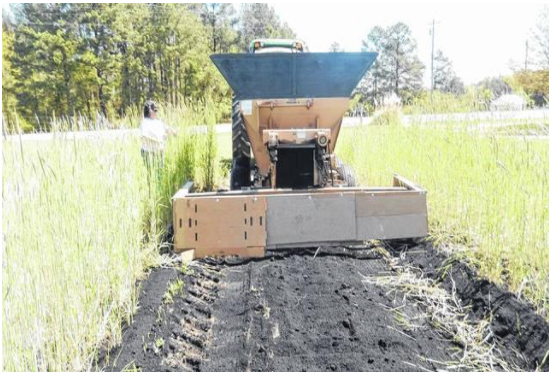
The biggest handicap to growing crops in the North Carolina Sandhills is the sandy soil. Acidic and low in organic matter, it does not hold water or nutrients. Compost can help but the organic matter breaks down and needs to be reapplied every year. What if something could enhance the soil permanently? Biochar acts like compost, but is more stable. Where compost breaks down within a year, biochar lasts for thousands of years.
« A tractor spreads biochar in a field. Photo courtesy of Dr. Mike Parker.
|
|
➤ Washington State Wine Commission Bets on Biochar for Sustainability. Research priorities for wine grape growers and vintners will focus on sustainability issues from discovering ways for wineries to reduce winery wastewater and waste to studying biochar for optimal vine and soil health. The commission will launch a sustainable certification program in 2022.
|
|
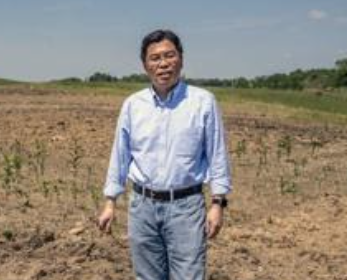
Jingxin Wang, professor of wood science and technology at WVU, stands in » field being used to research regional biomass products.
|
|
|
|
|
➤ Swine and Pines Project Aims to Find Waste Solutions. Victoria Augoustides has been the lead researcher on a project to add value and remediate waste products of pine and swine production in North Carolina. “We are currently testing the biochar (made from pine bark) for its potential to absorb volatile organic compounds from the air around the swine farms. It could also be used to lower the level of contaminants in the water,” says Augoustides.
|
|
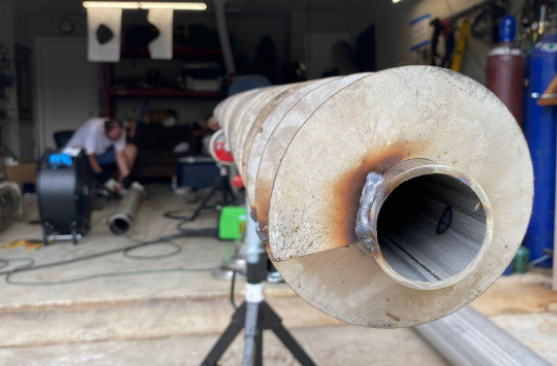
Locoal Charcoal’s pyrolysis machine under construction. »
|
|
|
➤ Partners Test Hydrogen Pyrolysis in California. CHAR Technologies revealed a new test project with Hitachi Zosden Inova (HZI) to develop a high temperature pyrolysis to green hydrogen system at its California facility. Under the definitive agreement, CHAR’s high temperature pyrolysis system will process 18,000 tonnes per year of solid anaerobic disgestate into 1,320 tonnes of green hydrogen per year, and 2,800 tonnes per year of biocarbon.
|
|
--------------------- promotional section ---------------------
|
|
Proceeds go to the International Biochar Initiative
|
|
|
|
|
|
|