|
Europe 2023
October 2 & 3
Trier
| |
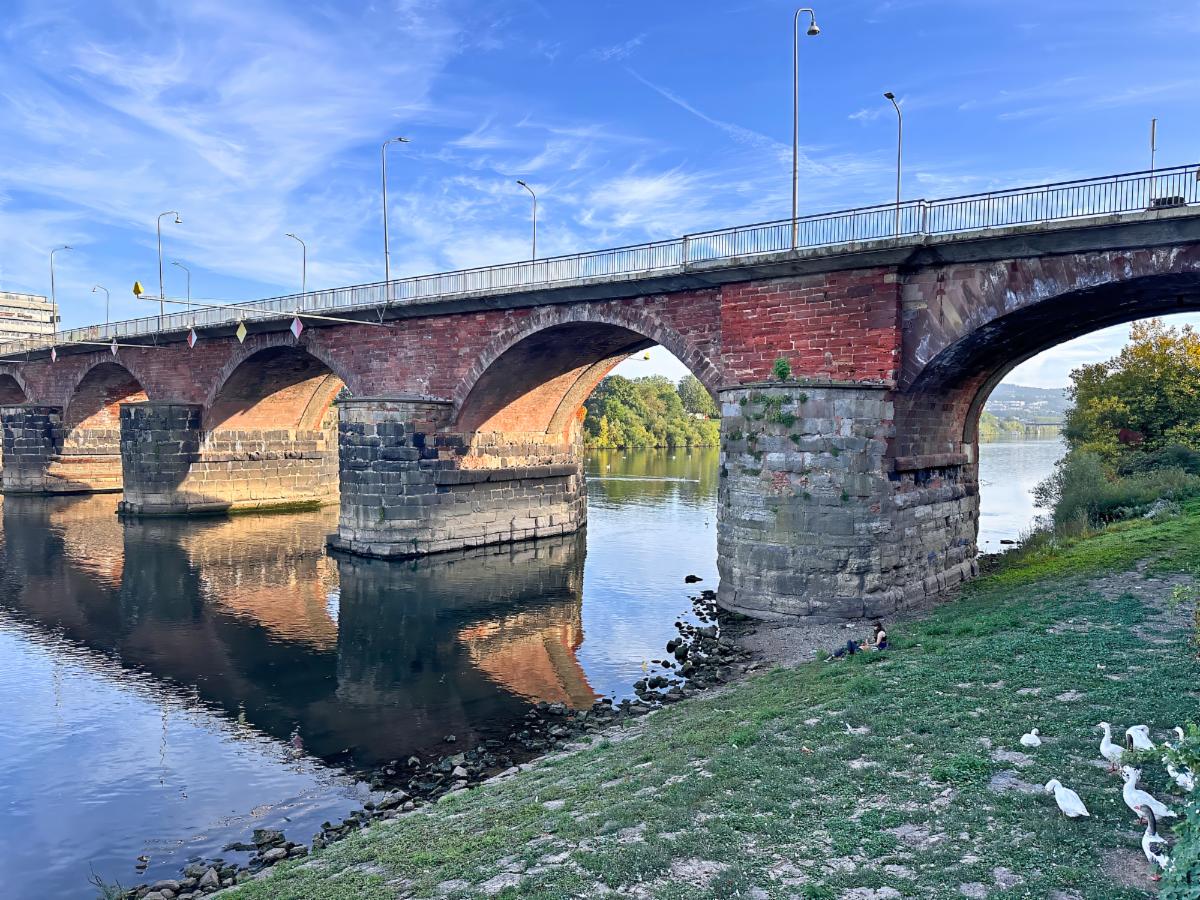
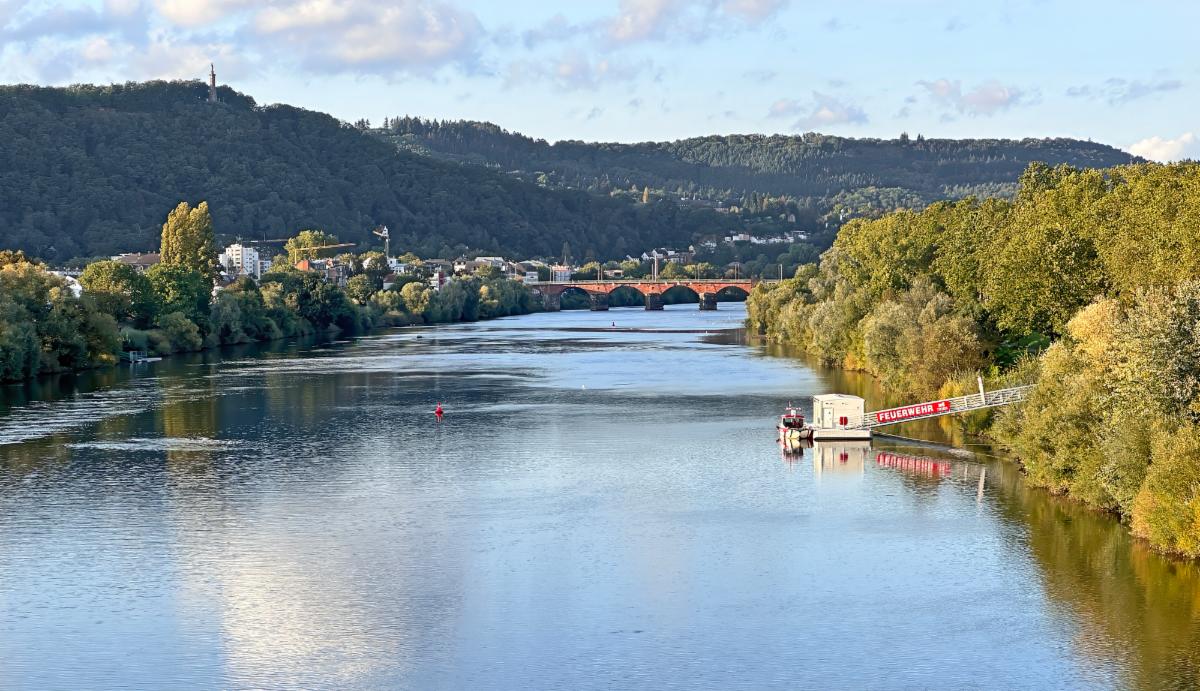
This is the Roman Bridge that marked the founding of Trier. The stone foundation pillars were laid 2000 years ago. | |
|
MONAY, OCTOBER 2, 2023
TRIER
Trier is the oldest city in Germany. It was established as a Roman outpost in 16 BC when the Romans built a bridge across the Moselle River. The bridge’s stone river supports are still standing and still being used as the bridge foundation. The stone arches were replaced 300 years ago, and the wooden roadway was recently replaced with asphalt. The Romans were excellent engineers.
We arrived at the best RV park yet, at 10 a.m., the optimal time to snag a site. We picked a perfect spot along a tall vine-covered fence 100 feet from the bathrooms and showers. My only quibble is that they need many more hooks in the shower stalls. With a price of €13.50, plus a couple of bucks if you hook up electricity, it was very reasonable.
Wanda and I were sent out to reconnoiter the best routes into the city center. With help from Google Maps, we found a bus stop nearby. Google sent us on a roundabout route to the stop. We were able to trim the distance way down to 200’. The bus stop sign was cryptic, claiming buses 1, 3, and 83 use the stop on Monday through Friday. Saturday was different. Sunday and holidays had a tiny footnote stating only buses numbered 80 through 89 run. As we were reading this through our Google Translator, bus 306 pulled up and dropped someone off. What? 306 wasn’t listed. Anyway, tomorrow is the German reunification holiday, so we guessed that bus 83 would be the guy to look for tomorrow.
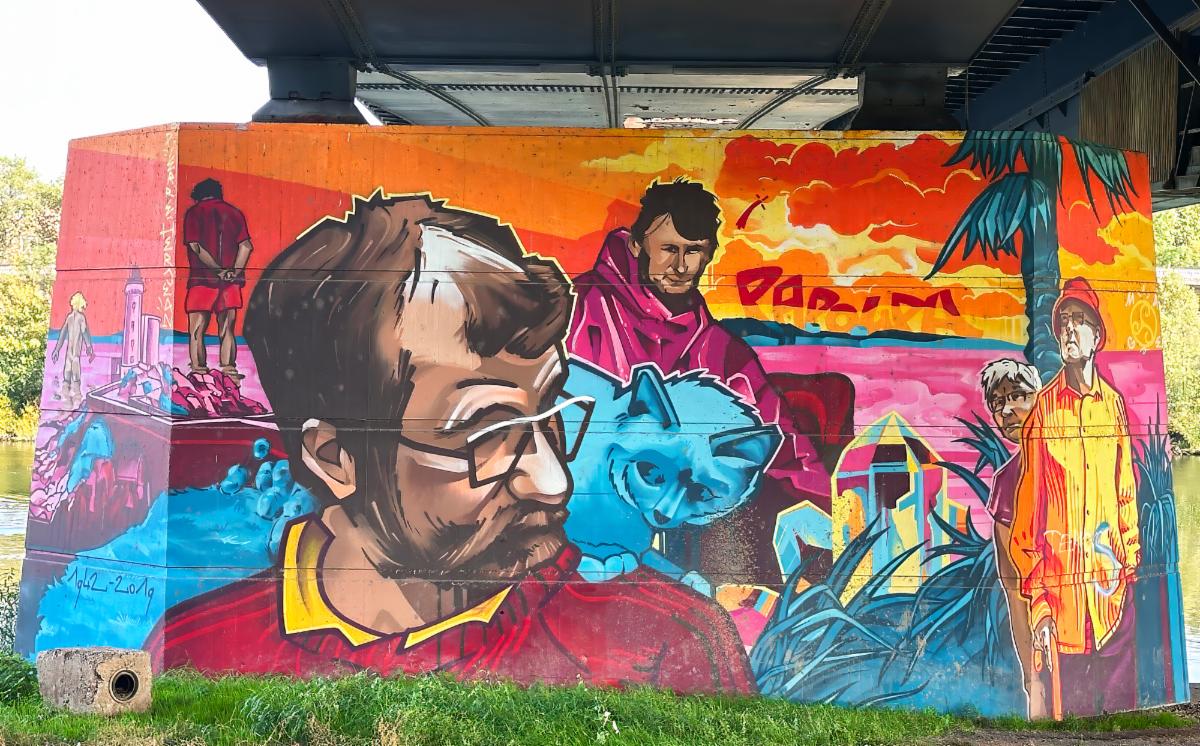
| 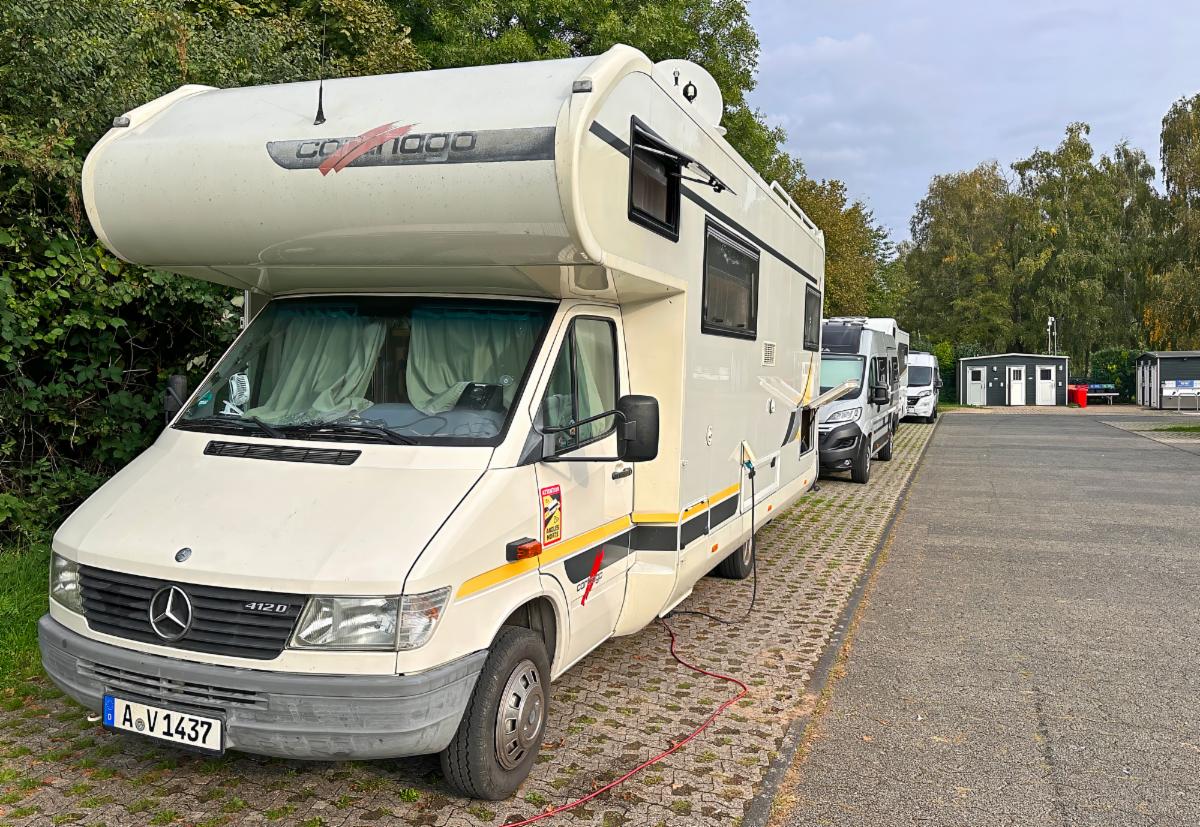 | The RV park in Trier. The little buildings in the back were the showers and toilets. As is the European fashion, the RV parks are cramped but extremely clean, convenient, inexpensive, and close to clean, convenient, and inexpensive public transportation. | Above and below: We found these murals on the overpass supports on our way to the bus stop. | 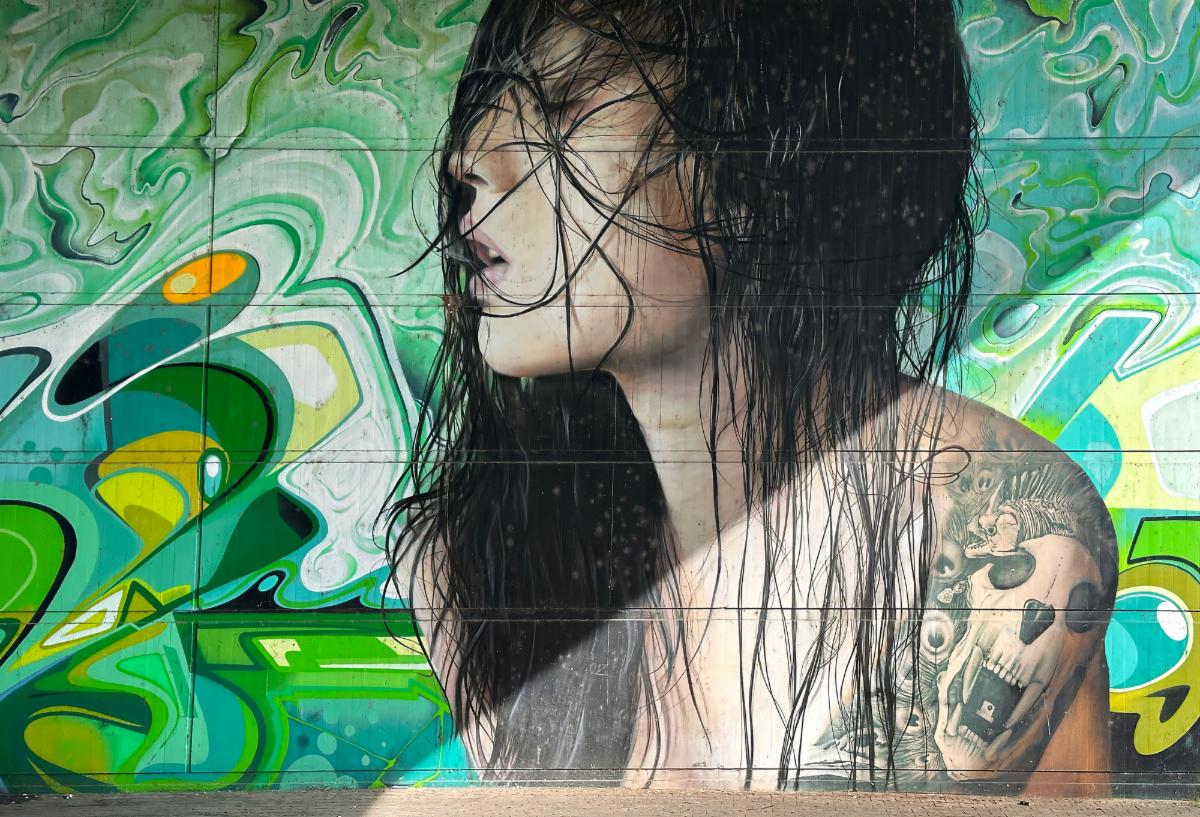 | |
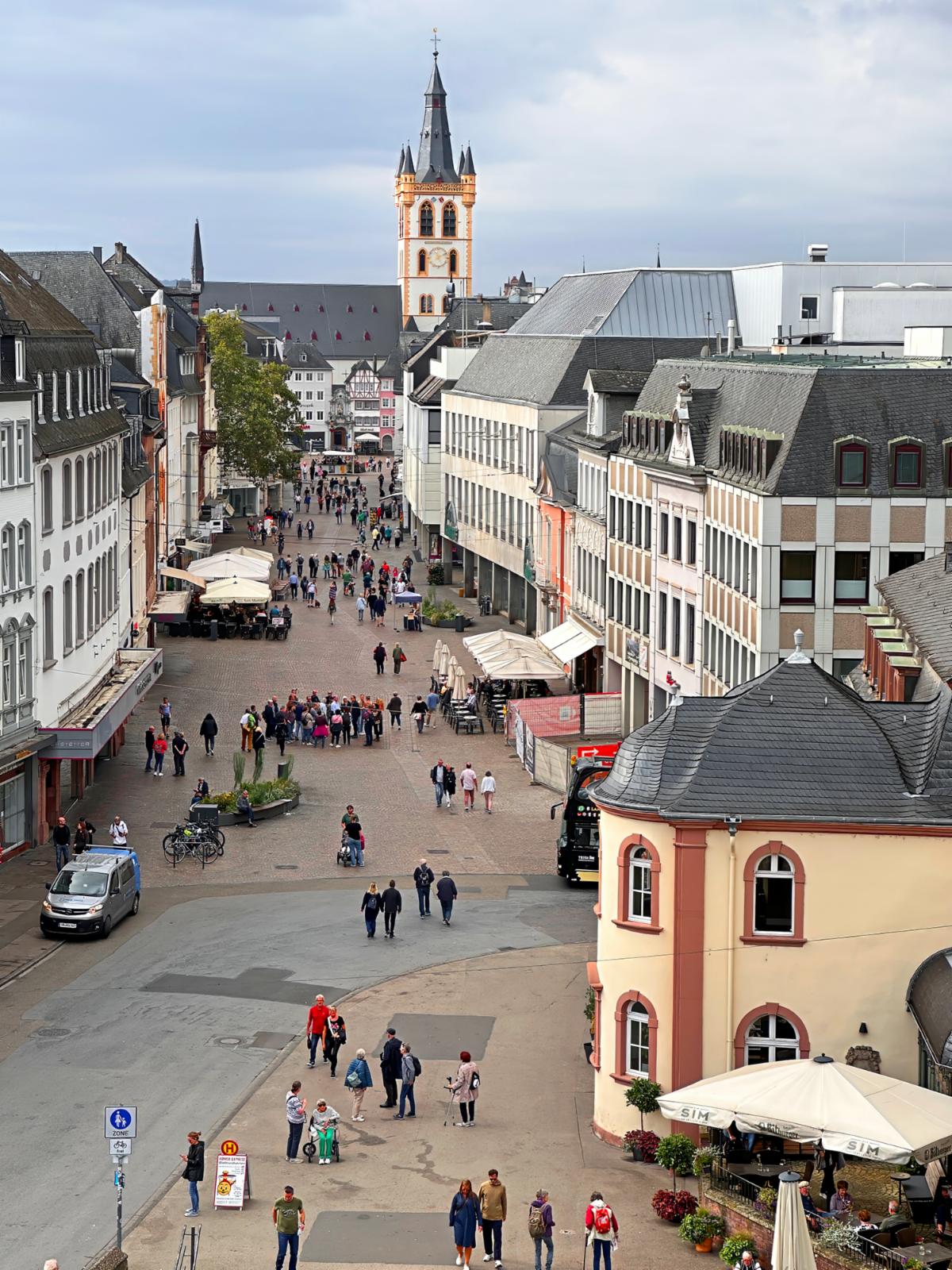
Next, we got the bikes out to find a bike route downtown. Again, Google Maps gave us a bike route. That also turned out to be an approximation. The bike path along the Moselle River is identical to the Enkirch area. It closely follows the riverbank, and it is gorgeous. After a short run along the river, we crossed the Moselle on the Roman Bridge. The bike route through the city is mostly well-marked and led us into the typically beautiful central plaza. (Although, it didn’t precisely follow Google’s route.)
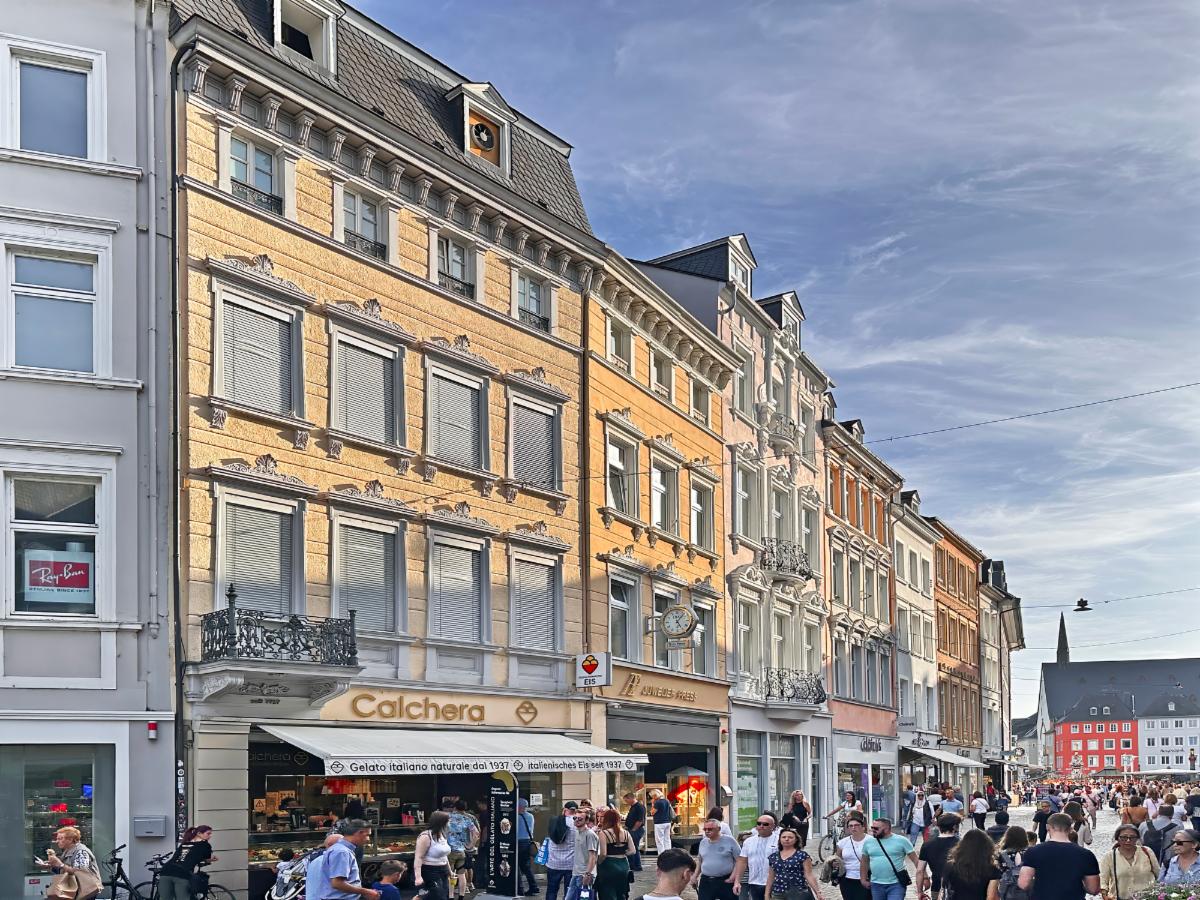
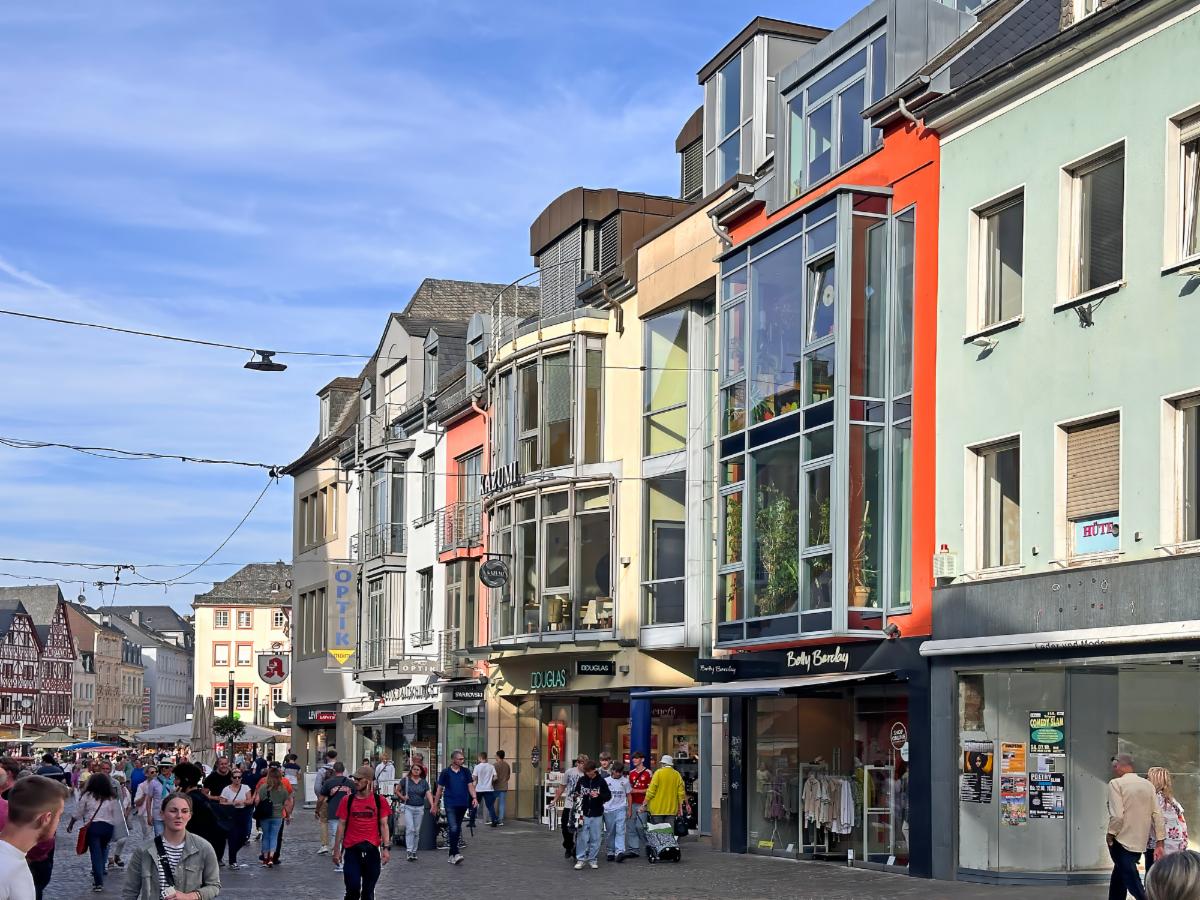
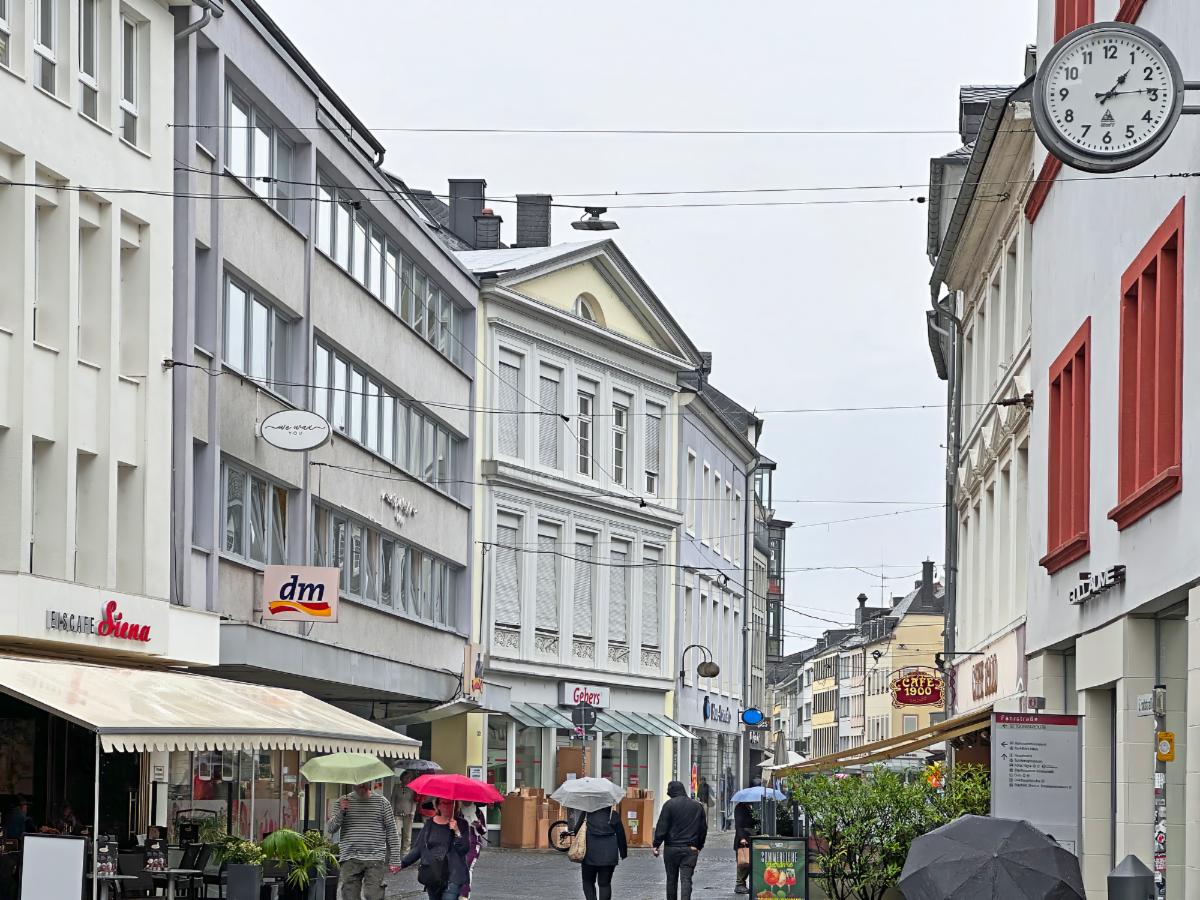
The buildings, however, seemed schizophrenic. Sections of old-time ornate buildings were interspersed with swaths of plain box buildings. As I suspected, a plaque told us that large downtown areas were bombed during WWII. The boxy buildings were built after the war. (Augsburg, on the other hand, rebuilt their bombed-out areas to match the original feel.)
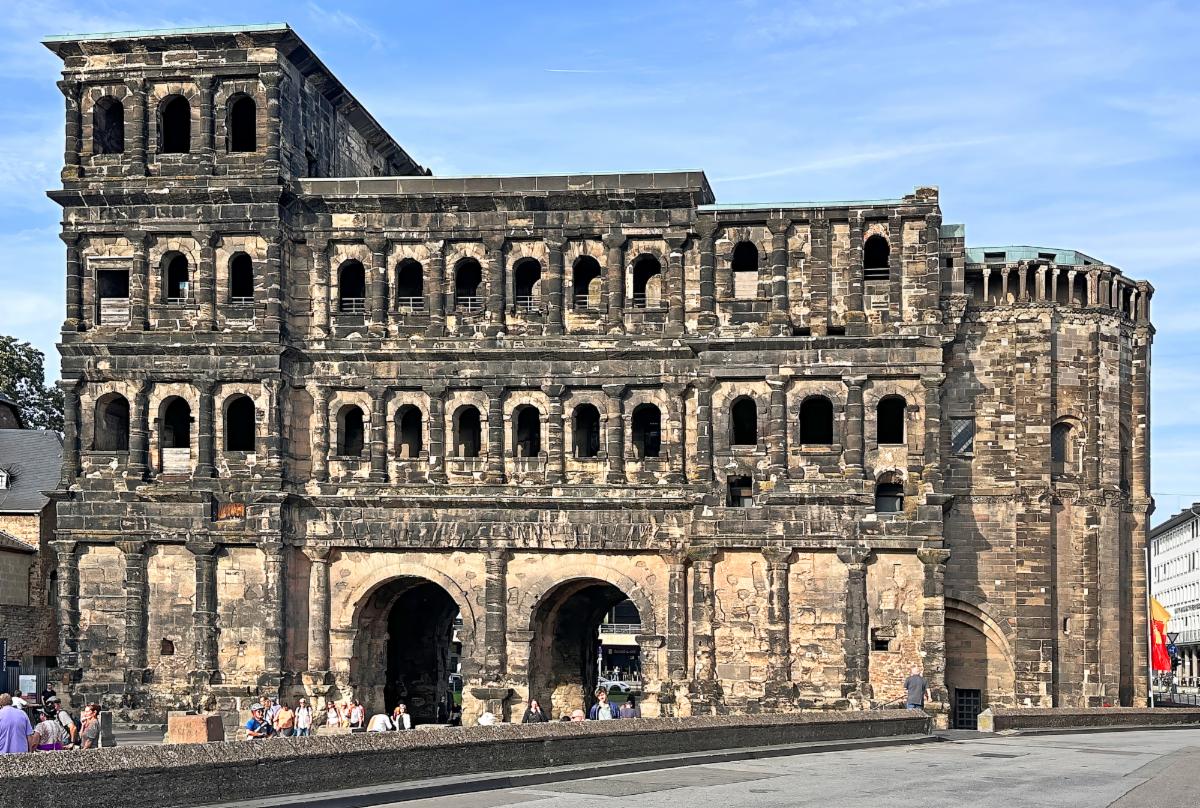
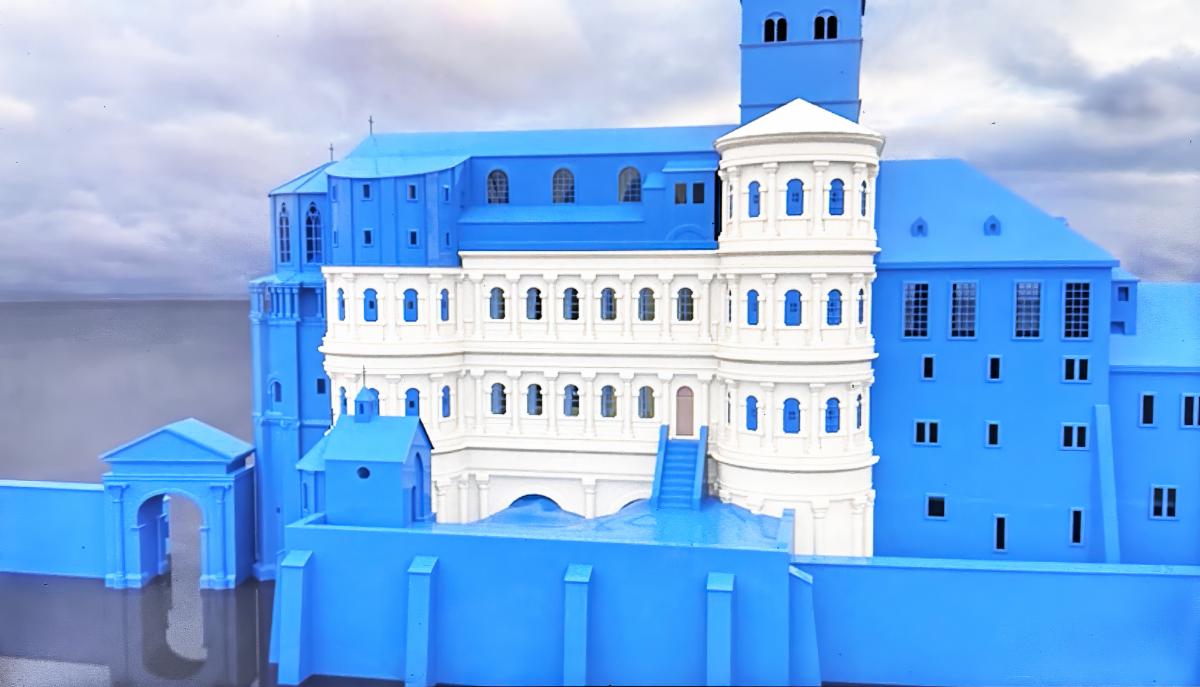
Downtown was so crowded that we had to walk our bikes down the central pedestrian street. Halfway, we just locked the bikes up. Our goal was to find the Porta Nigra (Black Gate). This is the gateway to the historical city center. Built by the Romans, it is a mammoth stone building that was initially one of four gates of a 6-kilometer protective wall. It is the only surviving gate. Most of the wall is also gone, but a small section remains attached to Porta Nigra. This huge building has an interesting history that saved it from demolition, unlike the other three gates. The building was turned into a church by more than doubling its size via many add-ons. The add-ons were eventually removed, and the building was returned to its original state.
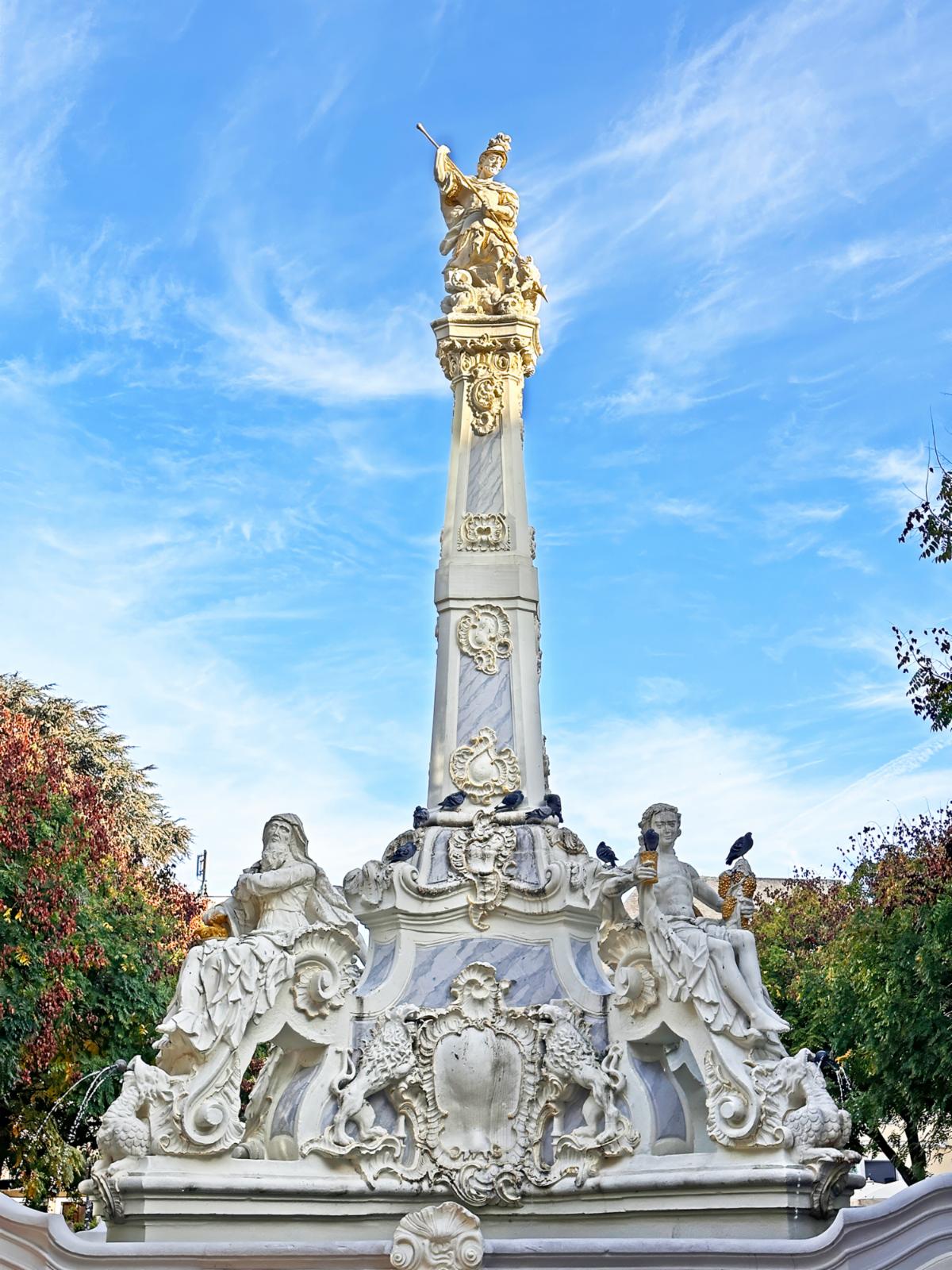
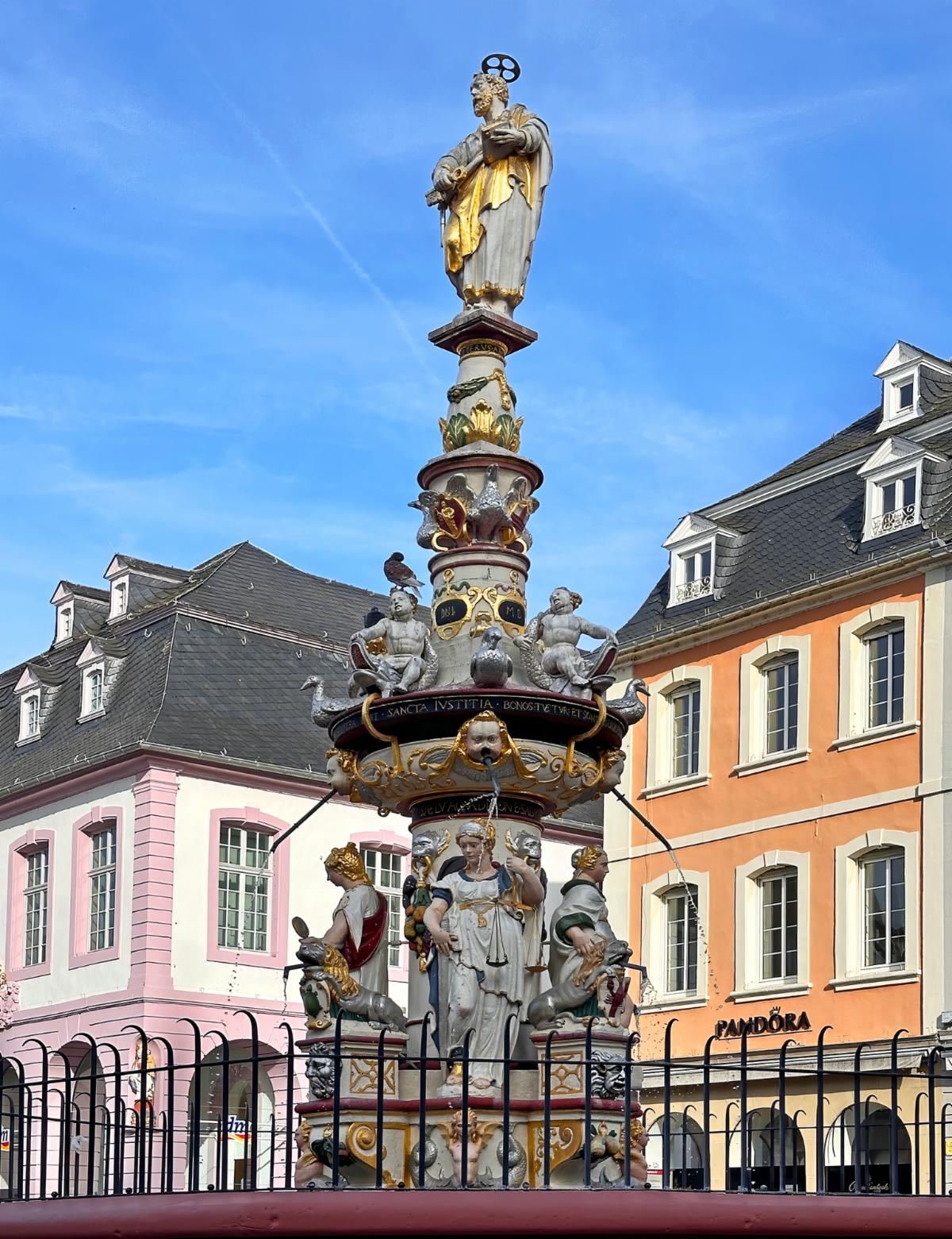
| 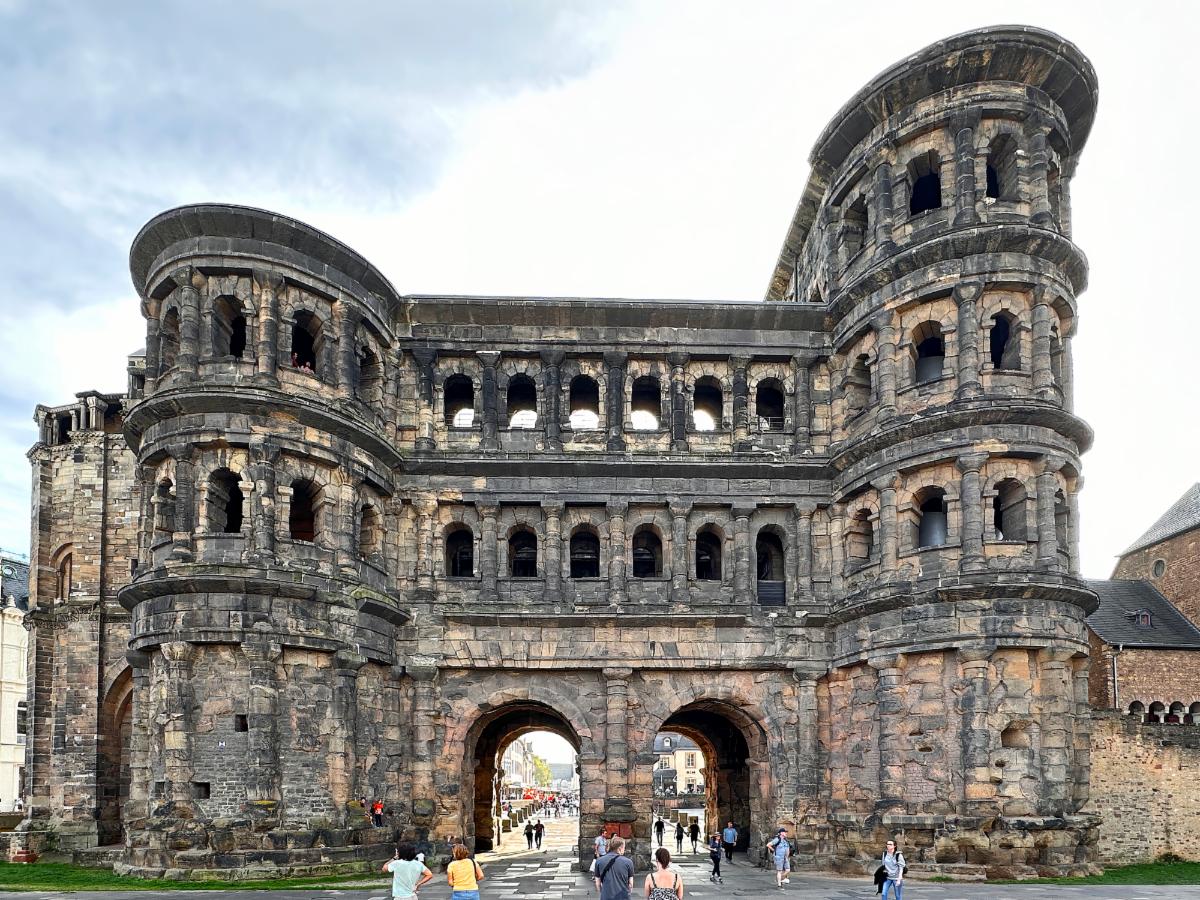 | Above and below: The Roman built Porta Nigra (Black Gate) | This is a model of the changes made to the Porta Nigra over many centuries. The white portion is the original Roman-built structure. The blue portions were additions built to make the structure a Cathedral. Much later, the blue areas were removed. Today, only the original white area remains. | Every plaza needs a statue. | Every plaza needs a fountain. | The buildings along this block were built after the WWII bombing. You can see the different style. To me, it was less appealing. | |
Next to Porta Nigra were a fake trolley tourist train and a double-decker hop-on hop-off bus. The bus cost €13 for an hour tour. It will rain tomorrow so we might take one of these conveyances.
We quickly buzzed around the city center to get our bearings. When we bring Diane tomorrow, the fewer steps, the better. The ride back to the RV was uneventful.
Back in 2014, when we visited Germany and Holland, I was floored by how Holland had embraced bikes, ebikes, and scooters. Germany was way behind. Germany is catching up. The trail systems along the major rivers are impressive and gorgeous. The most significant improvements have been in the cities. Trier is a good example. The bike routes are well laid out and marked. We are working our way to Holland. I am interested in comparing Germany’s fledgling biking infrastructure with Holland's mature bike routes.
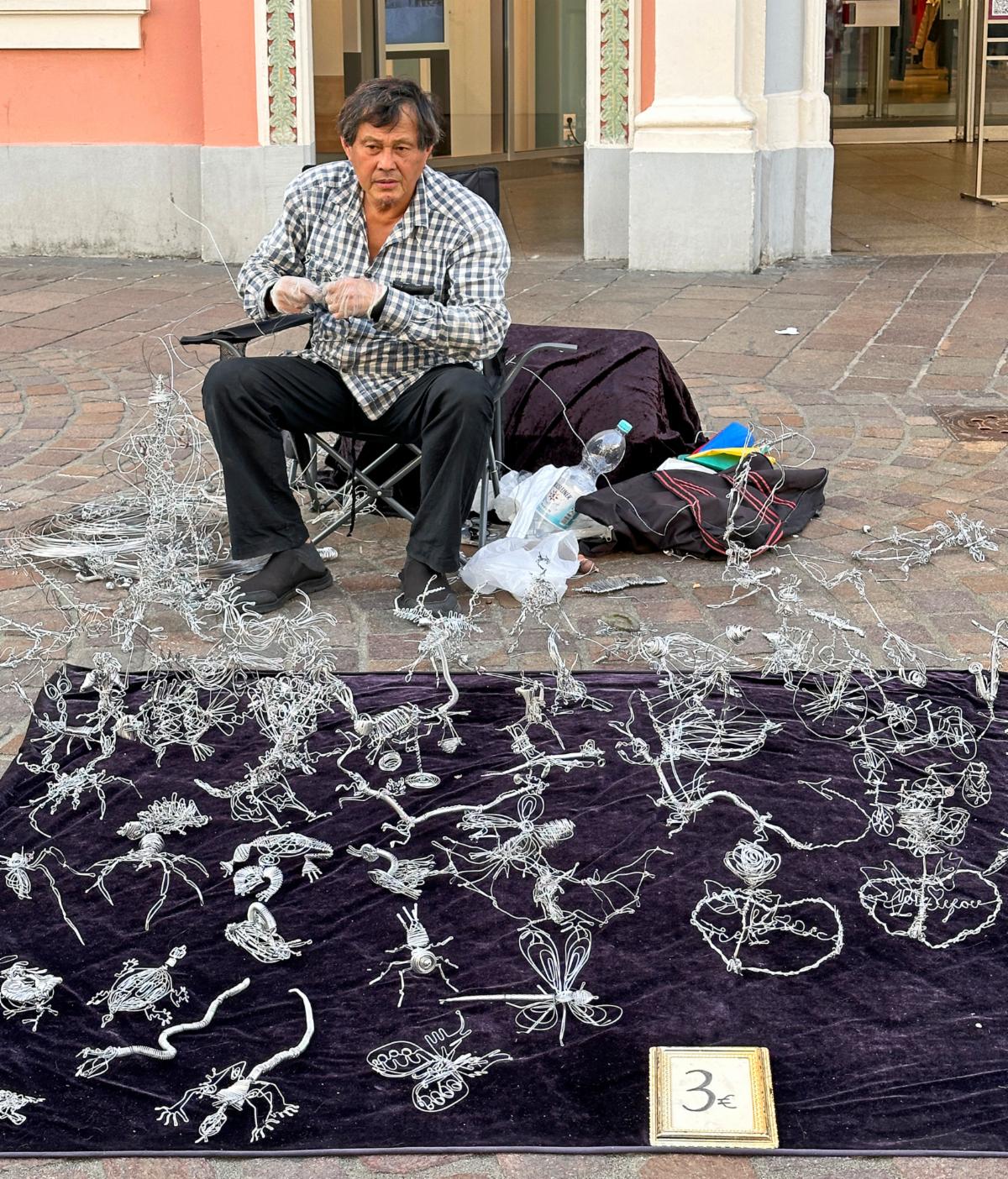
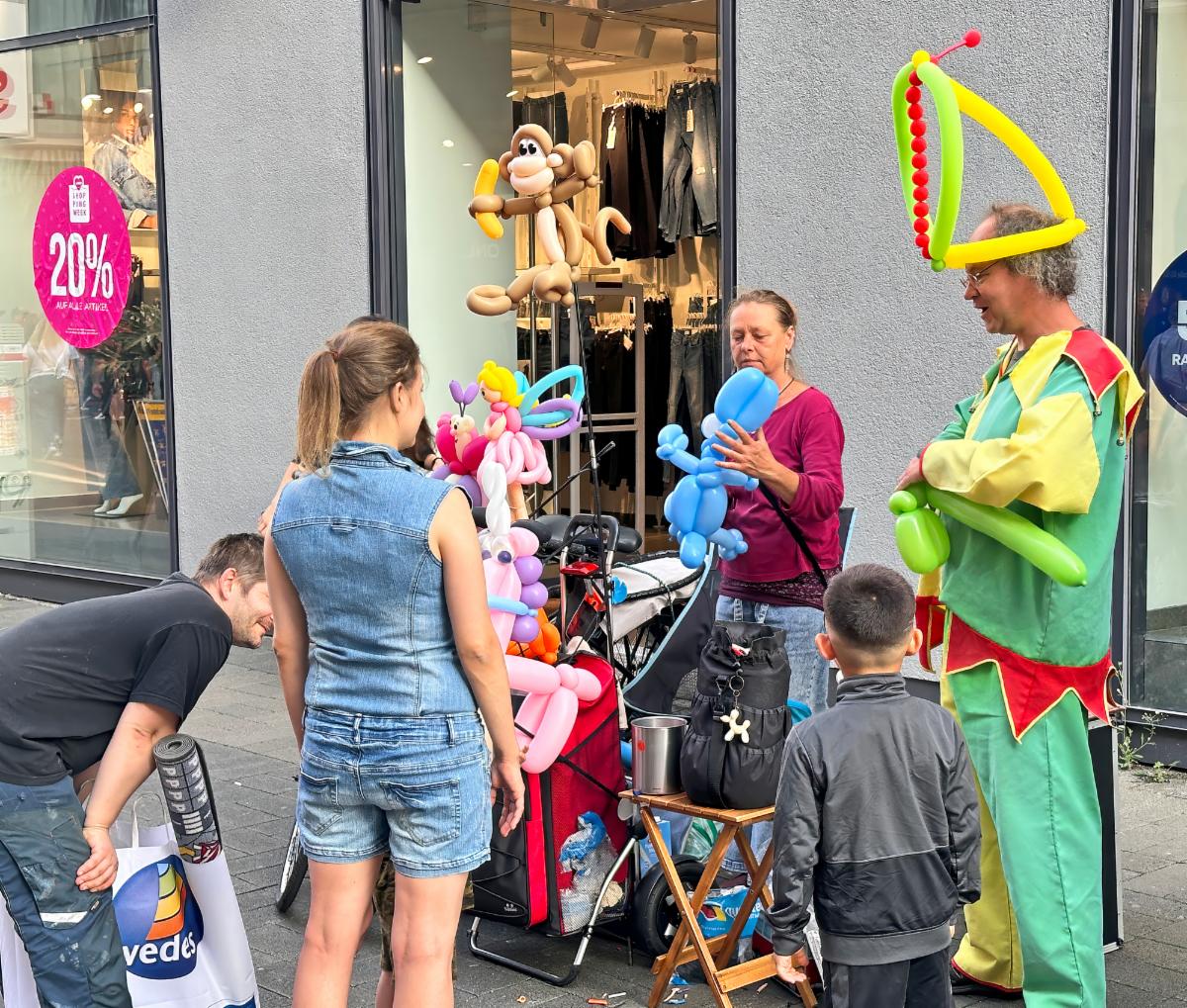
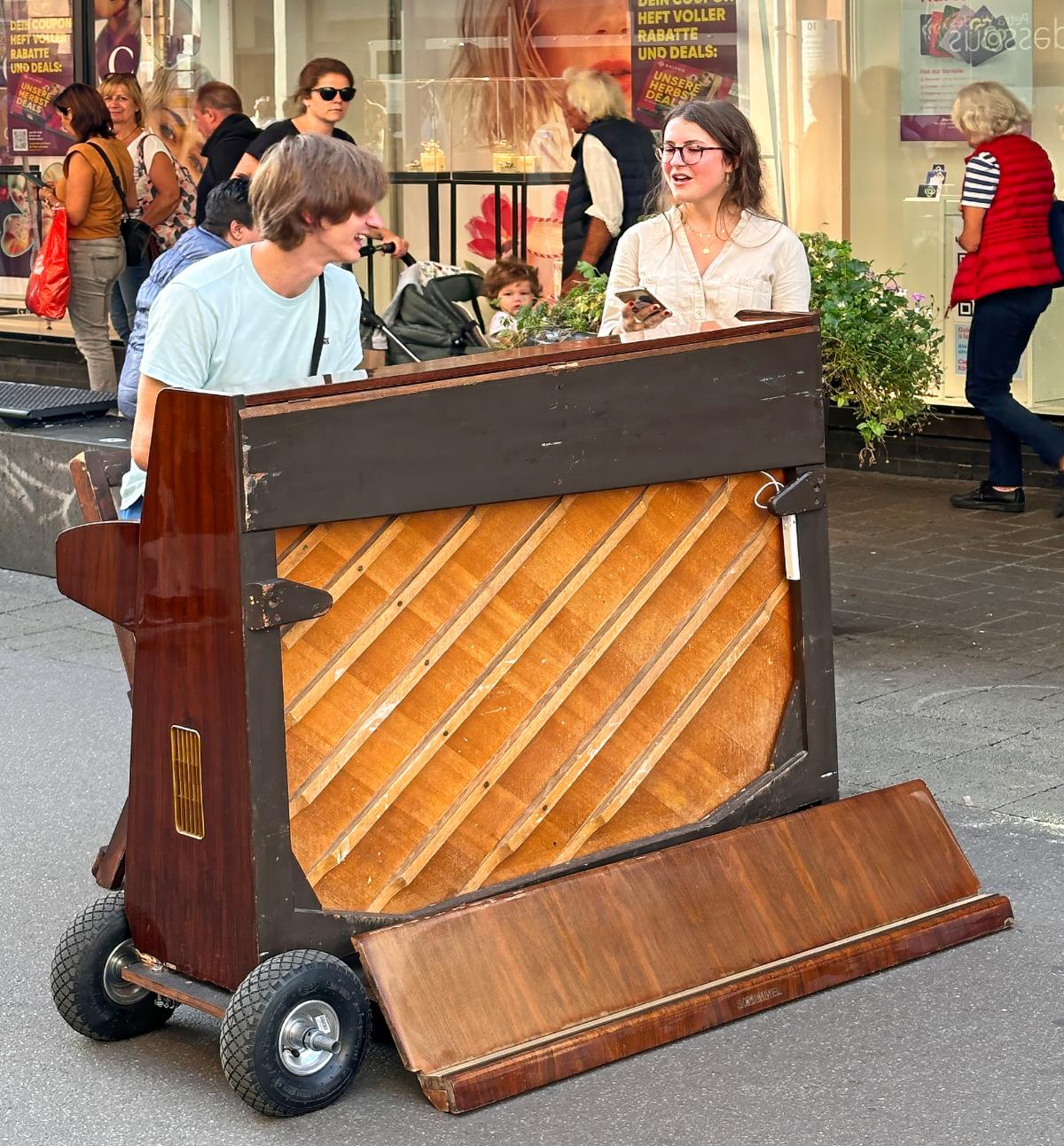
| Above and below: There were several street vendors and a couple of street musicians. | This young musician played classical music until the girl showed up. She sang pop tunes while he accompanied her. They were very good. | |
TUESDAY, OCTOBER 3, 2023
TRIER
Accompanied by Diane, Wanda and I found a bus that took us to the Porta Nigra. The downtown info center told us where the return bus stand was located, which was different from where we were let off. We also picked up a map with a 1.5-kilometer walking trail that hit many of the important sites. The rain was holding off, so we decided to walk the circuit.
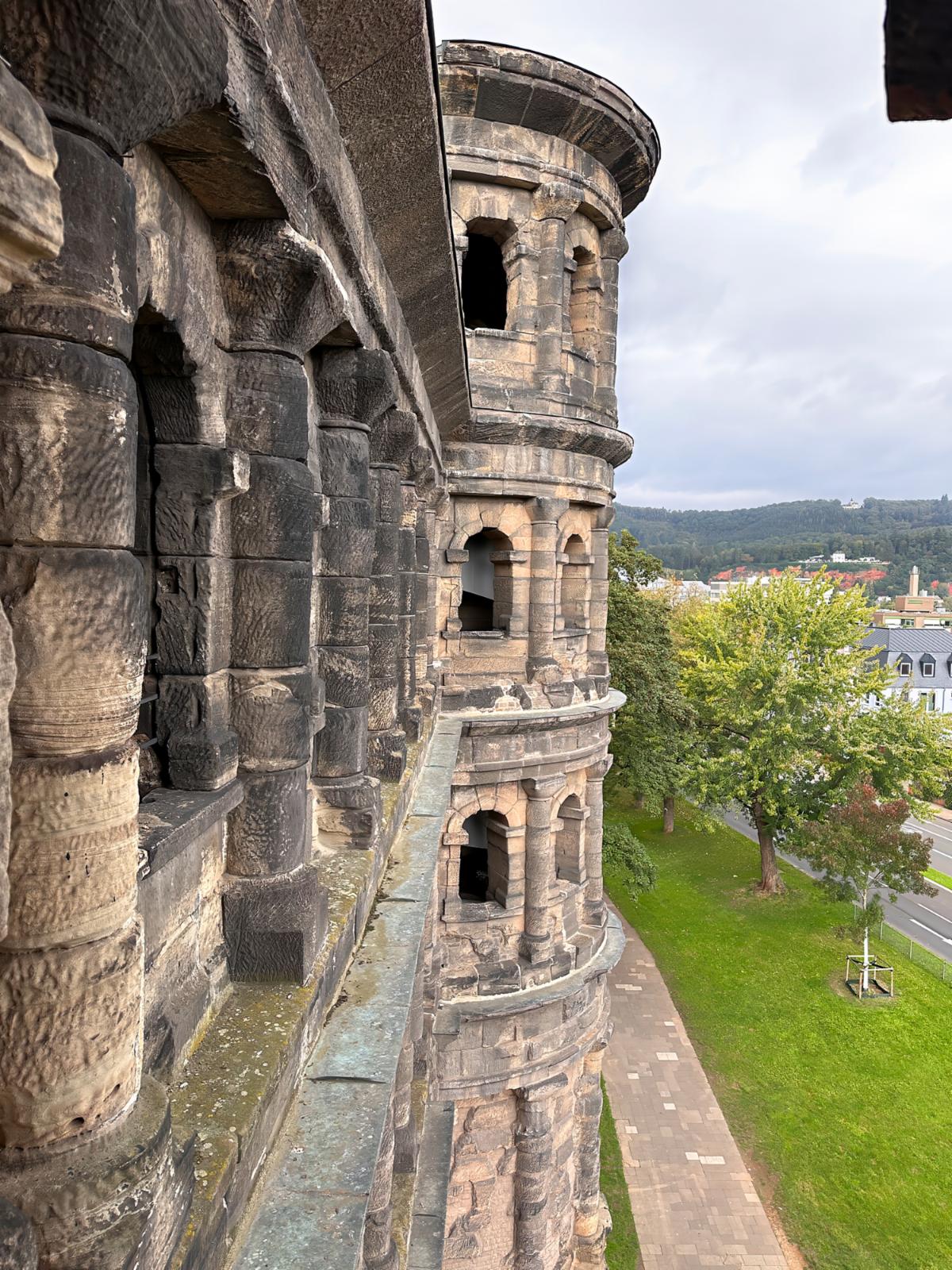
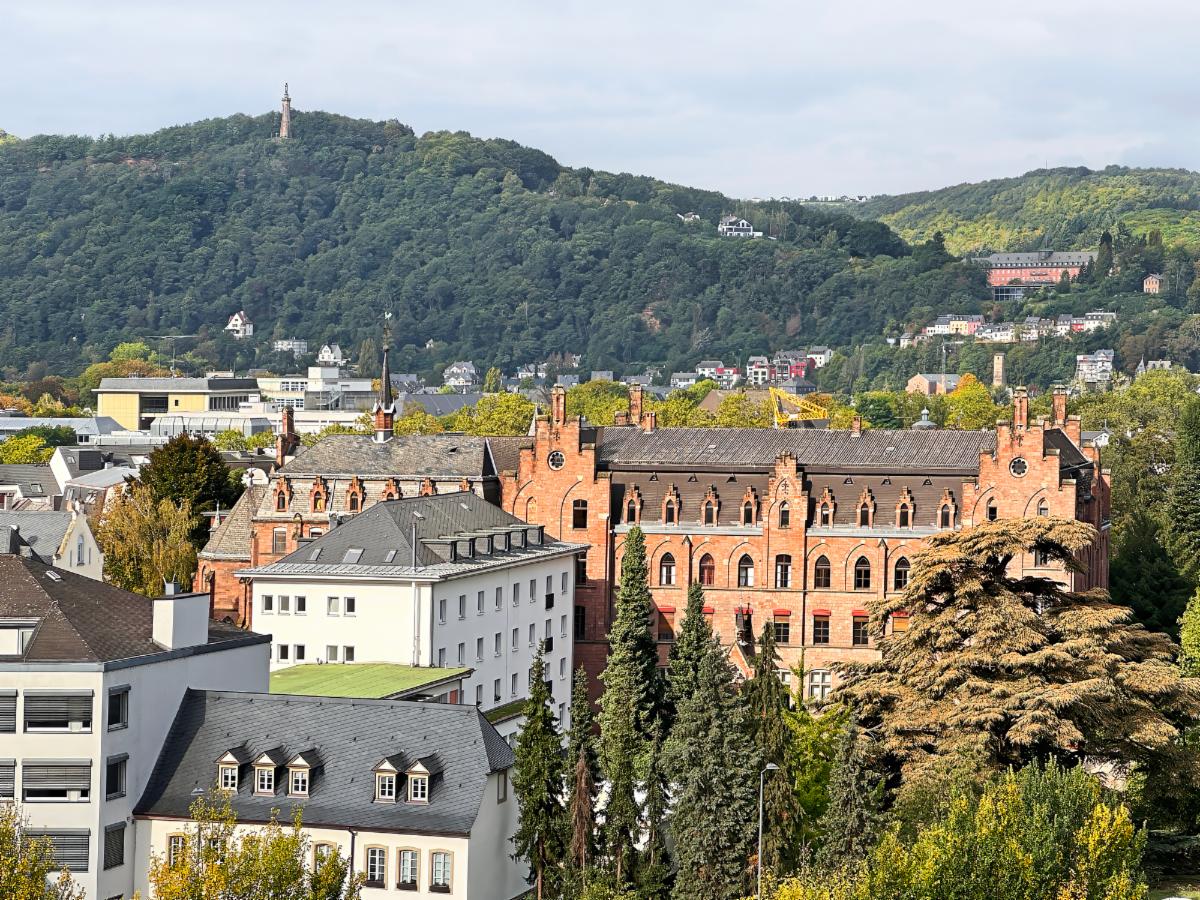
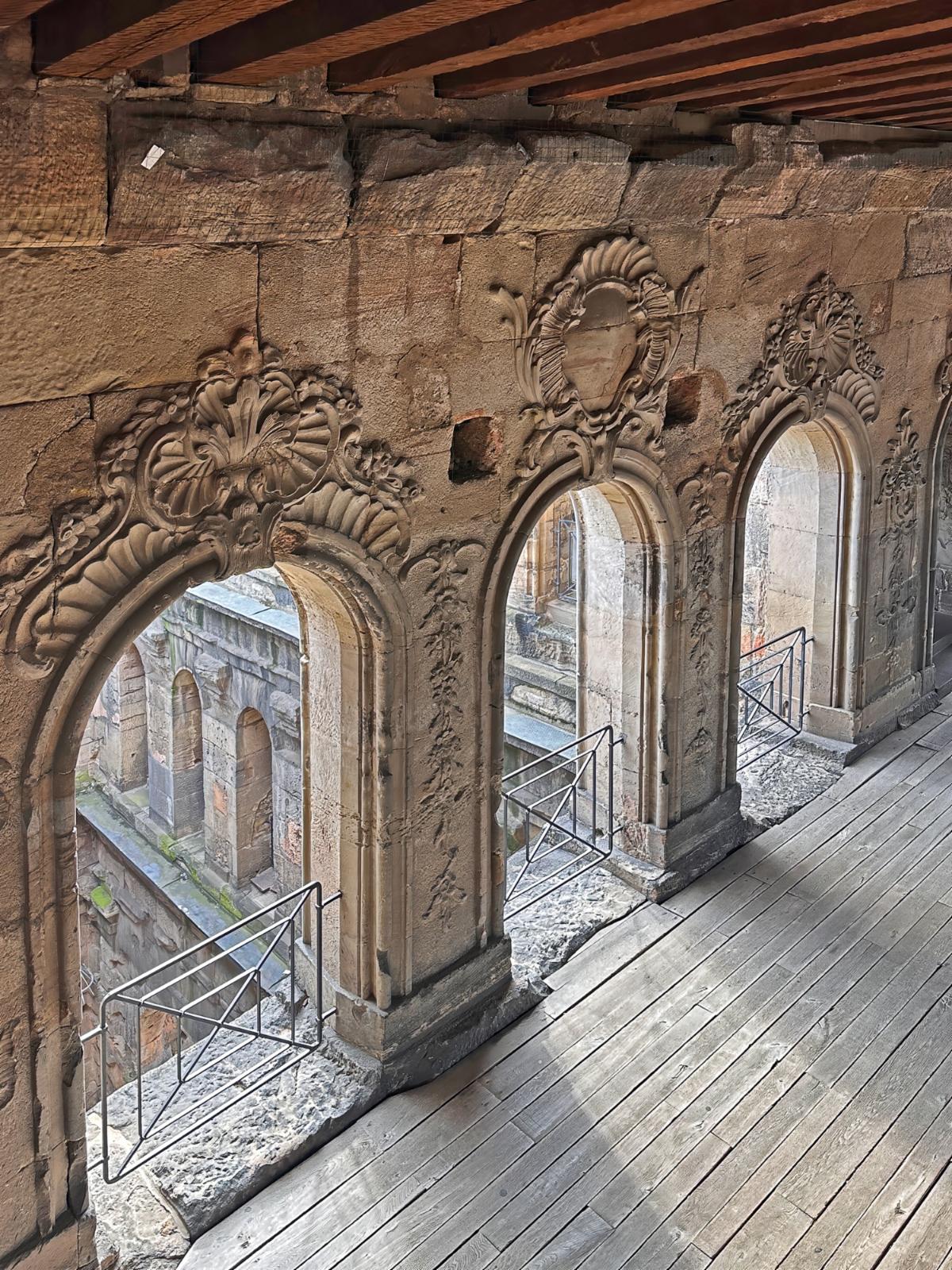
With the imposing 2000-year-old Porta Nigra beaconing us, Wanda and I paid €4 to climb up the three stories and roam around the structure. Solid rock holds up darn well as a building material. The old gate was in good shape for her age. The views of the old city were also quite nice.
| Views of Trier from the upper floor of the Porta Nigra. | The Dom is in the background (left). | Are those more grape vines in the background? Trier is on the Moselle River. | The interior of the Porta Nigra reveals intact 2000-year-old decor. | |
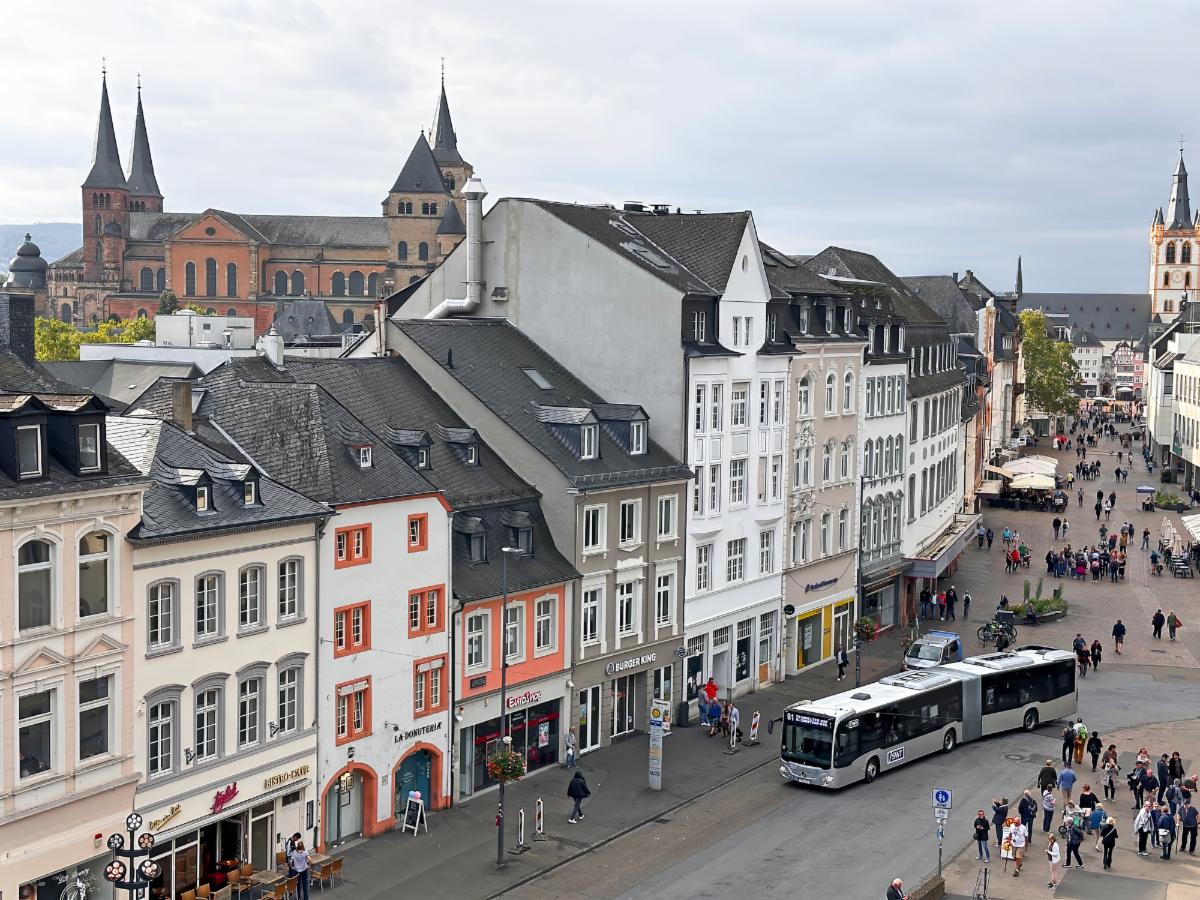
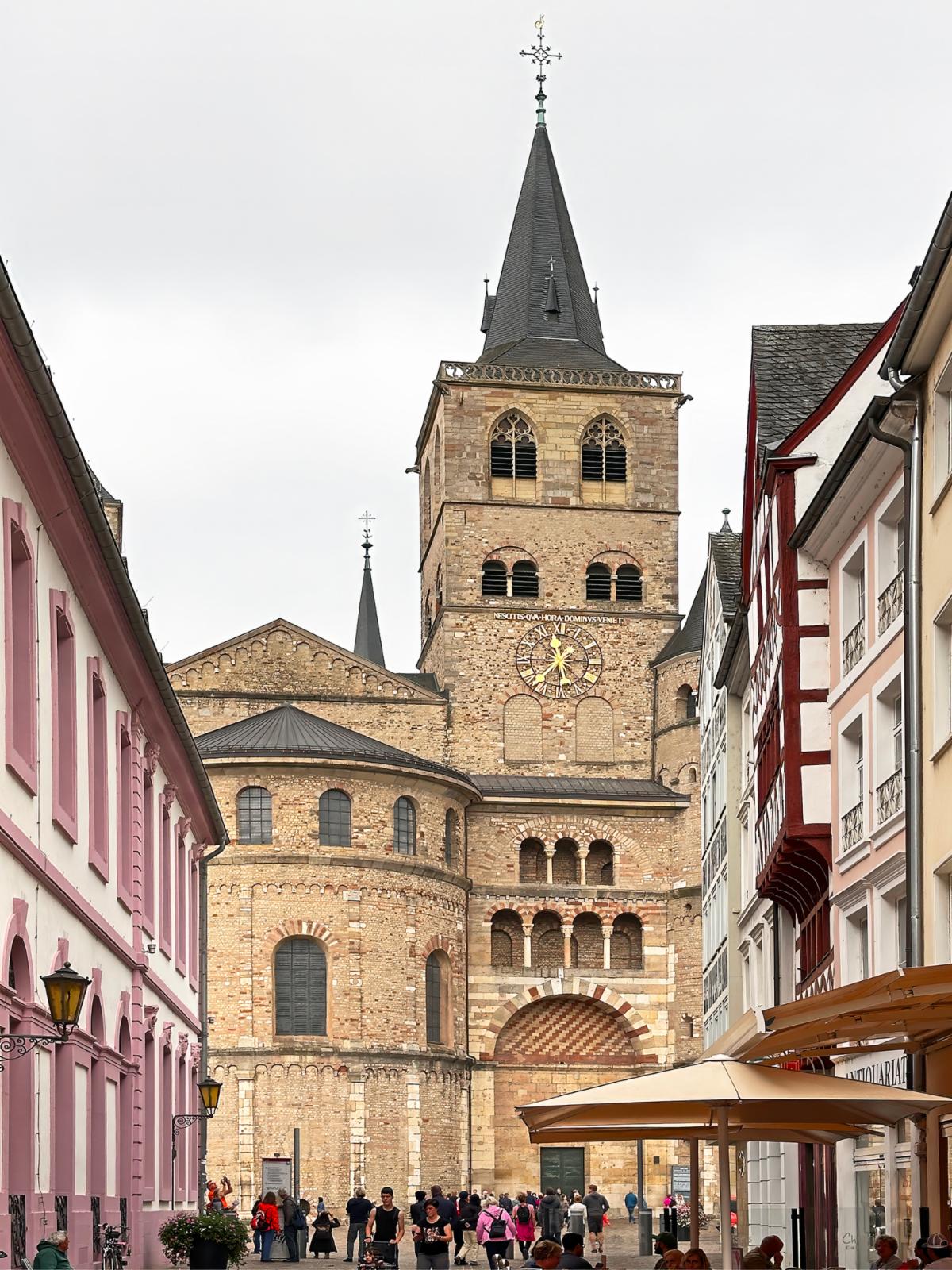
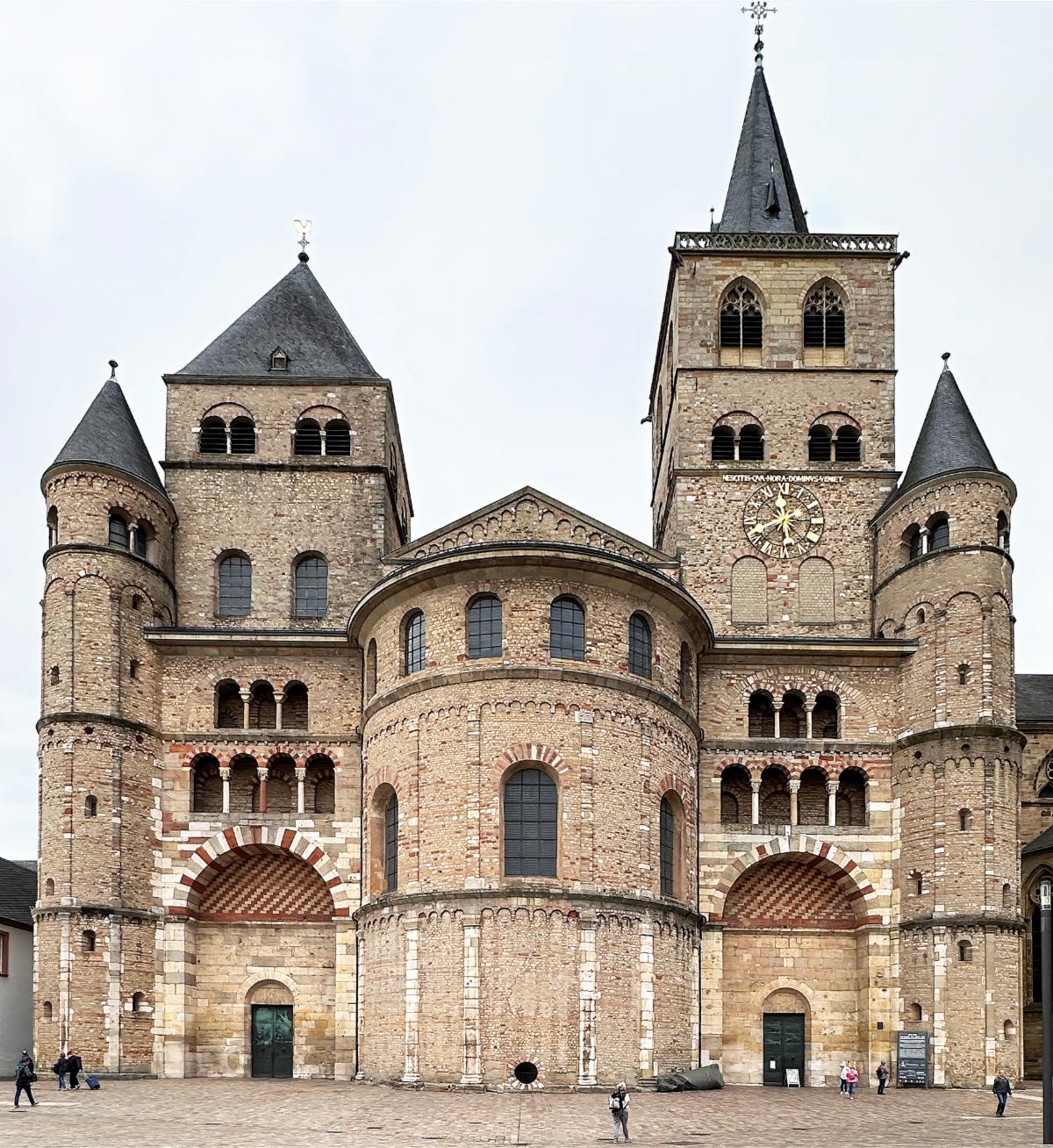
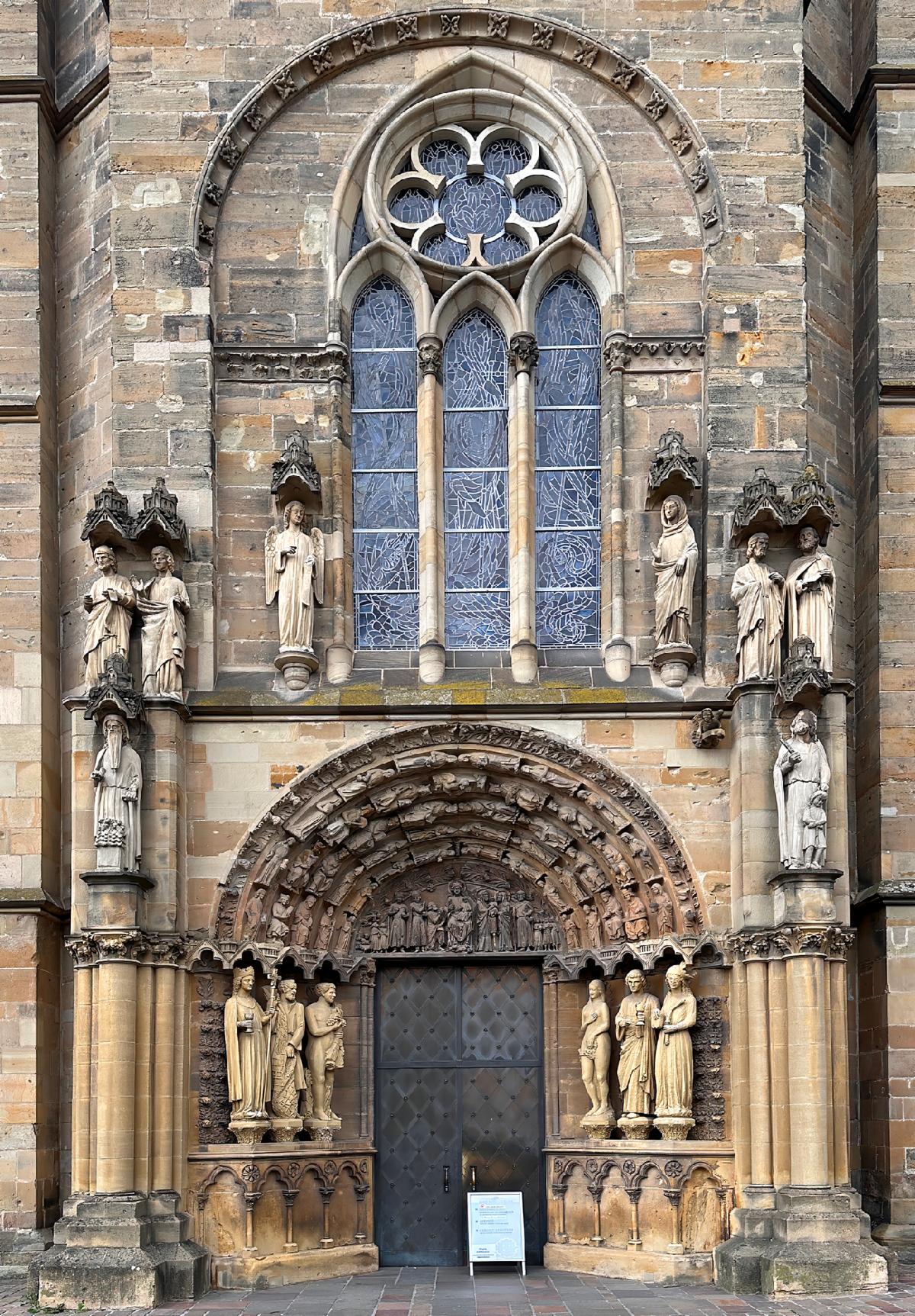
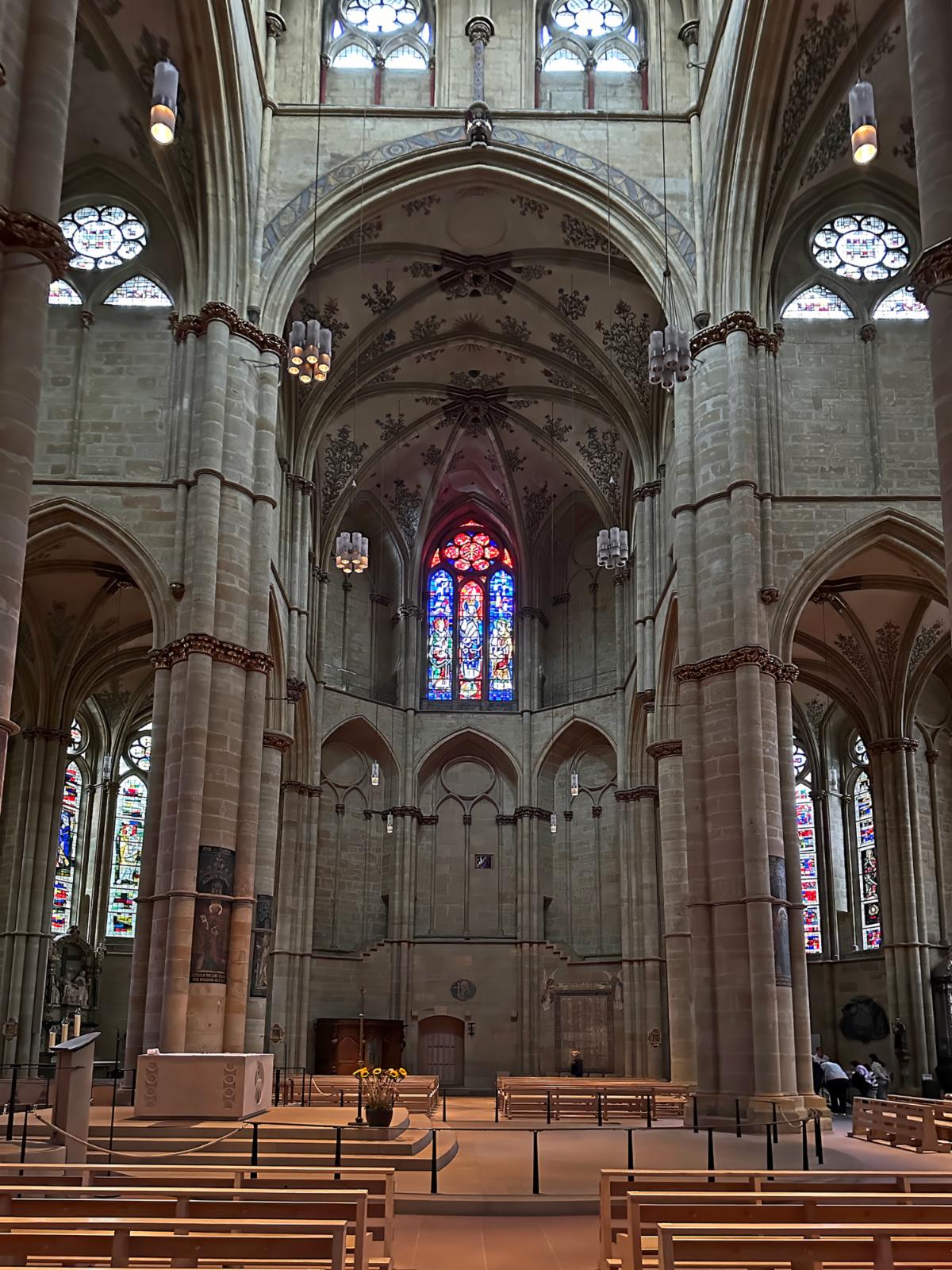
The first grand building we encountered after we left the Porta Nigra, was the twin churches of St. Peter Cathedral, usually called the Dom, and the Church of Our Lady. The Dom is Germany’s oldest continually serving church, established 1700 years ago. The Church of Our Lady is Germany’s oldest Gothic church. It was built in the 1200s. It served as the local parish church to the giant Dom until 1803.
Even though these two churches are attached to each other, The Dom is now Episcopalian, while the Church of Our Lady is Catholic. I never could find out how this schism happened.
| Above and below: The Episcopalian St. Peter Cathedral, better known as the Dom. | The interior of the Dom was plain and simple, but huge. | |
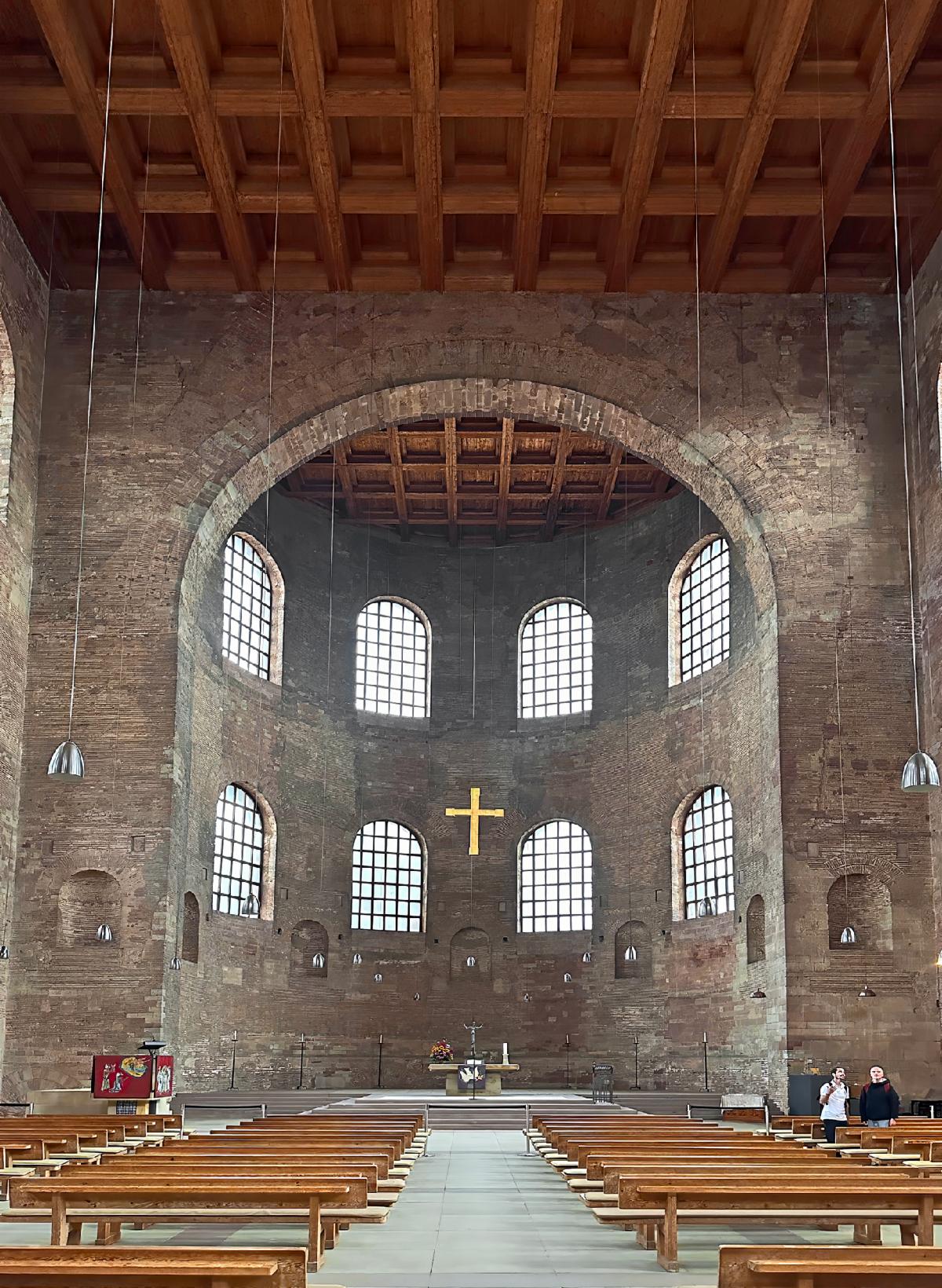
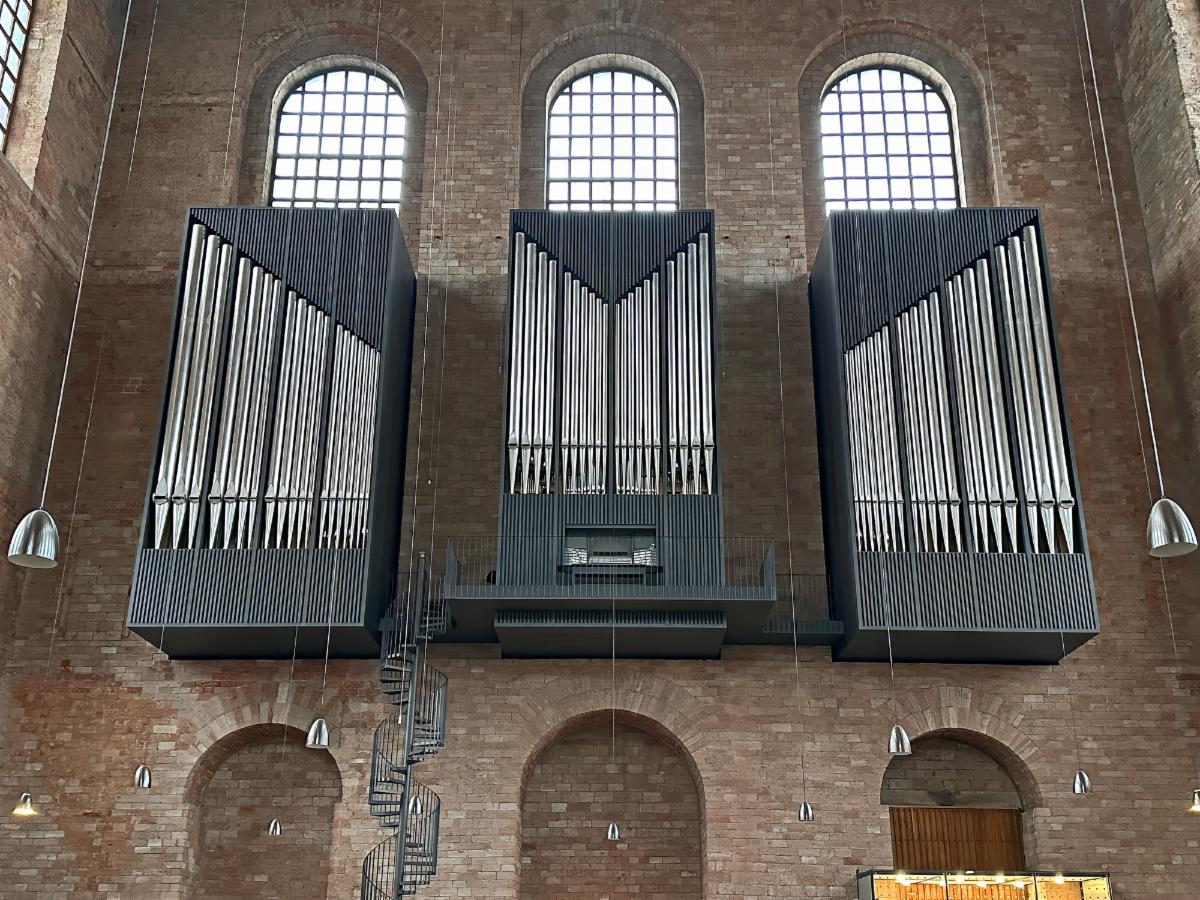
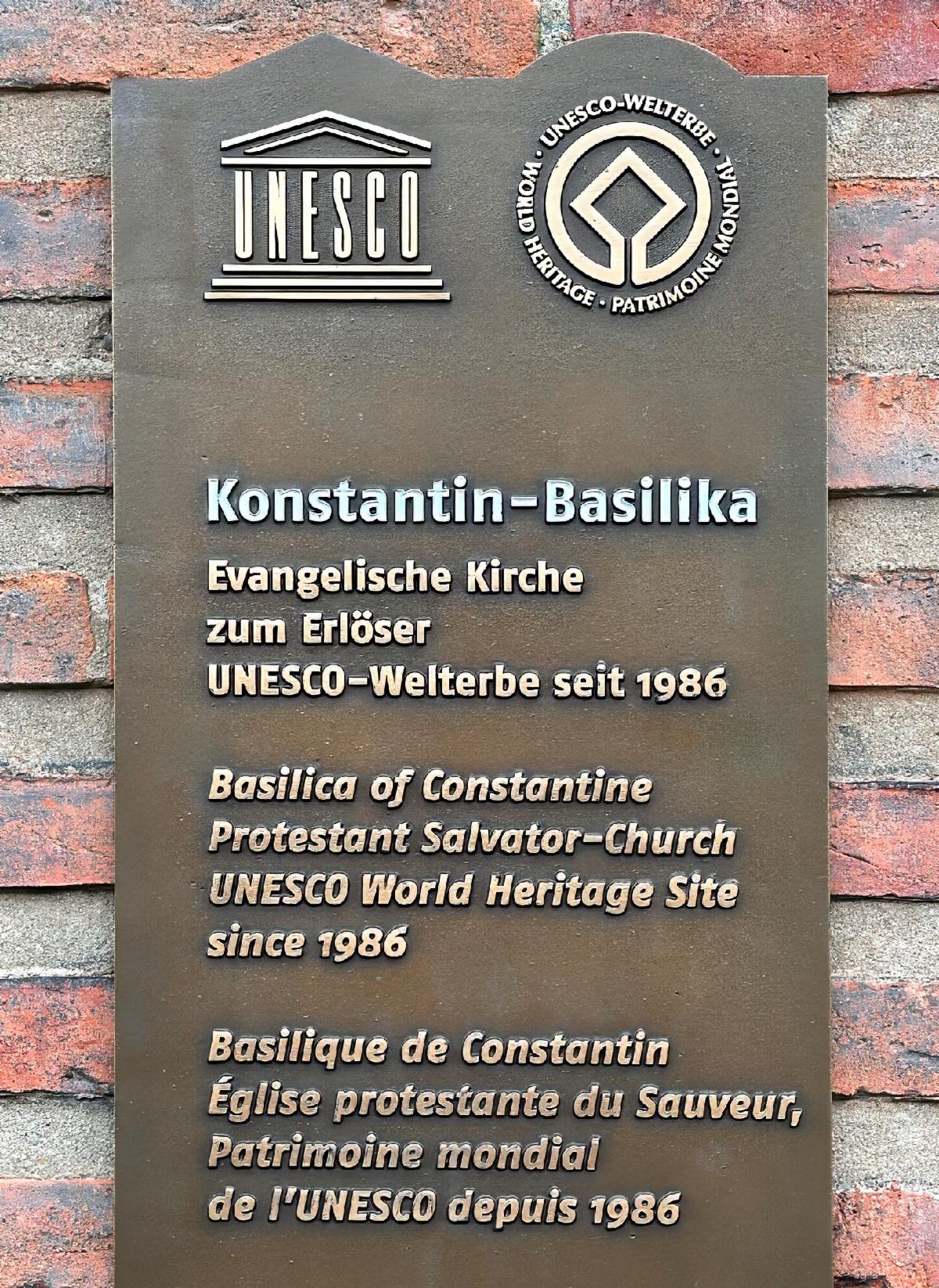
Next up was the Konstantin Basilika (Constantine Basilica). Early in Emperor Constantine’s reign, Trier was the capital of Rome’s Western Empire and the seat of Constantine’s government, ruler of the Western Empire. During that time, Constantine had the Basilica built as part of his year 306 building spree. (In 324, when Constantine ascended to Emporer of the entire Roman Empire, he moved his capital to the shiny new Constantinople.)
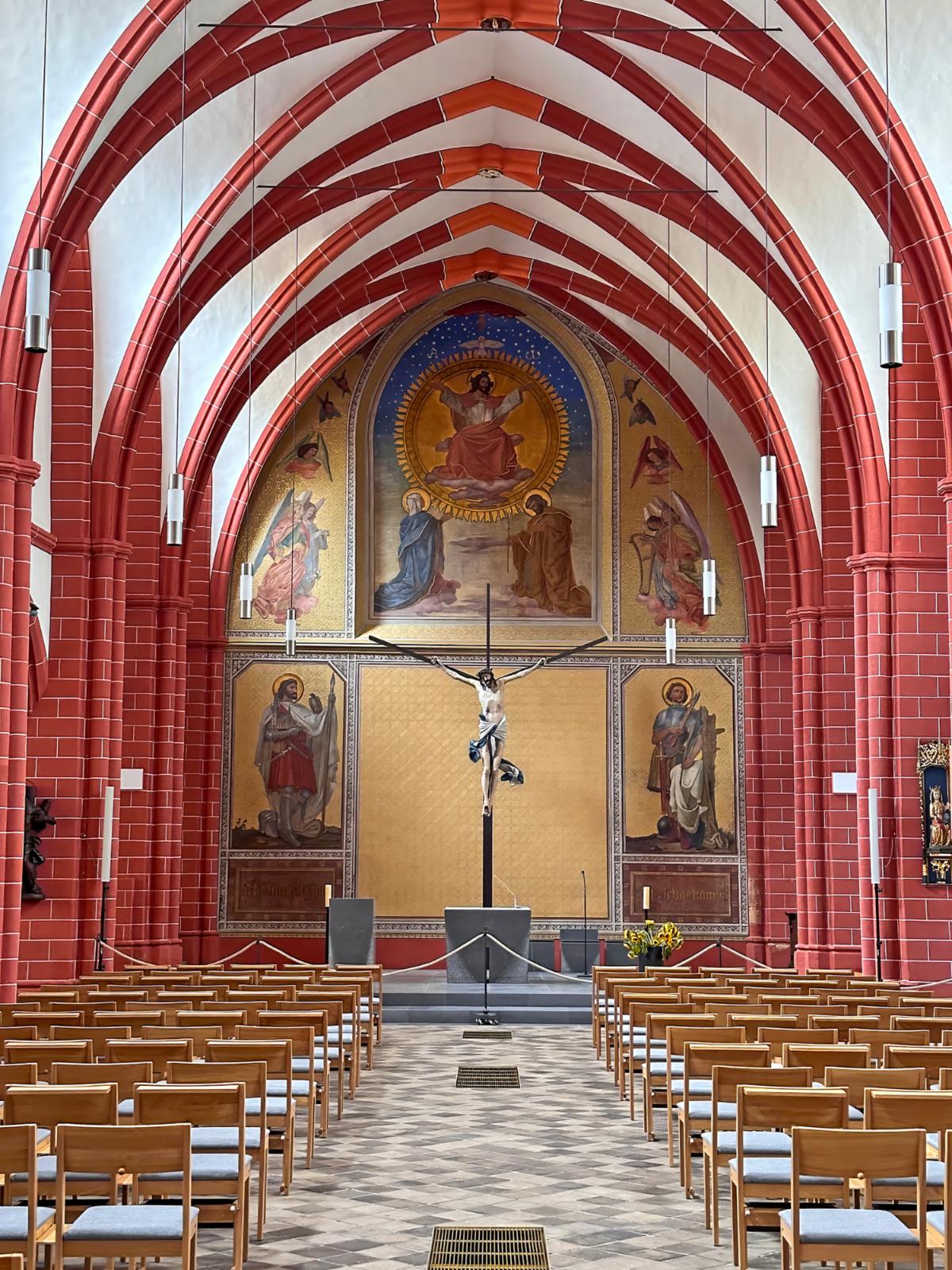
Over the centuries, the building has been partially destroyed and rebuilt a few times, including during WWII. It has been used for several different purposes, even as an army barracks. Today, it is a church again. The style is stark, like the Dom, but bright and cheery, unlike the Dom.
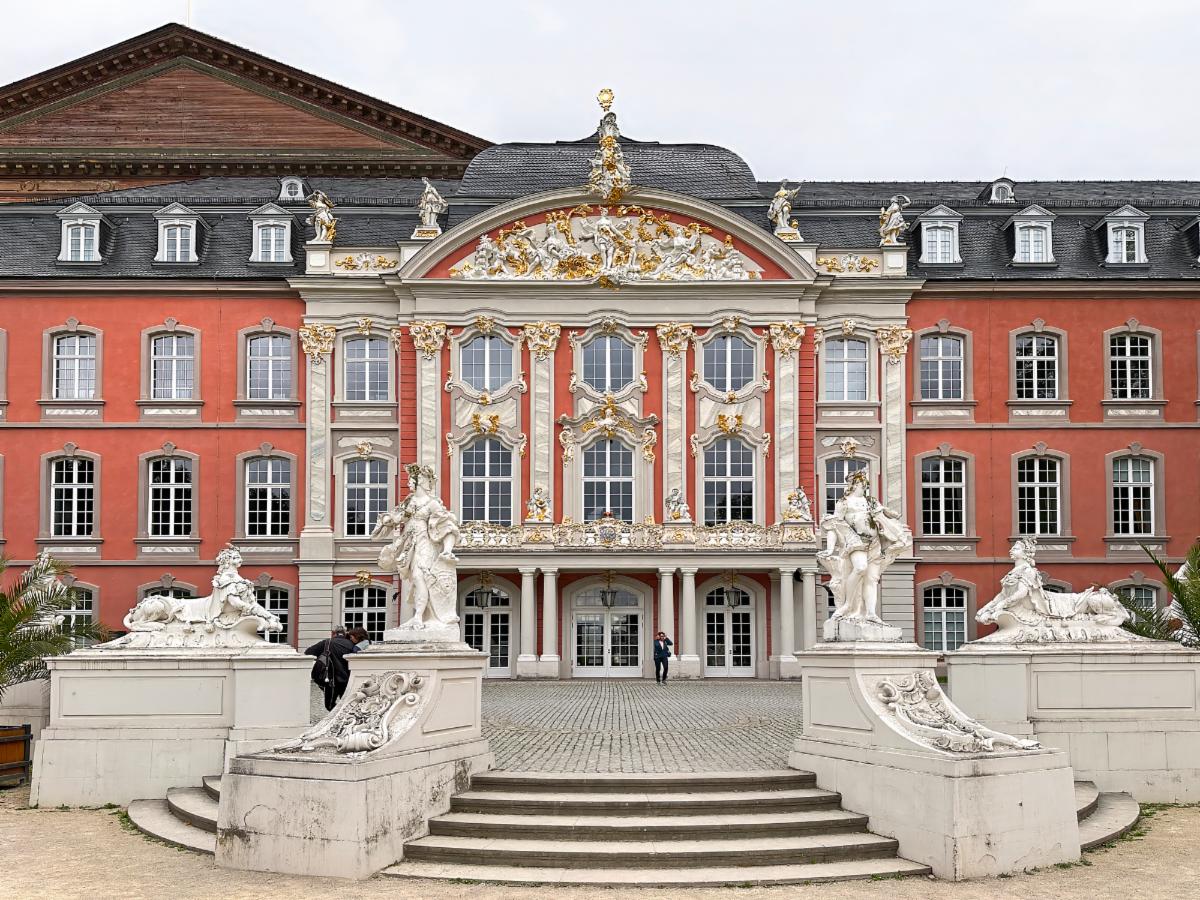
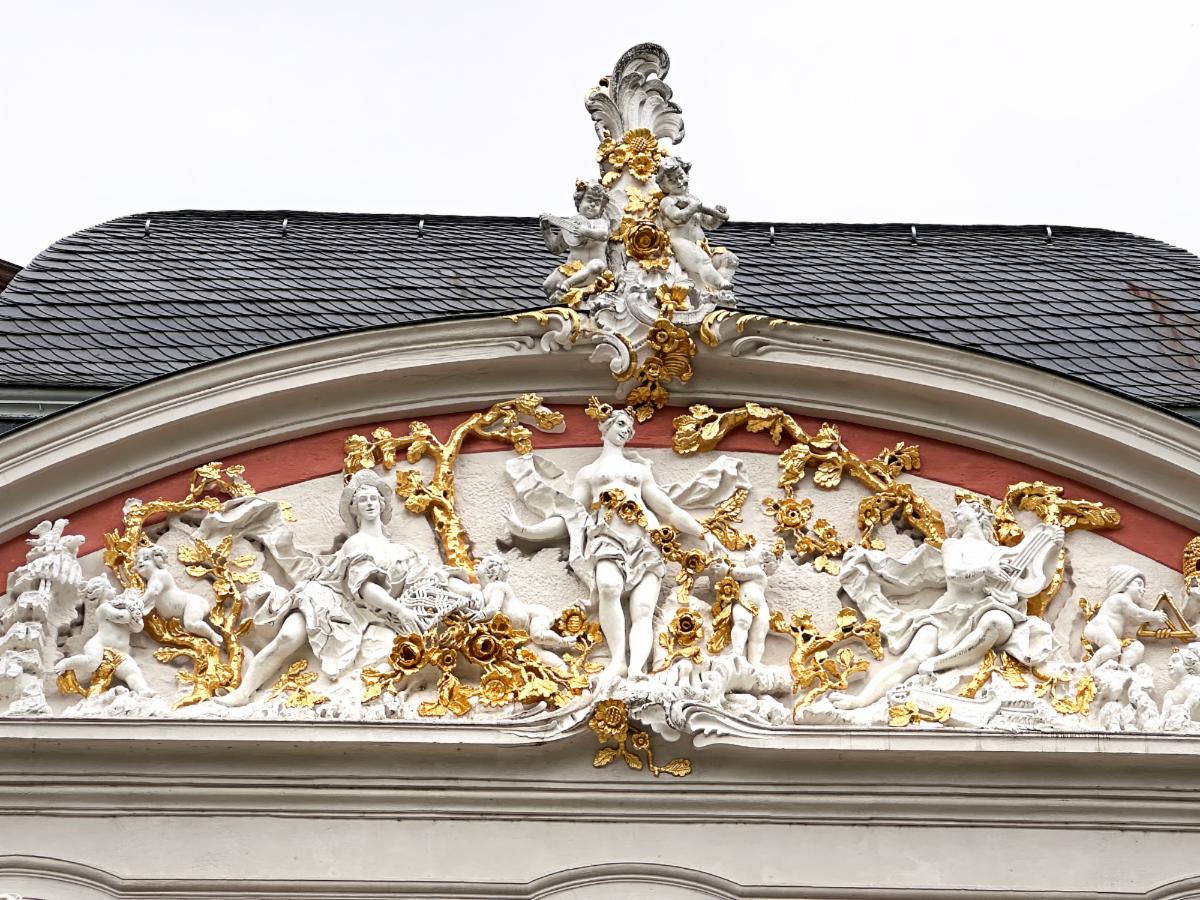
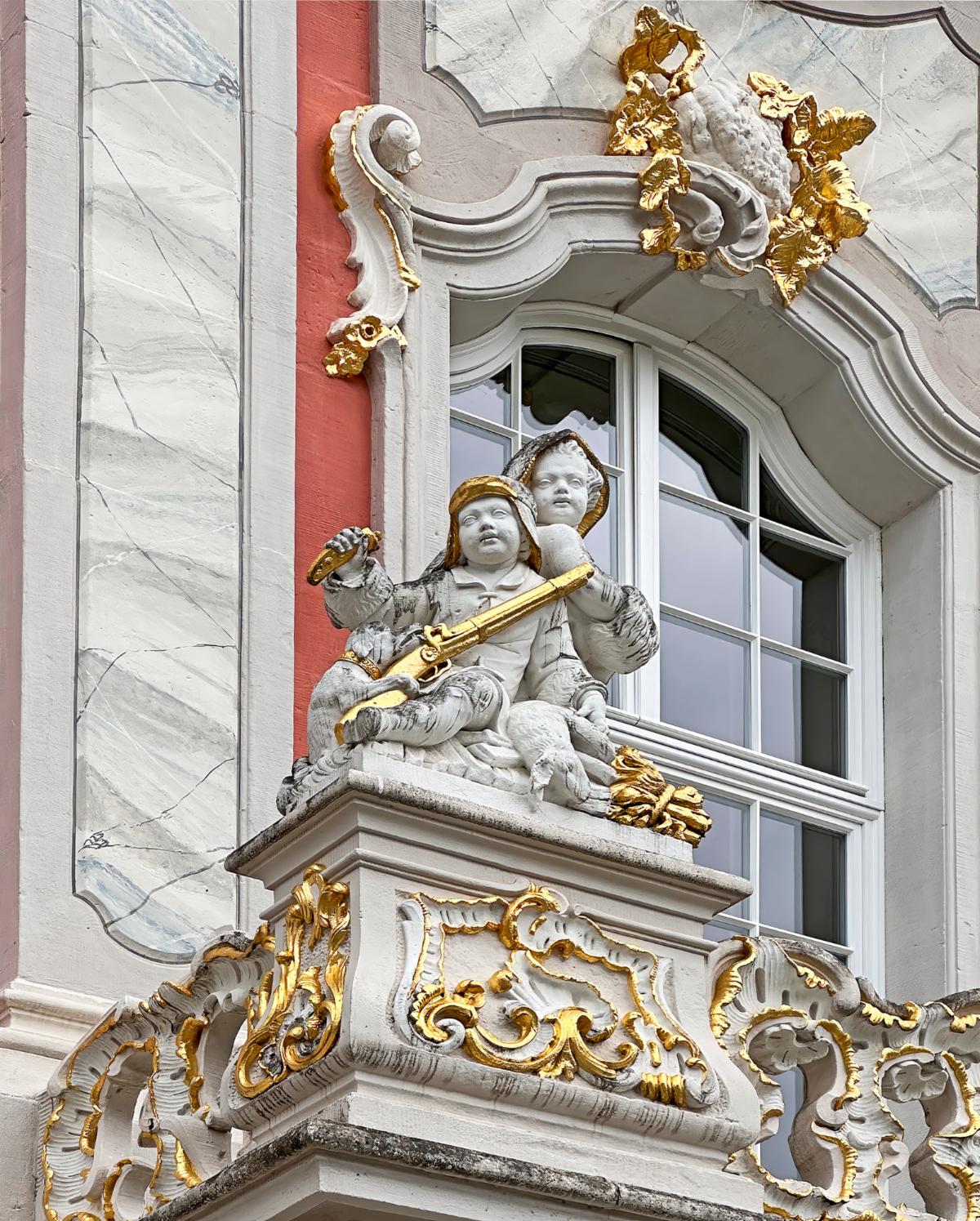
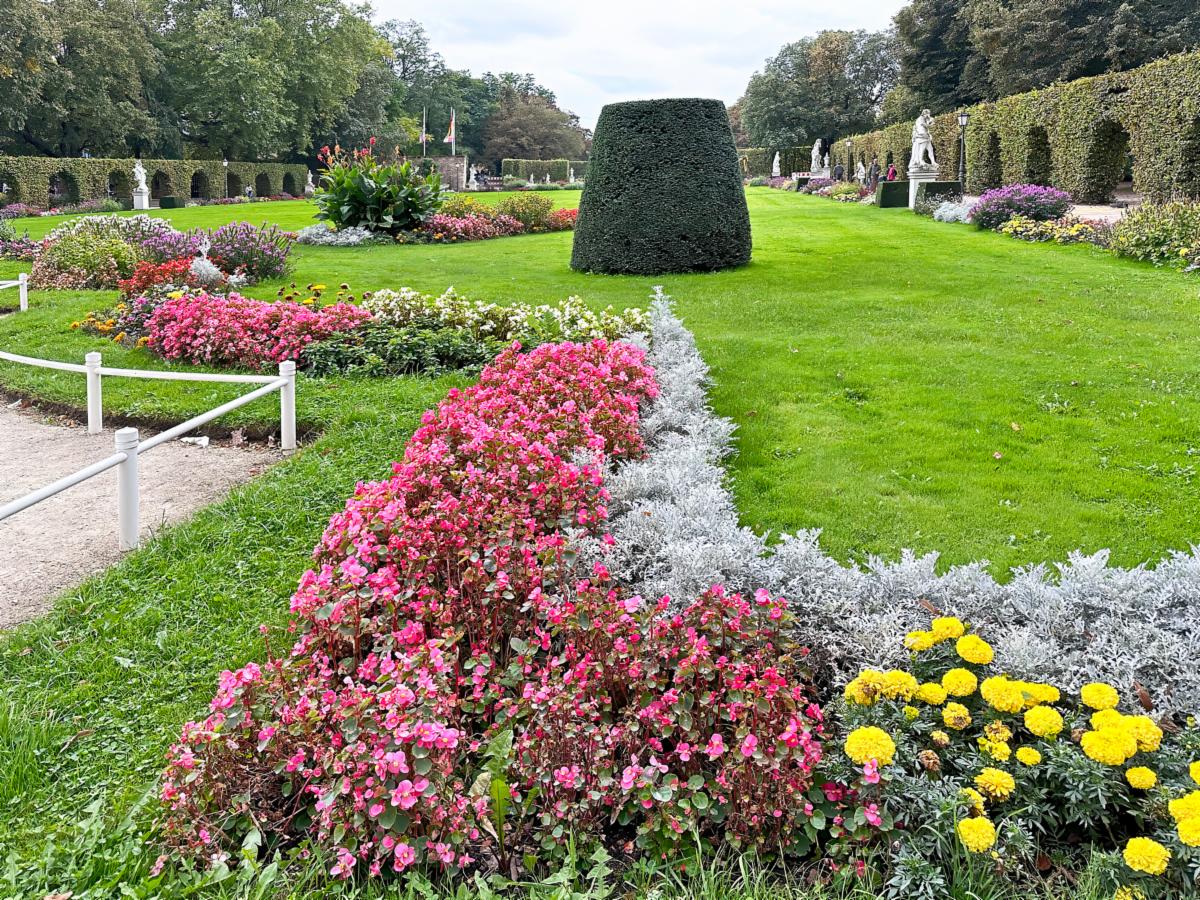
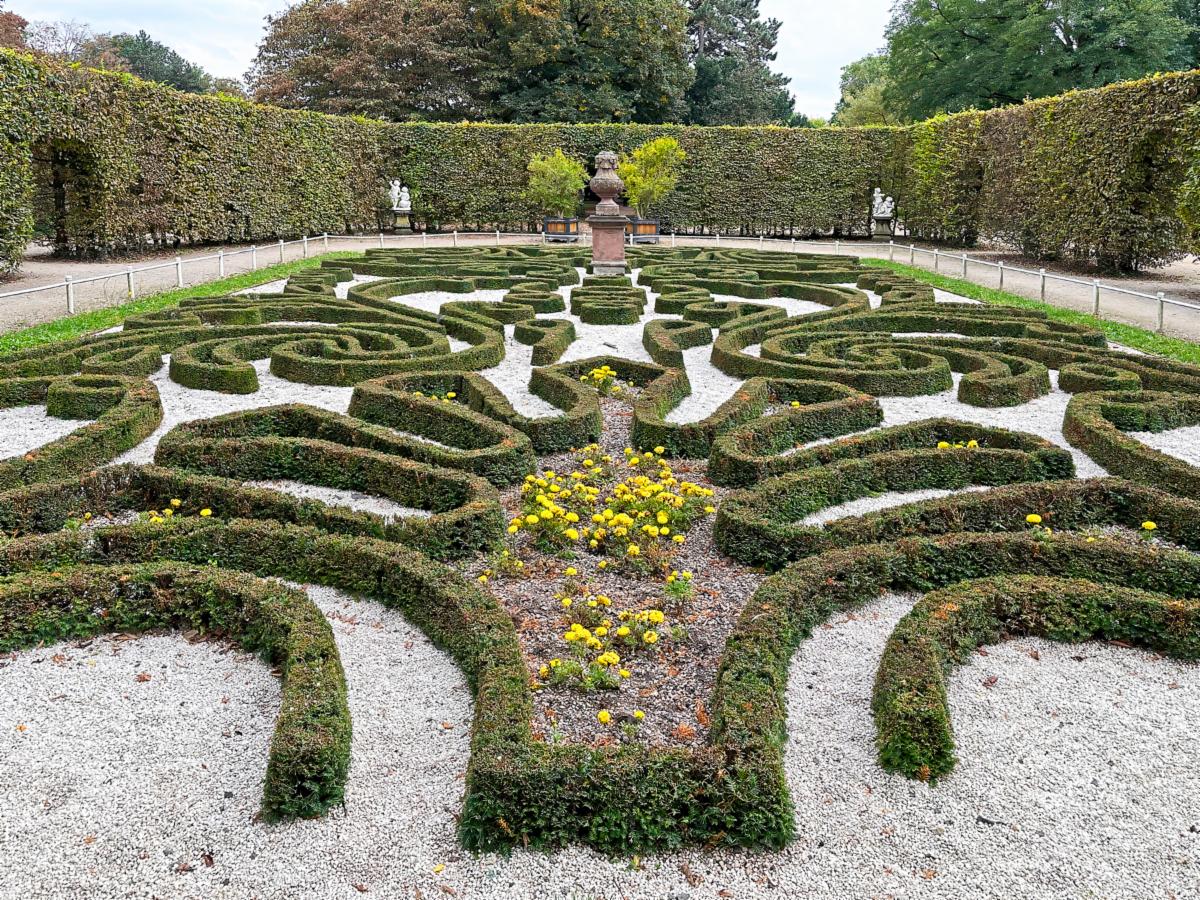
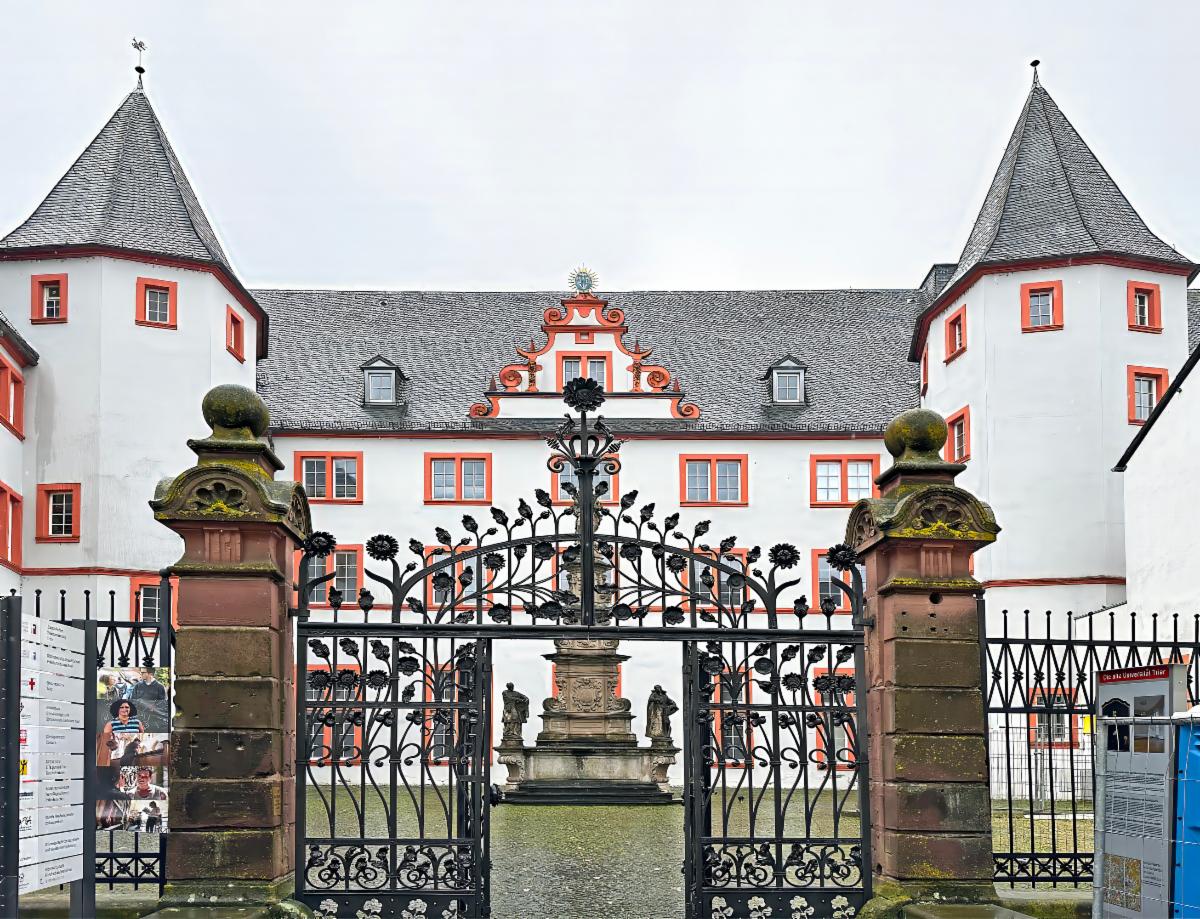
Attached to the Basilica is an opulent palace - Kurfürstliches Palais (Elector's Palace). Constantine had an Imperial Palace here when he lived in Trier. This latest incarnation was started in the 1500s. It was renovated several times, used as a barracks by the French in 1794, and damaged during WWII. The palace gardens remain.
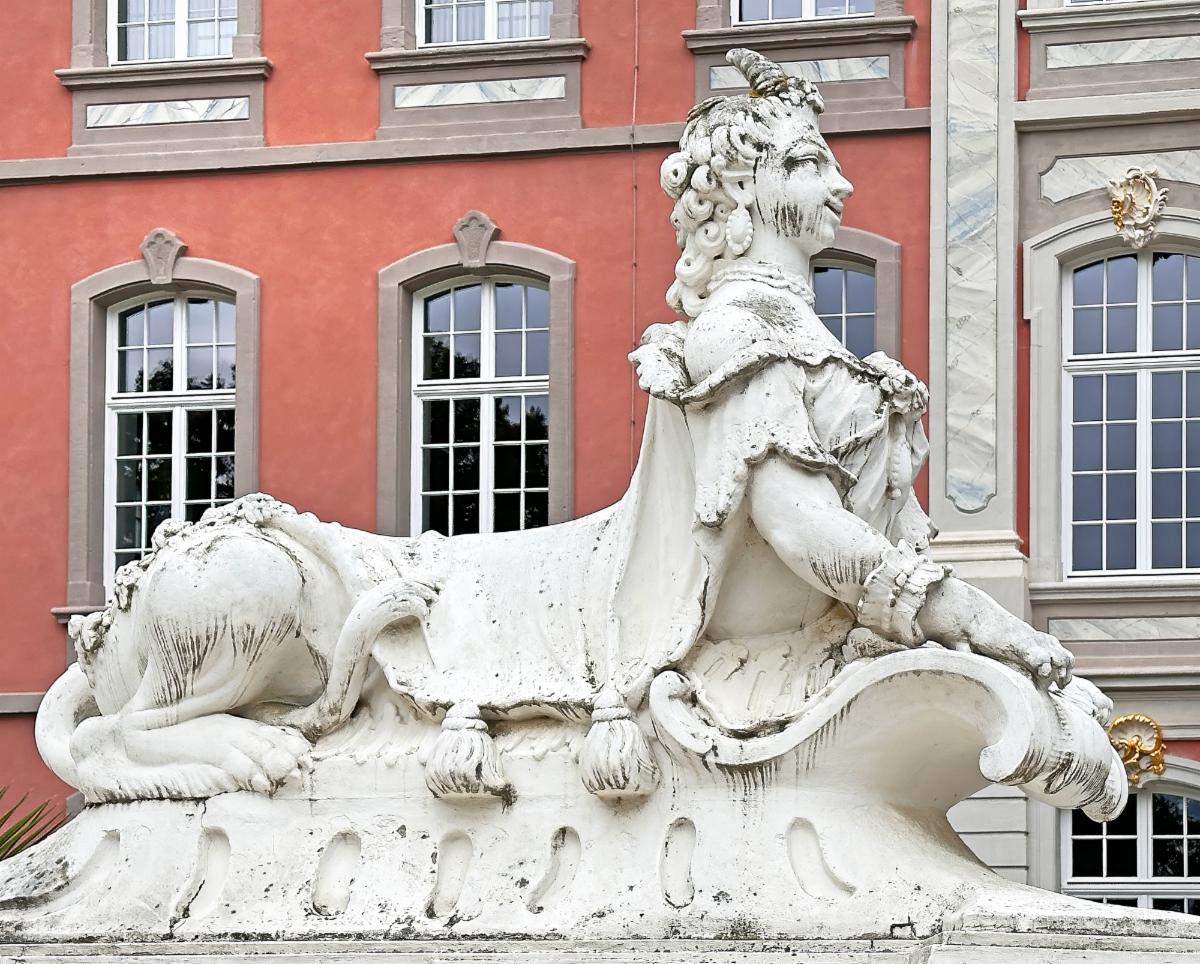
| 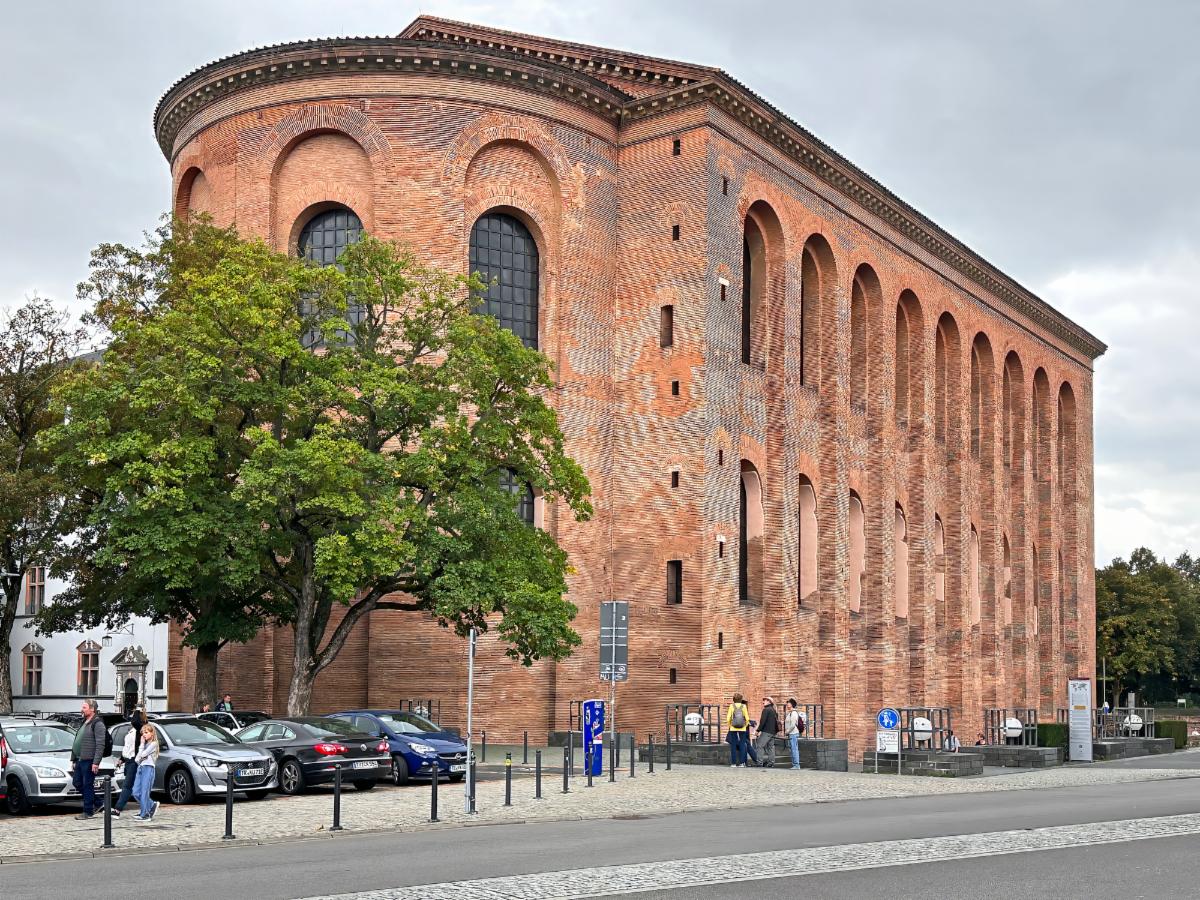 | Above and below: The unique Konstantin Basilika. This is a brick building, not stone. There aren't any supporting flying buttresses or interior support columns as most cavernous churches utilize. | The interior was stark, but full of light. | Kurfürstliches Palais (Elector's Palace) is connected to the Basilica in the back. | I wonder what inspired this creature? | Ah, kids with a golden gun. | |
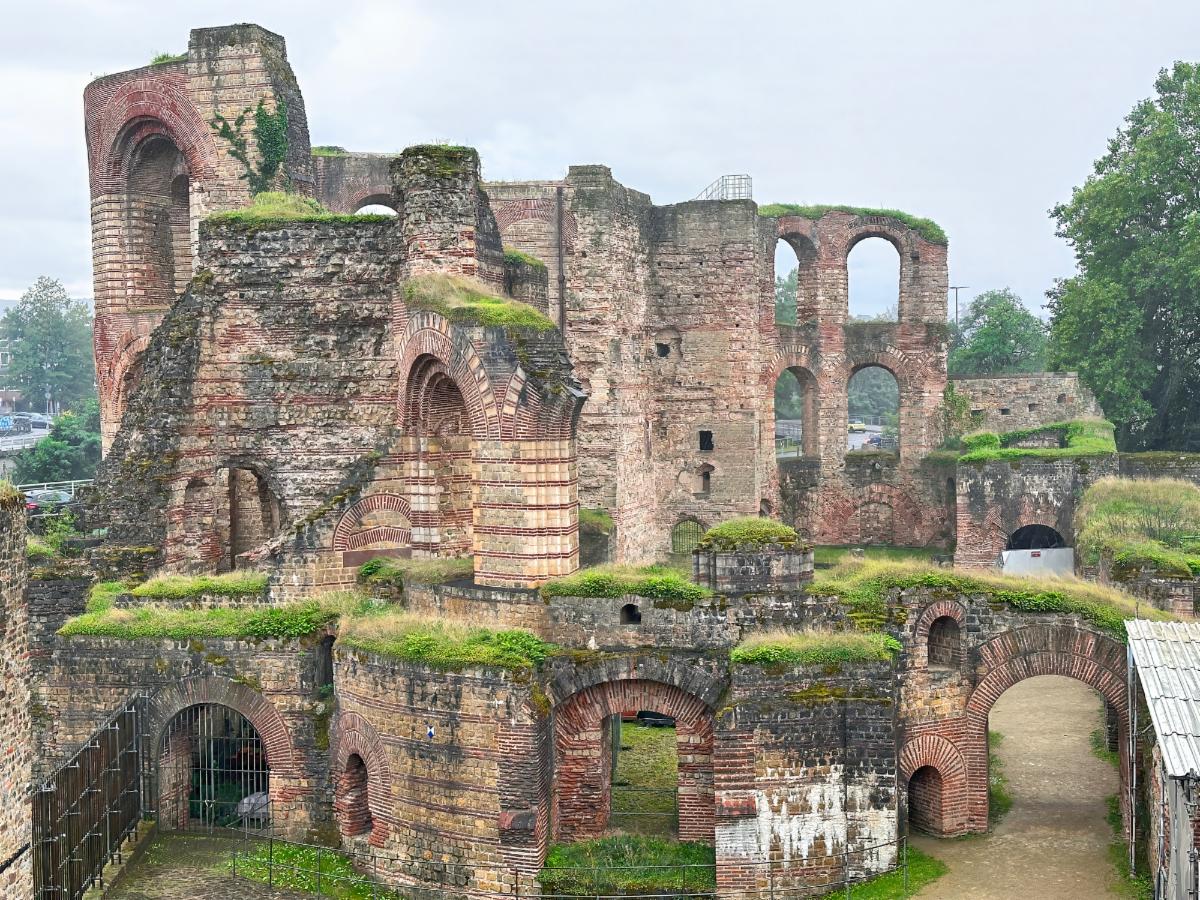
When we arrived at the 2000-year-old Roman bath ruins, the sky opened up with steady, moderate rain. That impeded our tour of the baths, which was mostly outside. There was one nearly intact part of the baths that looked impressive. I tried to get a photo of that building. The rain gave me fits.
So, we popped open our umbrellas and hiked back down to the Porta Nigra to catch the hop-on, hop-off bus. It was a kilometer back to the tourist bus. We walked through some interesting areas, including a section that had been destroyed by WWII. Trier decided to rebuild in a totally different architectural style.
| The Roman Baths. The baths were designed to accommodate up to 5,000 bathers. | |
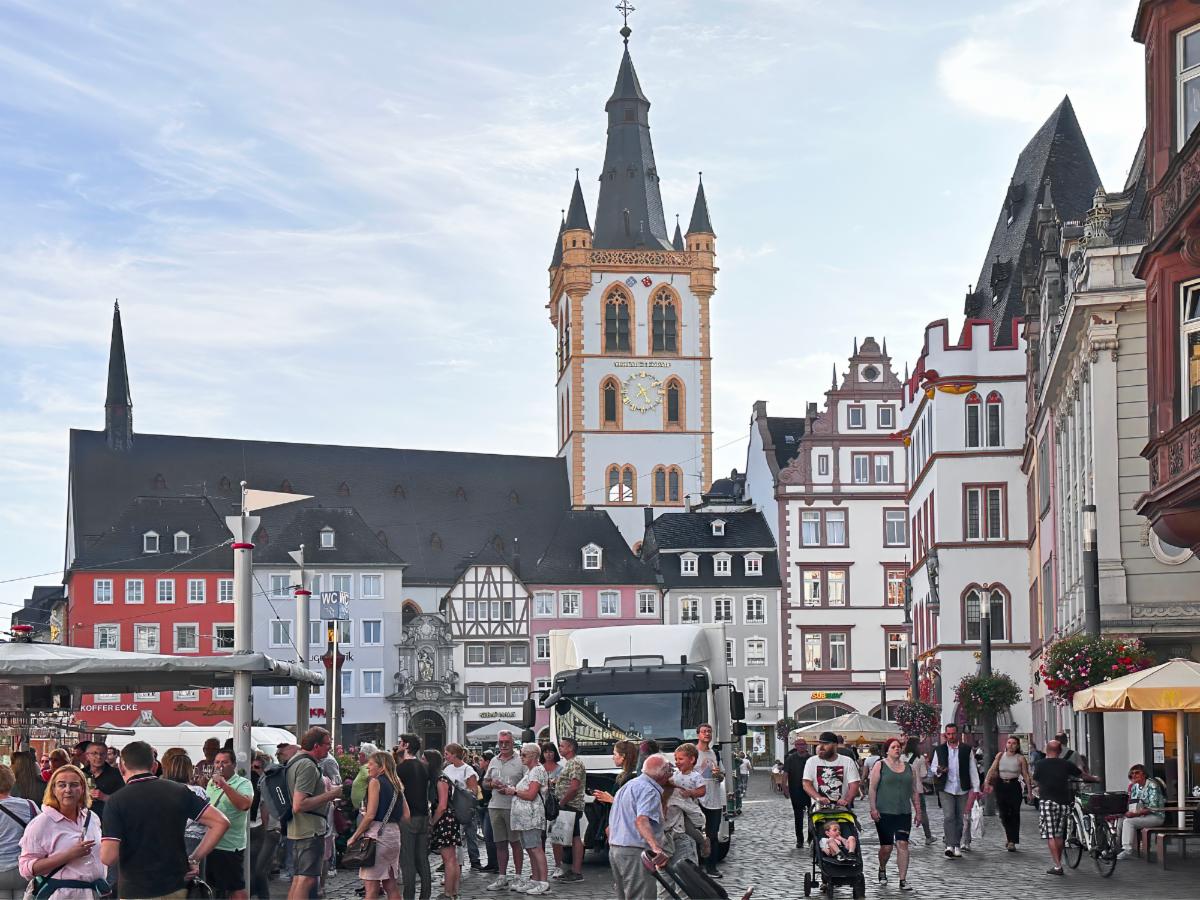
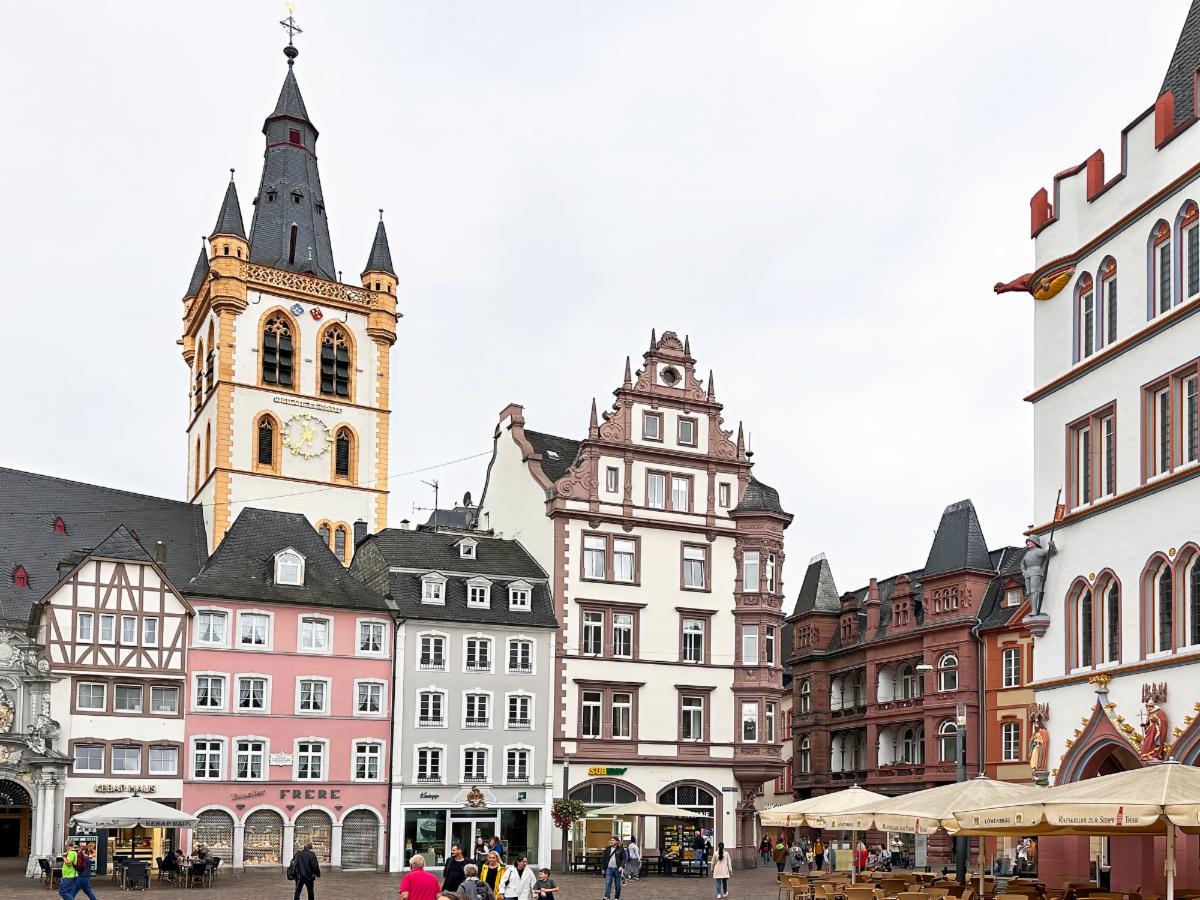
The center of Trier does not have a shortage of churches. The steeple is St. Gangolf, also known as the Market Church. | |
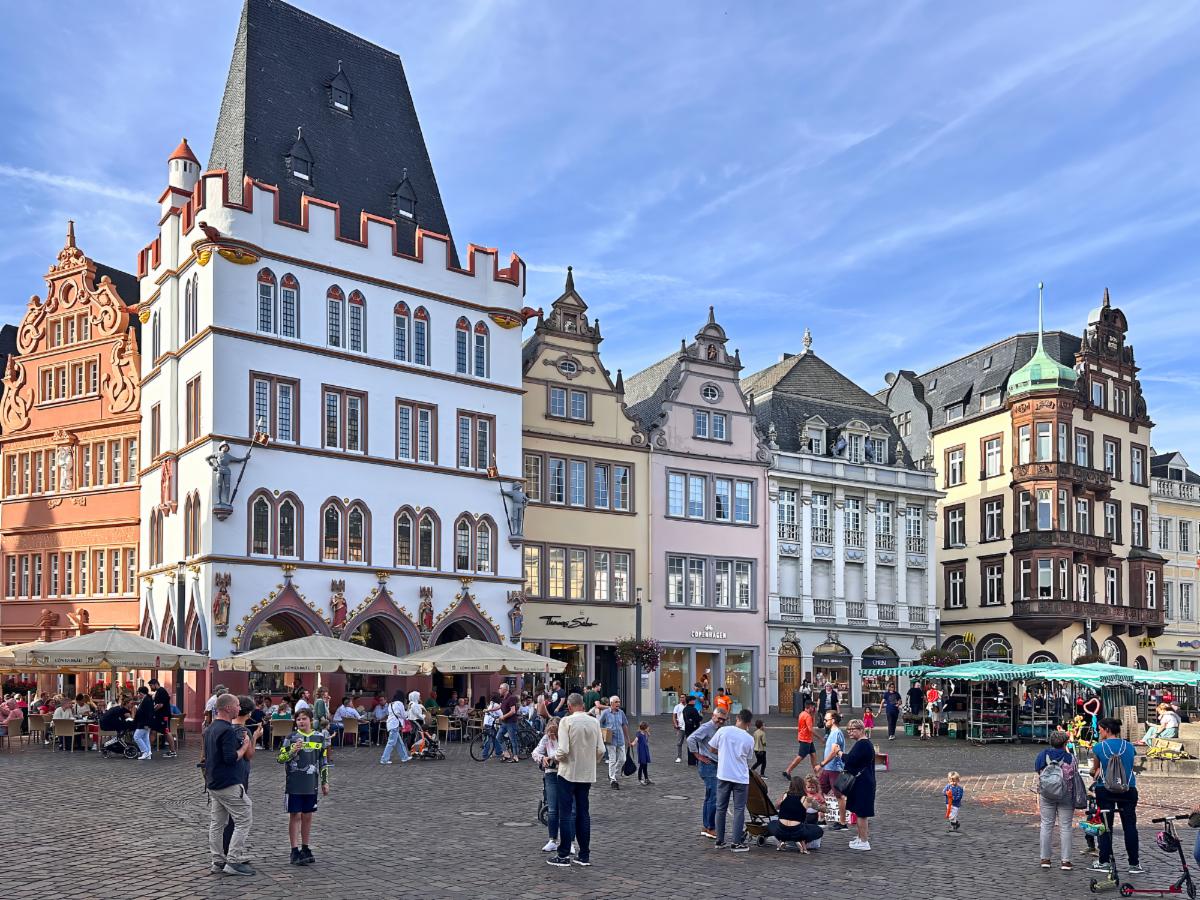
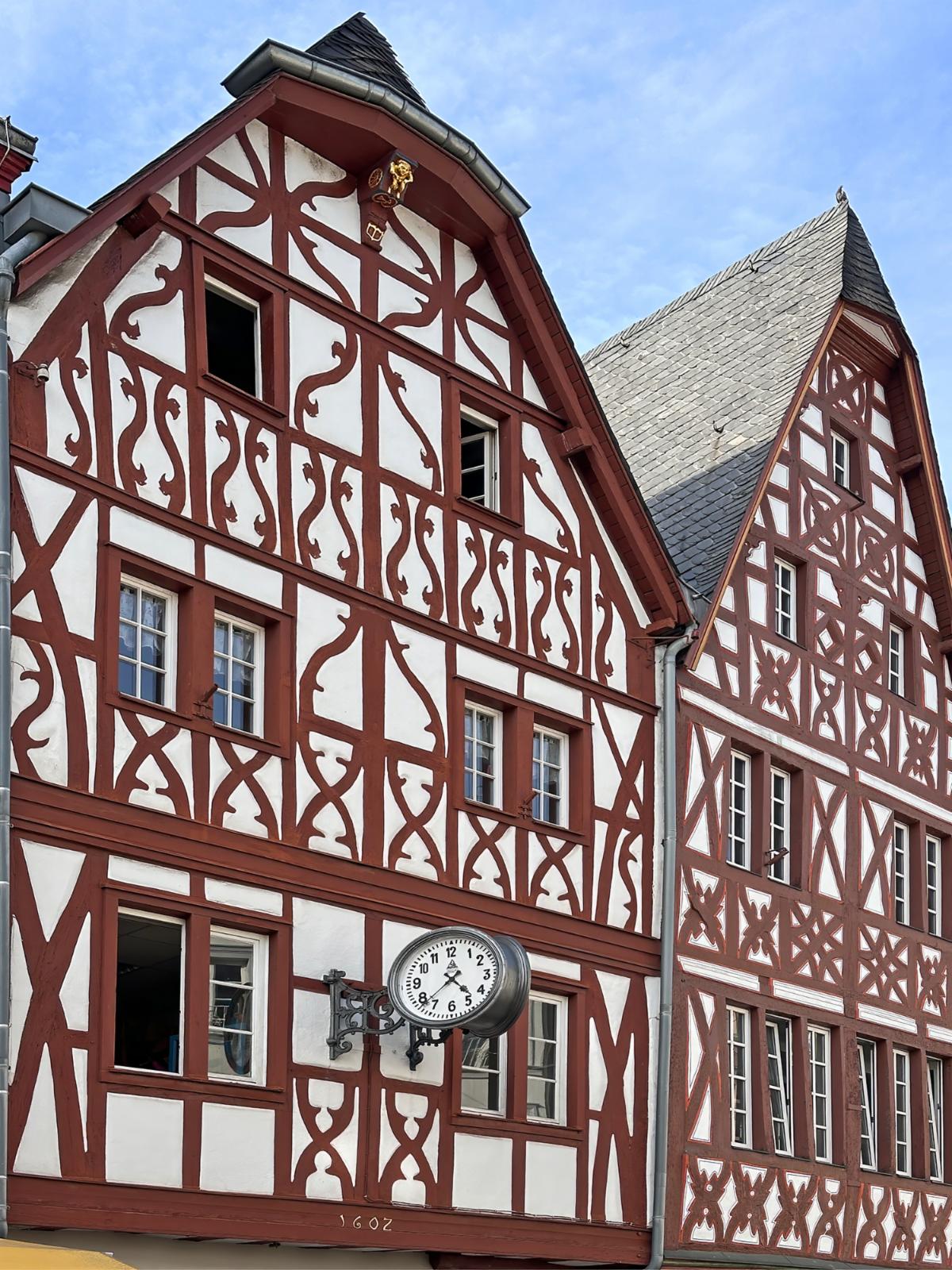
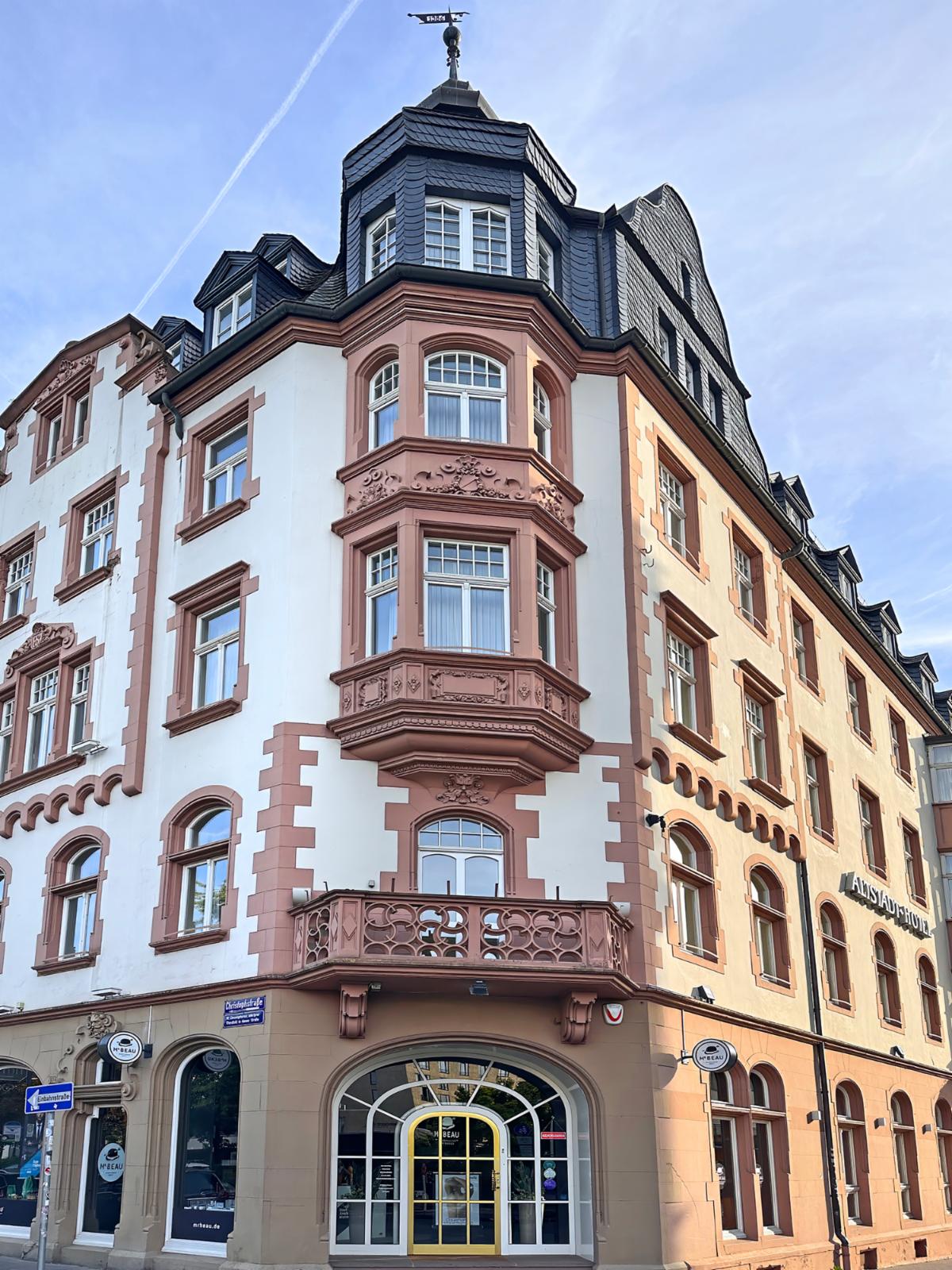
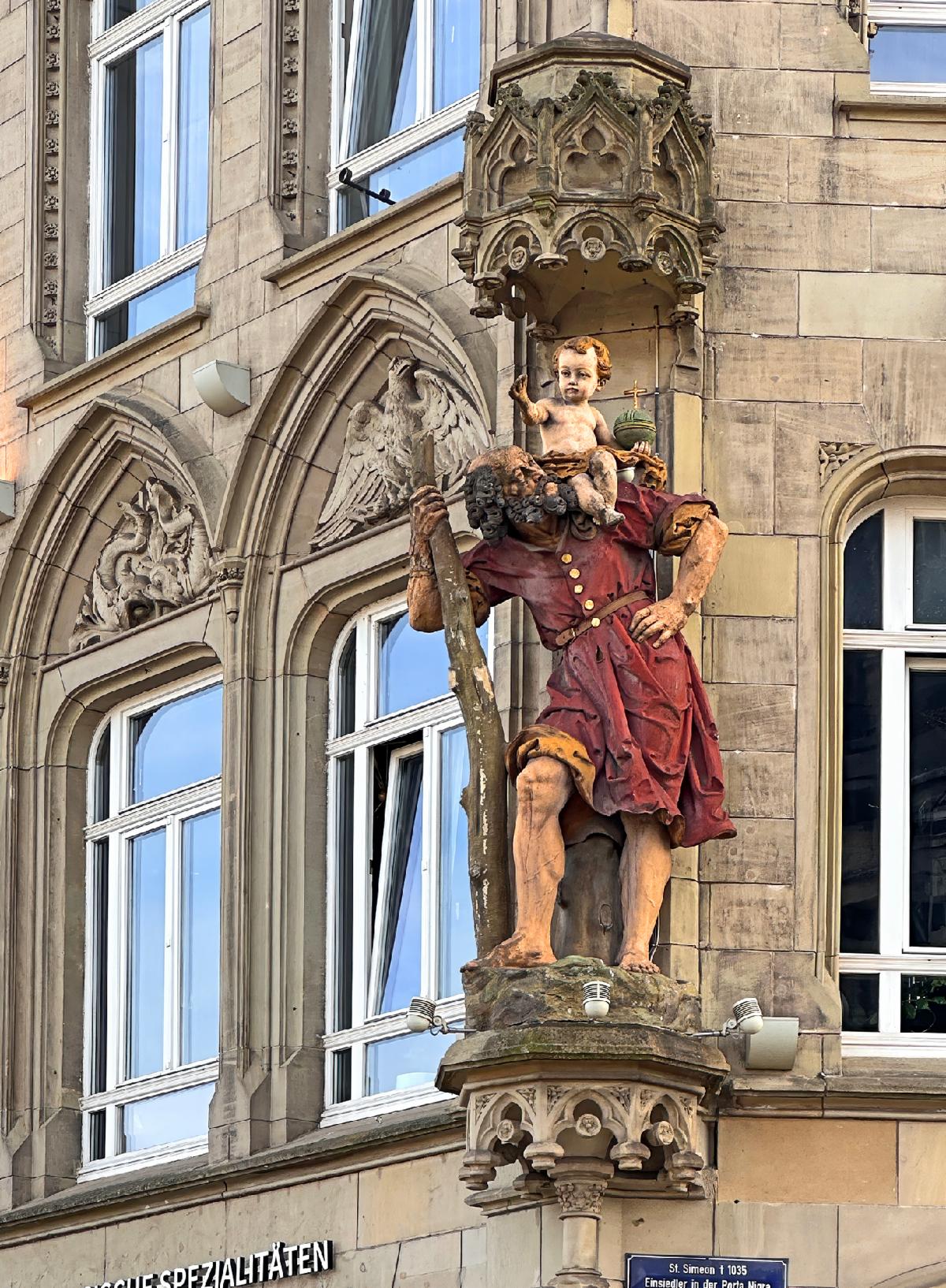
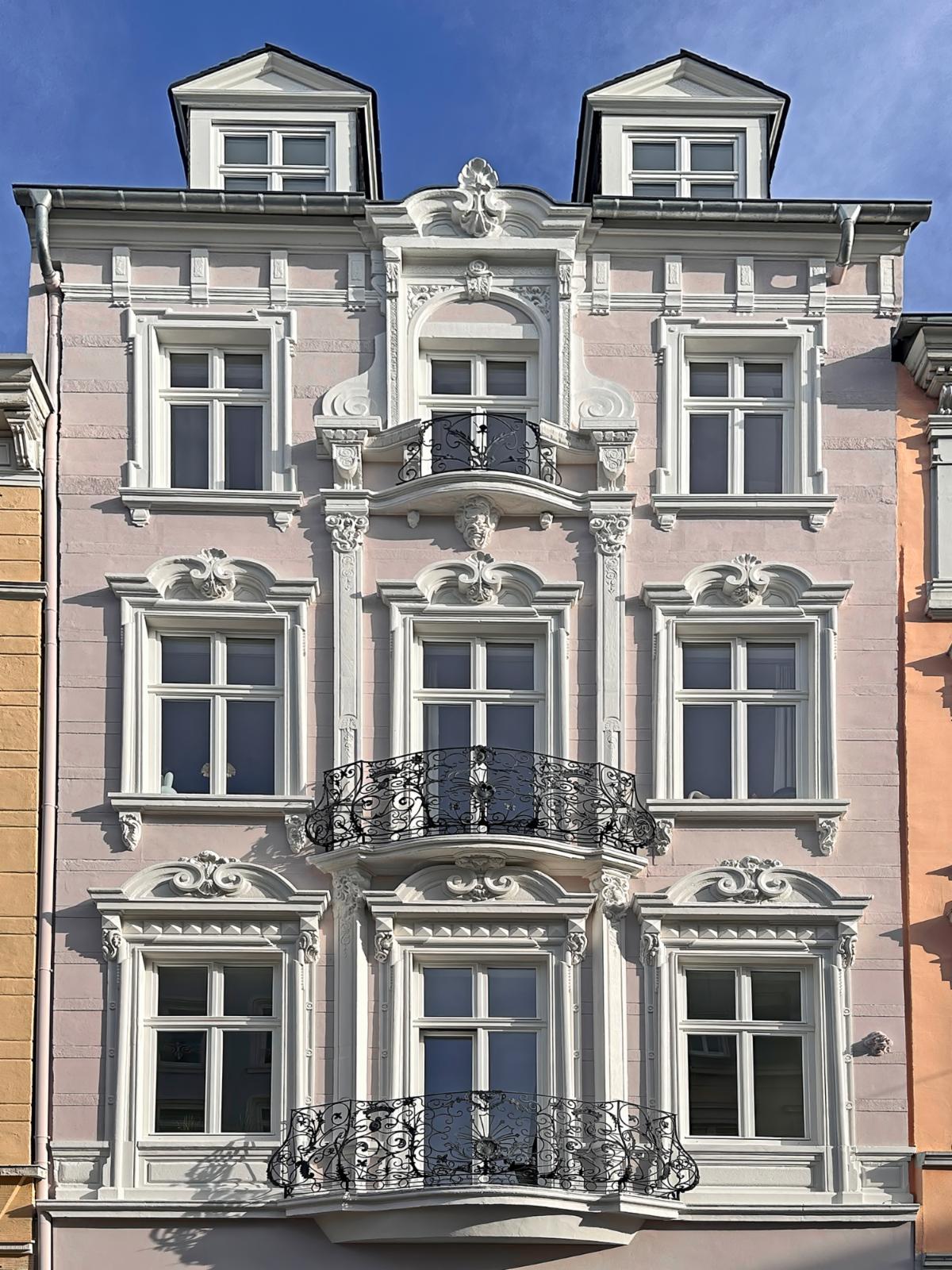
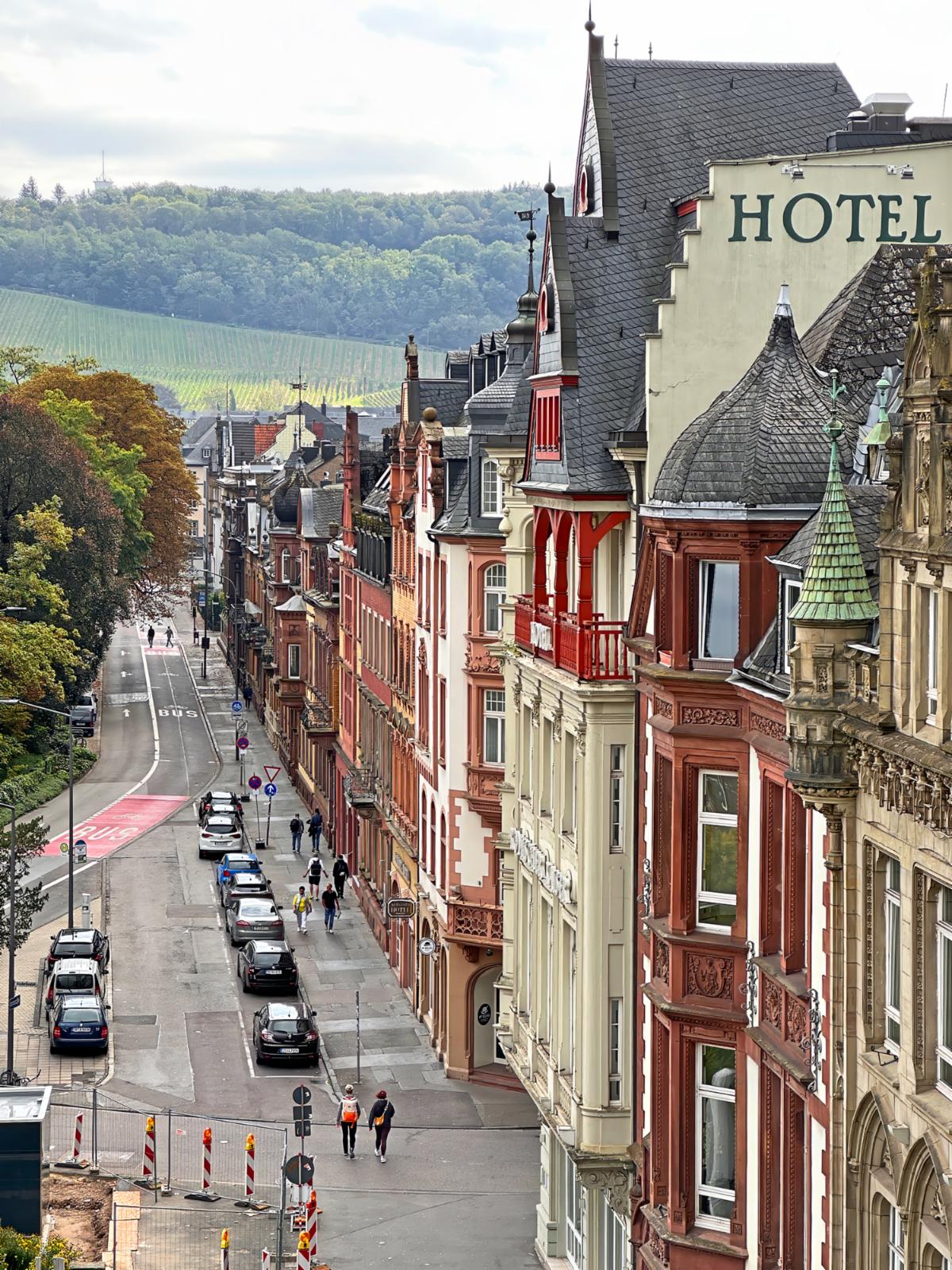
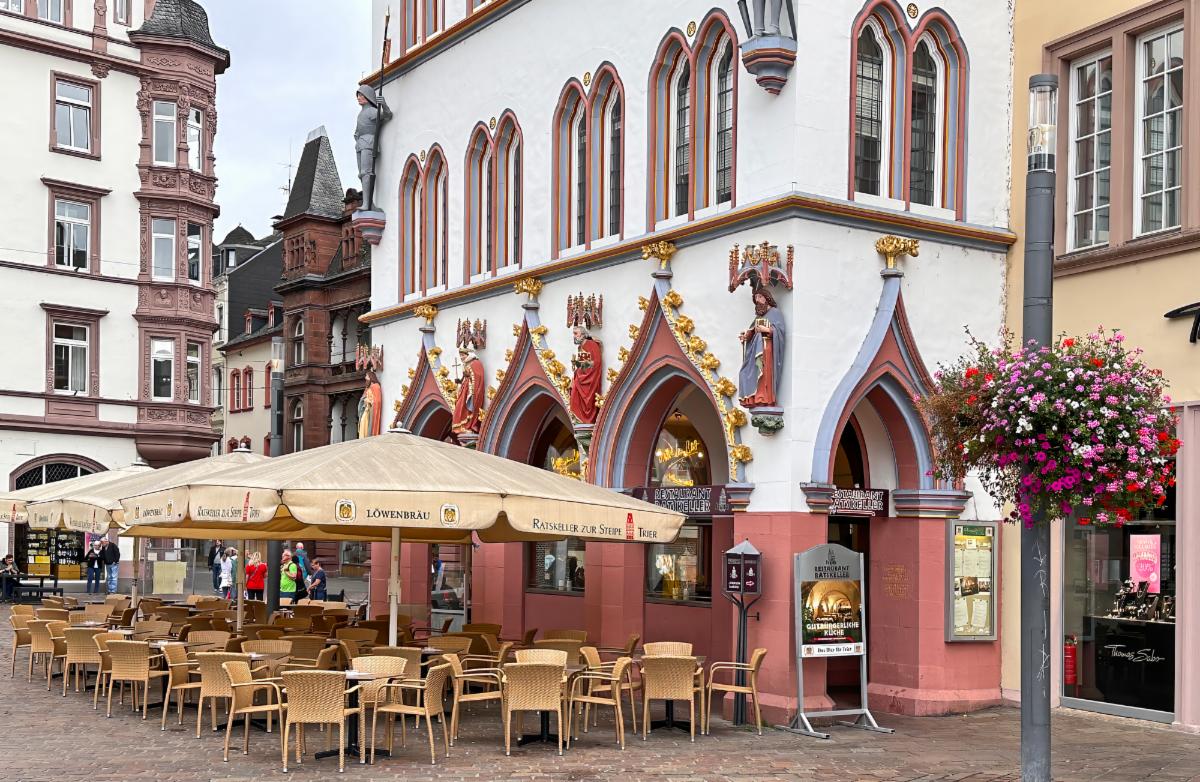
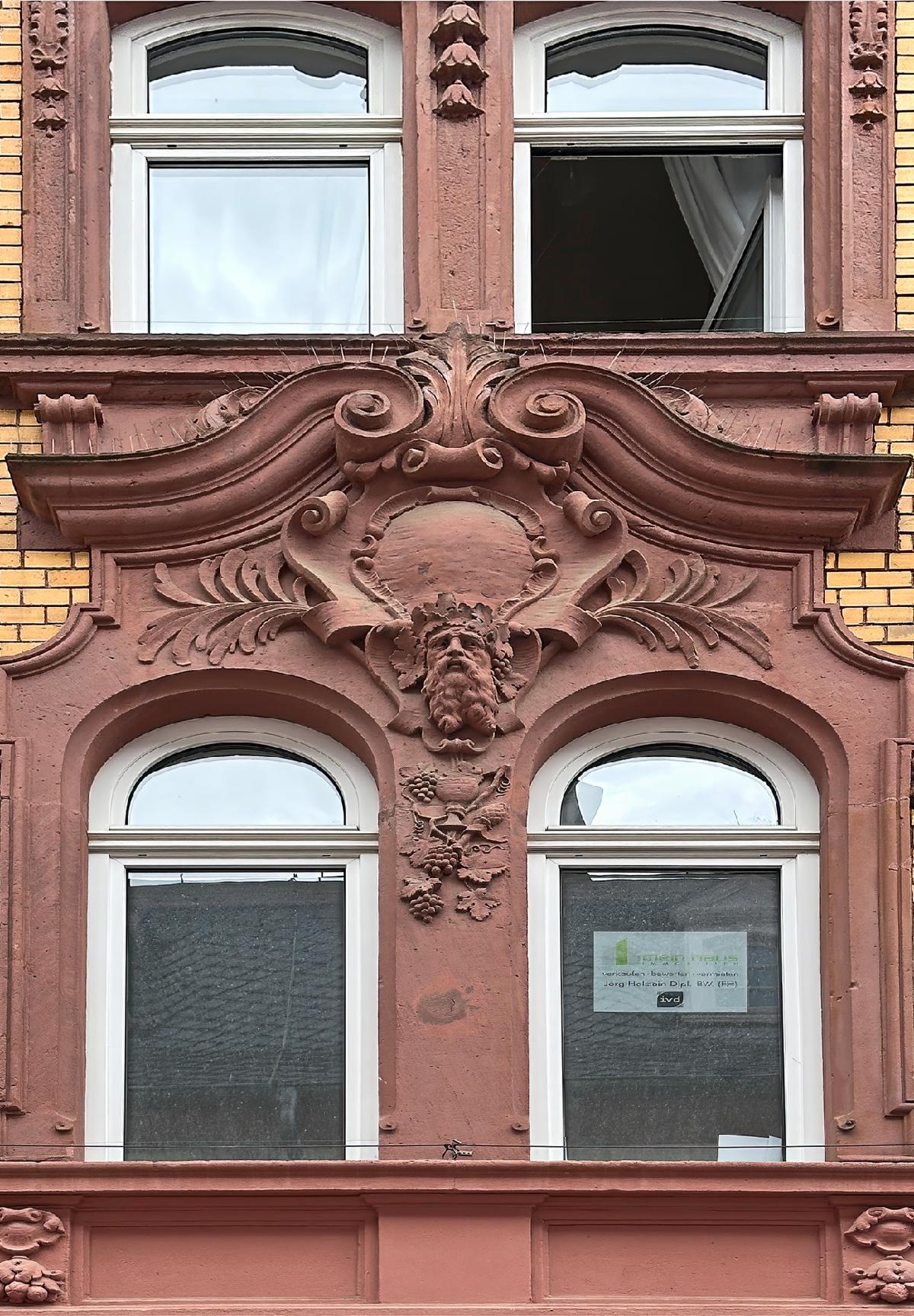
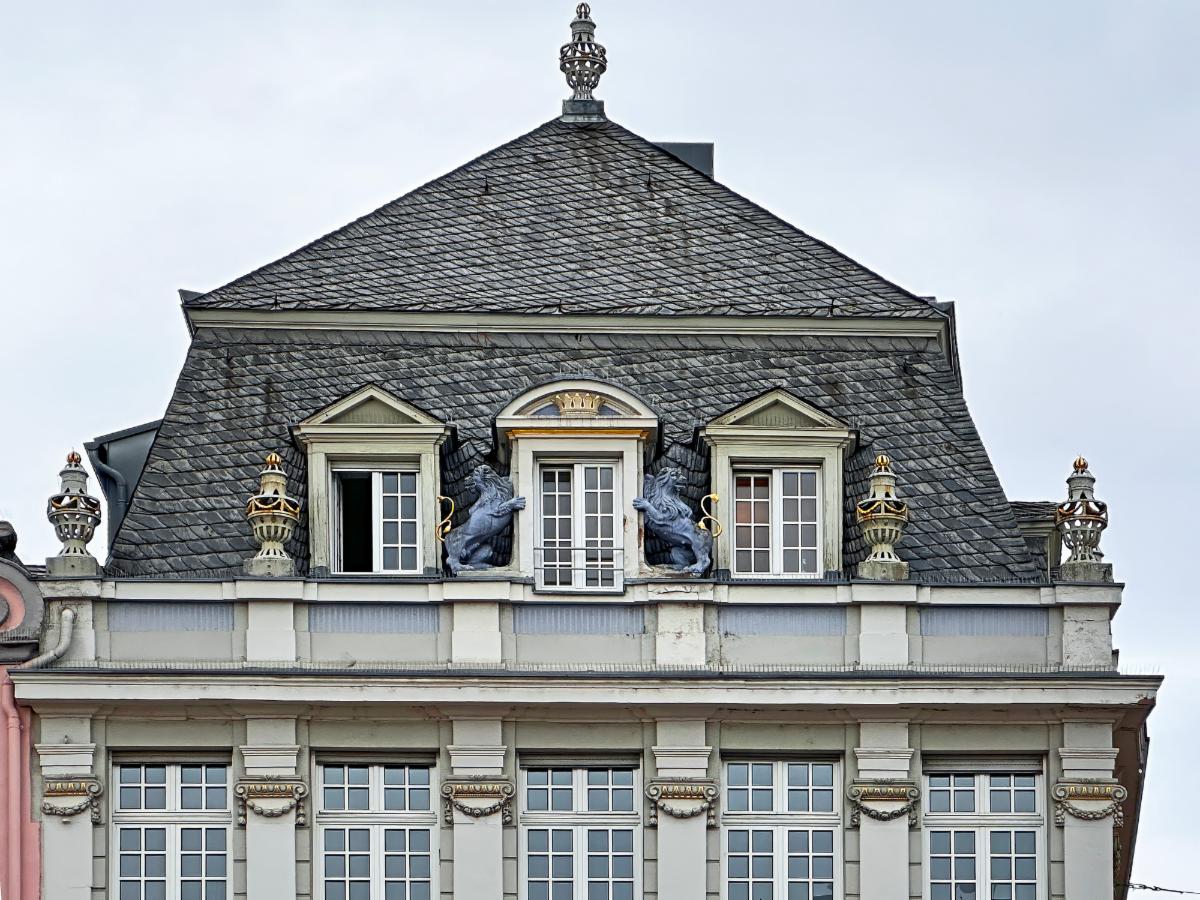
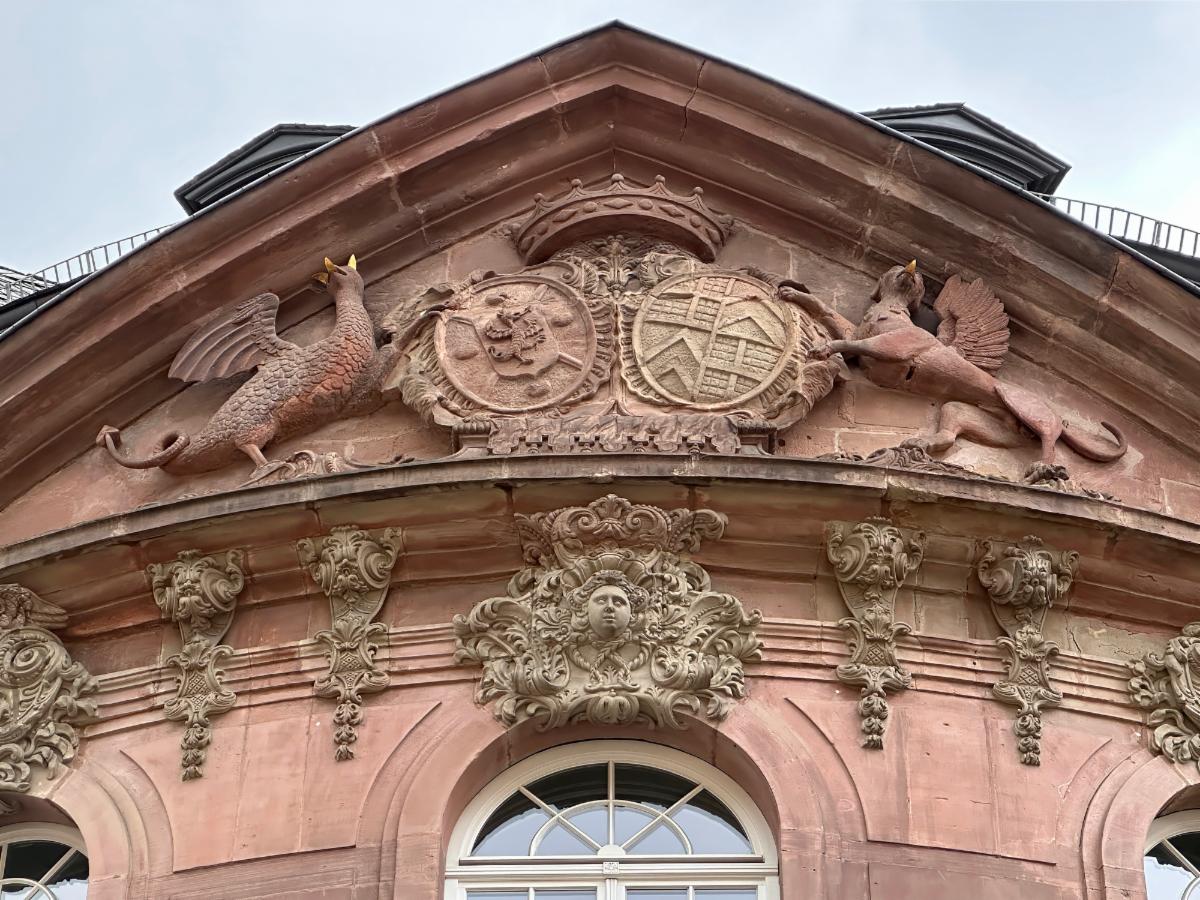
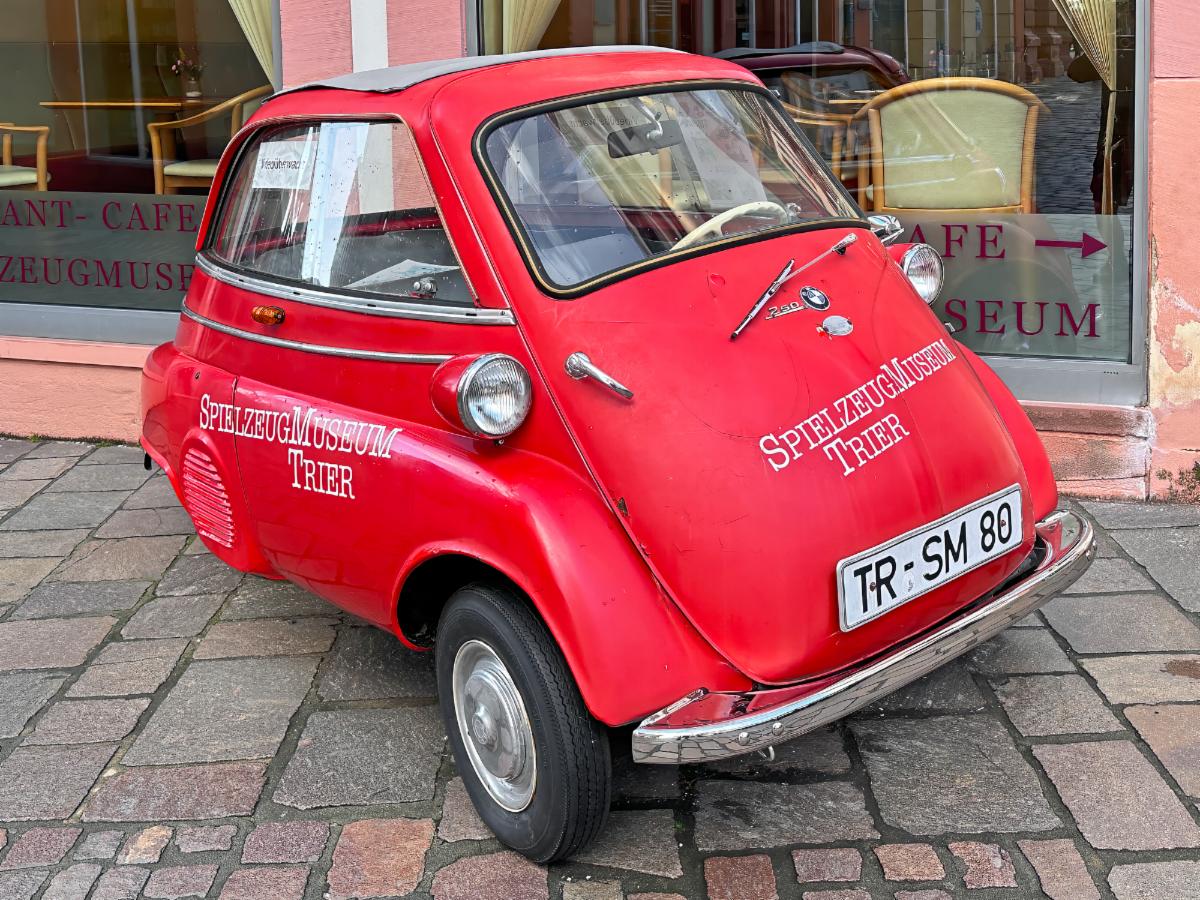
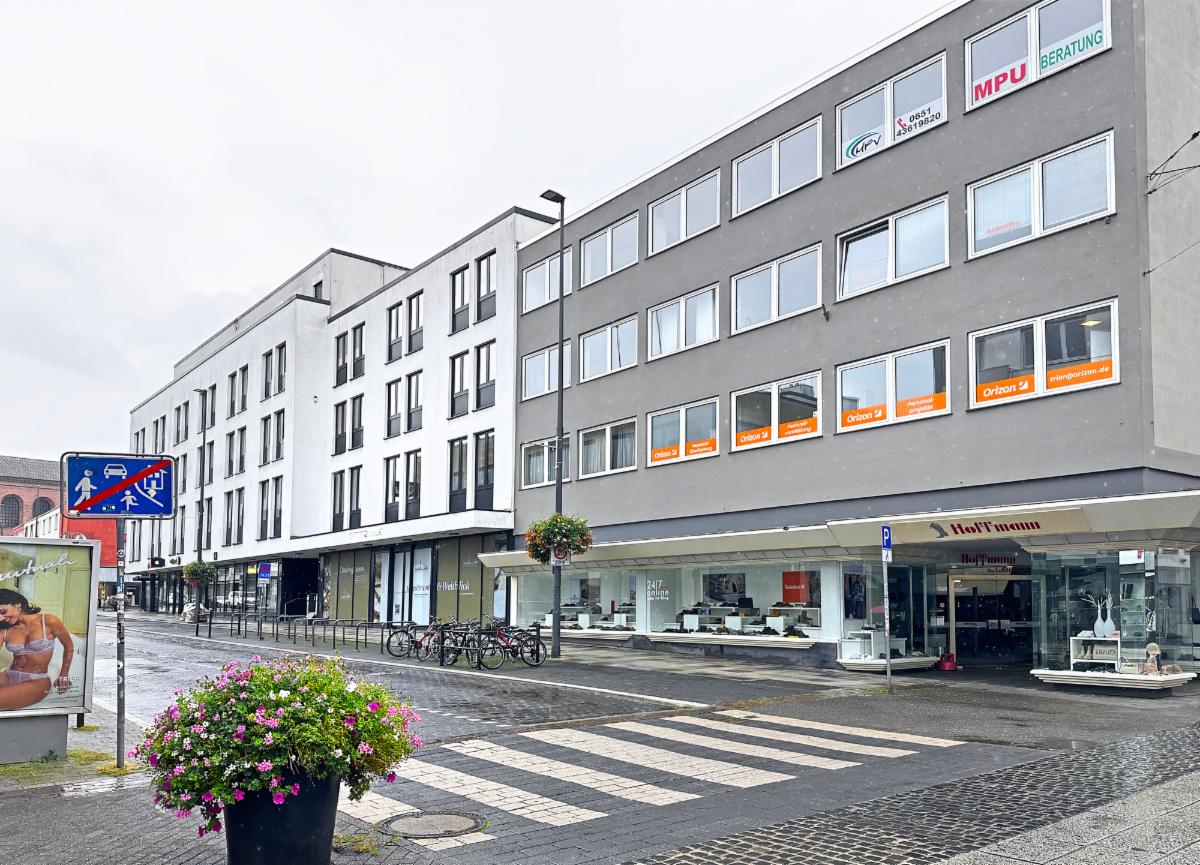
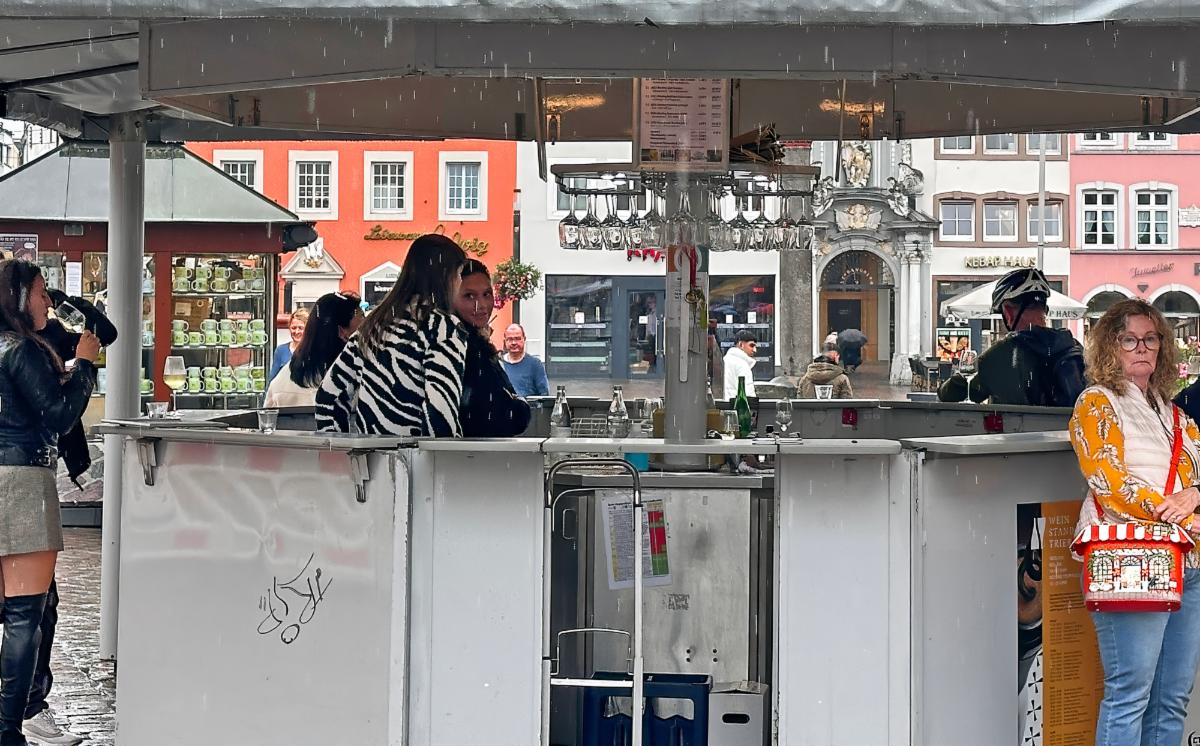
Like most German cities, around every corner was an architectural gem. | Notice the spikes on the top of the curvy wood trim. This keeps pigeons from perching and crapping their white excrement down the window carving. | I love the winged dragons. | I didn't know that BMW made a front-door car. There wasn't one in the Sinsheim Teknik Museum. | Above and below: This is another street that was leveled during WWII. Many German cities were rebuilt in the old style after the war. Some, like Trier, let modern, more blander styles sneak in. | In the middle of the central plaza in Trier is an open-air wine bar. | 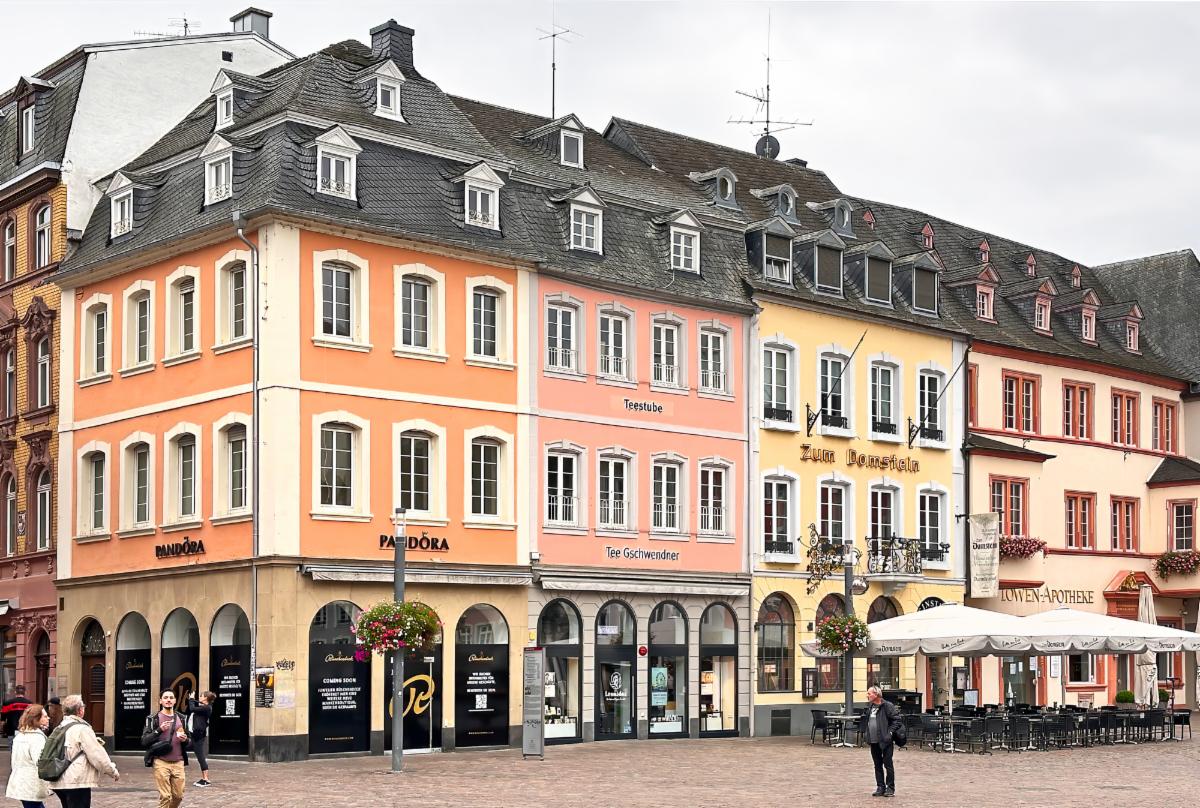 | 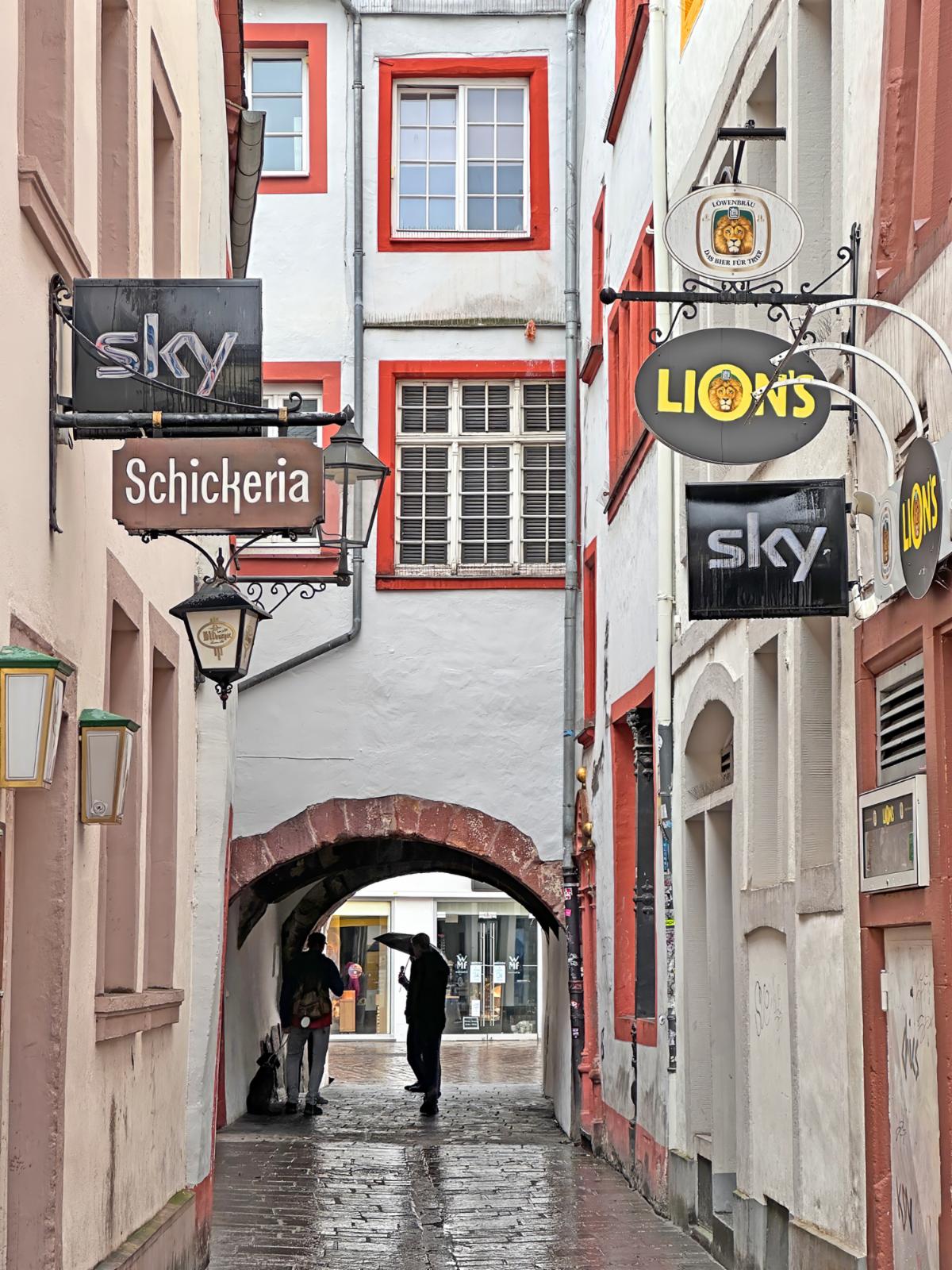 | |
As soon as we took our seats, the rain poured so hard that it leaked into the bus. It wasn’t until we completed our 50-minute circuit that it began to lighten up a little. We did see more sights, even through the rain. We continued on the bus for a second round. By the time we reached Karl Marx’s house, it stopped. We got off.
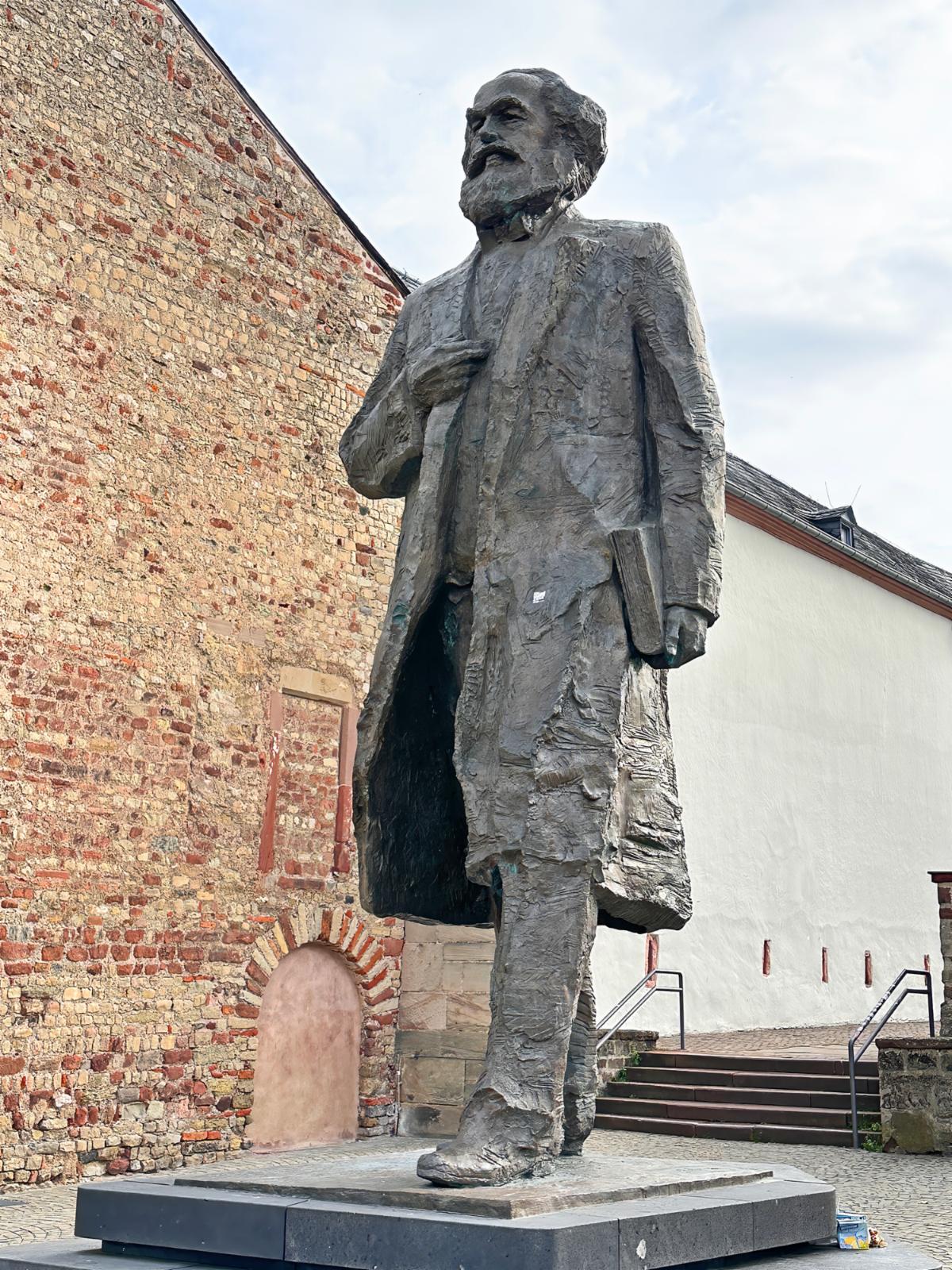
Karl Marx was born and raised in Trier. Later, he moved to Berlin and then to London. Marx, along with his confidant Engels, had a profound impact on the world. During the 1850s, raw, unregulated, laissez-faire capitalism in Europe produced extreme riches for a few barons and extreme poverty and misery for the factory and mine workers. Rightfully, this misery disturbed Marx. He concluded that greed was the root of all evil. This is partly true. Greed is the root of some evil. The owners of the production (factories and mines) didn’t care about worker safety or quality of life, only profits. Their greed led Marx to advocate for the dissolution of the captains-of-industry ownership of the means of production.
By the time of the Russian Revolution in 1917, Marxism had divided into two strains: 1. Democratic Socialism. 2. One-party dictatorship. Lenin favored the latter, thus putting Russia on the path of an unsustainable economic system and an authoritarian government.
Stalin changed Lenin’s system into a one-man dictatorship. Too bad because countries that did adopt more benevolent forms of Democratic Socialism, like Denmark, faired quite well. Denmark is modern, thriving, and often named the happiest nation in the world. In America’s economic heyday in the 1950s, it was found that capitalism with anti-trust regulations and fair regulations to provide decent working conditions worked quite well.
Anyway, Karl Marx’s house has been turned into a fascinating museum. We spent far more time there than I had planned. We just missed the hop-on hop-off bus when we emerged from the house. So, we walked back to Porta Nigra to find our bus back to the RV.
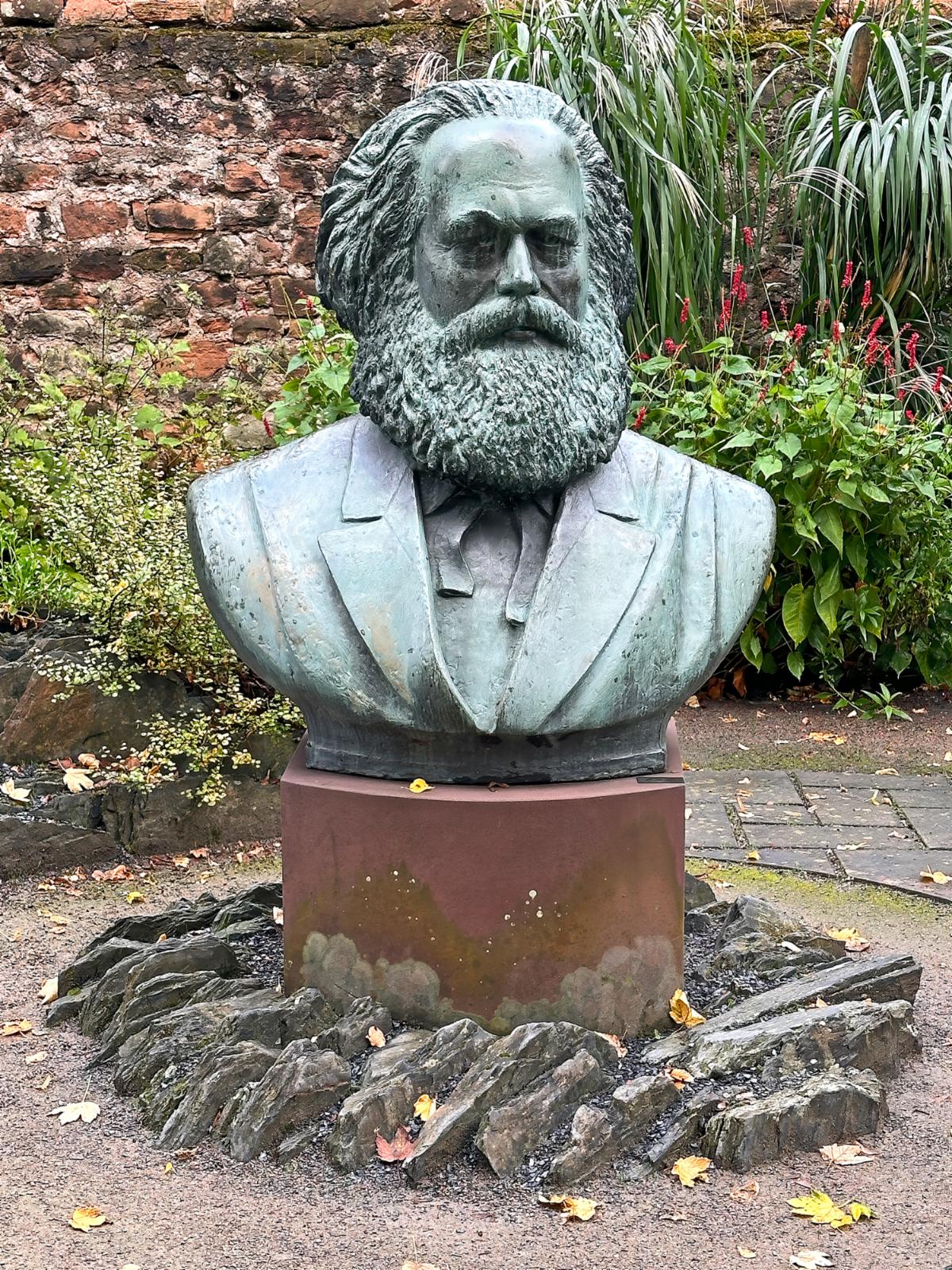
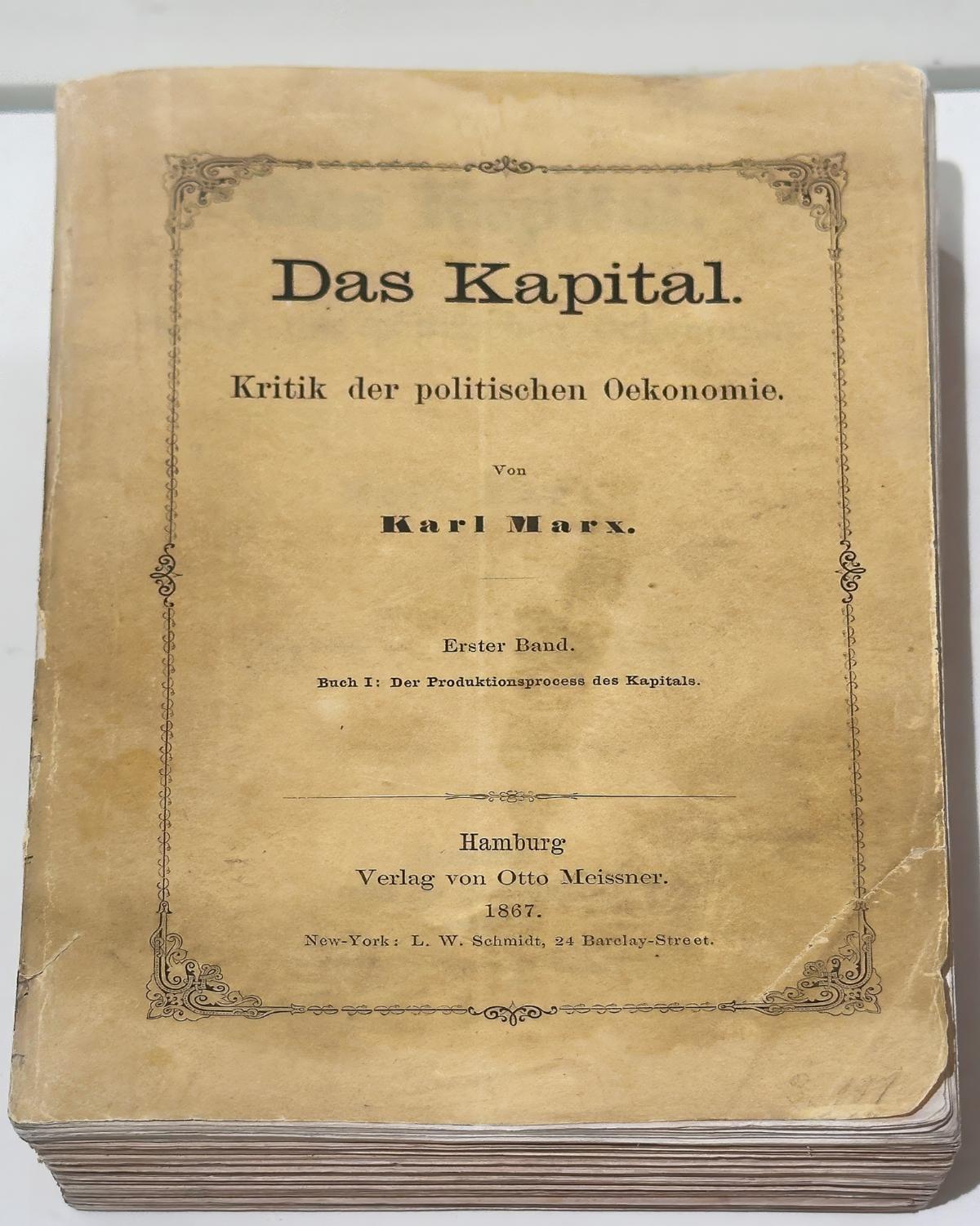
| 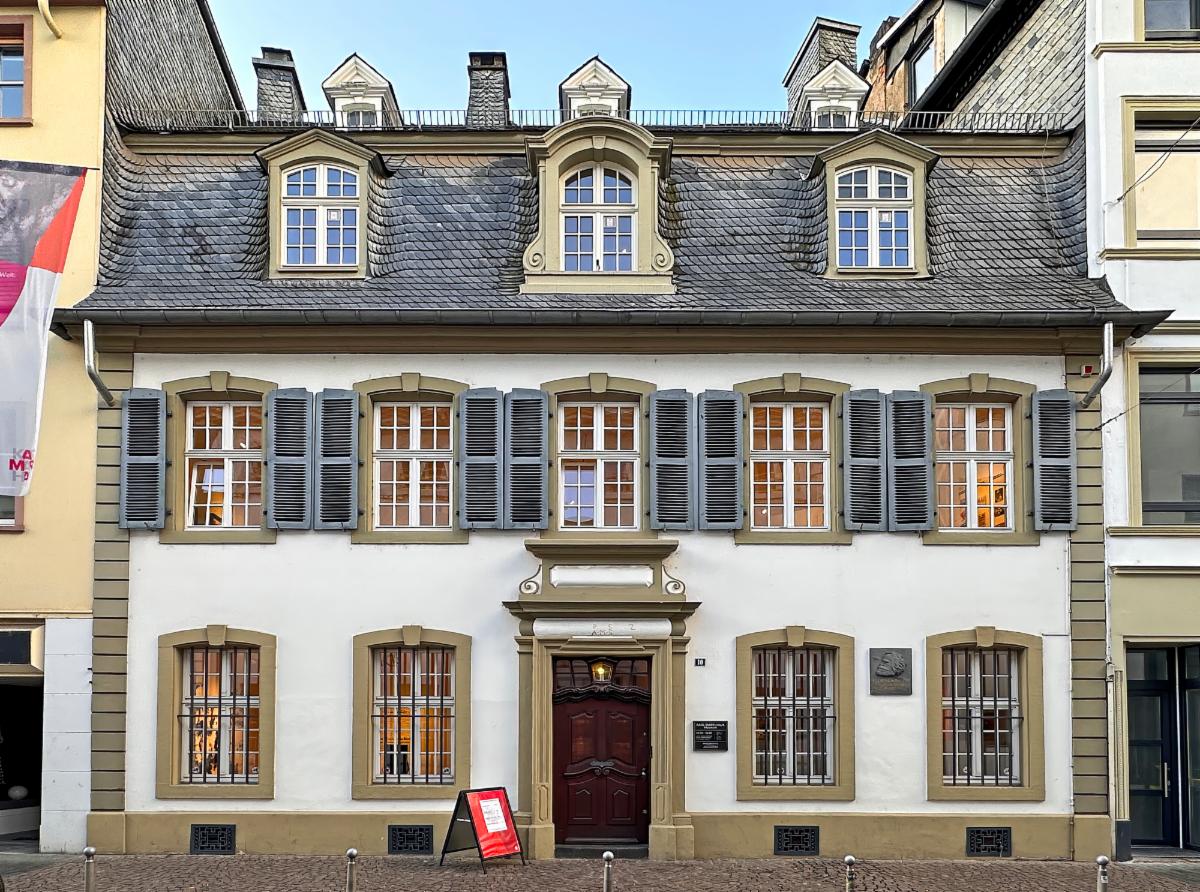 | Karl Marx's boyhood home. | A bust of Karl Marx in the garden. | An early copy of Karl Marx's famous Das Kapital. | |
We got on bus 83 as the schedule stated. Diane asked the driver to verify that the bus went to the RV park. He said, “Nein.” What? He did say that he goes near the RV park.
I followed the bus' progress on Google Maps to know when to get off. When we reached the stop closest to the RV park, the driver stood up and sternly told us to “get off my fucking bus” in near-perfect English. After he said it, he broke out with a big smile, so I guess he was just messin' with us.
This was to be our final evening on the Moselle River. We bid it farewell by opening our prized bottle of Zeller Schwartz Katz Riesling Lieblich wine. It was absolutely the best wine I have ever experienced. We savored every drop.
| This statue of Karl Marx met us at our bus stop. | The bus left us off at this bridge over the Moselle River. The RV park is adjacent to the left bank of the bridge. Notice that the sky was clearing as we headed back to the RV. | |
Dave and Wanda
Vaccines: Your ticket to safe world travels.
Virtual Business Card
North America. Europe. Mexico. Asia. Product Reviews. Books & Maps.
We are on an RVing adventure through Europe that could last as long as six months. Traveling with family, we will start in Germany and explore several countries. We are excited to explore all that Europe offers and share our travels with you through this blog.
Share if you know someone who would enjoy tagging along. Please join our email list if you haven't already done so. On the slightest whim, tap 'reply' to this email and drop us a line. We'll get back to you whether you need travel help, have ideas, or just want to say hello.
Please send us your thoughts and any errors we may have missed. We're on the road, and cellular service is intermittent in the remote areas. We are eager to read your messages as soon as we get online.
Message us: 715-252-6664 | 715-252-3326
Email: alloverthemaptravelventures@gmail.com
| | | | |