|
|
JP Pennington, CSP®, CPP®, RPIH, CFEI, MIFireE
Operating Partner, IES Safety, LLC
| |
A Renewed Enforcement Priority
The Occupational Safety and Health Administration (OSHA) has renewed its National Emphasis Program for Warehousing and Distribution Center Operations. The renewed program took effect on July 31, 2026, and supersedes the National Emphasis Program that became effective in July 2023. The program establishes OSHA's policies and procedures for inspecting warehouse and distribution-center operations, mail and postal processing and distribution centers, and parcel-delivery and courier services (OSHA, 2026b).
OSHA subsequently highlighted the renewed National Emphasis Program in its August 6, 2026, QuickTakes newsletter. According to OSHA (2026a), the program has been extended from three years to five years, providing greater continuity in the agency's enforcement activities.
This development is significant for organizations operating warehouses, fulfillment centers, refrigerated storage facilities, distribution centers, wholesale storage operations, mail-processing facilities, parcel-delivery services, and other high-volume material-handling operations. These employers should understand that the renewed program is not simply an educational campaign. It is an OSHA inspection program that authorizes comprehensive safety inspections at covered establishments.
What Is a National Emphasis Program?
A National Emphasis Program, commonly referred to as an NEP, is a temporary OSHA inspection initiative that focuses agency resources on particular hazards or industries. An NEP may include programmed inspections of establishments selected using criteria established in the directive. It may also establish procedures for unprogrammed inspections resulting from complaints, referrals, fatalities, catastrophes, and reported severe injuries.
The renewed warehousing and distribution-center NEP applies OSHA-wide. Federal OSHA regional and area offices, State Plans, and OSHA On-Site Consultation Programs are included in the directive's implementation structure (OSHA, 2026b).
For employers, the practical message is straightforward. Covered facilities may be selected for an OSHA inspection even when the facility has not recently experienced a fatality, hospitalization, amputation, or loss of an eye. A programmed inspection may be initiated because the establishment falls within an industry classification covered by the NEP.
Comprehensive Inspections Under the Renewed Program
The breadth of the renewed program is one of its most important features. OSHA states that all inspections conducted under the warehousing and distribution-center NEP are comprehensive safety inspections (OSHA, 2026b). A comprehensive inspection is not limited to one piece of equipment, one work area, or one reported condition. The Compliance Safety and Health Officer (CSHO) may evaluate multiple operations, hazards, records, programs, and physical areas throughout the establishment.
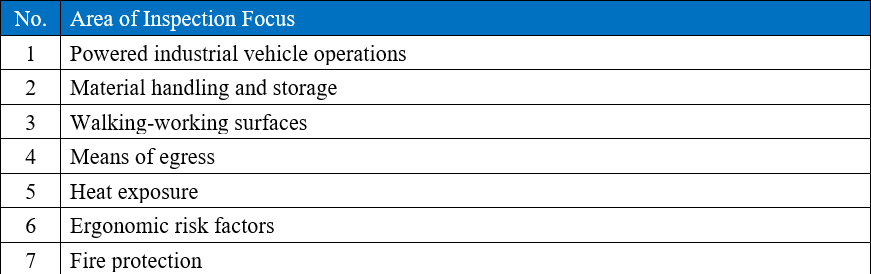
OSHA identifies the following principal areas of inspection focus:
Table 1
Principal Areas of Inspection Focus Under the Renewed Warehousing and Distribution Center NEP
| |
This list is not exhaustive. The directive describes these subjects as common industry hazards, including, but not limited to, the identified categories (OSHA, 2026b). Other hazardous conditions observed during an inspection may therefore be evaluated and cited when appropriate.
The renewed directive also provides instructions for expanding an inspection when a fatality, catastrophe, complaint, referral, or other inspection-triggering event involves an establishment within a covered industry. Employers should not assume that an OSHA inspection initiated by a complaint about one condition will remain limited to that condition.
Powered Industrial Trucks and Pedestrian Safety
Powered industrial trucks are central to most warehouse and distribution operations. They are also a major source of struck-by, caught-between, crushing, tip-over, and falling-material hazards. OSHA identifies being struck by powered industrial trucks and other material-handling equipment as one of the most common sources of warehouse injuries (OSHA, n.d.-d).
A meaningful compliance review should examine more than the availability of forklift operator cards. Employers should verify that each operator has received required formal instruction, practical training, and workplace performance evaluation. Refresher training and reevaluation should be provided when required by 29 C.F.R. § 1910.178.
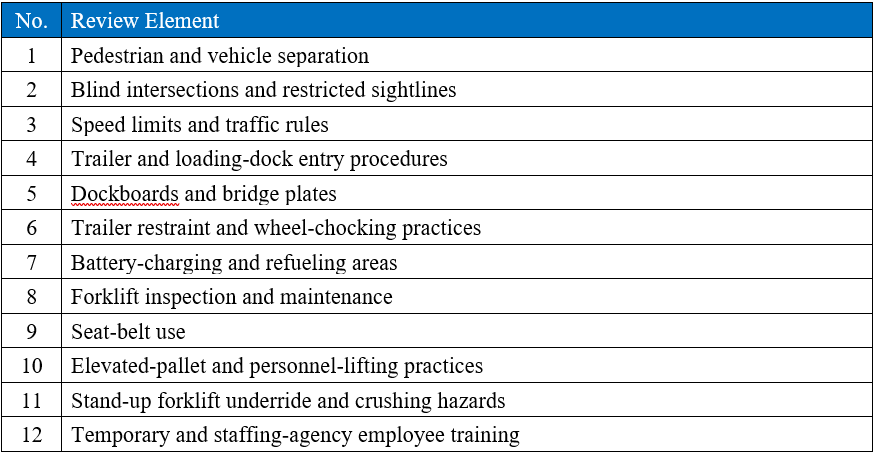
The review should also address:
Table 2
Powered Industrial Truck and Pedestrian Safety Review Elements
| |
OSHA recommends maintaining safe clearances in aisles, passageways, and loading-dock areas. OSHA also recommends visual warnings near dock edges and training workers concerning combustion byproducts, including carbon monoxide produced by fuel-powered industrial trucks (OSHA, n.d.-b).
Pedestrian safety deserves particular attention. Painted floor lines alone may not provide adequate protection in congested areas, blind corners, dock operations, or locations where employees routinely enter powered industrial truck travel paths. Depending on the facility and its operations, effective controls may include physical barriers, designated crossings, mirrors, warning lights, alarms, traffic-control procedures, high-visibility garments, lighting improvements, and enforceable operating rules.
Material Handling, Storage Racks, and Conveyors
Warehouses depend on the safe movement and storage of materials. Damaged racks, unstable loads, congested aisles, overloaded shelving, falling products, and unguarded conveyor components can expose employees to serious injuries.
OSHA recommends that employers inspect and maintain shelving and racking to prevent collapse. When damage is discovered, the affected area should be isolated immediately. Materials stored on racks and shelving should not create falling or collapse hazards, and rack load capacities should not be exceeded (OSHA, n.d.-b).
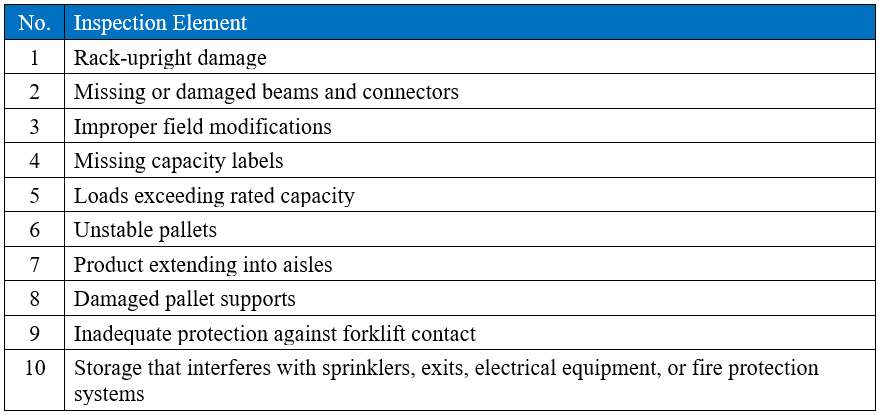
An employer's inspection process should address:
Table 3
Material Handling and Storage Inspection Elements
| |
OSHA also recommends inspecting conveyors regularly, guarding pinch points, providing suitable lighting and working surfaces, and establishing lockout procedures for clearing jams or performing maintenance (OSHA, n.d.-b). Employees should not reach into, climb onto, cross over, or enter hazardous conveyor areas unless appropriate energy-control procedures have been implemented.
Walking-Working Surfaces and Loading Docks
Slips, trips, and falls remain common warehouse hazards. Fast-paced work, changing inventory, damaged pallets, shrink-wrap, spilled liquids, uneven floors, dock edges, trailers, ladders, mezzanines, and elevated work areas can create hazardous walking-working surfaces.
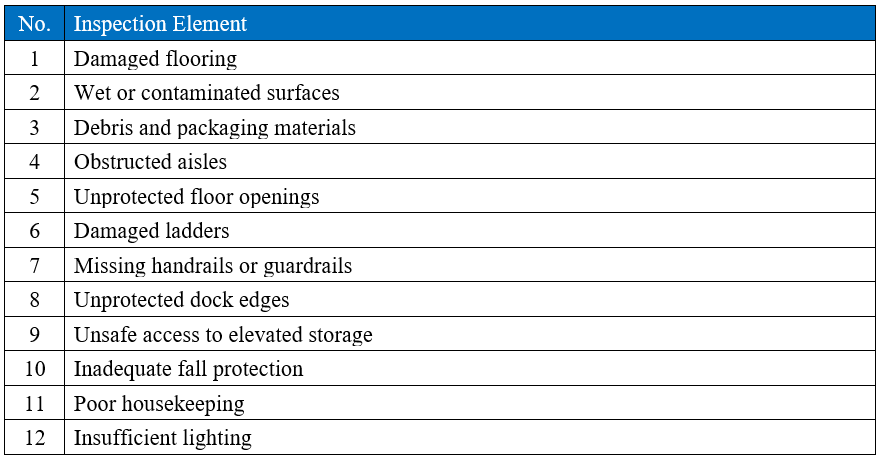
Employers should conduct documented inspections for:
Table 4
Walking-Working Surface Inspection Elements
| |
Hazards should be corrected promptly, and the employer should document the corrective action. OSHA's recommended practices emphasize conducting initial and periodic inspections, identifying new or recurring hazards, investigating incidents and near misses, evaluating risk, and prioritizing corrective action (OSHA, n.d.-a).
Loading docks require particular attention because they combine elevation changes, powered industrial trucks, pedestrians, trailers, shifting loads, and vehicle movement. Employers should verify the condition and capacity of dockboards, establish procedures for securing trailers, control pedestrian access, protect exposed dock edges when required, and ensure that employees are not placed between moving vehicles and fixed objects.
Means of Egress and Emergency Preparedness
Warehouses frequently experience changing storage configurations and temporary product accumulation. These changes can obstruct exit routes, reduce aisle width, conceal exit signs, or interfere with access to emergency equipment.
Exit routes must remain unobstructed and available for immediate use (OSHA, n.d.-c). Employers should inspect exit access, exits, and exit discharge areas during each shift. Stored materials, pallets, carts, powered industrial trucks, temporary workstations, and seasonal inventory should not obstruct required routes.
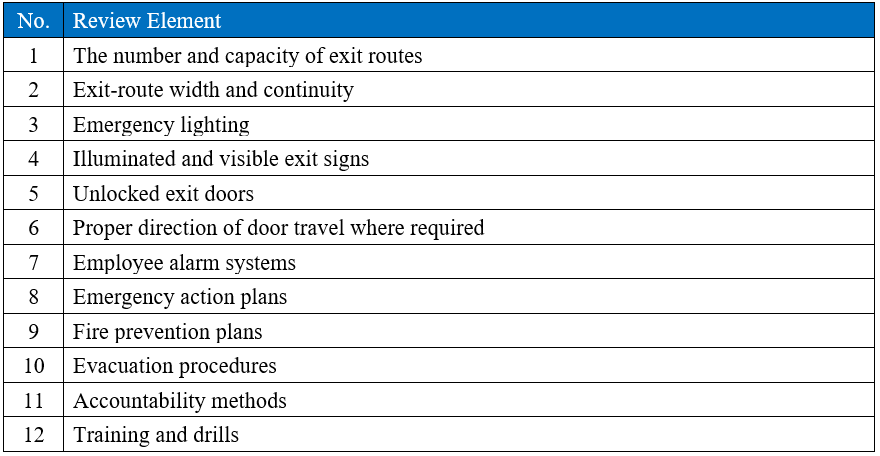
An NEP readiness review should evaluate:
Table 5
Means of Egress and Emergency Preparedness Review Elements
| |
Employers should also verify that emergency plans reflect actual facility conditions. A plan that does not account for new storage layouts, mezzanines, temporary work areas, hazardous materials, staffing changes, or contractors may not provide adequate protection during an emergency.
Heat Exposure in Warehouse Operations
Heat is an express inspection focus under the renewed warehousing and distribution-center NEP (OSHA, 2026b). Indoor warehouse temperatures can rise because of seasonal weather, inadequate ventilation, loading-dock activity, radiant heat, roof exposure, industrial processes, powered equipment, and a lack of effective climate control.
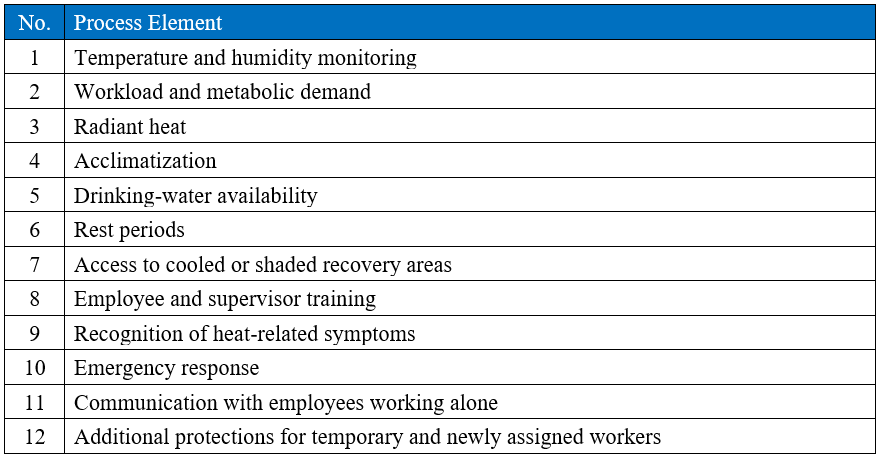
Employers should assess both environmental conditions and workload. A heat-illness prevention process should address:
Table 6
Heat-Illness Prevention Process Elements
| |
Heat controls should be based on actual workplace conditions rather than outdoor temperature alone. Indoor employees may experience significant heat stress even when outdoor conditions appear moderate.
Ergonomic Risk Factors
Warehouse work often involves repetitive lifting, lowering, carrying, pushing, pulling, reaching, bending, twisting, and prolonged standing. OSHA identifies musculoskeletal disorders, particularly those arising from overexertion during lifting and lowering, among the most common warehouse injuries (OSHA, n.d.-d).
Employers should review injury records, first-aid cases, employee reports, job demands, production data, and observations of work practices. The review should identify high-frequency lifts, heavy or unstable loads, floor-level handling, overhead reaching, extended carrying distances, high push or pull forces, and tasks performed at an excessive pace.
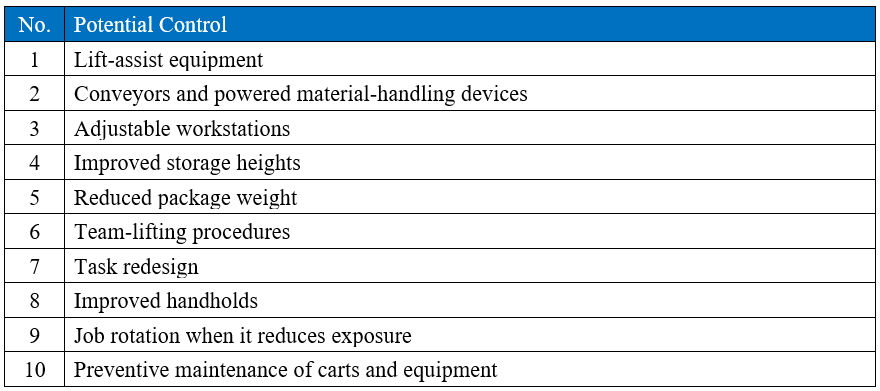
Potential controls may include:
Table 7
Potential Ergonomic Controls
| |
Training is valuable, but training employees to lift safely should not be treated as a substitute for feasible engineering and administrative controls.
Fire Protection and Prevention
Warehouses may contain substantial combustible loading, high-piled storage, packaging materials, lithium-ion batteries, flammable liquids, charging stations, conveyors, automated systems, and ignition sources. Storage arrangements can also interfere with sprinkler discharge and access to portable fire extinguishers.
OSHA advises employers to ensure that portable fire extinguishers are suitable for the hazards present, readily accessible, fully charged, operable, visually inspected monthly, and maintained annually when extinguishers are provided for employee use (OSHA, n.d.-b).
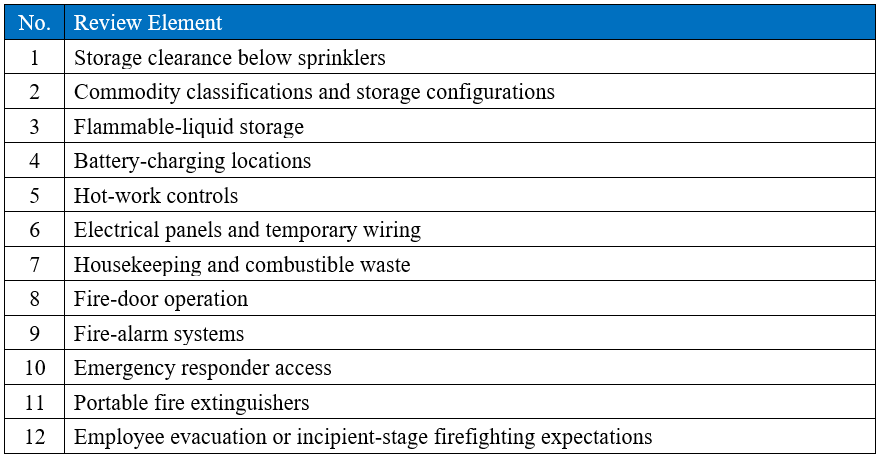
A broader fire-protection review should examine:
Table 8
Fire-Protection Review Elements
| |
The facility's emergency action plan and fire prevention plan should be consistent with its fire-protection strategy and the actions employees are expected to perform.
Preparing Before OSHA Arrives
Preparation for an OSHA inspection should begin before a CSHO enters the facility. Employers should conduct a structured, good-faith evaluation of current operations and promptly correct identified hazards.
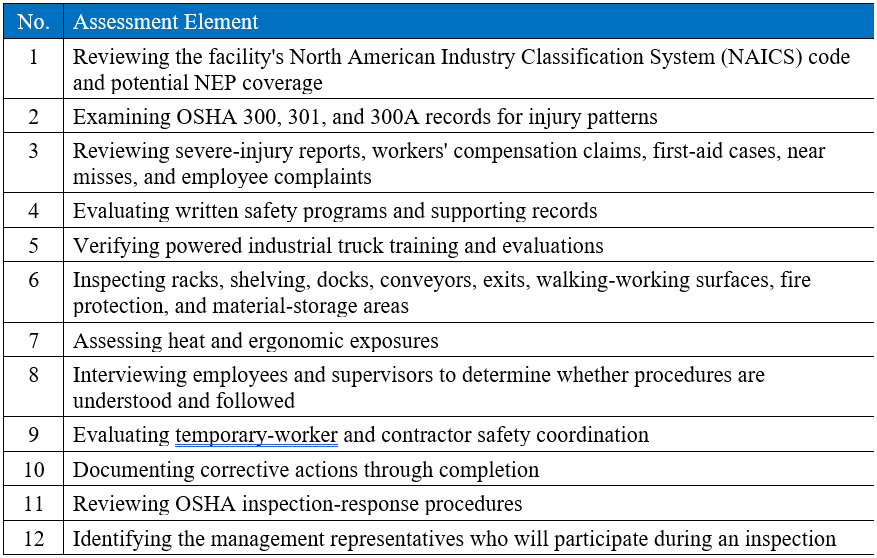
A warehouse NEP readiness assessment should include:
Table 9
Warehouse NEP Readiness Assessment Elements
| |
Employers should avoid treating inspection readiness as a one-time documentation exercise. OSHA's recommended practices support a proactive and continuing process for identifying and correcting hazards before workers are injured or become ill (OSHA, n.d.-a).
How IES Safety, LLC Can Assist
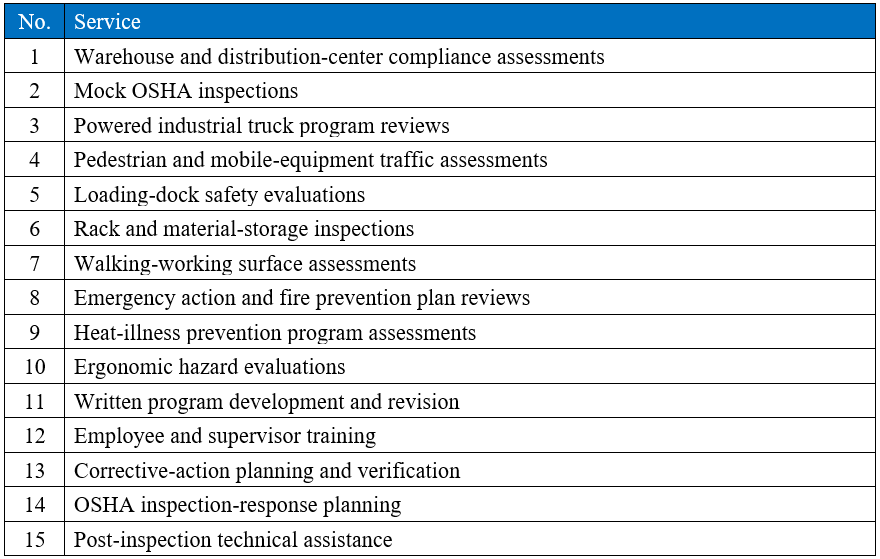
The renewed National Emphasis Program creates a timely need for covered employers to evaluate both regulatory compliance and actual workplace conditions. IES Safety, LLC's consultants are available to assist clients with NEP compliance and inspection readiness.
Available services include:
Table 10
IES Safety, LLC Warehousing and Distribution Center Services
| |
An independent assessment can help identify conditions that may be overlooked during routine operations. It can also provide leadership with a prioritized corrective-action plan based on the facility's hazards, applicable OSHA requirements, and the inspection priorities established by the renewed NEP.
Conclusion
OSHA's renewed National Emphasis Program confirms that warehouse and distribution-center safety will remain a federal enforcement priority. The program's five-year duration and comprehensive inspection model mean covered employers should expect continued attention to powered industrial trucks, material handling and storage, walking-working surfaces, exit routes, heat exposure, ergonomics, and fire protection.
Employers should use this opportunity to evaluate their facilities before an incident, employee complaint, referral, or programmed OSHA inspection reveals a deficiency. A proactive review can protect employees, strengthen regulatory compliance, reduce operational disruptions, and demonstrate that safety is integrated into the organization's daily management system.
IES Safety, LLC's consultants are available to help warehouse, distribution, storage, fulfillment, postal-processing, and parcel-delivery employers evaluate their programs and prepare for increased OSHA scrutiny under the renewed NEP.
References
Occupational Safety and Health Administration. (n.d.-a). Recommended practices for safety and health programs. U.S. Department of Labor. https://www.osha.gov/sites/default/files/publications/OSHA3885.pdf
Occupational Safety and Health Administration. (n.d.-b). Warehousing: Hazards and solutions. U.S. Department of Labor. https://www.osha.gov/warehousing/hazards-solutions
Occupational Safety and Health Administration. (n.d.-c). Warehousing: Know the law. U.S. Department of Labor. https://www.osha.gov/warehousing/standards-enforcement
Occupational Safety and Health Administration. (n.d.-d). Warehousing: Overview. U.S. Department of Labor. https://www.osha.gov/warehousing
Occupational Safety and Health Administration. (2026a, August 6). August 6, 2026: QuickTakes newsletter. U.S. Department of Labor. https://www.osha.gov/quicktakes/080626
Occupational Safety and Health Administration. (2026b, July 31). National emphasis program on warehousing and distribution center operations (OSHA Instruction No. CPL-03-00-026). U.S. Department of Labor. https://www.osha.gov/sites/default/files/enforcement/directives/CPL-03-00-026.pdf
| |