RECEIVE 20% OFF WHEN YOU PURCHASE DURING SEPTEMBER AND OCTOBER | |
|
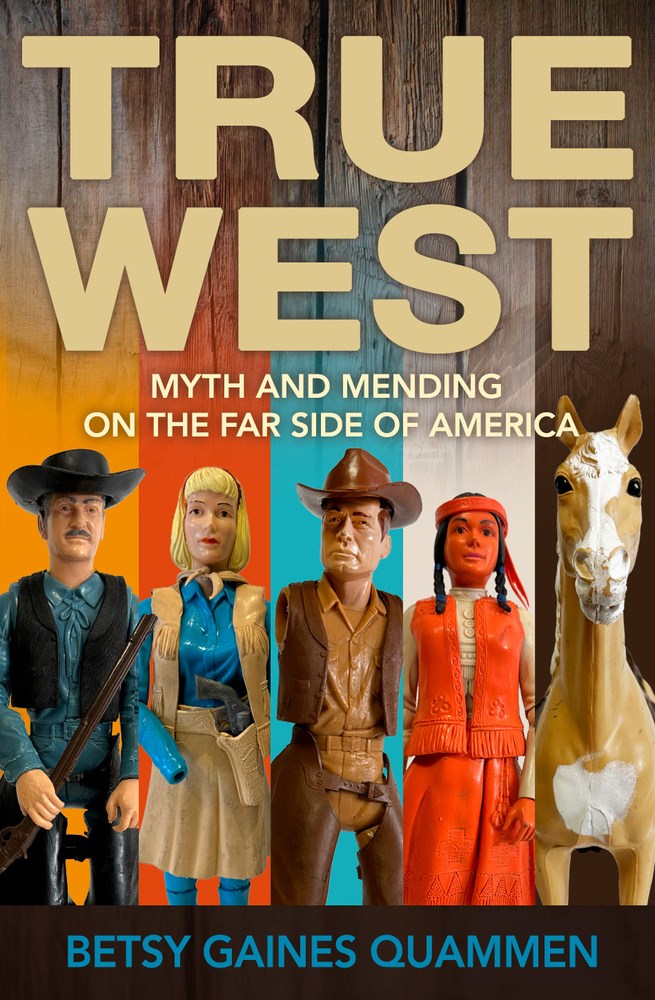
By Betsy Gaines Quammen
Torrey House Press
Paperback: $19.95
Best Wellers' Price: $15.96
Reviewed by Frank Pester
“What I do in this book,” writes Quammen, “is examine what happens when broad and bogus beliefs are affixed to the American West. Myth thus understood as an accepted but deceptive belief leads us to what I’ve come to consider a museum of toxic myths – a great cultural hall of follies based on misconceptions. The mythmakers I’ve focused on, unlike Greek muses, have promoted reckless ideas, bringing the West to a lurching instability, like a Conestoga wagon on a mountain trail, wobbling in dangerous directions. There are tall tales piled atop fabrications, seeping into memory, falsifying history, and turning caricature into grievous miscalculations.”
For anyone who has lived in the West, the myths that Betsy Gaines Quammen tackles in True West: Myth and Mending on the Far Side of America will feel very familiar. As we walk through this “Myth Museum” we encounter such examples as the “myth of discovery” of a land already inhabited; the myth of Manifest Destiny and westward expansion; the myth of Terra Nullius– land free and yours; the myth of a morally upright range-riding hero; and the myth that rain follows the plough. Add to these myths a batch of other reckless ideas, and we have views that can be very scary.
Betsy, not swayed by these myths, provides a fair and balanced discussion of all sides, starting with the views of Creationism verses Science and the attack science went under during the Covid-19 crisis. Next, she tackles the rise of Far-right, with the birth of the Oath Keepers, Stewart Rhodes, and the Bundy incidents. The Redoubt communities springing up in the Northwest are also touched upon.
Quammen chronicles the rise of ranching and the exploitation of lands in Wyoming and Montana for the creation of mini ranches and ranchettes. While working on this book just after the Pandemic in 2021, Betsy took up residence in the Hemingway House in Ketchum, Idaho. Hemingway had gone through his own Pandemic, the Great Influenza Pandemic during the 1918’s. Hemingway had marketed the Sun Valley area as a healthy and wonderful skiing resort, which gave rise to the exploitation of land in Wyoming and Montana. Especially during the Pandemic, the wealthy were trying to get away and create idyllic settings that only their money could buy. Quammen also explores the controversy over reintroducing wolves in the wilds had with ranchers.
Following into the killing of George Floyd there was racial unrest in many parts of the West. Betsy not only writes of the contemporary issues we face in the West but also the history of settlements that grew around the myth of limitless resources.
Because of the growth of our population and need to get out in the wild, we face tremendous strain on our National Parks. We also face a dire need for water in the arid parts of our country. As the West gets hotter, drier, and angrier we must reassess how we interact with the land.
Betsy sits down with many individuals who have reckless ideas and gives them a fair platform to vent their views– whether that be over a coffee or a beer. This is a book that will at sometimes anger you, but in the way the author presents these issues, it will also give you some hope. It is a necessary book for us who have made the West our home.
“I am reminded over and over how important it is to listen deeply and learn from each other. When we do, we move beyond myth making, myth busting, and misinformation to something much more powerful: connecting. This is where truth can be found, strolling together down the long halls of a museum of western myths.”
| |
Inscribed copy of The Right to Live; The Right to Die by C. Everett Koop, U.S. Surgeon General 1982 – 1989. Famous surgeon speaks out on abortion and mercy killing. Inscribed by Chick to an apparent ally on the half title page. $175 | |
| |
|
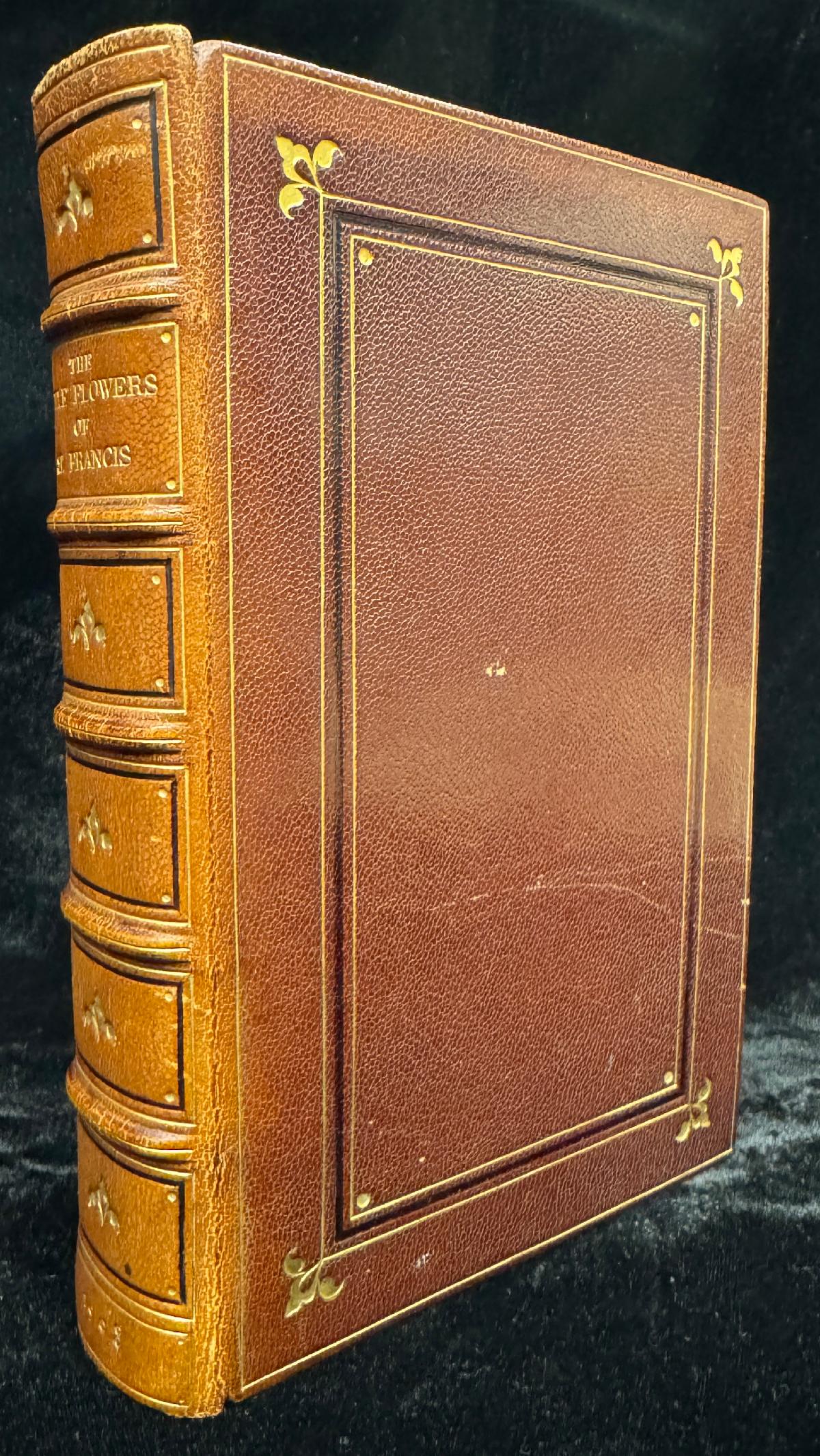
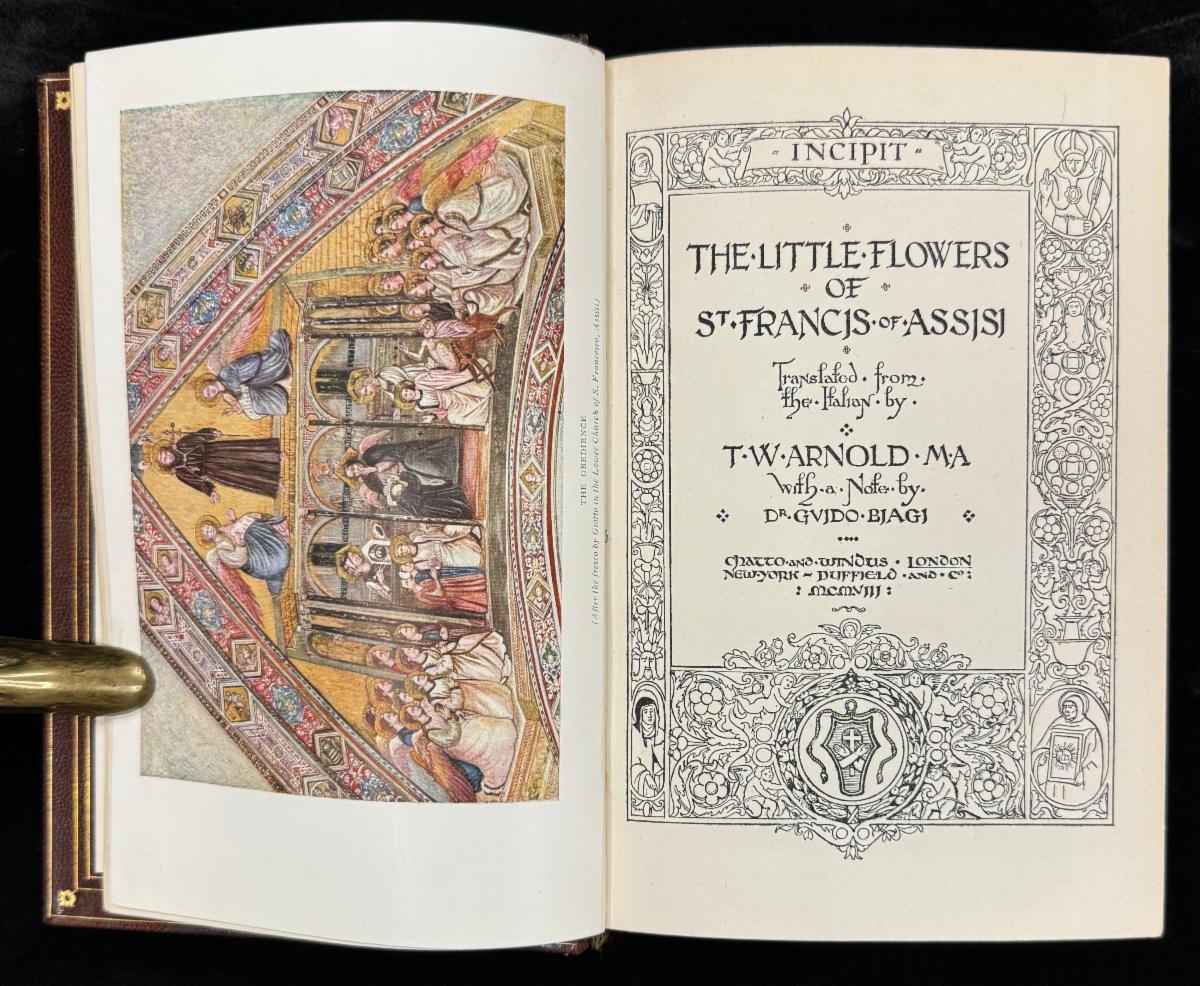
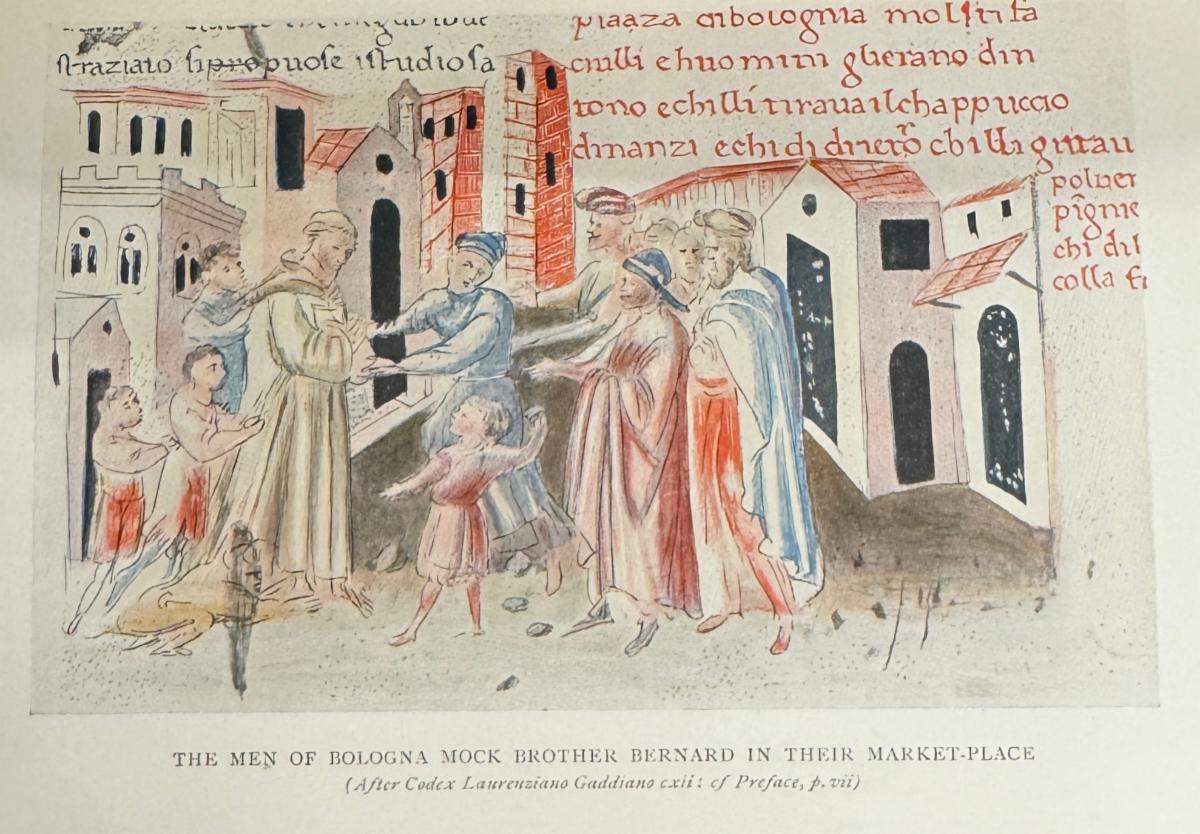
Lovely brown morocco duodecimo Little Flowers of St. Francis. Catto and Windus, 1908. Numerous illustrations. Tooled in darker brown and gilt with gilded edges. Quite pretty. $200 | |
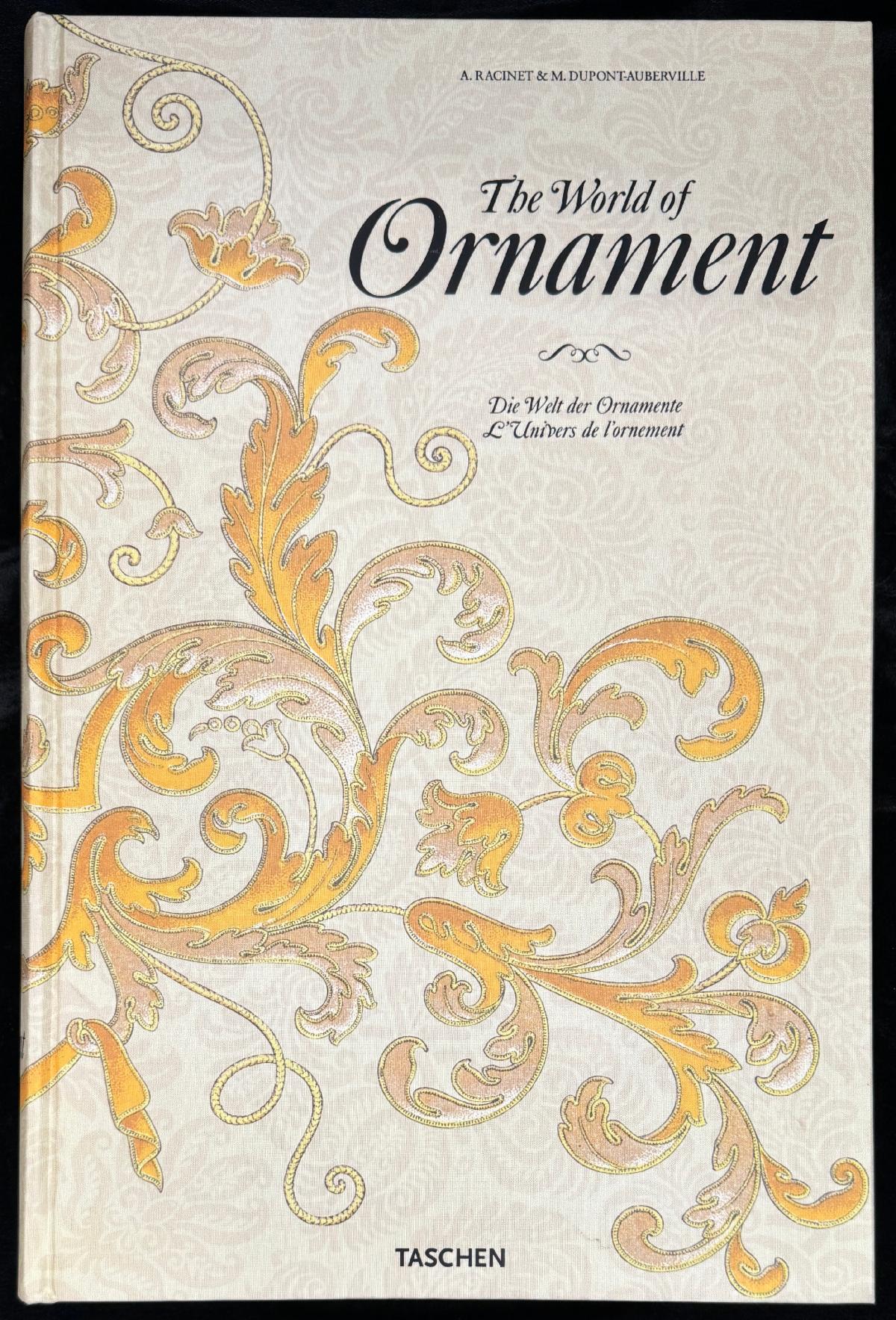
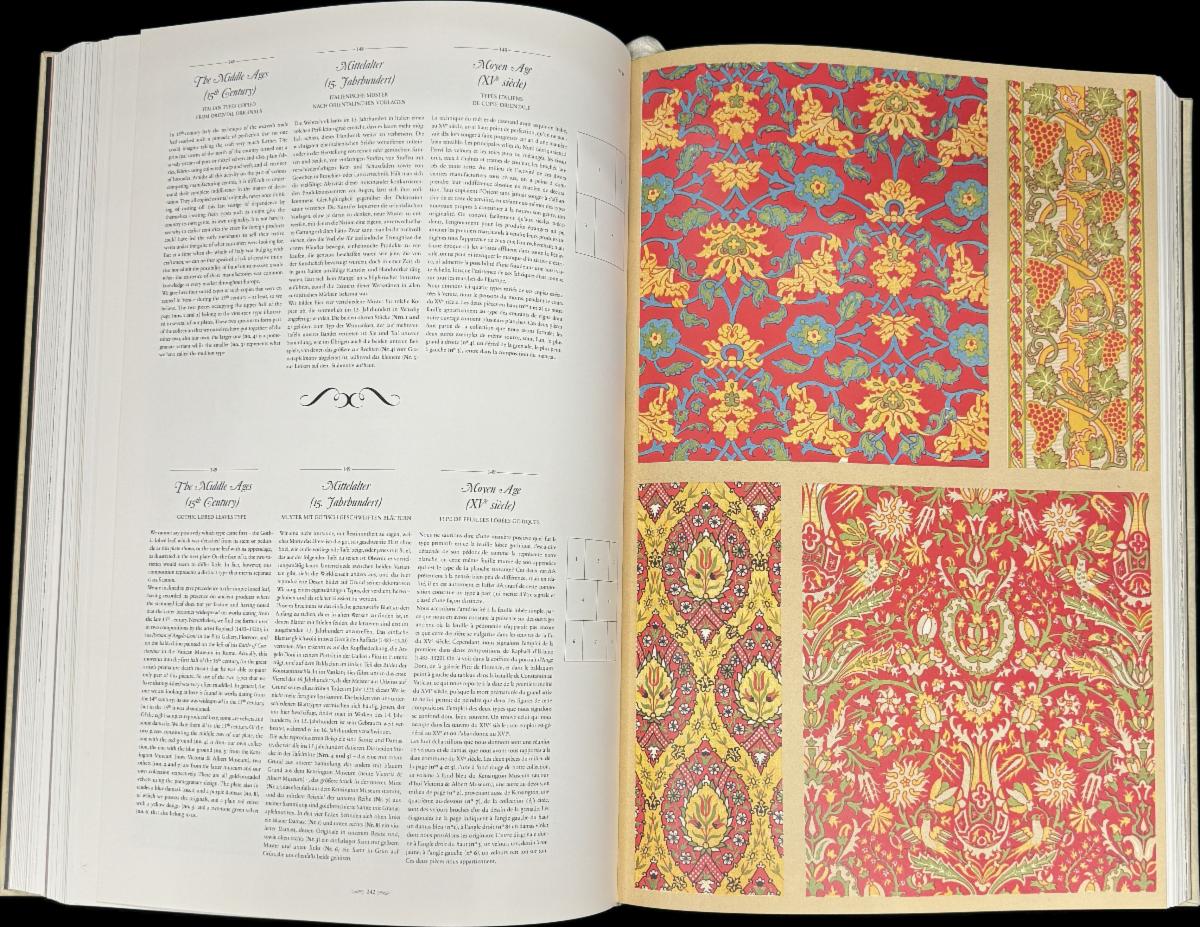
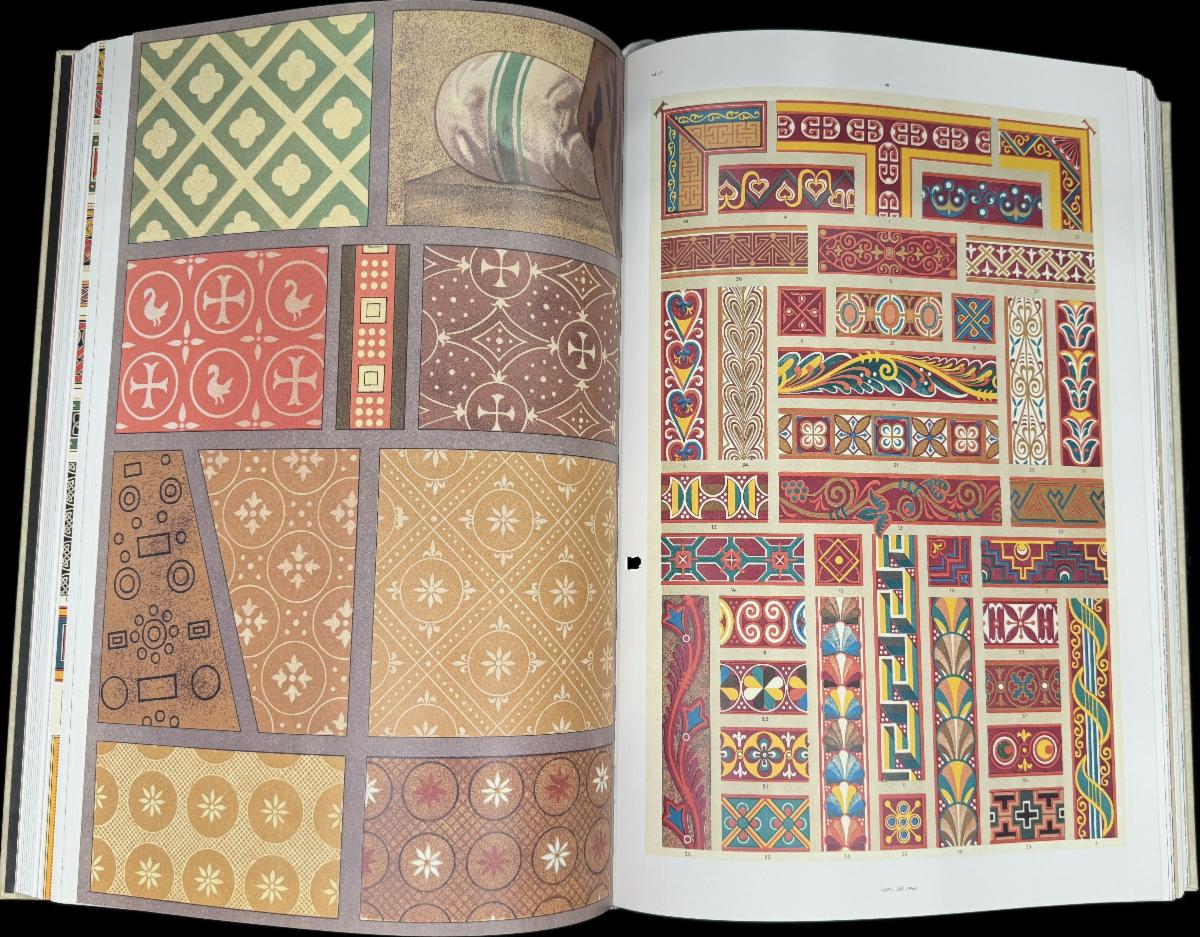
The marvelous Taschen The World of Ornament, a folio reprint of Auguste Racinet’s two-volume 1869-1888 L’Ornement Polychrome and A. Dupont-Auberville’s 1877, L’Ornement des Tissus. This 45 cm tall volume is bound in patterned ecru linen. It contains over 500 pages of bright decorative patterns, sorted by cultures of origin. Text occurs in English, French and German. $150 | |
| |
|
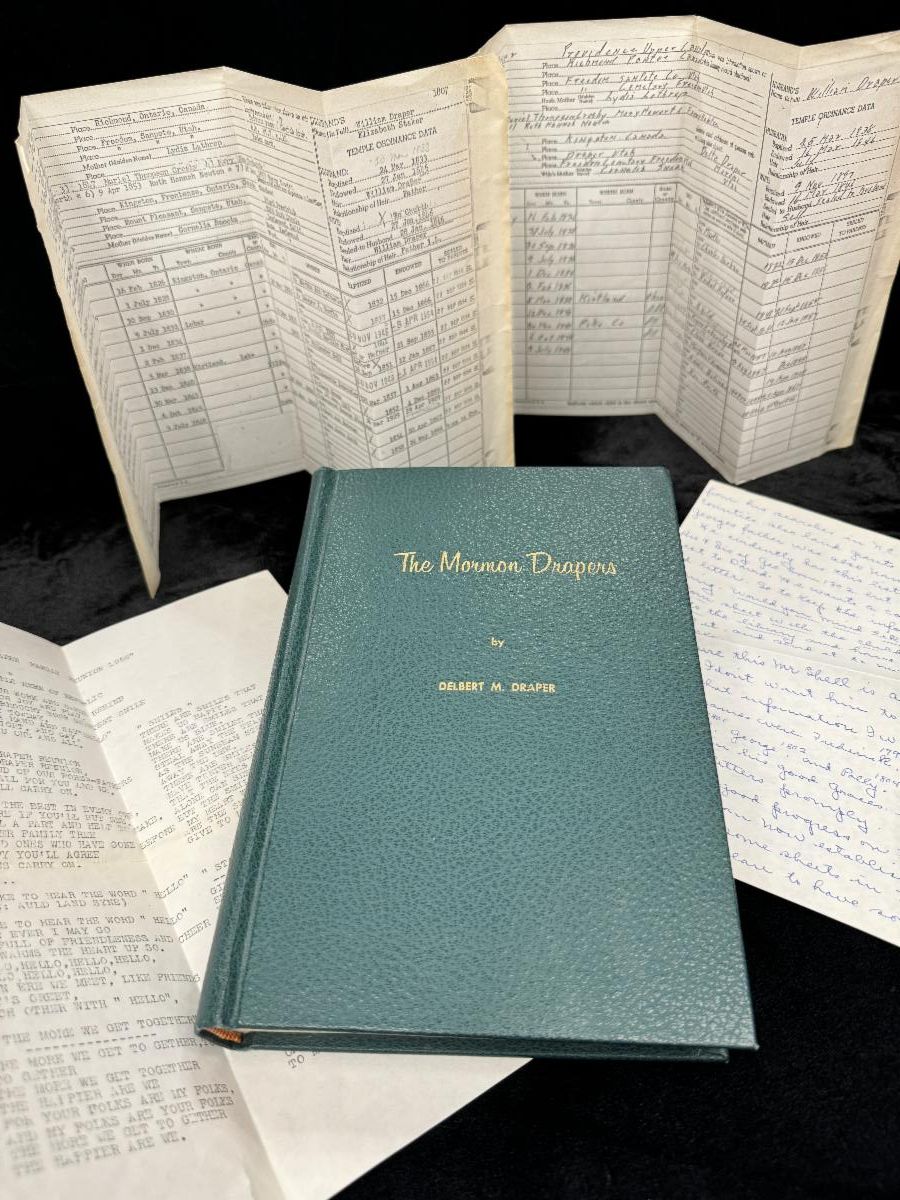
The Mormon Drapers is a well-made impressive collection of the family for whom Draper City is named. 1st Edition of this Sturdily bound 1958 book by Delbert M. Draper. Scarce! $400 | |
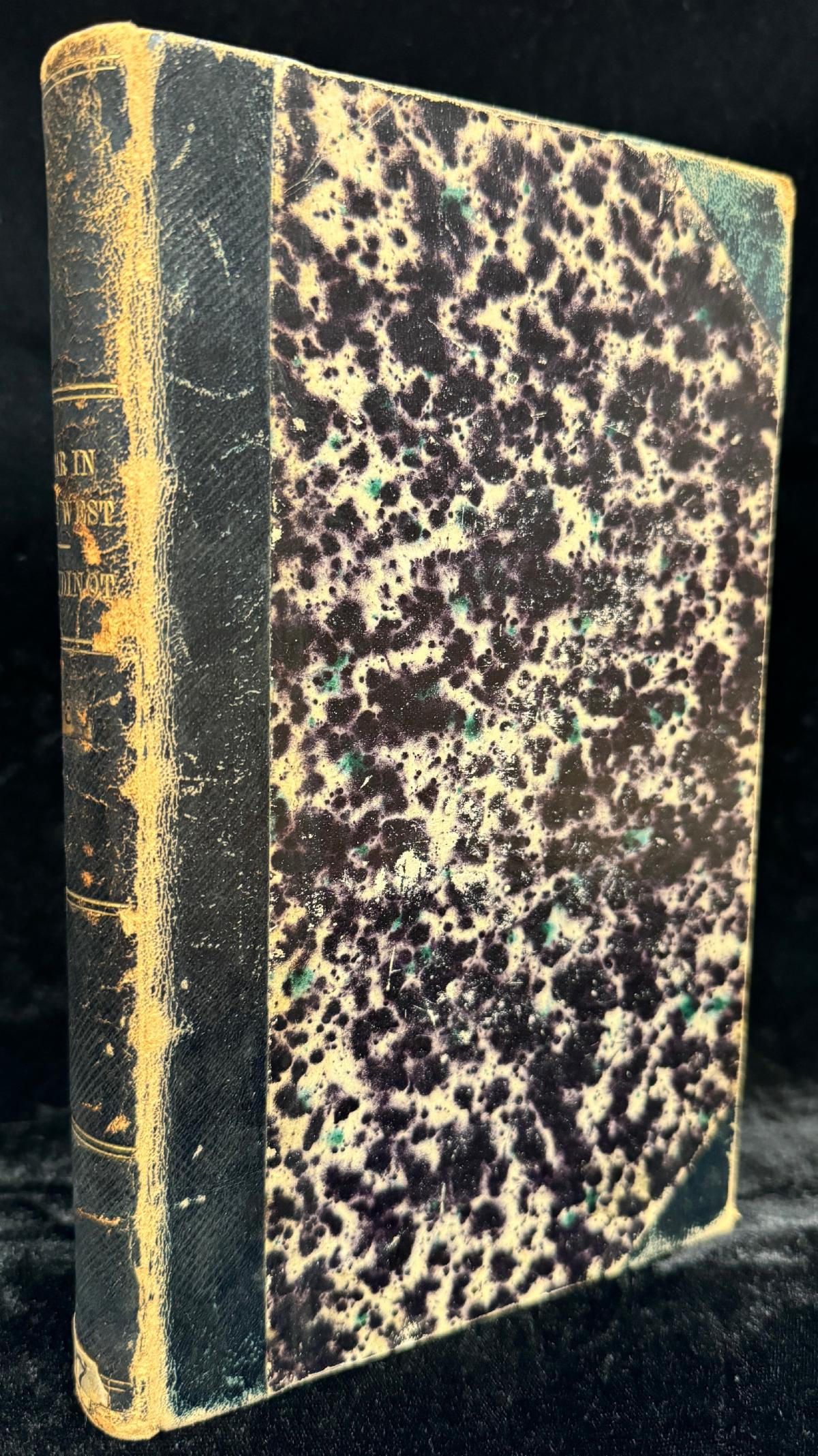
Very good copy of the scarce 1816 Star in the West by Elias Boudinot. Subtitled A Humble Attempt to Discover the Long Lost Ten Tribes of Israel, Preparatory to Their Return to Their Beloved City, Jerusalem. Our copy is solid and square and bound in ¾ black leather. Considered an influence on the Book of Mormon. $2250 | |
| |
|
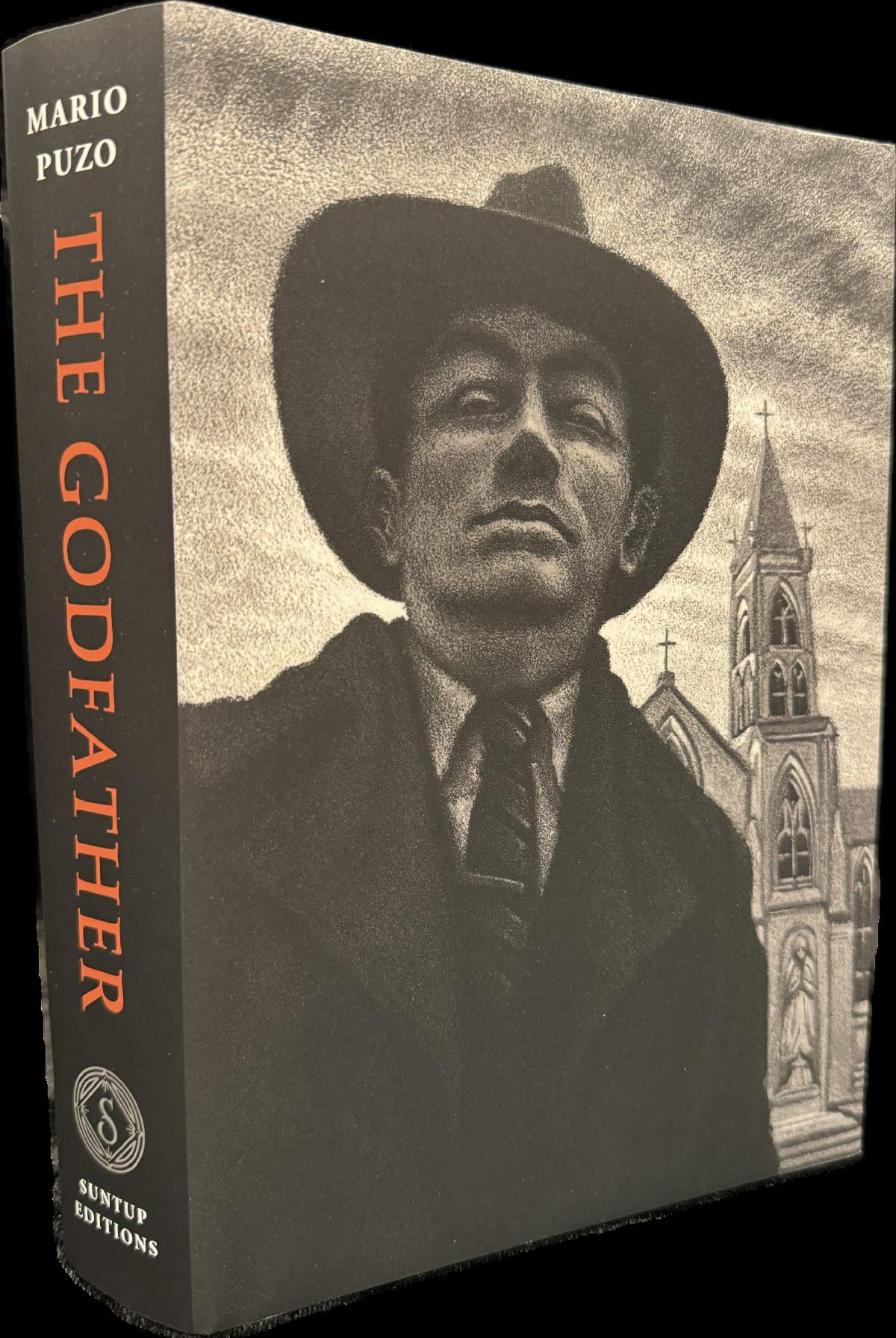
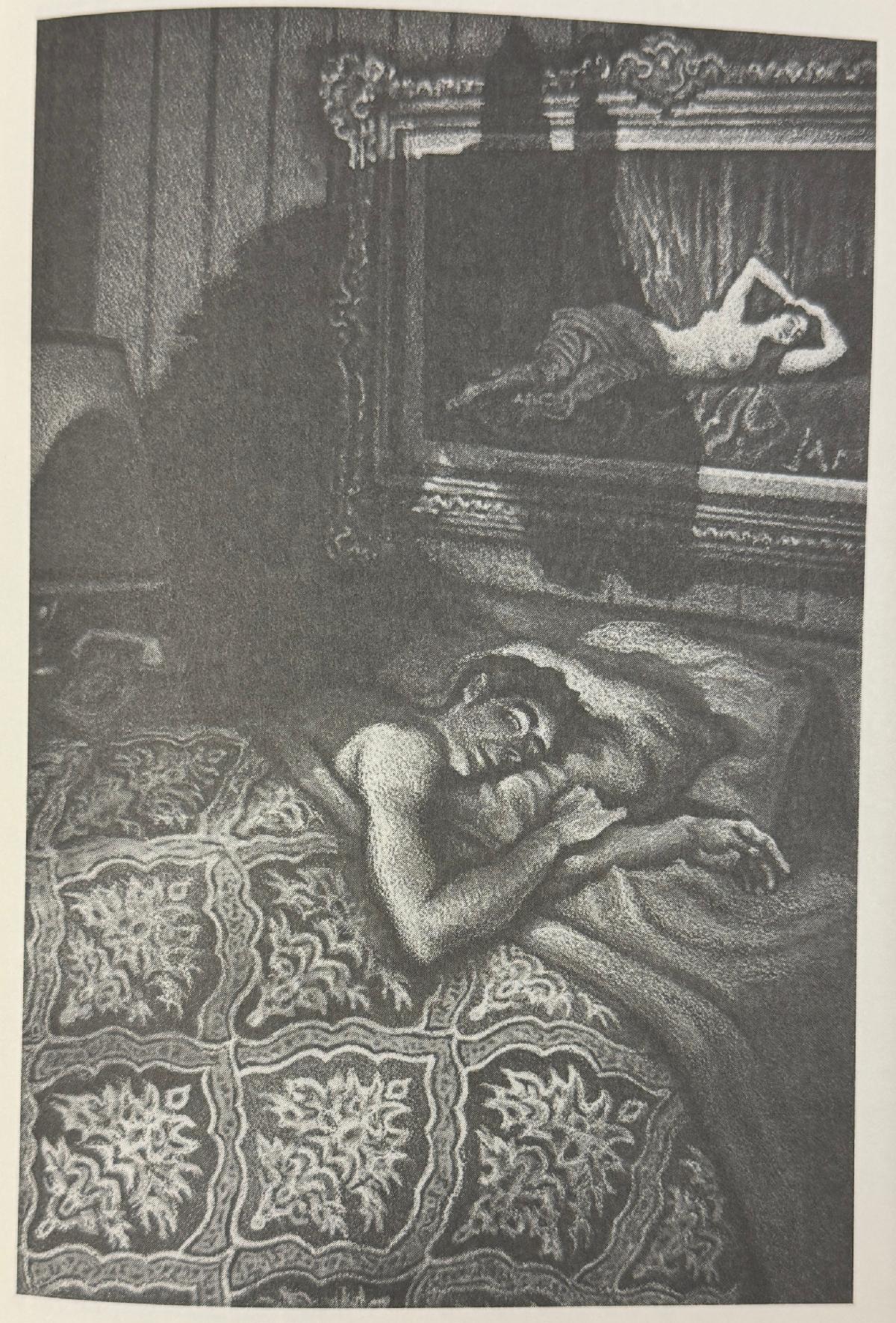
Mario Puzo’s The Godfather ranks among the most beloved of crime novels. How cool would it be to own the slipcased 2023 edition from Suntup Editions. It is illustrated and signed by Art Wenger. $225 | |
|
By Alain Badiou
Bloomsbury Academic
Paperback $19.95
Review by Dylan Parry
From time to time people can be heard asking, What is happiness? Am I happy? Can the world be a happier place? and so on. But Badiou's Happiness isn’t just some self-help cash grab by someone who wants you to buy their next book, and “unlock your true happiness." No, Alain Badiou, the French philosopher who’s works and influence span from the late-60’s to today, gives us in his short treatise, Happiness, a radical reanalysis of what it really is, and where it can be found.
Badiou, with his expert eye, challenges, rejects, accepts, and reorients our understanding of happiness, from what is often considered to be common expressions of happiness. This is not happiness for happiness’ sake, nor total condemnation of the things we say makes us happy, but a desire to really investigate a truer understanding of what makes us happy, and why.
In the beginning, Badiou establishes that philosophy is an expression and desire for more happiness. How? The philosopher, on shining light on the injustices of the world, looks to, in the end, bring more happiness into the world. Badiou follows this up with a rejection of rigidity and what one may summarize as religious dogma, or antiphilosophy, instead putting forward the willingness to be re-routed by encounters, and have the confidence to demand the impossible since the impossible brings happiness. Later on, he uses the events of the October Revolution, May ’68, and the Arab Spring as examples of events where the people taking part chose something new from what was, and in effect, discovered potentially new forms of happiness.
All this is to say that Badiou, writing Happiness, a short read (not even 130 pages), gives us a very rich and in-depth exploration into happiness. This is a book that one could easily go back to, pulling quotes to share with others, or just rereading for the happiness you’ll no doubt experience.
| |
|
By HR Giger
Taschen
Hardcover $20.00
Review by Wade Brown
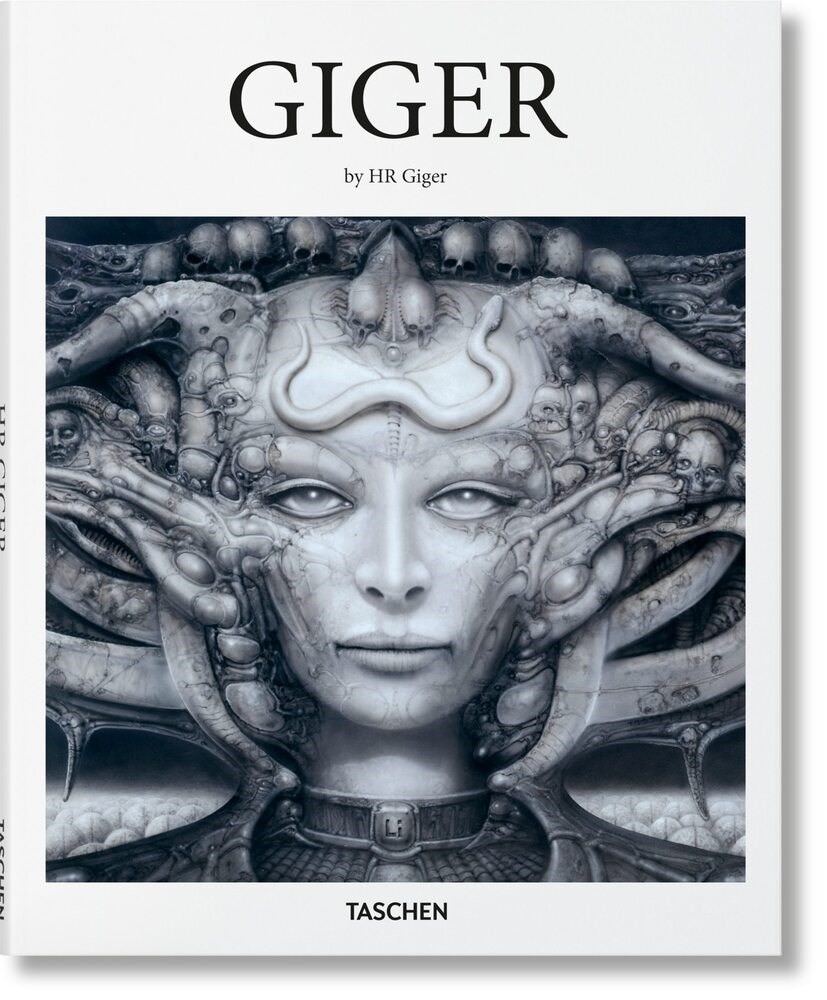
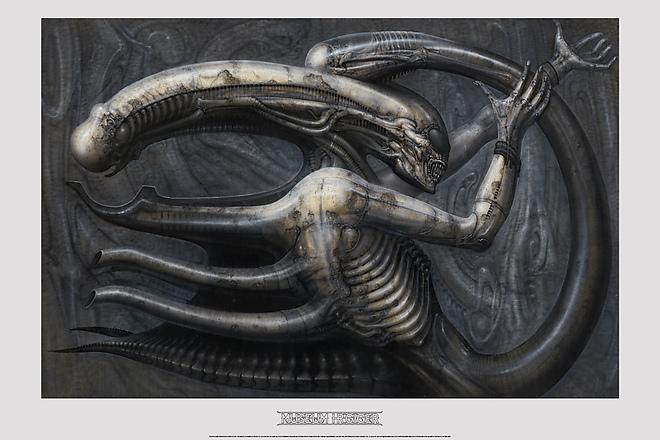
Dark. Strange. Sensual. Dreamlike. Otherworldly. Nightmarish. Disturbing. Hallucinogenic. Utterly unique. These words, while accurate, hardly begin to describe the work of Swiss surrealist artist H. R. Giger. Even if you don’t know his name, you’ve encountered his work. He first came to prominence in the 1970s for his distinctive, monochromatic, airbrushed paintings that combined images of human bodies merged with machinery in a style that became known as “biomechanical.” Film director Ridley Scott chose Giger to design the derelict spacecraft and the titular xenomorph in his iconic 1979 film Alien. Scott chose to base the design of the xenomorph on a pre-existing painting of Giger’s. Necronom IV depicts a very strange humanoid creature with an enormously elongated cranium, rows of spine-like tubules growing from its back, and what appears to be a genital organ whose girth and length are only matched by its nature– which appears to be at least prehensile and at most sentient.
Giger and his special effects team won an Academy Award for their work on Alien. The worldwide impact of the film was inescapable, and the artist went on to work on other films (most notably Poltergeist II: The Other Side, Alien 3, and Species), music album covers, furniture, films of his own, and painting. As fascination with his work spread, his biomechanical style was (and continues to be) endlessly imitated, duplicated, and adapted into many other forms of media. His work has particularly been embraced by tattoo and fetish culture across the world for its dark and transgressive visions. The Saint-Germain Castle in Gruyeres, Switzerland, permanently houses the H. R. Giger Museum. He even has an asteroid named for him, 109712 Giger.
Taschen’s Giger is a lovely and inexpensive collection of the artist’s work that serves as both an introduction to and celebration of his extraordinary images. H. R. Giger’s work has enthralled me (and the world) for decades. This book is essential for fans of fine art, science fiction film, and anyone who wants to experience haunting visions like no others.
| |
|
By Andrew Joseph White
Peachtree Teen
Paperback $12.99
Review by Apollo Frenzel
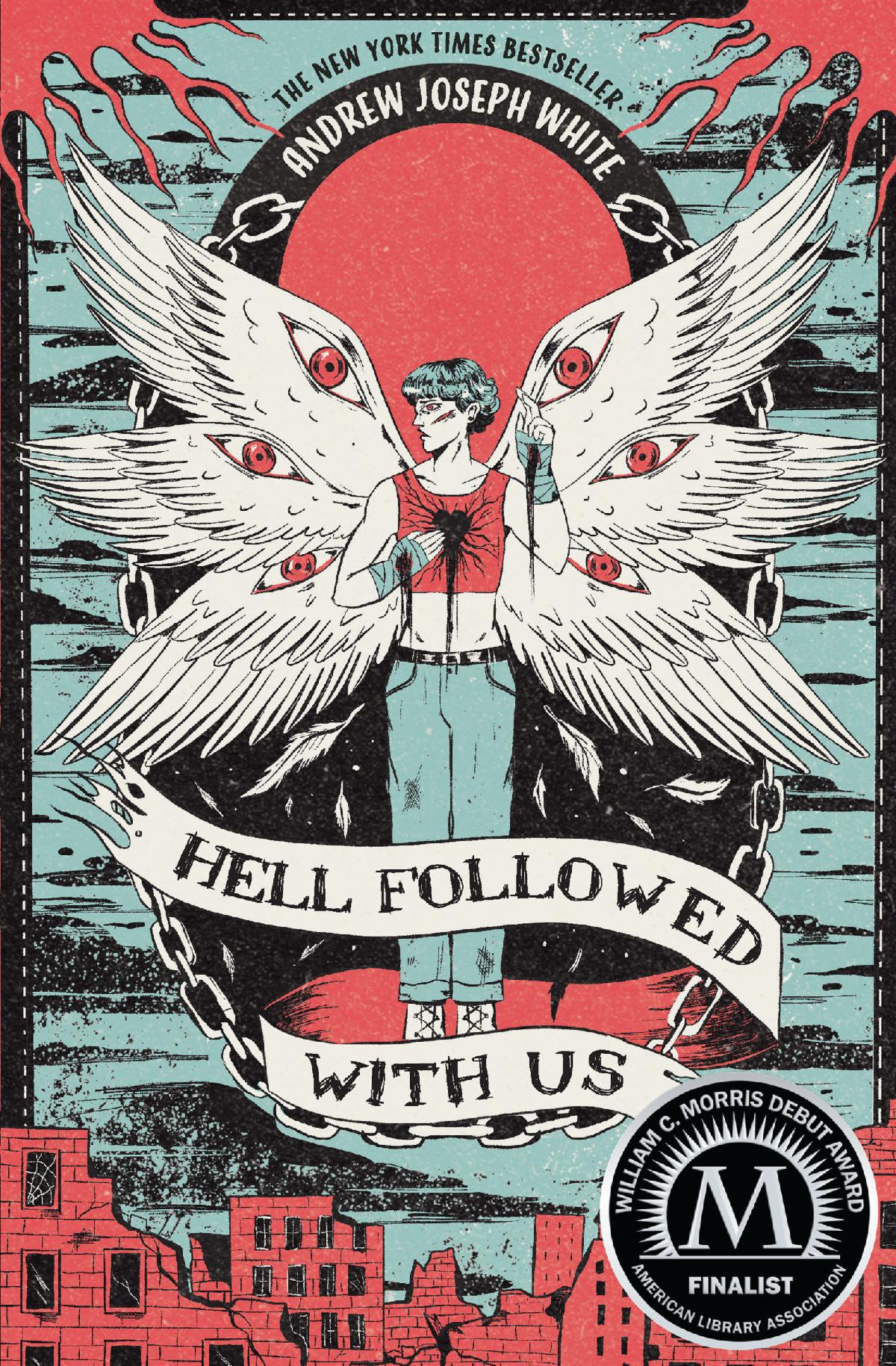
The Faith Evangelical Church has ended the world. The “Angels” have created a bioweapon that has wiped seven billion people off the earth in an event dubbed “The Flood.” Those who didn’t die were turned into monsters nicknamed “Grace’s” that will spread flood rot across the earth with one monster leading them, Seraph. Benji has been selected to be Seraph but he never wanted this. So, he ran away with his father to escape the only city left functional, New Nazareth. They don’t get far and Benji is quickly recaptured, his father dying in the process. Suddenly, their group is ambushed by a rag-tag group of teens and Benji free once more, but with a choice. Join this new group and take revenge on the ones who hurt him, or run far away from this place.
Hell Followed with Us can only be described as hauntingly poetic. I mean, look at the cover! It’s horrifyingly epic! White does an amazing job of commenting on the extremism in Christianity, and in religion as a whole. The message in these pages shows that religion can be a necessity for those seeking understanding within their world view but, how dangerous it can get if left too extreme. Along with religion, it tackles the idea of body dysmorphia– especially with transgender folks. Because Benji was injected with “the Flood” before he left, his body changes in horrifying ways much like what trans people go through growing up.
I listened to the audiobook and, my god, was it amazing. Shaan Dasani along with Graham Halstead, and Avi Roque did wonderfully to capture the evocative essence of this book. A book with great writing and great narrators will always be entertaining to me. Do yourself a favor and buy the audiobook on Libro and give it a listen. You won’t regret it!
| |
|
By Ishmael Reed
Archway Editions
Paperback $12.95
Review by Kelly Watanabe
A reconfiguration of Andy Warhol’s influence on one of the most important artists who fell into the Factory.
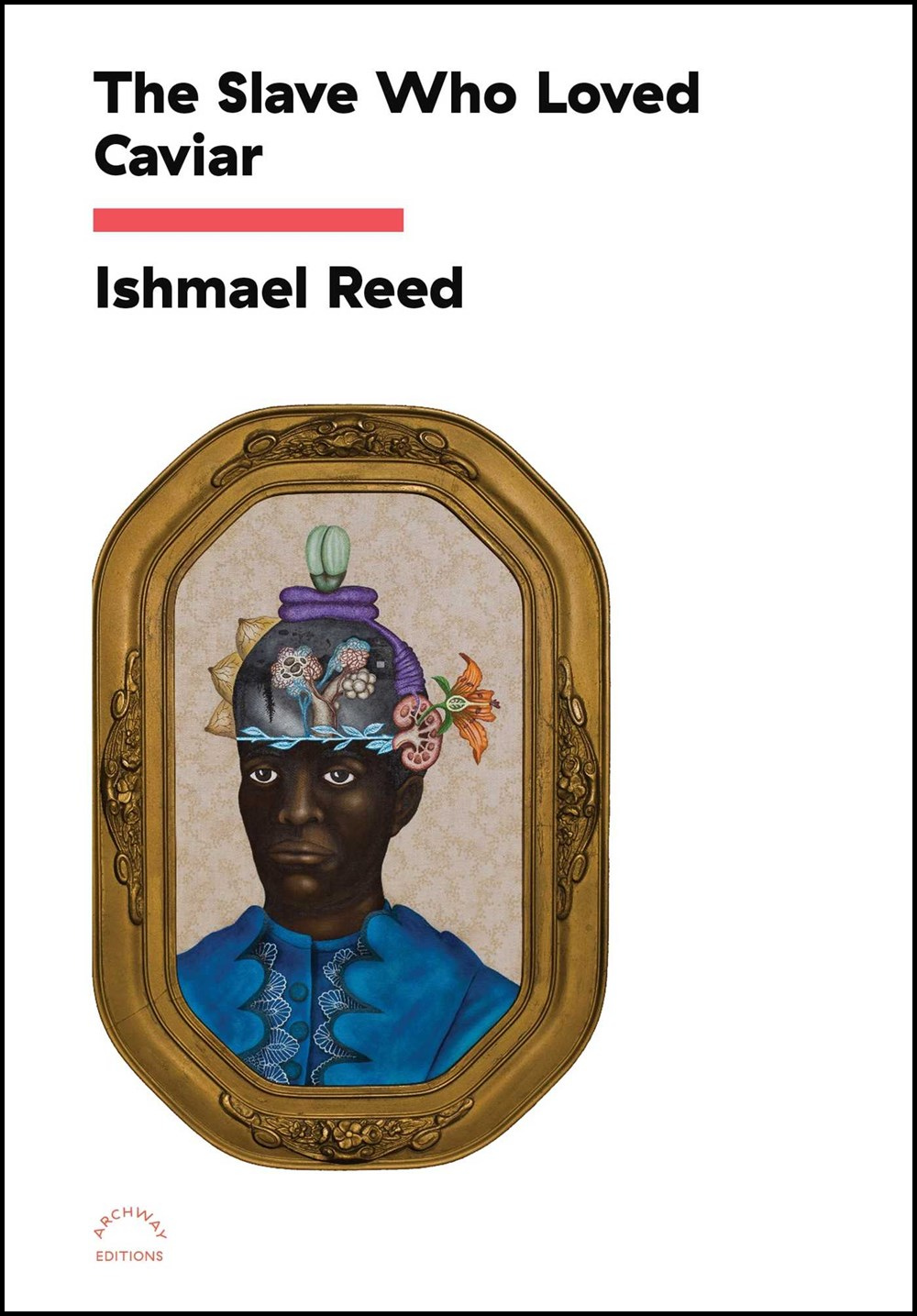
The spooky season comes and goes so quickly, if you are not frequently reading vampiric literature, this might be the perfect time to pick up a tale about: vampires. To satisfy one’s thirst, I am compelled to recommend Ishmael Reed’s The Slave Who Loved Caviar, which isn’t just a play about vampires, but a play about vampires that chronicles and parallels the relationship between pop art icons Andy Warhol and Jean-Michel Basquiat.
The story is set around the Baron, an artist vampire under investigation for acts similar to those committed by Andy Warhol against Jean-Michel Basquiat in the 1980s. The Baron, whose paintings are falling out of vogue and must recover from his “dwindling assets” is advised to employ a “black graffiti artist” to collaborate with him on an art piece. The unfoldings are told in real time while in the side-lines two investigators dive into the world of Warhol and Basquiat. From analyzing direct quotes to interpreting art pieces, the investigators go to great lengths deciphering gray areas, exchanges, lies, contradictions. The Baron is used to shine a critical light on Warhol’s ideas, his ability to commercialize art, and his drive to exploit artists. The investigation reimagines the microcosm of Basquiat, Warhol, and their closest engagements– providing a visceral perspective on the inner workings of the Pop Art movement.
This play was highly divisive before it hit the stage at Theater for the New City. The theater’s artistic director Crystal Field, being the intimate friend and neighbor to Annina Nosei, could not continue letting it play at Theatre for the New City, due to negative mentioning of Nosei in the play itself. Reflection on the reception of the contents of the play is provided by Reed in the introduction and guarantees that this play will stick with you. It is not easy to take an accusatory stance against one of the most influential artists of the 20th century, but Ishmael Reed provides an excellent case as to how and why we should start doing just that.
| |
|
By R. L. Stine
Scholastic
Paperback $7.99
Review by Thomas Moore
I remember the small, one-room library of my elementary school well. It was there that I first heard the saying, "You shouldn't judge a book by its cover!" Despite not understanding whatever wisdom governed the saying, I attempted to follow this advice as I searched for things to read. Ultimately, I failed to hold myself to it. It seems my teachers forgot to supply me with the tactics that I should employ for choosing a book. They also did not account for another important factor; some cover illustrations are way too cool to pass up. Case in point: Goosebumps!
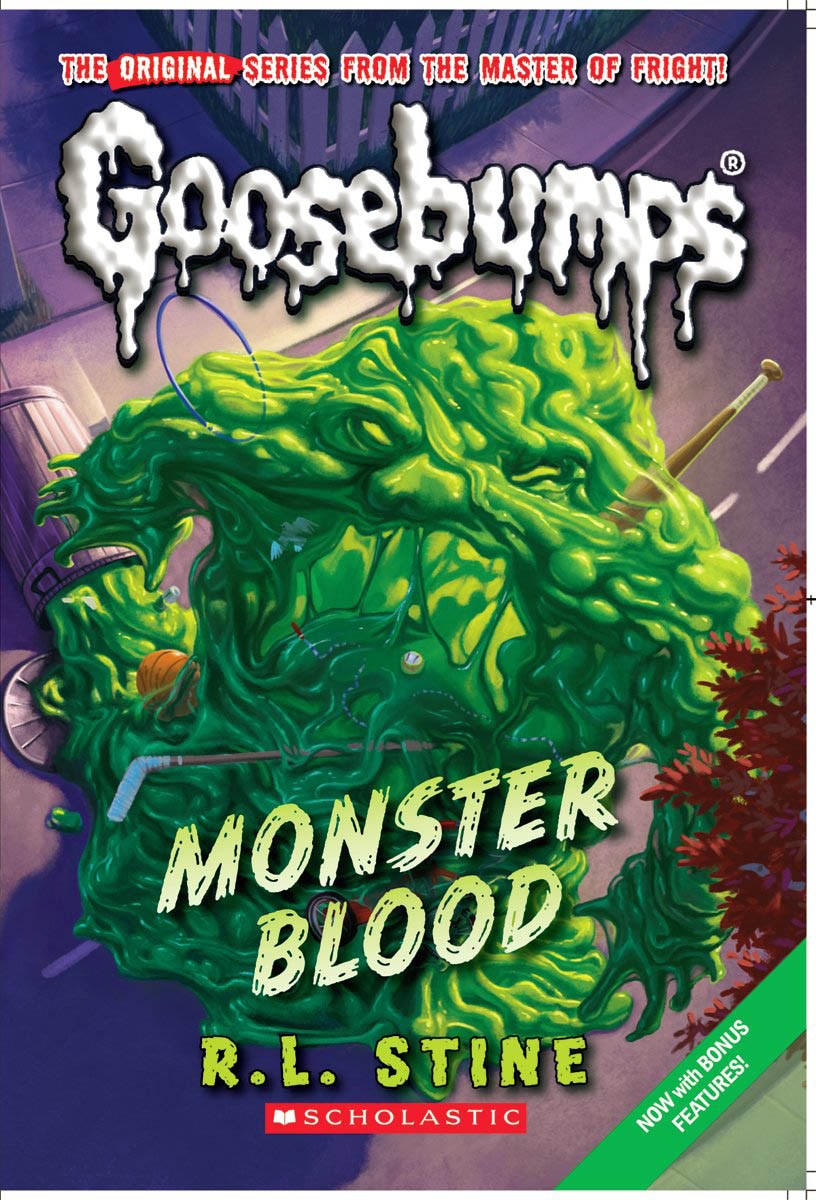
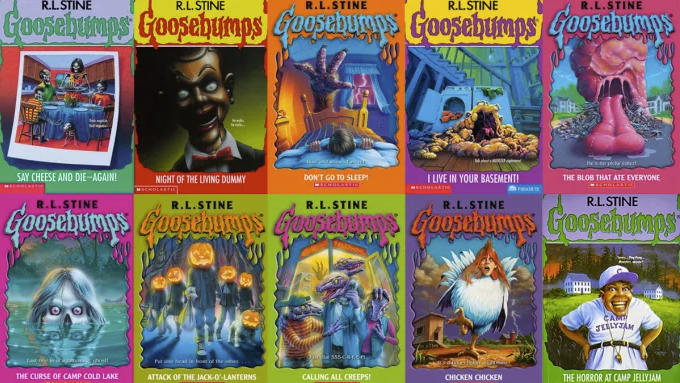
Chills went down my spine at the first sight of R. L. Stine's Night of the Living Dummy and Stay Out of the Basement as I pulled them from the shelf. The images on their covers terrified and enticed me in an instant. At the moment I saw them I decided I must read this series, but I opted to begin with a book featuring a slightly less scary, but no less intriguing, cover. Monster Blood would be my first foray into Stine's world of juvenile horror. This book presented a story much like any other in the series, with a child main character pitted against mysterious beings and frightful circumstances. I still remember the dread fascination I had for this book as I first read it. Similarly, I remember the nearly superstitious regard I began to hold for the shelf in the library that housed the other Goosebumps books, as if the section extended an aura of terror over me. It delights me to remember those feelings so clearly– especially knowing how tame I consider these books now. With that said, they are not without thrills and chilling suspense! It's possible that a young reader would spark a lasting interest in horror after beginning with this series. For me, however, they offered a different gateway.
The spinoff series Give Yourself Goosebumps was a collection of children's choose-your-own-adventure style books within the same horror setting. In these the reader makes decisions at integral parts of the story, flipping to different pages depending on their choices and following branching story paths with various endings. I fell in love with this format as I was able to explore a few of these books, despite my poor decision making often leading me to further peril in the stories. Those experiences would lead me to further explore stories shaped by my choices, guiding me to many of the role-playing games and more advanced gamebooks that I enjoy to this day.
In retrospect, I am very grateful to the contributors of Goosebumps for sparking my childhood imagination. Stine's series inspired me to face my fears and allow curiosity to guide my reading. The illustrators, perhaps none more so than the artist for the classic print run, Tim Jacobus, awakened my fascination with grim and macabre imagery. This series provided early building blocks for my lifelong reading passion. As Halloween draws near, I highly recommend these books to any young reader, or the nostalgic older reader, who's looking to enjoy a frightful tale.
| |
|
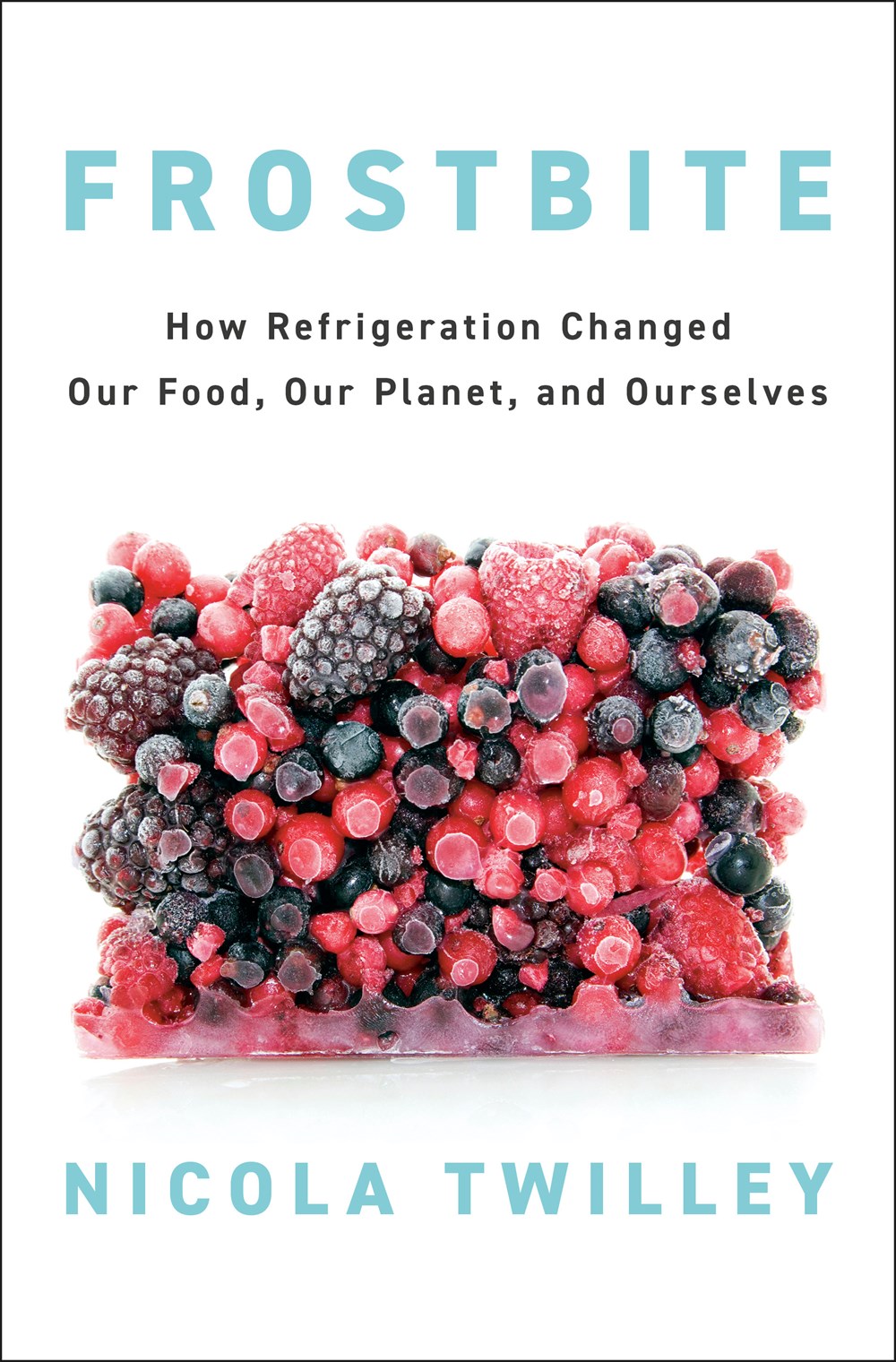
By Nicola Twilley
Penguin Press
Hardcover: $30.00
Reviewed by Claire Margetts
I have used a fridge every single day of my life. Even if I’m not gazing into it, or selecting food, I’m using it. I’ve got food chilling in it even as I write this. I’m so used to this machine, its constant hum is only noticeable when it turns off. You might have the same relationship with your refrigerator: having it, but never really thinking about it. However much I have used it in my life, I can tell you that before I read this book, my fridge and I were practically strangers.
In her book, Frostbite: How Refrigeration Changed Our Food, Our Planet, and Ourselves, Nicola Twilley lays out the peculiar history and impact of one of humanity’s greatest inventions. Since the dawn of history, humans have understood that keeping food cooler will slow the effects of rot. It’s basic knowledge, but it is only very recently in human history that we even started to understand and master cold. How do we harness it? How do we make it move with us? How can we use it to keep up with the demands of the population?
When refrigerators were first being introduced only about a century ago, people saw the out of season food that had been kept in them for months as “zombie food.” Banquets were even held so people could enjoy eggs, apples, butter, and other items that had been stored for months to see that such foods were not deadly. Today, more than three-quarters of everything on the average American plate is processed, shipped, stored, and sold under refrigeration. This single invention has upended human nutrition and the way everybody interacts with food. We overcame not just rot, but also seasonality and geography.
Twilley leads us through underground cheese caves, banana ripening rooms, America's humongous orange juice reserves, frozen train cars, and more as just a snapshot of the vast hidden tundra that binds this country together. Our way of life is so tied up with refrigeration that it plays an enormous role in our economy, politics (both national and international), and the environment. All of which are catching up with us urgently. How can we move forward without addressing these impacts? Perhaps, Twilley poses, we need to rethink the way we shape our lives around such a powerful force.
| |
|
Click here for our September events newsletter.
And, as always, view our events calendar to see all of our upcoming events.
We host both virtual and in-person events, and we look forward to seeing you soon.
| |
|
Come visit us!
SUNDAY 12-5
MONDAY-THURSDAY 10-8
FRIDAY & SATURDAY 10-9
| |
|
Can’t make it to the store?
Support your local indie from home!
Order by phone or online, then pick up at the store or the curb! We also ship!
| |
|
Give us a call at 801-328-2586.
Shop new books on our website.
Browse our entire inventory of new, used and rare books on Biblio.com.
Listen to audiobooks from Libro.fm.
Read ebooks from Kobo.
| | | | |