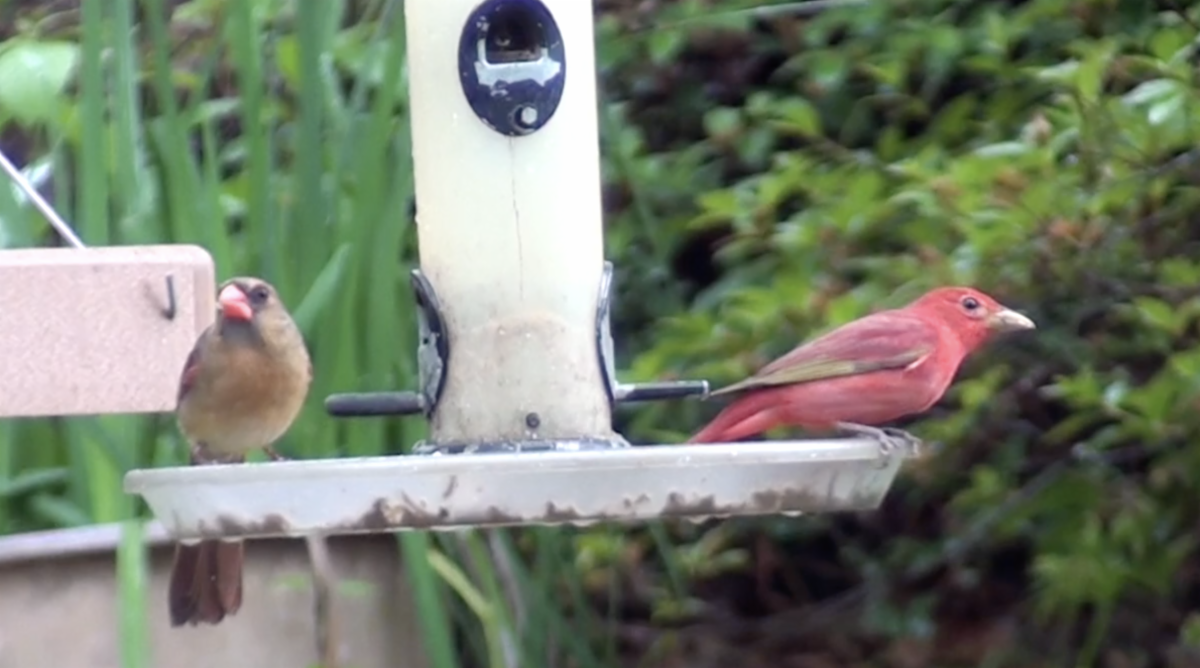
Cardinal and Summer Tanager
Are you bored with birding from home? Does it feel like you could be doing something better with your time? If you’re not already using eBird, join and make a difference by contributing to a global database of bird observations.
When I retired last September, one of my top priorities was to get out and do more birding across the Tallahassee area. To my surprise, what I’ve ended up doing is birding more from home! Spending more time at home during the day—prime birding hours—I was surprised at how much I had been missing while I was at the office. But something else has given my home-based birding greater significance—sharing my sightings with the Cornell Lab of Ornithology as a citizen scientist.
In December, I registered to participate in FeederWatch, a winter-long (November-April) survey of birds that visit feeders at backyards and other locations in North America. Two days a week, I've kept watch through the kitchen window, counting species and numbers of birds, which were then reported through an app to Cornell. I was surprised to find that over the 19 counts I've submitted so far, 29 species of birds visited our feeders or water features (small pond and mutiple bird baths).
On non-FeederWatch days, I found that I missed counting the birds. It was also frustrating to have a Yellow-bellied Sapsucker show up and not be able to count it because it wasn’t a FeederWatch counting day. Then it occurred to me to start reporting my sightings on eBird. For some reason, the backyard seemed far too mundane for eBird and I only used the app when I was away from the house. Not any more! I typically submit an eBird report two or three times a week now, especially during migration season.(Scored an American Redstart this spring!) It’s incredibly helpful for scientists to have data from around the world documenting where birds are at various times of the year and how many are being observed. While you’re at home, make your birding time count.
To participate in
FeederWatch
or
eBird
you'll need to set up an account with the Cornell Lab, but once you’ve done that you’ll have access to both. (Note: FeederWatch does ask for a $15 participation fee.)