Habitat Care Stations at ERNA |
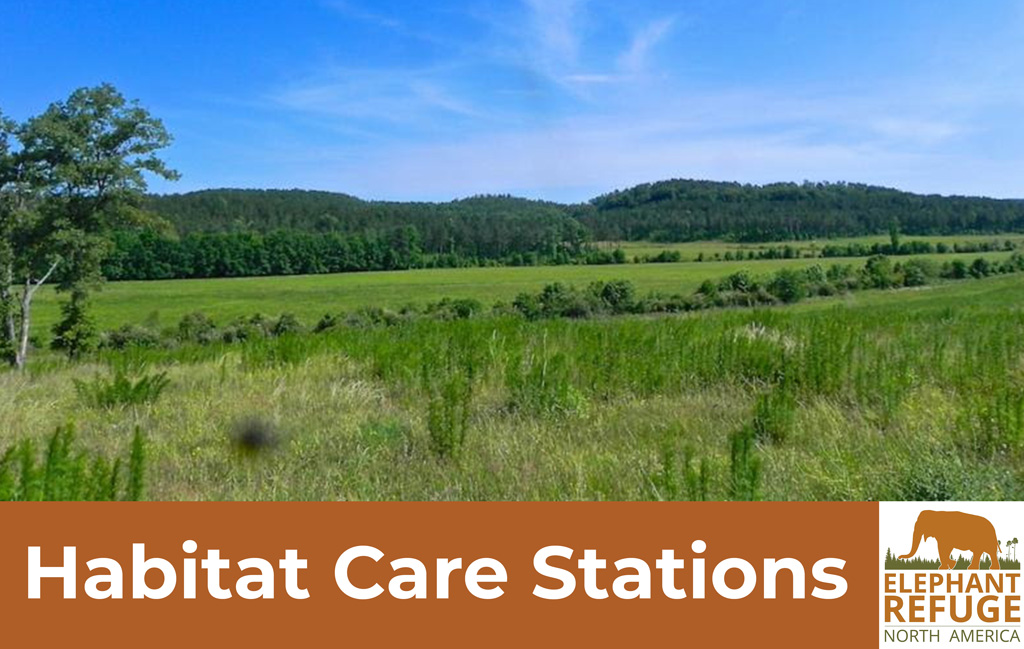
When elephants arrive at Elephant Refuge North America (ERNA), they will enjoy all this natural and ideal habitat provides, from gentle rolling hills, lush pastures, dense forests, and bamboo groves to abundant natural water sources and mild winters. Retired elephants coming from confined zoo and circus exhibits will experience physical freedom and autonomy, some for the first time since being taken from the wild and sold into captivity. |
|
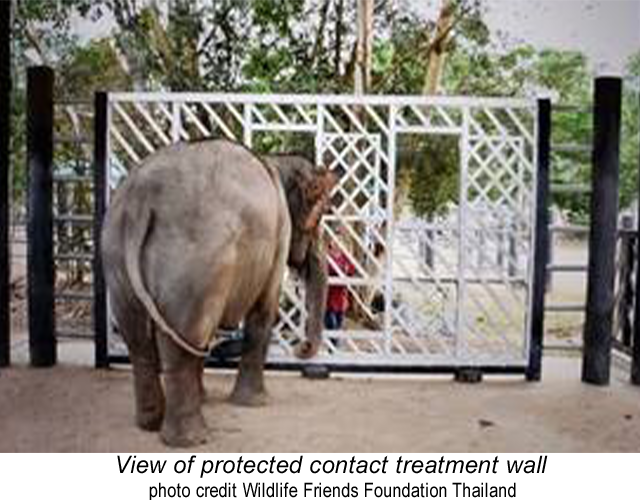
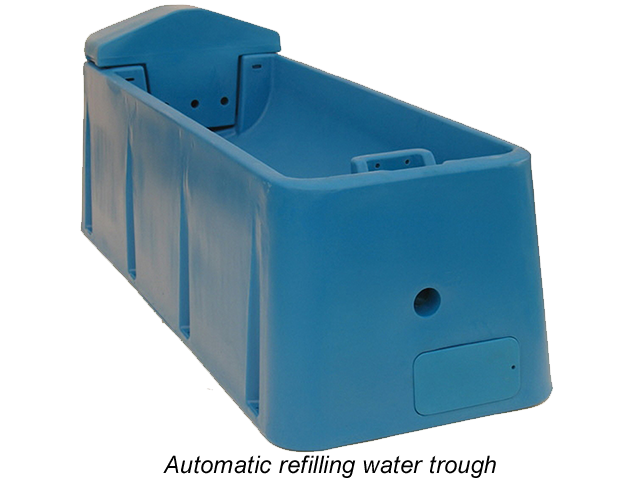
To facilitate their rehabilitation, we are building Habitat Care Stations (HCS) in the remote locations of ERNA’s 850 acres. These stations will provide fresh water for drinking and bathing, as well as a safe space for those providing treatment. Accessible by 4-wheeler, each station is a steel pipe enclosure 25’ wide x 25’ deep x 7’ high, complete with a 70-gallon water trough that refills automatically, and a 12’ x 16’ protected contact wall for staff. The barrier will be used for positive reinforcement training, foot trimming, and veterinary care. This way, caregivers remain safe inside the station while elephants retain their independence and receive necessary care. |
|
The refilling water trough makes fresh water available 24 hours a day, reducing an elephant’s need (or desire) to return to the barn to satisfy their hydration and cooling needs. Free-choice access to water supports the elephants’ health, reinforces self-sufficiency, and increases self-determination—all key components of successful rehabilitation.
The cost for each Habitat Care Station is $25,000 and we need three to accommodate the vast size of ERNA.
|
|
Every donation, no matter the size, is greatly appreciated and helps us reach this important goal! |
|
Monsoon Season Challenging for Elephants and Mahouts |
|
It is monsoon season in Nepal when flooding is common. Monsoons are annual weather events which can result in people losing their homes, their livestock, their belongings and in some cases, their lives. During this time of year, elephants and their mahouts are on high alert. They must be prepared to evacuate at a moment’s notice and walk to unfamiliar locations to stay with other people and elephants.
Even under the best of human care, the elephants suffer greatly during this season. The continual rain over this four-month period means everything remains wet, which creates a perfect environment for fungal growth. Without dry ground to stand on, an elephant’s feet are highly susceptible to infection. As with humans, curing fungal infections is challenging. To make things more difficult, swift moving muddy rivers prevent elephants from drinking and bathing. And most devastating is the long-term damage done to pastures. Once the waters recede, everything is covered with a thick layer of sticky mud making it impossible for the elephants to graze. As a result, owners must find and compete for sources of edible grass far from the flooded areas.
|
|
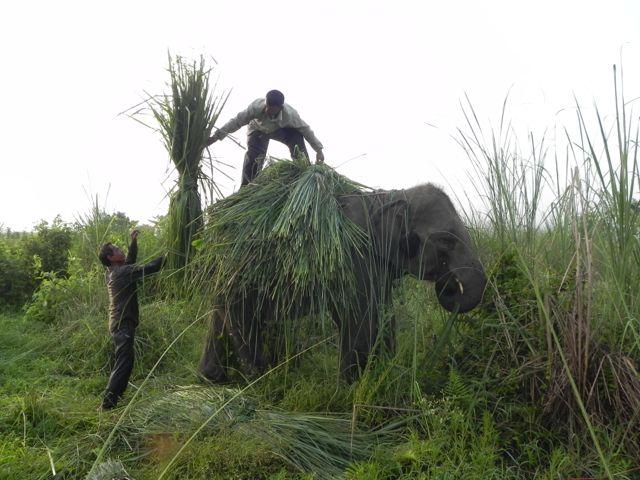
In our experience most mahouts are hard-working and dedicated people. Their normal schedule is seven days a week from dawn past dusk. They sleep on site at the hattisar (elephant stable) literally feet from their elephant. Generally, their housing consists of an 8’ x 8’ simple wooden shed with a tin roof. Two mahouts share a room along with elephant care duties. When tourism is low, or as with COVID-19, nonexistent, usually only one mahout is employed to care for an elephant.
Some good news though. Recently, all mahouts in residence in Sauraha (some were far away in their home villages) received the COVID-19 vaccine, courtesy of the Restaurant and Bar Association of Sauraha. It is a disgrace the elephant owners, the employers of the mahouts, did not see fit to provide their workers with the protection of the vaccine. Credit should be given to the Restaurant and Bar Association for taking on the responsibility and cost to ensure the welfare of these dedicated caregivers. This action clearly demonstrates how the elephants and their mahouts are at the center of a vibrant tourist community. The sad reality is that without elephants and mahouts, restaurants, bars, hotels and shops would not thrive. Making sure the workforce stays healthy is one key component to ensuring tourists continue to flock to this town and spend their money at local establishments. We applaud this association for their action, while keenly knowing their efforts may save their small businesses.
|
|
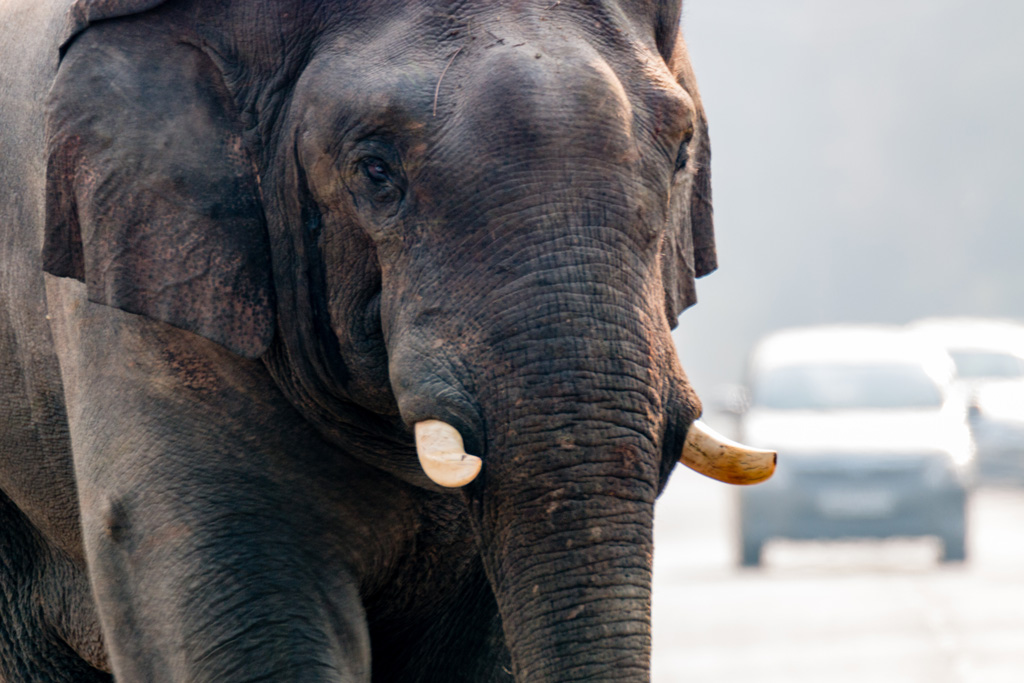
Regardless of laws prohibiting the smuggling of elephants from Nepal into India, the illegal activity continues. When COVID-19 hit, tourism stopped in Nepal. Over the past year, several elephant owners in Sauraha have sold their elephants and allowed them to be smuggled into India. For days, these elephants walked in heavy traffic on hot tarmac roads to reach the Indian border. Crossing under the cover of night into India, they might walk for many more days to reach their destination only to serve as street beggars or living statues in temples. Until the government of Nepal enforces their own regulations, which currently they do not, elephants will continue to be the vehicle for black market money laundering and illegal wildlife trafficking.
EAI Plans Travel to Nepal
After monsoon season ends and travel restrictions allow, we plan to return to Nepal to: (1) connect with government officials in Kathmandu once again to encourage their enforcement of laws designed to protect elephants; (2) continue our relationships with local attorneys in their efforts to ensure the government is held accountable in their duty to protect elephants; and (3) extend mahout training, and elephant care programs—our decades-long effort to improve elephant welfare in Nepal.
Pro Public Efforts on Smuggling
In addition to our direct support of elephants in Nepal, Carol has accepted a position on the Advisory Board of Pro Public, a legal firm in Kathmandu that has put the government on notice for not enforcing regulations aimed at protecting captive-held elephants. Together with a team of professionals who are vested in this cause, we are giving elephants in Nepal a voice. If successful, Pro Public will stop the illegal trade of elephants between India and Nepal and ensure the Nepali government administers a 2020 regulation requiring all privately owned elephants be registered. To date, neither the anti-smuggling law nor the registration regulation have been enforced, allowing the illegal trade to continue unchecked. If necessary, Pro Public is prepared to sue the government in order to make them accountable for their lack of action.
|
|
Heading Back to School? Visit EAI’s Learning Center |
|
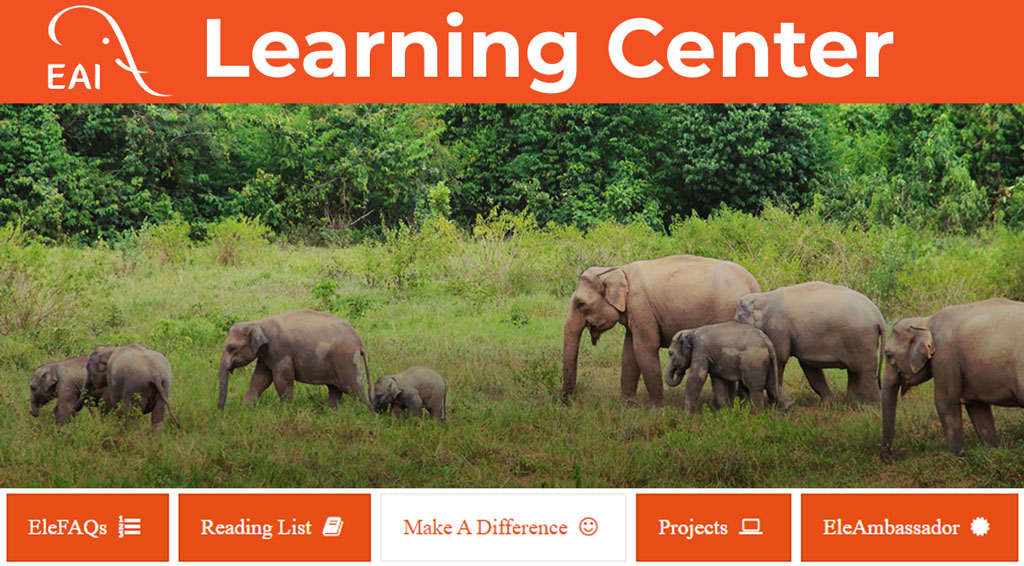
Teachers, as you head back to school, don’t forget to take us along! Elephant Aid International’s Learning Center is where you will find all the information you need to teach your students about elephants and their lives in captivity. Our Elephant Learning Center hosts carefully curated elephant facts, a reading list, inspirational learning projects, and resources to help your students make a difference. In addition, Carol is available for classroom visits via Zoom. For more information and to schedule a virtual visit, contact us at Suzanne@elephantaidinternational.org.
Students, become an EleAmbassador this year! An EAI Elephant Ambassador commits to represent and promote the best interests of elephants and to help those in their community understand why elephant welfare matters. EAI Elephant Ambassadors do the important work of improving the lives of elephants worldwide. Ambassadors receive an official certificate from EAI in recognition of their work and commitment. To become an ambassador, check out the Make a Difference section on our website, choose an activity, and then you will be on your way!
|
|
As always, we greatly appreciate your interest, commitment and help. You make our work for elephants possible. Thank you! |
|
Support EAI Every Time You Shop |
|
One World... One Elephant at a Time
|
|
|
|
|
|
|