Upskilling of FLWs through effective planning and coordination in Bharuch, Gujarat

In Ankleshwar Block of Bharuch, Gujarat, effective planning and coordination help tackle gaps in the knowledge and counseling skills of front-line workers (FLWs) identified during supportive supervision visits.


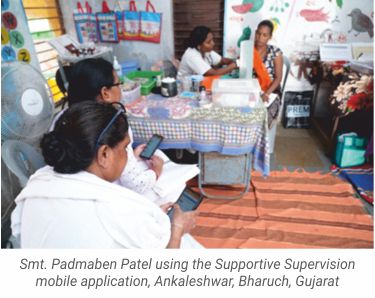
Supportive supervision trainings under Implementation Research in Ankleshwar block of Bharuch district were followed by field visits aided with mobile app by NHM Supervisors, which included Accredited Social Health Activist (ASHA) Facilitators, auxiliary nurse midwife (ANM), female health supervisors (FHS) and Taluka Health Visitor (THV).


Training on supportive supervision gave confidence to the NHM cadres to make supportive supervision field visits instead of just monitoring visits. During the home visits and at Village Health Sanitation and Nutrition Days, the supervisors could identify major gaps with the use of supportive supervision mobile app. Gaps were identified in knowledge, particularly maternal, infant, and young child feeding nutrition, and counseling skills. It was also observed that the FLWs were not giving complete and proper messages to the beneficiaries.


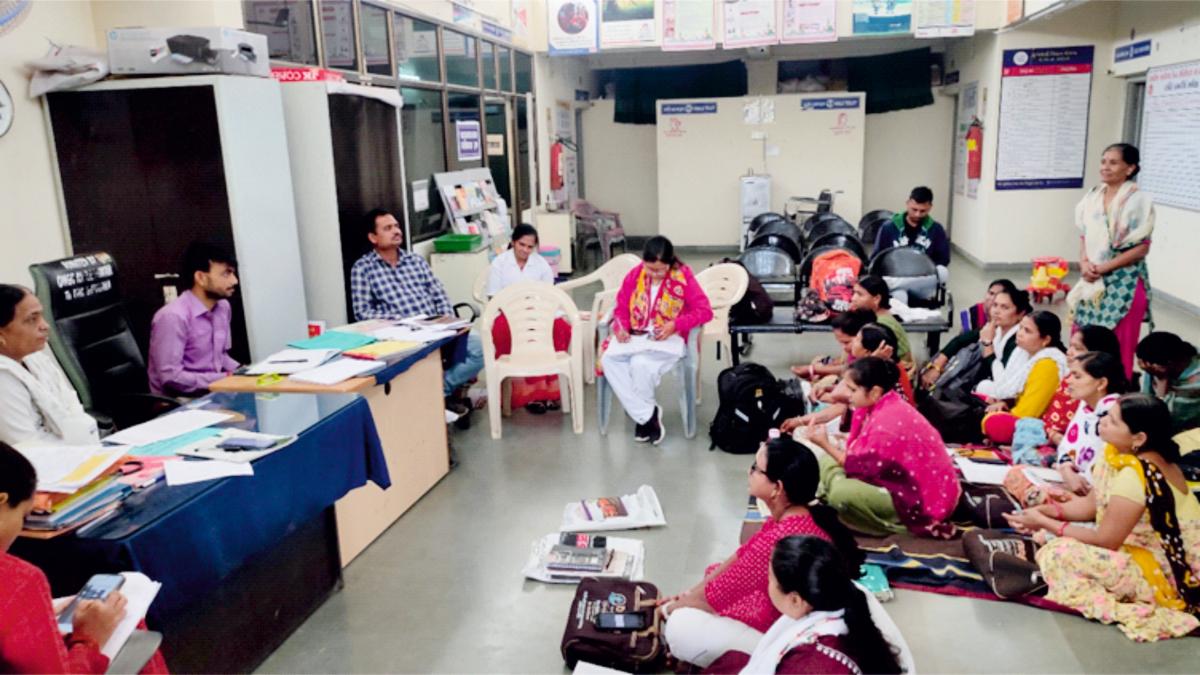
During the block-level review meeting, the THV observed that the above issues had been identified by ASHA facilitators, ANMs, and FHS in almost all the public health centers (PHCs) in the block. The matter was discussed with the Taluka Health Officer (THO). It was then decided that the Community Health Officers (CHOs) of the blocks would be given the responsibility to facilitate sessions on knowledge gaps and counseling for the FLWs of their sub-centers and PHCs. Looking at the situation, THV arranged a meeting with the THO where the block coordinator was also invited. THO felt that gaps in knowledge and counseling skills were serious issues and needed to be addressed on a priority basis. He suggested Saturday meetings at the PHC level to be a good platform to resolve these issues. It was thus decided that every Saturday at the PHC meeting, all the FLWs and supervisors would meet.


“After the supportive supervision training by Alive & Thrive, our supervisors started making home visits with the help of the mobile app. With the App, the supervisors could easily identify the gaps and issues. After discussing with the THV, I came to know that there were common knowledge gaps on different topics among front-line workers. So, we decided to arrange training on these topics using Saturday meetings as a platform. The responsibility of these trainings has been given to the MOs of the PHC. I am observing that these trainings are very useful in capacitating the front-line workers.” added Dr. Sushant Kathorwala, THO, Ankleshwar.


Taking charge, THO asked the THV to prepare a list of all the topics where knowledge gaps were observed. After consultation with other supervisors and the block coordinator, the list was prepared from which a topic for each Saturday of the month was selected. All the topics would be covered in five months. After planning and finalization, THO issued a letter to all the PHCs, attaching the discussion points for Saturday meetings. In this letter, THO directed the Medical Officer (MO)/MO AYUSH/CHO/FHS to conduct sessions on the topics mentioned in the circular. The PHC MOs were asked to ensure that the calendar of the topics was followed in the upcoming Saturday meetings. THV was to coordinate and follow up with the PHCs for the effective rollout of the knowledge upskilling sessions. 

We used to do home visits and monitor the VHSNDs earlier but now with the help of the mobile app, we can identify the issues and gaps. The training and App gave us the confidence to discuss the identified gaps with our THO Sir. It also helped in finding the solution for these issues. Now we are arranging training sessions on the different topics at PHCs during Saturday meetings. Our front-line workers are doing home visits more confidently” added THV Smt. Padmaben Patel. 

Scaling up of community Quality Improvement

approach in Gaya, Bihar

A pilot quality improvement (QI) approach at the community level was initiated in Gaya, Bihar as an extension of A&T’s ongoing effort to improve the quality of facility-based MIYCN service delivery using the POCQI approach. A&T has been working in QI for healthcare facilities in collaboration with the government medical colleges, their allied hospitals, and secondary-level healthcare facilities in Bihar. The positive outcome from the facilities encouraged A&T to explore possibilities of using the QI approach at the community level.


The QI approach at the community level was initiated in Wazir Ganj to improve child malnutrition and Bodhgaya to address maternal anemia. After the overwhelmingly positive response from the panchayats from both blocks, the decision was taken to scale up QI at the community level in all the other Panchayats, covering all the AWCs of both blocks. All AWW, ANM, and ASHA from both blocks were trained on QI, issues selected for the block, technical input, and reporting. It was decided that each month the leaders from each Panchayat will have monthly block-level meetings to review the progress.


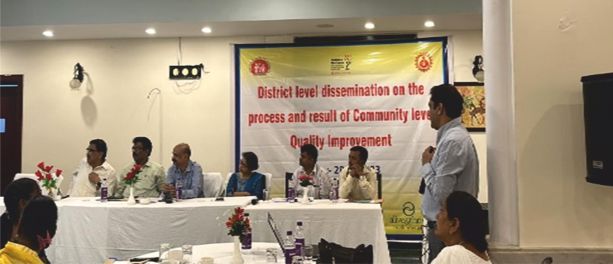
The district-level workshop was organized on 28 June 2023 to disseminate the learning from both blocks and plan the scale-up of the intervention in other blocks.


Alive & Thrive presented the QI approach and the efforts taken in Bihar with medical colleges, district health facilities, and the community. The Panchayat leaders presented the positive outcomes and processes adopted in both blocks. Then Child Development Project Officer (CDPO) and Medical Officer-In-Charge (MOIC) of the concerned blocks shared their experiences and requested the other blocks to follow the approach to achieve the desired results in their respective blocks. The district-level scale-up has been planned during the meeting in collaboration with the Piramal Foundation. The same approach is shared at the state level both with the Department of Integrated Child Development Services and Health. 


Recently Published:

Care During Pregnancy and Early Childhood for Growth and Development in Low- and Middle- Income Countries


Journal Article

In the recent publication, Alive & Thrive’s collaborative work with UNICEF ROSA and FHI 360- spanning seven countries on the Power of Counselling in improving MIYCN has been designed and disseminated in South Asia


For more, click here: Care During Pregnancy and Early Childhood for Growth and Development in Low- and Middle-Income Countries | Frontiers Research Topic (frontiersin.org)

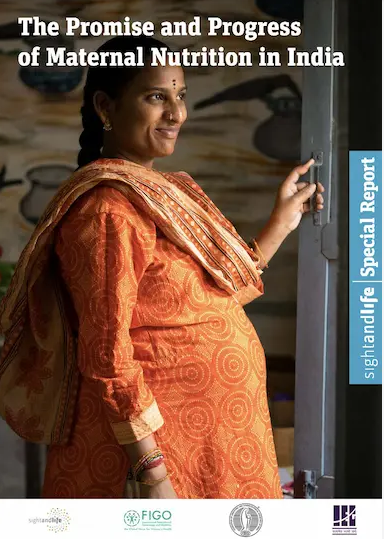
The Promise and Progress of Maternal Nutrition in India


Special Report by Sight and Life

___

This Special Report by Sight and Life (SAL) brings to light the progress and potential of maternal and newborn health care in India and lays down suggestions and plans for improving the same. It is a valuable resource for all stakeholders of maternal nutrition in India and beyond. With 45+ articles, it is a deep dive curated to capture what has been achieved and what more needs to be done and an insightful guide to the maternal nutrition landscape in India. Alive & Thrive India contributed and led the paper on Maternal and co-authored the paper on integrating maternal psychosocial health and nutrition in the report. A&T India was a core member of the Maternal Nutrition Partners' consortium along with UNICEF and other partners who collaborated with SAL on this effort.


For more, click here: The Promise and Progress of Maternal Nutrition in India

Food, Nutrition, Health, and WASH (FNHW) Digital toolkit

___


The FNHW Toolkit has been developed by the National Mission Management Unit (NMMU) with support from Technical Assistance agencies – TA to NRLM (PCI) and inputs from ROSHNI - Centre of Women Collectives led Social Action, National Institute of Rural Development (NIRD), State Institutes of Rural Development (SIRDs), National Resource Persons (NRPs), State Rural Livelihood Missions (SRLMs) of Bihar, Chhattisgarh, Jharkhand, Odisha, Uttar Pradesh, Andhra Pradesh, Telangana and Maharashtra, JEEViKA Technical Support Program - Project Concern International (JTSP-PCI) and UNICEF state teams from Odisha, Bihar and Chhattisgarh. The standard materials of the Ministry of Health and Family Welfare (MoHFW), Ministry of Women and Child Development (MoWCD), National Centre for Excellence & Advanced Research on Diets (NCEARD), Alive & Thrive, JTSP-PCI and UNICEF have been referred while finalizing the content. This toolkit provides standard and uniform messaging across materials on the identified FNHW topics and operational issues. These materials are flipbooks, facilitator guides, posters, counseling cards, stickers, banners, SOPs, and certain videos. The materials are available in English and Hindi and can be downloaded and printed directly from here. SRLMs can translate, modify, and adapt any material as per state context. The toolkit can be explored topic-wise as well as material-wise.


Please click here to access the toolkit: FNHW Digital Toolkit


View previous updates
LinkedIn Share This Email
 
Twitter  Linkedin