|
MONDAY, NOVEMBER 20, 2023
EPHESUS
Today, we learned about Ephesus, one of antiquity's most important cities. The area now known as Turkey was settled by the Anatolians during the Neolithic Age, some 11,000 years ago.
Over 3,000 years ago, around 1050 BCE (Before the Current Era), Greek colonists crossed the Aegean Sea, separating mainland Greece from Anatolia (now southwestern Turkey). These people were called Ionians, and they founded the city of Ephesus. Ephesus became one of 12 cities that made up the Ionian League along the southwest coast of Turkey. The Ionian and Anatolian cultures mingled under Ionian rule. The city grew to become the most important Greek city and the most important trading center in the Mediterranean region.
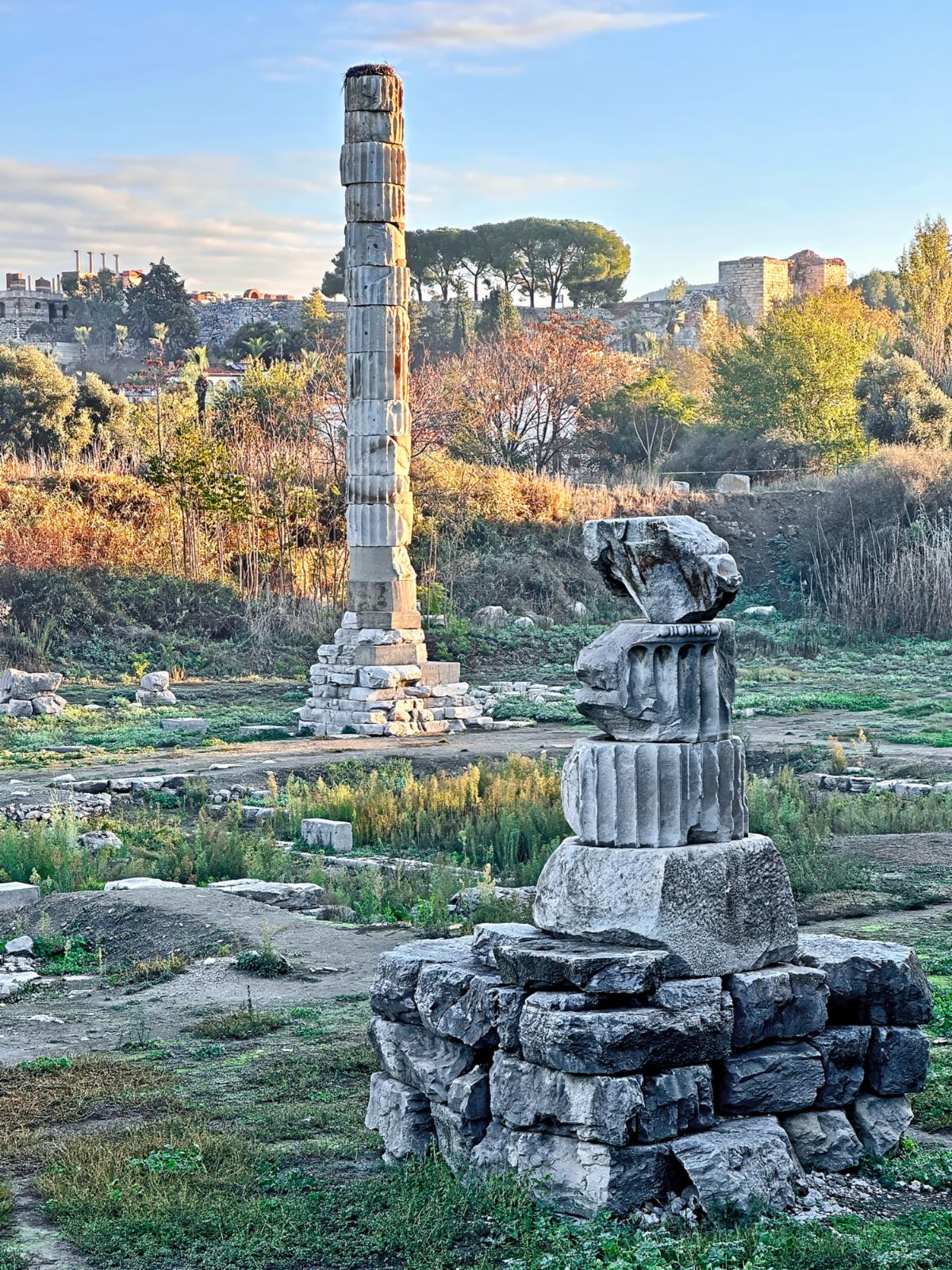
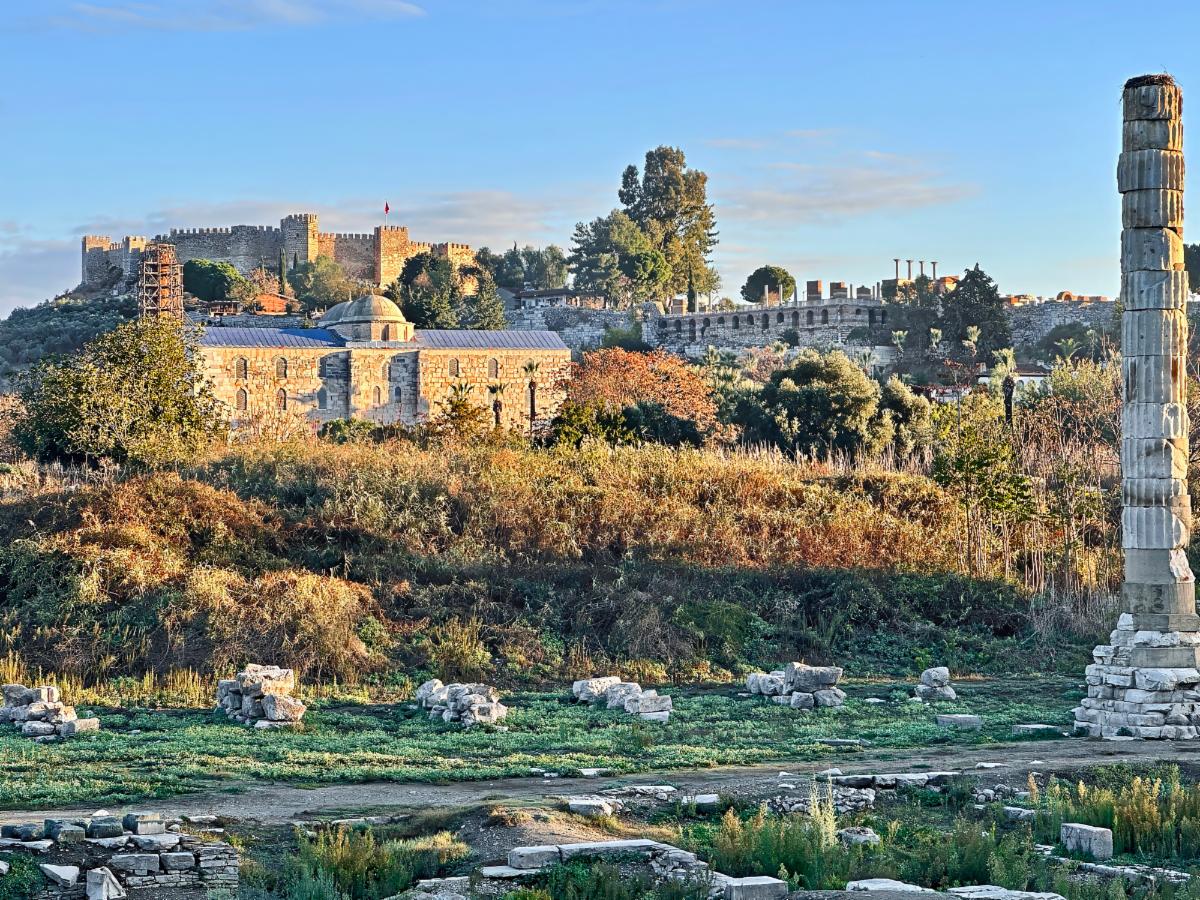
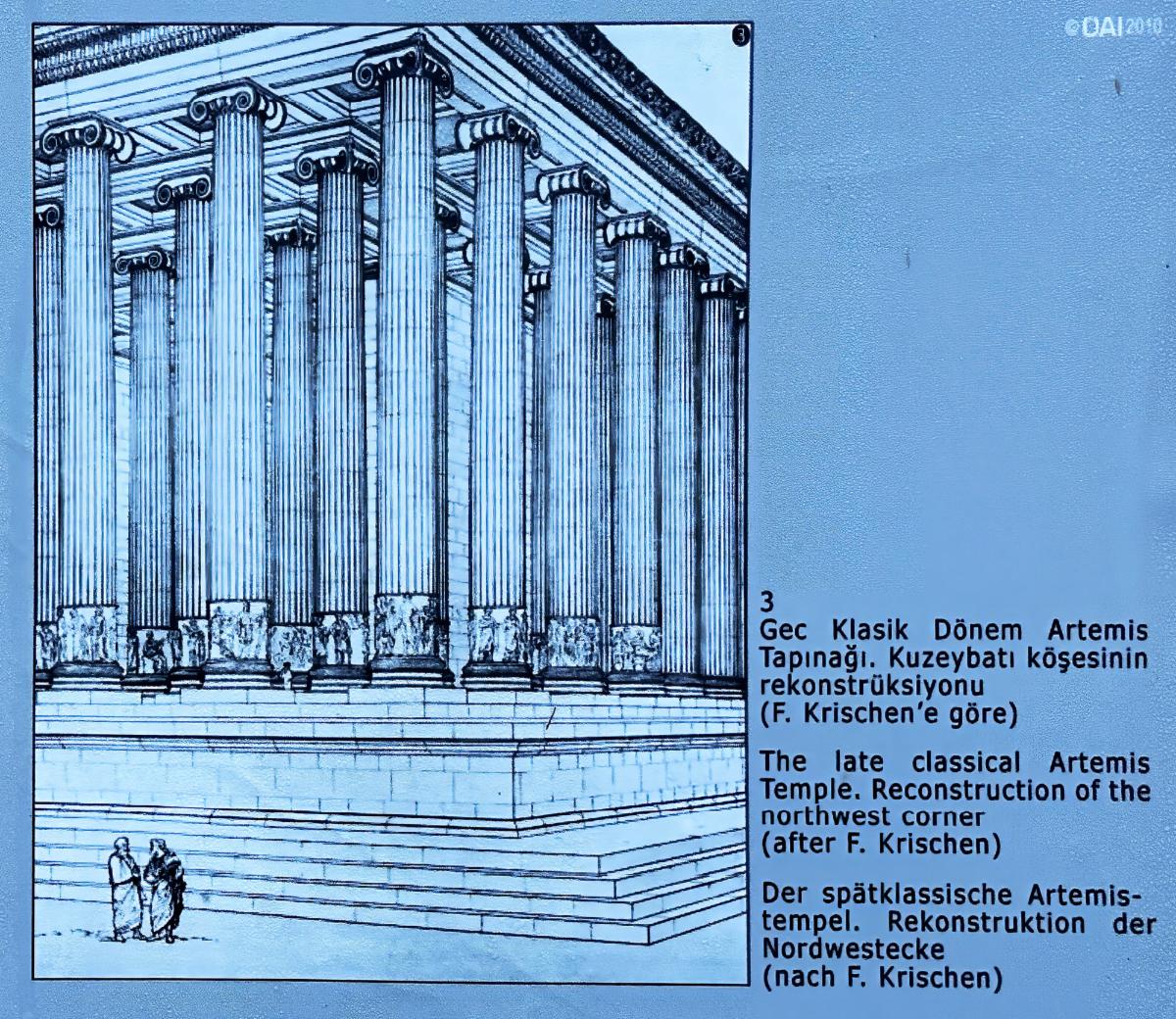
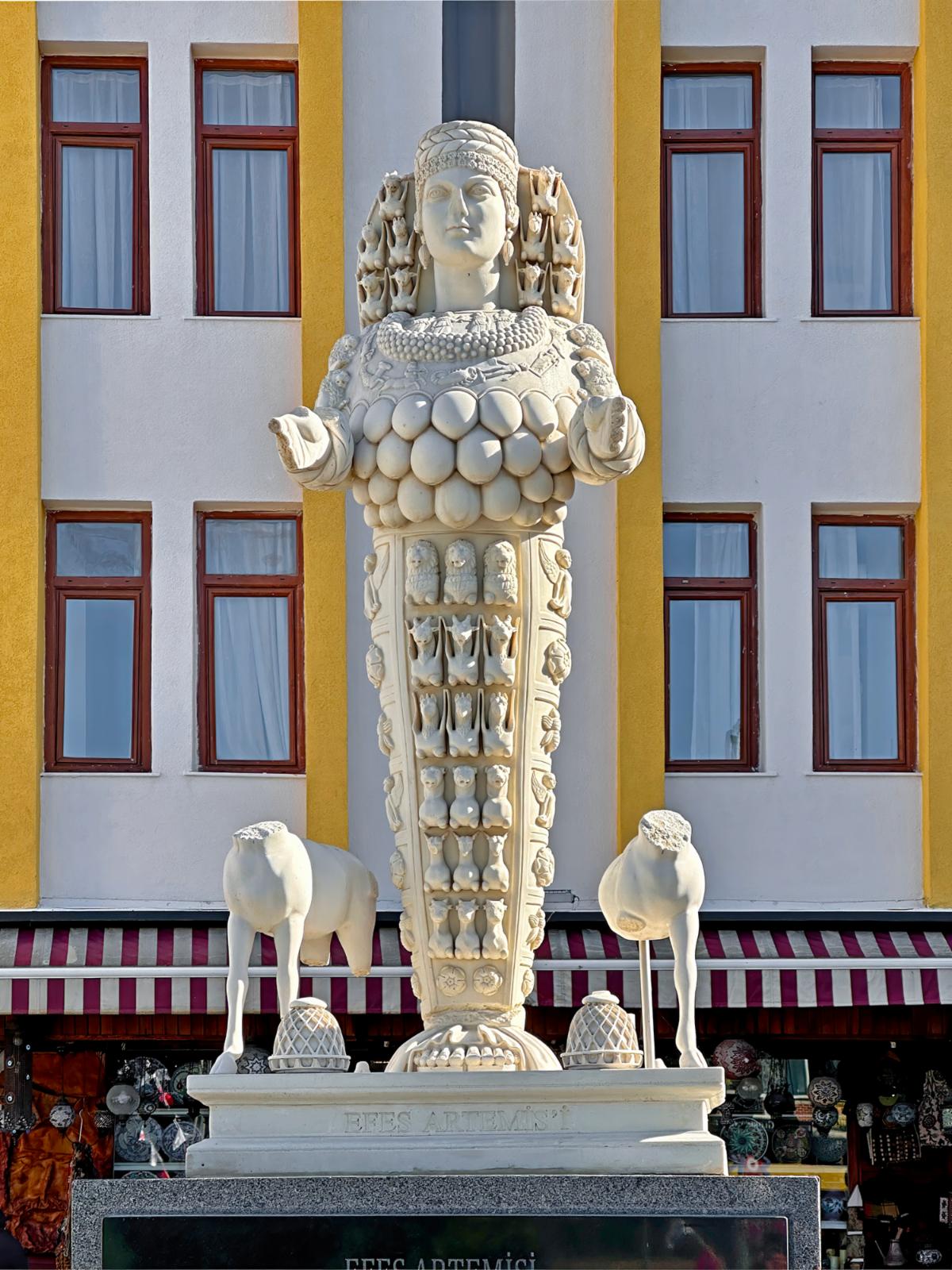
The Greek goddess Artemis and the Anatolian goddess Cybele were identified together as Artemis of Ephesus. She was depicted as the many-breasted Lady of Ephesus and was venerated with the building of the Temple of Artemis. This was the largest building of the ancient world and was named one of the Seven Wonders of the World. Sadly, little is left of the structure except for a few pieces of columns and some squarish stone building blocks.
Of course, the city’s success and strategic location made it a tasty target for neighboring empire builders. In 650 BCE, the Cimmarians sacked the city but were eventually driven away. In 560 BCE, the Lydians took over. Soon after, the Persians conquered the city in 546 BCE. Alexander the Great got his turn in 334 BCE when he defeated the Persians.
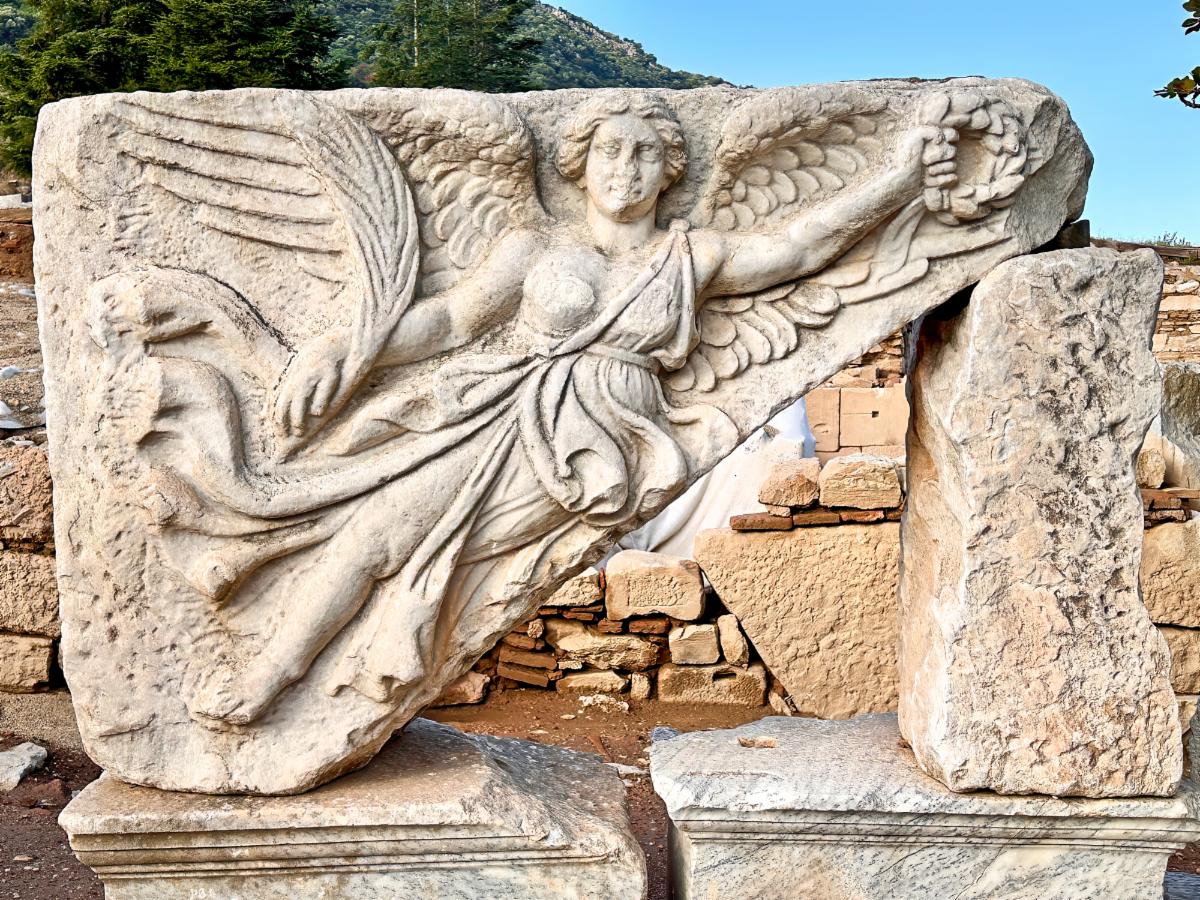
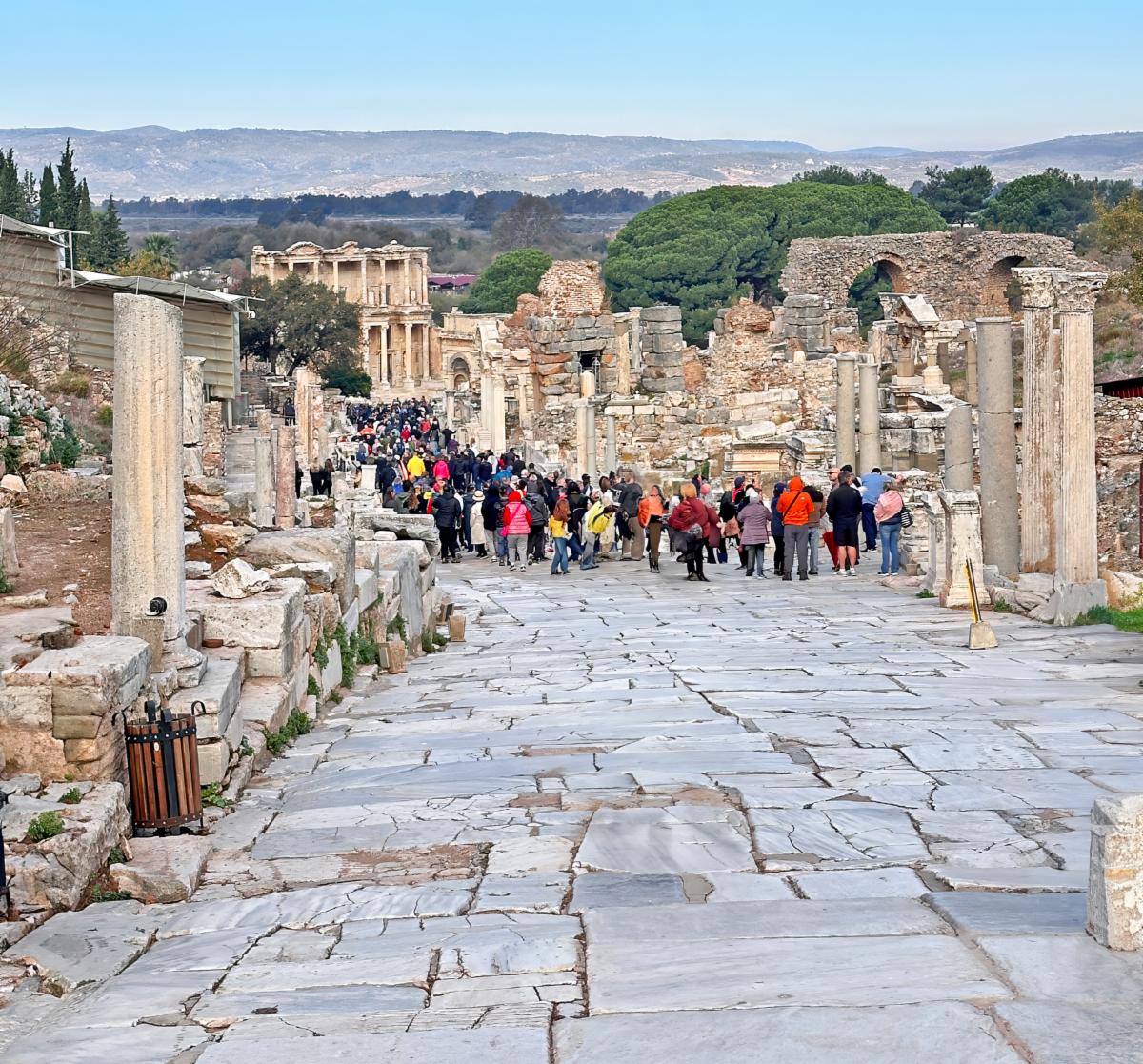
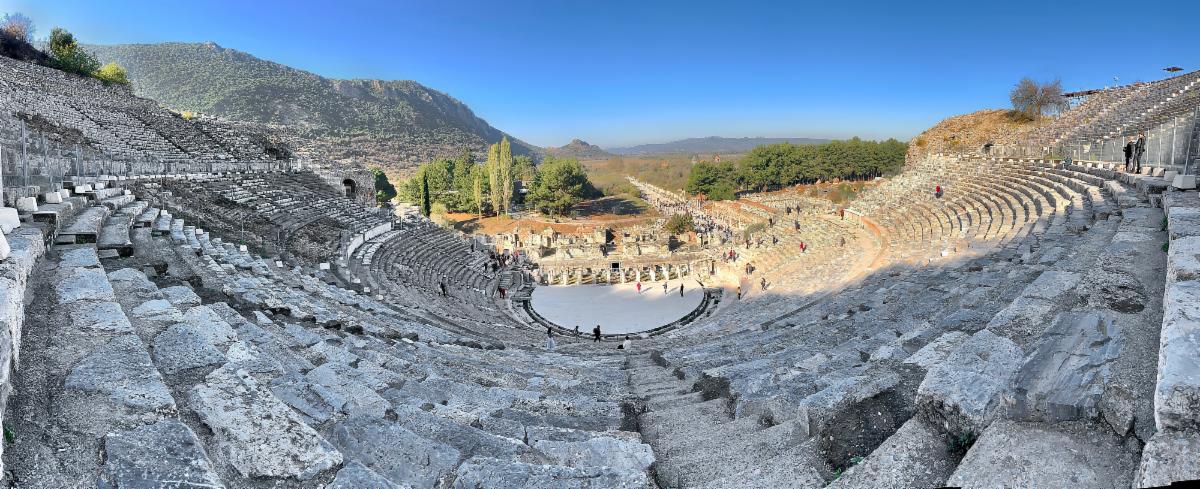
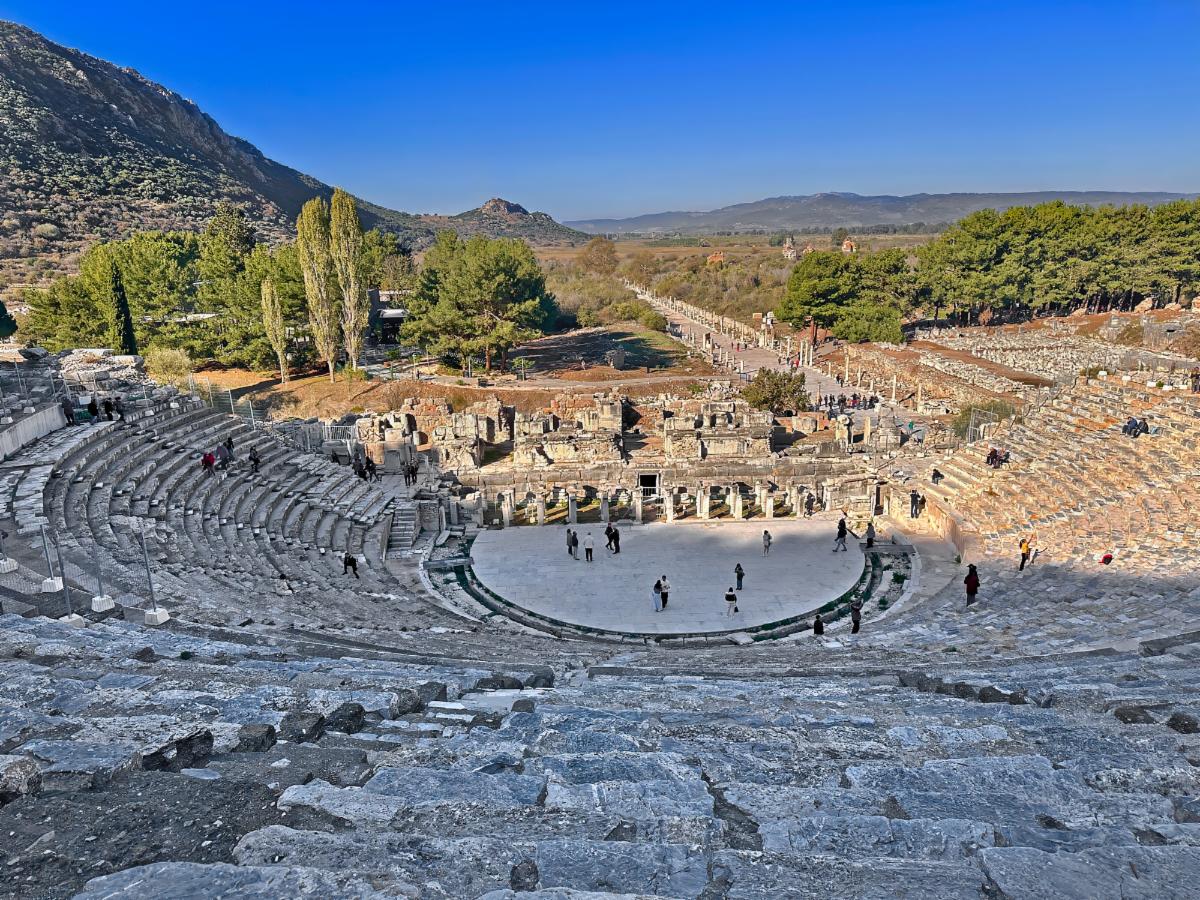
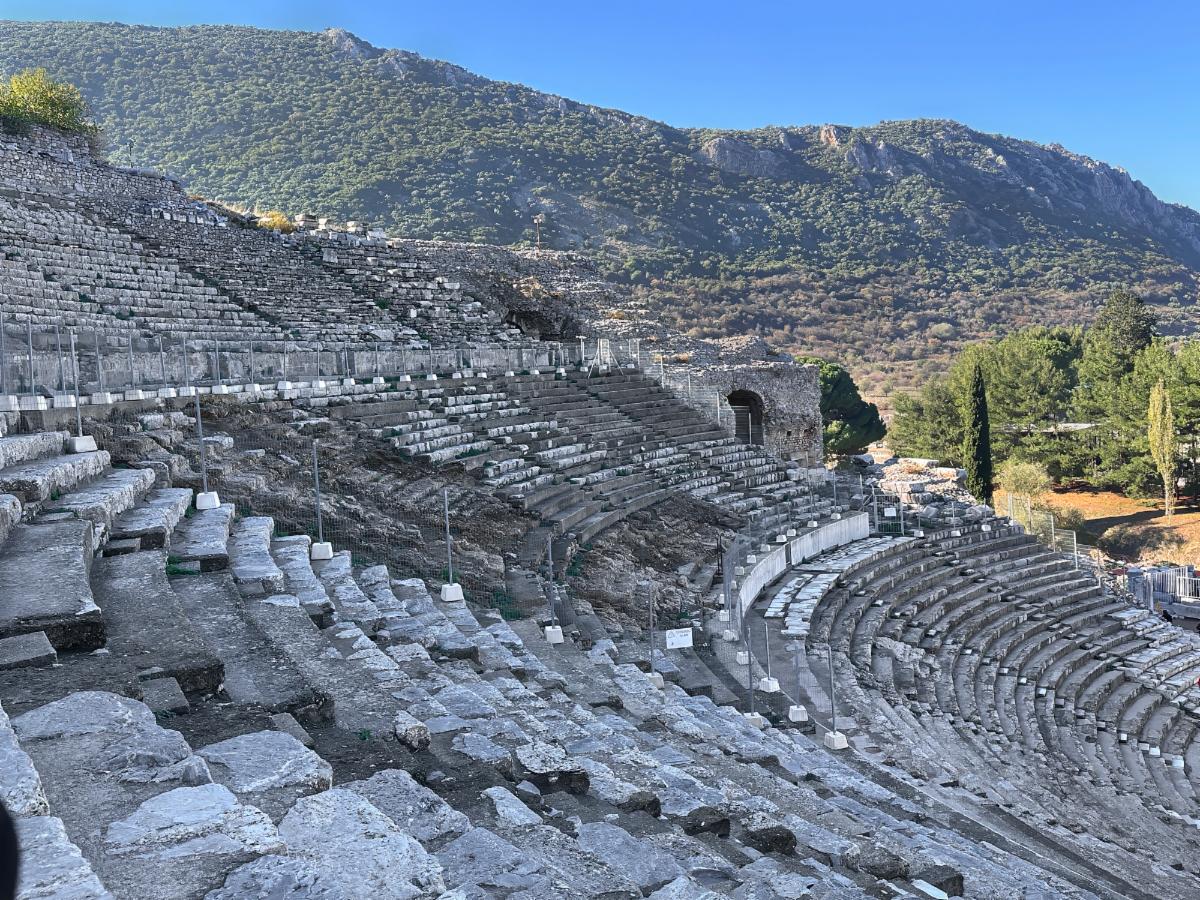
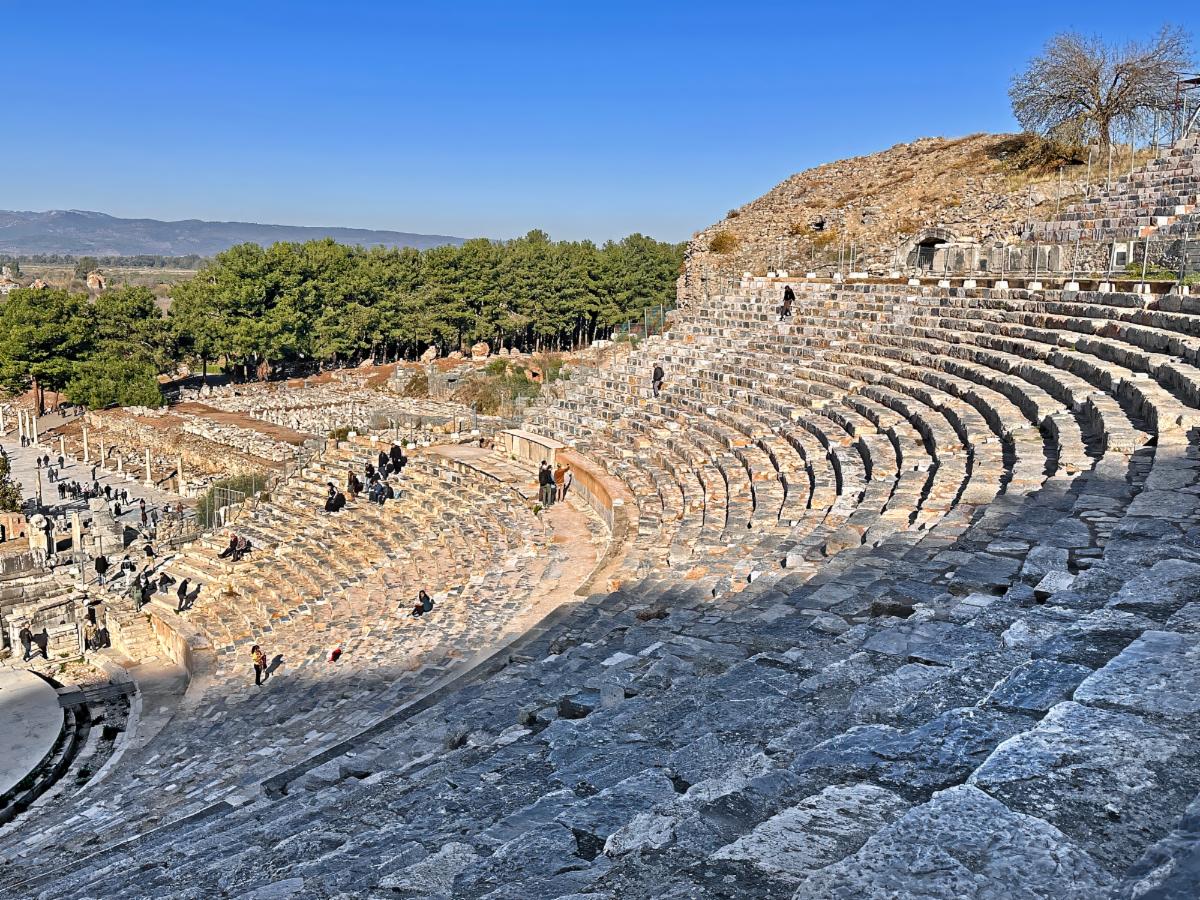
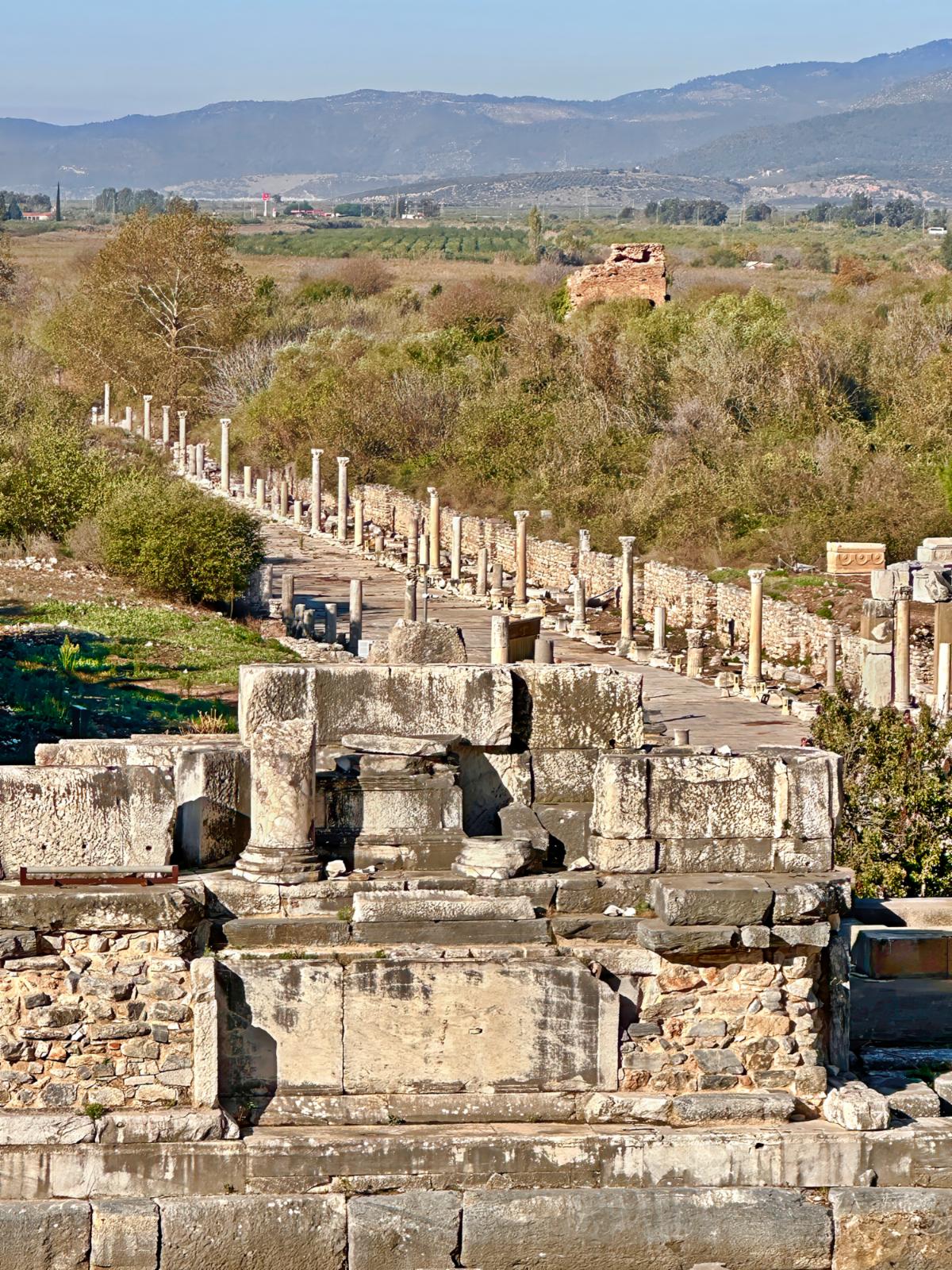
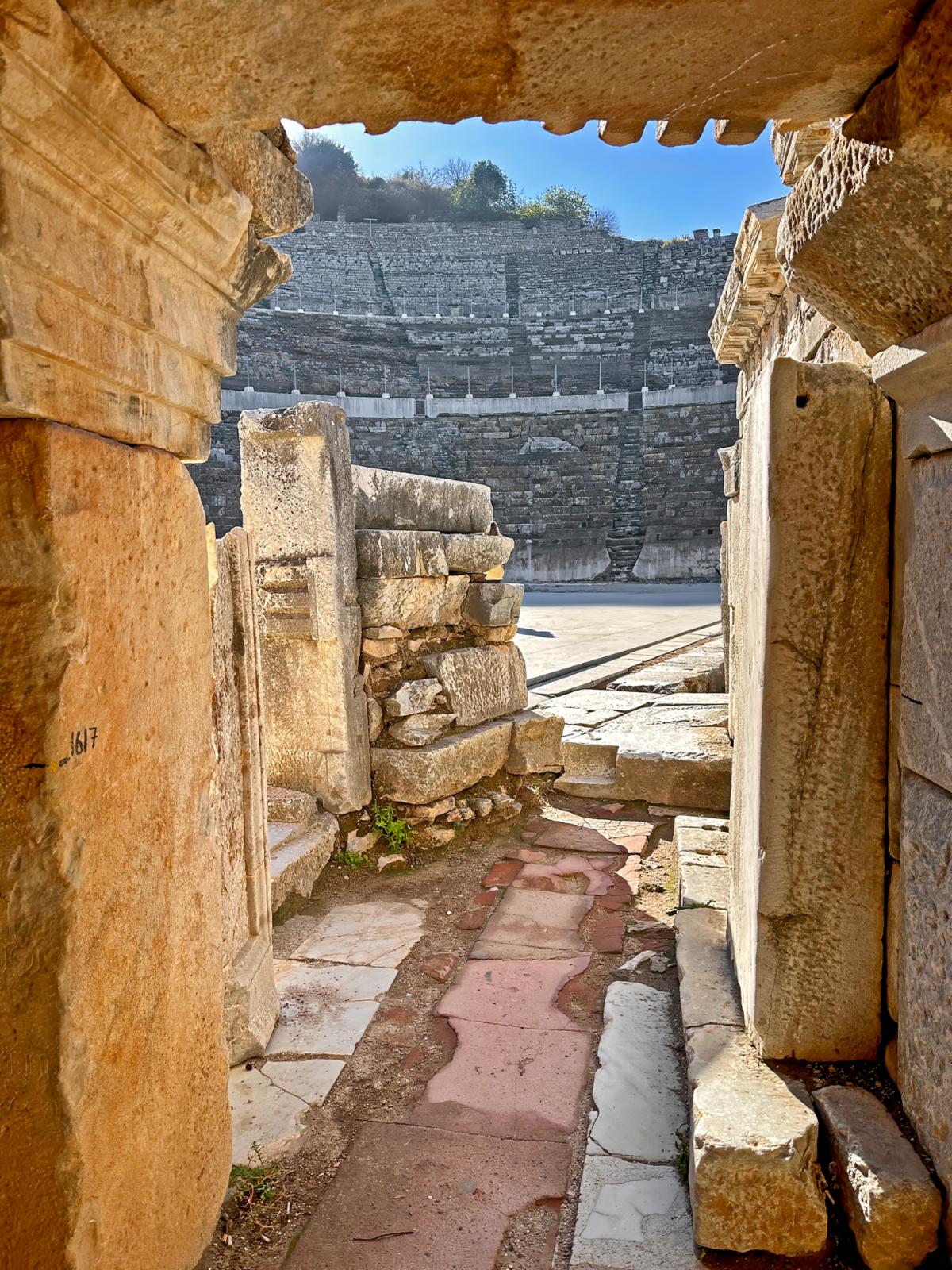
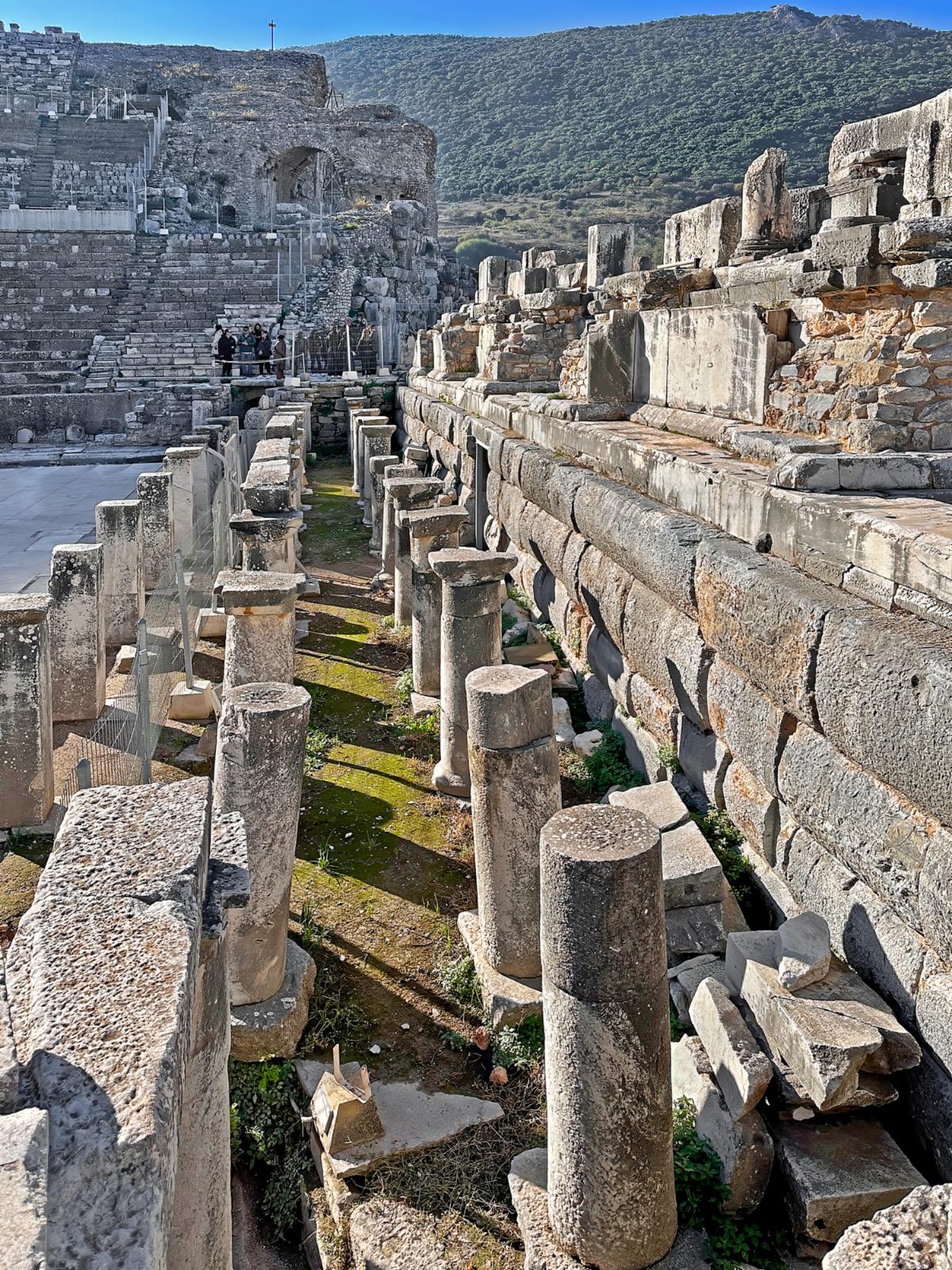
Eventually, the Romans took control of the city from 129 BCE to 395 CE. It was during the Roman era that Ephesus reached its glory in importance, becoming the Roman Empire’s fourth-largest city with a population of up to 225,000 (this figure is disputed; however, it was a large metropolis for its time). In 29 BCE, Ephesus was named the capital of Asia, an important Roman province. The city prospered. It featured white marble streets, a massive market, two giant public agoras (plazas), an important library, huge bath complexes, statues, fountains, delicate mosaics and frescos, and a massive open-air theater that could seat 20,000 spectators.
The Roman Empire went through many changes until 330 CE when Constantine the Great took control and moved the capital from Rome to Constantinople (present-day Istanbul). This phase of the Roman Empire is referred to as the Byzantine Roman Period. In the early years of the Byzantine era, Ephesus remained the 2nd most important city after Constantinople.
Ephesus’ decline started in 614 CE when much of the city was destroyed in the Sasanian War with what is now known as Iran. Soon after, the harbor silted up, taking away its strategic trading location. The city was sacked by the Arabs in 654, 700, and 716 CE. When the Turks conquered Ephesus in 1090, it was just a small town. Finally, in the 15th century CE, Ephesus was completely abandoned, and its 2,500-year history came to an end.
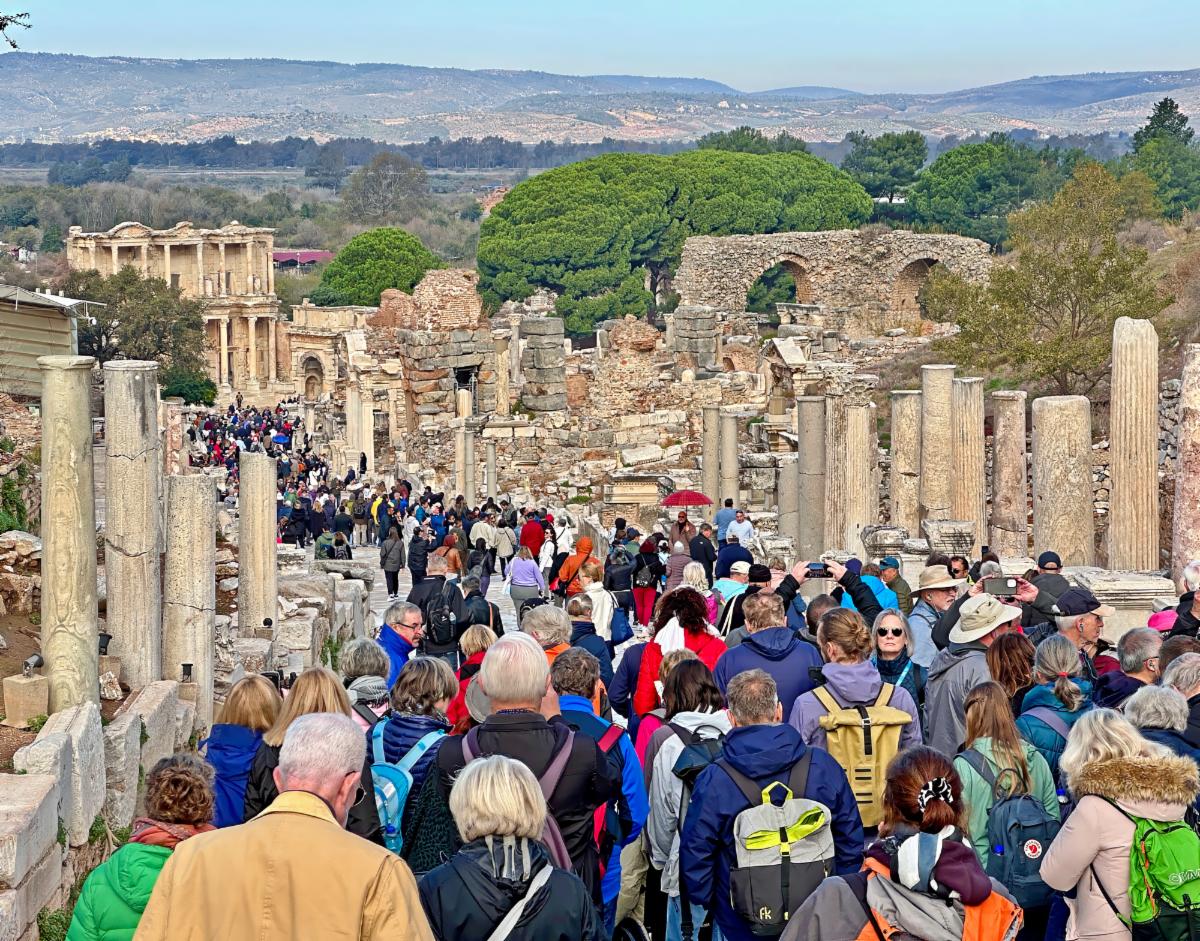
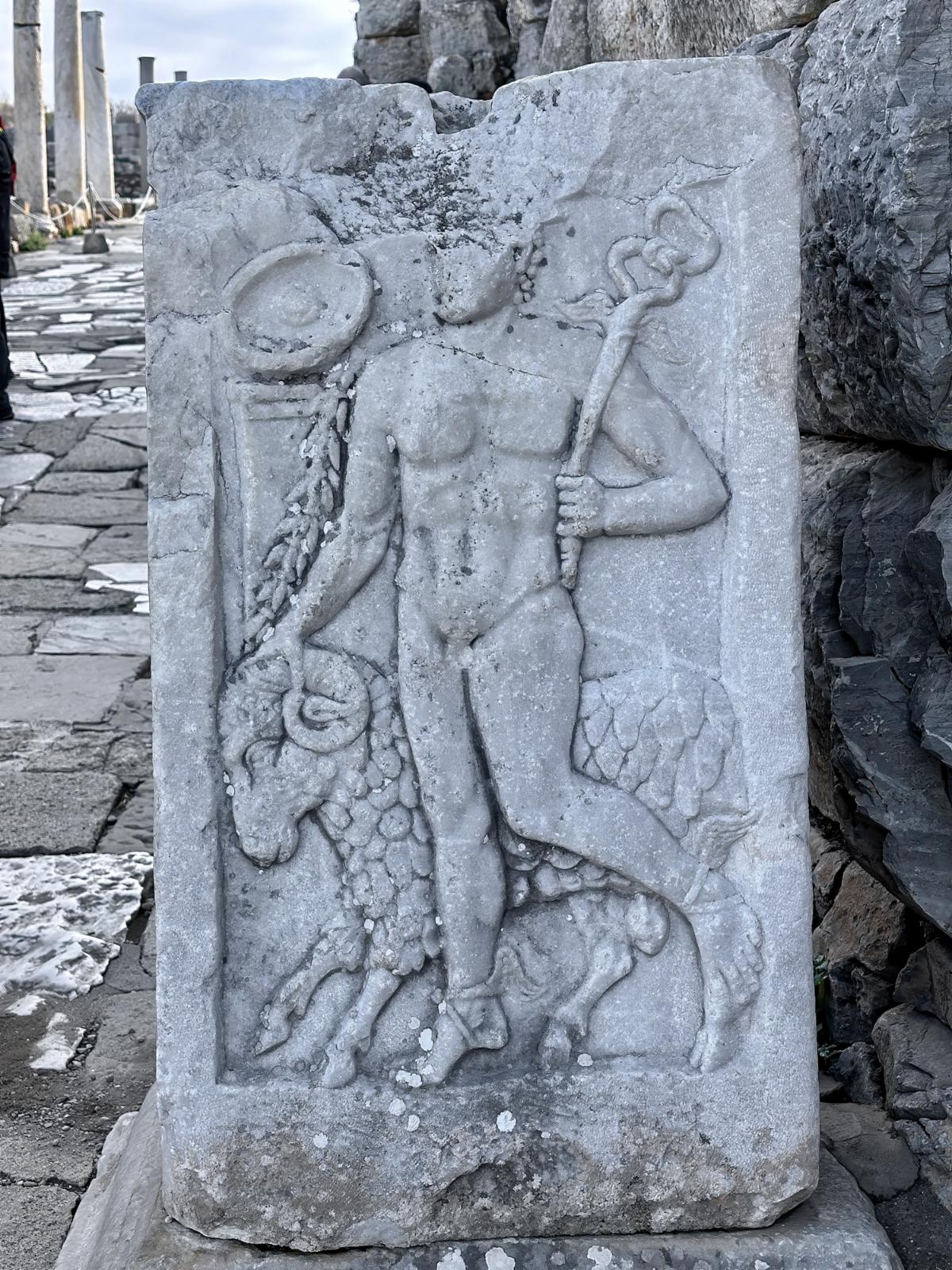
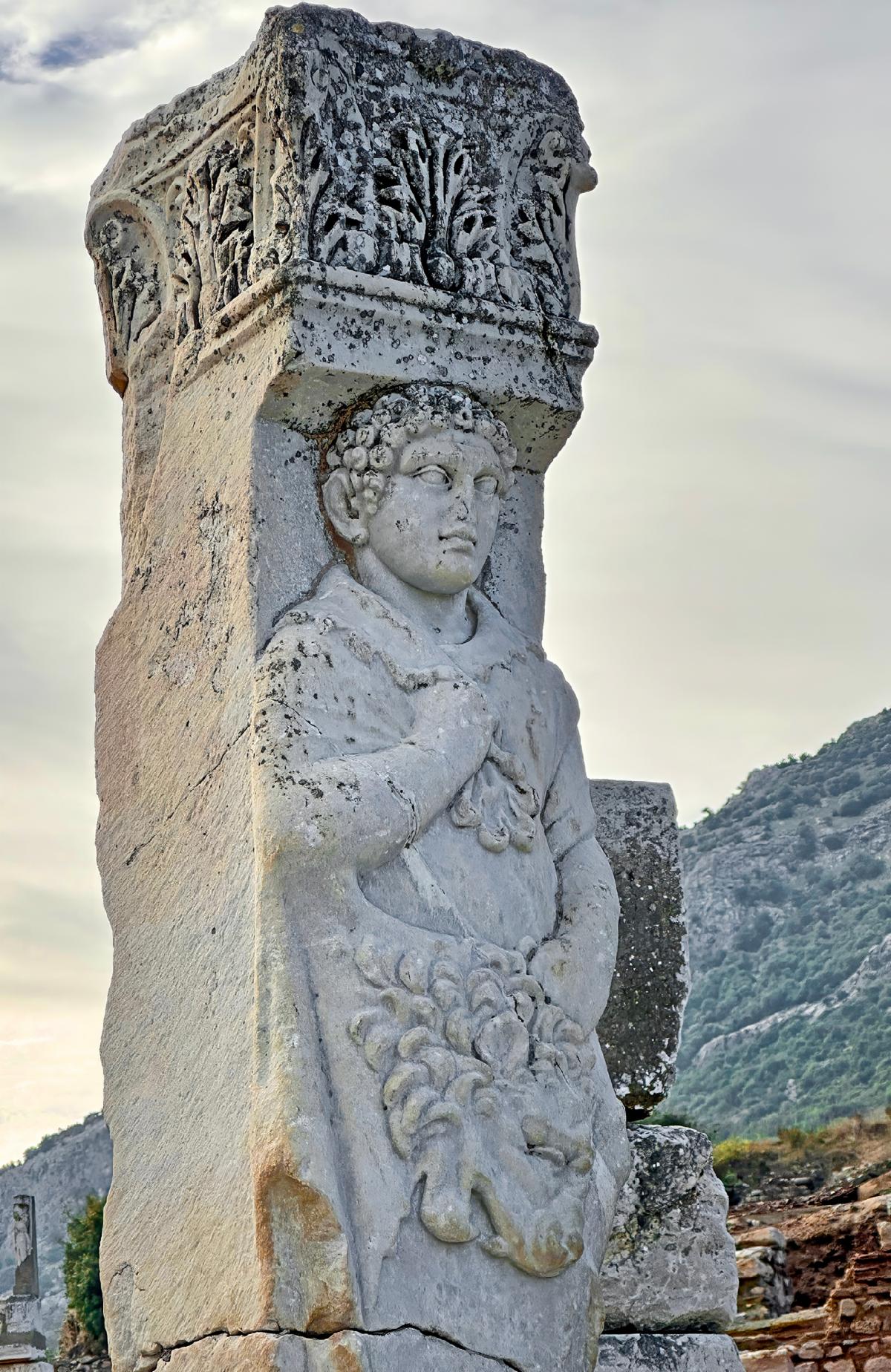
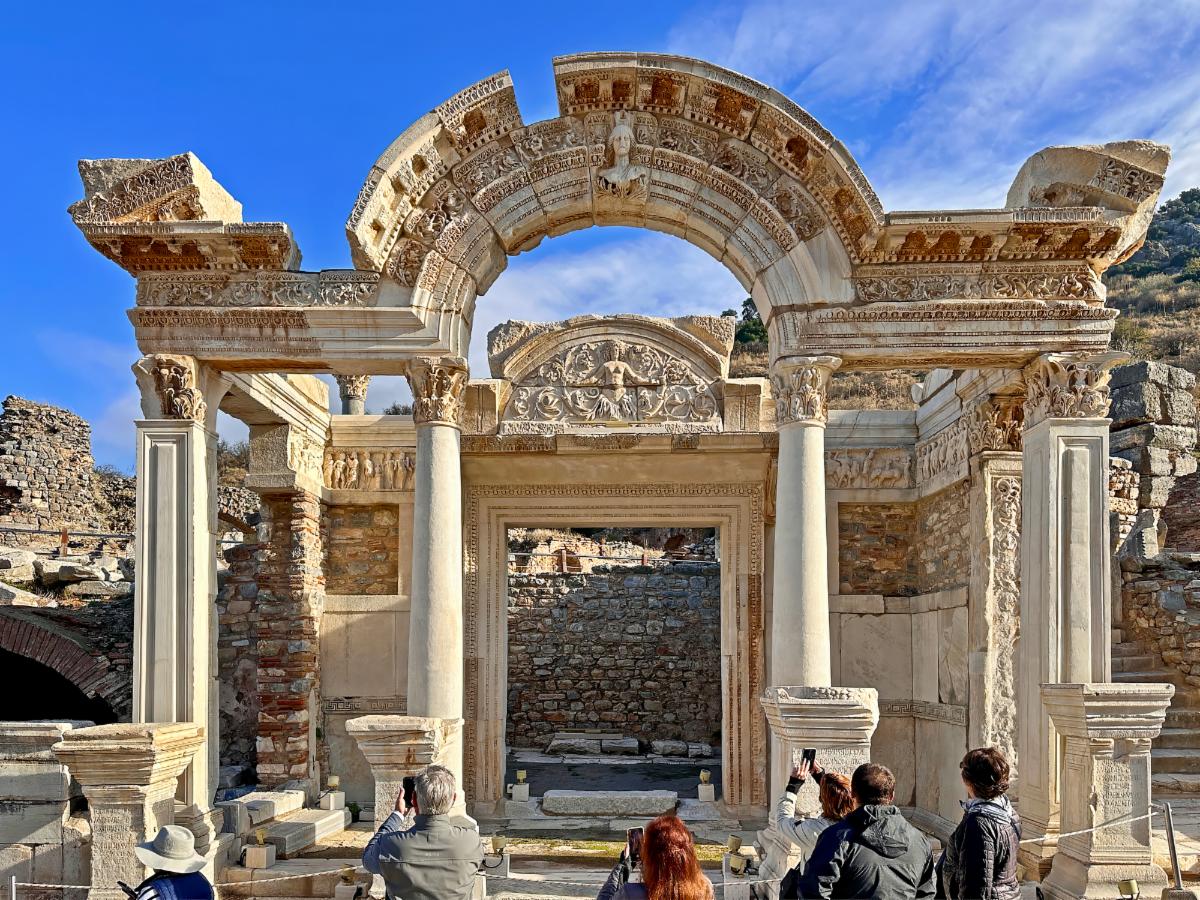
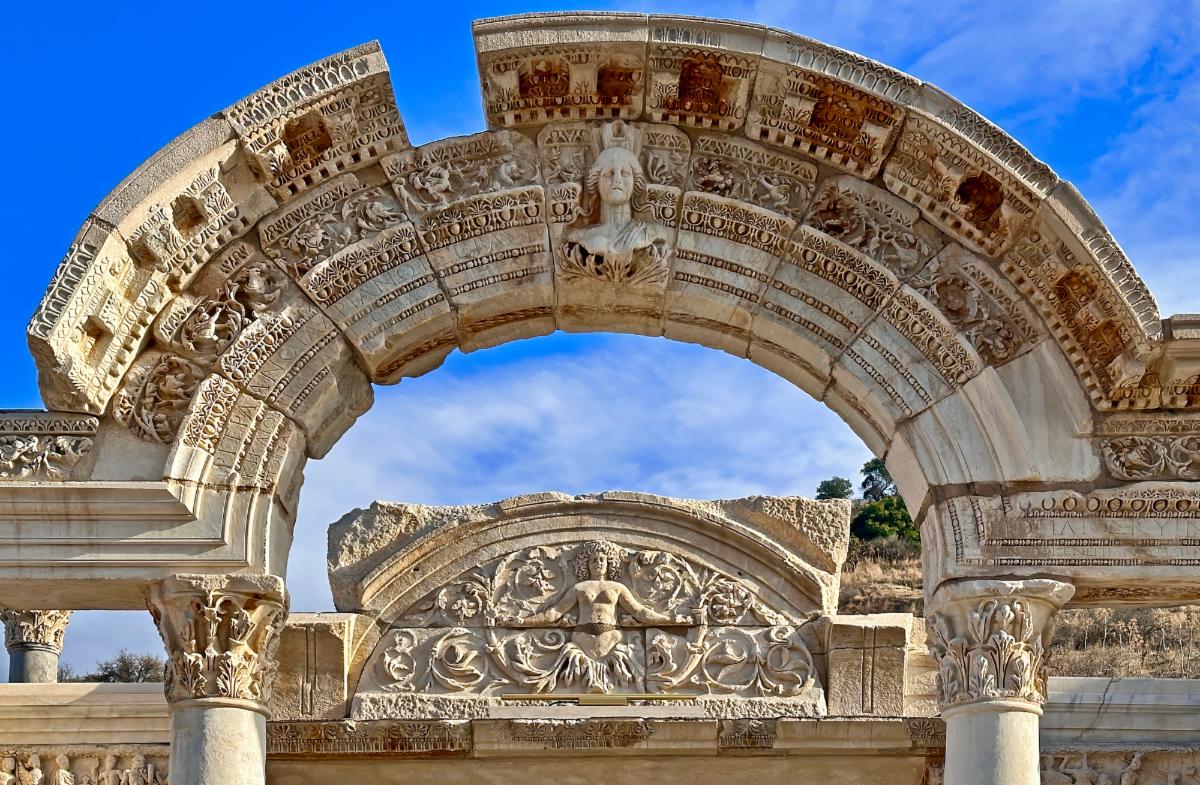
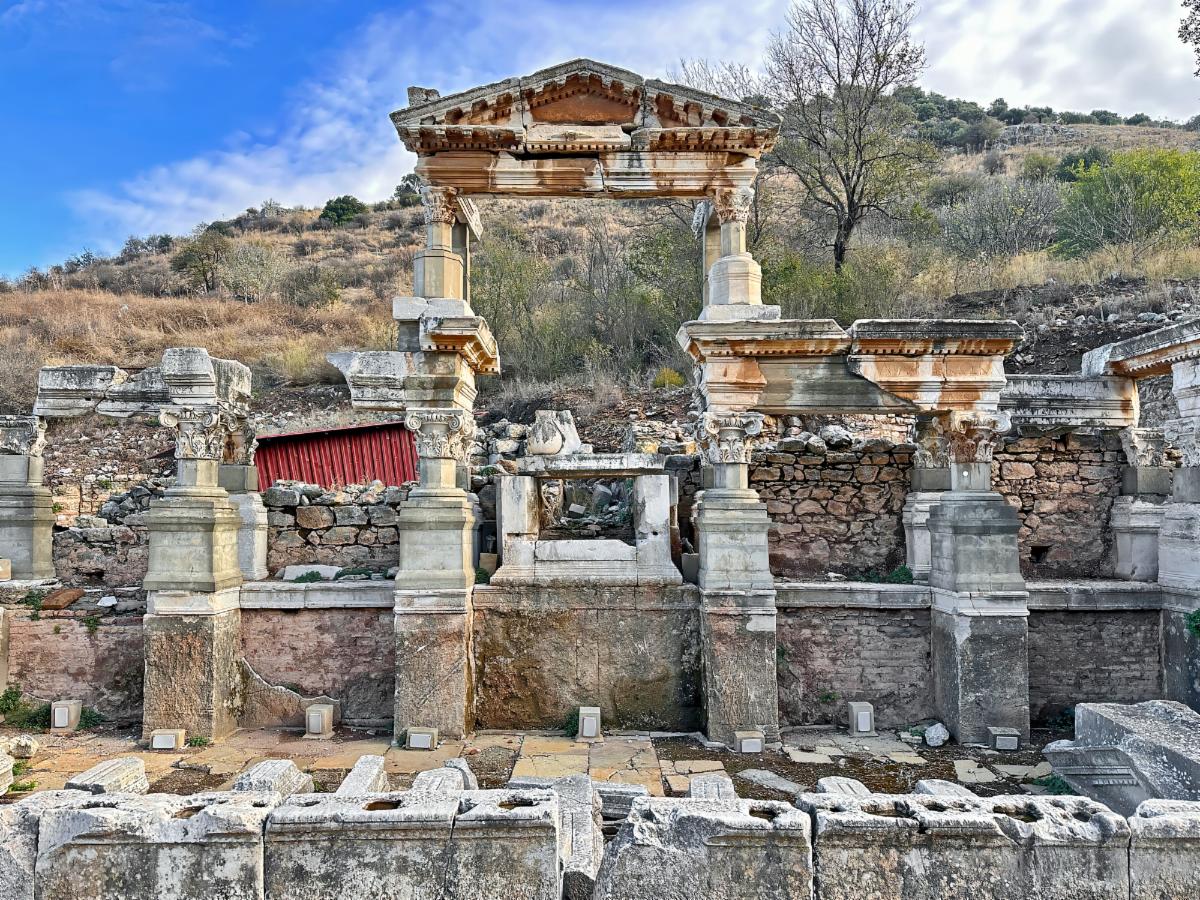
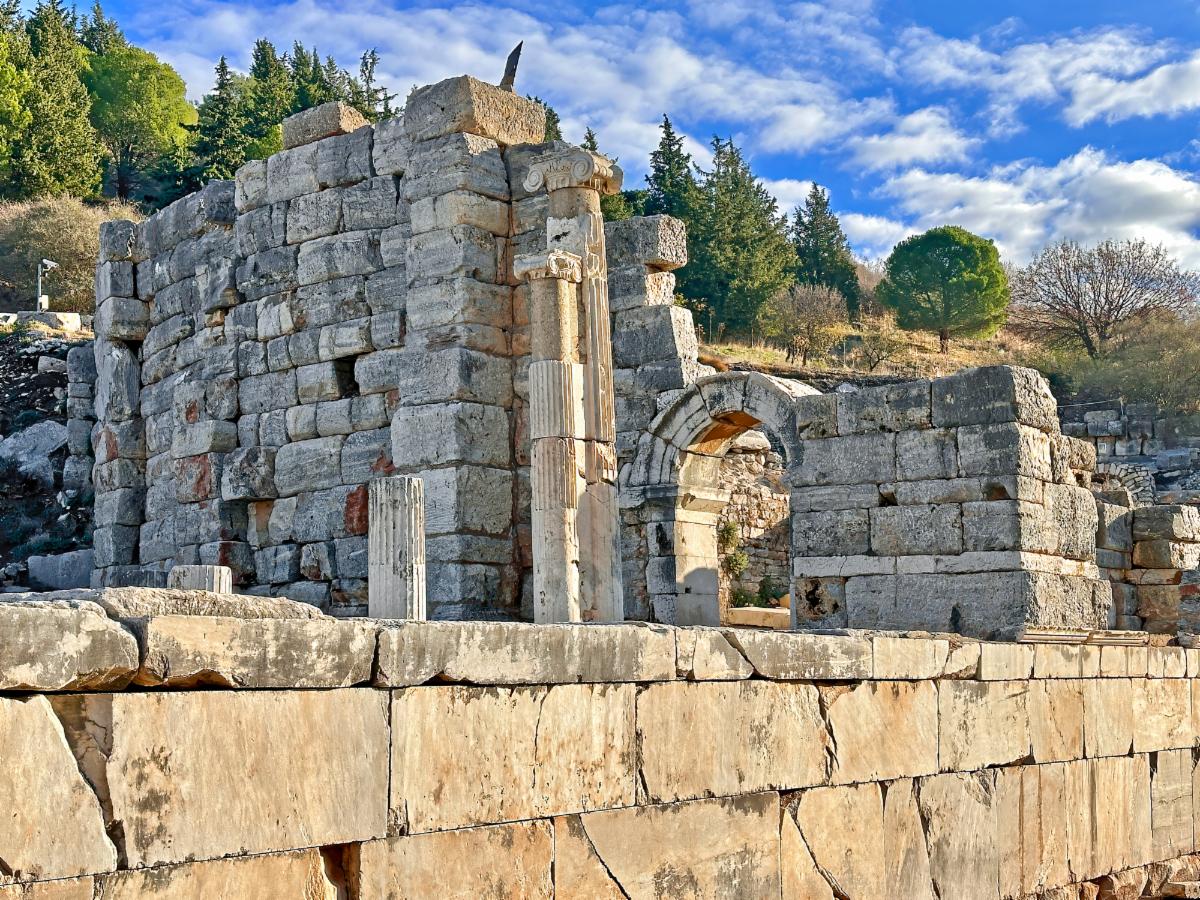
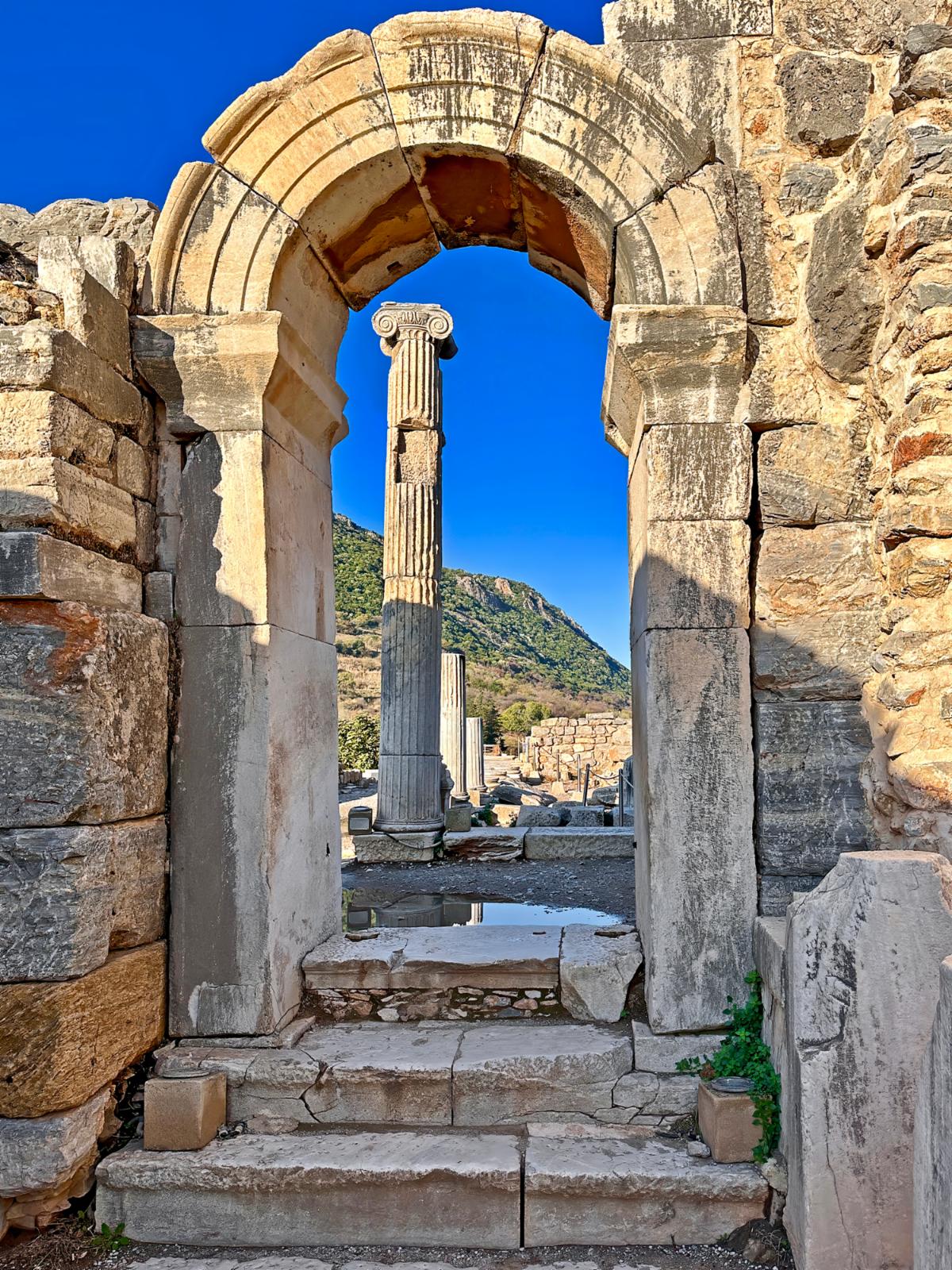
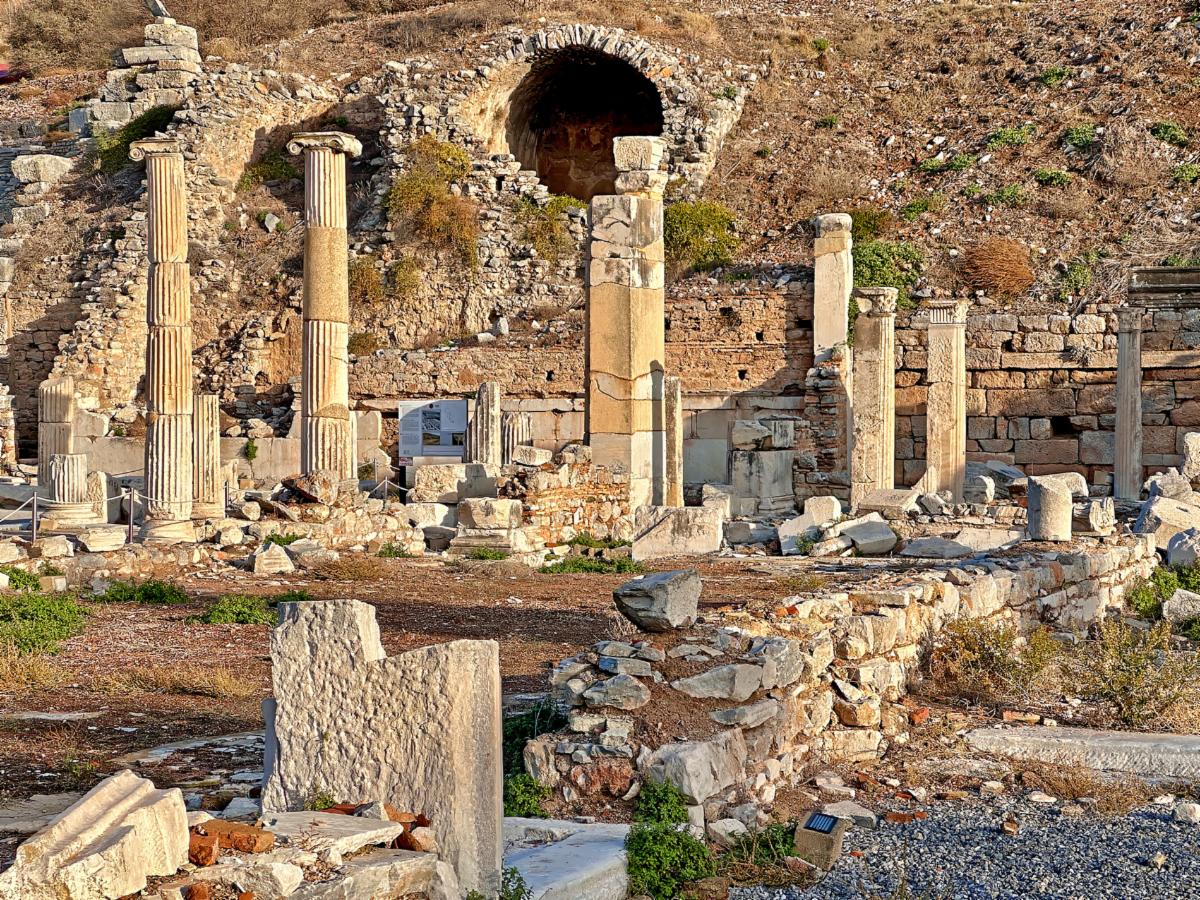
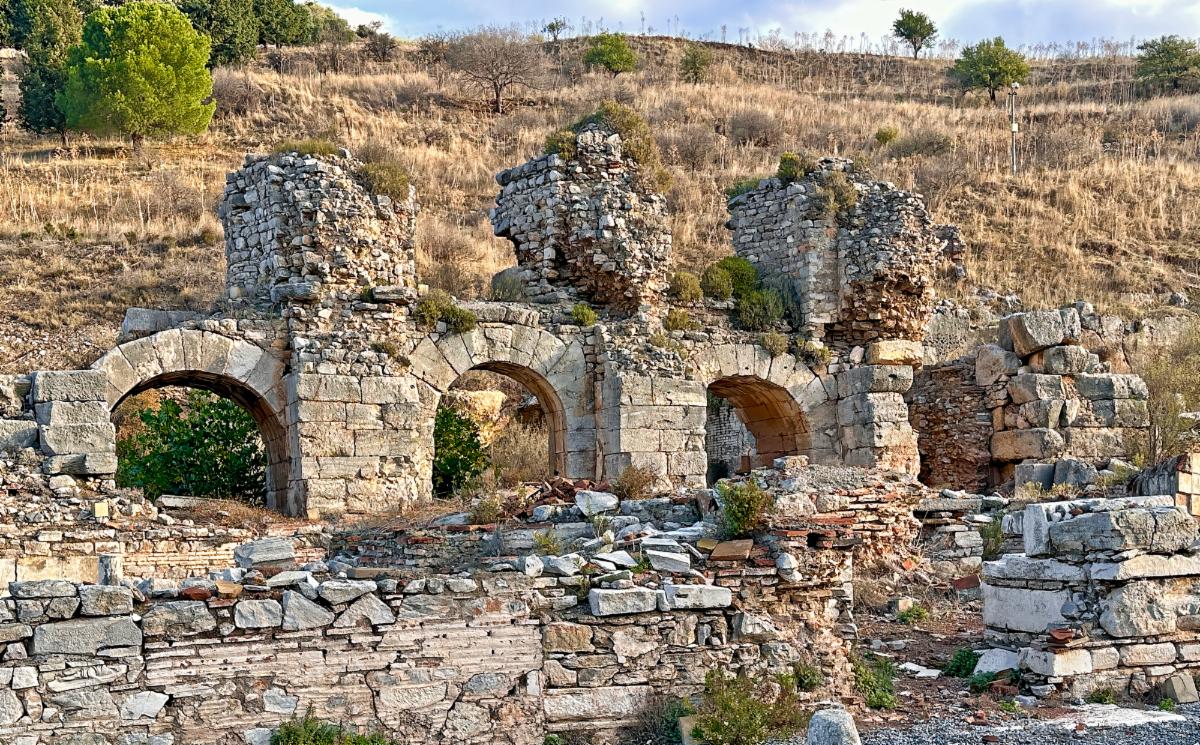
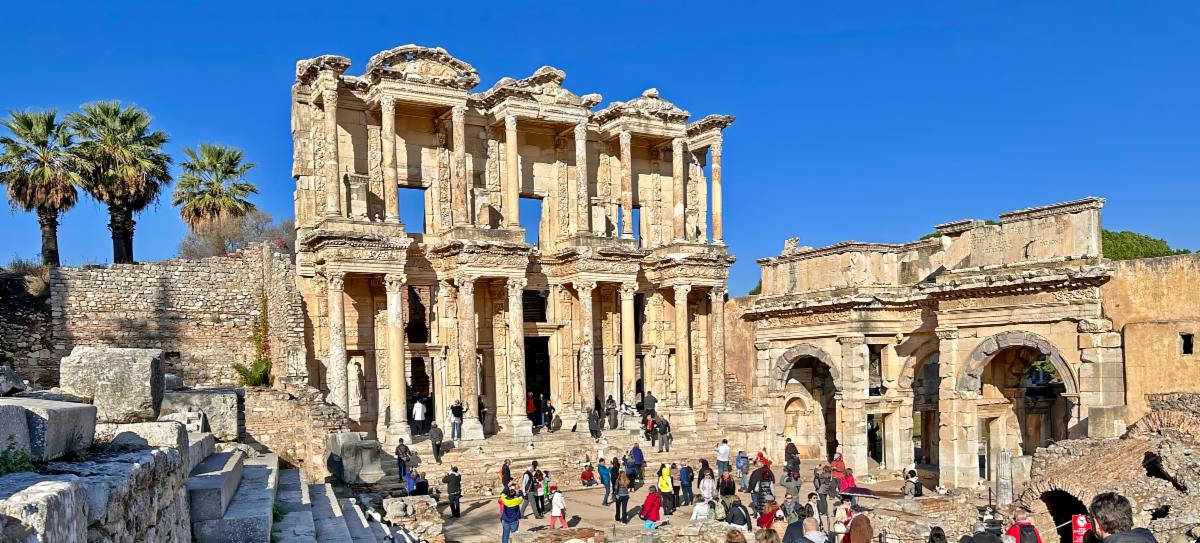
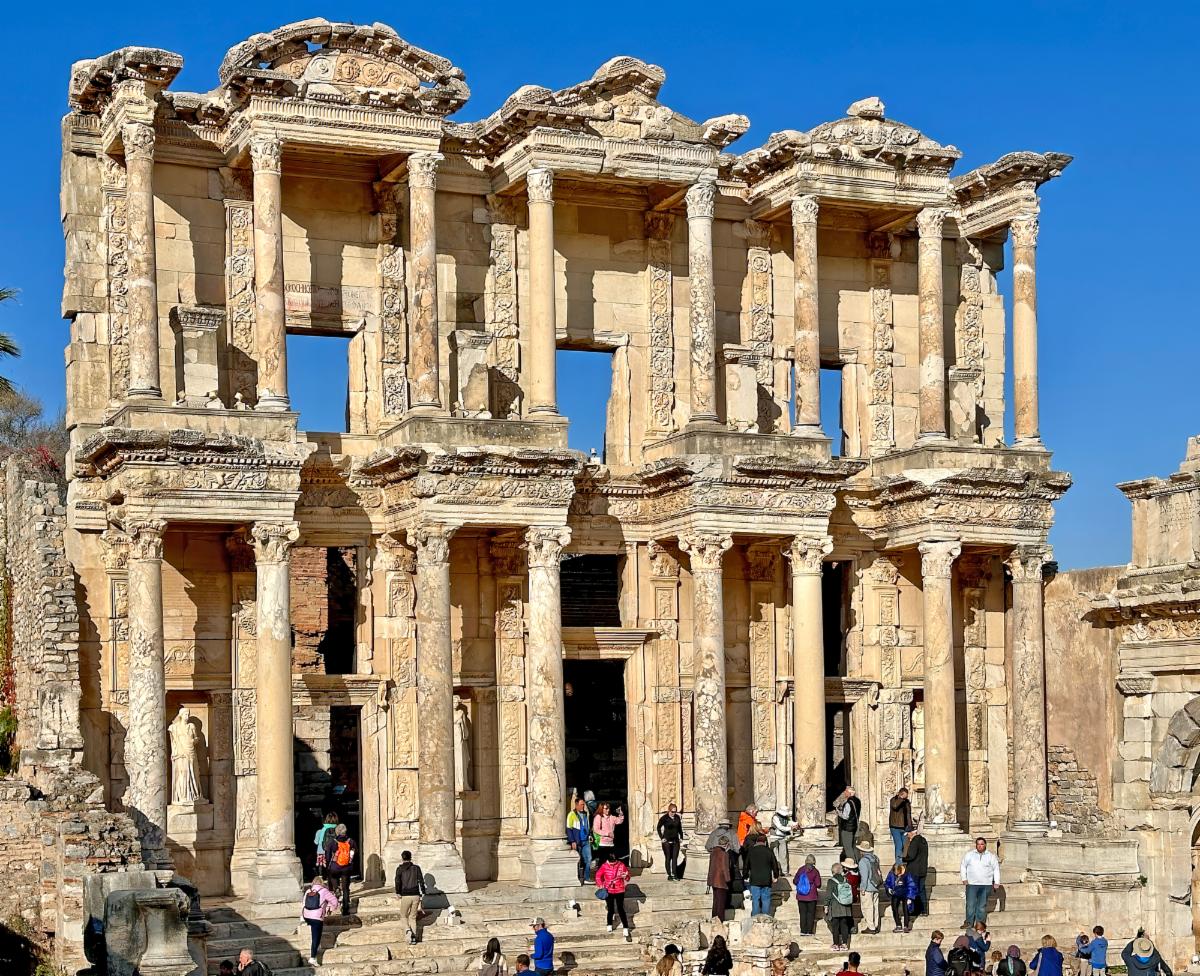
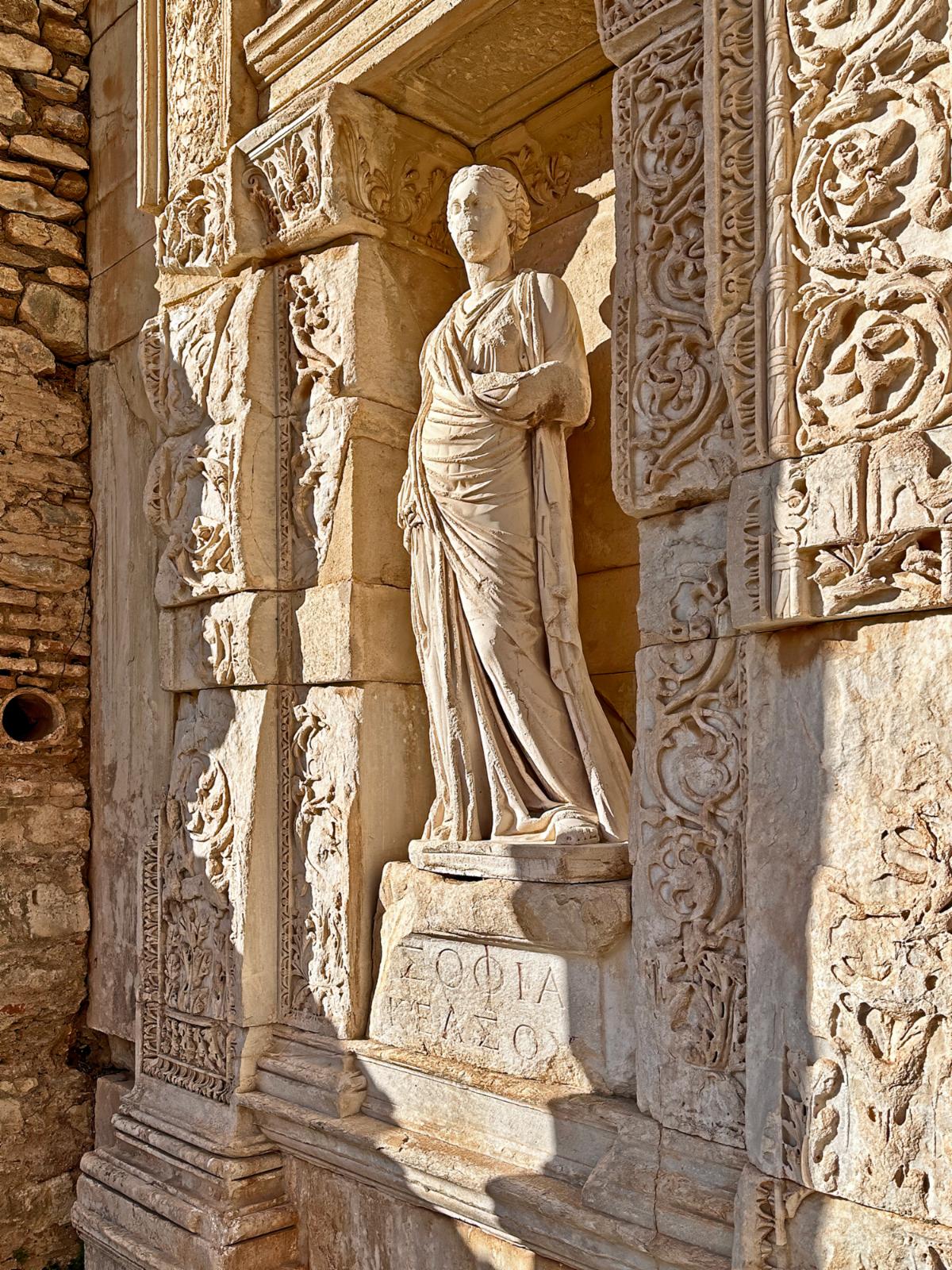
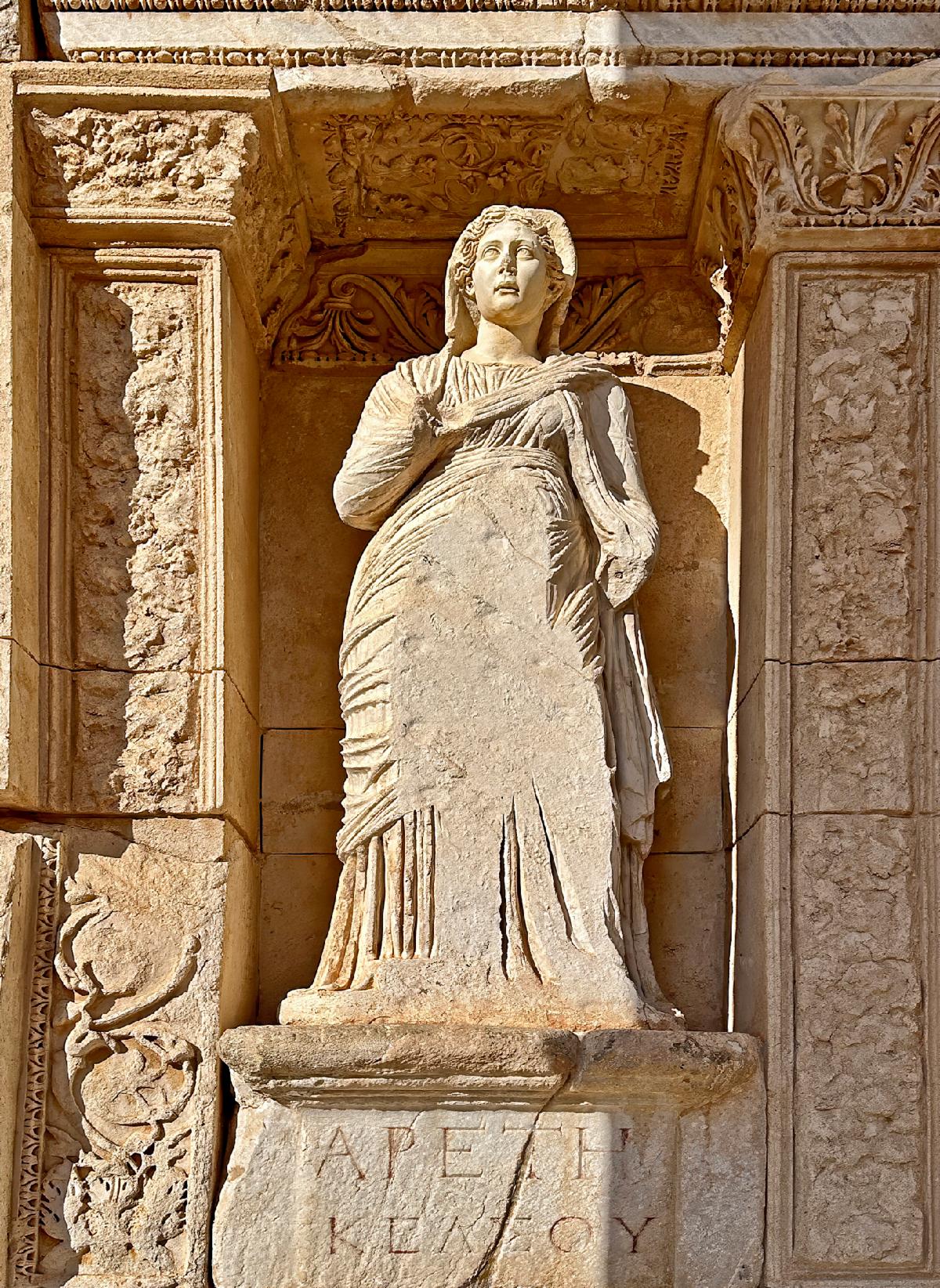
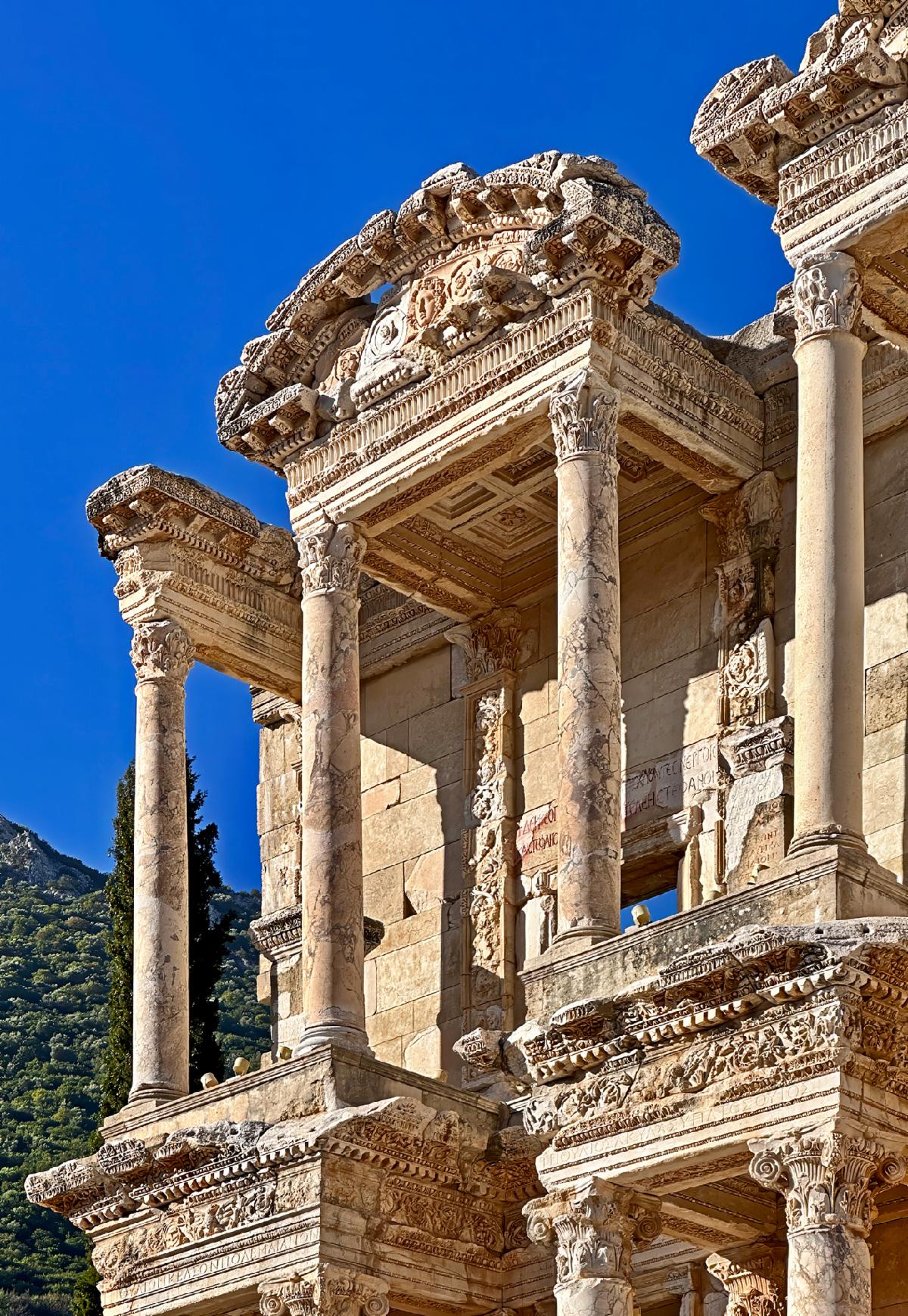
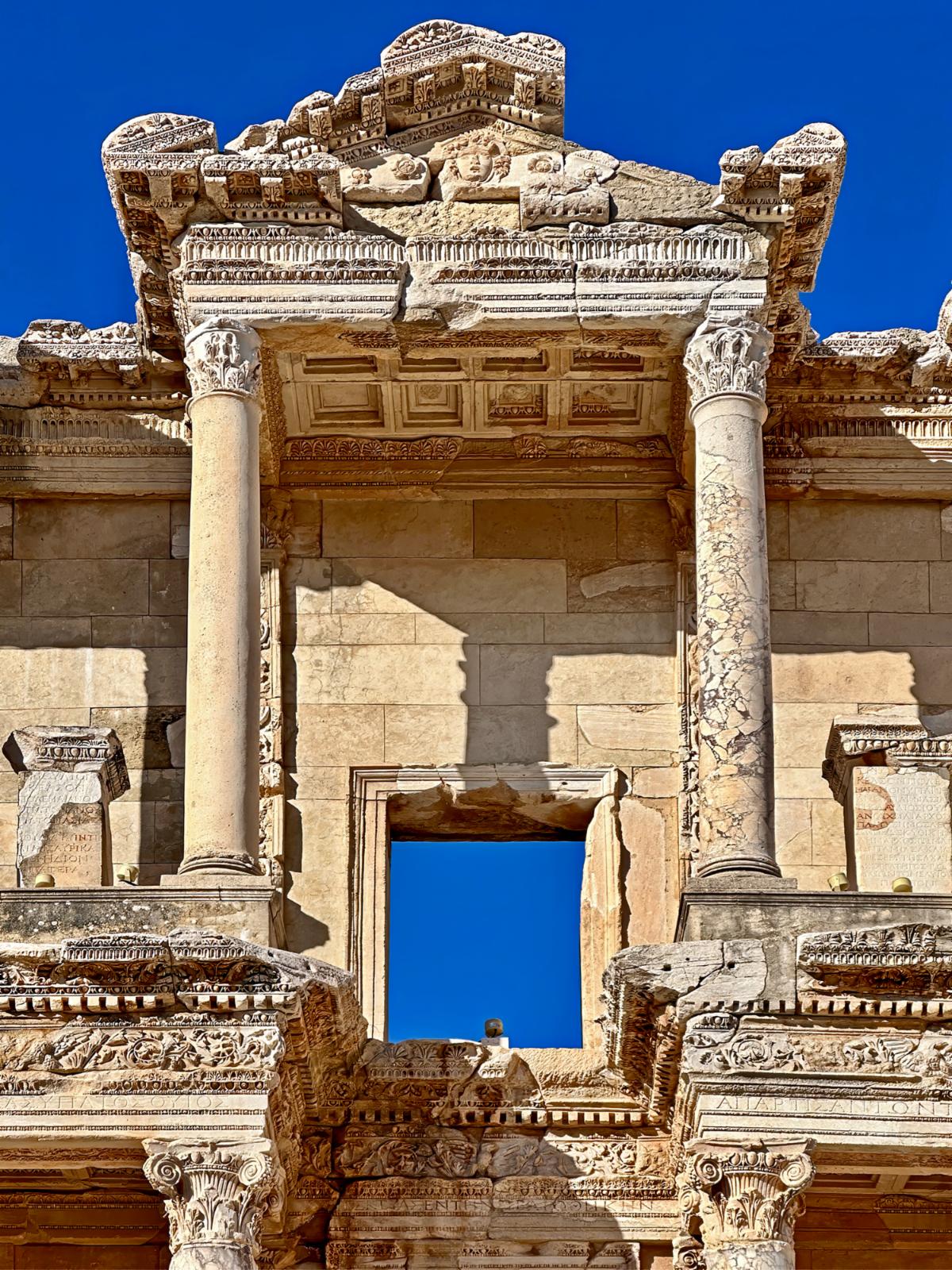
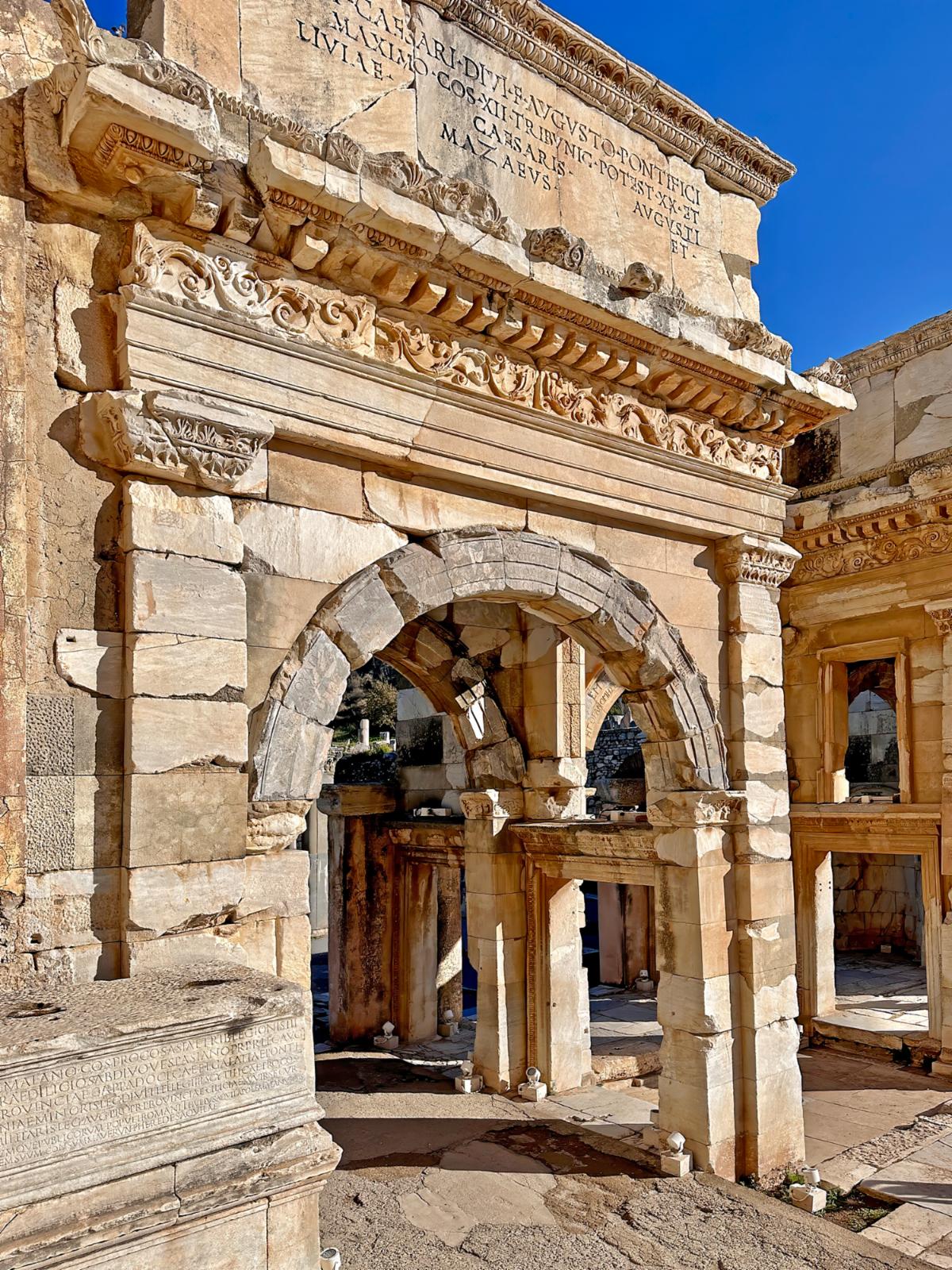
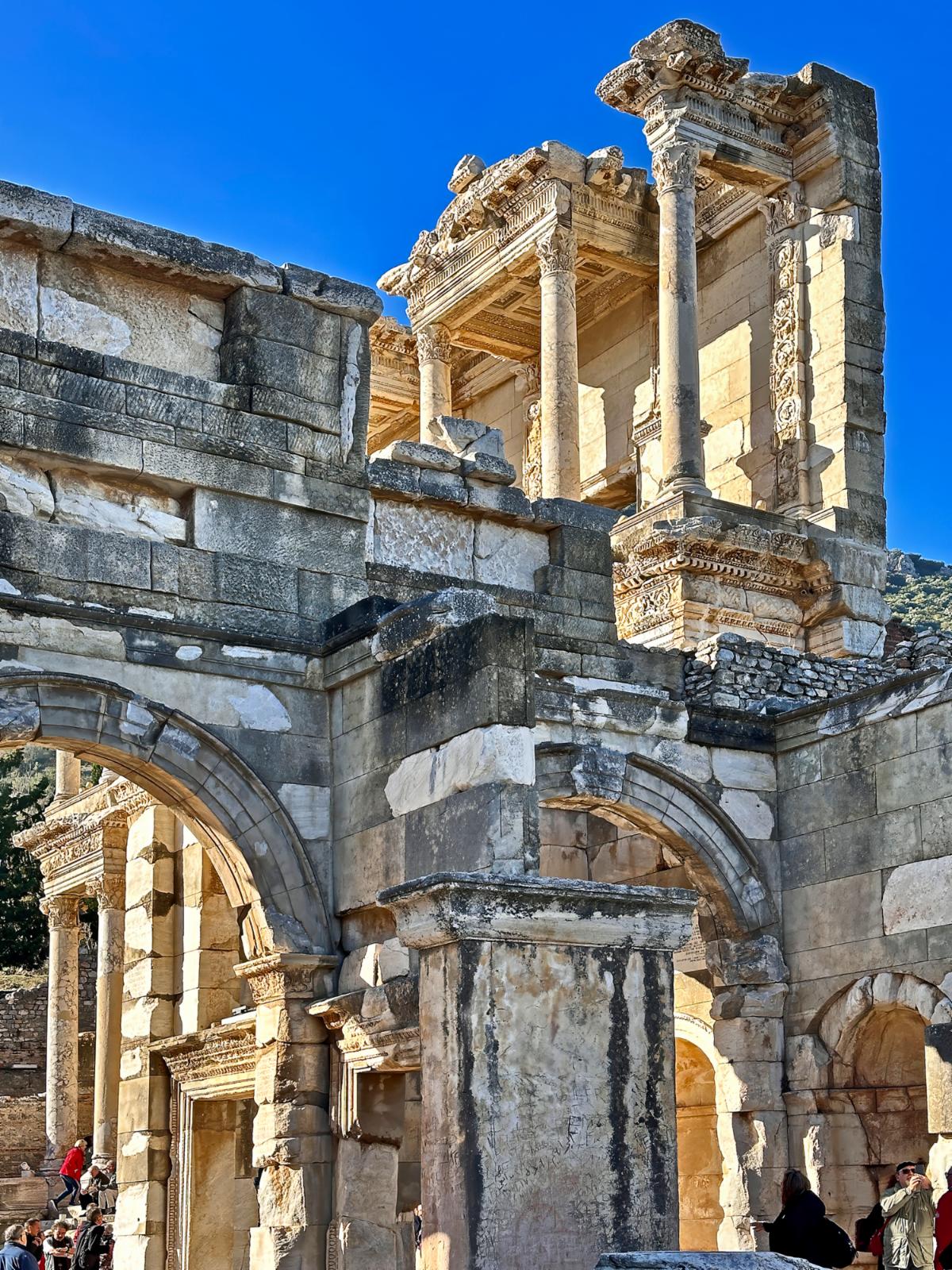
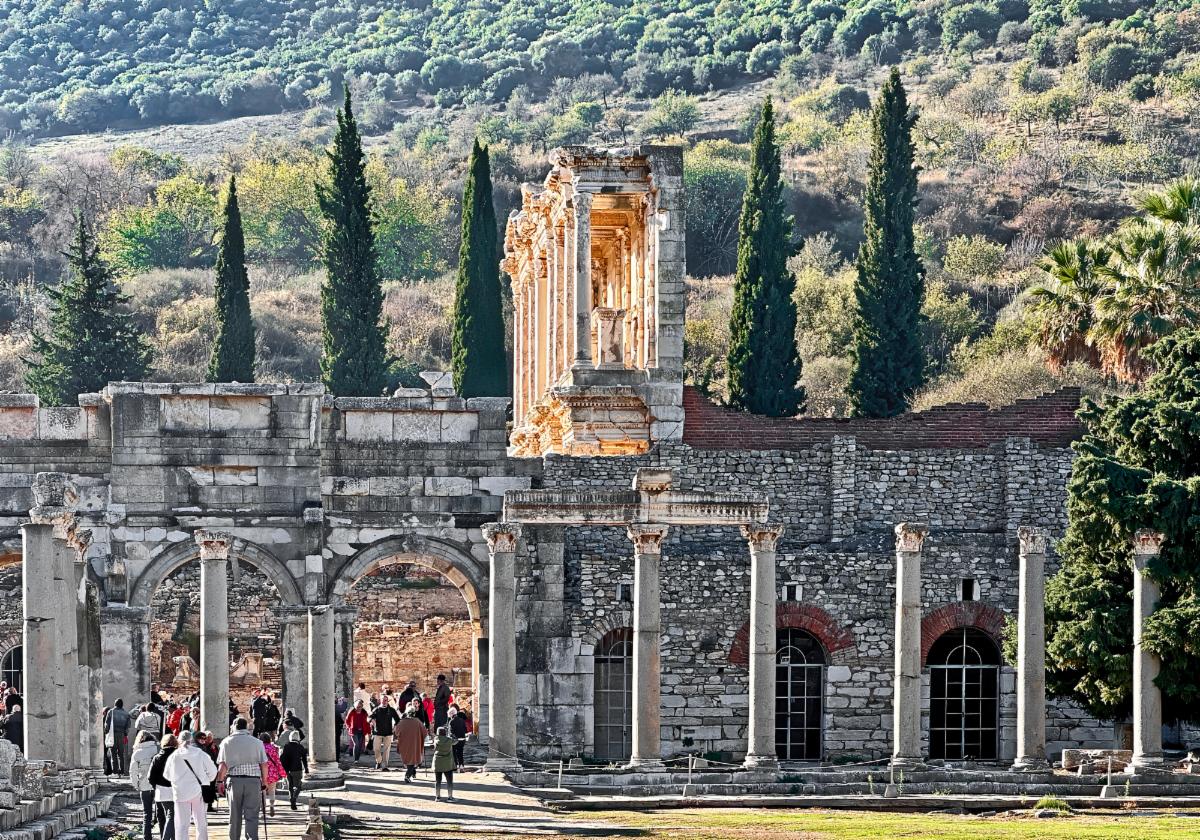
The Ephesus ruins still had many surprises. Much of the Library of Celsus was standing, and one could envision what it must have looked like. In its heyday, the library held 12,000 scrolls. The most impressive remaining structure was the open-air theater or coliseum. The theater we saw in Xanthos two days ago pales in comparison to it. I would have loved to have seen the city in its glory.
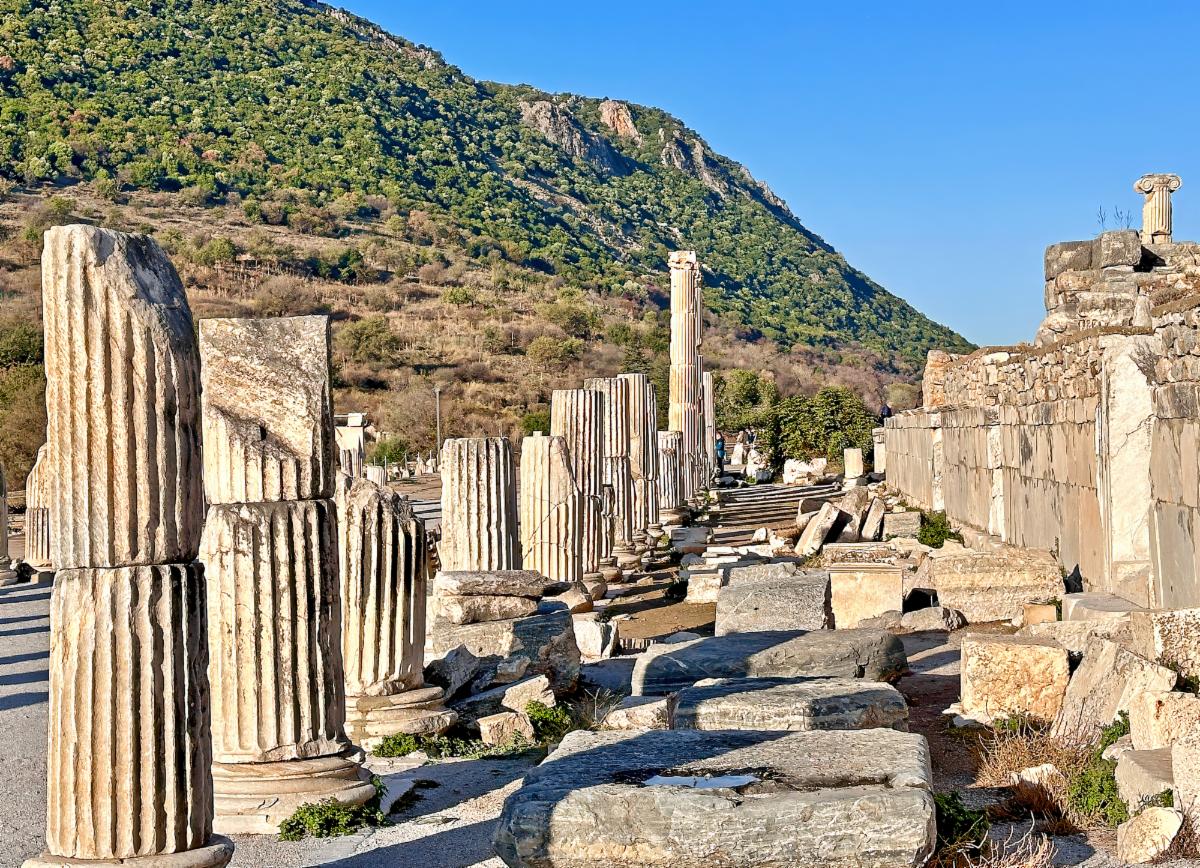
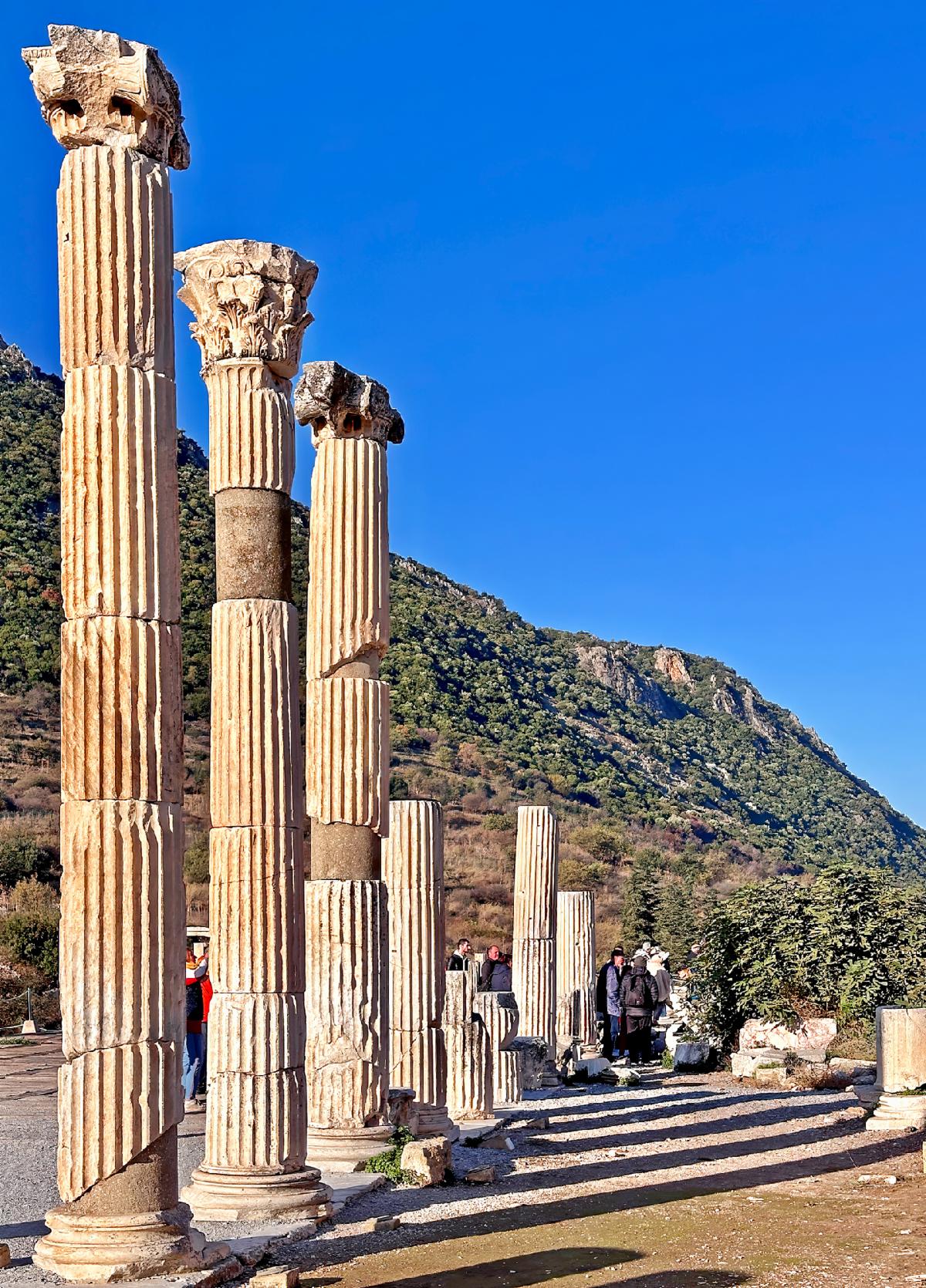
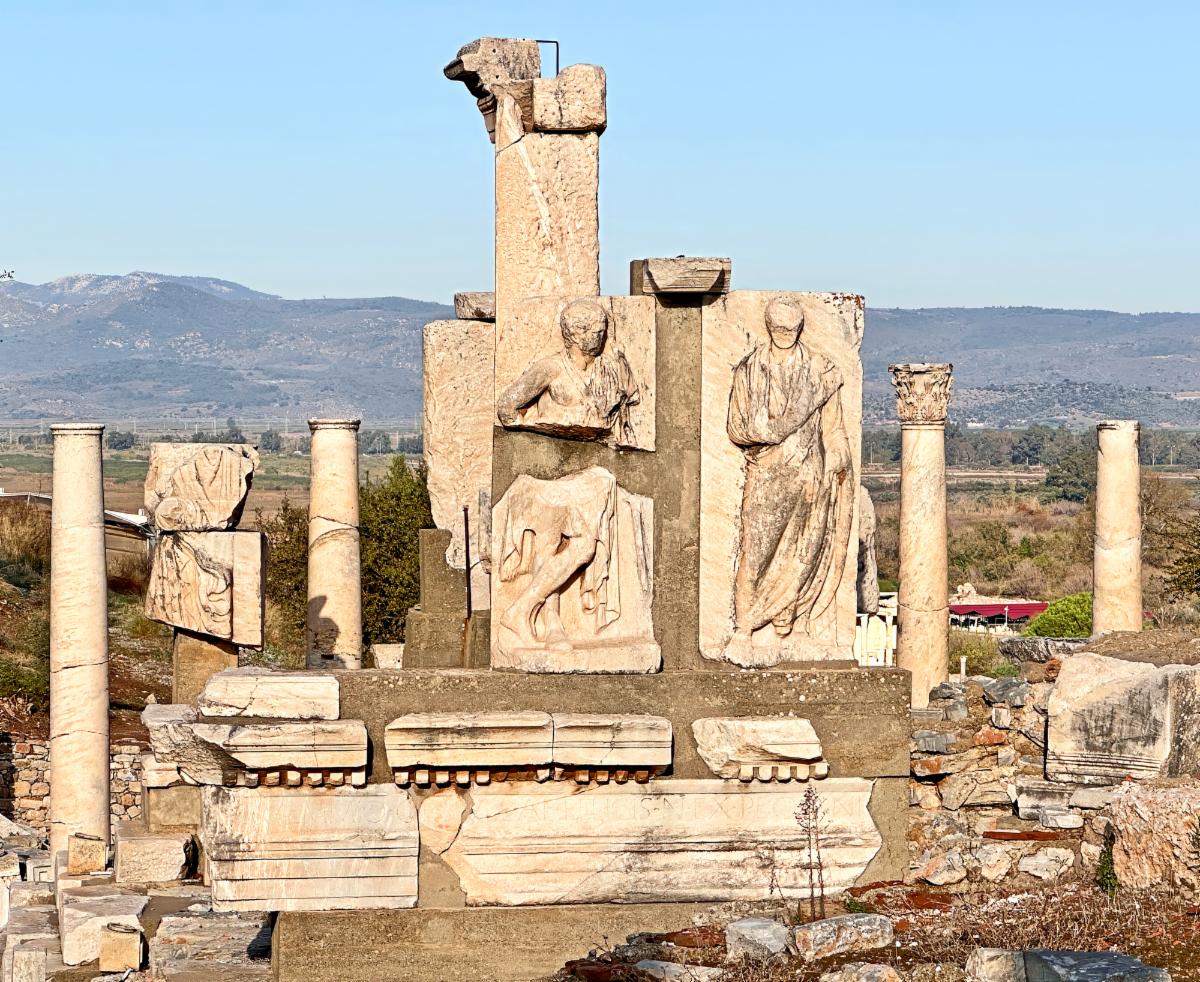
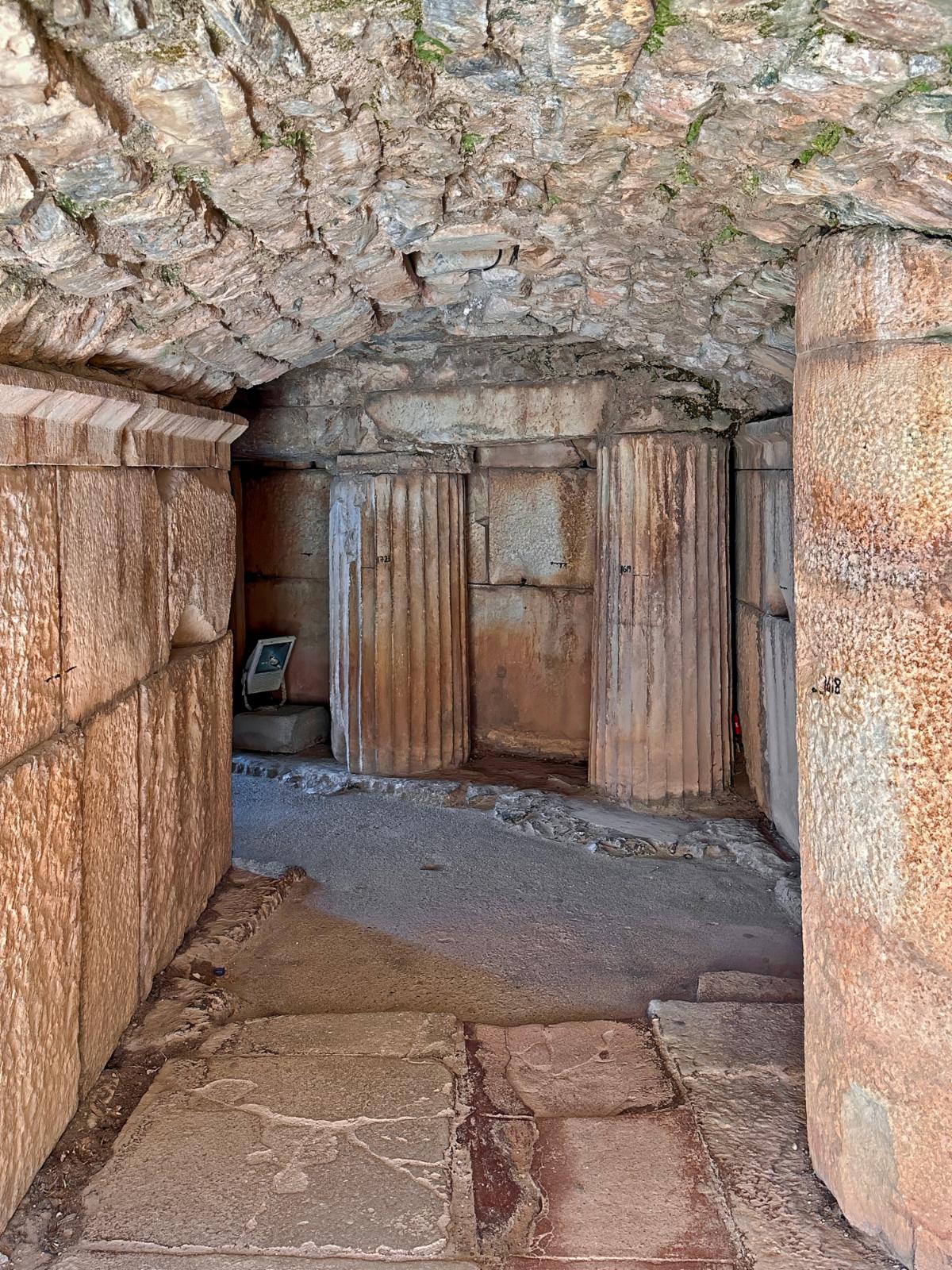
We spent more than half of the day walking through the old giant city, reading a zillion information plaques to piece together its history, and exploring the theater. Most ruins that we have visited have been thoroughly ruined, requiring a lot of imagination to envision the place. Ephesus presented our imaginations with much more to work with. I left impressed.
|