Rail Workers Weekly News Digest
Number 24 - September 3rd, 2019
|
|
Below is a series of articles compiled over the previous week.
They are of interest to railroad workers.
_____________________________________________
|
|
2019-24 Article 1
Trust the People, not the Powers-that-Be on the Question of Rail Safety
By Jason Doering
(Editor's note: Jason Doering is the Nevada State Legislative Director for SMART Transportation Division. He currently serves on the RWU Steering Committee).
Advocates for rail safety in Nevada achieved a great victory in May as the state became the second this year to put into law a mandate that two people — a certified conductor and a certified engineer — operate freight trains through the Silver State.
When Gov. Steve Sisolak signed
AB 337
on May 15, he aligned himself with the continued safe operation of freight trains that rumble through Nevada and through the country 24/7, 365 days a year. A dedicated coalition of environmental, citizen and labor groups came together in an energetic and successful effort, and made Nevada legislators aware of the necessity of keeping a pair of trained, qualified crew members in the cab.
FRA stated that a proposed rule mandating the number of people needed to operate trains was not necessary, and that action by Ron Batory, the FRA leader appointed by the Trump administration, drew the attention of U.S. representatives on the House Subcommittee on Railroads, Pipelines, and Hazardous Materials,
who called a special hearing June 20
.
During the hearing involving Batory and rail labor leaders on the state of the rail labor workforce, Batory was asked by a member of the subcommittee about the practicality of having one person operate, check and repair a fault in a train that spans three miles.
Read more ...
|
|
2019-24 Article 2
Trump Threatens Veto Over Passenger Rail Funding
The White House issued a veto threat against the fiscal 2020 funding bill, saying President Trump was "disappointed" at Congress for boosting investment in Amtrak instead of eliminating the National Network, as outlined in the President's budget request.
The White House also objected to language that prevents the U.S. DOT from clawing back grant funding from the California High-Speed Rail project.
This threat must not go unchallenged. Our elected officials need to hear from the passengers and communities that depend on these trains, whether your home station is in New York City or Newton, Kansas!
|
|
2019-24 Article 3
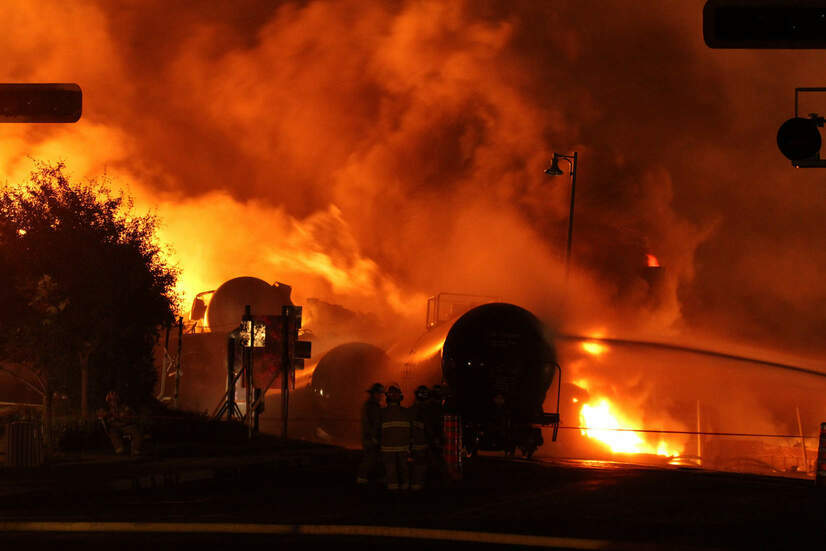
Comment: Rail Industry Publication Attacks New York Times Over Lac-Mégantic Oil Train Tragedy
However, Railway Age, the leading rail industry publication, attacked The Times' coverage in an incredibly flawed critique. The title of finance editor David Nahass's take-down is
“Clickbait Journalism at The New York Times
.”
In reality, both stories miss the mark on oil train safety.
The New York Times makes a major error in the industry’s favor regarding rail safety, as well as serious omissions about the risks of moving flammable cargo by rail.
Nevertheless, Nahass claims that The New York Times “sadly exhumes and retreads the memories of those lost and the pain of those who suffered trauma in order to generate readership.”
Read more ...
|
|
2019-24 Article 4
Commentary: Is intermodal rail stalling?
As a transportation mode choice, where is intermodal rail heading?
Author’s note – this is not a financial analysis to help determine whether to buy or sell railroad stock. This is about the evolving role of rail intermodal service in a market that is dominated by trucks, whose share of volume dwarfs rail.
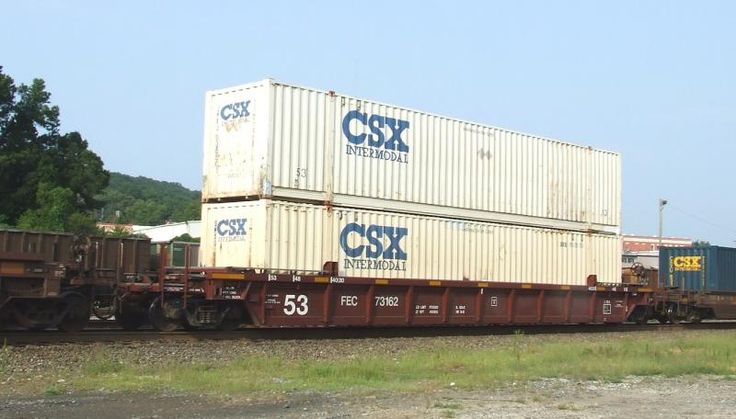
Over several decades the premise was that railroad intermodal trailer on flat cars (TOFC) and containers mostly on doublestacked well cars (COFC) would grow in volume and therefore reduce highway truck congestion.
Yes, rail intermodal has grown – and at a pace mostly above the growth rate of the nation’s gross domestic product.
But the commercial message sent by the railroads has largely focused upon the financial earnings and the success of railroad company yield management using their so-called precision scheduled railroading (PSR) business model.
As one example, CSX (NYSE: CSX) proudly states that “CSX has more pricing power [now]…particularly in intermodal truck-rail business…” according to Wall Street Journal business editor Paul Page (October 2018).
However, on a volume and market share basis, changes in CSX’s origin-destination intermodal services have resulted in weakness in CSX’s second-quarter intermodal volume. The company reported a 10 percent drop year-over-year in intermodal volume. CSX also reported an 11 percent drop in intermodal revenue for the quarter.
Beyond this one eastern railroad, mid-August 2019 U.S. rail total carload and intermodal volumes were down 3.5 percent year-to-date to 16.6 million units. Of that, U.S. carloads fell 3.2 percent to 8.1 million, while U.S. intermodal units dropped 3.7 percent to 8.5 million.
Read more ...
|
|
2019-24 Article 5
Tech companies ignore pleas on rail safety
The National Transportation Safety Board asked Google, Apple and Microsoft in 2016 to add railroad crossings to their navigation apps. But they haven't.
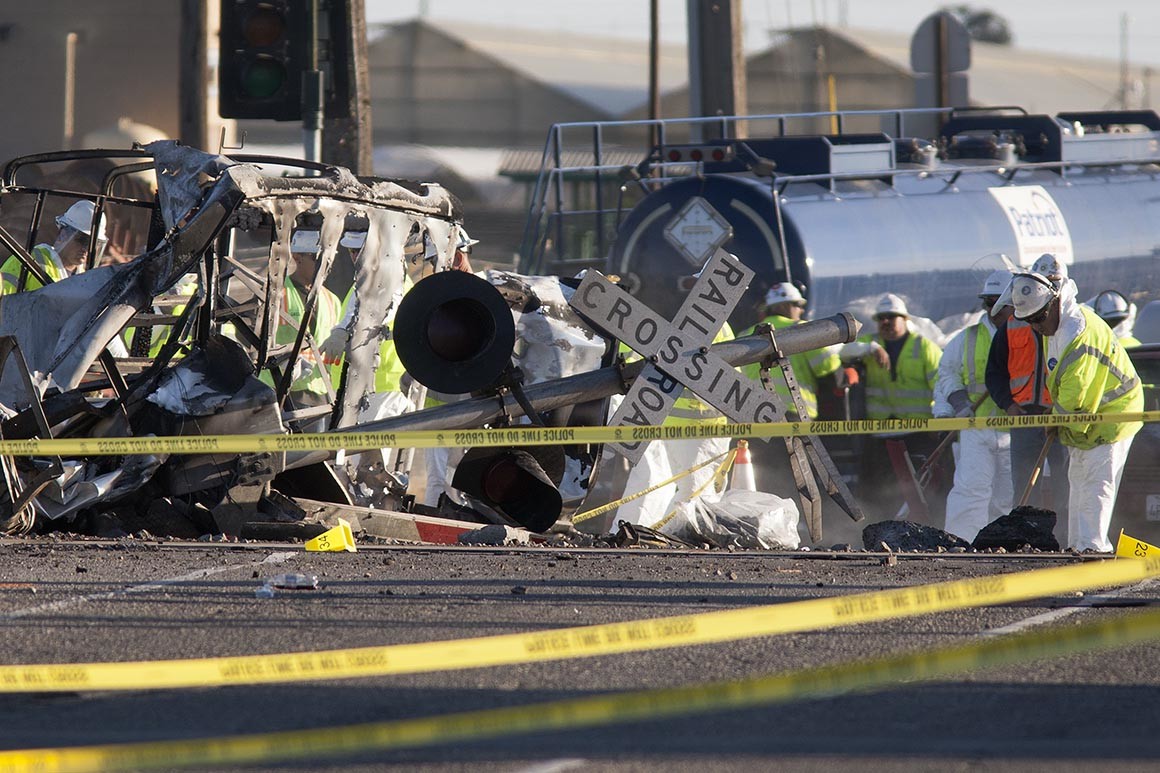
In late 2016, federal investigators probing a fatal crash between a confused truck driver and a California commuter train made a plea to Google, Apple and Microsoft: Add information on the nation’s hundreds of thousands of railroad crossings to your navigation apps.
Nearly three years later, none of them has.
The inaction by giant tech companies remains a frustration for safety advocates, at a time when hundreds of people die every year in collisions at U.S. railroad crossings, even as drivers increasingly rely on their smartphones’ GPS applications to tell them where to go. And it comes in an era when the tech industry is under fire in Washington for a litany of perceived anti-social behavior — from ruthless squelching of competitors to cavalier handling of users’ private data.
The companies’ failure to act is "tantamount to gross negligence," said Sarah Feinberg, who led the Federal Railroad Administration at the time of the February 2015 crash in Oxnard, Calif., that prompted the request from the National Transportation Safety Board.
It's “indisputable that they could save lives by acting," said Feinberg, who spearheaded high-visibility campaigns to combat deaths at railroad crossings.
Read more ...
|
|
2019-24 Article 6
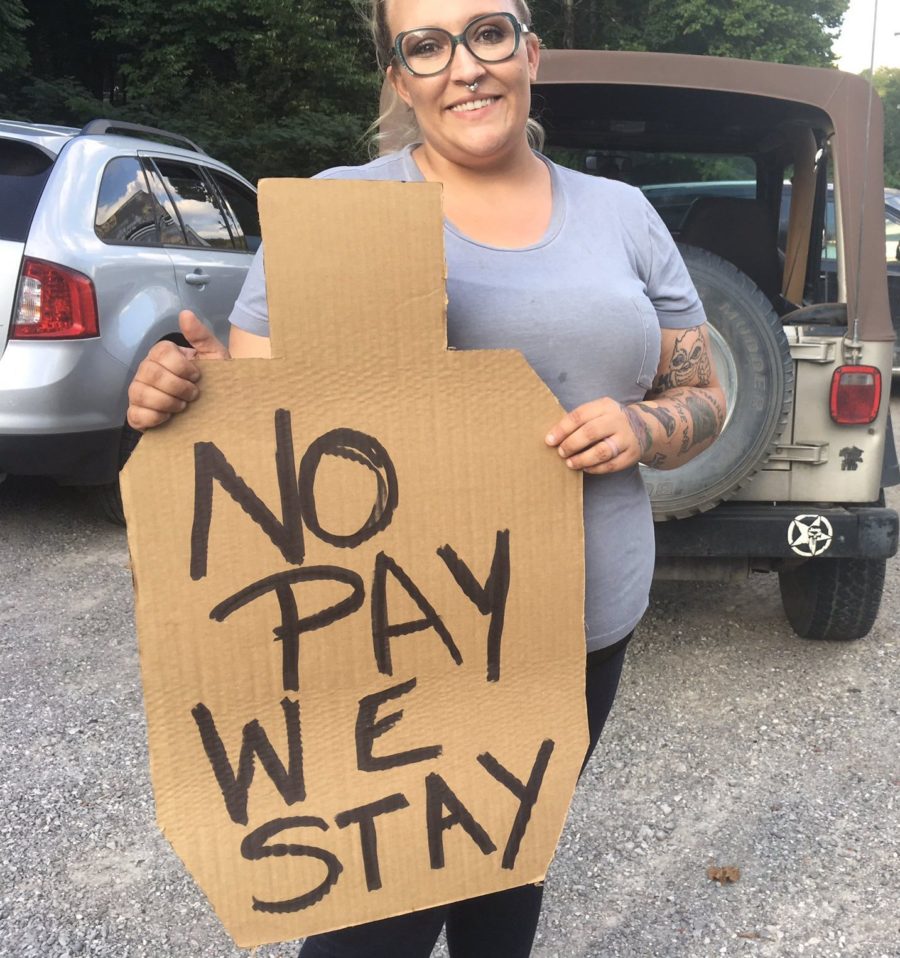
Blackjewel miners vow to stay at the tracks after court order for a evidentiary hearing
CHARLESTON, W. Va. (WYMT) Lawyers for the Department of Labor (DOL) and Blackjewel met in Charleston West Virginia Friday morning, this time to argue their stance on coal sitting on Harlan County rails.
The judge ultimately called for an evidentiary hearing in 10 to 14 days to determine the coal's fate.
Ned Pillersdorf, an attorney representing the Blackjewel miners, says overall it was a good day for the miners.
"The good news is that Blackjewel didn't get the right to move the coal without paying the miners"
Weeks ago unpaid miners blocked the movement of thousands of tons of coal. Since then they have set up a tent city to fight the company who owes them weeks of pay.
Chris Rowe, Former Blackjewel miner, says he spent his morning waiting for the hearing.
"Anticipating an answer. Hopefully the one that we wanted unfortunetely it wasn't."
Donna Raleigh, the wife of a Blackjewel miner, says it is taking a toll on her and her husband.
"It's kind of a little nervous because we don't know if there is going to be anything good come out," said Raleigh. "We couldn't sleep last night know what's going to go on today."
Read more ...
|
|
2019-24 Article 7
Carload and intermodal traffic, down and down
WASHINGTON — The Association of American Railroads today reported U.S. rail traffic for the week ending Aug. 24, 2019.
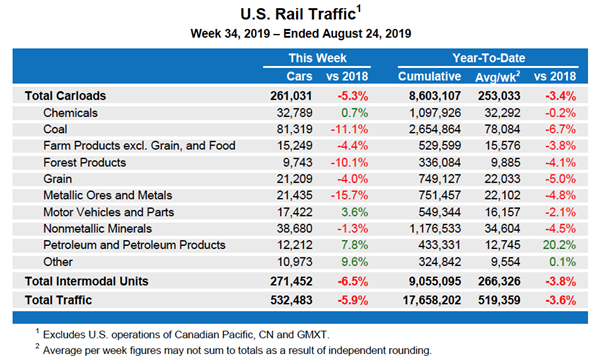
For this week, total U.S. weekly rail traffic was 532,483 carloads and intermodal units, down 5.9% compared with the same week last year.
Total carloads for the week ending Aug. 24 were 261,031 carloads, down 5.3% compared with the same week in 2018, while U.S. weekly intermodal volume was 271,452 containers and trailers, down 6.5% compared to 2018.
Four of the 10 carload commodity groups posted an increase compared with the same week in 2018. They included miscellaneous carloads, up 961 carloads, to 10,973; petroleum and petroleum products, up 888 carloads, to 12,212; and motor vehicles and parts, up 609 carloads, to 17,422. Commodity groups that posted decreases compared with the same week in 2018 included coal, down 10,166 carloads, to 81,319; metallic ores and metals, down 4,003 carloads, to 21,435; and forest products, down 1,093 carloads, to 9,743.
For the first 34 weeks of 2019, U.S. railroads reported cumulative volume of 8,603,107 carloads, down 3.4% from the same point last year; and 9,055,095 intermodal units, down 3.8% from last year. Total combined U.S. traffic for the first 34 weeks of 2019 was 17,658,202 carloads and intermodal units, a decrease of 3.6% compared to last year.
Read more ...
|
|
2019-24 Article 8
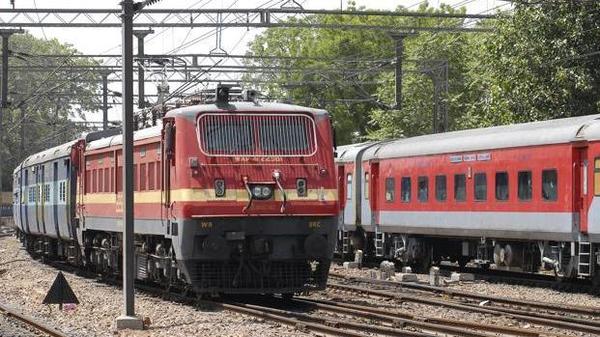
India to achieve 100% electrification of railways in 10 years
NEW DELHI : The government has decided to move towards achieving 100% electrification of railways, as part of efforts to curb carbon footprints, Union Minister
Piyush Goyal
said on Wednesday.
The railways minister also said he has a mission that in next 10 years,
Indian Railways
will be running on renewable energy.
"We have decided to move towards 100% electrified railway. We will be the world's first large railways...nearly 1,20,000 km of track, which will be 100% electrified. Imagine how much carbon we will reduce from the entire atmosphere," Goyal said here.
He was speaking at CII's Sustainability Summit.
He said more than half of the trains that come to New Delhi are still based on diesel but the ministry is working on their electrification.
"A year from now, more trains coming to New Delhi will be electrified..we are ensuring that all of them are end-to-end electrified," he added.
The railways is taking various environment-friendly or energy-efficient measures to reduce carbon footprint and protect the environment.
Read more ...
|
|
Railroad Workers United
Solidarity -- Unity -- Democracy
|
|
|
|
|
|
|