WEL NEWSLETTER September 2024, Vol. 14, No. 6 | |
|
Dear Kenneth,
Happy September! This fall we all have very busy schedules with client work and presentations. This month and next we are presenting in Sudbury, for ACFI, STEP Bermuda, STEP Cayman, STEP Italy, and STEP CANADA/USA in Chicago, as well as the CBA, LSO, The Advocates' Society, and Osgoode Professional Development. We are looking forward to embracing all these new and established connections and presenting to our colleagues.
I wanted to share a few stories and my thoughts and observations involving them: In August, as you know I was in London. While walking back to the hotel after dinner, one late evening, I spotted under the arches of Regent Street an elderly man, reminded me of Eli Wallach, aka “Arthur” in the movie, The Holiday, - a wise, gregarious charming older gentleman with poise, intellect, with much finesse. The curb down is higher in that spot and the taxi he flagged was mid arch and not near the curb. The gentleman had a cane and was visibly distressed trying to navigate the situation. I ran over and asked if I could help, not even waiting for the answer. I helped him down the curb and up into the London Cab. I handed him his cane and asked if there was anything else I could do. The taxi driver acknowledged with a nod, and the gentlemen said in a posh English accent, “lady you earned yourself a place in heaven tonight-you are an Angel sent from above-thank you.”
Shortly thereafter, a colleague reached out for some help regarding an urgent care issue involving his wife who has Alzheimer’s. I offered whatever assistance I could, and I received this message – “You are a live angel. Its people like you that prove there are great humans around.”
So why have I shared these stories? I am Definitely Not an angel-we all know that! I share these stories since if the reactions of people we interact with are such that actions like this are not expected, not ordinary, but rather extraordinary, it means that we need to be more mindful and attuned to the needs of those around us and to be kind and approachable and helpful always. To be human should not come with an expectation of reward, or award, and the help we give should be intuitive and natural. Keep an eye out, we all need a helping hand at times!
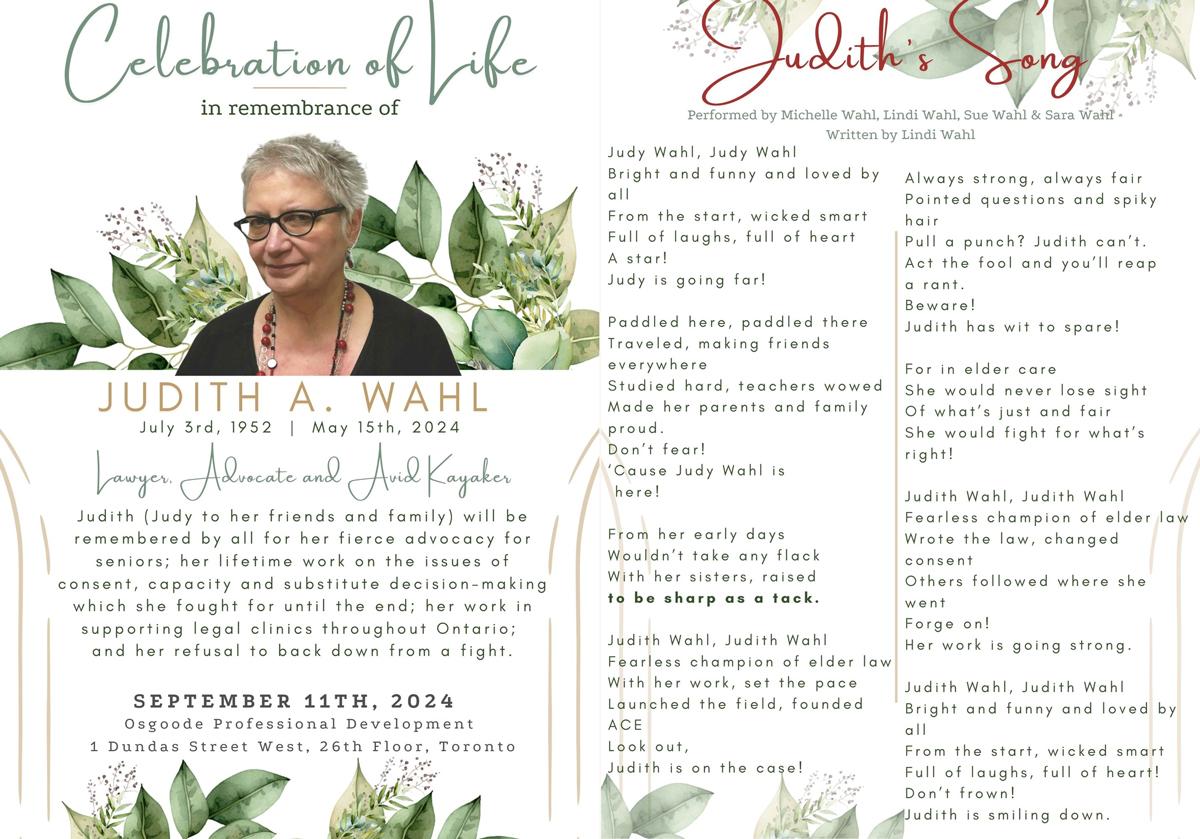
I, and many others, attended a Celebration of Life with colleagues, friends, and family for Judith Wahl on September 11, at Osgoode Hall. It felt great to regroup, reconcile, and think about the life and legacy of THE JUDITH WAHL. I can feel her absence. Even though she retired from ACE, she was still always present. The evening was truly a celebration with lots of story sharing. The kind words shared about her, demonstrative of her presence in our community. She dedicated her life with great passion to helping older adults, as well law, policy, and the community. I have included a card about Judith that was made for her celebration of life, and I took one as a memory.
| |
Finally, I have obviously seen a lot of estate disputes and administrations in my career but sometimes the deceased leaves only pure joy and so, I wanted to acknowledge the gift that I was left by Judith, a piece of her art. Judith’s sister Pat advised me of the gift and delivered it to me at the celebration. I am so touched and moved by this kind and thoughtful gesture. Its also such a clever memory that Judith left for me and others to remember her by. Thank you, Judith. I will hang it at the cottage and think of you! | |
Sam and I attended at our friends’ daughter’s wedding in London this month. The lovely Shania was born when I still lived in London and worked at Beale & Company. I worked with her mom, my good friend, Sheena Sood, now the managing partner of Beale & Co. Shania married Kush. She is a lawyer as is Kush, both working in London. The wedding was so much fun, I am rooting for this young couple, and I hope they have a thriving, healthy, prosperous and successful future. I was touched to be included in the celebrations. | |
|
This month our new articling student, Chhavi Monga, joined our WEL Team and we are pleased to be working with her. Gabriella Banhara returned from her summer break after articles and qualifying and has started as an Associate Lawyer. We look forward to seeing great things from Gabriella in her legal career.
We are still looking to add some experienced, senior litigation lawyers competent in drafting court documents and running litigation files with independence. Qualified candidates, please contact Bryan or I directly.
As ever, thank you for your support in our WEL TEAM,
Enjoy the Read,
Kim
| |
1. WELCOME CHHAVI MONGA, ARTICLING STUDENT | |
Join us in welcoming Chhavi Monga, our new Articling Student. Chhavi joined us in September of 2024 after completing her Juris Doctor degree from the University of Windsor, Faculty of Law. Chhavi holds a Bachelor of Business Administration (with Honors) from the Schulich School of Business. Before joining WEL Partners, Chhavi interned at a boutique immigration firm, along with working for the Pro Bono Students Canada (PBSC) under the Windsor Chapter.
https://welpartners.com/people/monga
| |
2. RECOGNITION IN BEST LAWYERS, CANADA | Kimberly Whaley, Albert Oosterhoff, John Poyser and Bryan Gilmartin have been recognized by their peers in the 2025 edition of The Best Lawyers in Canada™ in Trusts and Estates law. WEL Partners is honoured by these recognitions. | |
3. ASSOCIATION OF CERTIFIED FORENSIC INVESTIGATORS OF CANADA CONFERENCE, SEPTEMBER 9, 2024 | |
Kimberly Whaley and Bryan Gilmartin presented at the Association of Certified Forensic Investigators of Canada (ACFI) program on Fraud & Scams in Wills, Estates and Powers of Attorneys.
https://welpartners.com/resources/WEL-ACFI-Presentation-Sept24.pdf
| |
4. STEP CAYMAN AND OGIER LAW | Kimberly will be presenting at the STEP Cayman Islands Conference on September 26, 2024, on the topic of Predatory Marriages. Kimberly is grateful to be invited to visit the offices of Ogier (www.ogier.com) while in Cayman. She will be presenting to Ogier's Trusts Advisory Group (TAG) Team whose practitioners practice a mix of non-contentious and contentious trusts and estates matters. | |
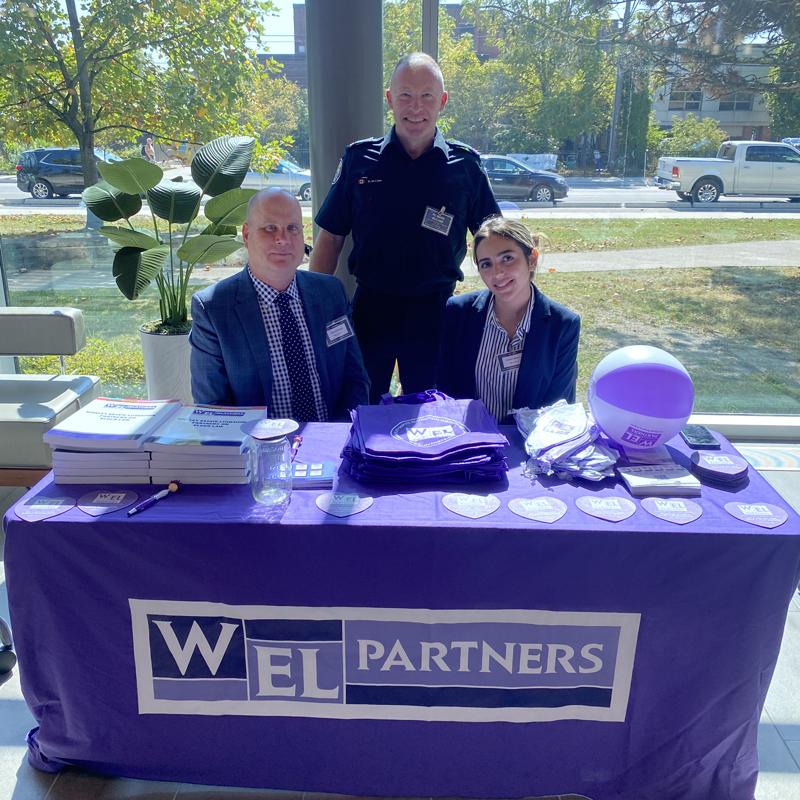
5. TORONTO POLICE SERVICES SENIOR SYMPOSIUM, SEPTEMBER 19, 2024 | Chhavi Monga and Ken Raymond from WEL Partners had the honour of attending the TPS Vulnerable Seniors Symposium held at the Toronto Police College on September 19th, 2024. Representing WEL Partners as one of the event's sponsors, we had a front-row seat to an enlightening day centred around protecting vulnerable seniors. The symposium began with an opening address by CPEU Mark McCabe, setting the stage for a series of insightful presentations and acknowledging WEL Partners for their contributions to the event. | |
|
The presentations included Dr. Carol A. Cohen delivering a thought-provoking talk on interviewing techniques when working with seniors, particularly those with cognitive disorders. She emphasized the importance of recognizing early cognitive decline, often seen first in a person’s inability to manage Instrumental Activities of Daily Living (IADLs). Dr. Cohen also directed attendees to resources from the Canadian Coalition for Seniors’ Mental Health to assist those dealing with capacity-related issues.
After which, ACA Jason Balgopal took the floor to discuss elder abuse, exploring the different forms it can take and the legal options available for intervention. His presentation shed light on the ongoing challenges seniors face and the critical role of legal professionals in combating abuse.
Followed by a joint presentation by Danielle Carbonneau and Arthur Willwerth from the Office of the Public Guardian and Trustee (OPGT) providing a detailed overview of the OPGT’s role. Explaining that the OPGT is not a crisis intervention service but acts as a substitute decision-maker of last resort when seniors are deemed incapable and at serious risk. They clarified that the OPGT operates solely within the civil judicial system, meaning they cannot lay criminal charges but are tasked with safeguarding the personal and financial well-being of seniors through investigations and guardianship roles.
The presenters also highlighted several resources available to assist in situations where the victim may not cooperate or is unable to make decisions, offering a lifeline for seniors in need. Detective David Coffey from the Financial Crimes Unit later presented on the growing issue of financial fraud against seniors, emphasizing the need for vigilance and awareness.
Closing the event, Lisa Manuel from the Elder Abuse Consultation Team fielded questions from the audience, offering practical advice on navigating the complexities of elder abuse cases.
| |
|
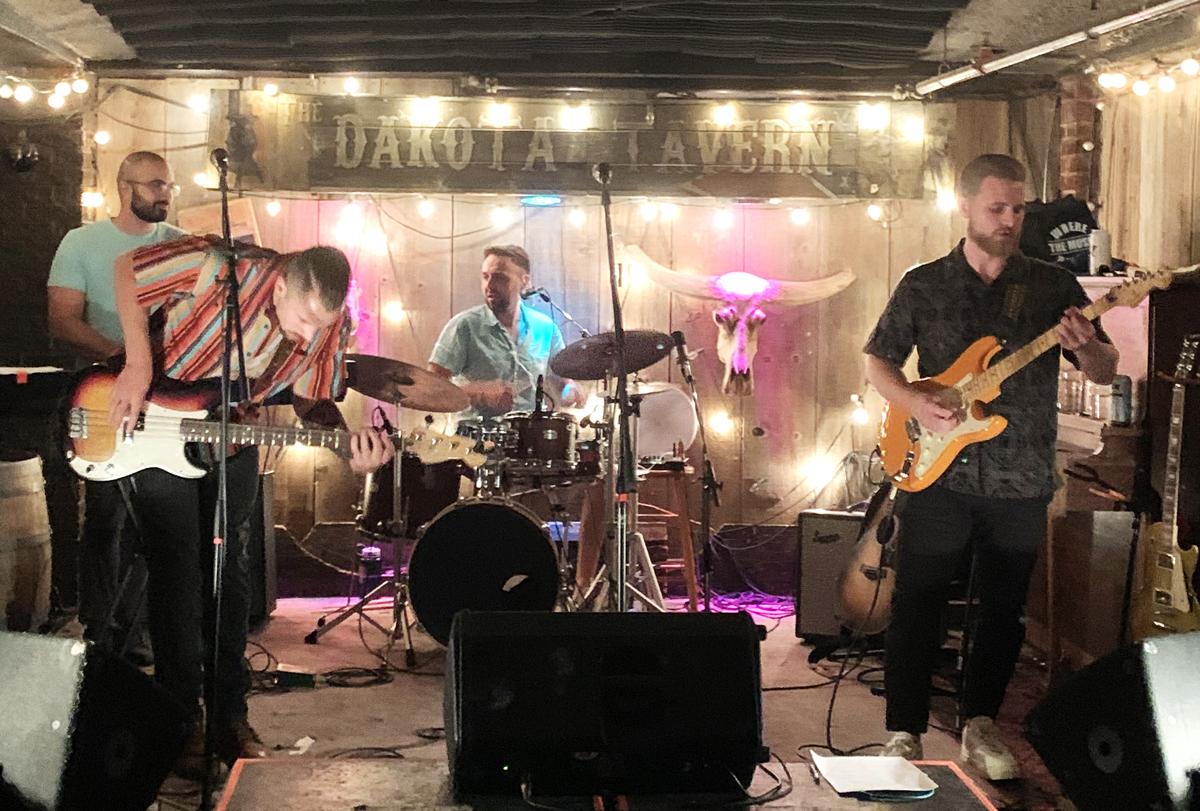
Last month, WEL Partner’s very own Jordan Atkinson performed in Toronto at the Dakota Tavern with his band, Hot Pockets. Jordan, the band’s lead guitarist, gave an electric performance to a packed and boisterous crowd. Ken Raymond and Oliver O’Brien attended.
Hot Pockets played on stage for 2 hours and their set included a blend of their own music and renditions of classics from the Killers, Dua Lipa and more. Hot Pocket’s music and stage presence made it an entertaining show, with people out of their seats and dancing throughout.
Hot Pockets are on social media and can be found on Instagram at: @hot.pockets.band
| |
|
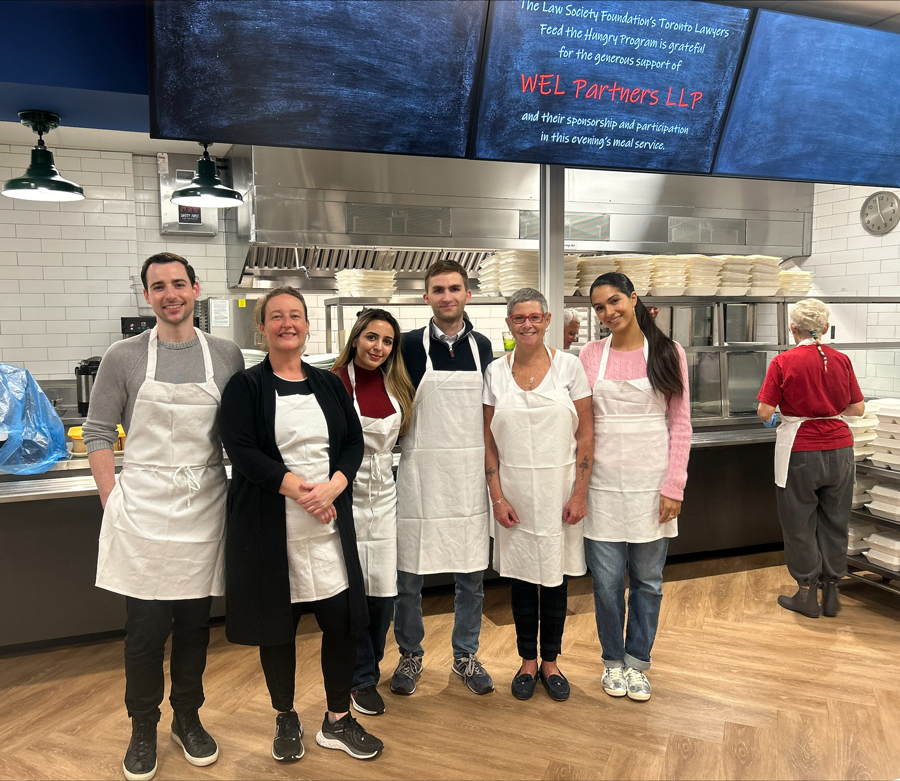
This month, WEL Partners was proud to sponsor the Lawyers Feed the Hungry program at the Law Society of Ontario.
The Lawyers Feed the Hungry programme has members of the legal community assist in serving food to those in need from the kitchens at Osgoode Hall. The programme has been running for almost thirty years and serves almost 1,200 meals a week.
Six members of WEL Partners volunteered, including: Lisa, Christin, Gabriella, Chhavi, Evan and Oliver. Those involved greatly enjoyed interacting with and serving the wider Toronto community.
https://lso.ca/the-law-society-foundation/our-work/hunger-relief-efforts#toronto-5
| |
STEP COUNCIL ELECTION RESULTS 2024 | |
19TH ANNUAL STEP PRIVATE CLIENT AWARDS | |
BEST LAWYERS TRUSTS & ESTATES RECOGNITIONS | |
(i) REBUTTING THE PRESUMPTION OF TRUST | |
|
By Albert H. Oosterhoff
1. Introduction
Cases in which parties claim an interest in property under a presumed purchase money resulting trust are now a dime a dozen. It appears a party who has no other leg to stand on will argue the presumption as a last resort or a hail Mary attempt to get what he wants. That does not mean that all such claims are baseless, but the opposite party has opportunity to rebut the presumption. However, the case law has become unclear about what exactly the opposite party needs to prove. Must he prove an intention to make a gift, or also an intention to prove a loan if he alleges that the claimant lent the money to him? In the recent case, Bradshaw v Hougassian,[1] the Ontario Court of Appeal has clarified the law on this point.
2. Facts
The testator, Violet Hougassian, had three children, Jack, Solina, and Sona. Jack purchased a house in Cambridge in 1980 for $38,500 when he was still a university student. He and Violet both signed the agreement of purchase and sale but only Jack took title. He contributed $8,000 to the purchase price from money saved from summer jobs. Violet contributed $10,000. The remainder was financed by a mortgage in Jack’s name, which Violet signed as guarantor. Soon after the purchase, Violet left her husband and moved into the newly purchased house with her children. From 1992 to 2018, when she died, Violet lived alone in the house. She paid the mortgage payments and the utility bills for the first year, after which Jack took over those payments. He also paid off the mortgage in due course. Eventually, he transferred title to the house into the name of his corporation. In fact, Jack became very successful in business and supported his mother financially during her life. Violet made her will in 2002. She left Jack out of her will because he was financially successful, while his sisters were not. She named Solina her executor and left her residuary estate equally to Solina and Sona. In 2006 Violet made an assignment into bankruptcy but did not declare the house as an asset.
In a 2023 judgment, Justice Sanfilippo held that the estate held a beneficial interest in the house under a resulting trust. Jack, his corporation and Sona appealed on two grounds. First, they argued that Violet advanced the money as a loan to Jack and that he had fully repaid the loan. Second, they argued that the trial judge wrongly held that the corroboration requirement of section 13 of the Evidence Act[2] applied to Jack.
3. Analysis and Judgment
3.1 First Ground of Appeal
Dawe JA wrote the judgment for the court and K van Rensburg and Sossin, JJA agreed. His Honour began his analysis of the first ground of appeal by quoting from paragraph 1 of Nishi v Rascal Trucking Ltd[3] which states that a purchase money resulting trust can arise ‘when a person advances funds to contribute to the purchase price of property but does not take legal title to that property’. He further observed that the paragraph also notes that there is a rebuttable presumption that the parties to the purchase ‘intended for the person who advanced the funds to hold a beneficial interest in the property in proportion to that person’s contribution’. And, citing Pecore v Pecore,[4] he noted that this presumption applies to transactions involving parents and adult children.
In their argument on appeal the appellants argued based on a statement by Professor Waters, adopted in a line of cases, that a person who claims a resulting trust ‘must also prove that he or she acted throughout as a purchaser’.[5] However, his Honour disagreed because their argument reflects a misunderstanding of legal principles.
First, the doctrine of purchase money resulting trust focuses on the parties’ intentions at the time the money is advanced.[6] His Honour therefore concluded, ‘to the extent that there can be said to be any requirement that the claimant have [sic, has] “acted … as a purchaser”, this requirement only applies at the point that the purchase money is advanced. It is true that evidence about how the claimant conducts herself later may be relevant, but only to the extent that is illumines what she intended when she contributed the purchase money. Thus, said his Honour, ‘Professor Water’s statement … should be understood as referring only to the time of the transaction itself.’
Second, the requirement that the claimant must have acted as a purchaser means simply that she did not intend to advance the money as either a gift or a loan. And this was clear from the full passage in Waters already referred to.
However, Waters’ formulation of the test raised a further question, namely, whether it imposed a burden on the claimant to prove that the money she advanced was not a loan, or whether the presumption places the onus on the opposing party to prove that the money the claimant advanced was either a loan or a gift. Or, as his Lordship continued, ‘Framed another way, is the presumption of resulting trust merely a presumption that [the] purchase money was not meant as a gift, or is there equally a presumption that the money advanced was not a loan?’
Justice Sanfilippo held that when a person makes a monetary contribution to the purchase price of property, she had no further obligation to prove that she acted as a purchaser. And, as Dawe JA noted, this follows from what Rothstein J said in paragraph 1 of Nishi, quoted above. Hence, as Dawe JA states in paragraph 19:
19 After Nishi, it is no longer necessary to distinguish loans from gifts in the resulting trust analysis. The presumption of resulting trust will be defeated if it is established that the person who contributed the purchase money did not intend to acquire a beneficial interest in the property. This can be established by demonstrating that the money advanced by the contributor was meant as either a loan or as a gift.
His Honour also quoted from Singh v Kaler,[7] which came to the same conclusion:
[P]re-Rascal Trucking and Pecore case law has been overtaken and it is no longer appropriate to require the person advancing the funds to prove he or she was “acting throughout as purchaser”. Once the claimant proves the “basis fact” ..., that is, they made a contribution to the purchase price, the legal presumption of resulting trust applies.
This is not to suggest that when a true lender advances funds to assist in the purchase, a resulting trust arises. There are significant differences between a lender and an investor or purchaser. However, when the presumption applies, the onus is on the title holder to rebut the characterization of investor by proving the purchaser was, in fact, a lender.
Accordingly, Justice Sanfilippo placed the onus on Jack to prove that Violet had contributed the money as a loan, and he held that Jack had not met this onus. Justice Dawe held that Justice Sanfilippo, having considered all the evidence, did not commit a reversible error when he concluded that it made no sense to find that Violet lent the money to Jack when she was in financial straits while he had amassed a lot of money.
3.2 Second Ground of Appeal
Section 13 of the Evidence Act provides:
13. In an action by or against the heirs, next of kin, executors, administrators or assigns of a deceased person, an opposite or interested party shall not obtain a verdict, judgment or decision on his or her own evidence in respect of any matter occurring before the death of the deceased person, unless such evidence is corroborated by some other material evidence.
The appellants argued that since Jack was not a beneficiary under Violet’s will, he was not being sued as an heir and therefore section 13 did not apply to him. But Justice Dawe held that the appellants’ argument on this point was based on a misunderstanding section 13. It is true that Jack was not being sued as an heir, but Solina sued him in her capacity as executor. That made him ‘an opposite or interested party’ and hence the corroboration requirement of section 13 applied to him. However, Justice Sanfilippo did not ultimately decide the case by applying section 13. Rather, he decided it by refusing to accept Jack’s evidence that Violet had lent him the $10,000 because he found that it was implausible that Violet would have lent the money to Jack when she was in financial difficulties, while he had sufficient moneys to pay the down payment.
---
[1] 2024 ONCA 425.
[2] RSO 1990, c E.23.
[3] 2013 SCC 33.
[4] 2007 SCC 17.
[5] Waters Law Trusts in Canada, 5th ed by DWM Waters, M Gillen, and LD Smith (Toronto: Thomson Reuters 2021), p 421.
[6] Citing Nishi, supra, paras 2, 30, 41, and Andrade v Andrade, 2016 ONCA 368, para 6.
[7] 2017 ABCA 275, paras 26-27.
| (ii) SAGA OF THE RELATIONSHIP BETWEEN WILLIAM AND GILLIAN | |
|
By Albert H. Oosterhoff
1. Introduction
It is indeed a saga, and one that is in many ways incomprehensible. The facts are recorded in The Estate of William Robert Waters v Gillian Henry et al[1] (‘William’ and ‘Gillian’); a decision of Justice Callaghan. The saga is about William, a very rich man of almost 80 in 2009, when he and his wife, Phyllis, engaged Gillian, to serve as a nighttime PSW for Phyllis. Gillian immigrated from Guyana and was 40 years old in 2009. Soon thereafter, William and Gillian enter an intimate relationship that endures for approximately nine years. During the period of 2009 to 2019 William advances over $30 million to Gillian, most of it in the form of gifts.
Inexplicable, no? The first interpretation that suggests itself is that this a case of a predatory romance scam designed by Gillian to acquire her hands on most of William’s fortune. Indeed, that is exactly what William’s Estate argued (para 75). To be sure, the facts are very similar to those you find in predatory marriage cases. However, on the facts adduced in evidence, Justice Callaghan concluded that most of the advances were gifts. Nonetheless, it seems to me that, based on her acceptance of the large sums of money and the use she made of them, she can be described as a predatory participant. This is true especially of the moneys she knowingly received from William that were Phyllis’ moneys. Further, as Justice Callaghan states, she enjoyed living the good life (para 2).
The case is very lengthy and runs to 441 paragraphs. I shall present the facts, analysis and judgment in summary form. In doing so, I mean no disrespect to his Honour’s judgment but for a blog a summary form is de rigueur. However, to permit the readers to find their way in the reasons, I shall frequently mention the paragraphs on which I rely.
2. Facts
William
William came from humble beginnings. He was an orphan who was eventually adopted by a single parent. He could not afford to go to university but went to work. But, having earned sufficient funds, he was able to attend the University of Toronto (‘UofT’), where he earned an MBA. After that he earned a PhD in economics at the University of Chicago. Then he returned to UofT and taught at what is now the Rotman School of Management, where he was the first director of the executive MBA program. Later he married Phyllis.
William was a very successful businessman. He was an expert in financial returns for utilities and he used the data he accumulated to create computer modeling program companies. He founded two companies, which he later sold for approximately $50 million. He conducted most of his business through his company, William R Rogers Limited (‘WRW’). Remarkably, he did not use computers or mobile phones, but relied on his administrative assistant, Meredith Brown (‘Meredith’) to run his office, handle his emails, and prepare documents and emails from his handwritten notes. Agnes Kussinger (‘Kussinger’) also worked for William and his businesses.
William kept close tabs on all his affairs and gave personal directions to his bankers and business advisors. He also used other professional advisors, including lawyers and accountants. Lindsay Histrop (‘Histrop’) of Cassels Brock & Blackwell prepared his wills. Histrop and Kussinger are the trustees of his estate. Kussinger is also the attorney for property for Phyllis.
Although he was wealthy, he lived modestly. He was a very private person and did not share most personal information with his friends, staff, and professional advisors. Thus, none of them were aware of his relationship with Gillian. Meredith and Kussinger knew that he provided significant funds to Gillian but never confronted him about it because they knew that William would not appreciate it. Indeed, if a friend or professional advisor pressed him too closely on a matter, he ended the relationship forthwith.
Phyllis
William and Phyllis moved into a senior’s residence before Covid. They were married for 53 years but had no children. Phyllis was 85 at the time of the action. Some time ago, Phyllis had a fall and became a housebound recluse. She suffered from chronic pain, depression, and dependent personality disorder. She requires daily care and the assistance of a PSW. There was little contact between William and her. William was her attorney for property and at one time she held $5.4 million in investments. However, over time William dissipated most of her money, so that at the time of the action only approximately $500,000 was left (para 37). Phyllis was not a witness at trial because she lacked capacity to testify.
Gillian
Gillian was born in 1969 and came to Canada to join her mother when she was a teenager. She and her sisters were sexually abused as children in Guyana. She left school after grade, 10 but later became a PSW. She married twice and had a child by each husband. Both marriages ended early. On June 9, 2009, she ended up with the house that she and her second husband purchased on Elder Crescent (‘Elder’) but had to assume the mortgage debt. She earned only a modest salary and was heavily in debt in 2009.
Employment
When the Waters hired Gillian as a nighttime PSW in 2009, she was paid a salary of $60,000. Gillian got along well with Phyllis. William professed loyalty to Phyliss. But as Justice Callaghan stated in para 48, ‘loyalty to Phyllis was not the only reason to advance considerable sums to Gillian [to persuade her to stay as her PS, as the estate argued] and, in my view, this was a convenient explanation for William that kept prying eyes from inquiring into his real motives’.
Intimate Relationship and Advancements of Money
The intimate relationship between William and Gillian began soon after she was hired. In 2009 he advanced her $101,000 so that she could buy a new car, namely, a Mercedes SUV at his suggestion. Two weeks later he advanced another $400,000 and took a mortgage on the Elder property, and the two of them signed a security agreement. Three weeks thereafter he advanced her another $310,000 to permit her to pay off the mortgages on her home and other debts. She testified that these last two sums were loans from William, but there were no signed loan documents for either amount, although there was an unsigned promissory note for the $310,000 in favour of WRW at 3% interest. Gillian testified that the money from William was to pay debts to others in connection with the Elder property, but she also used the money to make improvements to the property and for other expenses. All in all, within a little over a month after Gillian commenced employment for the Waters, William advanced more than $800,000 to Gillian without any signed note or security (para 59). As Justice Callaghan noted, this ‘was not just the generosity of an employer, but rather the generosity of an intimate partner’ (para 61).
His Honour notes that it is not surprising that William did not tell his friends and colleagues about the affair, first because it would impair his image with them, and second because he was a private person and did not share private matters with others (para 63). However, when he sought advice about his erectile disfunction, he told his family doctor that he had a girlfriend, which confirms the intimate relationship (para 64). The relationship was more than physical. Gillian spent time with William, and he regularly took her out to dinners.
Over the years, William made more than 393 transfers to Gillian, either by direct transfer or by cheque. William approved all advances. Gillian used the money to buy properties, cars, jewellery, trips, clothes and other things. She spent $12 million to purchase properties, and another $7 million on renovations to properties on Brock Road (the location of King of Hearts and King of Hearts Stables) and another property. Gillian incorporated a number of companies to hold title to the properties, one of which is 2325587 Ontario Limited (‘587 Ontario’).
William also paid for private school education of Noelle, Gillian’s daughter, at a private school in Newmarket, and Gillian brought a house on Secretariate Drive (‘Secretariate’), that was near to the school. She rented it out after 2011, when she bought another house on Northern Dancer Drive (‘Northern Dancer’) in Newmarket for $2 million. William guaranteed the mortgage on this property. Gillian acknowledged that she agreed to repay the money he advanced to buy Secretariate. It was sold in 2013, after which she transferred $700,000 to William.
King of Hearts
King of Hearts is the only asset owned by Gillian that is operated as a stand-alone business. Gillian acquired title to it through her 587 Ontario company and operated it as a horse farm to board the horses of Noelle and others. But William paid $2.1 million of the price. A note made on 5 September 2014 (‘September Note’) indicated that William held a business interest in King of Hearts (para 127) and Justice Callaghan so found (para 139).
Wills
William made several wills between 2011-2018. The last, in 2018, continued a large bequest of shares in a private company to Gillian, ‘provided she pays to my estate the assets she holds for me on resulting trust’. The condition was inserted at the suggestion of Histrop, who believed the Gillian was taking advantage of William (para 159), but she was unaware of the intimate relationship between the two. She counselled William to make a demand for Gillian to repay him for what she held for his benefit. He declined to do so (para 163).
William received independent legal advice on several occasions, mostly at the request of his bank because of his age. The advisors testified that William had capacity, was aware of the transactions, and did not appear to be concerned.
The Estate brought this action against Gillian and her corporations. The estate also sued Gillian’s children, her parents, and several siblings and their spouses.
3. Analysis and Judgment
Justice Callaghan began his reasons with a summary of his decision. This is perhaps unusual. But because it will assist in understanding the lengthy reasons, I reproduce the summary here:
- William Waters … was an academic, successful businessman, and philanthropist. He had amassed a significant sum in his life. He died at the age of 88.
- Upon his death, his estate trustees on behalf of his estate (the “Estate”) would learn that he had provided most of his money to his wife’s personal care worker, Gillian Henry …. Over the better part of 10 years, William had provided Gillian more than $30 million, which Gillian spent acquiring property and living the good life. Unbeknownst to his friends, colleagues, and the estate trustees, over those years, William was involved in an intimate relationship with Gillian.
- The Estate sues Gillian seeking the return of the money and properties purchased with the money. It claims that Gillian cannot keep the money. It asserts the money was given to Gillian to invest for William. In contrast, Gillian states the money was a gift and she is not required to repay the Estate or return the properties.
- This case turns on the intentions of William. Was the money a gift or was the money to be invested and returned to him? Of course, William is dead. He cannot speak and tell us his intentions. Instead, his intentions must be deciphered from the other evidence adduced at trial.
- I have concluded that William did intend most of the money to be a gift. I have concluded that William intended to retain an interest in the business known as King of Hearts Stables (”King of Hearts”). I have further concluded that William improperly gifted his wife’s money to Gillian, which he could not do, and which must be returned to Phyliss. Further, there are certain debts that are agreed to be owing that must be repaid and a mortgage that must be discharged. Finally, there is an Order of Canada medal that must be returned.
- There was a Counterclaim issued alleging that William committed a sexual battery on Gillian at the outset of their relationship. I have dismissed that claim.
Limitations and Corroboration
His Honour found that most of the claims were barred and only some were still within time (paras 229ff). He also held that corroboration was required because of s 13 of the Evidence Act.[2] And he accepted most, but not all, of the evidence (para 276).
Resulting Trust
The first main issue is resulting trust. The Estate relied on the presumption of resulting trust,[3] which places the onus on Gillian to prove that William intended gifts. His Honour concluded that most of the money William gave to Gillian was in the form of gifts. In his opinion, although the magnitude of the moneys might make a reasonable person question the transfers, they were made over 10 years and were made within an intimate relationship (paras 288-292). He held that the non-property amounts were all gifts and that the property amounts were also gifts to permit Gillian to purchase various properties, except for King of Hearts, in which William intended to retain a beneficial interest. Thus, there was a resulting trust for the purchase and renovation of that property, but there was no resulting trust with respect to the other properties (paras 316-317).
Since William was Phyliss’s attorney for property, he had a fiduciary duty to toward her. The parties agreed that he was a fiduciary (para 319) and that was not an issue, since that is a statutory rule.[4] Hence, the $5.4 million of Phyliss’s money that he lost must be repaid to Phyliss. The Estate agreed that they owe this amount to Phyliss (para 319). The evidence showed that $2.85 million was transferred by Phyllis to William between 2013 and 2018. His Honour concluded that William then passed on these transfers to Gillian as gifts, because they came from William’s Wood Gundy accounts and William used his margin account with Wood Gundy to fund his payments to Gillian (paras 321-327). His Honour also held that, as Phyllis’s caregiver, Gillian is in a fiduciary relationship with Phyliss (para 329). Regrettably, he did not give any authority for this proposition. However, it is clear that she is a fiduciary, since the fits the description of a fiduciary by Wilson J in Frame v Smith, where her Ladyship stated:[5]
39 Relationships in which a fiduciary obligation have been imposed seem to possess three general characteristics:
40 (1) The fiduciary has scope for the exercise of some discretion or power.
41 (2) The fiduciary can unilaterally exercise that power or discretion so as to affect the beneficiary's legal or practical interests.
42 (3) The beneficiary is peculiarly vulnerable to or at the mercy of the fiduciary holding the discretion of power
It is true that Wilson J dissented in the case, but this statement has been accepted as correct in subsequent cases.[6]
Justice Callaghan went on to hold that William and Gillian’s actions were unconscionable, and that the doctrine of equitable fraud precludes Gillian from retaining the moneys[7] (paras 330-334). She must repay the moneys to the Estate, which must return the moneys to Phyllis (para 335).
Undue Influence
Justice Callaghan then addressed the issue of undue influence. He noted that there are two kinds of undue influence, actual and presumed.[8] Whether a presumption could be raised in this case depends on whether William reposed trust in Gillian for his finances. His Honour found that there was no evidence to that effect, so that the presumption did not apply. Besides, William controlled his own finances (paras 344, 347). Nor, considering that William was a strong-willed person who controlled his own financial affairs and knew what he was doing, was there actual undue influence (paras 349ff).
Unconscionable Procurement
The next issue is unconscionable procurement. His Honour mentioned the question whether the doctrine is part of the law of Ontario,[9] but held that, apart from King of Hearts and Phyllis’s money, the advances were all in the form of gifts. Therefore, there was no unconscionable procurement (para 361).
Ad Hoc Fiduciary Claim
His Honour also rejected the argument that Gillian is an ad hoc fiduciary toward William because she was not operating a property business for him and did not agree to hold her properties in William’s best interests (para 363).
Fraud
Similarly, his Honour rejected the claim that Gillian obtained the funds through fraudulent misrepresentation, since there was no misrepresentation (para 366).
Unjust Enrichment
Next his Honour rejected the argument that Gillian was unjustly enriched. Since he found that most of the advancements to Gillian were gifts (except for the money William took from Phyliss and the money he invested in King of Hearts), there was no basis for a claim in unjust enrichment[10] (para 367). However, there was an unjust enrichment with respect to the moneys that came from Phyllis. She was deprived of the $5.4 million and that amount was made up in part of the $2.85 million that was a corresponding enrichment to Gillian (para 369).
Claims Against Family Members
The claims against Gillian’s family members were based on the doctrine of knowing receipt. Many of these claims were statute barred. But in any event, except for Phyliss’s funds and King of Hearts, none of the funds were subject to a trust, and knowing receipt (as well as knowing assistance) is based on the premise that family members received trust property with actual or constructive knowledge that the property was being misapplied.[11] Therefore his Honour dismissed these claims.
Successful Claims
King of Hearts. While William acknowledged that Gillian had legal title to the property, he intended to hold an ownership interest. This meant that the court had to estimate the proportionate share of William’s interest. Based on the September Note, his Honour calculated William’s contribution to the purchase as $2.1 million and Gillian’s as $400,000. In his opinion, this meant that William intended to retain an 80% beneficial interest in King of Hearts. He did not believe that William’s additional investment in the form of payments for renovations should alter this calculation, in part because Gillian contributed sweat equity. This meant that the Estate is entitled to an 80% ownership in 587 Ontario’s interest in King of Hearts, which owns Brock, and an 80% interest in King of Hearts Stables Ltd. However, the award did not extend to other assets owned by 587 Ontario (para 385).
In a pre-trial proceeding the court ordered King of Hearts to be sold. It has not yet been sold and at the conclusion of the trial his Honour ordered that no sales take place until these reasons are released. His Honour has now ordered that it be sold and that the net proceeds be divided 80/20 between the Estate and William. However, this is subject to the comments regarding Phyliss below, and if there is a good reason for not selling the property, either party may seek a case conference to address the matter (para 386).
Outstanding Loans. Justice Cavanaugh next dealt with the outstanding loans of $2.6 million. He ordered that Gillian pay the Estate the amount of the loans less the $1.6 million Gillian already repaid. Since the outstanding loans included a mortgage on Elder, the Elder mortgage should be discharged once the loans were paid (pars 389, 391).
Since the sale of the properties may influence the calculation of the overall payments, and since the moneys used to purchase the properties were gifts, this may create a further offset. To resolve that the parties should reach an agreement or attend before his Honour to resolve the issue. Until it is resolved a formal order cannot be issued.
Phyliss’s Money
There was another issue with respect to the $2.85 million Gillian received from Phyliss and which must be paid to the Estate for the benefit of Phyllis. The moneys were paid to her beginning in December 2013 and continued for a number of years thereafter. This coincided with the period when $4.5 million were used to renovate King of Hearts. This meant that some of the $2.85 million should be borne by the Estate in proportion to its ownership in King of Hearts. His Honour estimated this figure as follows. In his calculation, 40% of the money spent between 2014 and 2018 was spent on King of Heart. Applying the 40% to the $2.85 million, $1.14 million of Phyliss’s money (i.e., 40% of $2.85 million) was used for King of Hearts. Consequently, when the funds are ultimately settled, the Estate must hold $912,000 (i.e., 80% of the $1.14 million) in trust for Phyllis. Gillian will be responsible for the remainder, $1,938,000.
Guarantee
It was intended (as indicated in the trust document and William’s Wills) that his guarantee on Northern Dancer would be extinguished on his death. Thus, Gillian must pay off the mortgage.
Order of Canada
Phyliss gave William’s Order of Canada medal to Gillian. She was unable to do so, since it belongs to the Estate. Gillian must return it to the Estate.
Counterclaim
As mentioned above, Gillian counterclaimed that William sexually abused her soon after she was hired and before their intimate relationship began. She based her claim on sexual battery. The only evidence is Gillian’s evidence. His Honour found that there was no clear, convincing, and cogent evidence to prove that battery took place. He did not find Gillian’s evidence credible on this issue. Moreover, she failed to provide corroborative evidence as required by s 13 of the Evidence Act. Therefore, he dismissed the counterclaim.
Costs
Since there are further issues to be resolved, no costs order can be made until they are, or the court is informed that there are no further issues that need to be dealt with. Considering the divided success, it will be interesting to see the treatment of costs in this matter.
4. Concluding Comments
In these types of situations involving an estate there are always evidentiary hurdles, yet equitable remedies seem to be a common theme in the remedies accepted and applied. In this instance, resulting trust, unjust enrichment, unconscionability, and the doctrine of equitable fraud were tools used by the court to resolve William and Gillian’s fiduciary breaches to Phyliss, which caused financial devastation to her.
---
[1] 2024 ONSC 4190.
[2] RSO 1990, c E.23.
[3] Citing Pecore v Pecore, 2007 SCC 17.
[4] Substitute Decisions Act, 1992, SO 1992, c 30, ss. 32 and 38.
[5] [1987] 2 SCR 99, 42 DLR 4th 81, 1987 CarswellOnt 969.
[6] It should be noted that in Hodgkinson v Simms, [1994] 3 SCR 377 at 409, La Forest J suggested that an element of vulnerability is not essential to every fiduciary relationship. He regarded Justice Wilson’s tri-partite test as containing ‘indicia that help recognize fiduciary relationships rather than the ingredients that define it’.
[7] Citing Performance Industries Ltd v Sylvan Lake Golf & Tennis Club Ltd, 2002 SCC 19.
[8] Citing Bank of Montréal v Duguid (2000), 47 OR 3d 736 (CA), para 6.
[9] Citing Gefen v Gaertner, 2022 ONCA 174, para 61.
[10] Citing Moore v Sweet, 2018 SCC 52, paras 57-58.
[11] Citing Quantum Dealer Financial Corporation v Toronto Fine Cars and Leasing Inc, 2023 ONCA 256, para 52.
| |
(iii) HOW LONG IS TOO LONG FOR A NON-OWNER TO REMAIN IN AN ESTATE PROPERTY? | |
|
By Evan Pernica
In the recent decision of Kenney v. Martin, the Honourable Justice Charney required the son of a Deceased to vacate an Estate property within 7 days of the property being sold, and further required the Estate Trustee to wait for a period of at least 60 days before closing on a sale of the property.
Facts
The Deceased died leaving behind two sons, Derek and Christopher. Derek resided in the Deceased’s home (the “Home”) for his entire life and continued residing in the property after the Deceased’s death. Derek also commenced an application against the Estate for dependant support under the Succession Law Reform Act, RSO 1990, c S.26.
The essential terms of the Deceased’s will divide the residue of her Estate between her two sons, which residue included the Home. The Deceased also named her sister as Estate Trustee.
When the Estate Trustee attempted to appraise and list the deceased’s Home for sale, they were met with interference and threatening responses from Derek.
Position of the Parties
Considering Derek’s conduct, the Estate Trustee sought declarations and orders that, amongst other things, the Deceased was the sole owner of the Home; the Home vested in the Estate Trustee upon death; the Estate Trustee is entitled to immediate vacant possession of the Home and power of sale; and that Derek was required to vacate the Home within 30 days.
In response, Derek conceded that the Home could be sold but sought an adjournment to a mutually agreeable date. The basis for the requested extension included that he had lived in the Home for his entire life and “needed time to plan his next steps” and has commenced a dependant support application against the Estate that remains unresolved.
Analysis
Section 2(1) of the Estates Administration Act, R.S.O. 1990, Chapter E.22 vests all property unincumbered by rights of survivorship in an Estate Trustee upon death:
2 (1) All real and personal property that is vested in a person without a right in any other person to take by survivorship, on the person’s death, whether testate or intestate and despite any testamentary disposition, devolves to and becomes vested in his or her personal representative from time to time as trustee for the persons by law beneficially entitled thereto, and, subject to the payment of the person’s debts and so far as such property is not disposed of by deed, will, contract or other effectual disposition, it shall be administered, dealt with and distributed as if it were personal property not so disposed of.
Accordingly, Justice Charney found that the Home and associated powers vested in the Estate Trustee upon the Deceased’s death.
At the same time, Justice Charney accepted an undertaking from Derek to cooperate with the Estate Trustee moving forward and required that the Estate Trustee wait 60 days before closing on any Agreement of Purchase and Sale for the Property while further requiring Derek to vacate at least 7 days prior to the date of closing.
Concluding Comments
This decision speaks to the immediate authority vested in Estate Trustees to deal with Estate assets contrasted against reasonable needs and expectations of third parties and beneficiaries.
| |
(iv) ONTARIO COURT OF APPEAL CONFIRMS 2-YEAR LIMITATION PERIOD FOR EQUITABLE CLAIMS AGAINST AN ESTATE | |
|
By Oliver O’Brien
The recent Ontario Court of Appeal decision in Ingram v. Kulynych Estate https://canlii.ca/t/k6rj7 (“Kulynych Estate”)”,[1] provides clarity on the limitation period applicable to equitable claims against an estate. Roberts J.A. speaking for the Court, confirmed that the two-year limitation period under section 38 of the Trustee Act,[2] applies to equitable claims, not the ten-year limitation period under section 4 of the Real Property Limitations Act (“RPLA”).[3]
Background
Mr. Kulynych died in February 2017 (the “Deceased”), leaving a Last Will and Testament from 1989 (the “Will”). The dispositive provisions of the Will were such that his estate was left to his first wife, but in the event, she predeceased him it flowed to his three children. The applicant at first instance was Ms. Ingram, who alleged that she was the Deceased’s common law spouse from 1999 until the time of his passing. The Will left nothing to Ms. Ingram.[4]
By March 2020, the estate trustee had distributed most of the assets of the estate. Two years prior, in March 2018, Ms. Ingram sent a letter through her counsel asserting that she was entitled to receive one-third of the total value of the estate, given she had supported the Deceased emotionally and financially for many years.[5] It was not until March 2021, over four years since the Deceased’s passing, that Ms. Ingram commenced an application against the Deceased’s estate for dependant’s support. Ms. Ingram also made an equitable claim, by way of constructive or resulting trust, for a share of the estate.[6] The estate trustee argued that Ms. Ingram was statute-barred from bringing her application, given two-years had passed since the Deceased death. The motion judge rejected this argument and ruled that the ten-year limitation period under the RPLA applied. The decision appealed.
Issues for Court of Appeal
The chief issue for the Court of Appeal was not the quality of Ms. Ingram’s equitable trust claim, but rather whether she was statute-barred from bringing it. Two applicable limitation periods with recognized:
(1) The two-year limitation period against an estate under section 38(3) of the Trustee Act; and
(2) The ten-year limitation period in relation to interest in property under section 4 of the RPLA.
The relevant provisions of the Trustee Act are:
Actions against executors and administrators for torts
38(2) Except in cases of libel and slander, if a deceased person committed or is by law liable for a wrong to another in respect of his or her person or to another person’s property, the person wronged may maintain an action against the executor or administrator of the person who committed or is by law liable for the wrong.
Limitation of actions
38(3) An action under this section shall not be brought after the expiration of two years from the death of the deceased.[7]
And the RPLA:
Limitation where the subject interested
4. No person shall make an entry or distress, or bring an action to recover any land or rent, but within ten years next after the time at which the right to make such entry or distress, or to bring such action, first accrued to some person through whom the person making or bringing it claims, or if the right did not accrue to any person through whom that person claims, then within ten years next after the time at which the right to make such entry or distress, or to bring such action, first accrued to the person making or bringing it.[8]
Analysis
Iskenderov factors
The Court of Appeal relied on a previous appellate decision in Bank of Montreal v. Iskenderov (“Iskenderov”).[9] In Iskenderov, the Court of Appeal grappled with the issue of two potentially applicable limitation periods in the context of fraudulent conveyance. Feldman J.A. established the correct analytical path to follow when considering which should apply, which includes consideration of the following factors:
- The historical approach to the limitation periods in issue – including the legislative purpose of the relevant statutory limitation periods;
- The judicial approach to interpreting limitation periods in issue;
- The nature of the relief sought in the action; and
-
The language of the statutory limitation provisions.[10]
Importantly, the motion judge in Kulynych Estate did not have the benefit of the Iskenderov analysis. The Court of Appeal proceeded to consider each of the Iskenderov factors in turn.
Historical purpose of two-year limitation period against estates
As to the historical approach and the legislative purpose, the Court of Appeal noted that:
The shorter, two-year limitation period for estate matters reflects the long-established duty of estate trustees to administer estates promptly and diligently, including ascertaining the estate’s liabilities and debts as quickly as possible, as the expeditious administration of estates is in the interests of justice.[11]
The Court of Appeal further discussed how the discoverability principle does not apply to actions under section 38 of the Trustee Act. It cited the decision in Ryan v. Moore,[12] where the Supreme Court of Canada stated:
A further reason for the non-application of the discoverability rule is the evident impact such a rule would have on the distribution of assets to the beneficiaries. Without a time limit, an executor or an administrator would not feel free to distribute the assets of an estate until all reasonable possibilities of claim had been addressed. This would be cumbersome and unrealistic. ‘An estate should not be held to ransom interminably by the advancement of claims which are not proceeded with in a timely manner’.[13]
Accordingly, the legislature had underlying policy reasons for applying a strict, two-year limitation period to claims against an estate.
As further evidence of the legislative intent for the shorter limitation period for estate claims, the Court of Appeal noted the requirement for the timely administration of estate assets under the Estates Administration Act (“ECA”).[14] Section 9 of the ECA concerns vesting of estate property and establishes that in the absence of a registered caution, all real property not disposed of within three years of the deceased’s death automatically vests, without conveyance by a deceased’s personal representative, in the persons beneficially entitled to it.[15]
Which limitation period applies?
The Court of Appeal found that Ms. Ingram’s equitable trust claim fell neatly within section 38(2) of the Trustee Act. This was a reversal of the decision by the motion judge, who ruled that this provision did not encompass unjust enrichment claims, given no ‘wrongs’ were committed by the Deceased. To the contrary, Ms. Ingram’s claim was predicated on the fact that the Deceased financially benefited from her, living rent-free in her apartment for years while renting out his own property. In other words, Ms. Ingram was wronged by the Deceased’s unjust enrichment.[16]
Examining the issue more generally, the Court of Appeal noted the potential conflict between limitation periods, which could both arguably apply to an equitable trust claim against an estate. However, it cited the well-recognized principle of statutory interpretation, generalia specialibus non derogant, which provides that special or more specific legislation overrides general legislation in the case of conflict so that the two statutes are brought into harmony.[17]
The Court of Appeal found that sections 38(2) and 38(3) of the Trustee Act are more specific than section 4 of the RPLA. Section 4 of the RPLA is general in nature and does not refer to estate proceedings. To include estate proceedings under this provision of the RPLA “ignores the language, legislative history, purpose, and judicial treatment of s.38 of the Trustee Act”.[18] It would require the inclusion of language that the legislature did not intend and would be inconsistent with the overarching interests of justice that estates be efficiently and quickly administered.[19]
Further still, was Ms. Ingram’s equitable trust claim “an action to recover any land” for the purposes of the RPLA? The Court of Appeal did not agree, given the nature of her equitable claim was in relation to estate assets and not the Deceased’s real property. Ms. Ingram’s claim for relief was specifically for an order, by way of constructive or resulting trust, for one-third interest in all estate assets or their money’s worth. The fact that Ms. Ingram claimed an interest in all estate assets, based on unjust enrichment, indicates that her claim was an estate claim that falls within the Trustee Act, not the RPLA.[20]
Accordingly, Ms. Ingram’s equitable trust claim crystallized on the passing of the Deceased, at which point his assets vested in his estate trustee. Her claim was in the ownership of these assets, not the Deceased’s property, and the two-year limitation period in the Trustee Act applied. Because Ms. Ingram brought her action more than two years after the Deceased’s passing, the Court of Appeal ordered that she was statute-barred.[21]
Concluding Comments
The decision in Kulynych Estate brings even more clarity to the applicable limitation periods for equitable claims against an estate. Prior to this decision, estate litigators could rely upon the decision in Wilkinson v. The Estate of Linda Robinson,[22] for the principle that the ten-year limitation period under the RPLA could apply to constructive trust claims against estate property. The Court of Appeal found that Wilkinson was wrongly decided.[23]
---
[1] Ingram v. Kulynych Estate, 2024 ONCA 678 (“Kulynych Estate”).
[2] Trustee Act, RSO 1990, c T.23 (“Trustee Act”).
[3] Real Property Limitations Act, RSO 1990, c L.15 (“RPLA”).
[4] Kulynych Estate at para 4.
[5] Kulynych Estate at paras 5 and 6.
[6] Kulynych Estate at para 7.
[7] Trustee Act, sections 38(2) and 38(3) [emphasis added].
[8] RPLA, section 4 [emphasis added].
[9] Bank of Montreal v. Iskenderov, 2023 ONCA 528 (CanLII).
[10] Kulynych Estate at para 21.
[11] Kulynych Estate at para 29 [emphasis added].
[12] Ryan v. Moore, 2005 SCC 38 (CanLII), [2005] 2 SCR 53.
[13] Ibid. para 33 [emphasis added].
[14] Estates Administration Act, RSO 1990, c E.22.
[15] ECA, section 9(1).
[16] Kulynych Estate at para 52.
[17] Kulynych Estate at para 55.
[18] Kulynych Estate at para 58.
[19] Ibid.
[20] Kulynych Estate at para 60.
[21] Kulynych Estate at para 61.
[22] Wilkinson v. The Estate of Linda Robinson, 2020 ONSC 91 (CanLII).
[23] Kulynych Estate at para 65.
| |
(v) CASE REVIEW: DEWBERRY ESTATE (RE) | |
|
By Fabiana Araujo Monteiro da Silva Kennedy
https://canlii.ca/t/k6r6k
Self-Dealing, Part II
Introduction
At the end of August, I addressed how the rule of self-dealing applied in the matter of the Estate of William Scott Dewberry : see Self-Dealing, When Is It Allowed?.
This month, the Supreme Court of British Columbia provided a supplementary reason, for the Dewberry Estate (Re)[1] judgment given on July 13, 2024, and indexed as 2024 BCSC 1374 (“First Decision”).
The Court addressed the concluding paragraphs of the First Decision which outlined that neither side addressed the terms of sale of the property.
Background
William Scott Dewberry (“Mr. Dewberry”) died on August 10, 2016, without a Will.
He was survived by his three daughters namely, Angela Dewberry (“Ms. Dewberry”), Tracey Friman (“Ms. Friman”) and Elaine Eaton. The sisters are entitled to equal shares in Mr. Dewberry’s estate in accordance with s. 23(2) of the Wills, Estates and Succession Act, S.B.C. 2009, c. 13.
Supplementary Reasons
Ms. Friman seeks an order for the sale of the Property and an award of costs against Ms. Dewberry in her personal capacity, on terms allowing the amount owing to be deducted from the net sale proceeds of the Property.
Ms. Dewberry seeks that she continues to have conduct of the sale. In the alternative, she seeks she seeks a “right of first refusal” that would allow her to meet any acceptable offer, in the further alternative, terms that would give the conduct of the sale to a third-party lawyer and allow her to purchase the Property in her personal capacity should no offer be received within a period of time set by the Court[2].
The Court confirmed once again the reasons set out in the First Decision, which were for Ms. Dewberry not to conduct of the sale of the Property. Ms. Dewberry shall continue as the Administrator, but it is appropriate for someone other than her to have conduct of the sale of the Property on behalf of the Estate[3].
As a result, the Court ordered that Ms. Friman will have exclusive conduct of the sale on behalf of the Estate in accordance with its set terms and with respect to the costs of the application awarded cost against Ms. Dewberry in her personal capacity is fixed at $2,000.00.
Concluding Comments
Executors are fiduciaries and owe fiduciary duties to the Estate and the beneficiaries. The executor is responsible for ensuring each beneficiary receives their share of the Estate. The general rule is that executors can not purchase trust property without the consent of all beneficiaries or sale occurs at fair market value with the approval of the Court.
It is important for the drafting solicitor to explain to the client that general rule, as sometimes there is a misconception that being an executor is only merely about distributing assets. It is indeed a task with legal obligations.
---
[1] Dewberry Estate (Re), 2024 BCSC 1695
[2] Ibid para 7
[3] Ibid para 9
| |
(vi) ANOTHER FAILED WILL CHALLENGE - MILNER V. MILNER | |
|
Milner v Milner, 2024 ONSC 4232 https://canlii.ca/t/k6stc
By Gabriella Banhara
In Milner v Milner, 2024 ONSC 4232 (“Milner”) the court dismissed an application seeking that the Applicant’s mother lacked the requisite testamentary capacity to execute her Last Will and Testament (the “Will”). The application also asserted that the Will was prepared under suspicious circumstances and that the testator was unduly influenced at the time of the Will’s execution.
All these claims were dismissed by the Court on the basis that the Applicant’s uncorroborated evidence was insufficient to prove such claims.
Facts
The Deceased had two sons, the Applicant and the Respondent. The Respondent had three children, all of whom assisted in the Deceased’s care prior to her death. The Deceased executed her Will on May 17, 2018, at the age of 91 alongside Continuing Power of Attorney for Property (“CPOAP”), a Power of Attorney for Personal Care (“POAPC”).[1] On October 18, 2021, the Deceased passed away. In the Deceased’s Will, the Respondent was appointed as her Estate Trustee, as well as her attorney under the CPOAP and the POAPC.
Due to the Deceased’s declining health, she was unable to live in her own home located at 3 Kellogg Street, Toronto (the “home”) shortly prior to her passing. In 2019, the Deceased moved into the Respondent’s home. The Deceased was assisted by the Respondent and his children until her death. In the same year, the Deceased had vocalized the desire to renovate the home and rent it to tenants to cover her health care costs. Soon after, the Respondent completed a renovation of the Deceased’s home and rented it to tenants for one year, at a monthly cost of $2,700.
The court stated it was clear that the Respondent had a distant relationship with the Deceased. In 2019, the Respondent re-emerged into the Deceased’s life and requested two wellness checks be conducted in 2020 and 2021.
The Deceased had multiple assets on her death, including a few million dollars in savings, as well as her home that was worth $1.5 million dollars.[2]
The Will
The Deceased’s Will divided the residue of the Estate (the “Estate”) into three equal shares between the Respondent, his children and the Applicant. In November of 2021, the Applicant filed a Notice of Objection to the Respondent’s Application for a Certificate of Appointment of Estate Trustee with a Will. This Notice of Objection was filed on the “on grounds of lack of testamentary capacity, undue influence, suspicious circumstances, and unfitness to act as estate trustee”.[3] The Respondent alleged that the Deceased had made an earlier Will that divided the residue of the Estate between the Applicant and the Respondent, instead of between the Respondent, his children and the Applicant.[4]
The Law
The court asserted that the presumption “to prove a Will” lays on the propounder. In other words, the individual upholding the Will has the “the legal burden of proof with respect to due execution, knowledge and approval and testamentary capacity”.[5] In this case, the propounder of the Will was the Respondent.
[28] As set out in Vout v. Hay, 1995 CanLII 105 (SCC), [1995] 2 S.C.R. 876 (S.C.C.), at para. 26, if a will is duly executed with the requisite formalities, after having been read over to or by a testator who appeared to understand it, it will generally be presumed that the testator knew and approved of the contents and had the necessary testamentary capacity.
[29] However, the presumption may be rebutted by evidence of suspicious circumstances relating to one or more of:
(i) circumstances surrounding the preparation of the will;
(ii) circumstances tending to call into question the capacity of the testator; or
(iii) circumstances tending to show that the free will of the testator was overborne by acts of coercion or fraud: Vout v. Hay, para. 25. Where suspicious circumstances are present, the presumption is spent and the propounder of the will reassumes the legal burden of proving knowledge and approval: Vout v. Hay, para. 27.
Evidence
The Applicant provided only his own affidavit evidence, consisting of uncorroborated statements said by the Respondent.[6] These included statements such as “[the Deceased] told him that “… [the Applicant] forced her to change her prior will”[7] or “[the Respondent] told [the Deceased] to question the making of a new will and to tell the lawyer that she understood everything and agreed …”.[8] The Deceased also purportedly asserted that the Respondent was taking thyroid medication that could have affected her testamentary capacity.
As per the Respondent’s own evidence, he submits a police report that stated the Deceased was being taken care of in proper conditions with round the clock care. the Respondent denied all of the Applicant’s allegations.[9]
Evidence from the Deceased’s solicitor indicated that the Deceased did not exhibit symptoms of diminished testamentary capacity during the execution of the Will on May 17, 2018.[10] Additionally, the court pointed to a referral letter written by the Deceased’s family doctor on July 31, 2018, that also did not to raise any concerns regarding the Deceased’s mental capacity.[11]
Analysis
Claim #1 - Testamentary Capacity:
The court stated that there was no independent evidence to support a finding that the Deceased lacked testamentary capacity to execute the Will. Additionally, according to the solicitor’s evidence, it was clear that the Deceased had fulfilled the requirements set out in Orfus Estate v. Samuel & Bessie Orfus Family Foundation, 2011 ONSC 3043, aff’d 2012 ONCA 225[12], as the following:
Testamentary capacity is established where the testator:
(i) understands the nature and effect of a will;
(ii) recollects the nature and extent of his or her property;
(iii) understands the extent of what he or she is giving under the will;
(iv) remembers the people he or she might be expected to benefit under his or her will; and
(v) understands the nature of the claims that may be made by persons he or she is excluding under the will.
The Applicant was unable to “rebut the presumption that the testator had testamentary capacity at the time the Will was executed”.[13]
Claim #2 - Unduly Influenced
The Applicant was unable to prove, on a balance of probabilities, that there was actual coercion used to influence the Deceased into executing her Will. Additionally, the court found that the Applicant did not submit sufficient evidence to prove this claim.
Concluding Comments
It is clear from Milner that there is a high burden of proof that must be put forth to successfully contest a will. This includes evidence that is independently corroborated as per s. 13 of the Evidence Act, R.S.O. 1990, c. E.23.
---
[1] Ibid at para 5
[2] Ibid at para 11
[3] Ibid at para 11
[4] Ibid at para 14
[5] Ibid at para 31
[6] All Will Challenges in Ontario are subject to s. 13 of the Evidence Act R.S.O. 1990, c.E.23
[7] Ibid at para 26
[8] Ibid at para 26
[9] Ibid at para 28
[10] Ibid at para 30
[11] Ibid at para 44
[12] Orfus Estate v. Samuel & Bessie Orfus Family Foundation, 2011 ONSC 3043, aff’d in R. v. Brown, 2012 ONCA 225
[13] Ibid at para 41
| |
|
STEP Cayman Island Conference
September 26, 2024
Ogier, Cayman Islands, October 1, 2024
Predatory Marriages Lecture
Speaker: Kimberly Whaley
CBA Wills Estates & Trust, Elder Law and Pensions Law online Symposium
October 1, 2024
Litigation Relating to POAS
Speaker: Kimberly Whaley
https://www.cbapd.org/details_en.aspx?id=na_na24eld01a
STEP Canada-USA 2024 Cross-Border Conference
October 6 – 9, 2024
Incapacity Planning
Speakers: Kimberly Whaley, Kathleen Cunningham and Shelley Rhoads Perry
https://web.cvent.com/event/f9837a29-18bb-4e46-a911-2f5b3a15f2d5/websitePage:602b72f4-fb83-4ccf-aa97-2886aed126c1
STEP Bermuda Conference
October 15 – 16, 2024
Predatory Marriages
Speakers: Kimberly Whaley and Michael Armstrong (Forsters LLP)
https://preview.shorthand.com/GaL8B5bYtn4gvG1Q
Colloquium Legal Education Conference, Sudbury, ON
October 16 – 18, 2024
Estates Section
Speaker/Chair: Bryan Gilmartin
https://www.colloquiumsudbury.com/
Osgoode Estate Litigation Certificate Program
October 21, 2024
Non-Contentious and Contentious Proceedings – Locating Missing Beneficiaries
Speakers: Kimberly Whaley & Bryan Gilmartin
https://osgoodepd.ca/professional-development/certificates/estate-litigation/
LSO Trusts and Estates Summit, Day 1
October 22, 2024
Conflicts of Law in Guardianship Applications
Speaker: Bryan Gilmartin
https://store.lso.ca/27th-estates-and-trusts-summit-day-one
LSO Trusts and Estates Summit, Day 1
October 22, 2024
Ethical Issues in your Estates Litigation Practice
Speakers: Kimberly Whaley, Archie Rabinowitz, Suzana Popovic-Montag
https://store.lso.ca/27th-estates-and-trusts-summit-day-one
LSO Trusts and Estates Summit, Day 2
October 23, 2024
Complex capacity issues regarding granting and acting on powers of attorney
Speaker: Nima Hojjati
https://store.lso.ca/27th-estates-and-trusts-summit-day-two
STEP Italy Mental Capacity SIG Seminar
October 23, 2024
Predatory Marriages
Speaker: Kimberly Whaley
Canadian Lawyer Webinar
November 6, 2024
Case Law Update
Speakers: Kimberly Whaley, Bryan Gilmartin, Ian Hull, and Suzana Popovic-Montag
The Advocates Society
Mediation and Arbitration: Transforming Estates Law
December 2, 2024
New Character Alert: The Rise of Arbitration
Speaker: Kimberly Whaley
LESA
April 10 - 12, 2025
Jointly Held Assets
Speaker: Kimberly Whaley
https://www.lesaonline.org/program/lesas-refresher-2025-wills-and-estates-victoria/
Osgoode Passing of Accounts & Fiduciary Accounting
April 15, 2025
Chair: Kimberly Whaley
Cambridge Forum on Estate Planning & Litigation
April 27-29, 2025
https://www.cambridgeforums.com/forums/eplf/
Osgoode Powers of Attorney and Guardianship
April 29, 2025
Speaker: Kimberly Whaley
| |
VI. IN CASE YOU MISSED IT - RECENT BLOG POSTS | |
WEL NEWSLETTER September 2024, Vol. 14, No. 6 | | | | |